
The Queen & the Presidents
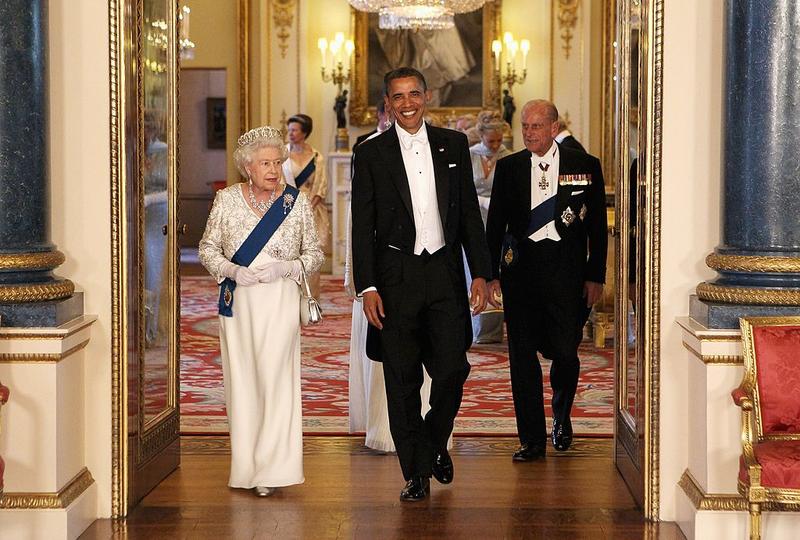
( Chris Jackson - WPA Pool / Getty Images )
[music]
Brian Lehrer: It's The Brian Lehrer Show on WNYC. Good morning again, everyone. USA TODAY Washington Bureau Chief Susan Page is out with a new book on how Queen Elizabeth II interacted with American presidents throughout the decades, from Truman all the way to Trump. She joins us now to talk about her new book, The Queen and Her Presidents. We'll also ask for her analysis about some of the latest news in the headlines, as we usually do. Susan is good enough to come on with us for that. Susan, welcome back to the show, and congratulations on the new book.
Susan Page: Hey, Brian, it's great to be back with you. I've written four books and I've done your show for all four of them.
Brian Lehrer: Because they've all been so good about Barbara Bush, Nancy Pelosi, Barbara Walters, and now Queen Elizabeth II. You have a lane here, Susan, don't you, which is powerful women of the 20th and 21st centuries.
Susan Page: Powerful women who have been underestimated.
Brian Lehrer: Do you think Queen Elizabeth II was underestimated?
Susan Page: Oh, absolutely.
Brian Lehrer: For example?
Susan Page: For example, I think the impression that a lot of people, a lot of Americans have of Queen Elizabeth is of a kind of a stoic figure in a colorful hat standing on a balcony and waving. Queen Elizabeth was quite a deft diplomat and she was a smart politician and she was a very shrewd judge of character, and she had a sense of humor and she was a mimic. She had an impact on the things that happened between the United States and Great Britain. She had an impact in, in some cases, on things that happen in the world in ways that I think have been underestimated, in part because it's all soft power exercised behind the scenes.
Brian Lehrer: I mentioned Truman to Trump as the basic arc of your book. You open with a scene most Americans probably don't know about FDR and Eleanor Roosevelt hosting Elizabeth's parents at Hyde Park in 1939, serving hot dogs and refried beans to a king and queen on the eve of World War II. Describe that refried scene.
Susan Page: Amazing. The first time a British monarch had stepped foot on American soil because, as it turns out, there is, even to this day, a little resentment on the other side of the Atlantic about that revolution. Remember the No Kings Revolution in 1776? This was a very big deal when the King and Queen came over, not only because it indicated the hard feelings over that were over, but also that there was this new relationship developing between Britain, which had ruled with the empire, and the United States, which was the new global power, and the special relationship that they would forge to fight Nazi Germany.
Brian Lehrer: You write that the teenage Princess Elizabeth absorbed a template from that visit that shaped the rest of her life. Tell us about the significance of that trip and what the Queen, as, I guess, a girl, a teenager, learned.
Susan Page: She's back in London with her sister and her beloved parents. They were a very close family. They called themselves We Four, just the four of them, a very cozy quartet. She saw the very dutiful attitude that her father took toward his role. He wasn't supposed to be king. Only when his brother abdicated did he become queen and put her in line to become queen.
He approached it with great purpose, and he kind of rose to the occasion as was demanded during World War II. She had various challenges during her time as monarch, some of them enormously serious. Think about the Iraq war and the pandemic and the Suez Canal crisis. There was one challenge after another that she approached with the same kind of sense of purpose that her father did.
Brian Lehrer: Listeners, anybody want to tell your own story or ask a question about Queen Elizabeth II in particular with respect to her relationship with the United States and American presidents for Susan Page, whose new book is called The Queen and Her Presidents. 212-433-WNYC. I know we sometimes get calls from the UK or from expats from the UK living here. Maybe your take or question from you would be particularly interesting, or any American. 212-433-WNYC. 212-433-9692. Questions on national politics of today are also welcome. We'll do some of that with Susan Page in this conversation, too. Call or text 212-433-WNYC. 212-433-9692.
Maybe one of the most striking details in the book is about the Queen's access to classified intelligence. You write about how she received copy number one of Britain's weekly intelligence summary. She was briefed on nuclear contingency planning for seven decades, maybe the most well versed person on the subject, you say, and she saw daily wartime situation reports. Talk about underestimating the Queen, if we thought she just waved from balconies. Can you talk about the depth and breadth of her knowledge?
Susan Page: Think about that. There's really no other leader in the world in modern times who reigned for so long in such a serious way. Almost every day she's reading the government documents they sent her. No one in history had the depth of understanding about contingency planning in case of nuclear war, because she was reading about that, dealing with that, having access to the British intelligence, but also US intelligence traditionally shared.
It's really a perspective that no one else had. Her perspective on that is a little mysterious because, unfortunately, for me, she didn't do interviews, she didn't write a memoir. She did keep a diary her whole life, a diary in pencil that has not been released. I look forward to the day when perhaps her diary will be released or will be released to historians, so we can see what she thought about some of these remarkable things she witnessed.
Brian Lehrer: When you tell that story of how she got copy number one of Britain's weekly intelligence summary, including nuclear stuff and everything, did it give her some kind of leverage, is that the right word, sitting down with any US president? Was there any situation where it became relevant like that?
Susan Page: I wouldn't say leverage. I would say wisdom. It gave her some insights to have. I write in the book about how Queen Elizabeth influenced presidents, and she did, but I also write about how presidents influenced Elizabeth. In her first visit to the United States as queen, she was visiting President Eisenhower in the aftermath of the Suez crisis. She discovered that he actually wanted to hear her opinion about things.
She had been a child when he came to London as the great general in World War II, but as queen, he was respectful of her. He sought out her opinion on Sputnik, which was a big issue of that particular moment, the Soviet space exploration that suddenly seemed to have leaped ahead of the Americans.
It was Eisenhower who really taught her that her views would be heard and considered by the person who is, at that moment, the most powerful person in the world. That was a lesson she never forgot. She became, I think, circumspect, but also very skilled at exercising influence. Even though she obviously couldn't do negotiations, she wasn't passing laws, she couldn't deploy troops, her power was something more subtle than that.
Brian Lehrer: That anecdote was about her and Eisenhower. Moving to the next president, you write about a genuinely tense dinner at Buckingham Palace in 1961, where First Lady Jackie Kennedy was privately dismissive of the Queen's dress, the furnishings, even the conversation, while Elizabeth had to bend her own rules on divorce just to let Jackie's sister through the door. Then there's this remarkable moment where Elizabeth lets her guard down and tells Jackie Kennedy, "One gets crafty after a while and learns how to save oneself." Why'd you include that? What do you think that exchange reveals?
Susan Page: Isn't that wonderful? Of course, anybody who's watched The Crown on Netflix remembers the kind of rivalry between the Queen and Jackie Kennedy. Royal historians who know more than I do say it's overplayed in The Crown, that makes too much of it. Actually, if you look at the photographs of that dinner, the Queen does look kind of dowdy, and Jackie Kennedy looks entirely glamorous.
There was this odd exchange or this illuminating exchange where the Queen says that you will learn to reserve some of yourself just in order to survive all the scrutiny that being a public figure has. Then the next thing that the Queen said as she gave Jackie Kennedy this tour was she showed her a picture of a horse, and she said, "A portrait of a horse." She said, "That's a good horse." Actually, horses became one of the bonds between the two of them because they were both pretty serious horsewomen.
Brian Lehrer: Here are two related texts that have come in from two different listeners. At least they're from two different phone numbers. Listener writes, "Does your guest author explore in her new book whether Elizabeth and the US Presidents discussed reparations for descendants of enslaved Africans/Black people?" Another one, "Has the Queen ever apologized or shown regrets for Britain's colonial past?"
Susan Page: I would say not for the colonial past. In one famous speech she gave marking the US Bicentennial, she said Britain hadn't had the wisdom to understand that they needed to let the colonies go. That's not quite expressing regret, but it's sort of acknowledging that independence was not an entirely bad thing for the United States and was perhaps inevitable.
The reparations question is an interesting one because Queen Elizabeth was extremely-- she was very interested in race relations. She was very close to African leaders. She had an emotional connection with Africa. It was where she was when she learned her father died and she was becoming queen. It was where she was on her 21st birthday when she gave an address to the British people about the life that would follow.
When Barack Obama was elected president, there were those on both sides of the Atlantic who worried that they were not going to hit it off because Obama had no particular orientation toward Europe. His orientation was more toward Asia. He had grown up in Hawaii and in Indonesia. In addition, the only contact between their two families had been that her colonial government had put his grandfather in jail in Kenya on false charges of treason. There were those who were concerned that this special relationship was going to have some tough going during the Obama presidency. That turned out to be entirely wrong. The two of them hit it off from the first time they met.
I think that Obama as second only to Ronald Reagan as a president for whom the Queen had genuine affection. When Obama came for a state visit, the Queen, as was her habit, had pulled these incredible material from the palace, from the archives. You can imagine the history that the royals have at their command there. It included a letter exchange with Abraham Lincoln and a sympathy note from the then Queen Victoria to Lincoln's widow.
I don't know that they ever discuss reparations itself, but that was a general topic on which the Queen had a connection and strong views. Just one more thing. One of the few times the Queen sort of openly differed with her elected Prime Minister was on the issue of South Africa and apartheid, where she took a different tone entirely from Margaret Thatcher.
Brian Lehrer: Moving from the profound reparations and colonialism to the trivial but really entertaining, the book has some really funny, awkward moments. President Jimmy Carter apparently once kissed Queen Elizabeth on the lips. President Lyndon Johnson essentially stood up the Queen during his presidency. You want to tell any story like that? Do you have a favorite?
Susan Page: The Carter story is a great story. Carter's elected. It's his first trip abroad. He's invited to Buckingham Palace for a dinner that included some European leaders. He is very new to this role as president. He was also always a man given to less pomp and circumstance. The dinner's over and he actually-- you're not supposed to touch royals. This is a rule Americans constantly violate, but it is a rule. You're not supposed to touch them. You're not even supposed to shake their hand unless they extend their hand to you. The dinner is over and he's saying goodbye not to the Queen Elizabeth, but to her mother, the Queen Mother. He leans in to kiss her on the cheek, which by the way, is not done. She turns her head and he kisses her on the lips.
Brian Lehrer: Oh. By accident.
Susan Page: By accident. She is appalled and tells this story with horror for years to come. She's at a private dinner and the Queen Mother would give what she called antitoasts, which is like reverse toast for people she really doesn't like. At one of these dinners, it is said she gave an antitoast to Idi Amin and Jimmy Carter.
Brian Lehrer: Whoa, that's some coupling that Jimmy Carter would not have liked.
Susan Page: Just one thing. Jimmy Carter denied this story. When the story came to light in his 30th book, which he wrote when he was 90 years old, he said it was the press had made it up. Unfortunately for Jimmy Carter, of course, a man of many achievements, no longer with us. I interviewed his chief of protocol, who was standing next to him at the palace, who saw him kiss the Queen Mother on the lips.
Brian Lehrer: What's an antitoast? Do you remove your glass from the tip of the other person's?
Susan Page: Maybe you drink more.
Brian Lehrer: [laughs] Tony in Manhattan has a Queen Elizabeth II anecdote of his own, I think. Hi, Tony, you're on WNYC with Susan Page.
Tony: Hi, Brian. Thank you, Susan, also for being there. A long time ago, I was a lay clerk, that is to say a man singer in the choir at Canterbury Cathedral. The Queen came to visit Canterbury Cathedral one day and the choir sang to her. Through a spokesperson, she let us know that she did not enjoy sitting at the bottom of the stairs in her chair while the choir sang from the top of the stairs. She didn't like being sung down to. I thought that was rather funny.
Susan Page: That seems ungrateful. I mean, I'm sure you were singing very well, and it was probably very nice.
Brian Lehrer: You end the book in the present with King Charles inviting President Trump for a state dinner at Windsor Castle last year and a trade deal following shortly thereafter. You write that, "Even two and a half years after her death, Her Majesty's hidden hand was shaping the moment." What did you see happen in that diplomatic exchange that made you think that?
Susan Page: Well, no president adored Queen Elizabeth more than President Trump, and no president wanted more to meet her as president and to be honored at a state dinner. That was clearly one of the greatest highlights for him of his presidency. That regard he had for her helped facilitate trade talks during Trump's first term. They didn't reach the trade deal they had hoped to reach for other reasons. The Queen was facilitating, getting Great Britain a relatively good deal on tariffs, not a great deal, but better than others, including other European countries. That trade deal finally came together under King Charles, but it reflected, in part, the table that she had set for those talks to go forward before her death.
Brian Lehrer: Some might say the British monarchy is in decline. King Charles is much older. He's had cancer. Barbados removed the monarch as head of state in 2021. Several other Caribbean nations like Jamaica, Antigua, The Bahamas, I think, also Belize, Grenada, St. Kitts, Nevis, and and St. Lucia have indicated they may move toward removing the King as head of state. The world in general is more polarized. There's the whole Andrew thing. Do you think the crown still has the diplomatic weight it had under Queen Elizabeth in a way that means anything?
Susan Page: Well, we're about to find out, with King Charles heading here in two weeks at a time of great turmoil. The monarchy's under fire. The US presidency is in a state of some turmoil. Perhaps you've noticed. The special relationship between the two countries that Queen Elizabeth did so much to protect has been gravely imperiled by the war in Iran and the debate over whether the US might even withdraw from NATO.
It's a different world. I wonder what Queen Elizabeth would make of it because these were institutions that the monarchy, the US presidency, the special relationship that meant so much to her, kind of her father's legacy that she protected and grew. Now, I think, on any number of fronts, they seem in some danger.
Charles may have a very successful visit and a successful reign, but he can't match his mother's record. She was queen for 70 years, and her kind of link to her people were forged during those terrible days of World War II, when her family stayed in London and didn't flee when they could have. Those are assets that Charles doesn't have, but that doesn't mean he has no assets. Charles' invitation to Trump to make a second state visit to London was something that did a lot to improve and protect US-British relations. We'll see how he does when he comes back here just at the end of this month.
Brian Lehrer: You've segued into the brief news of the day section of this conversation. If you you're just joining us, listeners, we've been speaking with USA TODAY Washington Bureau Chief Susan Page about her new book about Queen Elizabeth II and presidents of the United States she has known called The Queen and Her Presidents.
On this tension between the US and the UK over the Iran war, do you think it matters to anything longer-term, or do countries act together when they see their interests as the same and not when they don't? This isn't really such a unique moment or one that portends anything for the future when there's a different situation they're dealing with.
Susan Page: Seems like a pivot point to me. I mean, we've had this infrastructure forged in the days after World War II, which includes NATO, that has served pretty well in kind of hanging together during-- not perfectly. It hasn't worked perfectly, not in every single case, but it's done pretty well to hold together the interest of the free world at a dangerous time.
It seems to me that in the wake of President Trump's second term, we're going to have a reshaped world with different alliances and maybe even different organizations behind those alliances. I'm not smart enough to know exactly what it's going to look like, but I do think we see some of the assumptions about the old world order just falling away now.
Brian Lehrer: Well, Congress gets back to work today after spring break. Do you see the war as on the agenda in any new way compared to when they went out two weeks ago?
Susan Page: Congress has held no public hearings on the war, which strikes me as quite extraordinary. I think it is unlikely that we will see more aggressive congressional oversight of the war now that they're back in town.
Brian Lehrer: We're getting deeper into midterm election season. How do you see that influencing anything Congress might do or not do?
Susan Page: If you want to have congressional hearings on the war, you should elect a Democratic House, because I can tell you, if Democrats win control of the House or even of the Senate, something that seemed impossible a month or two ago and now seems more conceivable, Democrats will have hearings on the war and on other things as well. It will be a different world. We've had almost two years now. No, not almost two years. We've had, yes, almost two years of effectively no congressional oversight of the Trump administration. Even if Democrats win only control of the House, which is all but certain, that is about to stop.
Brian Lehrer: Let me throw you what might be a few curve balls since you've been, I think, away from your beat in recent days, getting ready for the book tour. Do you have any reason to believe that the defeat of Viktor Orbán in Hungary has any ramifications for President Trump or US midterm elections?
Susan Page: Yes, it may be. I mean, you need more than one thing to happen, but it may be one more sign of kind of the decline of the move toward a harder right in Europe. I think it's got repercussions for the Ukraine war, which involves the United States as well. It could be of a piece with what we've seen with US special elections, which have, over and over again, shown unhappiness with Republicans and with President Trump, who defines the Republican Party these days, not necessarily happiness with Democrats, but unhappiness with Republicans. I think we've had a kind of series of referenda on President Trump in which he has not fared very well.
Brian Lehrer: How about the whole Trump portraying himself as Jesus in that image thing in the context of criticizing the Pope is too liberal?
Susan Page: He says he thought he was a doctor. It doesn't really look like a doctor in that picture.
Brian Lehrer: He's saying he wasn't really showing himself as Jesus because he was putting his healing hand on the other person in the-- oh, just a deity. Of course, we all know what it looks like. I guess my question is--
Susan Page: By the way, the patient looks like Jon Stewart. Did you notice that?
Brian Lehrer: Oh, I didn't notice that. I'll go back and look.
Susan Page: You should look at it because he really does. He's healing Jon Stewart.
Brian Lehrer: He wouldn't heal Colbert, so I guess he healed John Stewart. I guess my question about this, though, is do you think that this is just the stuff of chatter among people like us, or does it matter politically in any way?
Susan Page: I think the President's inclination to speak in ways that push the envelope has not really hurt him politically. This one, I think you could tell, struck a chord with his supporters because he pulled it down after 12 hours, and that is something he doesn't like to do. It's pretty rare that he pulls down a tweet, even one that's caused enormous controversy, in case often he posts tweets in order to create enormous controversy.
I think that some of the core members of his support, like Christian conservatives, were offended by this image, and it prompted him to take a rare step back and to argue that he thought it was portraying himself as a doctor, which when you look at the picture, doesn't actually seem like a credible explanation.
Brian Lehrer: Well, he certainly wouldn't have healed Jimmy Kimmel, that's for sure. There we leave it with Susan Page, USA TODAY Washington Bureau Chief and the author now of The Queen and Her Presidents. Great book. Really fun. Thank you so much for coming on today.
Susan Page: Thank you, Brian.
Copyright © 2026 New York Public Radio. All rights reserved. Visit our website terms of use at www.wnyc.org for further information.
New York Public Radio transcripts are created on a rush deadline, often by contractors. This text may not be in its final form and may be updated or revised in the future. Accuracy and availability may vary. The authoritative record of New York Public Radio’s programming is the audio record.