
The Perils of Pregnancy in America
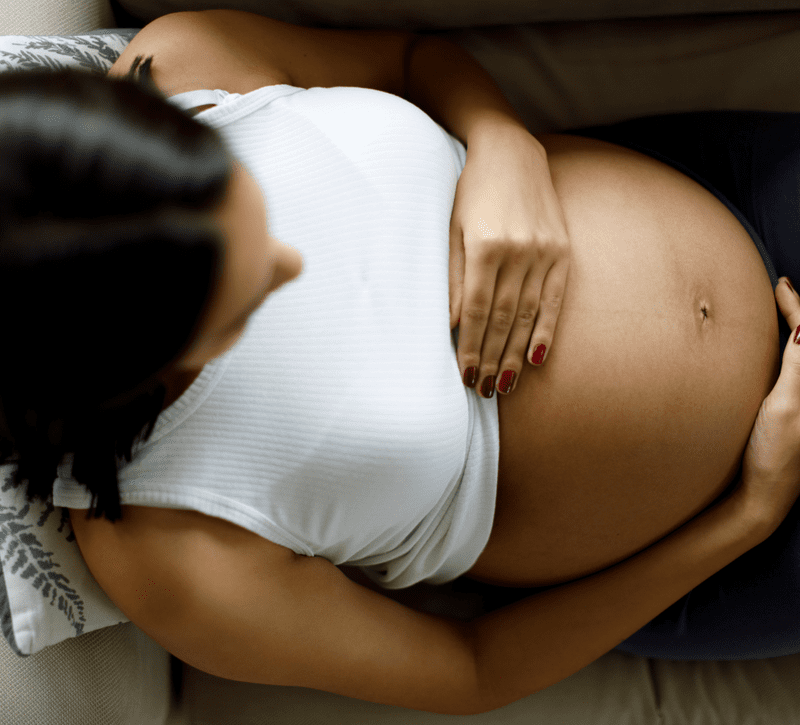
( CANVA stock images )
Brian Lehrer: It's The Brian Lehrer Show on WNYC. Good morning again, everyone. Since the Supreme Court overturned the constitutional right to abortion, having children or not more broadly has become more politicized. From religious tradwives who model large families on social media to so-called "childless cat ladies," that slur from Vice President Vance, the message from the Trump administration is clear. Women should have more babies in America, but childbirth in the US is as dangerous in some US States as it is in countries with far fewer resources.
A new report from the Commonwealth Fund finds that Louisiana, Tennessee, and Arkansas had similar mortality rates as El Salvador, Belize, and Azerbaijan. The report warns that the overturning of Roe plus impending Medicaid cuts "will likely deepen coverage instability during pregnancy and after delivery, periods already marked by high rates of churn and care disruptions that contribute to poor maternal and infant health outcomes." Our guest now argues that the erosion of reproductive freedom post Dobbs has made pregnancy dangerous for all American women.
With us now is Irin Carmon, senior correspondent at New York Magazine. Some of you know, back in 2015, she was co-author of the book Notorious RBG, about Ruth Bader Ginsburg. Her new book explores what it means to be pregnant today in America through reporting and personal stories. It's titled Unbearable: Five Women and the Perils of Pregnancy in America. Irin, welcome back to WNYC. Thank you for joining us for this.
Irin Carmon: I'm so thrilled to be back together, Brian.
Brian Lehrer: You write, "The end of Roe v. Wade, allowing about half of American states to enact abortion bans almost overnight, has already brought unimaginable pain. It has also exposed how broken the existing system already is, shaped as it is by the same values that animate abortion bans." What are you looking at?
Irin Carmon: Brian, in the immediate aftermath of Dobbs, I think many people were surprised to suddenly be hearing stories people being turned away for non-abortion care, miscarriage care, ectopic pregnancies, early labor that would never result in a live birth, being denied emergency care in these circumstances that when people thought about banning abortion, they didn't understand that this is also abortion care or that doctors would be so afraid of providing necessary healthcare that they would turn patients away because of the chilling effects of these laws.
I think Dobbs was a clarifying moment. It was an accelerating moment. What I wanted to do with Unbearable is to tell a story about how we got to this point and how it's playing out because the kinds of artificial separations in the law, they don't exist in people's lives, and they don't exist in medicine. These are all deeply interconnected medical and personal experiences of pregnancy, whether you're looking to end your pregnancy or not.
Brian Lehrer: I want to make this local for our listeners right away in a way that may surprise them, because in your book, you tell the stories of five women in Alabama and also New York City. You write, "We like to congratulate ourselves in New York, but somehow the largest, wealthiest city in the country, with its world-class hospitals and universities, is also a place with a starker racial disparity in maternal mortality than Alabama." Of course, New York also has liberal abortion laws, which Alabama no longer does. Can you talk to us about the racial disparity here in New York City and why you spotlighted those?
Irin Carmon: Brian, it blew my mind to learn that our already unforgivable national disparity in maternal mortality, wherein a Black woman is-- the most recent number is three or four times likelier to die for a pregnancy-related cause than a white woman. At the time that I was-- of course, every year these numbers are slightly different, but in recent years in New York City, Black women have been 9 or 12 times likelier to die for pregnancy-related causes than white women.
I'm so glad you highlighted that passage, because I knew when I was figuring out how to tell a bigger and deeper story than just our most recent catastrophe, that I wanted to understand how it could be that right here in New York City where I live and where I was pregnant, first during COVID and then during Dobbs, could have these unforgivable disparities. What was the mechanism?
What I realized is that even in progressive places where you can access an abortion, this is fundamentally a story of inequality, which is part of our story of American pregnancy care, where we have some of the most storied institutions that have the most resources to provide healthcare, but that these riches are unevenly distributed in our city and that there are public hospitals. I focused on one, Woodhull, where every day, despite some people trying to do the best they can, unforgivable mistakes are being made, patients are being abandoned. Two different patients might be treated completely differently depending on their characteristics.
When we tell a story of the difficulties of being pregnant in America, you're right, we do tend to say, "Okay, Alabama, their numbers for maternal mortality overall are really high. They banned abortion. They don't offer healthcare," but right here in New York City, one of the women that I wrote about, I met her at a preschool picnic in my own community. I tell her story of trying to find a different kind of pregnancy care, one where she would be treated like a whole person. Unfortunately, as she woke up in the intensive care unit at Woodhull, a second woman that I write about had the same doctor, the same botched C-section, four years later. As a Black woman, she was part of that tragic statistic, where she lost her life.
I did want us to look in the mirror. I think it's the greatest city in the world, but we've got a lot of problems to tackle. All of these problems tend to show up at this moment of pregnancy, where people are so vulnerable in what should be a joyful moment in their lives.
Brian Lehrer: What's the message or the lesson from the experience of those two New York women, Maggie and Christine? You say botched C-sections by the same surgeon. Tell our listeners why that isn't just a story of one bad surgeon and something more systemic.
Irin Carmon: I'm so glad you asked that, because I think we are all tempted to say, "Okay, there was a bad doctor, and he can get fired, and we can all move on with our lives." I want to be clear. These two women went to Woodhull Hospital because they wanted to be seen by the midwives who were known to provide a higher level of care in a community with a lot of needs and not a lot of resources. They both ended up getting C-sections that the proper standard of care was not followed, where not only were their incisions not properly sutured, and they internally hemorrhaged, but nobody noticed, and it was not reported.
In the case of Maggie, who is an artist from Canada, experiencing our American system through the eyes of someone who truly cannot understand why it's like this, understandably, and her husband, Matt, are in this moment of crisis, where he realizes that something's wrong and he's calling for help. Luckily for them, somebody came in time. Doctors came in time, despite at first them being questioned and denied that something was wrong, but when Christine's partner repeatedly advocated for her throughout the process, he was not even allowed inside of the delivery room-- excuse me, the or, when she had her C-section, which she did not want.
He was repeatedly, in trying to advocate for her, they called security on him. While he was in the NICU with his son, she was left alone to hemorrhage and eventually died that night at Woodhull. The treatment that he experienced afterwards-- Again, one person, a Latino man with a Black woman as his partner, his fiancée. When he calls for help, they called security, and he's not able to save her life despite all of his attempts. Also, the follow-up care. Why was she left alone? Why were they repeatedly having to advocate for themselves and feeling like they were risking being retaliated against because they were making themselves a problem?
This is a catch-22 that shows up in the research. There's also significant research that shows that that racial maternal mortality gap can partly be accounted for whether a patient goes to a hospital that predominantly serves other Black patients, so it's telling us something also about the resources at these hospitals. While both of them were treated unforgivably, the systemic issue here is both one of interpersonal racism and also a hospital that simply does not have the tools for when there is something wrong to respond to it properly.
Everything that Jose has experienced in the aftermath, fighting to bring home his son, fighting to get access to their shared apartment, fighting the hospital for answers is a story of both racial inequality and how pregnant people are treated here. The one thing that I will say is that as horrific and tragic as the story has been, if you read the book, you'll also understand that Jose has found himself in maternal health advocacy and actually, after the book was published, he's since become certified as a doula and is just trying to make sure that these systemic issues and matters of interpersonal racism don't take another life as they did his partner.
Brian Lehrer: Sure enough, a listener texts, "Midwives and doulas are the unsung heroes of maternal care. I'm proud that New York City has expanded access to doulas and midwives in recent years and hope the city continues to invest in this essential care," writes one listener. Listeners, we can take a few more texts or calls for Irin Carmon, senior correspondent at New York Magazine, whose new book is Unbearable: Five Women and the Perils of Pregnancy in America. 212-433-WNYC, if you have a question or a story, 212-433-9692.
I do want to get back to the southern states in a minute. I read out those stats at the beginning about how three states in particular have maternal death rates similar to three countries around the world that people would be shocked to hear American healthcare outcomes being compared to, but in New York, if this is a systemic problem, do you go in the book to what systemic solutions might be, especially to the racial disparity? Because we've had now two mayors in a row and we're about to have a third, and not even to dismiss previous mayors in this respect, at least in what they would say, but Mayor de Blasio got elected as the inequality mayor who was going to fight inequality.
Mayor Adams certainly was focused to some degree on racial disparities in all kinds of things. I think that expansion of midwives and doulas that the text are referred to is in Adams' administration policy. Now we have Zohran Mamdani coming in, who's obviously running to improve conditions for the working class, as he frames it, to reduce all kinds of disparities, certainly health outcome disparities. What's the systemic answer if word of whatever you say can get back to Mayor-elect Mamdani?
Irin Carmon: I certainly think that expansion of midwives and doulas is extremely important. I will say that having reported a little bit on the citywide doula program, I know some incredible advocates who are doulas who have been in the system who had to drop out because they weren't being paid in a timely fashion and they needed to support their own families. I think also making these programs sustainable. Midwives provide much of the same care that obstetricians do, but they're reimbursed for less. It's often an economic problem providing access to this kind of care.
Somebody just said to me, I just did an event with a midwifery practice, Oula, where I delivered my second child. This idea of everyone needs a midwife and some people need a doctor too. I think expanding access to that as the threshold of your care, making sure that people have access to healthcare before they become pregnant to address any kind of underlying health issues that they have, but some people are going to need medical care. They're going to need surgery. They're going to need emergency care. I think the hospitals in people's communities are failing them when it comes to that kind of critical care.
The doctors there are paid less. The staffing ratios are more challenging. Many people quit during COVID. Many people were put on night shifts. In the cases that I wrote about, they were put on night shifts when the doctor in this story was 72 years old and had just been hospitalized for COVID. I think actually giving them the resources that they need when they need to provide advanced care, because it shouldn't be that people have to leave their community just to not end up a statistic.
Brian Lehrer: Chloe in Washington Heights, you're on WNYC with Irin Carmon. Hi, Chloe.
Chloe: I wanted to give my perspective on this, as a midwife who works in a hospital that serves almost exclusively patients who receive Medicaid. I just wanted to provide that perspective because a lot of people don't know this, but midwives are the primary care workforce in the public hospital system, serving low-income patients, doing the best that we can with very little resources and even less institutional support, including abortion care. I would love to see these conversations include the input of midwives because I find that they rarely do.
Brian Lehrer: Here you are. What would you like to add?
Irin Carmon: Yes.
Chloe: No, I just wanted to highlight the fact that, like you mentioned at Woodhull, there are midwives who are really on the front lines, and I know many of them personally trying their best to deliver the very best, safest and most respectful care, but yes, it's just the little resources and little support for our work, little understanding for our work, and also, the pay is not very good either.
Brian Lehrer: Thank you for your work and thank you for your call. Anita in Queens, you're on WNYC. Hello, Anita.
Anita: Hi, Brian. I participated in a documentary several years ago, exactly mirroring the book, where two families tragically lost family members because of the lack of care and attention. I feel like we're screaming into the void because we've been talking about this for so long and there's been some progress, but as the author points out, it depends on where you are, what you have access to. I currently have a daughter-in-law who's expecting for the first time, who had to go to the emergency room the other day. It's the part of Georgia that I'm terrified because the attention, the experience to me is the window into what afraid for. The lack of access, the lack of care, and all of that. It's absolutely terrifying to me.
Brian Lehrer: Anita, thank you very much. Disturbing as that is, and as we start to run out of time, Irin, I did mention in the intro that new report from the Commonwealth Fund and she talks about Georgia, obviously, a southern state report that finds Louisiana, Tennessee, and Arkansas had similar maternal mortality rates to El Salvador, Belize, and Azerbaijan, obviously, just an incredible outrage in a country with the resources of the United States.
Irin Carmon: Yes. In the Alabama chapters of the book, I lay out some of the challenges. I write about a heroic obstetrician who's trying to partner with midwives and open up a birth center in the former abortion clinic once Dobbs makes it impossible for her to provide abortions there, but the barriers just to providing access to safe birth in a so-called "pro-life state" are significant. We have our own set of challenges here in providing this kind of care. In Alabama, expensive real estate and regulatory challenges are not the issue. The issue is the doctors have a monopoly on birth and they don't want to give it up.
I think that we are also, as you mentioned, on the precipice of many people losing access to Medicaid. There's a pregnancy carve-out technically, but we understand that somebody is a person before they become pregnant who deserves access to healthcare. I always say that although the book is called Unbearable, that the unbearable does not have to be inevitable. Pregnancy is inherently a time of both vulnerability and power, but there are so many mechanisms in the United States where we choose to take that power away from the pregnant person, and we leave them in dangerous situations at a point where what we need is support.
These are all intentional choices. They show up differently depending on where you live. By the way, to the caller who's worried about her daughter, all week I have been hearing from people who are saying that they're specifically choosing not to have children because they're so concerned about the healthcare environment in this country, post-Dobbs getting even worse. At the same time that you have the Trump administration telling people to have more babies, RFK called it a national security threat that people are choosing to have fewer babies. Patients are being abandoned at a point where they might otherwise undertake this. This is a choice.
Brian Lehrer: I want to play, before you go, one clip. You can't put a sound bite in a book, but we can pull it on the radio. Something that you referred to in the book as you tell the story of Dr. Yashica Robinson. This is a clip of her in 2022 in a House Judiciary Committee hearing about abortion access, being questioned by future House Speaker Mike Johnson. Johnson speaks first.
House Speaker Mike Johnson: Do you support the right of a woman who is just seconds away from birthing a healthy child to have an abortion?
Dr. Yashica Robinson: I think that the question that you're asking does not realistically reflect abortion care in the United States.
House Speaker Mike Johnson: In that scenario, would you support her right to abort that child?
Dr. Yashica Robinson: I won't entertain theoreticals.
House Speaker Mike Johnson: It's not a theoretical, ma'am.
Dr. Yashica Robinson: That's not reality.
House Speaker Mike Johnson: You're a medical doctor.
Dr. Yashica Robinson: I am a medical doctor, and that has never happened.
Brian Lehrer: Dr. Robinson, we should say, provides both abortions and maternal care in the South. Why did you reference that exchange in the book?
Irin Carmon: The question he was asking had nothing to do with making any pregnancy safer, having any healthier outcome. The barriers that a doctor faces trying to provide reproductive healthcare, whether it's abortions, for as long as it was legal, or safe births where the patient is respected and heard, are so significant to then show up and have the powerful members of Congress use you as a rhetorical target. It's just an added disrespect at the same time that they're telling people to have more children. I did really want to say that the reason that I wrote about Dr. Robinson, too, is that historically, abortion care and birth care were not separated. They were both provided by midwives.
Abortion was not illegal at the founding. This is a 19th-century phenomenon when doctors took over medical care. I wrote this book because when Dobbs was handed down, after my entire career of covering abortion rights and the court and how it plays out in the country, I was eight months pregnant. Just as I was listening to Mike Johnson, I was reading Sam Alito describe what he thought a pregnancy was by quoting the Mississippi law, by saying, "At this point, this happens. At this point, this fetal development happens, and the unborn child has taken on the human form in all relevant respects," is what he quoted.
I looked in that decision, and I could not find a single mention of the reality of being pregnant in America. Even for me as a joyfully pregnant person, what it was doing to my body, my very bones, it was leaching my calcium. It was changing the shape of my eyeballs and my feet. It was putting me at great risk of death, as you say, commensurate with countries that have far fewer resources than we do, and instead, that burden and that transformation were completely erased. I hear that same disrespect in Mike Johnson, questioning someone who, after all, is trying to provide care to their patients regardless of what kind of pregnancy care they need. It's how we got in this situation in the first place is that disrespect.
Brian Lehrer: Irin Carmon, senior correspondent at New York Magazine, her new book is Unbearable: Five Women and the Perils of Pregnancy in America. If you want to see Irin at a book event, you can do so later today, 5:30 this afternoon at NYU's Birnbaum Women's Leadership Center. That's at 40 Washington Square South in Manhattan. Again, NYU's Birnbaum Women's Leadership Center, 40 Washington Square South at 5--
Irin Carmon: Brian, I'm so sorry to correct you. It's on November 12th. Wednesday, November 12th.
Brian Lehrer: Oh, I'm sorry. I had that as tonight. It's next Wednesday. Next Wednesday, November 12th. Is it 5:30? Do you know?
Irin Carmon: It is at 5:30, yes.
Brian Lehrer: Okay. Sorry about that, but thanks very much for coming on and sharing your book with us.
Irin Carmon: Thank you, Brian.
Copyright © 2025 New York Public Radio. All rights reserved. Visit our website terms of use at www.wnyc.org for further information.
New York Public Radio transcripts are created on a rush deadline, often by contractors. This text may not be in its final form and may be updated or revised in the future. Accuracy and availability may vary. The authoritative record of New York Public Radio’s programming is the audio record.