
The New Yorker: Politics & A Movie
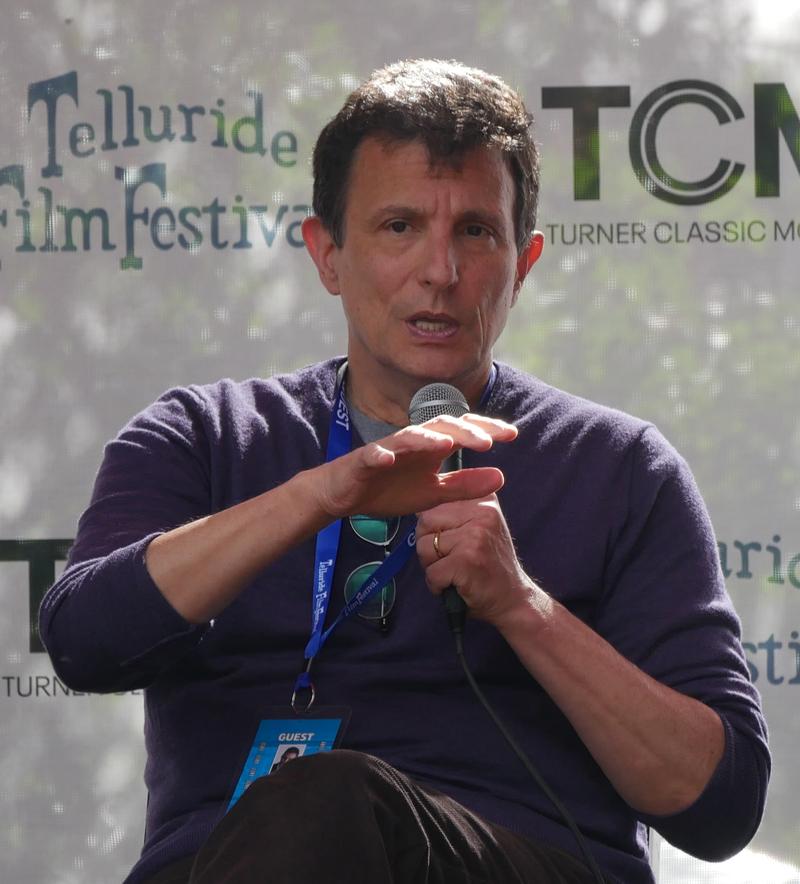
( Sizzlipedia / Wikimedia Commons )
[music]
Brian Lehrer: It's The Brian Lehrer Show on WNYC. Good morning, everyone. Senator Cory Booker is coming up later this hour for his latest visit to the show at a pivotal moment in a number of ways. You know that we remain on the health insurance cliff for millions of Americans, with the Obamacare subsidy cuts coming at the end of the month unless Congress acts to extend them. Plus, what an increasing number of people see as the human rights emergency, national security emergency, and US reputational emergency of Pete Hegseth's leadership at the Pentagon.
Also, do many of you remember Senator Booker's idea for baby bonds back when he was running for president to help reduce the rampant economic inequality in this country? President Trump is now suddenly proposing something; actually got something along those lines in the so-called Big Beautiful Bill. We'll see if Booker thinks it's real or fake. He's actually teaming up with Ted Cruz, of all people, to try to influence how they get implemented. Yes, I know some of you want me to ask about Cory Booker's wedding, which has been on the Style pages in recent days.
Sure, we'll do that, too. He'll take some calls from you. Maybe one of you will want to pose a wedding question while I stick to boring things like healthcare and inequality. Senator Booker, later this hour. Our first guest is no slouch either. David Remnick is back with us, editor of The New Yorker, as you know, and host of The New Yorker Radio Hour here on the station on the weekends. You can add to his credits now, prime subject in a new documentary by Marshall Curry called The New Yorker at 100.
Marshall Curry will join us, too, in a little bit, but we'll talk about some news of the day first with David Remnick, things he's writing about or interviewing people about. David, always great of you to come on. Welcome back to the weekday side of the station.
David Remnick: Oh, thanks for having me, Brian. How are you?
Brian Lehrer: I'm doing all right. Thank you. You wrote a New Yorker newsletter entry on Monday called Our Political Violence Problem, pegged to a piece in the magazine this week. You opened it with a reference to the governor of Pennsylvania, Josh Shapiro, having his house set on fire. The alleged firebomber reportedly did it in the name of Palestinian rights. You write that the crisis of political violence, like much in our moment of inflamed division, seems inseparable from the man in the White House. Considering the alleged motivation for the Shapiro attack, why do you bring President Trump right into it?
David Remnick: First of all, it's important to say that the piece is by Benjamin Wallace-Wells, our staff writer, and I was just writing a newsletter for it. I think it's clear that political violence has always been with us. There's a long, long tradition in the United States of political violence. There's that wonderful book by Richard Hofstadter about it and many others. I don't want to suggest, and I'm sure Ben doesn't want to suggest, that political violence started somehow in the Trump era. It's not the case. All kinds of things are capable of contributing to political violence.
Obviously, in the 19th century, the conflict of the Civil War, even its end, resulted in hangover Confederate radicals and the Booth killing of Lincoln at the Ford Theater, one of the most famous instances of political violence. Both Kennedys, Martin Luther King. Political violence is nothing new. Experts tell us that political violence is on the rise, and certainly, the ready availability of firearms contributes to this. We are awash in guns. God knows we're not the only nation with fractious politics, and yet we have so many more guns than anybody else.
Our levels of political violence are much higher. Also, when you have a president of the United States who operates in an entirely different way than certain other presidents, take Obama, for instance, and whose rhetoric on a daily basis is all about division and deepening those divisions and hardening his base, when he has rallies where he encourages his supporters to beat the hell out of people who are not his supporters, when he threatens to execute his political rivals within the first term administration and on and on and on, that cannot contribute to the health of the nation.
Then there's political violence now, not just in one direction. It seems almost ubiquitous. I don't think you can think that the president of the United States and his rhetoric will do anything to bring down the temperature. Just the opposite.
Brian Lehrer: I don't know if you've seen on political violence being rampant and not just in one direction, the breaking news just this morning about an arrest of somebody who allegedly planted firebombs, I think they were, or some kind of bombs, at both the Democratic headquarters and the Republican headquarters on the morning of January 6th, 2021.
David Remnick: I hadn't seen that, but I wish I could be terribly surprised.
Brian Lehrer: Coincidentally, on Monday, the same day you published the newsletter, Senator Mark Kelly of Arizona held a news conference responding to Trump's desire to have him and some other Democrats in Congress prosecuted. For what? For making that video that said US troops should refuse to obey illegal orders. Trump said things like, "George Washington would have had those members of Congress hanged." Senator Kelly references Josh Shapiro, too. Listen.
Senator Mark Kelly: My family knows the cost of political violence. My wife, Gabby, was shot in the head and nearly died while speaking with her constituents. The president should understand this, too. He has been the target of political violence himself. The speaker of the Minnesota House of Representatives, Melissa Hortman, and her husband were murdered in their home this year. The Governor of Pennsylvania, Josh Shapiro, had his house firebombed this year.
Then, Charlie Kirk was assassinated at Utah Valley University, a place I visited just a few weeks ago with Republican Senator John Curtis. Faced with a wave like this, every other president we have ever had in the history of this nation would have tried to heal the country, but we all know Donald Trump. He uses every single opportunity to divide us. That's dangerous.
Brian Lehrer: Senator Kelly on Monday. David, maybe you need to be a psychologist, not a journalist, to answer this question, but with President Trump having been on the receiving end of two assassination attempts himself-
David Remnick: That's right. That's right.
Brian Lehrer: -and his comment coming right after the ambush shooting of the two National Guard troops, his comment about these senators would be put to death. What game do you think he's playing? Some people think the MAGA actually wants a civil war.
David Remnick: I think it's important for journalists [chuckles] to not pretend to be psychoanalysts, and I think it's important for them to say I don't know when they really don't know. Donald Trump has been a presence in New York life for a very long time and a presence in political life now for a decade. For me to start to psychoanalyze his motives with any confidence, I think, is a disservice. Yes, he himself has been the subject of assassination attempts, which is horrendous. Charlie Kirk.
There's no question about any of this, but you would think that part of the responsibility of being the elected leader of the country would relate to some sense of moral purpose and the safety of Americans, insofar as he can accomplish that through rhetoric and leadership and moral example, but he just does the opposite.
I don't know that I could expand any better on what Mark Kelly said, except that-- Gabby Giffords was just here at the Condé Nast offices recently, and she's done her damnedest in rehabilitation and all the rest, but to see what was robbed of her and to see at the same time, her incredible determination and spirit, which we've all seen on television and maybe lucky enough at public appearances, is remarkable. She escaped the worst fate just barely. Her spirit is exemplary. Her rhetoric is exemplary. If only that kind of speech, that kind of leadership was shown from the White House, I think we'd be better off, God knows.
Brian Lehrer: David Remnick is with us, editor of The New Yorker, host of The New Yorker Radio Hour. We'll get in a few minutes to the new documentary and bring in filmmaker Marshall Curry, called The New Yorker at 100. We just talked about the Republican side a little bit. Let's talk about the Democratic Party side. You had Maryland Senator Chris Van Hollen on The Radio Hour last month, and you played him this clip of Chuck Schumer refusing to endorse Zohran Mamdani for mayor of New York. Listeners, you will hear Schumer with CNN's Dana Bash, followed by a comment on the show from Senator Van Hollen.
Chuck Schumer: All I can tell you is I'm going to continue talking to him.
Dana Bash: What's the holdup?
Chuck Schumer: I got to continue talking to him, and that's what I'm going to do.
Dana Bash: Is part of the calculus that if you endorse a Democratic socialist, you're worried it will be damaging to your party, maybe dampen your chances of winning back the Senate?
Chuck Schumer: I'm going to continue talking to him. Dana, you can ask me again.
Dana Bash: All right.
Senator Chris Van Hollen: The Democratic Party should make room for lots of different opinions. Those opinions may be different in a state out west than in New York City, but when we have a Democratic nominee, we need to back them.
Brian Lehrer: David, it's remarkable, no matter what anybody thinks of Mamdani. Of course, there are many opinions about Mamdani that, so far, since the election, Donald Trump is saying nicer things about the mayor-elect than either New York senator is, not to mention the outgoing mayor. What do you make of it?
David Remnick: I think that meeting between Trump and Mamdani was two politicians in their own interest at a given moment in time behaving with discipline, let's put it that way. Trump was having a horrendous political week. I'm not sure that he needed yet another explosion. Perhaps he was swept up a little bit by Mamdani's skill. Mamdani needs things from Washington. I don't think he loathes the president any less than he did six weeks ago or six months ago. It's also in the city's interest to avoid conflagration where it can.
Do I expect that relationship to be an ongoing love fest? I'd be really surprised if that were the case. As for Chuck Schumer, that was not a good moment for him, but I suspect it's not related just to economics. Chuck Schumer, who's a critic of Netanyahu of late, but in a fairly circumscribed way, within limits. I think he's gotten a lot of pushback and probably feels it himself about Mamdani's rhetoric, sometimes about the Middle East, and with hundreds of rabbis in the city pushing back against the Mamdani candidacy.
I think that was very, very hard for Schumer to just outright endorse. I think he has a lot of political allies and funders, and friends that felt very strongly that they didn't want to see him endorse Mamdani. That's my sense of the case, that it wasn't just economics
Brian Lehrer: Now, also pertaining to Schumer, but separately, we have this health insurance cliff on New Year's Eve with the current level of Obamacare subsidies about to expire. We'll talk to Cory Booker about that in our second segment today. The Democrats allowed the government shutdown to end without winning on their central shutdown issue, the subsidies. You asked Senator Van Hollen what might come next. Here's that.
David Remnick: Incredibly, we're facing another potential shutdown fight in January. How should we expect things to play out under this administration two months from now? Less than that.
Senator Chris Van Hollen: By then, we'll have learned whether or not Donald Trump and Republicans will do anything to turn off the ticking time bomb on healthcare costs. We'll have that in the rearview mirror by then. We'll fight to try to achieve our objectives. I think things are in too much flux right now to be able to decide at this moment what the plan will be for January 30th, other than to say whatever it is, we need to come up with it together and stick with it.
Brian Lehrer: David, we'll bring on director Marshall Curry and talk about the film after this last question on the news. How do you see this divide in the Democratic Party right now? It was only a very small number of senators who broke ranks to end the shutdown. That was all the Republicans needed mathematically. Do you think Schumer might be ousted as minority leader by his ranks by January, before this next possible shutdown, of people like Van Hollen think anyone else could hold the ranks together more effectively?
David Remnick: Those of us of a certain age, let's just put it plainly, you and me and some others remember an era, for better or for worse, where there was something called party discipline, when the leadership of the Democratic Party, the Republican Party in Congress could more or less command their caucuses what to do on a vote. Not always, but with some discipline. Those days are long over. Senators and congressmen, really, are individual actors far more than they ever were.
Chuck Schumer is the leader of the Democratic caucus, but I don't think he's able to corral votes with the ease of Sam Rayburn back in the day or Mike Mansfield or something like that. That's a fantasy. Schumer is pointed to as if he were weak, and therefore, the Democratic caucus is not behaving in such and such a way. I don't know that anybody in modern times could corral votes as if it were a half century ago.
Brian Lehrer: Coming up, director Marshall Curry will join David Remnick as we talk about the new documentary, The New Yorker at 100. Stay with us.
[music]
Brian Lehrer on WNYC with David Remnick, editor of The New Yorker, host of The New Yorker Radio Hour. Also joining us now is the award-winning documentary filmmaker Marshall Curry. You might be familiar with films like Street Fight, If a Tree Falls, and A Night at the Garden about the Nazi Bund rally at Madison Square Garden just before World War II. He is the filmmaker behind The New Yorker at 100, premiering Friday on Netflix. That's tomorrow.
The film, made during the creation of The New Yorker's 100th anniversary issue, which came out in February, shows that process and takes us through the history of The New Yorker and how the magazine has impacted both culture and the craft of journalism itself. The documentary tells the history of the magazine in large part through writers who not only shifted the cultural conversation at the time with their pieces in The New Yorker but also literally changed journalism itself.
We're going to start with one dramatic example of that history. There was John Hersey's Hiroshima in 1946. That was an entire issue, 30,000 words of reporting on the aftermath of the nuclear bomb. Here is Hersey in his own words from about a minute of the documentary.
John Hersey: I had talked with William Shawn, who was then the second in command at The New Yorker, and we had talked about doing an article on Hiroshima. At that time, most of the writing had been about the power of the bomb and how many buildings it could destroy, and what a huge area it devastated, and so on. I went to Japan, and I began to look for five or six people whose paths crossed each other, whose experiences had been vivid.
Narrator: The piece he produced revolutionized journalism. It was nonfiction, but written with the intimacy and drama of a fictional story.
John Hersey: I think that fiction is much more powerful for readers in looking at grand or terrible events, because the reader can identify with the character.
Brian Lehrer: John Hersey, as heard in The New Yorker at 100 documentary that comes out on Netflix tomorrow. Marshall, welcome.
Marshall Curry: Thank you. Thanks for having me.
Brian Lehrer: For readers of The New Yorker, this clip may not have been a surprise. The magazine is known for telling important grand stories through the lens of the characters living the story. Can you put Hersey's story into context for us? It was interesting to me because I never heard that clip. To hear him say fiction is much more powerful for readers.
Marshall Curry: That story that he wrote about Hiroshima marked a big turn for the magazine itself, which I was surprised to find, as we were doing research on the film, had been founded as a comic magazine. It was really just a humorous, lighthearted magazine. It wasn't until some years later that they started doing real reporting in serious issues.
This was probably the biggest story like that. It also was a change in journalism. He went to Hiroshima and found a number of characters and told their story, what they experienced in Hiroshima, as if it were a novel with a fictionalized style, even though it was journalistically all accurate. That really changed journalism in a lot of ways. It opened a lot of creative doors for other journalists to do things similar.
Brian Lehrer: Listeners might be surprised that Rachel Carson's seminal book Silent Spring, which practically launched the modern environmental movement, was first published in The New Yorker. Truman Capote's In Cold Blood also debuted in The New Yorker. However, the documentary also acknowledges that up until the 1960s, The New Yorker was mostly written by white people, for white people. To the extent that Black people were featured, the narration notes, it was in racist caricatures. Marshall, what was the process of telling that story like? What did you learn?
Marshall Curry: One of the things about the documentary, it's a love letter to fact-based journalism. The New Yorker is the premier magazine for its fiction, its cartoons, its political writing, its profiles. It also takes a clear eye at the magazine's history, and it hasn't always lived up to the ideals that it holds itself to today. One of those things, as you point out, was that it was really a magazine written by white people for white people for many, many years.
One of the big turning points in that was the publication of James Baldwin, what would go on to be a significant portion of The Fire Next Time, his huge world-changing work about the civil rights struggle. When they published that, it just opened so many eyes. The letters that poured into the magazine, they just have boxes and boxes of these letters at The New York Public Library. I think it marked a change for the magazine as well. Again, these changes that happened to the magazine, they happened to the country. It catapulted Baldwin as a major figure in the civil rights movement.
Brian Lehrer: David, the documentary, as Marshall just did, frames that moment as taking a chance on Baldwin that then catapults him more into the national spotlight. Can you talk about, in general, as editor, how The New Yorker shapes the career of writers and how they, in turn, maybe shape the magazine?
David Remnick: I think that's a great question, because while we're an institution, I think our readers look as much to the left side as they do to the right side of the table of contents. In other words, a newspaper comes at you, and they're full of talented people at a place like The New York Times, for example. You expect to see the news on Pete Hegseth and Donald Trump, and whatever happened yesterday, and any number of enterprise stories, and all the same. Here, I think our publication is usually surprising.
It's far less about obligation, even though we certainly will cover the Trump administration over time. I think they're looking to read individual writers, too, whether it's in a certain era, Janet Malcolm and John McPhee, or James Baldwin, or whoever it might be, or these days, people that you see in the film, like Kelefa Sanneh or Andrew Marantz or Rachel Syme, Larissa MacFarquhar, the names are many, but they want to hear individual voices that sound distinct from one another.
Contrary to the notion of an institutional voice, certainly the best writers sound like themselves because they have a unique intelligence, a unique angle on the world, a unique view of the world. It's a very human enterprise, The New Yorker. God knows we have flaws, but at the heart of what we attempt is something that's extremely accurate, fair-minded, but also written by individual human beings, by individual writers. We want to give them the leeway, the sense of freedom that allows that magic to happen.
Brian Lehrer: The film does not avoid the controversy of the Tina Brown years as editor. She had come from Vanity Fair, I guess, in the '80s, and critics thought she would make a serious magazine unserious. She thought she was making an important but stodgy magazine more contemporary and relevant. She fires a lot of people and hires a lot of people. I learned in the documentary, David, that she hired you.
David Remnick: I think I might be the first writer she hired, to be honest. I came from The Washington Post. Like any editor, God knows I look back and think I wish I had done X differently or why differently. I'm sure Tina does the same in her period of six years as the editor. She did something essential. I think The New Yorker, if it doesn't watch out, can risk being more admired than read. A magazine, a website, the whole of The New Yorker is a living thing. It exists in time.
It has to have some sense of vitality and excitement and being in its moment, even if it's sometimes shooting for long-lasting or even eternal place in letters or journalism. I think Tina came in with the irreverence of somebody who grew up elsewhere, meaning in Britain, and didn't view The New Yorker as a secular religion, but as a magazine that could not rest on its laurels. That's not to say that Bob Gottlieb wasn't, for example, publishing some terrific things. He really was. It needed the kick in the butt that it got.
I'm very pro-Tina. We're not the same people. We don't have the same view of everything, but I got along with her like a house on fire and still do. That's, by the way, pretty rare with predecessor-successor relationships.
Brian Lehrer: I would say. Marshall, I think I hear you trying to get in there. What are you thinking?
Marshall Curry: No, I was just chuckling. She was one of the most fun interviews that we got to do in the film. Her era was quite dramatic. It's a fun beat in the film.
David Remnick: Look, Tina knows-- She's very funny in the film about two things, especially. She doesn't like Eustace Tilley much. I think she says it should have been smothered in 1935. That guy with the monocle on the cover every once in a while. She left the magazine very abruptly to start another magazine and a kind of entertainment enterprise called Talk. Unfortunately, she went off to do it with Harvey Weinstein, and that didn't end ideally, but it's great to see her writing now. She writes a very funny and sharp Substack that gets a lot of play. God bless her, we talk all the time.
Brian Lehrer: Here's a clip from the film of Tina Brown on what made her decide to leave The New Yorker after an interaction with the publisher S.I. Newhouse.
Tina Brown: After six and a half years at The New Yorker, I felt that the business side of The New Yorker was slow. We needed to be expanding in a lateral fashion. I remember writing to S.I. Newhouse a note saying that we should have a production arm to do documentaries, to do books and movies, even maybe a radio show. He just said, "Tina, stick to your knitting." [chuckles] I thought, "Okay. That got me very irritated indeed." I thought, "Well, maybe it's time for me to move on here."
Brian Lehrer: Tina Brown, who, by the way, just to correct the date that I mentioned earlier, she was editor from '92 to '98.
David Remnick: That's right.
Brian Lehrer: David, besides the sexism of telling a woman editor in chief to stick to her knitting, she dropped that little thought bubble in there of starting, of all things, a radio show. Was--
David Remnick: Yes. Which didn't come to fruition for quite a while.
Brian Lehrer: Yes, but-- [crosstalk]
David Remnick: Look, I think she got frustrated about a number of things, but was also attracted by-- Tina's a comet and here I am, I've been doing this for 27 years, and maybe some people think that's great, some people think that's terrible. Tina, I think in the end, she'd be the first to admit maybe she would have done 10, not 6, that she ended up doing. She has that move in, change form, and then move on. I don't know that she would have stayed forever and ever. It took quite a while first to write our finances and also to find our footing in the digital world, much less in the podcasting, radio, video world.
Brian Lehrer: Now that your show is one of WNYC's pride and joys, was it Tina Brown's idea, or did she plant that seed, and then you, as somebody who I know grew up loving radio-- we talked about that-- decide to run with it at all with Tina Brown's inspiration?
David Remnick: Look, I love her to pieces, but I never knew about her radio desires. I really don't. What happened is that came up a good number of years later. I credit Tina with a ton, I just didn't--
Brian Lehrer: I couldn't help but be curious about that. All right. One more clip. Because the documentary also walks us through what you might call some of the history of the present. Writer Andrew Marantz, who's currently there, talks about covering the Trump rally at Madison Square Garden in October of last year. Let's take a listen to about half a minute of how he thinks about his role as a reporter.
Andrew Marantz: Part of the goal is to give readers some kind of portal into what it feels like to be at a Trump rally. Ideally, maybe you can transcend that and say, "Not only what does it feel like to be in the room, but what does it mean?" One of the challenges with reporting on the Madison Square Garden rally was the specter of this Nazi rally that had happened at Madison Square Garden in 1939. That's just a challenge as a reporter to go, "Okay, I'm in a room with tens of thousands of people who are really enjoying this show. If I then write about it in the context of a Nazi rally, am I calling them all Nazis?"
Brian Lehrer: Marshall, I imagine that made your ears perk up since you made a whole documentary, Once Upon a Time, about that 1939 Nazi rally at Madison Square Garden.
Marshall Curry: Right, it did. We went to that rally and filmed him there. It's really emblematic of how seriously the writers at The New Yorker take the ethical questions of their work. Andrew's a terrific writer. There's so many other folks that we also got to profile as we were making this film, and they're all obsessed with accuracy. They have 20-something fact checkers at the magazine. They're all so obsessed with writing beautiful, compelling prose. David mentioned that they all have their own voices.
The film is a tasting menu of some of those voices. We go to the Middle East with Jon Lee Anderson, Rachel Syme interviews Carol Burnett. We go to a art gallery with Hilton Als and watch Roz Chast draw a cartoon. For me, making this film was just the joy of a career in documentary filmmaking. Getting to see how that rarefied sausage is made, it's a really fun project.
Brian Lehrer: As a closing question, David, I hope you don't mind a spoiler alert. Listeners, if you don't want to hear how this documentary about The New Yorker ends, tune out now. Three, two, one. The film ends with you quoting the magazine's co-founder, Harold Ross, who had called The New Yorker a movement. You embraced that, and you said, "If that sounds sanctimonious, I don't care." Can you talk about in what way you see The New Yorker in 2025 as opposed to 1925 or similar to 1925 as a movement?
David Remnick: I think he used that notion first of all to keep E.B. White at the magazine. I think he was really pressing him not to leave. I think he had, for all his rough-hewn, Western newspaper man practicality, for all he knew, that it was a business, too. It has to mean something to last. It can't just be yet another publication, yet another podcast, yet another enterprise in the press howling into the wind. It had to mean something. It had to have a sense of principles.
The recipe of The New Yorker, the amalgam of what we're after, which combines the high and the low, but also the things that are genuinely funny, but also journalism at the very highest level, that sometimes leads a writer to spend many, many months on a single piece, if not more, was an unknown recipe then, and it's pretty damn rare now. It wasn't so long ago that even The New York Times thought that BuzzFeed was going to inherit the earth. It is very hard to have an idea, to develop it, sustain it, and to weather the ups and downs of the era and keep your principles at the same time.
We're not who we were in 1925 in many ways because of technology, because of any number of things. At the same time, I hear a kindred soul, even though we have very different backgrounds, when I read what Harold Ross had to say about The New Yorker 100 years ago, and that's pretty unique.
Brian Lehrer: I'll just add as a coincidental addendum that Marshall Curry's first appearance on the show was 20 years ago. Not 100 years ago, but 20 years ago in 2005, along with Senator Cory Booker, for your documentary Street Fight about his entry into politics, the Newark mayoral election that he won at the time. By sheer coincidence, Cory Booker is our next guest. Congratulations to both of you on this film. The New Yorker at 100 premieres on Netflix tomorrow. Marshall, David, thanks a lot.
Marshall Curry: Thank you so much.
David Remnick: Thank you.
Brian Lehrer: Senator Booker joins us in a minute.
Copyright © 2025 New York Public Radio. All rights reserved. Visit our website terms of use at www.wnyc.org for further information.
New York Public Radio transcripts are created on a rush deadline, often by contractors. This text may not be in its final form and may be updated or revised in the future. Accuracy and availability may vary. The authoritative record of New York Public Radio’s programming is the audio record.