
The New York Times Picks the Greatest Living Songwriters
Amina Srna: It's The Brian Lehrer Show on WNYC. I'm Amina Srna filling in for Brian today. We're kicking off our last segment of the show with a little bit of Dolly Parton. You just heard a clip from the iconic working woman's anthem, 9 to 5, a song which has lodged itself so deep in the American psyche that it's kind of hard to imagine a world without it.
In fact, single the same could be said of a lot of Dolly's songs, probably. It comes as no surprise that she made it onto The New York Times' recently published list of, "The 30 Greatest Living American Songwriters" Yes, they narrowed it down to only 30. To close the show today, we're using that as a jumping off point to do some informal unofficial list-making of our own.
Listeners, we want to know. Who would make your personal list of greatest living American songwriters, emphasis on the living. Sorry to the Leonard lovers out there. I'm talking Bernstein and Cohen. Yes, your nominee has to be alive, has to be American. Who makes the cut? Let us know. 212-433-WNYC. That's 212-433-9692. You can also text that number.
My guest for this is Lindsay Zoladz. She's a pop critic at The Times, and she writes the music newsletter The Amplifier. She was one of the 250 music insiders and critics who voted on The Times' list, and she also wrote another article in The Times titled 11 Great American Songwriters Who Didn't Make Our List, maybe because the American songbook defies limitation. We're going to unpack how she weighed her picks, what got left out, and what makes a songwriter truly great. Lindsay, welcome to WNYC.
Lindsay Zoladz: Thanks for having me.
Amina Srna: All right. Listeners, again, we're taking your calls on this question. Who would make your own personal list of great living American songwriters? Of course, it's all pretty subjective, but that's okay. You can call or text us now at 212-433-WNYC. That's 212-433-9692. All right. Lindsay, there are, of course, just so many amazing American songwriters. What factors were you weighing when you made your picks? Did you have a rubric?
Lindsay Zoladz: That's a great question. We were weighing a lot of different sort of hard to define qualities, which is one of many reasons that this list was very difficult to put together. I think we were trying to strike a balance between the sort of traditional singer songwriter, traditional songwriter that you think of when you think of just songcraft and someone sitting down at a piano or a guitar and coming up with a spontaneous sort of masterpiece, and then trying to incorporate somenewer ideas and newer genres and younger musicians who we think are redefining what it means to write a song, to create a song.
Is writing even the right word in some of these cases? I think there's a lot of the lines between producing and writing have blurred in recent years. Collaborations have sort of had a blurry line between-- there were a lot of factors that we were considering to try to make this list. Both having one foot in tradition and one foot towards the present and even the future of songwriting.
Amina Srna: The three from the list that you wrote blurbs for are Dolly Parton, who we just heard from, Bruce Springsteen, a local legend, and Lana Del Rey. I think you were just getting into sort of how artists like Dolly Parton and Bruce Springsteen are iconic. They've been around for so many decades. I think Lana Del Rey might be a little bit more surprising to our listeners. Why did she make the cut?
Lindsay Zoladz: She, I think, is one of the most influential artists in the pop sphere working today. That might be surprising to some because she doesn't have the sort of number one hits that you think of with someone like Taylor Swift or Beyonce or someone like that. I think she is someone who's really dedicated to finding her own voice as a songwriter, really tapping into some emotions and feelings and just a sense of almost poetry that I think she's sort of brought back into pop music.
She's someone that I hear imitated and paid homage to all the time, especially in younger female artists. I think she's really carved a lane for women to express sadness and ambivalence and some less "empowering" kind of feelings that we associate with a female pop star. She's done so in a way that feels really artful and true to herself and is sort of a blend of that tradition I was talking about, but also taking it somewhere new and taking it somewhere that feels very 21st century.
Amina Srna: All right. Not to call out The New York Times, but it seems like these big-
Lindsay Zoladz: You can.
Amina Srna: -definitive lists, they're just kind of designed to stir up controversy.
Lindsay Zoladz: Absolutely. Guilty as charged.
Amina Srna: Determining the best of anything is obviously totally subjective. Does that feel accurate? It's more of a conversation starter than just pure canon creation, right?
Lindsay Zoladz: Yes, I hope so. I did not design [chuckles] the parameters of the list. Personally left to my own devices, I would have chosen more than 30. I think it's such a small number. We started out trying to winnow it down to 25, and we just couldn't do that. We ended up adding five more [chuckles] just to sort of pad things out a little bit. I would have loved 50 or 100 just to avoid some of these hard conversations we've been having.
I think they are fun conversations that show just a lot about what music and songwriting and what it means today and how it's maybe different from it was 100 years ago, 50 years ago. Are there certain threads that we can pull through all of these artists and generationally. I think it was a really hard thing to do, and this is the list we came up with. I love that it's starting discussion, starting a conversation, and really allowing people to ask themselves how they define greatness personally when it comes to music.
Amina Srna: A bunch of the songwriters you chose for your spillover list, that's the people who didn't make it to the original 30, have songs that were made famous by other people. I'm thinking about Nile Rodgers, who was the first songwriter on the big list. He wrote the song I'm Coming out, which of course was made famous by Diana Ross. Super iconic song made famous by Ross, but written by somebody else. Tell us about that cover. Are some of the greatest songwriters actually somewhat behind the scenes?
Lindsay Zoladz: I think so. We were trying to also have a balance o performers and recognizable household names and then the behind-the-scenes songwriters that maybe don't get as much credit but are certainly deserving of a spot on a list like this. I think of someone like Carole King as being someone who kind of occupies both of those spaces. I was glad that she made the cut. I certainly think she is one of the greatest living American songwriters.
Nile Rodgers, too, is someone who, you think of his guitar riffs as much as you think of the lyrics or the hooks to those songs. Songwriting is obviously not just about lyrics. It's melody, it's harmony, it's texture, it's arrangements in some ways. He was someone who I was also glad made the list just because I think he represents a slightly different mode of songwriting than we think of, of someone like Bob Dylan or Carole King or something like that, but is every bit as important and deserves to be mentioned in the same breath.
Amina Srna: All right. Let's go to the calls, because the lines filled up immediately.
Lindsay Zoladz: I'm sure. [chuckles]
Amina Srna: For all of that talk about greatest songwriters being subjective, here's somebody who agrees, I think, with the list. I'm not sure if they know about it, but Jamaat in Queens, you're on WNYC. Hi.
Jamaat: Good morning. How are you?
Amina Srna: Good morning. Who's your pick?
Jamaat: My pick is Mariah Carey.
Amina Srna: New York native. Made the list, right?
Lindsay Zoladz: She did, yes.
Amina Srna: Awesome. Here's somebody who did not. Here's an artist who did not, I should say. Robert in Williamsburg, you're on WNYC
Robert: Tori Amos.
Amina Srna: Tori Amos.
Lindsay Zoladz: Oh, good choice.
Amina Srna: Tori didn't make it to your spillover list, right?
Lindsay Zoladz: No, I think I need a spillover to the spillover list because there's so many good-- I made sort of an additional list as we talked about for-- it was an installment of my newsletter, and I picked 11. I think I need 11 more that I couldn't even add to the extra list. Just once you start thinking about this and having these conversations and hearing from other people, too, it's like, "Oh, yes, of course."
[laughter]
Amina Srna: I forgot. Here is Bill in Rockland County who does have somebody on your spillover list. Hi, Bill.
Bill: Hi. Well, my pick would be Tom Waits-
Amina Srna: Tom, yes.
Bill: -who, I think, is one of our greatest American songwriters, but I was happy to see Lucinda was there, since I knew Lucinda back in the early '80s when she was just first starting out, and I was a singer songwriter in Austin playing with people like Townes Van Zandt and Lucinda and other people. It was wonderful to see that she finally gotten acknowledged after all these years for her fantastic works. I was surprised to see Tom Waits was left off the list.
Amina Srna: Bill, thank you so much for your call. Lindsay, how do you want to tackle that? You want to talk about Tom Waits first and then Lucinda Williams?
Lindsay Zoladz: Sure. Tom Waits was someone who I think was left off in sort of our last round of voting. He was right on the cusp there, and I was advocating for him. There was a lot of different opinions in the sort of critical panel where we narrowed it down to the final 30 from the votes that we received from the 250 voters. There were some really hard debates and some hard cuts, and some of the people that I was advocating for unfortunately did not make the final list, Tom Waits being one of them. I added him to my Amplifier extra list.
It just goes to show there was so many different ways of evaluating songwriting, and the critics in the room, I think we were all bringing our own personal taste and our own values of greatness that didn't always line up. That was something that was both enriching and infuriating about creating this list. I'm with you on Time Waits. I think he should have been on.
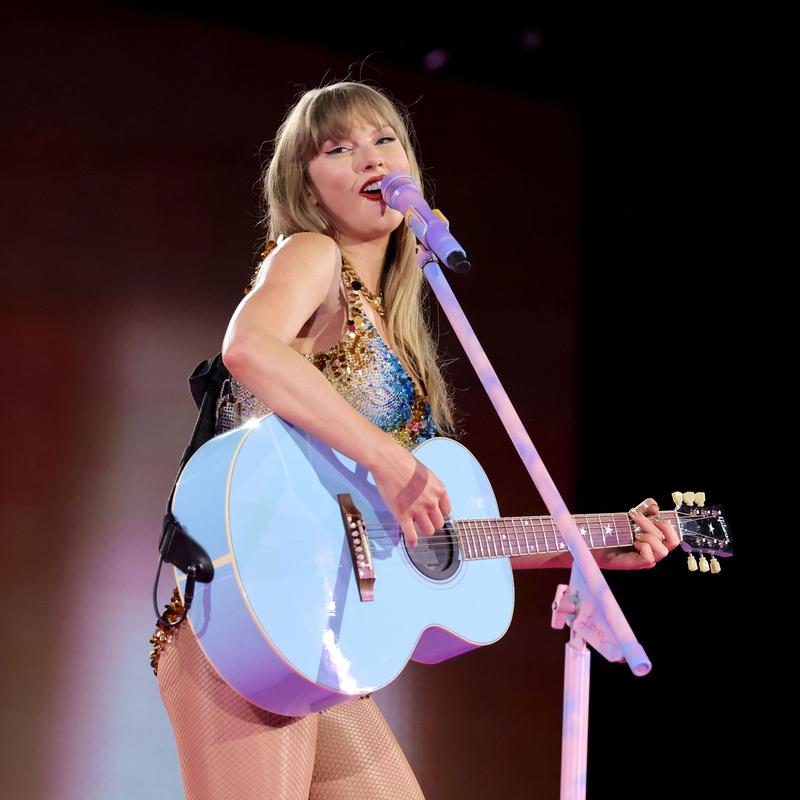
Amina Srna: Let's listen to some more music. Here is somebody who is probably unequivocally the biggest pop star of our time. Taylor Swift, of course, made the cut. One thing I noticed about her section of the list is that four out of five recommended songs, New York Times makes their pick and then gives you five songs, like essential listening songs. Four out of five of Taylor Swift's songs are from before 2010, which means that those are songs that she wrote as a teenager. Let's take a listen to our song, which was released back in 2006 on her self-titled 10 debut album.
[music]
And he says
Our song is a slammin' screen door
Sneakin' out late, tappin' on your window
When we're on the phone and you talk real slow
'Cause it's late and your mama don't know
Amina Srna: Our Song by Taylor Swift in her country pop music era. Her music has definitely changed a lot since that song came out. Also, the blurb from the article says she has never stopped chasing that initial Nashville impulse. What does that early song show us about her songwriting, and how has that carried through?
Lindsay Zoladz: I think the early songs, and that one in particular, really shows how precocious she was when she first came out. There was a lot of emphasis on her writing her own songs. I think she was 16 or 17 when the first album comes out. Something that we were looking for and that I think Taylor really embodies is a sense of longevity and sort of evolution over a full career.
She obviously makes herself known as a country artist first and then continues to evolve, but does so in a way that I think has always been focused on songwriting. I think she's a great ambassador for the power of songwriting to a younger generation. That's something that she, even in her more pop-oriented music, she always emphasizes that, always identifies herself as a songwriter first and foremost, and I think has helped sort of carry the value of songwriting into the 21st century.
Amina Srna: We're definitely not going to have time to get to everyone, but let me just shout out a few picks that are on the list for listeners who aren't familiar. There's Young Thug, Lucinda Williams, as we mentioned, Carole King, Outkast, that covers such a wide range of music, but it's all very distinctly American. What's the throughline, if there is one?
Lindsay Zoladz: That's also a great question. I don't know if there is one. I think if there is a throughline, like I said, I've been thinking about the idea of tradition, but innovating on the foundation of tradition. I think even the older artists on the list, obviously, Bob Dylan is going to be on this list. In his own time, he was wildly innovative and pushing boundaries that I think some of the younger artists on this list, while they have not had the longevity of his career yet, I think there's a throughline of just boundary pushing and creating, I guess, what becomes the new tradition through that push and pull.
Amina Srna: I'm going to have a listener give us the very last word in this segment or actually, I guess, last song to set it up. Henry in West Village. His pick matches The New York Times list. Henry, who's your pick?
Henry: It's Stevie Wonder, who I saw in concert many years ago and was just amazed by how one song after another was just incredible. I was also curious if albums played into the decision at all.
Amina Srna: Henry, thank you so much for your call. I don't think that they did, right, Lindsay?
Lindsay Zoladz: Yes, in some ways. Again, we were looking at the full span of a career. I think Stevie has certain throughlines with Taylor Swift. I was thinking, too, started as a teenager, maybe even younger than that for Stevie, and really continued to evolve over albums, but also just singles and eras, if you will. He had to be on there.
Amina Srna: Lindsay Zoladz, music critic at The New York Times. Thank you so much for your time.
Lindsay Zoladz: Thank you.
Copyright © 2026 New York Public Radio. All rights reserved. Visit our website terms of use at www.wnyc.org for further information.
New York Public Radio transcripts are created on a rush deadline, often by contractors. This text may not be in its final form and may be updated or revised in the future. Accuracy and availability may vary. The authoritative record of New York Public Radio’s programming is the audio record.
