
The "New Era" in the Politics of Birth Control
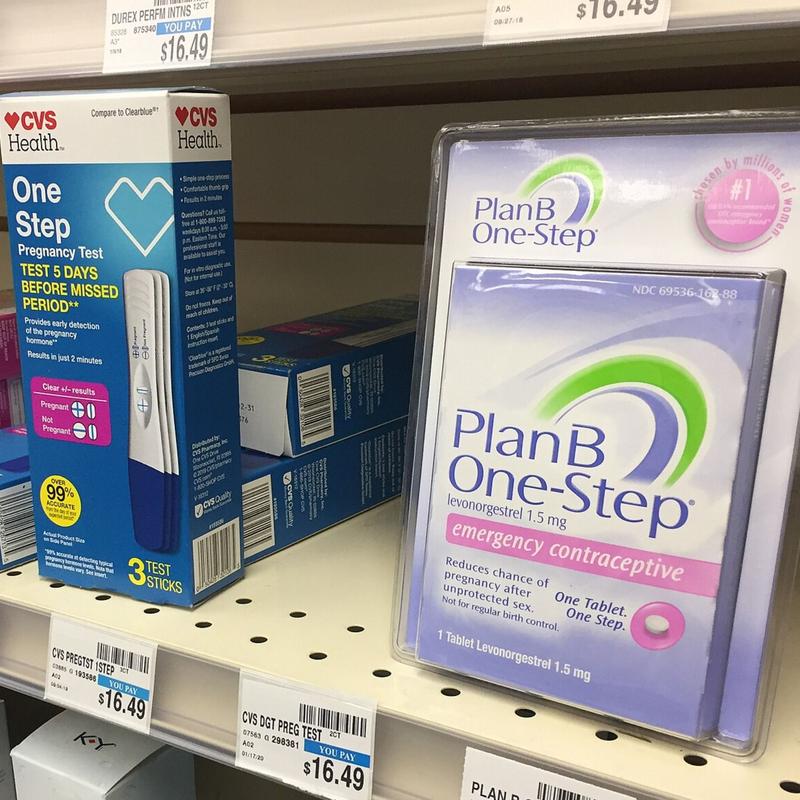
Amina Srna: It's the Brian Lehrer Show on WNYC. I'm producer Amina Srna filling in for Brian today. Good morning again, everyone. Earlier this month, the Department of Health and Human Services released new guidance that would overhaul the Title X family planning program. The 70-page document notably makes only passing mention of contraceptives like the birth control pill, stating that the pill is overprescribed, has negative side effects, and is part of a broader "over-reliance" on pharmaceutical and surgical treatments. Instead, the guidance calls for so-called natural family planning, like period tracking and other forms of fertility awareness.
Medical experts say those have far higher failure rates than hormonal birth control. This guidance goes out to clinics around the country that provide birth control and other sexual health services to millions of low-income people. That's according to Politico. The changes could take effect when those clinics reapply for funding in January 2027. While the American public is almost evenly split on its views on abortion, according to a Pew Research poll from March, nearly all American adults surveyed, that's 91% think using contraceptives to prevent pregnancy is morally permissible. That's their framing.
Birth control has historically held broad bipartisan support, but our next guest writes that the Trump administration is currently launching the most serious effort in decades to curb access to contraception. Mary Ziegler is a law professor at UC Davis and the author of several books including Roe: The History of A National Obsession and Personhood: The New Civil War Over Reproduction. Her latest op ed in the in Politico is titled Trump Is Going After Birth Control, Here's Why. Professor Ziegler, welcome back to WNYC.
Mary Ziegler: Thanks for having me.
Amina Srna: Let's begin with the new guidance from the Department of Health and Human Services. It would overhaul Title X family planning program. Did I get that characterization right of that 70-page report? It only mentions hormonal birth control, basically to condemn it.
Mary Ziegler: Yes, that's absolutely right. It's worth emphasizing how big of a change that is. Title X is a family planning program that was developed initially to provide access to contraceptives. This is a kind of complete rethinking of what federal involvement in birth control should look like.
Amina Srna: Talk to us a little bit about Title X. Congress passed it in 1970 to provide free or low-cost contraceptives to low-income patients. For listeners who aren't familiar, what does Title X do, and who do these new guidelines apply to?
Mary Ziegler: Title X is a program that was introduced, as you mentioned, in 1970 that provides either low-cost or no-cost contraceptives. It's a federal grant program. The federal government provides these grants to grantees who, in turn, provide birth control, STI testing, health screenings. Again, priority is given to people with fewer resources. If this guidance is implemented as we expect it will be, the impact will be felt the most by people with the least.
Amina Srna: We'll get into your op ed and how birth control has historically been really popular with American voters, but you write that the Trump administration now has it in its sights due mostly to Trump, "Sinking in the polls and his coalition fracturing, and because, "He may want to deliver for his core supporters." Take us one step further. Why is President Trump targeting birth control now?
Mary Ziegler: Well, one of the interesting things is that President Trump is not targeting abortion, right? You would think if Trump wanted to please his base and do something that wasn't divisive, abortion might be a more logical choice. The administration has been slow walking pretty much the main priorities of the anti-abortion movement since coming into office again, and that's sparked some real conflicts. We've started to see major anti-abortion groups threatening to withhold dollars in the midterm, threatening to withhold the support of their volunteer armies. It's becoming clear to the Trump administration that that social conservative base is restless.
On the other hand, it's pretty clear in polling that Republicans have been hurt when abortion is on the front burner as an issue. Interestingly, I think the Trump administration has assumed that an attack on birth control may be more energizing to that conservative coalition or at least as energizing as an attack on abortion. Even as we're seeing the Trump administration continuing to stall and delay on abortion, this is a very aggressive move we're seeing on contraception. That in itself is a pretty big change to our reproductive politics.
Amina Srna: Listeners, we want to hear from you. Do you work in reproductive health care, especially for reproductive contraceptive access for low-income Americans? Maybe you have some insights or some reporting on the ground that you want to share with us or anyone else. If you have questions or comments for our guest, UC Davis law Professor Mary Ziegler, on how the Trump administration may be trying to curb access to contraception, give us a call now at 212-433-WNYC. That's 212-433-9692. Professor Ziegler, you describe a new and maybe unlikely coalition forming against birth control. We have the pronatalists, MAHA influencers, and social conservatives, each coming at it from a very different direction.
Let's take those groups one at a time, starting with the pronatalists. They worry that contraceptive use partly explains the low birth rates in this country. You note that it does, including among teenagers, which a lot of reproductive healthcare specialists think is very beneficial. How central is the falling birth rate argument to what's happening with Title X, and is there any actual policy logic to it?
Mary Ziegler: Well, it seems pretty central, at least in the guidance we're seeing. We have yet to know exactly how that guidance will be implemented, but pretty clearly, the guidance is saying it's pro-conception, not pro-contraception. The framing entirely is pronatalist at its core. In terms of whether contraception is contributing to a lower birth rate, the answer must to some degree be no, because contraceptive options in the United States haven't substantially changed since the 2000s. There's no reason that contraception in and of itself would be driving a lower birth rate. It's also an interesting question what a higher birth rate would mean because birth rates have declined in part among teenagers, for whom having children has a lot of lifelong negative consequences.
I think pronatalists are also arguing that a low birth rate is bad because they're unwilling to make up for lower birth rates with immigration. That would be one of the ways you might deal with the impact of an aging population and the potential economic concerns that might raise. Of course, the coalition of pronatalists with which the Trump administration is working is also opposed to even legal immigration and therefore wants to see a certain group of Americans, or at least Americans, full stop, having more babies. I don't think contraceptive access is what's explaining that decline.
Amina Srna: I'm going to ask you about MAHA influencers and then the social conservatives, but first, in your answer just now, you said that contraceptive options haven't changed since the year 2000. I think you wrote about that in your op ed. Can you just explain what you meant by that?
Mary Ziegler: Yes. We haven't seen a lot of research and development on contraceptive options for American consumers since the spread of emergency contraceptives in the 2000s. This hasn't been a major area of pharmaceutical development. There are a number of reasons for that. Some of it just has to do with the fact that there are already good options for some patients on the market. A lot of it also has to do with drug companies being afraid of both lawsuits and political blowback from social conservatives. Part of, I think what's made it possible for MAHA influencers to reach a large group of audiences, a large audience, rather, other than just the spread of MAHA thinking generally, is that some people wish there were different contraceptive options, and there are not, in part because in a much more subterranean way, contraception has been politicized, even if it hasn't been attacked directly in the way we're seeing now.
Amina Srna: Hasn't really progressed. When writing about the MAHA influencers, that some women genuinely might be receptive to that message because they do experience the very real side effects from hormonal birth control, as you're talking about, none of that has really been addressed in the last 26 years on how to lessen those side effects with maybe newer forms of birth control. How is RFK Jr.'s movement making inroads with people who maybe don't even consider themselves anti abortion?
Mary Ziegler: I think that RFK's movement is able to appeal to people who have legitimate doubts about the pharmaceutical industry. It's not an accident that the MAHA movement took off at around the same time we were seeing really devastating revelations about the opioid epidemic and the role of the pharmaceutical industry in that epidemic. The MAHA movement was able to draw on a kind of broader distrust of Big Pharma and then build on to that the fact that there were women who were unhappy with the side effects they were experiencing with the contraception they were already using.
You had that kind of generalized concern about some companies sometimes putting profit ahead of patients, combined with people's real experience of options they weren't happy with. There are lots of people who, of course, are very happy with their birth control options, but it isn't everyone. Which means those MAHA influencers had a potential audience outside of their kind of core group of supporters, at least potentially.
Amina Srna: Then, finally, the social conservatives, which you have started talking about, you write that they see contraception as part of a threat to marriage and the traditional family. What's going on there?
Mary Ziegler: Well, you have different reasons that social conservatives object to birth control. You have a cohort who believe essentially that the pill, IUDs, emergency contraceptives are in fact, abortion drugs, that they work the same way. You then have another group that argue that contraception underwrote the sexual revolution, and the sexual revolution, in turn, destroyed the traditional heterosexual family. One of the things we've seen in the second Trump administration is a growing openness among some social conservatives in arguing that women shouldn't be prioritizing career or education, or should be having children earlier, should be prioritizing their husbands.
These arguments are much more, I think, out in the open and transparent than they would have been even five years ago. As part of that, organizations like the Heritage Foundation have argued that birth control is part of the problem and that limiting access to it or regulating it in new ways would be good for the American family, and particularly for making the American family look more like it's imagined to look in the 1950s than it does today.
Amina Srna: Let's go to a call. Here is Sarah in Brooklyn. Hi, Sarah, you're on WNYC.
Sarah: Hi. I just wanted to make the point that I recently had a baby. I was insured, but there were complications with the birth. It would have cost me $800,000 to give birth and save my baby's life if I was not covered. This trifecta of trying to ban contraception and abortion healthcare subsidies all at the same time is really just cool on its face and will strain the entire system and result in more dead mothers and dead babies, frankly.
Amina Srna: Sarah, thank you so much for sharing your story, and I hope you and your baby are doing well. Professor Ziegler, Sarah's talking about this sort of trifecta, as she called it, on banning abortion and health subsidies, and then now this. Do you want to put it into the broader context for us?
Mary Ziegler: I think one of the striking things is that abortion rates have started to either tick up again or hold steady. If you look at the history of the United States, when Roe was on the books, there was a pretty significant decline into the 2020s. When it went up again, it was usually because there weren't adequate contraceptive options available. For example, in the last Trump administration, Trump took some pretty big cuts at Title X, particularly going after providers who also offered abortion services. That led to fewer people having access to birth control, and that seems to have contributed to higher abortion rates.
I think that's one of the reasons historically we saw Republicans stay away from birth control, because it made logical sense if you said abortion was this kind of civil rights issue of our time. If you buy that as a premise, you would want to do everything in your power to make it possible for people not to be pregnant when they weren't ready to be. It seems likely that if we do see these cuts to Title X, we're going to continue to see abortions go up. That may not be a problem for people who don't see abortion as morally problematic, but it arguably should be a problem for the people who are supporting these proposals for the Trump administration.
Amina Srna: Listener texts, "Contraception has been under attack for years. In certain states, pharmacists could decide whether or not to fill birth control pill prescriptions, depending on the pharmacist's religious beliefs." I'm going to ask you about a Supreme Court ruling from this week in just a second, but just to respond to that texter, how has this been kind of an ongoing legal battle?
Mary Ziegler: Yes, there definitely have been conservative attacks on contraception, really starting in the 1980s, so even earlier than some of those conscientious refusal laws the exter was referring to. I think there was always in the past a kind of need for political cover. Republicans would say, "Well, what we're really unhappy about here is parental rights. It's not really birth control." Or, "What we're really unhappy about here is that money is going to abortion providers and that they're going to use it for abortion in a backdoor way, even though they're saying they're going to do it for contraception."
Or they would argue that they were really focused on the conscience-based rights of pharmacists, doctors, and others. This is a little different in the sense that the Trump administration is just saying contraception is bad, it's unnatural, it's ineffective, it's unsafe, it's a sign that we're over-medicalized. We should be focusing on having more babies. This is a much more radical change than we've seen before. The texter is absolutely right that there has been a desire to do this for a long time in certain quarters, and more incremental steps. This just seems like a much bigger swing.
Amina Srna: Listener texts, "Question for the professor. Do we have a national push to promote condom use? Would that help to ease concerns with pharmaceutical contraception?" Your article, I don't believe, addresses condom use, but can you talk to us about what the new guidance says about family planning and fertility awareness?
Mary Ziegler: Yes. The guidance tends to assume that contraception is the responsibility of women and people who can get pregnant. There are obvious advantages to condoms, among them that they prevent sexually transmitted infections in ways that some other contraceptives do not. I think there was always a concern both that you needed to have a female-controlled contraceptive.
The Trump guidance doesn't really move away from that entirely. There's still an assumption that contraception is the responsibility of women, rightly or wrongly. The push instead is for natural family planning. This goes back to the rhythm method, which was developed in the early 20th century by several physicians and relies on the idea that it's unusual to get pregnant during a certain window of someone's menstrual cycle.
Amina Srna: Ovulation.
Mary Ziegler: It's usually considered much less effective than other birth control options are. There's a lot of user compliance required, and it doesn't work as well for people who have irregular cycles. What we're seeing, I think, in effect, is a willingness to promote less effective methods because those methods are politically more acceptable to the people for whom the guidance was really targeted.
Amina Srna: We have several texters saying pretty similar things on what they believe is the political agenda of the Trump administration. I'm going to read you one that I think is pretty representative of how a lot of people are feeling. When MAGA right says that limiting birth control access is good for the traditional American family, they mean good for wealthier white families who can access birth control regardless of laws. It's the poor people, the people of color, and with less privilege who would have more trouble accessing birth control. This is all part of Trump's racist agenda and not at all religious or, moral-based. Professor Ziegler, I know you study the law, but in terms of reproductive healthcare access, a lot of listeners are saying this is not really going to affect people with means.
Mary Ziegler: I think that's right. It's a little ironic, too, in the sense that to the extent the Trump administration would like certain people to have more children, this is not going to have that outcome. Title X is primarily going to shape options for people with the fewest resources, and that's more likely to be people of color. To the extent this is going to lead people to have more children, it's going to be primarily lower-income people and people of color.
I don't know if that's really what the Trump administration is pursuing. Again, I think that there's this general view among this coalition that it's good to have more babies, it's good to be a traditional married family, but it's hard to see how the steps the Trump administration is taking here would actually achieve any of that. I think the texters are right to think that there is a kind of, if not racial logic, certainly an interest in national origin behind this. We can't have people immigrate to the country to take jobs that we need people to do. We need to produce Americans to do it. Again, I think if what you're targeting is a program that helps Americans with the least, you're going to achieve a result I think very different than what the Trump administration was setting out to do.
Amina Srna: Before you go, Professor Ziegler, I want to ask you a Supreme Court case question. The Supreme Court sided with a faith-based so-called crisis pregnancy center in New Jersey called First Choice on Wednesday. These crisis pregnancy centers provide prenatal care, and they typically steer women away from having abortions. Several Democrat led states in the past couple of years, including New Jersey in this specific case, have investigated whether centers like First Choice mislead women, including by implying that they offer abortions when they actually don't.
This case centers on New Jersey's then Democratic Attorney General Matthew Plotkin. He sent a subpoena to First Choice asking for donor lists and other information. First Choice pushed back, and then it went to the Supreme Court. A lot of legal analysts are calling this a win for crisis pregnancy centers. Can you pick it up from there? What is this case about, and what does this ruling mean?
Mary Ziegler: Well, so crisis pregnancy centers have been subject to investigation off and on for decades now, in part for allegedly portraying themselves as abortion clinics and more recently for arguing that medication abortion can be reversed. Essentially, if you have a medication abortion now, you are often taking two pills, mifepristone and misoprostol. Crisis pregnancy centers will often argue that if you take a very high dose of progesterone after taking that first pill, you can reverse an abortion.
There haven't really been any credible controlled studies to demonstrate that that's true. Any study that is in the research, as the British Medical Journal found, has found progesterone not to be effective, and there are real questions about patient safety as well. On the other hand, the concern the court had in this case, First Choice, was about the fact that crisis pregnancy centers are also kind of political advocacy groups. Attorney General Plotkin had asked for a list of all of the group's donors.
The Supreme Court has been very concerned about that kind of request in the past, whether it's been sent to the NAACP or a group like First Choice. This decision was actually unanimous. All the liberal and all the conservative Supreme Court justices said First Choice has a right to go to federal court, and they have a right to raise this freedom of association claim. The tricky thing, of course, is that there are real consumer protection concerns at issue in these cases too. While we're not going to see that in this round of this case, we are seeing other cases, including one involving New York Attorney General Letitia James, that moved through the courts, that are asking, how we balance protecting the speech of everyone against the need to protect consumers from even sometimes potentially dangerous advice.
Amina Srna: Mary Ziegler is law professor at UC Davis. Her latest op ed in Politico is titled Trump Is Going After Birth Control. Here's Why. Thanks so much for coming on today, Professor Ziegler.
Mary Ziegler: I'm happy to come anytime. Thanks.
