
The Military's Influence on What We Wear
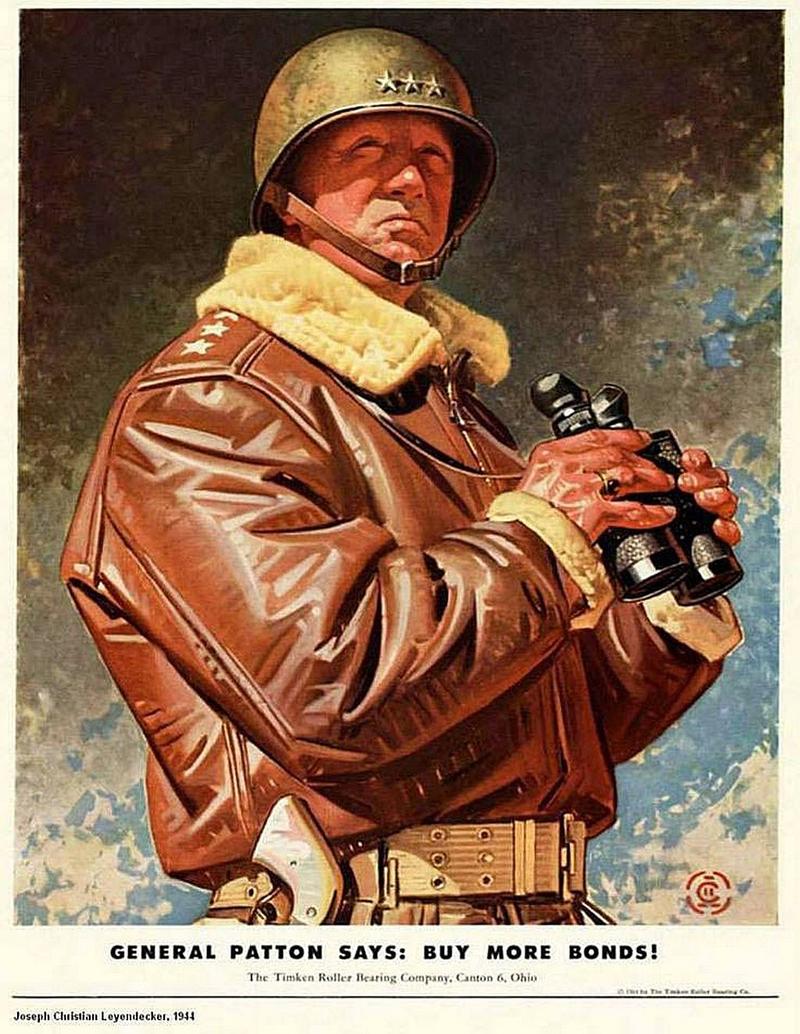
( Joseph Christian Leyendecker / Wikimedia Commons )
Title: The Military's Influence on What We Wear
[MUSIC]
Brian Lehrer: Brian Lehrer on WNYC. Here's something you may or may not have thought about: the American military and its profound impact on, of all things, modern fashion. Our clothing and our accessories. Think about staples like bomber jackets and aviator sunglasses (hello, Joe Biden). Cargo pants. Not your style? What about a plain cotton T-shirt? Well, apparently, soldiers coming back from World War I made it popular to wear them as regular shirts. Before that, they were considered underwear. Or another World War I staple, the wristwatch.
In a new installment of her popular podcast, Articles of Interest, our next guest argues almost all classic menswear is based on 20th-century militaria. That enduring appeal — we'll see it goes all the way back to the founding of the country — says something deeper about the American psyche and how Americans think about ourselves.
Joining us now about the new season on the link between the US Military and the clothes we all wear is none other than Avery Trufelman, host of the podcast Articles of Interest. Hey, Avery, welcome back to WNYC.
Avery: Hi, Brian. It's good to be here.
Brian Lehrer: Before we get into how the military has influenced fashion trends today, you start with the history of the military itself and its relationship to clothing. You say Americans were always dressing to look more rugged than they were. How far back do you want to go?
Avery: Oh, yes. Well, it's funny because I feel like there's this thing. People get roasted for dressing more rugged than they are, right? For wearing these really hardcore raincoats to go walk the dog. I just think this is as American as apple pie. I think that Americans have been dressing like Daniel Boone to go do mundane things since the founding of this country. It's just a part of who we are. It ties back to American military dress since before the United States had a military. This is the funny thing about American dress. Our country is so relatively young, it's easy to trace it back.
Very long, very interesting, story short, the fascinating thing about the United States is initially, many of our founding fathers, Thomas Jefferson included, they were like, "Oh, this country, maybe we shouldn't have a military." Maybe a military is a bad idea because they were looking back to the early democracies of antiquity, and oftentimes a standing military-- military coups happen all the time. They thought maybe we shouldn't have a military, and so we shouldn't have a military uniform. Maybe we should all just wear something called the hunting shirt.
The hunting shirt was this fringy-- it's very Daniel Boone looking. It has this fringy outdoorsman looking thing to it, and this is what our militias were supposed to wear. You were supposed to be able to slide it on over your normal clothes and grab your gun and defend your friends and fellow countrymen. This was supposed to be the everyman shirt that we were all supposed to wear because we were supposed to be this nation without a military. That very quickly didn't work out because we got our butts kicked immediately, and very quickly realized we did need a military, and then we did need a military costume.
It's very interesting. The idea of our clothing and who we are as a nation, and our military, have always been very, very interwoven. Right away, we were like, "Oh, we're going to be these scrappy outdoorsmen fighters, not this regimented military," even though that didn't work out.
Brian Lehrer: For your first episode in this season of Articles of Interest, you head to the headquarters of the clothing brand Buck Mason to meet with their chief designer, Kyle Fitzgibbons. He shows you their archival collection that he and his design team use as references. Here's a 20-second clip from the podcast.
Kyle Fitzgibbons: If you pick things off of this wall, there's almost every archetype for every modern piece of clothing.
Avery: Like, what are we seeing?
Kyle Fitzgibbons: I see flight jackets, bomber jackets, 1950s and '60s automotive car culture jackets. Every version of a field jacket, chore jackets, it's all there.
Brian Lehrer: I guess my question, Avery, is do people even realize all the time that they're dressing in military gear or clothing as fashion? You go back to the 1960s, anti-Vietnam War protesters loved to shop at Army-Navy stores.
Avery: Yes. It's interesting, because I think it went in these waves. Well, the fascinating thing is after World War II, that was the giant surplus boom because everybody thought the Manhattan Project was obviously a secret. No one knew the atomic bomb was coming. Everybody thought World War II was going to go on for years and years and years and years. The United States military made so much clothing, and that accounted for why there was so much military surplus. For decades, people just wore these clothes as basics. They almost forgot that they were military clothes.
I think for a long time, people just forgot that the pea coat was a military coat. As you said, the T-shirt was underwear. Everybody forgot for decades until, as you said, the anti-war movement. Then suddenly, there was this giant recollection that, oh yes, these were military clothes, and let's reclaim them as military clothes. Now it's this interesting twilight period. You can go to almost any major retailer, Buck Mason included, and they'll have-- They're still called field jackets, cargo shorts. They look almost exactly like things you would have been able to buy in a surplus store.
I just don't know if it's registering to people that these are former military surplus clothes, in many cases almost copied, at least in the case of Buck Mason, stitch for stitch. I think the big difference is that the military surplus store doesn't exist anymore, and the only place you can buy these clothes is in high-fashion stores.
Brian Lehrer: Avery Trufelman is my guest, if you're just joining us. Host of the podcast Articles of Interest. Her new season relates how much of modern fashion somehow is related to military wear. We're going to play another clip here. It again goes back to the founding era. You spoke to Joshua Kerner, who's actually an attorney, but you say he moonlights as a deep archival research obsessive. You talk about one of the earliest battles in the Revolutionary War that happened really close by, the Battle of Brooklyn, that was fought near the western edge of Long Island in what is now Brooklyn.
Let's listen to about a minute from the podcast. This clip starts with the voice of army veteran and author Phil Klay and ends with the voice of that Joshua Kerner.
Phil Klay: The Hessian mercenaries were professionals at war, and the Americans weren't.
Avery: The British had hired German mercenary soldiers, the Hessians, who were ruthless killers for hire.
Phil Klay: At the Battle of Brooklyn, Hessian mercenaries whooped the citizen soldiers pretty badly.
Avery: There's this big reconsideration. Maybe we couldn't just rely on militias. Maybe we did need to have an actual regular professional standing army dressed in something a little bit better than linen smocks.
Joshua Kerner: Maybe they should be actual uniforms made of actual sturdy wool.
Avery: They opted to put soldiers in a British-style uniform. What else did they know?
Joshua Kerner: Our colonial button-down regimental coats looked basically identical to the red coats, but ours were blue.
Phil Klay: We think of army green now, but it used to be army blue was the color of the military.
Brian Lehrer: There's an interesting fact that most people probably don't know. I didn't know it. We do think of green as the essential military clothing color, but it used to be blue?
Avery: Yes, it used to be blue. You think about the Civil War, the Union was blue. It was blue for a very long time. The interesting thing is, I spent an ungodly amount of time in episode one going over how it changed. It changed in a war that's not often talked about, which is the Spanish-American War, which is the first war that the United States fights abroad. This is when we shed our signature blue, and it's functionally because it's our first colonial endeavor. We copy the British. We copy the British khaki that they wore essentially during their colonial campaigns in India during the Raj, and we never let it go.
It's very interesting. We have a long history of copying other countries as we're searching for our identity, and we do it through our military uniforms.
Brian Lehrer: Spanish-American War during Theodore Roosevelt's presidency. Here's an interesting question from a listener. Tell me if you think this is accurate or if you came upon this in your research. It says, "Military fashion fact. Women's nylon stockings were invented to replace wool stockings because the military needed all the wool for soldiers' uniforms." Do you know that to be true?
Avery: Yes, yes, I've come across this fact a lot. There's this whole idea that the United States-- I mean, just the idea that every single facet of every single industry contributed to the war effort in a way that we can't fathom now is another thing that just contributed to almost every single aspect of clothing. That's the other thing. I feel like I've been researching clothing history for years now, and almost every single thing that I've ever touched on really goes back to usually World War II, and sometimes World War I, and it's always stories like this. It's always like something had to be sacrificed [chuckles] for the war effort in this way that we can't fathom now.
Yes, I've absolutely come across that fact. You also come across this other fact that oftentimes, to preserve silk, wedding dresses used to be made out of repurposed old parachutes. All these interesting fun facts of ways people used to scrimp and save and preserve in the name of the war effort. Some are quite apocryphal, and some aren't. I honestly focus less on the home front and more on the soldier's perspective on this series, so I'm less in a place to speak to that, but it's really true. This is a huge part of the ways that warfare has affected all of our lives and what we wear to this day.
Brian Lehrer: Here is a comment on our 1960s reference from before. A listener writes, "About military surplus clothes, during the anti-Vietnam War era, we consciously chose to wear military-style clothes as everyday wear to make a statement. It was definitely not forgetting that this was military gear." I think that's the point you were making before, right, when I asked the question-
Avery: Yes.
Brian Lehrer: -that some of that was very conscious to appropriate military gear into civilian life.
Avery: Absolutely. I was saying that there was a generation that was kind of before that era that was just wearing it as basics until the '60s came along and really remembered that these were military, and were actively emphasizing that these were military clothes. Then the funny thing that came after it was the yuppification of military surplus. The '60s made this rebellious look of military surplus so widely accepted that suddenly, you watch Annie Hall, and Woody Allen is waiting to go to the movies in his field jacket. In Kramer vs. Kramer, Dustin Hoffman, I forget he's a lawyer living in Manhattan, wearing his field jacket.
A lot of this actually has to do with the brand Banana Republic, which began its life as a surplus store. It began selling surplus clothes and zhuzhing them up, making them a little bit nicer, making them a little bit trendier. There were a lot of stores and boutiques that began their lives like this. It's just that Banana Republic was purchased by Don Fisher, owner of The Gap, but these things became very mainstream. I think that's part of what allowed clothes like the field jacket and these things that we consider basics now that so obviously represent military clothes to enter mainstream fashion now and trickle back down from that spirit of revolution that guided the '60s.
Brian Lehrer: Let's wrap up with this. Although the outdoor industry — hiking, camping, rock climbing, and all the gear that comes with it — is a global trend, you can make the argument that it's most visibly popular in the United States. Is this really an American thing, or is this a global thing?
Avery: Well, it's definitely a global thing now, but the American outdoor industry has a very specific look. Obviously, there's a huge outdoor industry with a rich history, especially in Alpine countries in Europe, but the United States has a rich outdoor history that's very much co-shaped by the military. That is a huge part of this history and this series. It's too big a history to go into now, but it's fascinating.
Brian Lehrer: People can listen to your podcast series and learn a lot more. That is Avery Trufelman, host of the podcast Articles of Interest. Her new season, called Gear, premieres tomorrow. Avery, thanks for coming up. By the way, is it true that your parents met a generation ago when they were both WNYC employees?
Avery: Yes, it's true. I think my mom let you take naps in her office, if I'm not mistaken.
Brian Lehrer: Maybe when I did those double shifts, the night show after the day show. Avery, thanks for coming on and paying [crosstalk].
Avery: Thanks so much for having me.
Brian Lehrer: Articles of Interest is the podcast. Brian Lehrer on WNYC. Amy Sedaris next. Stay with us.
Copyright © 2025 New York Public Radio. All rights reserved. Visit our website terms of use at www.wnyc.org for further information.
New York Public Radio transcripts are created on a rush deadline, often by contractors. This text may not be in its final form and may be updated or revised in the future. Accuracy and availability may vary. The authoritative record of New York Public Radio’s programming is the audio record.
