
The Latest on Iran Negotiations
Amina Srna: It's The Brian Lehrer Show on WNYC. I'm Amina Srna, a producer for The Brian Lehrer Show, filling in for Brian today. Coming up on today's show, we'll talk about a push by some lawmakers in Albany to force so-called "super speeders" to slow down. These are drivers who rack up dozens or even hundreds of speeding tickets. Governor Kathy Hochul is hoping to pass a bill that would make these people install a device in their cars that won't allow them to go much over the speed limit. This idea definitely has its critics, so it's not a sure thing. Streetsblog reporter J.K. Trotter will be my guest later this hour on this.
Plus, a new document from the Department of Health and Human Services de-emphasizes hormonal birth control in favor of natural family planning and period tracking as ways to prevent pregnancy. My guest, law professor and legal historian, Mary Ziegler, says it appears to be an attempt by the Trump administration to curb access to birth control, a once politically poisonous strategy. We'll wrap today's show with a pop music critic from The New York Times, Lindsay Zoladz. She was one of the contributors to the newspaper's really fun list of the 30 greatest living American songwriters. We'll talk about who made it on and who she wished they could have included.
Oh, and we'll definitely get your calls about who you think should make that list as well, but first, today marks 60 days since the Trump administration first notified Congress that it was carrying out strikes on Iran. Under the War Powers Act of 1973, that means today is the deadline for President Donald Trump to either end the war in Iran or seek congressional authorization to extend it. Yesterday, during a hearing in front of the Senate Armed Services Committee, Defense Secretary Pete Hegseth rejected that deadline. Take a listen.
Defense Secretary Pete Hegseth: We are in a ceasefire right now, which our understanding, means the 60-day clock pauses or stops in a ceasefire.
Amina Srna: He was referring there to the ceasefire agreement reached with Iran more than three weeks ago. Whether the administration's argument holds water probably makes little difference, according to The Guardian. This is the sixth time that Democrats have attempted to put war powers resolutions to vote without any success. The only path forward would be to continue negotiations with Iran to end the war and the blockade on the Strait of Hormuz. There's only one problem, though. Here's President Donald Trump speaking to reporters yesterday.
President Donald Trump: They want to make a deal badly. We have a problem because nobody knows for sure who the leaders are. It's a little bit of a problem. The leaders have been wiped out along with their military.
Amina Srna: The president has repeatedly said that the Islamic Republic has been toppled since the US killed its former Supreme Leader, Ayatollah Ali Khamenei, in late February. Since then, his son, Mojtaba, was appointed as new Supreme Leader. As our first guest reports, the power is now in the hands of an entrenched, hard-line Revolutionary Guard. Joining us now to report on the latest in the negotiations around the war in Iran and who's actually conducting them, at least on the Iranian side, is Farnaz Fassihi, United Nations Bureau Chief for The New York Times. She's an Iranian American journalist who has covered Iran for the last three decades. Farnaz, welcome back to WNYC.
Farnaz Fassihi: Thank you for having me, Amina.
Amina Srna: You described the new supreme leader of Iran, Mojtaba Khamenei, as an elusive figure who has not been seen yet and whose voice has not been heard since he was appointed in March. Can you walk us through what Iran's power structure looks like right now?
Farnaz Fassihi: Iran's power structure right now looks to be dominated by the generals of the Revolutionary Guards, because in this new post-war era, with the young Mr. Khamenei succeeding his father, all the key decisions are being made by the Revolutionary Guards generals together with the National Security Council of Iran, which now is headed by a former Revolutionary Guards General. Mojtaba Khamenei, as you just said, has not been seen or hasn't been heard to the extent that Iranians hear from him. It's written statements that are read by state media. My reporting showed that he was gravely injured in the airstrikes that killed his father.
He has lost a leg, he's waiting for a prosthetic leg, his face and lips are badly burned. Sources said that he's still mentally engaged and sharp. Also, because of extreme security, he can't really make decisions in real time. Messages are passed through couriers in the shape of handwritten letters. He's delegated a lot of the authority to the Revolutionary Guards, which he's always had a very close link to.
Amina Srna: You write that the messages to the new supreme leader, as you were saying, were handwritten. I just want to paint this picture as you have it in your reporting. They're sealed envelopes that are relayed via human chain from one trusted courier to the next, traveling on highways and back roads in cars and motorcycles until they reach his hideout. It's just such an extraordinary image of how Iran's government is functioning here in May 1st of 2026. Can you explain the security situation around him and how much real-time control he actually has over the decisions being made in his name?
Farnaz Fassihi: Top Iranian officials have been targets of assassinations by the Israeli and American airstrikes. On the first day of the attack, the war started with airstrikes on the late Ayatollah Khamenei's compound, which also killed him, some of his family members, and also many members of Iran's defense council and military command chain. Throughout the five weeks that the war was going on, senior military commanders, the former head of the National Security Council, they were targeted in wherever they were hiding or their homes and killed.
Israel has said that if we find the new supreme leader, we will also kill him. There's a huge amount of concern and anxiety about an attack that would take out the news of Mojtaba, and that's why he's been in hiding. Top government officials, even the president, has very limited access to him, if any at all. There are no electronics around him, no phones, no cameras. In the absence of modern-day communication devices, the trusted way that they can communicate is through these handwritten notes, as you just read from my story, and human couriers that they trust.
Amina Srna: I said that we haven't heard Mojtaba's voice, but in a statement widely distributed in Iranian media yesterday, he said that the US has been defeated in its war against the Islamic Republic and that its only place in the Persian Gulf was "at the bottom of its waters." I don't know if you caught that message.
Amina Srna: Are you familiar with its-
Farnaz Fassihi: I did.
Amina Srna: -context? That's the first we've heard from him, right?
Farnaz Fassihi: No, we've heard several. He has issued several written statements that have been read by state media or posted online. We haven't heard his voice or seen his face. The message, I think it was the third or fourth that he has sent. The context of it was yesterday was Iran national day, commemorating the Persian Gulf, a holiday that's been around for about two decades. In such, Iran has blocked the Strait of Hormuz, and the American military is enforcing a sea blockade. This holiday took more prominence yesterday with the Supreme Leader issuing a defiant statement saying that "we're going to double down on what we control, the Strait of Hormuz. It will remain under Iran's control, " and that the US, as you just read, must leave the region or its places at the bottom of the sea. This fits with Iran's narrative of how the war went.
Iranian officials have all along declared victory even after the ceasefire because, to the Islamic Republic's regime, the mere fact that they survived a vicious war with two military superpowers, the United States and Israel, is in itself a victory. They're really trying to ride that wave to their constituents that "we have won." Now, the war has been extremely costly for Iran. There's been devastating damages to its infrastructure, to its factories, to its healthcare, residential home.
More than several thousand people were killed. The government, when talking about the war, they don't really talk about the losses or the economic fallout and mostly rely on this rhetoric of victory against the US.
Amina Srna: Listeners, we want to hear from you. If anyone has a question for our guest, New York Times reporter and longtime Iran correspondent, Farnaz Fassihi, call or text 212-433-WNYC. That's 212-433-9692. Anyone with ties to Iran? Either you're from there or have families still living there. What are you thinking about now that this war has been going on for a few months? 212-433-9692, call or text. Farnaz, on the latest in the negotiations, which has been probably pretty hard for most people to follow. You reported on Sunday, Iran proposed opening the key waterway to shipping traffic and lifting the US blockade while postponing the thornier nuclear issue until later.
This morning, Iran had sent its latest proposal to the United States to end the war via Pakistani mediators. That's according to the state news agency IRNA. Do we know what's in this morning's proposal and how it differs from Sunday's?
Farnaz Fassihi: We do not know yet. I'm in the process of making calls and reporting that because the news that they relate to the new proposal just came out this morning. During my conversations all week with sources, the priority now is for Iran to negotiate a way out of the sea blockade because it impacts its economy and access to goods that it needs. It knows that it has the leverage of the Strait of Hormuz. The issue of the nuclear deal, which is the reason why President Trump says that he went to war and has defined repeatedly the goal of the war is to not allow Iran to have nuclear weapons.
The two issues, just Iran's enrichment of uranium, what percentage Iran would be allowed under the New Deal, if any, to enrich, and also what will happen to the highly enriched stockpile of uranium that Iran has. The United States wants Iran to freeze and suspend its program and hand over the enriched stockpile. Iran says, "We agreed to a temporary suspension, and we want to dilute the stockpile here and keep it under suspension." These are the two main sticking points, and the two sides right now seem pretty far away from a concession.
Amina Srna: Can you explain Pakistan's role as mediators in these negotiations, and who are they actually communicating with on the Iranian side? Do we know?
Farnaz Fassihi: Pakistan's been leading this round of negotiation. Even pre the war, both before the 12-day war in June with Israel and before this war, Iran's foreign minister, Abbas Araqchi, was negotiating with US Special Envoy Steve Witkoff and with President Trump's son-in-law, Jared Kushner. There was a channel always through the Omanis and sometimes even direct text messages between Mr. Araghchi and Mr. Witkoff. After this war, when Pakistan became the mediator, General Mohammad Bagher Ghalibaf, who's a Revolutionary Guards commander, he's in the war room now.
He's also the speaker of the parliament in Iran, was appointed to lead the negotiation, sort of taking over for the foreign minister, and met with Vice President JD Vance in Pakistan, which was a remarkable meeting. It was the first meeting at that senior level of a US vice president with a senior Iranian official in 47 years.
Amina Srna: Your reporting gets to the real tension for the US-Iran nuclear talks, because while the president of Iran and the foreign minister have warned of the economic damage, I read somewhere it's amounting to estimated $300 billion, and they've urged reaching an agreement to lift the sanctions. The generals of the Islamic Revolutionary Guard Corps argued that the talks were pointless in light of the US naval blockade. Are the commanders the ones effectively setting the terms here, and what does that mean for whether a deal is even possible?
Farnaz Fassihi: The generals are very much in the decision-making seat and calling the shots. They pulled the plug on the second round of talks with Vice President Vance, even as we know he was about to take off and fly to Pakistan to meet the Iranians, insisting that "As long as the sea blockade continues, we don't want to directly negotiate." This is from this stand that they have this leverage of the Strait of Hormuz, and they're going to try to use that in a maximum way at the bargaining table. Of course, that has risks for Iran. In addition to the pains from the sea blockade, it also risks creating, maybe, a global coalition.
We now see the Europeans coordinating and saying, "This can't go on." The regional Arab countries are very angry at Iran. There's also a risk of Iran overplaying this card and actually creating, perhaps, a larger international coalition against itself to open the Strait.
Amina Srna: It's The Brian Lehrer Show on WNYC. I'm Amina Srna, filling in for Brian today. If you're just joining us, Farnaz Fassihi is with us. She's the United Nations Bureau Chief for The New York Times. She's an Iranian American journalist who has covered Iran for the last three decades. We can take a few of your calls. Iranian Americans, what story do you feel is not being told? What are you hearing from friends and family members on the ground? Maybe you want to weigh in on how you hope that this ends, or anyone else, with comments or questions.
We can take your calls now at 212-433-WNYC. That's 212-433-9692, call or text. Farnaz, this week, Defense Secretary Pete Hegseth faced questions under oath for the first time since the war started. We heard that clip in the intro where Hegseth was saying the administration doesn't need to seek congressional approval to continue the war in Iran because the ceasefire puts a pause on that 60-day deadline. What's the reality on the ground been? Has there been an actual ceasefire? I think in your reporting, you've referred to it as a "fragile ceasefire."
Farnaz Fassihi: The ceasefire is fragile, especially for the Iranians. We've talked a lot now about the Revolutionary Guards and Mojtaba Khamenei, but for average Iranians, life is extremely difficult now on the ground. They're living in this status of limbo of not knowing, "Is the ceasefire going to hold and be permanent? Is the war going to start?" Sometimes they hear air defense, like last night, there were air defense going off on Tehran skies because there were surveillance drones sighted. I was getting a lot of text messages from people inside Iran who were anxious, asking, "Is the war starting? We're hearing explosions." The state of the economy is absolutely dire.
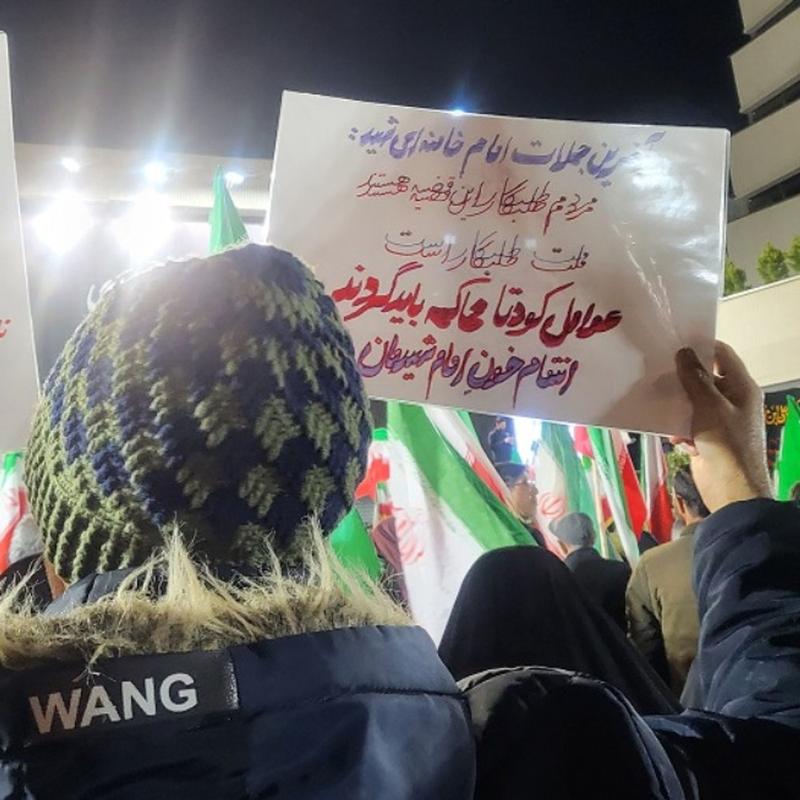
Inflation is through the roof. The government's also increasing its crackdowns on any kind of dissent. There are speeding executions of young people. Just yesterday, they executed a 21-year-old protester in Isfahan who was out protesting in January. They're arresting journalists and university students. Collectively, Iranians are extremely traumatized. They're traumatized by the uprising and massacre that happened in January, followed by this intense war and massive destruction. The population of Iranians that are against this regime that had a little bit of hope that perhaps this war is an opportunity that will topple this Islamic Republic, are feeling very hopeless.
One woman I spoke to in Iran described it as feeling like they're "buried alive," where they feel like, "This regime survived, oppression is still going on. Our economic situation is even worse than what it was before the war, and the future is looking very grim." For ordinary Iranians, it's a very, very difficult situation right now.
Amina Srna: To your point, a listener texts, "Iranian American with family back home still. The Islamic regime continues to execute citizens, including minors, for protesting." We're going to take a quick break when we come back more with Farnaz Fassihi, United Nations Bureau Chief for The New York Times. Stay with us.
[MUSIC - Marden Hill: Hijack]
Amina Srna: It's The Brian Lehrer Show. I'm Amina Srna, filling in for Brian today. We're speaking with Farnaz Fassihi, United Nations Bureau Chief for The New York Times, about the latest negotiations between the US and Iran. We're taking your comments or questions at 212-433-WNYC. That's 212-433-9692, call or text. Farnaz, during the hearings, several Senate Democrats raised doubts about the Pentagon's estimate that the war with Iran has cost the US about $25 billion. Democrats are saying that estimate seems well below what they think it might be.
While that remains a debate here in the United States, you talked to us briefly about the economic fallout in Iran. It has reported its own numbers on losses, and the question remains how much more of that cost it can endure. What are you hearing? What are the numbers?
Farnaz Fassihi: In Iran, the official government number is $300 billion in losses, and it might take about 10 years to rebuild. Some very key critical infrastructure was damaged during the war, mainly the petrochemical complex and the steel factories that produce, particularly the petrochemical one, the basic things that come down range in sort of the industrial chain. Iran is an industrial country. It manufactures and produces most of everything that its citizens need. Unlike many other countries in the region that are import-heavy, Iran actually has a pretty vibrant industrial culture, and that has been really damaged.
I was talking to a businessman who owns a dairy factory, for example, and he was saying that there's going to be a crisis in plastic containers that soon they're not going to be able to package bottled water or yogurt or anything that needs plastic because the petrochemical companies that produce that ingredient are shut down because of airstrikes and an attack on them. In addition to that, more than a hundred thousand homes, residential units have been destroyed, schools, hospitals, research centers that made vaccines and were critical to Iran's healthcare.
These are really big economic losses for a government that was already dealing with a terrible economic situation even before the war. Iran's been under really tough sanctions since 2018, when President Trump exited the nuclear deal and enforced sanctions. There's been a lot of corruption and mismanagement. The government just announced that inflation was something around 60% right now, and pretty much everybody I speak to in Iran talks about basic food prices doubling or tripling. About two million people have been laid off in the past two weeks since the ceasefire started, and have applied for unemployment. It's a very big economic crisis unfolding in Iran.
Amina Srna: We have a listener who says he's a retired admiral, and I think he wants to explain the terminology around ceasefire for us. Robert, in the Bronx, you're on WNYC. Hi, Robert.
Robert: Hi, good morning. How are you?
Amina Srna: Good morning.
Robert: I guess what I'd like to explain is when the US is talking about a ceasefire, it's a convenient way to explain an operational pause. In military terms, the operational pause is what gives you the time to restock, rearm, reconstitute your forces, so you can carry on with the mission at hand. I think the challenge is the US. There's only so many weapons you have, only so many bombs you have, only so many missiles, and you can't just restock those at sea. You have to put units in alongside. That takes time. That takes weeks and months just to restock and then to spool up the industrial complex to rebuild up those supplies.
That can take years. I guess what I'm trying to say is time is on Iran's side. It's not on the US's side, and there's only so long you can maintain those resources in theater before it becomes too challenging to do so without impacting broader issues across the rest of the world.
Amina Srna: Robert, thank you so much for your call. Farnaz, do you have a take on that? It sounds pretty ominous in the way that Robert is framing it.
Farnaz Fassihi: The Iranians government officials, actually, and commanders are very worried about that very point. They're suspicious that the temporary pause in fighting or the ceasefire, the US and Israel are regrouping and rearming just to strike again. We hear it all the time in public comments from them.
Amina Srna: Here's a caller with a question. Nader in Edgewater, New Jersey. Hi, you're on WNYC.
Nader: Thank you so much for taking my call. I'd like to ask your guest, what is the support of Reza Pahlavi in Iran? We don't know. We see many clips on social media, but we don't know the actual support for Reza Pahlavi.
Amina Srna: Nader, thank you so much for your call. Context for listeners that Reza Pahlavi is an Iranian political activist and the former crown prince of the Pahlavi dynasty in Iran. Farnaz, can you talk a little bit more about that story?
Farnaz Fassihi: Thank you for that question, Nader. Reza Pahlavi has some supporters in Iran. We've seen crowds chanting, "Long live the Shah," and there is a sense of nostalgia about the better days that Iranians think that they had economically, more prosperous and more social freedoms before the revolution. Some people in Iran say that they want the Iranian opposition to find a figurehead that can unite people, but he's also considered a divisive figure by his critics, who say that he actually hasn't been able to form a coalition with other opposition. He has supporters, he has opponents. Many, many Iranians that I speak to, student activists, human rights activists, democratic activists, say that their hope for Iran after 47 years of theocracy is to emerge as a secular democracy.
That if an opportunity arises, if this regime is toppled, that there should be some sort of a referendum or some sort of a democratic process where Iranians living inside Iran could choose what kind of government they want and who they want to lead them.
Amina Srna: Here's a text. A listener writes, "Did we forget the previous Ayatollah had delivered a fatwa against Iran developing a nuclear weapon? How can anyone take the US seriously if we're murdering their leaders instead of negotiating? How can the US negotiate without legit diplomats involved? It's crazy." Farnaz, I was not familiar with the fatwa on developing a nuclear weapon. Do you want to explain what that is for our listeners and what you know about that story?
Farnaz Fassihi: A fatwa is a religious edict in Shia Islam that has a finality order from the faqih or the senior Shia cleric known as a marja, who is in a position of scholarly and religious authority to signal to his followers. Iran has two famous fatwas. The founder of the revolution had a fatwa against killing the British Indian writer Salman Rushdie. We know about that because of a book that he had written that they deemed insulting to Islam. Many, many years later, there was an attack on Mr. Rushdie here in New York when he was giving a speech, and that fatwa was cited.
Later, Ayatollah Khamenei issued a fatwa against building nuclear weapons and said that the Islamic Republic would never pursue a nuclear program, and Iran has always maintained that its nuclear program is for peaceful purposes. Now, the US, Europeans said that they had intelligence, that they were suspicious of Iran's underground activity. I have to also point out that the UN's atomic agency and also US intelligence reports had said before the June war that Iran did not have a military program, that if it wanted to, it had the capacity to militarize its program, it had the capacity to build a nuclear bomb, but it had not, according to the UN atomic inspectors and according to US intelligence reports before the June war, that Iran had not gone that route.
Amina Srna: Farnaz, in our last few minutes, I want to get to your most recent reporting from today, and I think a caller will take us there. Here is Bezad in Nassau County on Long Island. Hi, Bezad. Thank you so much for your call.
Bezad: Good. Thank you for taking my call. I don't understand why you're afraid from saying that it is. It's the Israeli war against Iran. The regime in Iran is horrible. No question about it, but this regime has been in force 47 years. For many, many years, Israeli tried to destroy whatever it is, and six presidents basically ignored that. This year we have the president, they'll go along with Netanyahu, and he goes along with destroying the hospital, the schools, infrastructure of the country for what reason? The economy is terrible. It's a sanction for 47 years. This is not the answer for all the problems. It's just a war. He's saying that they execute the people. True, it's horrible.
You think there's people going to the street, pick up the first person, hang him from that. I'm sure there is some reason. They're not sadistic people. They're horrible in many, many form. In the meantime, I think it's just saying that they're nostalgic during the Iran Shah's regime. Is that true? I grew up in Iran. They had very nice, beautiful places for elected people, but going a little bit south of Tehran, it was horrible. It was like nothing. No school, no nothing.
Now they're saying Reza Pahlavi is going to come, and everything's going to go back as it is for a group of people. You have to be honest with ourselves. Otherwise, you guys are just repeating the same thing over and over again. They have their democracy in Libya, they have democracy in Iraq, democracy in Syria. We did all these things. Nothing happened. It's the same thing.
Amina Srna: Let me get a response from our guest, Farnaz Fassihi. Farnaz, what are you hearing in Bezad's call there? This morning, you published a new article on what daily life is like for Iranian citizens. Is that reflective of some of the conversations that you've been hearing?
Farnaz Fassihi: I think some of it is. I think that Bezad is right in that things have been really difficult for Iranians in the country for the past several decades. They've suffered from many different things, as he pointed out, from sanctions, from covert operations and assassinations, and now in all that war. They've also suffered from the policies and oppression that is enforced by the government. As you pointed out, I wrote a story today about how café culture is booming in Iran, and in the ceasefire, many Iranians are flocking to cafés, because they're looking for a place where they can socialize and where it's economically affordable.
Many people can't afford to go to restaurants. There are no bars in Iran, and hosting at home has become very difficult because we come from a culture of maximum hospitality, and the prices are very expensive. People get together at cafés over a cup of coffee over tea and talk about the war, talk about their struggles, and try to cope and basically make it through collectively.
Amina Srna: We discussed how the Islamic Republic is handling protestors. A listener asks, "What is the condition of Narges Mohammadi and the other human rights prisoners in Iran?" Do we have an update?
Farnaz Fassihi: Narges Mohammadi is Iran's top and most prominent human rights activist, women's rights activist. She's the Nobel Peace Prize laureate. She was awarded the Nobel Peace Prize a few years ago because of her dedication to the cause of human rights and women's rights in Iran. She's currently in jail. She suffered from a heart attack, was violently beaten in prison, and has been denied healthcare. The prison authorities have denied her request to take her to a hospital. She has a heart condition, and I've spoken to her husband, who's in Paris with her children, and I've been in regular contact, and they're extremely worried about Narges' health and Narges' situation.
When we were earlier speaking about leaders, Narges is somebody that many Iranians look up to in Iran as the kind of leader that they wish to have if Iran were free.
Amina Srna: A listener texts, "The Islamic regime has cut off the internet for over 60 days. This is a humanitarian crisis. Why hasn't the international community done anything about this?" I know Farnaz, you have reported on that this morning. What's going on with the internet in Iran and how much information about the war is being shared, or do we know if the international community has done anything about it to the listener's question?
Farnaz Fassihi: The Iranian regime has gotten into the habit of disrupting and cutting the internet whenever there was big protests or uprisings to try to control the narrative going out of Iran or the information going out of Iran, and to also disrupt Iranians from communicating with one another and organizing protests. We saw them do this in January during the uprising as well. They unplugged the internet when the war started on February 28, and it has remained that way. People are still able to connect. There are people who have access to internet. Some journalists, some analysts were able to buy expensive packages or are allowed to have internet. Not many people, but some people have Starlink, those who can afford it.
That's how we're able to communicate with them, or people buy expensive VPNs and try to come back online to send messages. I'm Iranian American. I have family in Iran, and for the duration of the war, it was impossible to contact them. This disconnect has really taken an emotional toll on Iranians inside Iran and outside Iran. It feels some sort of like a collective punishment. Your country's already going through this upheaval and war, and all this drama, and people can't just simply pick up the phone and call.
One day, I woke up and saw that my aunt's neighborhood had been attacked. I had no way of calling to see if she was all right or not because, in addition to disconnecting internet and WhatsApp, the government also locked all incoming international calls and all outgoing international calls. People really could not communicate with one another. The phone connection is a little bit better now. People can buy a phone card and call out, but internet still remains disrupted.
Amina Srna: That's all the time we have for today. Farnaz Fassihi is the United Nations Bureau Chief for The New York Times. Farnaz, thank you so much for explaining to us what's been going on on the ground in Iran for us.
Farnaz Fassihi: Thank you so much for having me, Amina.
