
The Latest Epstein Revelations
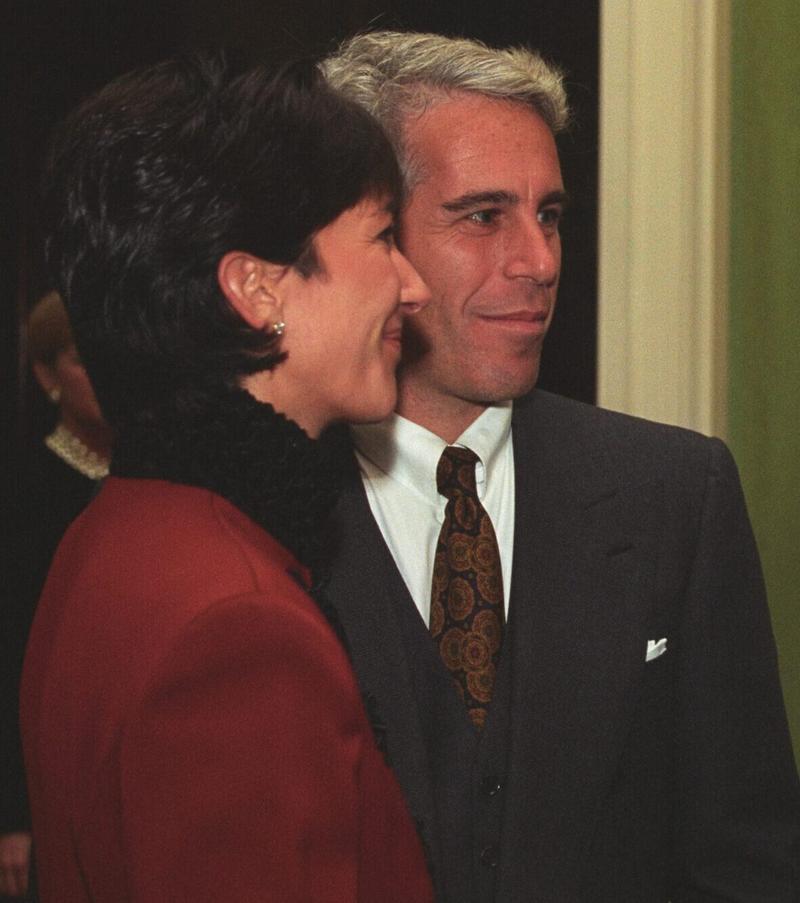
( Ralph Alswang, White House photographer / Wikimedia Commons )
[MUSIC]
Brian Lehrer: It's the Brian Lehrer Show on WNYC. Good morning, everyone. On today's show, we'll talk to former Jersey City Mayor Steve Fulop about his surprising transition to a job in New York. Have you heard this, just after he ran as a progressive for governor of New Jersey last year, to the left of Mikie Sherrill? He is now the president and CEO of the group that pushes the interests of the most powerful corporations in the city, you could say the most powerful corporations in America, and is working hard against parts of Mayor Mamdani's agenda. Has Steve Fulop sold out to the oligarchy? We'll ask him that question and hear his views.
We'll also talk about Mamdani's Department of Community Safety today as it begins to take shape. How is it actually going to be different from the NYPD and other existing agencies at everything from addressing mental health crises to fighting anti-Semitic hate crimes? A reporter from the news organization City and State is taking a deep dive. Near the end of the show, we'll invite your calls on anything about the Super Bowl last night, mostly about anything other than the game. Bad Bunny, of course, and mostly about anything other than the game.
We begin here. On this day when Ghislaine Maxwell is testifying before the House Oversight Committee, the world is still, I think we can say fairly, only beginning to digest the creepiness of various rich or powerful men who talked about women with Jeffrey Epstein, or got set up by him with women long after he was convicted of having sex with a minor and forced to register as a sex offender, and in some cases, even after the Miami Herald reporting in 2018 about many other allegations.
We'll touch on some of these names. Howard Lutnick, one of President Trump's very top appointees, Bill Gates, Leon Black, health influencer, and CBS News contributor Peter Attia, Ghislaine Maxwell and the Clinton Foundation- maybe we'll get to that- Epstein's Manhattan urologist, Dr. Harry Fisch, co-owner of the New York Giants, Steve Tisch, Bard College President Leon Botstein, maybe others. There is also the question, though, of why images of some of the victims were not redacted while identities of some of his associates were. Here's Democratic Congressman Ro Khanna on NBC's Meet the Press last week.
Ro Khanna: There is a demand for elite accountability, but the survivors lawyers that I've talked to have said that the survivors are still upset. They're upset that many of their names accidentally came out without redactions, and they want to make sure the rest of the files come out.
Brian Lehrer: We'll talk about some of the revelations, what consequences they should lead to, and if Ghislaine Maxwell's testimony today can shed any new light with two journalists following the Epstein story closely, Steve Eder, investigative reporter for The New York Times.
Vicky Ward, who did some of the earliest reporting on Epstein, more than 20 years ago, now writes the Substack newsletter Vicky Ward Investigates and is author of books, including Kushner, Inc.: Greed. Power. Corruption, The Devil's Casino: -maybe you remember that one- Friendship Betrayal and the High Stakes Games Played Inside Lehman Brothers about the financial crisis from back then, and her latest and instant bestseller that came out last summer, The Idaho Four: An American Tragedy. Vicky Ward, welcome back. Steve Eder, welcome to WNYC.
Steve Eder: Hey, thanks very much for having me.
Vicky Ward: Likewise. Thank you.
Brian Lehrer: Vicky, I know you've told this story here before, but could you start, before we get to the new stuff, by reminding us of your original Epstein story assignment for Vanity Fair? Originally, I guess it was supposed to be a lighter story way back in 2003, what you discovered in the course of that reporting, and how it got edited out.
I raise it now, listeners, because I think to discuss or judge any of these associations we're now learning about, fairly inaccurately, the timeline of what was known when is very important. Vicky, would you give us a brief on what happened in 2003 with you in Vanity Fair?
Vicky Ward: Yes. Thanks, Brian. Fall of 2002, Jeffrey Epstein's name was mentioned in the New York Post because he was flying, on his plane, Bill Clinton and various other celebrities to Africa on a charity mission. That was very unusual because back then, Jeffrey Epstein was not a household name. He was a figure of mystery. His money seemed to have come from nowhere.
All that was really known about him in New York elite social circles was that he owned the biggest townhouse in New York. He'd got a private island. He owned a massive ranch in New Mexico, and nobody knew where his money had come from. It was known that he was a bachelor.
I was pregnant with twins and not advised to fly.
Because he was mentioned in the Post, my boss, the editor of Vanity Fair at the time, Graydon Carter, said, "This should be an easy piece for you. You live in New York. Jeffrey Epstein lives in New York. I've always wondered where his money came from. Go and find out." That was the premise of the piece.
Along the way, I did find out quite a bit about his financial background, which did not tally with the story he had put out there. I also discovered these two sisters, Maria and Annie Farmer, who told me of sexual assault. In Maria's case, she was older than 21. She'd been working for Jeffrey Epstein as an art curator. Her younger sister, Annie Farmer, had been underage. She had been only 16. She'd been very cleverly manipulated by both Jeffrey Epstein and Ghislaine Maxwell, who'd promised her mother that she'd be chaperoned at a weekend in New Mexico.
What Epstein said was, "We need to get to know her because then we could fund a trip overseas that would boost her resume." She was applying for Ivy League schools. When Annie Farmer got to New Mexico, Ghislaine Maxwell gave her a topless massage, which she found terribly frightening. Next morning, Jeffrey Epstein climbed into bed with her and said I just want to cuddle. She didn't ever tell her older sister any of this because she didn't want her sister to lose her job.
Maria Farmer, a few months later, also had a horrific experience with both Epstein and Maxwell in Ohio, where she'd been doing some painting. She ran very long way down a private driveway with her dog and waited for her father to come and pick her up. They talked to me about their experiences, and they were on the record. They were backed up by their mother, by a very well-known artist who Maria had known at the time, Eric Fischl, and by a businessman in New York called David Schaffer, who had heard of their allegations contemporaneously.
Maria Farmer had also gone to the FBI and the New York police in 1996. However, when I put these allegations to Jeffrey Epstein and to Ghislaine Maxwell, they went berserk. Behind my back, Jeffrey Epstein showed up in the offices of Vanity Fair and went to see Graydon Carter. I obviously do not know what was said in that conversation. All I know is that the Farmer sisters' allegations were cut at the eleventh hour from the piece. The magazine subsequently said they didn't believe that we met the standards legal standards.
All these years later, when in the world of Me Too, the legal standard is that if people make allegations and they have three people who were told about these allegations contemporaneously, that is considered a pretty rock-solid standard.
Brian Lehrer: Or at least run with a story in a news organization that as an allegation.
Vicky Ward: Yes, they were cut. Coincidentally, as all this was going on, Jeffrey Epstein had been very, very threatening personally to me and to my unborn twins, and had told me he knew where I'd be giving birth. He told me he was going to have a witch doctor place a curse on my unborn children. He was going to have my husband fired. I was devastated with what happened to the Farmers, but I had to stop.
I almost immediately went into labor, far too premature at 30 weeks. I had two tiny babies weighing two pounds and three pounds who had comw fighting for their lives. My husband and I had to ask for extra security in the neonatal intensive care unit because we said, it's extraordinary as this sounds, there is this man out there who we think could- he means to cause harm.
Brian Lehrer: Oh, yes.
Vicky Ward: Yes. I think in subsequent years, a couple of years, one year later, maybe the FBI phoned me about the Farmer sisters. I told them what had happened.
Brian Lehrer: If I can move it along, you must wonder to this day how many girls and women could have been spared Epstein's abuse had your findings been allowed to see the light of day in your article in 2003. Yes?
Vicky Ward: Oh, yes, of course. Since then, I've met Virginia Giuffre. The great irony, the fall of 2002, which is when I was doing all my digging and reporting, was when she did her runner from Epstein's clutches to Thailand and escaped. I've got to know a woman called Jennifer Araoz, who is 16 and in high school in New York at the time that I was reporting. That was exact time, the same time period that Epstein raped her. I've got to know many [crosstalk]--
Brian Lehrer: What time period was that? Just tell us, and then I'm going to bring Steve in; when was his conviction on prostitution with a minor and having to register as a sex offender?
Vicky Ward: That all happened in 2008. As we know, it was a very cushy plea deal where the federal investigation, the federal charges against him were dropped in exchange for this deal with the state, where he got to barely go to jail. He was allowed out for what they call work release. When he came out of that, there were just two charges: soliciting a prostitute, and sex with a minor.
He was able to come out of that and tell all his rich and powerful friends that it was all because some girl had lied about her age. The scale of his abuse, the whole pyramid scheme, the 1,200 women we now know who were being abused, was completely kept hidden from public view. Yes, of course, [crosstalk]--
Brian Lehrer: Until the Miami Herald stories in 2018?
Vicky Ward: Yes, until the Miami Herald stories in 2018. Julie K. Brown became a friend of mine. We both covered Ghislaine Maxwell's trial together. She and I were talking last week. She said, no question, she was helped by the fact that the culture of Me Too was then going at full throttle, so Congress did pay attention to her series. The Justice Department did pay attention, and they did reopen the investigation of Jeffrey Epstein.
Finally, he was arrested. Then as we know, he died in jail before he could actually face trial. A year later, Ghislaine Maxwell was arrested. As we know, she was then indicted and found guilty of being his accomplice.
Brian Lehrer: We'll see if she says anything worth hearing in her testimony before the House Oversight Committee today. That's a long time between 2008, when he had to register as a sex offender, and 2018, when so many of those other revelations became known publicly.
Steve Eder from The Times was. Let's discuss a few of these associations that we now know about or know more about from the Epstein files release. One US Commerce Secretary, Howard Lutnick, who was also a top, top aide to President Trump, including not just on commerce, but the most controversial foreign affairs stuff. I see he was neighbors with Jeffrey Epstein on the Upper East Side. Here's 20 seconds of Lutnick claiming he had ditched that friendship after learning of Epstein's crimes. This is from a podcast last October.
Howard Lutnick: My wife and I decided that I will never be in the room with that disgusting person ever again. I was never in the room with him socially for business or even philanthropy. If that guy was there, I wasn't going because he's gross.
Brian Lehrer: Steve, what do the files actually show about Lutnick's relationship with Epstein? Crucially, what's the timeline?
Steve Eder: Yes, it looks like a direct contradiction of the assertion that he made on that podcast. We and others over the weekend were reporting on this. One of the things that popped up to us early, I don't think that Howard Lutnick's name had been somebody who had been particularly affiliated at the same level as some of the others up until now, so, yes, you can see from these files a different picture that emerges. They, of course, were neighbors living next door to each other, but there was the notion that they invested in a privately-held company together. They were in league on neighborhood philanthropic issues and socializing together, possibly Epstein trying to meet with Lutnik's nanny, too, was something that we had reported.
Brian Lehrer: Here's another clip of Secretary Lutnick from that same podcast interview.
Howard Lutnick: That's what his M.O. was. "Get a massage. Get a massage." What happened in that massage room, I assume, was on video. This guy was the greatest blackmailer ever.
Brian Lehrer: The greatest blackmailer ever. I assume. Steve, we haven't seen any of these blackmail videos that Lutnick is referring to in the clip, but can you say what he's referring to?
Steve Eder: We did another piece, which we'll probably get into, where Epstein has this way of wanting to be a knower of people's secrets, of wanting to have shared secrets with people, and acting like he has something. To what end? I think it's still something of a puzzle and to how he used those, but we can see- and we'll probably get into it- but in in other cases, writing letters, writing emails to people or drafting them, where he starts to refer in this toggling back and forth from sentimental and loyal to vaguely menacing, and "I know things about you." That's the kind of thing; I don't know if there's clear [crosstalk]--
Brian Lehrer: Consistent with the story that Vicky told about how he tried to intimidate her back in 2003.
Steve Eder: Yes, I think that it does echo that. It was fascinating hearing Vicky tell her story on her excellent reporting, which was so formative that so many of us, I think, have looked to over the years as we've reported and tried to pick up on this on all of this. Yes, there's a tone in a way of talking that you can really detect as you go through this massive volume of records and emails of--
Epstein could be badgering. Even with people who were his clients, people who were giving him money, he could belittle and push in ways that are almost a little surprising. It also would extend to his communications with women. You could see in messages in other years where he would be in touch. The style that Vicky described with her, you could see it in text form.
Brian Lehrer: In fact, one of your articles in recent days is called Gang Stuff and 'Illicit Trysts.' This includes Epstein drafting letters reminding retailers billionaire Lex Wexner of their, "gang stuff," keeping notes on Bill Gates and "illicit trysts," badgering billionaire Leon Black while referencing hush payments. Give me one example of that. Do we know what "gang stuff" referred to with Les Wexner?
Steve Eder: We don't. We don't. It's not clear what he was hinting at. It's not clear if he even sent the letter. I'll set the stage for it a bit. This was the piece that I was referring to a couple minutes ago. Leslie Wexner was a very important person in Jeffrey Epstein's rise. He was somebody who took him from millionaire in the '80s to being able to own the types of properties and hundreds of millions of dollars of wealth. Leslie Wexner's the billionaire behind Victoria's Secret and the Limited.
The way this relationship develops has always been a surprise, I think, to people that Epstein, he was a college dropout who had experience, but limited experience, and suddenly he finds himself as the key money manager for Leslie Wexner in the 1990s. Their relationship continues on. We've written about it extensively, as have others, over a period of 15 or more years.
In 2007, as Epstein's legal troubles are starting to become known, there's a split with Wexner, basically over a multitude of factors, but one of them is the legal troubles come up. Then also, the Wexners have said that they detected a theft of Epstein of a huge amount of money at that time. Several years pass, and we don't know-- This letter wasn't dated. It's mixed in there with these three million pages of records.
We're going through research and records, and come across this one in our research, and it has a tone. He had reached out to Wexner through lawyers about potentially reconnecting after what would appear to be several years of not being in touch. He had been rejected for that meeting. Then he kind of continues on talking about the debt that they I owe a great deal, a great debt to you, as frankly, you owe to me. He says he has no intention of divulging any confidence of ours.
He makes these references to "you and I had gang stuff for over 15 years." Doesn't explain what that means. Talks about being questioned by Mr. Wexner's wife. The whole tone of it raises just this question. It has this tone of knowingness and a bit of a ominous, is the right word. Of course, we should say the Wexner's representatives have completely denied this. Jeffrey Epstein is a notorious liar, and this is just part of his lies and such. Just to be sure.
Brian Lehrer: Listeners, some of you are calling in. We can take some calls and texts if you're interested in some of the details regarding some of the people whose associations with Epstein got revealed by this document dump. We will also talk about the victims and how some of them have felt re-victimized by the way, this was released. 212-433-WNYC, 212-433-9692 with journalists Vicky Ward and Steve Eder.
Vicky, Bard College's president, Leon Botstein. I don't know if you say Steen or Stein. I think it's Stein, signing off a 2013 email to Epstein with "Miss you, Leon." Five years later, Epstein facilitated a connection, apparently, between Botstein and Woody Allen's family, resulting in Woody Allen's daughter gaining admission to Bard, or at least helping it. Presumably, it didn't hurt. This doesn't mean Botstein did anything illegal, but what's your take on Epstein and Botstein, if you have one?
Vicky Ward: Well, I think multiple things. I think one of the things that we've come to see through all these emails is that Epstein was a networker extraordinaire, more than anything else, and that he was also able to use that network to manipulate the elite in almost the same way. Less criminal, but he was equally successful at manipulating the elite as he was at manipulating vulnerable women and girls. This is a classic example of him being the middleman in a very useful transaction for Woody Allen.
I think it's also interesting to note how he used academics to give himself a veneer of respectability that I'm not sure he would have had. All the money that he gave to places like Harvard, the fact that he surrounded himself with presidents of colleges like Harvard, like Bard did give himself--
Brian Lehrer: In fact, there's a story now in the science journal, Nature, about how Epstein cultivated many relationships with scientists, I guess in pursuit of reputation, even if he was helping to finance or whatever the relationship was with worthy research.
Vicky Ward: Well, I think it's partly that. I also think it harks back to something that Ghislaine Maxwell's father, Robert Maxwell, did. There were a lot of things that I think Ghislaine Maxwell offered Jeffrey Epstein that were very useful. One of them was the black book, his address book.
Robert Maxwell had a global publishing company, the Pergamon Press. It published scientific journals. It was actually a great way for powerful people to see what cutting-edge research was going on in other countries.
What Jeffrey Epstein, I think, really understood better than almost anyone was he understood what really, really rich and powerful people want. They usually want to meet other really, really rich and powerful people. They want information that they don't come across in the ordinary course of their business and their lives. All this stuff is very useful to people at that level. Can I just say one thing, Brian, about going back to the gang stuff?
Brian Lehrer: Yes.
Vicky Ward: I'm just going to throw out what I've got from my reporting and speculate based on that. In the 1990s, before Jeffrey Epstein met Les Wexner, his real mentor and business partner was a guy called Steve Hoffenberg, who ran a company called Towers Financial. It was a debt collection business. Steve Hoffenberg was a glorified gangster. He ended up going to jail for 20 years for committing the biggest Ponzi scheme in American history prior to Bernie Madoff.
When I was reporting on Jeffrey Epstein, I actually went to meet with Hoffenberg in his jail outside Boston at the time. Unfortunately, now, all these years later, he passed away, but he always maintained that Jeffrey Epstein was his partner and Jeffrey Epstein was the fish, the smaller fish that got away at that time.
I did notice in the latest tranche of documents that the FBI went to interview Hoffenberg in 2010, and they asked him what did he know about the murder of Arthur Shapiro. The only reason I bring that up is Arthur Shapiro was a lawyer who had represented Wexner, who was murdered in strange circumstances in Ohio. There was a local journalist up there I spoke to when I did my piece for Vanity Fair, who was convinced that Shapiro had been murdered because he had to go in front of a jury, and he was going to say things, and that something nefarious had gone on.
When I saw that document in the tranche, I just saw it this weekend, I did-- Hoffenberg, actually, his response was they should look at my piece [chuckles]. I don't know, but it did make-- Trying to connect the docs here is hard.
Brian Lehrer: Yet another example with you having only seen that this weekend of how much there is to pick through here still, and still to learn. We will continue in a minute with journalists Vicky Ward from Vicky Ward Investigates and Steve Eder from The Times. We will get into New York Giants co-owner Steve Tisch, two celebrity doctors, and pull back a little bit more and ask what should the consequences be for some of these men, as well as talk about the victims and the non-redactions. Stay with us.
[MUSIC]
Brian Lehrer on WNYC as we continue on this day when Ghislaine Maxwell is actually testifying before the House Oversight Committee, though some of the reporting says she's just going to take the Fifth over and over again and not say anything new. We'll see. On this day, and as people are still picking through those so many pages, I don't even know how many zeros are in the number of pages that were released from Epstein file documents, and people finding out things that he did, things that other people did. We are talking with two journalists, Vicky Ward, who does the Substack newsletter, Vicky Ward Investigates, and has the recent bestseller The Idaho Four, and Steve Eder, who's got a whole series of Epstein files articles in The New York Times.
Steve Tisch, Steve, co-owner of the New York Giants. The emails show Epstein connecting him with women and Tisch asking, for example, whether somebody was, "pro or civilian." Another exchange has Epstein saying that a date Tisch had went well, though the woman is concerned about the age difference. I think something there about trying to convince her not to go back to Ukraine. That one sounds like not about prostitution or pedophilia or anything illegal. What stood out to you about these Steve Tisch interactions?
Steve Eder: Well, a couple things. Less about Tisch himself and more just about the-- Look, I've been honest.
Vicky Ward: To me, Brian, or to Steve?
Brian Lehrer: To Steve first. You can talk about it, too.
Steve Eder: Sure. I think one of the things that, having been on this story for a while, it's hard to find things that surprise you, but just the number of people that keep getting brought into this story from different spheres. Here we have somebody who's in business, but also sports. That was one of the first things I thought when I had heard. The Tisch aspect of this was one of the first things that came up in the reporting when these vials were released.
Look at the language, the way that Epstein communicates with Tisch about women, about their bodies, about-- It's indicative of the kinds of things that we see as we keep going, thumbing through these records page by page, are these types of communications.
Brian Lehrer: Steve. The Times reports that the NFL has launched an investigation into Steve Tisch. One of the NFL's lawyers is Brad Karp, who had to step down as the chair of the law firm Paul Weiss, but from what I read, gets to keep his clients. He's still a pay partner, and one of his clients is the NFL. Conflict of interest. Or maybe the NFL has lots of lawyers, so there's no-- They're there with one of them. Yes.
Steve Eder: The Brad Karp role in all of this was a little less surprising. We've written extensively about the billionaire Leon Black over the years, another important client to Jeffrey Epstein. Brad Karp was had basically our understanding, had come to know Epstein largely through his work for Mr. Black, but I think the emails, again, shed more light on that relationship and the socializing between them and continues.
I think one theme, not just with Brad Karp, but just in general, is just the idea that I think people publicly have pushed back on closeness with Epstein, especially in recent years. Yet these records are giving us an ability to press deeper into that.
Brian Lehrer: Vicky, I understand you couldn't hear some of Steve's answers there on Steve Tisch. I think it brings us to one of the overarching questions here. For men who keep having friendly relationships with Epstein after at least his original plea bargain was known and his registration then as a sex offender, kept being friends but not doing anything illegal, maybe getting dates through him and making sexual jokes with him- I'll give an example of that in a minute- how does society judge them? How should society judge them or impose what kinds of consequences on them? You have a take? Oh, Vicky, I'm asking you if you [crosstalk]--
Vicky Ward: Oh, sorry that you died. Yes, I think there are tech issues, Brian. Sorry, I couldn't hear Steve, but I can hear you. Is there a echo on the line?
Brian Lehrer: Yes, I'm getting a litle bit of an echo. Can we correct that on there on our end, controller?
Vicky Ward: I got it. I've done it. I can hear you now.
Brian Lehrer: Good.
Vicky Ward: Sorry. Now I can hear you. I just don't know if I can hear Steve. Your question was about what penalty the men, like Steve Tisch should pay?
Brian Lehrer: Yes. That's right. People lose their jobs. Maybe every case is different, but for people who didn't do anything illegal, didn't commit any acts of pedophilia, especially, or anything else that's illegal, but maybe they were making sexual jokes- I'll give you an example of that in a minute- with somebody who they knew was a registered sex offender or getting dates like apparently Steve Tisch, what should the consequences be?
Vicky Ward: Well, look, Steve Tisch, I don't think, has been asked about this before. Somebody like Brad Karp sitting at the top of Paul Weiss, who I think has made public statements. I think I understand why he needed to step down. The NFL is looking at Steve Tisch. It's a case of willful blindness. They knew who Jeffrey Epstein was, but transactionality mattered more to them. His usefulness mattered more to them for whatever reason than his crimes.
That may not be illegal. It's certainly unethical and immoral in my mind. Should they go to jail? No, not unless there are, there are women coming out accusing them of something, and those allegations can be proven.
The one instance where it does seem as if the police are investigating is actually in my native country in England, around Peter Mandelson, who was recently Britain's ambassador to the US, because it does appear as if he gave market-sensitive information to Jeffrey Epstein, that Jeffrey Epstein was then able to enrich himself with, and possibly others. That was secret information. The police are now looking into that. That could be illegal, but it's tricky with these other guys.
Brian Lehrer: Steve, Peter Attia, longevity doctor, so-called, best-selling author. Named a CBS News contributor just days before the latest release of the Epstein files. Among more explicit comments, he wrote to Epstein, "The life you lead is so outrageous and yet I can't tell a soul." Now there's, I guess, tension in CBS News whether he should continue to be retained as a contributor. Do you have anything on the Peter Attia story?
Steve Eder: Yes. Just looking at our coverage at The New York Times, his name appears in more than 1,700 documents direct correspondence. A lot of it dates back to the mid-2010s. It's interesting to see-- I don't tend to opine on what the consequences, et cetera, should be. From my vantage point, certainly, they're falling into different buckets. You have some cases where it's a job- becomes a job issue, and whether someone should keep a job. Other times, you're seeing police investigations, especially abroad. They're falling into these different buckets of reaction.
Brian Lehrer: Do you know what year that quote was? I'm sorry, I don't have that, where Attia said Epstein, or wrote to Epstein, "The life you lead is so outrageous, yet I can't tell a soul," indicating sometime after he was a registered sex offender, he had secrets to keep.
Steve Eder: Yes, it looks-- Among the 1,700-plus documents I was looking at a piece, there's an email dated June 24th of 2015 with Attia initiating an email to Epstein, "Got a fresh shipment." It's not clear what he was referring to. Epstein replies, "Me too," with a photo that's redacted. Then Attia replies, "Please tell me that you found a picture." It looks to be around 2015 or so.
Brian Lehrer: As late as 2015, we can infer that he had secrets with Attia, writing, "I can't tell a soul." Steve. I know you got to go. We're going to stay with Vicky Ward a few more minutes. Steve Eder, investigative reporter for The New York Times, who's got a collection of articles now about the Epstein files and what's in them. Steve, thank you for joining us today.
Steve Eder: Thanks for having me. Appreciate it.
Brian Lehrer: Now, Vicky Ward, another celebrity doctor who has not been in the news very much, Epstein's urologist, Harry Fisch, Jen Gunter wrote about some of their emails with each other on her Substack, The Vajenda. I'm going to read from that. She wrote, "Dr. Fisch is on the receiving end of an email from Epstein with a "joke" about pedophilia in 2017 that involves a clown exposing his," I'll edit that word out, "to seven-year-old children.
She writes, "Joke in quotations because it isn't even a joke, it's just a clown wanting to show children his blank to seven-year-olds even when there is the threat of the police." She posts that particular exchange. Then she continues about Dr. Fisch. "Even after the Miami Herald detailing the extent of Epstein's crimes and successful evasion of appropriate penalties on November 28th, 2018, Fisch kept interacting. Epstein gifted Dr. Fisch an Apple Watch, which he received on December 11th, 2018, in other words, a few weeks after the Miami Herald article, and sent a thank you with exclamation marks. Then there are other interactions."
Then she continues, "There is the issue of a doctor associating with a pedophile, which increases the pedophile's aura of respectability." She adds on how to judge this. "Screening and treating STIs, which apparently Dr. Fisch did for Epstein, is one thing. Screening and treating a registered sex offender for STIs and receiving jokes about a clown exposing his blank to children raised concerns about ongoing pedophilia for me," writes Jen Gunter. Do you know this Dr. Fisch by any chance? Anything about him?
Vicky Ward: No, no. I don't know Dr. Fisch. I will say this, actually, I haven't yet come across women who've come forward to talk about abuse from Jeffrey Epstein after he got out of jail in 2008. Interestingly, he stopped having American women, American girls around him. He was always surrounded in the last decade of his life by women from Eastern Europe. I think because he thought culturally they were more favorable to the way he conducted his life. I haven't come across, which doesn't mean it doesn't exist, a survivor from that period-
Brian Lehrer: Interesting,
Vicky Ward: -of his life.
Brian Lehrer: Important.
Vicky Ward: I'm not surprised by the Dr. Fisch episode. I'll give you another example that tells you about Jeffrey Epstein's character and how he communicated with people. In his Paris apartment, a life-size stuffed elephant. In New York, by the way, he had a life-size stuffed poodle which he'd put on the piano when I went to his house. It was so creepy. I asked him why on earth he would have that. He said, "Because I like people to think what it means to stuff a dog," which was a horrible thing to say.
The reason he had a life-size stuffed elephant in his Paris apartment was because he would joke to his "friends," "Well, I think you need to think about what's the elephant in the room." He's referring, of course, to his own criminal behavior as a joke. That's exactly, it seems to me, what he's doing with his urologist. It's all a big joke, and all these men are in on it. He seems to be able to manipulate them or bring them into his way of thinking with levity. Again, it comes back to his ability, I think, to make people see things his way. It's horrifying. Well, not just the victims, but--
Brian Lehrer: The victims-- No, no, no. I don't mean he's making the victims see things his way. I was bringing up the next topic, but I understand what you're saying. That's a very profound take on it. Are the victims paying a higher price after this release, though, rather than getting something from it? The Justice Department has now withdrawn several documents containing victims' personal information, but has the damage already been done?
Vicky Ward: Well, I think it's mixed. I think there are two sides of this. I was doing an interview with the BBC the other night with Lisa Phillips, who's one of the victims. I think there's no question that the whole rollout of this has been utterly botched, and it was definitely retraumatizing and triggering for many of them when they were exposed, particularly because the whole point of the delay of these, of this release was supposed to be because they were going to be extra careful with the redactions.
I also think here we are, and a lot of our conversation now isn't really about the victims. It is about the names of these rich and powerful men. That's always been, I think, the problem for the survivors about the nature of reporting this story is that it is about them, but it's also about the people who enabled Jeffrey Epstein, if you like.
Lisa was saying this, on Saturday night when we did our interview, that unquestionably these women have in the last year found a voice that has had an impact. I hope they never forget that. I think the scenes of them standing on Capitol Hill have been very, very powerful. The fact that they did get Congress to pass this Transparency Act is a very big deal. I hope that this latest- the utter incompetence of the rollout doesn't detract too much for them from the enormous progress they have made because-- Given where I was in 2002 and where the poor Farmer sisters were and where we are today on this story are two very different places.
Brian Lehrer: Yes. Another important analysis of the moment that we're in. Before you go, you know what name we haven't mentioned, really? Donald Trump.
[laughter]
Vicky Ward: Yes.
Brian Lehrer: After all the speculation, at least, the reason that Trump wanted this story to die was because there would be really bad stuff that pointed to him. Just based on the reporting, which seems to focus on almost everybody in the Epstein file, or lots of men in the Epstein files, and not so much Trump, what's your take on how much of a there there is there, how much they may still be hiding things, the Justice Department on behalf of their president, or maybe Trump even was trying to protect some of his friends whose names got revealed. I don't know. What's your take on Trump in this?
Vicky Ward: Right. Well, he did say to Marjorie Taylor Greene-- There was a very in-depth, very great profile of Marjorie Taylor Greene done recently by Robert Draper in The New York Times, where I think it was mentioned that when she went in to see him to say why aren't you on the right side on the Epstein stuff, he said, "Oh, it's just going to hurt friends of mine." He did say that to her, reportedly.
None of the survivors I've spoken to have ever mentioned Donald Trump as being somebody who abused them. Obviously, we do know he and Epstein palled around until they had their big fallout. What you can clearly see in the emails is that Epstein was obsessed with Donald Trump.
I know Trump. The second book that I wrote was about the world of real estate in New York, and he featured quite heavily in it.
Brian Lehrer: With Kushner and Ivanka.
Vicky Ward: No, no, not that one, funnily enough. I wrote one called The Liars Ball that was actually about the world of New York real estate and all the fights over the GM building, which was the most valuable piece of commercial real estate in the country at the time. Trump had been one of the people who'd wanted to buy it and didn't.
I think that even though he campaigned on releasing the Epstein files, what he really doesn't like about the reality of when it came to this moment was that this is-- He is a master. Whatever you think of his politics, he's a master at controlling the narrative. That's what he likes to do. He likes to keep everyone guessing what he's-- He likes to switch stories minute to minute.
The problem with this story for him is that he can't control it. It's bigger than he is. I don't think you're going to find anything in there that puts him in any legal jeopardy. I think he just doesn't like the fact that he is out of control now on this. He's unleashed Pandora's box, and there's nothing he can do. If the media want to write more about that and whatever it is he wants them to write about that, that's what's going down. I think that is a big element of it.
Brian Lehrer: Vicky Ward's latest book is The Idaho Four: An American Tragedy, written with the novelist James Patterson. She writes the Substack newsletter Vicky Ward Investigates. Thank you very, very much.
Vicky Ward: Thank you, Brian.
Copyright © 2026 New York Public Radio. All rights reserved. Visit our website terms of use at www.wnyc.org for further information.
New York Public Radio transcripts are created on a rush deadline, often by contractors. This text may not be in its final form and may be updated or revised in the future. Accuracy and availability may vary. The authoritative record of New York Public Radio’s programming is the audio record.
