
The Iran Ceasefire: Day 2, and Beyond
[MUSIC - The Brian Lehrer Show: Intro]
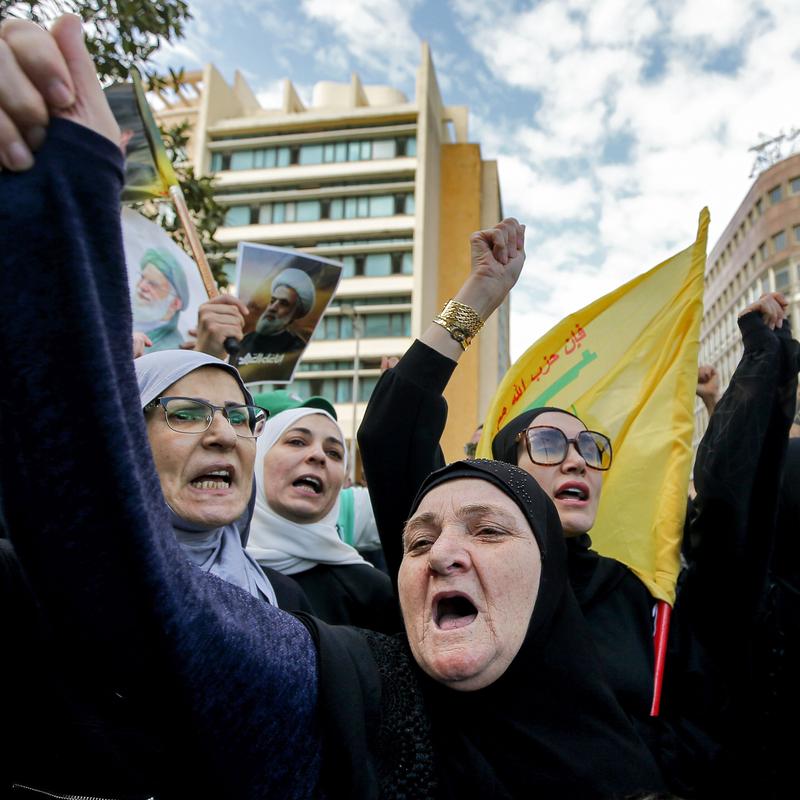
Brian Lehrer: It's The Brian Lehrer Show on WNYC. Good morning, everyone. On day-two of the US-Iran ceasefire, look at some of these headlines. The Washington Post, "After Trump pauses war, Iranians fly flags of victory, not surrender." The Hill, "Trump lost his nerve and surrendered to a beaten Iran." The Atlantic, "Trump made a deal that gives him nothing he wanted," and an article in The New Yorker begins like this, "A temporary truce can't erase the chaos of a war that the White House started and never fully understood."
Now, we'll talk to Global Affairs journalist, Ishaan Tharoor, who wrote that New Yorker article in just a minute. First, in case you weren't listening at 6:30 last night when we ran the show Marketplace, here's a clip, this runs a minute, of economist Mohamed El-Erian laying out four sequential stages of economic impact the war is having, some of which we haven't even seen yet.
Mohamed El-Erian: Let me think in terms of the 4 phases, and we are now, the US, in Phase 2, and Phase 3 elsewhere. While we started the year well, we got a massive shock in the shape of the war. We had the first phase, which is done, and we are living with it; higher energy prices than would have been otherwise, and higher interest rates than would have been otherwise. We then got Phase 2, which is more inflation in the pipeline. That's where the US is now as the largest economy.
Parts of Asia, unfortunately, have moved to Phase 3, which is not only do you get Phase 1 and Phase 2, but you also get demand destruction. You start worrying about economic growth. Of course, Phase 4, which I hope we never get to, would be financial instability undermining the economy. We are looking at a world in which the US outperforms the rest of the world, and parts of the rest of the world-- Asia in particular, parts of Europe, risk recession.
Brian Lehrer: Mohamed El-Erian, the economist, on last night's edition of the public radio program Marketplace. Let's see where else things stand with Ishaan Tharoor, writer and journalist based in Washington. He's been on the show multiple times in his former position as a Global Affairs columnist at The Washington Post before the Post's journalistic bloodletting there.
Ishaan, good to have you on again. My sympathies to you and many of your former Post colleagues about the vast reduction in the journalism staff there. Welcome back to WNYC, now that you've written an article for The New Yorker.
Ishaan Tharoor: Great to be back with you, Brian, and thank you for your condolences. It was, of course, a bit of a shock for a lot of us. We are all in various stages of mourning about what happened there, but to bigger and better things, hopefully, for a lot of us, and especially my colleagues on the international staff, many of whom were let go in the Middle East and are now all over covering this conflict right now.
Brian Lehrer: Yes. Not to linger too long on this, but that was one of the, I think to many journalism observers, most dramatic and impactful to coverage of the world, parts of the reduction in staff there, that they closed a lot of bureaus and just pulled a lot of reporters from around the world, right?
Ishaan Tharoor: Yes, it was quite stunning and chastening for a lot of us. I was at The Washington Post for 12 years on the International Desk, really proud of the incredibly smart colleagues I worked with and the family we had around the world. Yes, they've pulled back from China coverage, they pulled back from Middle East coverage, and a whole other set of areas that you would think American readers need to care about and read about more, not less.
Brian Lehrer: You heard the Marketplace excerpt. Is that an example of what you call in the piece, "The chaos of a war that the White House started but never fully understood"?
Ishaan Tharoor: Absolutely. Look, I think the simple narrative here is that Trump genuinely believed he could "Venezuela" Iran. As in, he thought he could go in for a decapitation strike, have some sort of arrangement with elements of the regime, and move on. Presumably, there were people whispering in his ear, convincing him of that, even though there were many others who knew that this would not happen this way, and here we are. There's a sprawling set of economic shocks.
I think what's important to recognize is that Americans are much more insulated from a lot of this than many people elsewhere. I was just in India a few weeks ago, and this is a country where, on major city streets, you see lines for natural gas cylinders, because cooking gas, which is essential for most Indian households, businesses, and restaurants, all comes from Qatar. The markets are all convulsed with the shut-off of Qatari LNG, and this is impacting hundreds of millions of people, and Americans don't really have a sense of that.
If this drags on the way it could, and if we see a resumption of hostilities and another snaring of the Hormuz crossings, we will have dire consequences here.
Brian Lehrer: You heard those other headlines I read out from multiple outlets, including The Washington Post. The gist is that Iran has more leverage over the US and the world at large than before the war. You wrote that Iran's take on the terms of the ceasefire indicates Iran sees the Strait of Hormuz not as a bargaining chip, but as permanent leverage. What do you mean by "permanent leverage"?
Ishaan Tharoor: Well, yes, and I think it's very important to recognize that both sides are really spinning this as victories, and the Iranians potentially have a more convincing case than Trump does. By "permanent leverage," I mean, look, for a long time, when we've talked about the geopolitical conundrum that Iran represents, the focus has been on its desire to have this ambiguity around its nuclear program. We've talked about the fact that the Iranians want to maintain their capacity to potentially create a weapon, even though they say they don't, as their deterrent, as the way in which they will position themselves vis-a-vis their neighbors, vis-a-vis Israel, vis-a-vis the United States.
That, one of the ways that they can fend off all these potentially antagonistic parties is by having the possibility of racing for a nuclear weapon. Now, what they have discovered in the course of this conflict over the last month is that there's another deterrent that's quite effective and perhaps even more effective than this complicated process to achieve some sort of nuclear capacity, which is, "Oh, we can just close off this strait that is essential to global shipping and essential to the global economy," and they did it.
Now they see they don't want to relinquish their control over it. There's the very likely prospect that they will try to push for some kind of system where they charge for passage, that they will be making money off the Hormuz Strait in ways they hadn't before. Its suggestion is they'll basically charge a tanker $2 million to go by, and if you're an oil company and your oil is at $100 a barrel, and there are 2 million tankers on the barrel, then that's not that steep of a price to pay, and then that will add up for the Iranians.
Now, even though they're battered, Israel and the United States has-- We don't even know the full scale of what the US and Israel has done in terms of bombing targets in Iran and the various ranks of leadership they've taken out, but as battered as the regime is, it's unbroken and finding itself, now, in a position of perhaps even greater leverage than it had before this conflict began.
Brian Lehrer: On the Strait of Hormuz, Trump says the allies who actually get their oil from there, which the US no longer does very much, should be the ones to militarily seize the Strait from Iran. He says it would be easy because the US already did the hard part in weakening Iran's military so much. Fair point from a military standpoint?
Ishaan Tharoor: No, not really, because, look, first of all, this is such 19th-century thinking, and Trump seems to want to be in a kind of 19th-century mode often when he thinks about how he wants to position himself vis-a-vis the rest of the world, but we're not talking even about Iranians having a major fleet that they can use to blockade or to stop ships and get in the way of other navies. All they need to do is present the risk, the danger of flying a bunch of missiles or drones into shipping, which they will be able to do in any case, and that will lead to insurance companies and the broader global shipping industry deciding against taking that risk.
The way these shutdowns happen is that it begins with a risk calculation that companies not sitting in the Strait, but sitting in London and elsewhere, are making. When the insurers say, "Okay, we're not okay with this ship continuing the passage," then the de facto blockade happens. It's just even the Iranians saying, "Oh, we are willing to do this," or, "We can do this," that would lead to a blockade of the Strait. What kind of international solution do you want to see here? It's very unclear. A lot of countries are furious with the US for provoking the Iranians into this.
Brian Lehrer: One of the things that I've been seeing and hearing in the news is that despite other attacks on Iran, like the ones last year that the US and Israel carried out and others, Iran has never closed the Strait of Hormuz before, and so that was one reason that the US maybe didn't anticipate that they would do it this time. I guess my question to you, if you've been covering the region for a while, is, why didn't they use that particular point of leverage in the past if it's so effective?
Ishaan Tharoor: Probably because it's so destructive for its Gulf neighbors. The Iranians have complicated but deep ties to all these countries on the other side of the Persian Gulf: the Qataris, the Emiratis, as well as the Saudis, and that relationship has been complicated. It has been antagonistic at times, and there's no love lost between certain capitals and Tehran, but I think there's been a recognition all this time that there is mutual prosperity here, and if we do this, we're punishing them as much as we're punishing the West or The Great Satan in America, and so perhaps that has prevented them from thinking this way in the past.
When they feel an existential assault from the United States and Israel, when they see the Israelis and Americans taking out top leaders, the Ayatollah Ali Khamenei and so forth, I think it spurred them into taking this course.
Brian Lehrer: They see it as really existential, right?
Ishaan Tharoor: Yes, of course.
Brian Lehrer: The US sees it as a victory over a dangerous and potentially more dangerous rival, but that's one, albeit major, country in the world. For the Iranian regime, it is 100% existential.
Ishaan Tharoor: Right, and the argument that many analysts make is that just the act of survival for them is a kind of victory, and we may get that narrative in the coming days.
Brian Lehrer: Right, so let's talk about the regime itself. Here's Trump addressing the world, but in this part of his speech, the Iranian people, at the start of the war.
President Donald Trump: America is backing you with overwhelming strength and devastating force. Now is the time to seize control of your destiny and to unleash the prosperous and glorious future that is close within your reach. This is the moment for action. Do not let it pass.
Brian Lehrer: That was on day one. A few days later, he posted a demand for unconditional surrender. Now, he says the current leaders are more reasonable and less radical. A few questions about that sequence. One, Ishaan, what happened to unconditional surrender? Did Trump try to redefine it?
Ishaan Tharoor: [chuckles] At a certain point, it's hard to keep up with all his proclamations and the excesses of his rhetoric, but absolutely, there has been no such thing as unconditional surrender. There's also been no wipeout of Iranian civilization or whatever else Trump has threatened in recent days. When it comes to who is in power, obviously, I think there's a degree of opacity here. We don't have a full sense of who's calling the shots.
Yes, they installed the son of Ali Khamenei, Mojtaba Khamenei, as the new Supreme Leader, but the general consensus among people you talk to is that he is not particularly powerful or influential right now, and the people calling the shots are probably more directly within, of course, the Revolutionary Guard, the IRGC. The entity that is the most powerful, repressive, and controlling element of the Iranian regime. It's also what we've seen the last few weeks, that is, the US and Israel have killed quite a few figures in the regime who would have been more pragmatic and have lengthy experience dealing with the West and having diplomatic engagements with the West.
Some of these very prominent figures have been killed, and so it is not clear that those who remain are actually more pragmatic. It is more clear that the IRGC is entrenching itself, knuckling down, doubling down on its position, probably quite hardline. There's no trust between Iran and the US in terms of the next rounds of negotiations because, of course, the last two times the Iranians and the Americans have engaged in indirect talks, those talks have been interrupted by America bombing Iran.
That's why there's very little confidence that this process that's going to presumably begin on Saturday in Pakistan, where the Americans and the Iranians are going to be engaging in talks again, there's no confidence that it'll lead to something potentially lasting. I think I'll be surprised if it does. Now, here we are, where Trump, yes, he went in, indicating that Iranians should rise up because "We're clearing the way for you." That has not happened.
Indeed, the number of civilian targets that the US and Israel has hit has been astonishing. They've hit over 30 universities. They hit hallowed cultural UNESCO World Heritage sites, so it's really inflamed an Iranian nationalism that serves the interests of a regime that was deeply unpopular and, of course, carried out horrific massacres, in January, of its own people. That sort of indigenous, domestic uprising is not going to happen right now. Then, at the same time, Trump creates a whole mess in Hormuz and says, "Okay, other countries can take it up."
He's starting fires and basically asking others to put it out for him. That's where we are right now, with American power on the world stage,
Brian Lehrer: On the new leaders being more reasonable and less radical, according to Trump, you have a source in your article, and I think you were just getting at these thoughts, who says they may be less theocratic but also less pragmatic and more belligerent. I think you were just describing the "less pragmatic" and "more belligerent" parts of that. What's the less theocratic part, and could there be something in that for the Iranian people?
Ishaan Tharoor: Well, look, this is a region that has a long history of strong men, of military men taking power and fashioning their rule through a secular nationalism. I think there is a deep apathy and hatred of the regime among many Iranians, and there is a hunger for change, but we've always wondered, what direction would that go? Would there be a magical democratic resurgence, or would it be something else? And one of the more plausible scenarios that experts game out is that you would see the defenestration of the theocratic elements of the regime by those who have been operating hand-in-glove with them all these years.
Namely, the Revolutionary Guards, the military apparatus, and you could get a more secular Iran, but a no less radical Iran, a no less militant and aggressive Iran, and a belligerent Iran, but just without the Mullah's trappings.
Brian Lehrer: One more clip from Trump on this before we get to the actual state of the ceasefire here on day-two, and more about the negotiations to come for something more permanent and where they might lead. This is a clip of Trump the other day, while he's bombing all the bridges and power plants, and "destroy the whole civilization" threat was still on the table, referring to what he thought the Iranian people thought about that.
President Donald Trump: They would be willing to suffer that in order to have freedom. The Iranians have, and we've had numerous intercepts, "Please keep bombing." Bombs that are dropping near their homes, "Please keep bombing. Do it." These are people that are living where the bombs are exploding. When we leave, and we're not hitting those areas, they're saying, "Please come back, come back, come back."
Brian Lehrer: I know that sounds unbelievable, and probably, literally, we shouldn't believe it, but does it intersect at all with the feelings and opinions of a lot of Iranians? Obviously, it's a big country, it's not going to be a monolith of public opinion, but what they might be thinking, given the oppressive nature of the regime?
Ishaan Tharoor: Look, again, as you said, Iran is a big country and there are lots of different opinions and there's a lot of emotional reactions to what's happening when your country is attacked, but when a regime that you despise is getting cut down to size a little bit. Surely, there are people in Iran who want the Americans to finish the job in some way, and I've talked to quite a few Iranians in the diaspora, and in the diaspora, you have a wide range of opinion as well, who are devastated by the apparent destruction of non-military targets, the killing of dozens of schoolgirls in the coastal city of Minab when the US or Israel hit a school that was near an IRGC facility.
That blood is on the West, on the US, and Israel right now. I don't think there are any Iranians that I've spoken to who are happy about that, who want Trump to keep on doing those kinds of things. It is a really difficult place to be if you're somebody who loves your country but hates your regime. There are a lot of people who I know who have no patience or time with the regime but are devastated by what's happening, and they're posting videos.
They're these musicians who have gone-- and before Trump scaled back his threats, there were these viral videos of musicians playing beautiful songs outside of power plants because they're putting themselves out there as human shields. It's really, really tragic. I don't claim to speak for an Iranian consensus here, and it would be hard for me to judge, but I do think, at the end of the day, what has happened within Iran is that you have a more embattled, cornered regime that has circled the wagons and does have a degree of-- and, well, I guess what you could say is that it will play up its willingness to sacrifice itself for the nation, to take these kind of, "Suffer these blows for the nation."
It will play up the narratives of martyrdom that have always been their currency discursively in the country, and they're being enabled by that through this US-Israeli campaign.
Brian Lehrer: Listeners, your comments and questions on day-two of the sort of ceasefire or what might come next, 212-433-WYNC, call or text. 212-433-9692, with Ishaan Tharoor, who wrote about it for The New Yorker. 212-433-WNYC, call or text. 212-433-9692. When we come back from a break, we'll go right to the current moment and how Ishaan sees the state of the ceasefire on day-two. Seems like it's wobbly. What is actually going on, and what might this lead to? Stay with us.
[MUSIC - The Brian Lehrer Show: Interlude]
Brian Lehrer: Brian Lehrer on WNYC, as we continue with Ishaan Tharoor, former Global Affairs columnist for The Washington Post. Now he has an article for The New Yorker on the state of the war. It just came out yesterday, so it includes a first take on the ceasefire. Ishaan, how do you see the state of the ceasefire on day-two? The reports I'm hearing and reading say the Strait of Hormuz is not actually reopened, and the US and Iran disagree vehemently over whether the ceasefire was supposed to include Israel holding its fire in Lebanon, which Israel is decidedly not doing. Where do things stand as you see them?
Ishaan Tharoor: Not good. It's very vulnerable, and things may unravel rapidly over the weekend if the two sides don't find any way to figure out an easy solution or a return to the status quo of before the war began. As you said, there is a huge gap between what the Iranians want to see and what the Americans want to see. The Iranian proposal; there's been a bit of confusion about what their 10 points actually are, but the Iranians hope to be able to maintain the ability and the right to enrich uranium, which is something that Trump has said will categorically not happen.
They want the withdrawal of US Combat forces from the Middle East, which may be something that Trump would do, but that would be a huge loss of face for him. They want to see the dropping of all sorts of sanctions, the sanctions on Iran, and the secondary sanctions and entities that work with Iran. They want to see a lot, and they also want to maintain a controlling apparatus around the Strait of Hormuz. All of this is pretty tough for Trump to swallow, and he wants to see something more like a full capitulation by the Iranians.
How they square this, it's unclear. The most realistic outcome, you would think, would be a return to the pre-war status quo, which would then just lead us down the path, again, to new rounds of conflict. That's where we are right now, and that's how much of a strategic blunder this is all appearing to be. The one element that we've not talked about too much in the last few minutes, but as you said, is Israel. There was an expectation-- and the Pakistanis themselves assumed that Lebanon was also party to the ceasefire, but that was not the case.
Israel launched a devastating series of strikes on southern Lebanon and Beirut yesterday, even as the ceasefire was supposed to be in place, infuriating many people in the region, leading to huge statements of condemnation from Europeans. Dozens of civilian casualties that we saw just yesterday, and there have been many more over the past few weeks, and we really do get the sense that the right-wing government of Benjamin Netanyahu is upping the ante as much as it can.
The opposition in Israel are treating this like a political failure of Netanyahu's because it does seem quite clear that the Israelis didn't want the Americans to go along with the ceasefire, and we're seeing now the moment where US and Israeli interests are very clearly diverging when it comes to strategy facing Iran. The Israelis are pretty happy just to keep on striking at will, hitting targets here and there, degrading Iran, keeping them guessing, absorbing the ballistic missile strikes that come their way, but maintaining the capacity to, to use their pretty chilling euphemism, "mow the grass" as they see fit in Syria, in Lebanon, in Iran now.
Whereas the United States really needs to see a stabilizing solution in the Middle East. It wants to see the Iranians change their behavior. It wants to have the oil and natural gas flowing through the Strait of Hormuz, and the Israelis are less affected by that, or they're less bothered by that. Then we're now in a moment where Israel is upping the ante in Lebanon, it's accelerated, dramatically, its expansion and settlement plans in the West Bank, so I think, quite swiftly, the aperture is going to shift back from Iran to Israel and its environs, because that's where a lot more stuff is happening right now.
Brian Lehrer: Why, from the Israeli standpoint, did they not go along with this ceasefire? If it's just a two-week ceasefire and Trump is trying to win, in the permanent terms, an end to Iran supporting Hezbollah, why didn't Israel at least just go along for the two weeks rather than risk sabotaging the ceasefire by continuing to bomb Lebanon despite what the terms seemed to call for? I guess, for that matter, why is Trump okay with that?
Ishaan Tharoor: [chuckles] It's unclear to me what Trump is okay with and not okay with, but I think the Israelis probably sense that there is a narrow window right now, diplomatically, politically, maybe even militarily, for them to get to do a lot that they want to do. Whether that's further degrading Hezbollah, whether that's really carrying out de facto annexation of parts of the West Bank, whether that's really, really cutting down to size Iran's capacity to enrich uranium and its ballistic missile facilities and capacities there, too.
I think they're just going for it, and I think, in this moment, you have to remember this is an election year in Israel, and Netanyahu faces a pretty tough reelection. Unlike Trump, who is not going to get any political dividend from what's happening right now, and, in fact, it looks quite bad for him in the polls, Netanyahu has staked his whole career on being this great statesman warrior who is going to confront Israel's most dangerous nemesis in the region, Iran.
I think there is a political calculation for Netanyahu that, "Yes, let's just do what we can right now, because after October 7th and the trauma that that has put on our society, we need to make absolutely sure that no one has the ability to hurt us." I think that's still the narrative that you hear.
Brian Lehrer: We have a caller on this aspect. Kevin in Queens, you're on WNYC with Ishaan Sharor, whose article about the war is in The New Yorker. Hi, Kevin.
Kevin: Hi. Yes, I'd like to ask your guest, first, if he's seen recent reporting in The New York Times that the Trump Administration was involved at least somewhat in getting Pakistan-- from the drafted statement on X, pressuring Iran to take the ceasefire deal. It was obviously aware, to some extent, probably what Iran wanted specifically, on the ceasefire in Lebanon point.
Then, just stepping back into other New York Times reporting that I saw, on the day that Trump threatened to destroy the civilization, that a meeting with Netanyahu was very pivotal in getting him to believe that this was going to be a very quick war that he would win, be able to declare victory, and leave the next day. Just to ask you whether the way that the US is conducting the ceasefire on the second day is the same level of hubris and maybe believing some of these sweet nothings that the Israelis have been telling us in the same way that it got us into the war in the first place?
Brian Lehrer: Ishaan?
Ishaan Tharoor: Yes. Look, I have not matched The New York Times reporting, but I have heard that there was a concerted whisper campaign in Mar-a-Lago earlier this year, by various people eager for regime change in Iran or sympathetic to Netanyahu's own political instincts and position, really telling Trump repeatedly that, "This is the moment. You did it. Look what you did in Venezuela. You can do it in Iran. The Iranians are weak. We've weakened them after the 12-day war last year. Let's just finish the job, and we can do it, and then you'll be remembered in history as this great, transformative figure for the world."
I think that's exactly what Trump wants to hear and be told. Obviously, there were others, and you're seeing now in the course of all of these leaks coming out and in the reporting that The New York Times and others have, that there was plenty of people in the White House who weren't so sure and now recognize what a blunder this was or how embarrassing this is turning out to be, who are messaging otherwise. I did a piece in The New Yorker last week on the parallels between this current moment and the Suez Crisis in 1956, when you had two waning empires in Britain and France going over their skis a bit, in conjunction with the Israelis, and invading Egypt to take back control of the Suez Canal.
The one thing that they wanted to achieve was the control of that canal, and, of course, the Egyptians sunk ships in the middle of the canal and closed it off. Instead of having open flow, they provoked a scenario where the canal was shut down for five months, and it became an incredibly humiliating retreat, thereafter, for them. Then, I think, everyone, and there are people in the White House who could have told Trump or may have told Trump, "Look, if we do this, the Iranians will shut down the Strait of Hormuz," but he went ahead anyway, and look, guess what? The Iranians shut down the Strait of Hormuz.
Brian Lehrer: On Venezuela as a model, Lela in Miami has a thought, I think. Lela, you're on WNYC. Hello.
Lela: Hi, Brian. Hi to your guest. I was listening to the BBC today before your show, and they're talking about this tanker that's coming with 2,000 gallons, or I don't know what was the metric, of Venezuelan oil. As I remember, Trump said that the money from the oil that comes out of Venezuela is going to go to Qatar. We don't know what he's going to do with the money, or if he's getting it personally, and now, for the first time, I thought, "Oh, my God. Now it makes sense why he did this war," because it has made no sense up to now.
If you read any books on the Athenian and Persian wars, you know that the Iranians, the Persians, whatever you want to call them, go in full, and if they survive, that's enough for them. They're not going to give up. Now, I think he's going to profit, Trump, from this. That's my thought. Thank you for taking my call.
Brian Lehrer: Lela, thank you very much. I did see one version of a story, Ishaan, and tell me if you think that this is even, at all, a plausible scenario, where this ends with Iran being able to charge tolls permanently on passage through the Strait of Hormuz. It used to be considered an open international waterway without countries or shippers having to pay those tolls, but the United States would go in with Iran on that and collect some of the tolls for the US. Have you seen that scenario?
Ishaan Tharoor: I haven't seen that, but that sounds like something Trump would be very happy with. [laughs] It seems like the kind of pragmatism that works for Trump. It's the landlord mentality that he'd like to apply across the world, I suppose. Yes. Look, Trump does have a very fossil-fuel, natural-resource, 19th-century vision of the world, or a late 19th-century vision of the world, where he wants to consolidate control over these resources, and he has partners elsewhere who are willing to play along with him in terms of creating the mechanisms that give him this sense of control.
The Qataris have created this payment system where they will be siphoning off Venezuelan funds, and presumably, that would get back to Venezuela, but it's unclear what's happening with all that. In the Middle East, there's this complete incoherence of Trump insisting on his paramount right to save Iran and send help on the way, and then the moment it blows up in his face, he says, "Oh, it's not my problem. It's the rest of your problem." It's this complete unwillingness to take accountability for your own actions, and yet still be animated by so much hubris and arrogance about your power in the world.
Brian Lehrer: Here's one article along those lines. By the way, this is from the South China Morning Post. Headline, "Strait of Hormuz: Is a Trump-Iran joint venture really possible?" And it starts with, "Regime change increasingly out of reach. The US President may pivot toward a business deal with Tehran's fractured leadership." Who knows? Sounds unlikely, but there is some chatter about that.
Do you see the state of the ceasefire right now as the US is holding its fire on Iran, Israel is not holding its fire on Lebanon, and Iran is not reopening the Strait of Hormuz? All we seem to really have is this one-way action, where the United States is not bombing Iran. Is that at all accurate?
Ishaan Tharoor: Yes. I think, as far as I can tell right now, the way I'm trying to understand this moment is that Trump is desperate for an off-ramp. He wants to get out of this. I think that's, first and foremost, what's driving the current situation, but the avenues for actually getting out of this are terrible for him because he's not going to magically, through diplomatic means, force the capitulation of the Iranians on a whole set of factors. If he climbs down and gives them the sanctions relief they want and gives them the mechanism for them to keep on charging tolls on the Strait of Hormuz and gives them even, perhaps, the notional right, lets them maintain their notional right to enrich uranium for nuclear purposes, it is a huge defeat, and it is a defeat that he would be formalizing.
I have a hard time imagining Trump accepting that. It does seem quite clear to me that this process, however long it lasts, is not going to yield a stable, peaceful outcome, and that you will have hostilities flare up in some way or the other in the weeks to come, and that the best-case scenario is a return to the status quo that existed before this war began. We may not even get there because the Iranians may see themselves as having more leverage than they had before.
Brian Lehrer: Yes, so maybe a return to the status quo, which Trump would try to spin as a victory. On the argument that it's a victory, what Trump, Hegseth, and others in the administration say is that they have already largely won this war, with the military objectives already, they say, exceeded. Iran's navy and air force are pretty much decimated. That seems to be true. They're running out of missiles and will run out of drones, so they can't threaten the region now the way they used to. They say the media is too negative compared to the reality of the situation. Do you see some truth in that take?
Ishaan Tharoor: Possibly. Look, it is resoundingly clear that, militarily, the US achieved a lot of its military aims in terms of degrading the Iranian capacities, destroying the navy, reducing its air force, and then also targeting some of the missile launchers that Iran uses to fire off its ballistic missiles around the region, but the Iranians, if you leave them alone, will be able to rebuild, and it's unclear to me--
[crosstalk]
Brian Lehrer: The cycle will continue.
Ishaan Tharoor: The cycle could continue. Maybe there's a world where you leave the Iranians alone, you back off, and you stop these periodic strikes, and the frailties and existing cracks within the regime get exposed in such a way that there is a collapse, and we do see an uprising or regime change. Maybe that's one of the hopes that's left for those who want to see the defenestration of this regime, but the one thing that these guys are good at, especially the Revolutionary Guard, is domestic control, is maintaining the repressive apparatus that exists, is keeping power in some way or form.
This is why it was always going to be a difficult job forcing regime change in Iran, and I don't think it's gotten any easier just because the US has had a tremendous amount of military success.
Brian Lehrer: On the nuclear program, which I think almost all the observers say is really-- with all the different explanations that float around and rationales and everything, is really what this is about, you report that Trump, who has repeatedly claimed that the US wiped out Iran's nuclear facility, said yesterday on Truth Social that there would be no enrichment of uranium, but indicated a willingness to discuss sanctions relief. Do you have any more on what a deal along those lines might look like?
Ishaan Tharoor: I don't know. [chuckles] The tragic irony of all this discussion right now is that if Trump had just, in his first term, stayed with the JCPOA, the existing nuclear deal that was there, that kept Iran far away from the possibility of rushing for a nuclear bomb, that built the roadmap to integrate the Iranian regime into the region in a more productive way, had he just stayed with that instead of listening to those who wanted him to cancel it, we'd be probably in a much safer and better place when it comes to the Iranian nuclear threat.
Of course, he scrapped it. The Iranians raced to enrich. The Biden Administration-- [crosstalk]
Brian Lehrer: He said it had too many loopholes.
Ishaan Tharoor: Well, the loopholes were about sunsetting dates on whether the Iranians would hold to it, and they're also about the things Iranians are doing that were unrelated to the nuclear program. Their ballistic missile program, their support for militant proxy groups around the region, so those loopholes were there. [crosstalk]
Brian Lehrer: Right, it allowed all those things to go on.
Ishaan Tharoor: There's a world where, had you let that stay in place and had you worked with a set of Iranians who were much more reformist--You can say that there's no-- we can overemphasize the differences within the regime, but the cast of characters who were in power when Trump was in his first term are profoundly different than the cast of characters who are probably fully calling the shots right now, and by breaking the nuclear deal, Trump discredited a whole set of Iranian officials who had placed their political careers on the line when it came to being the guys who were championing diplomacy with the US.
We can do all sorts of counterfactual revisionist history here, but it is abundantly clear that if we are concerned about an Iranian nuclear weapon, the much better arrangement was already there, and it was broken, and then the Iranians rushed much closer.
Brian Lehrer: Last question for today. The Obama-era Iran nuclear deal was basically what you describedt a Trump deal might be, inspections of Iran's nuclear program, or at least promises from Iran about how much of a nuclear program they would not have, in exchange for sanctions relief, and Trump undid that deal. How different would his version of some remaining uranium supplies in exchange for sanctions relief be?
Ishaan Tharoor: It's very hard for me to tell, but I think frankly, right now, it's unclear to me what the Iranians would do when it came to allowing for inspections. Some of what their proposals currently entail, at least the way they've been articulated by the Iranian state media, they would win sanctions relief without the same kind of restrictions that existed before, and we may see that. If Trump really wants to find an exit here, he may give the Iranians more than what was structured in the past, and that would be, also, somewhat humiliating for him.
Brian Lehrer: Well, we will see what happens. We will see what happens immediately with the ceasefire only sort of being in effect. Will the Strait of Hormuz actually reopen to shipping for what remains of this two-week period? What will happen with Israel continuing to bomb in Lebanon, and the disagreement between the various sides over whether not doing that was supposed to be part of this ceasefire deal? Obviously, we will continue to follow what happens with the negotiations for a more permanent solution.
Ishaan Tharoor, a writer and journalist based in Washington, who now contributed to The New Yorker. After being with The Washington Post for a long time, contributed to The New Yorker several times recently on the war, including the one that came out yesterday on the ceasefire and the idea that "A temporary truce can't erase the chaos of a war that the White House started and never fully understood," as the subhead of his article says. Ishaan, thanks.
Ishaan Tharoor: Many thanks, Brian. I love coming on with you. Thank you.
Brian Lehrer: Thank you. Brian Lehrer on WNYC. We turn the page. Much more to come.
Copyright © 2026 New York Public Radio. All rights reserved. Visit our website terms of use at www.wnyc.org for further information.
New York Public Radio transcripts are created on a rush deadline, often by contractors. This text may not be in its final form and may be updated or revised in the future. Accuracy and availability may vary. The authoritative record of New York Public Radio’s programming is the audio record.
