
The House Returns to Work
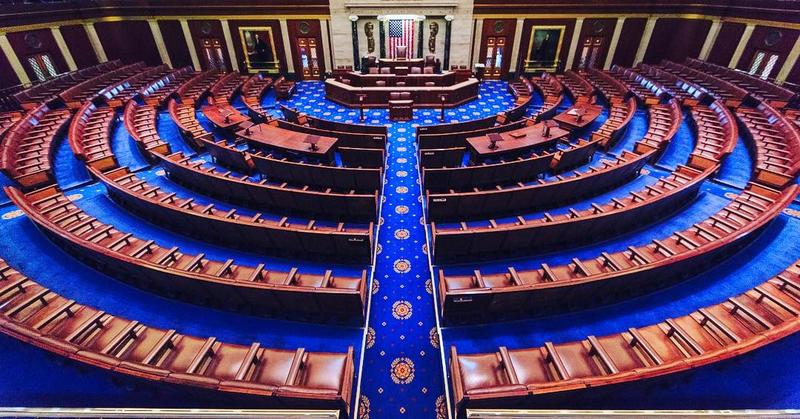
( United States House of Representatives or Office of the Speaker of the House, Public domain, via / Wikimedia Commons )
Brian: It's The Brian Lehrer Show on WNYC. Good morning again, everyone. Here we are, a week and a day after the Democrats did really, really well across most of the country in the elections, but which party is having a big public fight with itself? Yes, the Democrats. Let's see where things stand. Seven centrist Democrats in the Senate decided that now that the election was over, it was time to end the government shutdown with the best deal they thought the Democrats would get, no matter how long they held out. Virginia Senator Tim Kaine was one of the seven.
Senator Tim Kaine: We got a fighting chance of winning this health care vote. Dems have got the high ground on it now. People know we're fighting for them. We're going to continue to do it.
Brian: Kaine on NPR, but as you know, many other Democrats are furious. Maybe you're one of them. The governor-elect of New Jersey, Mikie Sherrill, calls it political malpractice. Bronx Congressman Ritchie Torres on why he opposes the deal.
Congressman Ritchie Torres: Because it's not a deal. It's an unconditional surrender that abandons 24 million Americans who are about to see their premiums more than double.
Brian: Congressman Ritchie Torres, who, remember, is often a more centrist Democrat himself, but not on this. Remember, to remind you of some of the basics, seven Democrats were all the Republicans needed to pass the compromise bill. It extends SNAP benefits and veterans' benefits for a year, rehires all the federal workers who President Trump said he was permanently laying off, and here's the biggest thing. It guarantees that a bill written by Democrats to extend the current Obamacare subsidies will get a vote on the Senate floor next month before those subsidy bills come due for premium payers.
Remember, it's those subsidies that Democrats refused to fund the government over in the first place, but there's a catch. There's no guarantee that it'll get a vote in the House, even if it gets a vote in the Senate. It could wind up being an epic fail by Democrats that amounts to a surrender right after winning big in the election, or it could wind up in a big victory if House Republicans feel the heat from their constituents on the very popular, according to the polls, and much-needed subsidies at a moment when we are told premiums would otherwise double.
Speaker Mike Johnson could declare on whether he'll promise that Obamacare vote any time now. We're going to talk about that with a congressional reporter. By the way, there is other breaking news this morning that Speaker Johnson and President Trump will have to deal with. The New York Times has a new story with a headline, "Epstein Alleged in Emails That Trump Knew of His Conduct."
It says in a message obtained by Congress, "The convicted sex offender, Jeffrey Epstein, wrote that Donald J Trump spent hours at his house with one of Mr. Epstein's victims," and it goes on from there. Let's see where we are on either of these things with Nicholas Wu, congressional reporter for POLITICO. Hey, thanks for some time today, Nicholas. Welcome back to WNYC.
Nicholas: Thanks so much for having me.
Brian: Can we start with that breaking news about Epstein and Trump? I see that even before The Times story came out around 8:30 this morning, you had published a story for today called "Here's how the House battle over the Epstein files will play out." Why were you already on that as an angle for today?
Nicholas: It's kind of all coming to a head today, because even independently of the release of this files, what was going to happen today was with the House finally coming back into session after weeks of being out, Congresswoman-elect Adelita Grijalva from Arizona, a Democrat, is set to be sworn in. She will become the 218th person to sign this thing called a discharge petition, which will basically circumvent the leadership and force a vote in the House on a bill that would compel the release of DOJ's Epstein files. We have that today. The process will get kick-started on that coming up for a vote probably in December. We have the release of these new files today as well. It's very much a big political headache for Republicans.
Brian: Have you seen the story about evidence Trump knew of Epstein's sex with minors? Apparently, according to The Times, in one of these text messages or emails, I guess, Mr. Epstein flatly asserted that Mr. Trump "knew about the girls," many of whom were later found by investigators to have been underage. The Times reminds us in another, it says, "Mr. Epstein pondered how to address questions from the news media about their relationship as Mr. Trump was becoming a political figure." I don't know if it's flat-out proof, but it leans in the direction, and we'll see what other words are there besides "knew about the girls." Where does that go from here?
Nicholas: This is something that we're still sorting through right now, but it appears to show that perhaps the president's ties to Mr. Epstein were either closer or more than he has let on previously. You see, he's been trying to put a lot of distance between himself and Jeffrey Epstein, and here is perhaps evidence to the contrary.
Brian: I'm going to give listeners a little more from The Times story, quoting from these emails. One email from April 2011, Epstein told Ghislaine Maxwell, who was later convicted on charges relating to facilitating his crimes, "I want you to realize that that dog that hasn't barked is Trump." Epstein added that an unnamed victim "spent hours at my house with him. He has never once been mentioned." Ghislaine Maxwell wrote back, "I've been thinking about that."
Then in an email from January 2019, so Trump is president at this time, Epstein wrote to someone else of Trump, "Of course, he knew about the girls as he asked Elaine to stop." Stop what? I'm not sure. Then it says, "House Democrats, citing an unnamed whistleblower, said this week that Maxwell was preparing to formally ask Mr. Trump to commute her federal prison sentence." It goes on from there, but Trump himself is going to have to answer to some of this. I guess the story that you reported about how they're going to have a vote before too long on the Epstein files, would these be in the Epstein files, or would these be separate?
Nicholas: They perhaps could be. Part of the question with all these files is that because they haven't been publicly released, and that there's a lot we don't know about it. We'll have to see what happens with that. At the same time, though, the Senate has not committed to any kind of vote on this Epstein files legislation. There's a very real possibility that after all this drama, after all this back and forth in the House and all this build-up to today, it could go to the Senate to never make it to the floor.
Brian: Just one last thing on this before we get back to the shutdown. Any reaction you're getting yet from Trump or you cover Congress House Republican leadership?
Nicholas: I don't think the speaker commented on it this morning. As for Trump, keeping an eye on his Truth Social has been the best place to keep an eye out.
Brian: All right. Nicholas Wu is with us, congressional reporter for POLITICO. Let's talk about the government shutdown. As far as you could tell, did those seven Democrats go rogue on Leader Schumer and the rest of the party, or is this a coordinated strategy to force a vote on Obamacare subsidies in a way the Republicans may have to accept?
Nicholas: It seems to be that even if they technically acted on their own, there was still some sign-off from Democratic leadership in doing so. In fact, because one of the members of the Senate who broke ranks was the number two Senate Democrat, Dick Durbin, who's retiring this cycle. It speaks in many ways to the ways that Democrats have been trying to find an off-ramp throughout this entire crisis. There were a number of different deadlines that folks thought might be things to end the shutdown. The troops needed to be paid by a certain day. Air traffic control started to have issues. The elections might have been a pressure valve that was released.
At this point, it seems that Senate Democrats, or at least the folks that voted to advance this legislation, believe that this was perhaps the best deal that they were going to get. Of course, there's no firm commitment for any kind of healthcare subsidy legislation. They'll instead get some sort of vote instead on doing so. As some of the Senate Democrats have said, when they started the shutdown, their chances of getting a vote on the healthcare subsidies was zero. Now, perhaps, it is a little higher.
Brian: To the thing that I really spotlighted in the intro, and that I have no idea of the real answer to, the Senate passed the bill. The House is taking it up today. Will the House version include the Senate Republicans' promise to allow a standalone Obamacare subsidies bill, written by the Democrats, to come to a vote next month? Will it happen in the House or only in the Senate?
Nicholas: That remains to be seen. Speaker Johnson has not publicly committed to bringing any kind of Obamacare vote to the House floor. Democrats are looking at ways to really force the issue, whether that's adding political pressure on Republicans or even attempting another discharge petition, which would circumvent Hill leadership, but that takes a lot of time. There's a real concern that if this is not something that's acted on the next month or so, people are going to see their premiums go up by a lot if you're on an Affordable Care Act Exchange health care plan.
Brian: December 15th, I believe, is the deadline for paying your premiums for next year's Obamacare health insurance policy, if you wanted to kick in at the start of the year on January 1st. Is that why the Senate Republican leadership promised the vote for the month of December on the standalone Obamacare subsidies bill?
Nicholas: That is what is looking like the likely reason why. At the same time, it's not clear whether there's enough time before then for any kind of alternate Republican plan on health care subsidies to emerge, since it gets into all sorts of thorny questions about Obamacare that Republicans are really loathe to talk about, let alone the fact that it's obviously a very complicated marketplace and changing things too much could cause real issues for consumers.
Brian: The Obamacare subsidies are very popular politically, according to the polls, and the Republicans, who you just mentioned, famously have no plan year after year to make health insurance affordable in other ways. Trump himself, as you know, has been embarrassed on that point so many times. "Repeal and replace Obamacare." Replace with what? Democrats can bring the heat, I guess, but I'm sure a lot of Democrats' heads are exploding over the prospect that they're going to get this promise from the Senate to have an Obamacare subsidies extension vote in December. Then if the House doesn't go along, then it's a dead end, right?
Nicholas: Right. That's why we're really seeing so much anger from different corners of the Democratic Party at the Senate right now. They've taken this big political risk in voting against government funding week after week after week, in really making health care the highlight of the government shutdown fight, in taking these very hard political positions. Now, as a lot of Democrats see it, they're not getting the central issue that they highlighted in this crisis, and that's leaving a lot of heartburn in the party. Some calls, although noticeably none from New Yorkers, for Chuck Schumer to step aside as Senate leader.
Brian: Let me play two more clips relevant to this, the point you were just making, and then listeners, we can take some phone calls and text from you on either of these things, the shutdown politics as they continue to play out with that House vote coming probably late today. We'll find out if there's a promise for a stand-alone vote on Obamacare. Also, the breaking news on these text messages involving Donald Trump, at least referencing Donald Trump, from Jeffrey Epstein, between Epstein and Ghislaine Maxwell. 212-433-WNYC, 433-9692. Here is House Minority Leader Hakeem Jeffries, congressman from Brooklyn.
Minority Leader Hakeem Jeffries: We're not going to support partisan Republican spending bill that continues to gut the health care of the American people.
Brian: He's not happy with those colleagues in the Senate who allowed this to even come back to the House. Here's one of the bits of context, Nicholas, that I think is making Democrats' heads explode. Even more, here's something President Trump said after the drubbing that the Republicans took in the elections last week.
President Trump: The shutdown was a big factor, negative for the Republicans, and that was a big factor. They say that I wasn't on the ballot was the biggest factor.
Brian: To the point of the president acknowledging that the shutdown was a big factor, we're going to go to Andy in New Paltz. Andy, you're on WNYC. Thank you for calling in.
Andy: Thanks, Brian. I believe the shutdown may have made sense as part of a large-scale protest, perhaps paired with a national strike against Trump's Project 2025 policies, against his pursuit of personal aggrandizement at the expense of stabilizing political norms, constitutional separation of powers, essential truth-oriented disciplines, the sordid Epstein relationship, his naked corruption, capture of the Justice Department, the military adventure in the Caribbean. The list goes on. It did not make sense to me to pin the shutdown to the Affordable Care Act. The issue connected to the ACA, which, as you've discussed, is the expiration of the COVID-era enhanced subsidies, is serious and terrible for some people.
I myself am in my mid-50s, and I get my insurance from the exchange, and my cost is going to go up, but fortunately, I can afford it. It's a relatively narrow issue, though, and it doesn't seem on its own to be an adequate justification for a government shutdown, with all the political risk and the real-life disruption that that involves. I don't know why we can't focus on the big picture and unite against the real threats that we're all facing under this administration. I guess I could pose it as a question rather than a comment, which is, is there a strategy behind this that's valid and defensible that I'm just not seeing?
Brian: Nicholas, you want to take that question? I think we discussed at the beginning of the shutdown what the goals of the Democrats should be. Should they hang it narrowly on Obamacare subsidy extensions, like we've been discussing, like Andy references, or should they have gone bigger, a kind of No Kings? Maybe too abstract. He says it doesn't have to be abstract or maybe not, using it to build more public demonstrations of outrage over the creeping autocracy, right? That was a debate within the Democrats' caucus when the shutdown started, Nicholas, wasn't it?
Nicholas: Yes. Leading up to the shutdown, there was a lot of debate within the Democratic Party about what their strategy should be. To Andy's question, it's something that Democratic leaders, rank and file, really grappled with, because healthcare, of course, has been the big focus of Democrats right now. They're hoping to make that a big part of their campaign message in next year's midterm elections, but that's an abstract concept. The Obamacare subsidies were a way for them to make it a much more concrete issue.
On the other hand, there were other factions of the party who really wanted them to highlight, yes, those questions about putting guardrails on the Trump administration and trying to prevent excesses of power. One issue being the so-called rescissions and the ways that the Trump administration was unilaterally rescinding funding from government programs. A lot of Democrats wanted them to push for protections to require that congressionally appropriated money would actually be spent as part of their shutdown demands.
However, that's a hard issue to bring to a broader public, and it's not the kind of thing that fits neatly on a poster. It's a little more complicated to explain to voters, and there's more in the weeds. That is perhaps why we ended up seeing much more of a focus on the Affordable Care Act subsidies and on healthcare alone. Of course, time will tell whether or not this was the most effective message for them to be using in this moment.
Brian: Dan in Ringwood, you're on WNYC. Hi, Dan.
Dan: Hi. I think that this is a win-win for Democrats. The reason is that no minority party has ever been granted its main goals in a shutdown, never. It wasn't going to happen this time, but the Democrats did a very good job of focusing their shutdown objections on the Obamacare tax subsidies, and so those are still there. That issue is still there, and we can run on it next year. Of course, very sorry for the millions of people who are going to be paying a lot more for their healthcare or going off healthcare entirely.
This is a horrible thing, but whose fault is that? It's not the Democrats. We can run on it. I think that Sheldon Whitehouse was right the last couple of days when he said it's perfectly fine for Democrats to be angry at the senators who supposedly caved in and negotiated this. Let's get together on the big issue, which is to resist MAGA and take it apart before it's too late. I think that's going to happen in 2026 as long as Democrats can unify behind these messages.
Brian: Dan, thank you. Thank you very much. Sheldon Whitehouse, the Democratic senator from Rhode Island. There was a lot in that call, Nicholas, but to the very first part of it, the premise that no minority party has ever gotten a big concession from a shutdown. That was the historical and presumably current political context in which Democrats had to figure out how to agree to end it. The Democrats who are angry point to that Trump clip that we just played, where he said he believed the shutdown was a big factor in the Republican losses around the country last week.
I think they were gearing up those other Democrats to push it even harder, push the message, and that maybe Trump and the House Republicans would have to back down and actually extend the Obamacare subsidies, not just do this vague thing about a vote and maybe only in one house. Why couldn't they win? Why wouldn't? I'm not asking you to be a spokesperson for Democratic moderates, but what's the thinking on why couldn't they win if the Republicans were that on the ropes after Election Day? Even Trump was saying that.
Nicholas: Republicans were on the ropes after Election Day, but they stayed consistent throughout the entire shutdown in their position that they would not give an inch to Democrats when it came to negotiating or having any kind of major concession on the Obamacare credits. It was striking to me that throughout this whole shutdown, there was not a single meeting other than the one that kind of went off the rails at the beginning. There was no meeting between congressional leaders on both sides of the aisle and President Trump throughout the whole time.
The White House continued business as usual, the House stayed out of town for the entire duration, and Senate Republicans put up vote after vote after vote on the existing stopgap funding package. With that particular scenario, if you're a Senate Democrat and you're going up against a side that is not budging, you, at the end, have to give us something. That is how we ended up seeing this block of Senate Democrats come together at the end to help end the shutdown.
Brian: Heather in Kensington, you're on WNYC. Hi, Heather.
Heather: Hi there. Overnight, there are reports popping up on various internet and YouTube sources that Republicans are threatening to not vote for the ACA continuance, which only lasts a year, unless there are additional abortion restrictions imposed, and that Senator Ron Wyden had been warning of this. Furthermore, the senators from Nevada, Jacky Rosen and the other one, who were among the seven who caved in, they've been on EMILYs List and other progressive outlets for quite some time as senators who we should all support, and I think that needs to change.
Brian: Yes, and you're right. I'm just seeing this now. Here's an NBC News version. "Senate Republicans say they're open to extending a part of Affordable Care Act funds that will expire at the end of the year, but only if Democrats acquiesce to stricter abortion restrictions on insurance plans." Thank you for raising it, Heather. Have you seen that yet, and do you have any political analysis, Nicholas, of whether that has a chance of passing? Obviously, much to the chagrin of many Democrats, if they feel like they have to go along with that to get Affordable Care Act subsidy extensions.
Nicholas: I have seen that, and that has been the question for Democrats all along. A lot of them really didn't want to get to this position in the first place because if they opened the door, the thinking went to a commitment to hold a vote rather than actual legislation that they could shape on extending the Affordable Care Act subsidies. This would get them into really thorny territory. That's why we see there are some things that Democrats have signaled they could compromise on, perhaps adding income caps to the ACA subsidies.
On the other hand, this Hyde Amendment question, as it's called, and putting abortion restrictions on the ACA subsidies, really puts Democrats into a hard place. If this ever comes up for a vote, this is something that could very well split Democrats.
Brian: A lot of moving parts, obviously, and some of them are going to move today. What time do you expect a House vote on the Senate bill, and whether the promise for an Obamacare subsidy extension vote will be included in the House?
Nicholas: The promise for an Obamacare extension is something that's kind of more of a handshake on the side. We do know that the House is going to start voting on this funding package somewhere around the five o'clock hour, which would set up final passage of it sometime between 7:00 and 8:00. Then it could be sent to the President for his signature, and the end of the shutdown later this evening.
Brian: Nicholas Wu, congressional reporter for POLITICO, thank you so much.
Nicholas: Thank you so much, Brian.
Copyright © 2025 New York Public Radio. All rights reserved. Visit our website terms of use at www.wnyc.org for further information.
New York Public Radio transcripts are created on a rush deadline, often by contractors. This text may not be in its final form and may be updated or revised in the future. Accuracy and availability may vary. The authoritative record of New York
