
The History of the 'Great Replacement Theory'
[music]
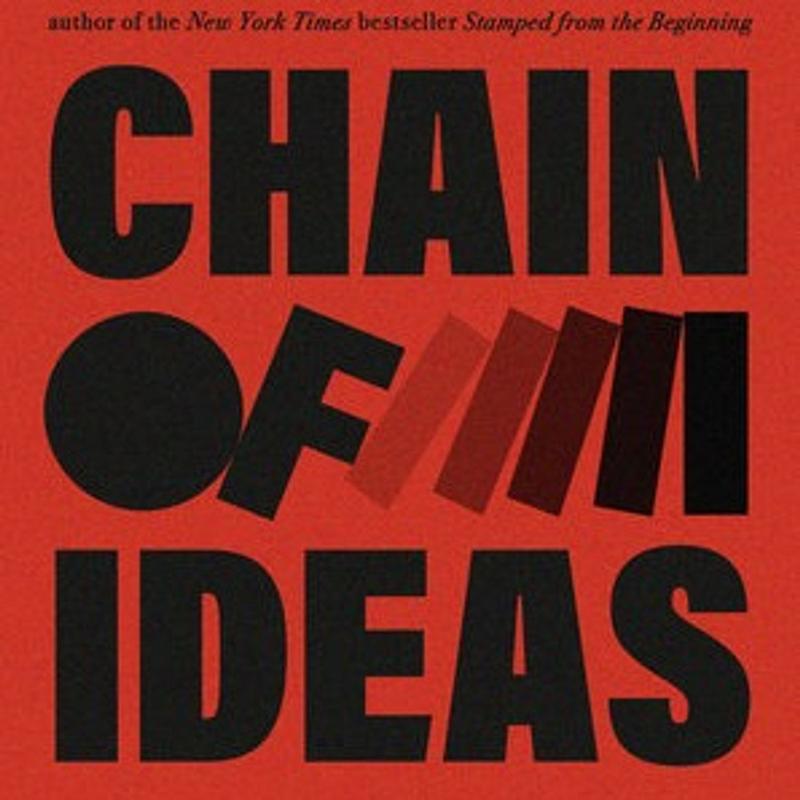
Brian Lehrer: It's the Brian Lehrer Show on WNYC. Good morning again, everyone. Howard University history Professor Ibram X. Kendi is back with us. Some of you know his influential books, such as How to Be an Antiracist and Stamped from the Beginning: The Definitive History of Racist Ideas in America. His new book is called Chain of Ideas: The Origins of Our Authoritarian Age. We'll talk about that now, including how it relates to the current backlash against all things DEI. Some of that backlash has been directed at him. Professor Kendi, thanks for coming on. Welcome back to WNYC.
Ibram X. Kendi: Of course. Thank you for having me.
Brian Lehrer: Let's start as your book does, 30 years ago, 1996, a French novelist coins the term Great Replacement Theory, which you say is now the most dominant political theory of our time. Who was that French novelist, and what did he mean by Great Replacement Theory?
Ibram X. Kendi: The French novelist is named Renaud Camus, and he was actually-- he's a pioneering French novelist. When he was in southern France in the late 1990s, and frankly, first in 1996, he perceived that people of North African descent who were likely Muslim were overrunning this town that he was in, that they were everywhere, and that ultimately they were replacing white French people and their cultures. At the time, though, North African immigrants and African migrants more broadly only made up about 4% to 6% of that actual area. Of course, he exaggerated the number that was coming, as Great Replacement theorists typically do. He essentially framed these people as replacing white people and as taking over.
Brian Lehrer: Also, that there was a group of elites who was directing this, right?
Ibram X. Kendi: Yes. That's a critical part of Great Replacement Theory, which we can define as a political theory that powerful elites are enabling peoples of color to displace the lives and livelihoods of white people, who thereby need authoritarian protection. When we hear terms like immigrants are invading the nation, we're hearing Great Replacement Theory. When we hear ideas like we need to solve that problem through mass deportation programs, we're hearing Great Replacement Theory. Even when we hear things like diversity programs are discriminatory, and they're taking jobs, we're also hearing Great Replacement Theory.
Brian Lehrer: Here's one question I have right off the bat. Some people may say that part of what you just said is overreaching, and we'll get to some of that. Here's one question I have right off the bat about Great Replacement Theory. These elites who are supposedly orchestrating the replacement of the white population, most people who we could call elites in this country and in Europe are white. Is the theory that there's a group of rich and powerful white people who are conspiring to make their own race a minority? Because that would seem very illogical.
Ibram X. Kendi: Yes. Frankly, I, as an historian, as a scholar, I try to share what the argument is, not necessarily make sense of it, but that is precisely the theory. I should also add that that comes from another theory or another element, or a previous manifestation of Great Replacement Theory. Now it's imagined that there are these globalists who are largely white and liberal and progressive, who are enabling the replacement. Not too long ago, the globalist was called international Jewry, who was framed as these people who were seeking world domination, and that all of Europe's ills were the result of so-called international Jewry. There's an anti-Semitic and certainly racist element to this theory.
Brian Lehrer: Right, and I'm glad you brought that up because it relates to a clip that I'm going to play from one of the most infamous examples of the expression of this, where the idea of replacement was very much in the news. Frankly, Dr. Kendi, that took me a while to actually understand. That is the so-called Unite the Right rally in Charlottesville, Virginia, in the first year of President Trump's first term, when rally goers were recorded on video chanting this.
Protesters: Jews will not replace us. Jews will not replace us.
Brian Lehrer: Dr. Kendi, honestly, it took me a while after Charlottesville to think I understood that chant. Tell me if you think I have it right today. I guess your previous answer indicates that I probably do, because I wondered, since Jews are only 2% of the US population, how could these rally goers have thought Jews could possibly replace them? They were really saying Jews are orchestrating white replacement theory by bringing in other groups, non Jews, by the way, who are more numerous, like Muslim refugees from Syria at the time and Latinos from Latin America. Is that what that Charlottesville chant meant?
Ibram X. Kendi: It is. Frankly, when we think of the person who engaged in a mass shooting of a synagogue in Pittsburgh, this is a person who believed that this Jewish immigration society was enabling his people to be slaughtered. That's how he justified going in and ultimately slaughtering people. Similarly, in Buffalo, when a mass shooter ended up killing a number of Black people, he believed that Black people were the most visible group of replacers today. Just as you've had Muslims who have also suffered mass shootings based on this theory, there was a shooter who shot dozens of Muslims in Christchurch, New Zealand, and wrote a manifesto called The Great Replacement.
Brian Lehrer: You write the Great Replacement Theory is not the same as white nationalism. Why not?
Ibram X. Kendi: Because most of these theorists who are pushing this theory are thinking globally and thinking internationally. They are saying things like the West is being destroyed. That's not France or the United States. That is a transnational idea. I mean, even the current war with Iran, you have people who are articulating Great Replacement Theory to justify that war, calling it a clash of civilizations, the West, the Christian Judeo-Christian West as they call it, versus Islam, with Iran at the head of the snake.
These are certainly people who are nationalists, but they're also, and this is what I try to emphasize in Chain of Ideas, they believe that Europe, they believe that the West is being replaced by Black people, Muslims, and immigrants of color.
Brian Lehrer: Listeners, questions are welcome for Ibram X. Kendi, Howard University history professor, about his new book, Chain of Ideas: The Origins of Our Authoritarian Age. 212-433-WNYC, 212-433-9692, call or text. I see you organized the book around 10, what you call links. I'm just going to read them out for the listeners because they're only one line each. They are, Link 1, "White people lose out as peoples of color gained." Link 2, "Racial inequity data should be ignored." 3, "Racism is biological prejudice and interpersonal discrimination." I guess you mean only that.
Link 4, "Racism against people of color is over." Link 5, "Anti-white racism is on the rise." Link 6, "White Christians are indigenous to the nation." Indigenous. Link 7, "Fight for freedom as patriots like the nation's founders." A directive. Link 8, "Stand in the legacy of ant-slavery, anti-colonialism, civil rights activism, and anti fascism." Like make it sound like your cause is rooted in those things. Link 9, "Insurrections against democracy protect the nation." Protect. Link 10, "Fight for privileges provided by dictators instead of power provided by democracy."
Dr. Kendi, let me ask you about a couple of those that really jumped out at me. Number two, racial inequality data should be ignored. I feel like I see this constantly in our national discourse today, and unfortunately, in the news media. I try to be an exception to that. Also see it in the backlash to affirmative action in college admissions or anything labeled DEI. The thing is that despite the centrality of that backlash in politics, in the media, and at the Supreme Court right now, the wealth of white Americans to Black Americans on average is still 10 to 1, according to the Census Bureau, 10 to 1, that's census data.
The unemployment rate as of last month, according to the Labor Department, was about 4% for whites, 7% for Blacks. Official government statistics there, under Trump. We could find similar things for college degrees, homeownership, annual incomes. To me, these things measure the foundational inequality that has never really been solved since slavery and Jim Crow were abolished. Yet the focus of politics is less on solving the basic thing than on what's fair to white people and how society tries to do it. That's just my take. What do you have in mind by that principle, that link in the book? It's one of the chapters, this Great Replacement Theory principle, that racial inequality data should be ignored.
Ibram X. Kendi: Sure. All of these links are deeply connected. Once you can make people believe that racial inequity data should be ignored, and therefore you should ignore the fact that Black people are on the lower or dying end of nearly every racial disparity, that then gives you the ability to say racism against, let's say, Black people is over. It more importantly gives you the ability to argue what in many ways is the nucleus of the racist manifestation of Great Replacement Theory, which is that anti-white racism is on the rise, or the primary form of racism in the country today is affecting white people.
In order to make that case, you have to completely ignore the racial data that you just described. That's why they're linked conceptually. You have to get people to believe one before you can get people to believe another.
Brian Lehrer: Your last two links relate very specifically. Of course, we could have a conversation about each of the 10. Your last two links relate very specifically, I think, to how Great Replacement Theory connects to authoritarianism, which is in the title of your book. Number nine, "Insurrections against democracy protect the nation." Number ten, "Fight for privileges provided by dictators instead of power provided by democracy." I think you were just starting to get at this to some degree. How do Great Replacement Theory, or the fears that it's built on, lead to a devaluing of democracy and support for authoritarians? Tell me more.
Ibram X. Kendi: Americans are quite familiar with a politician who essentially loses an election and argues that certain people who voted for his political opponents are not viable voters, and thereby the election was stolen from him. Those ideas then galvanize his supporters to believe that his loss was not democracy in action, that his loss was the very frankly opposite of that. His supporters are incited to insurrection and ultimately engage in them. Of course, we experienced that in the United States on January 6th. The 9th section also documents a similar development happening in Brazil, which also experienced a very similar insurrection when Bolsonaro, a Trump ally, lost an election.
I also document insurrections of that magnitude in Asia as well as in parts of Europe. You have these authoritarians essentially galvanizing their supporters to undermine democracy in the name of democracy via Great Replacement Theory, that these ethnic minorities or these Black people are stealing the elections. That's happened all over the world, as I document in Chain of Ideas.
Brian Lehrer: Interesting question from a listener. In a text, listener writes, "The strongest articulation of these theories I've heard in person have been from a Black American and a Mexican American." Listener writes, "Please don't make the usual liberal mistake of ignoring or minimizing white supremacist theories among people of color." You write about this, right? You've said we shouldn't be surprised to see people of color, or LGBTQ people, or women as Great Replacement leaders, even though the theory makes those groups out to be the big threats. Why would that be?
Ibram X. Kendi: First, in Chain of Ideas, one of my major arguments is that even as Great Replacement Theory has primarily been positioned as a far-right theory, polling data shows that people who identify as centrists and even liberal and leftists also believe elements of Great Replacement Theory. I document that in Chain of Ideas. I also document how you can have elected officials like the current President of the United States in their stump speeches saying things like, African Americans, your jobs are being stolen and taken by immigrants. Hispanic Americans, your jobs are being taken and stolen by immigrants, as this current president stated in his Republican National Convention speech in 2024.
Some of those African Americans and Latino Americans could ultimately believe and internalize the idea that their jobs are being replaced. Without question, in Chain of Ideas, I document all the different manifestations of Great Replacement Theory. We started out with the idea that, let's say, people of color are replacing white people. I also document in the book how people believe that Black immigrants are replacing African Americans, or that women are replacing men, or that the traditional values of Russian Christians are being replaced by queer people. This is a theory that has mutated to essentially position any disadvantaged group as the replacer.
Brian Lehrer: I have one more clip to play. It's from a recent Senate hearing that barely made the news. It was just last month, extraordinary, of a Trump nominee to be an Assistant Secretary of State, Jeremy Carl, asserting right out loud that he believes in Great Replacement Theory. He's being questioned here at his confirmation hearing by New Jersey Senator Cory Booker on Lincoln's birthday of all days, February 12th.
Senator Cory Booker: What do you mean when you say that you believe in the Great Replacement Theory?
Jeremy Carl: Senator, thank you for that question. This refers to the intentional demographic replacement of Europeans in Europe. It was invented by Renaud Camus, who was a French scholar.
Senator Cory Booker: You think there's an active effort to "replace Americans" right now.
Jeremy Carl: Senator, I think the Democratic Party, through its immigration policies, has certainly shown signs of that.
Brian Lehrer: Dr. Kendi, that's an example of how mainstream this has become. Knowing that Jeremy Carl held that view, Trump nominated him to be an Assistant Secretary of State. Secretary of State Marco Rubio supported that nomination. Mr. Carl felt comfortable enough putting it right out there. Like, "Yes, I believe in Great Replacement Theory." Is that indicative of anything that's very 2026 in any way?
Ibram X. Kendi: It is. It's indicative of also the number of people within the Trump administration who believe elements of Great Replacement Theory. Trump's US Homeland Security Advisor, Stephen Miller, is a longtime proponent of Great Replacement Theory. Obviously, he's been the architect of so much of this administration's immigration policy. I should also just add very quickly that Carl described Renaud Camus as a scholar, he's a novelist and a poet. I think it's important to just draw that distinction because he's trying to give legitimacy to a theory that has always been a conspiracy theory, trying to add some scientific credibility.
This is a person, Renaud Camus, who stated in You Will Not Replace Us, a book that he wrote after what happened in Charlottesville, that if science and data does not show that the Great Replacement is happening, then that doesn't speak to a problem of the Great Replacement. That speaks to the problem of science and data. This is a person who's anti-science, anti-data, anti-scholarship. It was fascinating for me to hear Carl describe him as a scholar.
Brian Lehrer: We should also note, however, that that nominee, Mr. Carl, withdrew from consideration after some Republican senators said they would not vote to confirm him because of views like what we just played. Does it give you hope that there's at least that much rejection of, maybe even revulsion against, promoting Great Replacement Theory by a meaningful number of people in the Conservative Party of the United States?
Ibram X. Kendi: Certainly, I think it's a good thing that that call was not confirmed. As I mentioned earlier, the animating philosophy of-- I should say, the animating political theory of the Trump administration has been Great Replacement Theory. Not just the Trump administration. Presidents and prime ministers of countries as diverse as Italy, El Salvador, India, and Hungary, Russia. These are also politicians who are espousing different forms of Great Replacement Theory, which is partly how I've been able to make the case that this is the most dominant political theory of our time.
Brian Lehrer: Listener texts-- Sorry, they're coming in too fast for me to keep the one I wanted on the screen. Wait, I'm going to get it. Oh, "The theory is really that old political cartoon of watch out, that other guy is trying to take your cookie said by the guy holding 99% of the cookies. It's weaponized artificial scarcity." That's an interesting laugh line that a listener suggests. Now, I said I was going to ask you some pushback questions, and here we go. I'm going to base these on some reviews of your book. I should say these reviews were mostly positive, but they also raised some questions.
New York Magazine wonders if you stretch the idea too far by including El Salvador's strongman Bukele in this. The article says, "That country really did have the world's highest murder rate. The support for authoritarian solutions may have come from things other than wanting to marginalize a despised other." I'm paraphrasing. Is the idea the way you describe it, over broad?
Ibram X. Kendi: No. Actually, I define it-- One of the ways we can understand it is there's three elements to Great Replacement Theory. First is that there are these powerful elites who are typically imagined to be operating in a political party or even economic actors. Two, that there is this group of people who are coming to destroy. Three, that they're a group of people who are being destroyed by the so-called replacers. In El Salvador, Bukele has positioned his political opposition parties as the powerful elites. He has positioned his supporters as the people who are being replaced and destroyed. A group he calls the good people.
Then he's positioned everyone else, people who are in opposition to his dictatorship, as all in cahoots with the gangs. Any journalist who is seeking to accurately report on his administration, he positions them as in cahoots with the gangs and is trying to destroy the citizenry. I talk about, in Chain of Ideas, that it's important for us to not just understand how theories operate today. It's important for us to understand how they can continue to mature and mutate. I talked about El Salvador in many ways as the future of Great Replacement Theory.
Brian Lehrer: Your proposed solutions to the rise of authoritarianism fueled by Great Replacement Theory got dinged a little in the review that was published in Business Standard. It says, "Kendi's solutions for our present social ills mostly aim to quarantine dangerous ideas. Kendi recommends the banning of Great Replacement politicians when they break the law. He goes on, we must systematize civic, anti-racist, queer feminist, and multicultural education."
Then they write. "Kendi does acknowledge that economic insecurity has made people more susceptible to right-wing populism. This admission feels perfunctory despite a few pages here and there on the links between Great Replacement Party success and inflation, COVID, and the Great Recession. Kendi tends to treat racist ideas as an all-powerful means of control and the global realities underlying right-wing grievance, especially mass migration generated by war, want, and climate change, as exaggerated if not illusory."
Your reaction to that? I guess that writer is trying to say, yes, there are big things going on in the world economy and other things that fuel this, and if you're going to look for solutions, they should address that, not just say racism is bad.
Ibram X. Kendi: It's interesting because in the epilogue that this person cites, I state that this book could have been titled Chain of Conditions, and I write about how it is conditions more than any other factor. The conditions that that so-called critic describes that have actually made people susceptible to this theory. I spent the bulk of so many-- each of the sections in the text, there are 10 sections, I describe a different set of historical conditions, like the Great Recession, like the inflation crisis, like a whole bunch of other economic ills that actually led to politicians being able to capitalize on people's status losses and basically tell them that those people are stealing from you. That's what becomes frustrating, I think, for us as writers when we literally do something in a text--
Brian Lehrer: Somebody says you didn't do it. One last thing-
Ibram X. Kendi: Yes, what else can we do?
Brian Lehrer: -as we run out of time, a couple of people have texted an example that we're all familiar with of when a great replacement actually happened. The way one listener puts it, "I thought that it was an Apache or a Lenape writer 500 years ago who first proposed the replacement theory." I think that person is being sarcastic. Of course, white European settlers and their descendants really did engage in replacement theory. At least that's how it turned out.
Ibram X. Kendi: Yes, and actually, I give an example of in Latin America, after the end of chattel slavery, you had a number of Latin American politicians who decided that they wanted to actively whiten their populations. What they did, roughly between--
Brian Lehrer: We have 20 seconds left. I apologize.
Ibram X. Kendi: Yes, roughly between 1880s and 1920s, was essentially go out and recruit white European immigrants to come, offer them land, offer them all sorts of privileges they refused to give people of color and indigenous people.
Brian Lehrer: Ibram X. Kendi, Howard University history professor. His new book is Chain of Ideas: The Origins of Our Authoritarian Age. Thank you for sharing it with us.
Ibram X. Kendi: You're welcome. Thank you.
Copyright © 2026 New York Public Radio. All rights reserved. Visit our website terms of use at www.wnyc.org for further information.
New York Public Radio transcripts are created on a rush deadline, often by contractors. This text may not be in its final form and may be updated or revised in the future. Accuracy and availability may vary. The authoritative record of New York Public Radio’s programming is the audio record.
