
The Fight to End Deed Theft Evictions
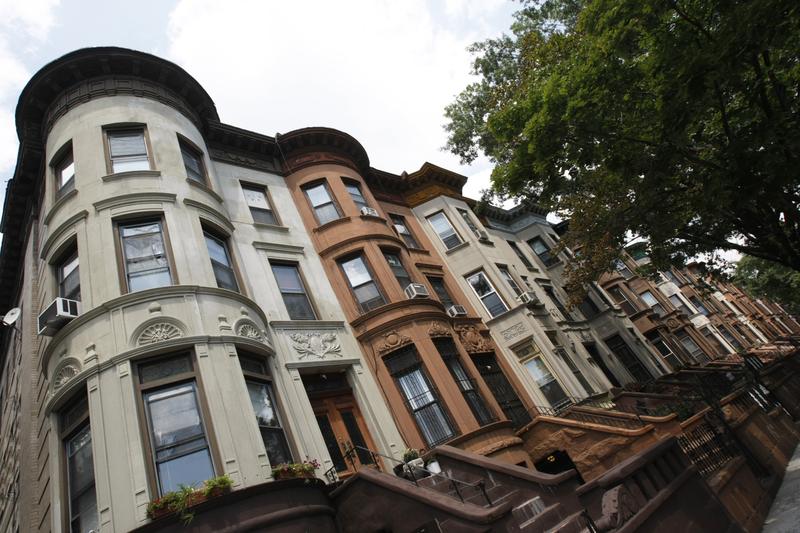
( Milbert O. Brown, Jr. / Howard University )
Title: The Fight to End Deed Theft Evictions
Brian Lehrer: Brian Lehrer on WNYC. Here's a New York City problem that a member of City Council is trying to lead a solution to. It's deed theft. It's a pervasive issue in the city's housing market, but one that's often overlooked, in no small part because it strikes mostly more vulnerable people and because it's kind of confusing. I'll do my best to explain a little bit. Then we'll talk to the council member and invite your question, and to help us report this story if you've been a victim of deed theft, or know anybody who has, or maybe you're even a lawyer who's working to fight it on an individual basis. Now, deed theft is essentially a scam where real estate investors steal ownership of a home on paper without the real homeowner's knowledge.
They'll identify recently deceased homeowners who didn't leave a will and track down far-flung heirs to the property, convincing them, sometimes through fraud, to sell their shares. Then these predatory buyers can evict the existing residents who might be family members and sell the property, often doubling or tripling their investments. To give an example, say you've been living with your grandmother, who passed away, and you assume that the house now belongs to you. Someone might knock on your door and say, "I've tracked down your second and third cousins and bought their shares of the house. Now I own part of your home, and I want to sell. You have to move out."
It's also important to note that these schemes do disproportionately affect communities of color. It's also creating a situation where Black homeowners are being stripped in yet another way, when you look at history, of a path towards intergenerational wealth. It's not actually a new phenomenon. Deed theft has a long history in the South, especially dating back to the days of sharecropping. It's become increasingly prevalent in the city in recent years following the gentrification of historically Black neighborhoods like Bedford-Stuyvesant.
Earlier this week, Council Member Chi Ossé, who represents Bed-Stuy and part of Crown Heights, partnered with the People's Coalition to Stop Deed Theft to urge Governor Hochul to enforce a temporary eviction moratorium on properties in New York City where there's a possibility of deed theft and fraud. Hochul did sign a bill in 2023 aimed at closing some legal loopholes that allow for these kinds of transactions, and she gave prosecutors more latitude to go after deed theft.
Council Member Ossé and several other officials who have signed on to this initiative are arguing that the governor needs to go further. We are joined now by Chi Ossé to walk us through what exactly he's asking the governor and the legislature to do, and how it might protect homeowners, especially Black homeowners in Queens and Brooklyn, who seem to be the disproportionate targets. We'll also touch on his recent decision not to primary Hakeem Jeffries, apparently because of the influence of Mayor Mamdani on the DSA, the Democratic Socialists of America. Council Member, welcome back to WNYC.
Council Member Chi Ossé: Thank you so much for having me back on, Brian. It's always a pleasure.
Brian Lehrer: First, I gave some background on deed theft there. What would you like to add or tell us how you first became aware of the issue?
Council Member Chi Ossé: Absolutely. I first became aware of the issue, not necessarily as a city council member. Both my mom and my grandmother, who recently passed away, are homeowners. When my grandmother first had a stroke in her early '90s, she's now passed, there were still individuals who were knocking on her door, who were calling her home phone number, trying to convince her that she needed to pay off her mortgage debt or make repairs to her home when she already paid off her entire mortgage. This issue of deed theft is extremely personal to me. I've witnessed how some of these thieves and scammers pursue trying to force mainly Black seniors and Black senior women to sell their home.
Now, as a council member, I've received numerous complaints around this issue, and I have been working with a coalition called The People's Coalition to Stop Deed Theft on trying to formulate a plan in keeping these homeowners within their homes. Black homeowners who are predominantly being impacted by this issue, as we see rampant gentrification and displacement within communities like Bed-Stuy, Crown Heights, Harlem, and Southeast Queens.
Brian Lehrer: Can you say more about why this issue winds up disproportionately affecting Black New Yorkers and people in other communities of color?
Council Member Chi Ossé: Absolutely. As we see our communities change, for example, Bed-Stuy over the past 10 years, from 2010 to 2020, saw the largest displacement of Black people than any other community within New York City. A part of that is the neighborhood is being seen as more desirable. Many of these communities that are now being seen as more desirable by real estate businesses are now seeing some displacement and gentrification take place. A part of that are these deed thieves. These brokerages are sometimes filled with scammers who are approaching Black homeowners, especially Black seniors, and taking advantage of them. We're seeing this mainly within communities of color, and that's why it's predominantly impacting a community that I represent.
Brian Lehrer: Listeners, we do want to invite you to help us report this story or ask council member to help you protect your home. Have you been a victim of deed theft, or know someone who has? Help us report this story. Let everybody else know what you've been involved with or even heard about. 212-433-WNYC. Call or text 212-433-9692. Have you filed a complaint to have your deed transfer voided after an inherent act of deed theft against you? Maybe you're not sure what channels to go through to restore ownership of your home, and you want to ask the council member about your options? Have you committed deed theft and want to fess up?
Maybe we won't get those calls, but bottom line, has this been an issue in your life or your neighborhood, or do you have a question for Council Member Chi Ossé of Brooklyn? 212-433-WNYC. 212-433-9692. These transactions might be morally dubious, but for a long time, as I understand it, they were technically legal. Many of them weren't, but many of them were. I mentioned in the intro that the governor did sign a bill a couple of years ago aimed at curbing the problem. Tell us what used to be legal and what has already changed.
Council Member Chi Ossé: I think what used to be legal was whenever a deed was stolen or there was a stack of paperwork that was presented to an unassuming homeowner, there would be forging of signatures or this homeowner would sign off on these pieces of paper where they would give their deeds away, which does not seem legal, obviously, because it's fraud. When presented to the courts, the courts and the judges are looking at these pieces of paper and seeing the signature of the homeowner. Because of that, in the eye of the courts, without real evidence provided from the homeowner, these deed changes appear to be legal.
I know that the state has recently been trying to enforce 756-a, which is the Real Property Actions and Proceedings Law, which would essentially open up deeper investigations into deed theft to hold these thieves accountable. Many within our judicial system, many of our judges, are not kept up to date, truly, about how to enforce this law. When they see those fraudulent papers, sometimes with the real signature of a homeowner who signed off on transferring their deed, it appears to be still legal within the eyes of the court.
That's why we are pushing for the governor to enforce a temporary stay on evictions or an eviction moratorium for those who believe that they've been victim of deed theft. To be someone who is included within this eviction moratorium, one would have to file a complaint with OCA, with the State Attorney General's office, or the District Attorney's office. That's only one step of what we're aiming to do here. We are also calling for more oversight within our court system, more training for our judges, so that they are aware of the new laws that have been put in place.
We're also pushing for there to be funds invested into more Right to Counsel programs, specifically around deed theft cases, so that when a homeowner believes that they are potentially having their deeds stolen, we can provide them with legal counseling from the city and from the state, making sure that they are given due process if their deed has been stolen.
Brian Lehrer: To be clear, did the bill that already got passed and signed close the relevant loopholes, and now it's just a matter of enforcement, or are you saying there needs to be additional legislation as well?
Council Member Chi Ossé: I do believe 756-a did close a loophole, though there are more bills that I would like to see passed and signed into law on the state level. For example, there's an LLC transparency bill. We need stronger transparency and oversight into-- not only our judicial amending system. Some of the companies that are being used to steal people's deeds are hidden behind these shell LLCs. When the state, or when our courts, are trying to investigate and hold these deed thieves accountable, it's sometimes near impossible to find who is behind some of these companies that are participating in stealing some of these people's deeds.
In addition to that, there's another bill on the state level that is hoping to expand the statute of limitations. When it comes to a deed theft case, I believe right now it's five years. There are some people who are part of the People's Coalition to Stop Deed Theft who have been fighting to get their deed back for over 10 years. We're hoping to see these bills passed on the state level. This is part of our advocacy with this initiative. We're hoping that some of these actions can be taken while there's a temporary stay on evictions for those who are dealing with potential deed theft cases.
Brian Lehrer: Here's a question from a listener in a text. They asked: "Does the Councilman have any data on these crimes? How many homes does this happen to every year? What's the average value of the home, age of a victim, et cetera? How many criminals are there and how they operate?" I think we've talked about how they operate, but how about the data that the listener is asking for?
Council Member Chi Ossé: Absolutely. In the past five years, and I think we received this number from OCA, we've seen over 1,300 complaints from Brooklyn and a little over 1,500 from Queens. While not everyone is a homeowner here within New York City, the fact that this is happening at all is unjust. I think there are, and this is something that we've heard with working with the coalition; there are numerous homeowners who are probably dealing with this issue, but don't know the name for it. This is targeted mainly against seniors, sometimes folks with dementia, sometimes folks who are dealing with health problems. They may be victims of deed theft and don't know it yet.
That's why a part of this initiative is we're pushing for a citywide cease and desist zone. This would ensure that solicitors, both through phone calls as well as knocking on doors, would not be able to bother and solicit homeowners within their homes. We are pushing for this so that we can prevent this from happening to people who don't even know that this is happening to them. Those are the numbers that we've heard from OCA as well as the State Attorney General's Office.
Brian Lehrer: Carmela in Brooklyn, you're on WNYC. Hello, Carmela.
Carmela: Hi. How are you? Thank you, Brian, for having us on your radio station. Thank you, Councilman Chi Ossé. This is a crime. I think it's always been a crime, but what happens is they move so rapidly in flipping the houses, changing the houses, evicting people. They're not really able to look at all that's happening. I think from the very beginning, it has been a crime.
Brian Lehrer: What would you like to see done, Carmela, as a member of the coalition?
Carmela: What needs to be done, and we're asking to be done, is that, once again, deed theft is a crime. We are demanding this eviction moratorium to be given to us. This has been happening for years. We needed to compartmentalize it, like the caller said, "What's the data?" That 3,500 that they've been saying? They've been saying that same number for a while, because they can't keep up with the data. We needed to pause so we could compartmentalize what is really going on and see who's really the bad actors in it, because we always say it's a syndicate crime. We're seeing it.
It's unveiling. Look at Frank Seddio, the Democratic Party, and the courts. We go to the same court, and we're not getting justice, even though our legislative laws are in place, but when we go in front of the courts, they're acting like they have no idea. Then there's funding with these nonprofit organizations. We see what they're doing as well. They're misusing the money. In so many areas that these things are happening, we need to pause so we can get the data and show what's going on, and we can get the help in these areas that we need help with, so it's very important to all of us.
Brian Lehrer: Thank you for your call, Carmela. Do you have a reaction to how part of that call, council member seemed to target even the Democratic Party and some power broker? She mentioned somebody by name. I don't know if that person has any involvement in deed theft or enabling deed theft. What would you say to that part of her call?
Council Member Chi Osse: I think Carmela is hitting the nail on the head. I think there's a lot of skepticism within our courts, within Frank Seddio, even though he's been in the paper recently. I don't believe some of our judges--
Brian Lehrer: For this, I don't know that story.
Council Member Chi Ossé: Apparently, there's an arrest warrant issued in a case of Frank Seddio, and there's missing $2 million involved. I would advise folks to look this up, but I think there's a lack of trust.
Brian Lehrer: Look that up. Allegations. Go ahead.
Council Member Chi Ossé: There's allegations. There's a lack of trust within our judicial system, especially when it comes to some of these cases. I believe we need more oversight from the state, from the Chief Judge, into what is happening within our judicial system when it comes to these deed theft cases. That's something that we are calling for, wanting to work in partnership with the governor on doing, because we have heard some cases in the past with judges who are participating in the level of this fraud. I think Carmela is hitting the nail on the head there. I think we need more training as well as more oversight within our judicial system when it comes to deed theft.
Brian Lehrer: Yvonne in Brooklyn, you're on WNYC. Hello, Yvonne.
Yvonne: Hello. I just wanted to make a comment on the eviction moratorium that we're asking for because a lot of the homeowners that are victims of deed theft, a lot of us have lost our homes and are now living as tenants in our own properties. The people that committed the fraud against us they're actively trying to evict us to get full control of our properties to do whatever it is they want to do with it. We're still fighting to prove the fraud. If we get evicted, it will be even harder for us to get back into our properties, so we need a moratorium. They shouldn't be able to benefit from being able to commit an intricate fraud that a DA or the police can't follow to prosecute in time. We're suffering. We're losing properties, we're losing our homes, we're going to be homeless.
We need the eviction moratorium so we can go through and identify the perpetrators, get the fraud on the record, and get them arrested. We're fighting with the DA right now to get him to prosecute our cases. You had Judge Knipel in the Supreme Court in Brooklyn, who the Post already reported he was taking bribes from the referees who were committing fraud against us, and our properties were taken. You have all of this fraud going on against us. No one's investigating. It's just hell right now. We have all this stuff going on. We're being evicted.
Brian Lehrer: Since it sounds like this happened to you personally, would you want to tell everybody how it happened?
Yvonne: Well, I was a victim of mortgage fraud, where my signature at this point has been forged more than 100 times. They started a fraudulent foreclosure action against me, where the attorneys that were representing the plaintiff had their secretary forge the documents that they presented to the court. Judge Knipel knew about that because they admitted to it in an affidavit. That's on the record right now, and he still gave them my house. The people are in my house right now, tearing it apart. A townhouse that was over 100 years old, that they don't even build anymore, is now being torn down. I'm fighting the court system to get back in my property, and the judges are committing fraud against us out here, and no one's helping us.
Then, when we lose our property, we're getting evicted, and they're tearing our houses down, and then we have nothing. It's happening mostly to Black and brown communities. It's happening to other people, too. We're out here sounding the alarm, and no one's even listening to us. Council Member Chi Ossé he's been listening to us. Senator Brisport and the people whoever signed the letter that we presented to the governor this week, they're listening to us. We really do need an eviction moratorium so that we don't lose everything. That's what we're asking for. I think that's simple. It's something basic, especially when you have members of the Democratic Party, judges implicated.
The governor should want to get to the bottom of that. She's appointed some of these judges. She should want to know what's going on. We're her constituents. She represents us. Why is she not here protecting us?
Brian Lehrer: Yvonne, thank you for your call. It sounds horrible what you're going through. To finish up on this, Council Member, it sounds like you need to help people, or the government generally needs to help people on two tracks. One is a structure for preventing this from happening, and another is to help people like Yvonne, if everything she says is accurate about her case, and a lot of others, to get their properties back.
Council Member Chi Ossé: Absolutely. That's why this is a two-part initiative. The first part is an immediate protection to stop displacement, and the second part is long-term reform, so this cycle cannot continue. That includes statewide and citywide funding and making sure that we are providing lawyers who know how to handle these cases so that some of these folks who have had their homes stolen are provided with legal representation and fighting to get them back.
Brian Lehrer: Before you go, a couple of off-topic questions, if I might. First, I'd like to ask about the city's response to the cold spell. As of Monday, at least 13 New Yorkers, is the number that I'm seeing, have died due to the brutal temperatures over these past couple of weeks. I'm curious about your thoughts on Mayor Mamdani's response. He's been stepping up the city's homeless outreach efforts. Do you think it's enough?
Is there anything he's doing well or differently than past administrations with his DSA grounding, as you're a member of the DSA? Also, he's getting criticized from the right, as you may know, for not sweeping homeless encampments, for example, which the critics say, "put people sleeping outside more at risk to not sweep them in the name of being more compassionate to them." What's your take?
Council Member Chi Ossé: I'll tell you this, and I've been in contact with the Mayor's Office, especially over this past week. We've been seeing some power outages across Bed-Stuy. The Mayor's Office has been extremely responsive. They've been providing warming buses for my constituents. We've activated a school to be a warming center for constituents who have been without power. I've seen the Mayor's Office move with a lot of support within my district. Every single time we've reached out for some help for keeping people warm, they've been very helpful.
I know that we are seeing some very cold weather. There's a lot on the Mayor's plate, but I can say that the response that we've been seeing within the 36th District, especially when it comes to keeping New Yorkers and residents of the 36th District warm, they've been doing a great job here.
Brian Lehrer: Do you have any reason to believe that if Adams was still mayor, there would've been more or fewer or the same as the 13 reported deaths?
Council Member Chi Ossé: I don't think I can speak to that hypothetical, but I can speak to the fact that if Adams was mayor still, I don't believe he would be as helpful with keeping my constituents warm or even as responsive to the calls that my office was making.
Brian Lehrer: One political question before you go. You recently became a member of the Democratic Socialists of America. You announced last year that you wanted to primary the more centrist congressman and House Minority Leader, Hakeem Jeffries, as a DSA candidate in a Democratic primary, but you ultimately did not receive the DSA endorsement, reportedly at the urging of Mayor Mamdani and you have since walked back your plans to run. Can you tell me your first-person version of how that played out and why you decided not to run or the Mayor's role?
Council Member Chi Ossé: Absolutely. I've been very disappointed with the leadership of our Democratic Party, both Chuck Schumer as well as Hakeem Jeffries. I don't believe that they are fighting as tooth to nail as we want them to. I think a part of that is the donors who fund their campaigns and fund their existence in office. Hakeem's top three donors are AIPAC, BlackRock, and MetLife. These are the same fiscal institutions who elected Donald Trump. Joe Biden was still in office. Both Hakeem and Chuck were very tepid about telling Joe Biden to step aside, which yielded to Donald Trump getting elected for a second time. I believe that this race was a necessary race to run and shaking things up.
I truly believe that there was an opportunity to unseat a democratic leader who was more beholden to his donors than he was the people of Congressional District 8. I said from the get-go, when I was seeking that endorsement as well as exploring a run for office, that I would not do it without the support of the New York City Democratic Socialists of America, so when I did not get the endorsement, I stuck to my word and decided to not run in that race.
Brian Lehrer: Do you think the Mayor is not speaking enough truth to power by playing a role in not getting you the DSA endorsement?
Council Member Chi Ossé: I think the Mayor had a viewpoint that this run against Hakeem potentially would've impacted and hurt the Affordability Agenda. I respectfully disagreed with that, but it's no bad waters over here. We still text from time to time. I'm here to be a supporter of his administration as well as the Affordability Agenda. We just disagreed on our approaches and combating and potentially unseating the House Minority Leader.
Brian Lehrer: Your decision to join the DSA, last question. You've been a council member for four years; why only now?
Council Member Chi Ossé: I first sought out the DSA endorsement when I ran for City Council back in 2021. I didn't really have the best experience in seeking that endorsement. I would say that over the past couple of years, especially over the past year, I've met a lot of really incredible organizers within the organization who organized me into DSA. There were folks who I think just enlightened me a little bit more about the organization, how it works, and brought me back into the org. It completely changed my viewpoint of the organization.
That's why I'm a proud dues-paying member currently, and even looking forward to potentially having an opportunity of joining the Socialists in Office Committee.
Brian Lehrer: Councilman Chi Ossé, representing parts of Bedford-Stuyvesant and Crown Heights. Thanks for coming on and talking about deed theft primarily today, and some of these politics at the end. We always appreciate when you come on with us.
Council Member Chi Ossé: Thank you so much, Brian.
Copyright © 2026 New York Public Radio. All rights reserved. Visit our website terms of use at www.wnyc.org for further information.
New York Public Radio transcripts are created on a rush deadline, often by contractors. This text may not be in its final form and may be updated or revised in the future. Accuracy and availability may vary. The authoritative record of New York Public Radio’s programming is the audio record.
