
The Consequences of EPA’s Endangerment Finding Repeal
Brian Lehrer: Brian Lehrer on WNYC. On Tuesdays on the show, for those of you who don't know, maybe some of you are new to us listening because you're home because of the snow or something like that. On Tuesdays on the show, we like to bring the science on public health and climate and other science policy questions. Today, we'll bring some science and some law on a really important health and climate issue that might have gotten lost for many of you in the crush of other headlines recently.
The Trump administration is canceling a finding that the government made back in 2009 that greenhouse gas emissions endanger human health. That greenhouse gas emissions endanger human health. That's not an abstract debate. The finding by the EPA, which was back under President Obama, provided the legal basis for regulating some major sources of pollution that are, of course, warming the planet.
Now Trump and his Environmental Protection Agency say no greenhouse gas emissions, no, they do not endanger public health. No. As a consequence, they say they can do the biggest act of deregulation in US History. That's actually what they're boasting. It's the biggest act of deregulation in US History. They estimate this change will save taxpayers more than a trillion dollars and lower the average price of a new car or other vehicle by 2,400. Here's EPA Administrator and former Long Island Congressman Lee Zeldin on Sunday on Fox.
Lee Zeldin: Less electric vehicle infrastructure that's needed. It adds up in a very big way for the American economy. What we saw from the Obama and Biden administrations taking the endangerment finding from mobile sources, then stationary sources, oil and gas airplanes. They ended up doing what amounted to trillions of dollars of regulation. We're just talking here about the light, medium, and heavy duty vehicle greenhouse gas emissions that we repealed.
It's a big savings and it's about following the best reading of the law. The Clean Air Act simply doesn't state that EPA should be doing trillions of dollars of regulation to combat global climate change. That's not even in section 202 of the Clean Air Act. We're respecting Supreme Court precedent, we're following the law, and we're delivering on that Trump mandate that the American public proudly voted for.
Brian Lehrer: EPA Administrator Lee Zeldin on the Fox News program Sunday Morning Futures. What he did not mention in that interview, I watched the whole thing, was anything about the science or about public health. He didn't try to make the case that climate change does not actually endanger public health, although the Centers for Disease Control has concluded that it was. We'll give you some of how during this segment.
This regulatory rollback is kind of a three in one. It's a public health issue, meets an economic issue. What Zeldin wanted to emphasize there meets a legal issue. Our guest for this is Pat Parenteau, professor emeritus and senior fellow for climate policy at the Vermont Law and Graduate School. He also served as EPA regional counsel under President Ronald Reagan. Professor Parenteau, thanks for some time today. Welcome to WNYC.
Pat Parenteau: Thanks, Brian. It's good to be with you.
Brian Lehrer: The legal history on this is really interesting, and I'm going to start there. Can you start by telling our listeners about a Supreme court case around 20 years ago that was about whether greenhouse gases could be regulated at all under the Clean Air Act?
Pat Parenteau: Right. That's called Massachusetts versus EPA. It was during the George W. Bush administration. Some readers and listeners may recall that the Bush administration took the position, similar to what Zeldin is talking about, that the Clean Air Act doesn't actually regulate greenhouse gases, and that EPA had no duty to make an endangerment finding. The court rejected that. It was a 5 to 4 decision. Typically, these hard questions result in a close decision, but it was definitive. It was written by the late Justice Stevens. The court concluded that the text of the Clean Air Act was crystal clear that the term air pollutant was basically anything that's in the air that could be deleterious to public health and welfare.
It wasn't a close call in terms of-- The best reading of the statute was that greenhouse gases, which have both localized impacts on people, methane has serious impacts on people, so does carbon dioxide. Therefore, EPA had a duty to make an endangerment finding, and if it found a danger, it had a mandatory duty to regulate it. That's what the Obama administration started to do, and then the Biden administration built on that. Now the Trump administration is proposing to throw the whole thing out the window.
Brian Lehrer: If the Supreme Court ruled in effect that the government has a duty to regulate greenhouse gases in the interest of public health, listen to what else EPA Administrator Zeldin said on Fox.
Lee Zeldin: The greatest thing about this particular action in the best reading of section 202 of the Clean Air Act and following the Supreme Court case in Loper Bright, it doesn't allow us to combat global climate change. All the many mental leaps that the Obama administration made in 2009 to reach this endangerment finding isn't even allowed in the current version of the law.
Brian Lehrer: We're in a little bit of legalese here, professor, but considering the current Supreme Court which has rolled back Roe versus Wade, rolled back affirmative action at the university level for diversity, might they revisit that 5-4 decision and overturn it?
Pat Parenteau: That's exactly what Zeldin is counting on. Of course, the court could do that, but it's way too early to try to handicap what the Court might do. In the Massachusetts vs EPA case, Chief Justice Roberts wrote the dissent. He questioned whether or not the court really even should address this kind of an issue with global pollution. He subsequently said in another case that he thought Massachusetts versus CPA at this point is settled law.
When you don't even have the Chief justice of the Supreme Court agreeing with you that Massachusetts versus CPA needs to be revisited and perhaps overruled. When you have three of the, what we so called liberal justices clearly are not interested in repealing either the endangerment finding or overruling Massachusetts versus EPA, you'll have to look hard to find that fifth vote that Zeldin is counting on. All eyes are going to be on Justice Barrett, because Justice Barrett has shown an inclination to side with some of the more liberal Justices on environmental issues in other cases. We're a long way from knowing what the Court is going to do with this issue, but you certainly can't count on winning.
Brian Lehrer: She just sided with the liberals and a couple of other conservatives on the tariffs case. There are swing votes on the Supreme Court. Professor, continuing on the timeline, the EPA, the Environmental Protection Agency in the Obama administration, 2009, established the finding that greenhouse gas emissions could endanger public health. Now describe what President Trump and EPA Administrator Zeldin announced when they call it the largest act of deregulation in US History. What did Obama or Biden regulate that they are now deregulating?
Pat Parenteau: There are two kinds of sources. Mobile sources, cars and trucks, but heavy equipment as well. Airplanes, yes. Even boats and trains. Everything that moves that emits greenhouse gases is subject to regulation. If there's a finding that these individual sources, I should say, collectively, these individual sources contribute to the danger. That's another critical finding that has been made. Then you have stationary sources, and that includes power plants, particularly coal plants. Coal is the deadliest form of fuel on the planet, frankly. It kills people. Not to put too fine a point on it, it does. It kills hundreds of thousands of people every year.
Then you have gas plants, and you have other kinds of major industrial sources, cement plants, in particular, oil and gas refineries and so forth. All of these different categories of sources eventually become subject to regulation. The Obama administration started with mobile sources, cars and trucks, and then it moved to power plants. Biden then added methane emissions from oil and gas operations. EPA under prior administrations was moving methodically to address each and every category of sources, trying to figure out what exactly is the danger, how much can be done through technology and other means to reduce the emissions and move us towards, of course, a cleaner source of energy in the future.
Nothing that was going to happen overnight. We all know that. This is a long process. Of course, this decision is going to set us back enormously. The calculation is that this single decision is going to put 68 billion tons of pollution into our air and our atmosphere. Just this one decision. That's just the cars and trucks, and power plants are coming up as well. The consequences of this, not just health and welfare consequences, the economic consequences of this decision are enormous. Maybe we want to touch on that as well.
Brian Lehrer: All of that is getting rolled back?
Pat Parenteau: Yes, one by one. It starts with the cars, but we know the power plant is next.
Brian Lehrer: I want to play a couple of more clips of Zeldin. I teased this in the intro. We played that clip from Fox of some of how Zeldin says undoing the health endangerment finding will be an economic boon. I noted that he didn't actually make any health related case. That was in the Fox interview. I went back and listened to the original announcement that he and the President made coming on two weeks ago. He really didn't make the argument there either. I pulled two clips that are as close as he came to that. Here's one.
Lee Zeldin: Today's action does not change regulations on traditional air pollutants and air toxics. This EPA is committed to providing clean air for all Americans.
Brian Lehrer: Here's the other one.
Lee Zeldin: EPA will never waver on its core mission of protecting human health and the environment. This administration knows we can do that while ushering in the golden age of America.
Brian Lehrer: Golden age of America. All he really said was the EPA would continue to protect the public from environmental hazards. Could this question go back to court, Professor? For you as an environmental law expert, could this question go back to court and have it put before the justices on the science on whether greenhouse gas emissions do endanger human health, and have the courts rule on whether they are on any solid scientific ground eliminating the endangerment finding?
Pat Parenteau: Zeldin and company were going to challenge the science, and they had the Department of Energy commission a report from climate denialists. These are scientists, but these are scientists that disagree with the overwhelming consensus of the world's climate scientists that climate change is not only real and not only caused by greenhouse gas emissions, but poses, to some extent, in some parts of the world, an existential threat to people. A really profound change in the way the earth's energy systems work.
The point is that Zeldin is backing away from attacking the science, and he has no choice on that. The final rule acknowledges that he's not relying on any scientific or any health-based argument. It's a pure legal argument. He's saying, "Maybe these things are real. We can't do anything about it. When I read the statute, the way I read, it doesn't give me the authority to address these problems, even if they are real."
The Supreme Court is probably not going to directly address the science. My guess is that certain members of the court, and maybe a majority of the court, are going to acknowledge the danger that climate change poses, or at least the real possibility of that. Then they could shift to the legal question of, does this statute actually authorize EPA to address it? Again, that's what Zeldin is counting on. He's trying to elide all of the health risks and dangers to people from this decision and just say, "I wish-- He's not saying I wish, just saying, "I can't do anything about it."
Brian Lehrer: Saying the law doesn't actually give him the authority. Yesterday when people who own private homes and people who work for buildings were digging out of the snow, since I live in an apartment and I didn't have to do it myself, I went digging into what the government actually says about the health effects of climate change. There is a contradiction now.
If Zeldin and Trump are taking this position and may even have to argue it before court, the government still has a Centers for Disease Control section of their website called Preparing for the Regional Health Impacts of Climate Change in the United States. Health impacts of Climate Change in the United States. I printed some of this out. You can hear me shuffling papers here.
It says, for example, "Climate change, together with other natural and human made health stressors, influences human health and disease as some existing health threats will intensify and new health threats will emerge." It says, for example, "Changes in temperature and precipitation are increasing health risks associated with wildfire and ground level ozone pollution. Rising air and water temperatures and more intense extreme events are expected to increase exposure to waterborne and foodborne diseases affecting food and water safety. Heat-related deaths are projected to increase, and in most regions, increases in heat-related deaths are expected to outpace reductions in cold-related deaths."
It goes on from there. Then, interestingly, the same Centers for Disease Control section has a separate page for each geographical region of the country. For example, for the Northeast, it says health impacts, and it lists various ones. Temperature-related death and illness, air quality impacts, extreme events, vector-borne diseases, water-related illnesses, food safety, nutrition and distribution, et cetera. It even has a section for Alaska on the CDC site, which you might think would only benefit from some warming.
The CDC site says, for example, "Higher winter temperatures and shorter durations of ice seasons may delay or disrupt usual patterns of ice formation on rivers, lakes and the ocean. For hunters and other travelers, this increases the risk of falling through the ice, having unplanned trip extensions, or attempting dangerous routes leading to exposure, injury, death or drowning." Then it goes on to a lot of other things for Alaska. Professor, the EPA and the CDC are now on very different pages about greenhouse gas endangering public health. I just thought that was really interesting, and it could wind up in court.
Pat Parenteau: There's no question about the extreme impacts that climate change is delivering in this country and around the world, and particularly to vulnerable populations. That would include coastal populations, floodplain populations, all of California, which burns more intensely than it ever has before, and so forth. There's just no question about the dangers that are being caused, nor is there any question about what we need to do about it and what we can do about it and the technologies that we have to address it, including hybrid vehicles and electric vehicles, which, of course, Zelda and Trump are determined to kill. They're actually succeeding, at least in the short term, to do that.
It makes no sense as a public policy matter or a legal matter or a scientific matter. This is just setting us back at a time when we just cannot afford to delay any longer the measures that we can take to address these things. They do create jobs, and they do save people money. He talks about repealing the tailpipe standards as saving a trillion dollars, but that doesn't even take into account the impacts that you've just described of climate change.
When the economists do an analysis of what delay in addressing climate change is costing Americans, it's more than a trillion dollars within the time frame that Zeldin is talking about with this repeal move. By any measure, what is happening here is not in the national interest. It certainly is not in the interest of Americans and their health and security. We have the means to address these problems. It's a shame, more than a shame that we're not doing it.
Brian Lehrer: Stephen in Westchester, you're on WNYC. Hello.
Stephen: Hi, Brian.
Brian Lehrer: Hi, Steven.
Stephen: Can you hear me? Yes. I just wanted to call in and talk about the irony of Lee Zeldin being a two time cancer survivor and he's rolling back regulations that will ultimately give people cancer. I also wanted to point out that under the executive order 14514, Unleashing American Energy, that a lot of these energy and mineral productions became vital national security. There's a bunch of permits that originally the EPA would deny and now they're able to proceed. The EPA uses the reasoning of that executive order. It's interesting because in Trump's first term, EPA denied these permits in the first place. That's all I wanted to add.
Brian Lehrer: Stephen, thank you very much. Broadening out from this particular climate change, public health endangerment finding rollback or undoing on the EPA generally, and you used to work for the EPA, is there-- There was an article that I saw in The New York Times the other day about MAHA Moms, the naturalist RFK devotee moms now rebelling against the administration because they're doing things like allowing more pesticides in food, which you wouldn't think is MAHA, but it supports the argument that they're working on behalf of corporations more than public health.
Pat Parenteau: Right. We also know that under Trump, EPA has basically stopped enforcing environmental laws. The entire enforcement program, which I was very much a part of, has collapsed. The Department of Justice is not any longer bringing either civil actions or criminal actions against polluters. The only thing left on that front is citizen suit enforcement. Of course, there's a limit to how many lawyers-- My law school has produced a lot of the public interest lawyers and government lawyers and private sector lawyers as well. The point is, it isn't just the repeal of these rules. The Trump administration has devastated the institutional capacity of EPA to deliver these kinds of programs.
They've fired lawyers, they've laid people off, they've intimidated others. A lot of my friends that have been at EPA for many, many years, the institutional memory of that agency is being decimated. That is going to be actually even more difficult to restore once Trump is gone. Some of these rules, depending of course, on what the Supreme Court does, can be reinstated. We're going to lose a lot of valuable time. We're going to suffer a lot of consequences.
In the long run, they can be reinstated, but when you lose some of the brain power of these institutions, not just EPA, but the Department of Interior, the Department of Energy, the Department of Justice, that's the real long-term damage that people, I'm sure, are not feeling right now, but they will when their community is being polluted by sources that aren't being forced to comply with the law.
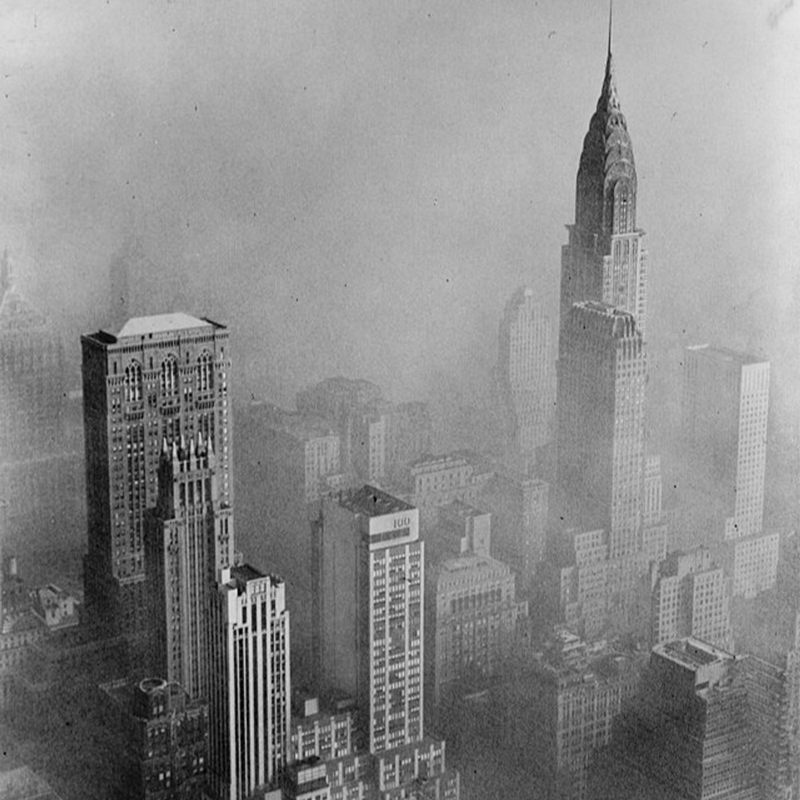
Eventually, people will find out what it was like before we had EPA, before we had all these environmental laws, when people in Donora, Pennsylvania dropped dead in the streets, and when oil spills were washing up on the beaches of California, et cetera. That world can return. You destroy these institutions, you repeal these laws, and you can bet that the consequences will be severe.
Brian Lehrer: I wonder if there's an echo from history that you're almost uniquely qualified to describe or have a take on, because you worked in the Reagan EPA. He also came in like Trump on a backlash to the environmental laws that had been passed in the '70s. He also considered the environmental laws a drag on the economy and an unnecessary drag on the economy. He also appointed people to run environmental policy who were the opposite of environmentalists. In fact, wasn't one of them Justice Gorsuch's mother?
Pat Parenteau: Yes. Anne Burford Gorsuch.
Brian Lehrer: Right. How parallel a universe are we living in now to the one you lived in during Reagan? Is there any lesson from how that resolved into continuing progress on environmental law into what you see coming?
Pat Parenteau: I was fighting the Reagan administration at that time. I was with the National Wildlife Federation, which was frankly a Republican organization at its roots. We were fighting Administrator Gorsuch and James Watt, the infamous Secretary of Interior, tooth and nail for several years. We finally convinced people like Michael Deaver, who was one of Reagan's chief advisors, that this was really a bad idea. Why was Reagan so determined to roll back environmental protection?
We finally convinced, frankly, a number of his senior advisors, first of all to get rid of people like Anne Gorsuch and James Watt, but then to stop this business of deregulating everything in sight. That's when Bill Ruckelshaus, one of the first administrators of EPA, came back to restore EPA's capability and integrity. He reached out to people like me and other people in the public interest community in Washington DC to help him, to come and join the Reagan administration.
Brian Lehrer: Oh, very interesting.
Pat Parenteau: Some of us were very reluctant to do that, but we did. I can tell you that the gloves came off. I went to Boston to head up the enforcement in the New England office. I was told by my superiors in Washington DC, "You will follow the law and enforce the law in the way that you determine makes sense. Where you have defensible claims and enforcement actions, take them." We did. It turned around rather quickly once the decision was made from the White House, we're not going to be going all in on deregulating environmental protection. This day, we don't have that.
Brian Lehrer: Somehow, I don't think that's going to happen. Yes, we don't have that.
Pat Parenteau: We don't have that this day, no.
Brian Lehrer: We're already over time, but I can't resist but to ask you the curious follow up question, what made Reagan cave?
Pat Parenteau: That's a very good question. I never talked to the man, so I don't really know. I do know that the people around him-- Michael Deaver comes to mind most specifically. I just think he got Reagan's ear and said, "This is a bad idea. We don't need to do this. We've got other priorities with Russia and all that." The Soviet Union then. That's what I think happened, is they just decided to shift their focus and stop going after the environment.
Brian Lehrer: One last thing, maybe unintended consequence for them of this rollback. My understanding is they've been trying to prevent states from regulating greenhouse gases on their own. I saw an article on the climate oriented site Heatmap Daily yesterday that says, "Trump's greenhouse gas rule will get a court test sooner than we thought." It's about a case called Suncor Energy Inc. Vs. County Commissioners of Boulder County, Colorado, which I guess argues that if the Trump administration is getting the federal government out of regulating greenhouse gases, then it legally clears the way for the states to get back in. 30 seconds, you know anything about that?
Pat Parenteau: Oh, yes. The court just yesterday did agree to review the Boulder cases, we call it. These claims of the state seeking damages from the major oil companies for adaptation to climate change that's occurring. Now we're going to have to wait until the fall when this case will be argued to see what the Supreme Court does on that front.
Brian Lehrer: There we leave it with Pat Parenteau, professor emeritus at the Vermont Law and Graduate School. He's also a senior fellow for climate policy there, served as EPA regional counsel under President Ronald Reagan, as you've been hearing. That's our Bring the Science segment for this Tuesday of this week on maybe the biggest environmental policy change, climate policy change from the Trump administration that maybe you hadn't heard about yet. Professor Parenteau, thank you so much.
Pat Parenteau: Thank you, Brian.
Copyright © 2026 New York Public Radio. All rights reserved. Visit our website terms of use at www.wnyc.org for further information.
New York Public Radio transcripts are created on a rush deadline, often by contractors. This text may not be in its final form and may be updated or revised in the future. Accuracy and availability may vary. The authoritative record of New York Public Radio’s programming is the audio record.
