
The Brian Lehrer Show's 'Best Photo' Contest Winners For 2025
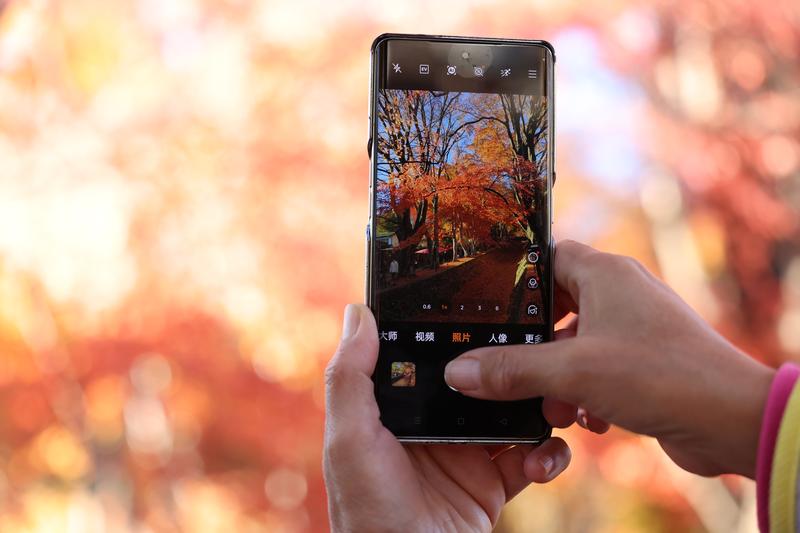
( Atsuko Tanaka / Getty Images )
[music]
Brian Lehrer: Brian Lehrer on WNYC. If you're a regular listener, you know that each year we invite you to send us the best photo you took this year, near the end of the year that's just been sitting on your phone. When we first started doing this, phone cameras were fine, serviceable. Now they're sophisticated enough that you can capture some truly extraordinary images as you all know. As we've done in recent years, we've invited professional photographers to help us look through the hundreds of photos that you sent in and choose their favorites. As always, the results say something not just about photography, but about intimacy, attention to detail, and the poetry of our visual world and maybe even what images are relevant in a particular year.
Today we're going to talk about the three winning photos that we've chosen for this year. You can see them as we discuss them. Just go to brianlehrershow.org or wnyc.org, click on Brian Lehrer Show and you'll find today's episode page, easiest way brianlehrershow.org. We'll also post a gallery of the top photos our judges selected from all the submissions we received this year, not just these top three.
Joining me now are our judges, Dave Shelley, co founder and creative producer at Photoville, and David Gonzalez, journalist, photographer, and co founder of the photo collective Seis del Sur. Dave and David, welcome back to WNYC.
Dave Shelley: You have the Double Davids today.
Brian Lehrer: That's right, It's Dave and David Day. Dave Shelley, before we get to the photos, just remind our listeners about Photoville, what it is and why contests like this fit so naturally with your mission.
Dave Shelley: Well, thank you, Brian. Photoville, basically, we started over-- This is coming up on our 15th year, unbelievably, and we're very excited about everything that's happening with our company and what we'll be doing next year. We have one of the largest free photography festivals in the United States. We just closed 81 exhibitions where we serviced over 500 artists and displayed their work. We're working with incredible partners like The New York Times, the Schomburg, Leica, VSCO, PhotoWings, Alice Austen House, Médecins Sans Frontières and Fund.
We're trying to get their storytelling, their images out in the world so that everybody can understand what's happening in certain situations. Also, of course, we're trying to find something that keeps your spirit light.
That's one reason we wanted to start doing this photo contest with you and WNYC, and I'm really excited about our other David judge today to have him on the air with everybody, but also just the amount of submissions that we got. You're right, Brian. The quality of the work, that has changed since the beginning due to the technology, but I also feel by looking at all the submissions this year that people are really putting some serious thought into that one photo, and they're really concentrating and taking their time to give us a stellar image.
Brian Lehrer: David Gonzalez, you come to this as both a journalist and a photographer, many years with The New York Times, as some of our listeners may know from your bylines and your many important stories, and the group Seis del Sur, which is a collective of Nuyoricans, as I understand it, telling many visual stories from the South Bronx. In your role as judge, what were you looking for if there were general criteria, before we describe the actual winning photos, when you're judging photos taken on people's phones rather than perhaps traditional or more professionally rigged up cameras?
David Gonzalez: Hi. Thanks for having me on, Brian. This is fun. Photoville is one of the most democratic art scenes out there, so I love anything that brings photography out, and so does this. This is what I like about mobile phone photography without naming a particular brand. It's really advanced.
I think the other thing is, mobile phone photography is seriously democratic. It gives people the tools to document, so we no longer have to, for those of us in the South Bronx, wait for a Bruce Davidson to come by or whoever to show us dysfunctionally. We can chronicle our own stuff, which is really wonderful. Because we have such an overabundance of images, it's hard.
That's what we did on the Lens blog. We'll go through everything so you don't have to, but at the same time, the preponderance of images online, I think, is having an effect in teaching people how to look at pictures and how to compose their own pictures. What I look for is, first and foremost, it has to work as a photograph. If you got to explain it, you got to go back to the drawing board first of all. A lot of us fall into that, so do I.
Taking a picture with that moment might be very emotional, and so you fall for that, but I look at it, "Does it work as a photo?" That involves composition, lighting, the subject matter itself, how people are represented. That's a little more vague. You could take pictures of people in certain communities looking one way or another way. I'm highly attuned to that.
I look at stuff that also connects with me emotionally.
My good friend Angel Franco, another two-time Pulitzer winning photographer from The New York Times, since retired, part of my collective, he always talks about depth of feeling and he's onto something there. Photographs have to connect in some way and they connect emotionally and immediately. What I look for is that kind of connection also and also something unexpected.
Brian Lehrer: We have two of the three winners ready to join us, each briefly. I will say the third one, Sumayun Biswas, was lined up to join us, but he's in India and he's been in touch and saying, having a really hard time getting connectivity in the particular place that he's in. We're going to bring on first, Esther Shang here in Brooklyn. Esther, welcome and congratulations.
Esther Shang: Hi. Thank you. Thank you for having me.
Brian Lehrer: i guess I'd start by saying your photo is deceptively simple. Your long distance boyfriend visiting from the UK for the first time, asleep after a long flight, completely at ease. Tell us why that quiet moment felt worth preserving.
Esther Shang: One thing about film photography is that you can't really capture intimate moments. Instead of pulling the big cameras, I feel like, "Oh, that's a quiet moment I want to capture and I want to keep it in my phone so I can look at it once in a while." It's funny, when I took that picture and after my partner wake up, and I showed him that picture and he said, "Wow." That's the moment you want to like keep forever. I think I just stood there for a while and I was just looking at that, appreciating the scene I was seeing. It was just a very quiet and very important moment for me to capture.
Brian Lehrer: Well, congratulations. It's a wonderful image and such a private image, but it really resonated strongly with the judges. David, I want to go on to the next winner. Just tell us briefly for you as a judge, what made it work as a photograph, not just a personal snapshot?
David Gonzalez: For me, first of all. she proves this, less is more. Simplicity is a beautiful thing. She uses the negative space around there. We're going to talk composition. The black around it, the slightly off angle and that shaft of light on her beloved's face. It made me feel really good. Let's face it, yo, at the end of this year feeling good ain't a bad thing. You want to feel love.
That kind of intimacy these kinds of cameras allowed to do that in a way-- Listen, we all got fancy cameras, but you got a decent cell phone camera, you can capture this and not even disturb this person. They won't know until they wake up. Then rightfully so, he said, "Wow," because it was a wild picture for me because it had an intimacy and a warmth. We've all been there. Somebody who's had a long trip, whether it's a kid, a lover, a parent, and you're up and they're still recovering. you just want to look at that face, sleeping. It's a beautiful thing. It reminds me of-- oh, God, what's his name who died in Afghanistan? He did a whole thing on sleeping soldiers. There's that vulnerability there.
Dave Shelley: Tim Hetherington.
David Gonzalez: Hetherington. Thank you. There's a vulnerability there, but also, obviously in this picture, there's a love there.
Brian Lehrer: Esther Shang, congratulations. Enjoy your bragging rights as a winner of the 2025 best photo sitting on your phone contest. Listeners, if you want to see that image and and the other two winners, brianlehrershow.org or it's also up on our Instagram stories. We're going to bring on the other winner who's available to us this morning. That's Lisa Guerriero joining us from Los Angeles. Lisa, welcome to you to WNYC, and congratulations.
Lisa Guerriero: Hi. Thank you for having me. I'm happy to be here.
Brian Lehrer: I'll explain to our listeners if they haven't clicked on the site yet, that this photo was taken at the Superchief Gallery's Contagious Culture Group show in June. Also captures a moment that's intimate, though in this case, a little chaotic, as well as oddly tender. One friend helping another put in eyedrops, eyes rolled back, mouth open with graffiti behind them. Fancy nails next to facial tattoos and piercing as well. Walk us through that moment. What caught your eye? How quickly did it unfold?
Lisa Guerriero: It was pretty quick. I originally saw her and a friend walk by me and stop. I was thinking about taking a photo of her because I really loved all her tattoos and piercings, but then her friend took out the eye drops and she just tilted her head back and started putting drops in her eyes with those amazing nails. I just loved her facial expression and also the tattoos under her eyes, which look like little hearts, which could be teardrops.
Brian Lehrer: David Shelley, Dave Shelley to you on this one. There's a lot going on in this frame. Why did this one rise to the top for you?
Dave Shelley: Well, David and I had a conversation about this the other day, and David jumped in afterwards. You said this was reminding you of Man Ray who currently is an exhibitionist in town.
David Gonzalez: Glass tears, yo. That's the picture.
Dave Shelley: It just pops off and it just comes straight up, and it's possibly moving into the area of the surreal movement of Man Ray. I think that's why we really liked it.
Brian Lehrer: Talk more about Man Ray, and that photo you just referenced, David.
David Gonzalez: It's a close up of a woman's face with these glass beads on her cheek, and he called it you call the Glass Tears. This one [unintelligible 00:11:50] when I saw it, it reminded me of that vibe. I'm not saying she's copying, although, as Picasso said, you steal from the greats. She obviously did if she did. The tonalities of it- if I want to get nerdy about it, the tonalities of it, the different hand, There's a lot going on in there. Ultimately, again, what's going on is a very tender moment, a little hectic, but there's a tendency there to let somebody put something in your eyes. There's trust in that. Again, [unintelligible 00:12:19]
Brian Lehrer: Right. Lisa, the caption of the photo is, "What are friends for?" You captioned it. Did you feel like you were influenced by Man Ray or anybody else in thinking about the composition of this shot?
Lisa Guerriero: Not at the time when I took the photo, but I do have a lot of historical photographers that I tend to lean on, but that wasn't the specific thing that I had in mind. It was this awkwardness, plus all the graphics of the graffiti behind them, the tattoos, and all the other things.
Dave Shelley: I love how the graffiti flows off from the back down onto the tattoos of the person that you photographed.
David Gonzalez: Totally.
Brian Lehrer: All right, David, [unintelligible 00:13:14] and Lisa, thank you very much. Congratulations. Bragging rights.
Lisa Guerriero: Thank you.
Brian Lehrer: No cash prize. Keep photographing out there. David, 20 seconds for tips for others who may be inspired by this to take more photos on their phone.
David Gonzalez: Less is more. We have all kinds of wonderful apps that you can process pictures with. Use them judiciously, especially clarity, saturation, and really try to stay away from that HDR stuff. It looks fake. Get closer. Pay attention to the corners of your compositions. You have some good pictures that go [unintelligible 00:13:53] in the corners, so pay attention to that. Backlighting, be careful. Don't blot out your subject. Oversaturation, be careful. Above all, all of these rules can and should be broken sometimes.
Brian Lehrer: avid Gonzalez of Seis del Sur these days, Dave Shelley from Photoville, thank you for judging this year. Everybody else, go see the winners at brianlehrershow.org or on our Instagram Stories page.
Copyright © 2025 New York Public Radio. All rights reserved. Visit our website terms of use at www.wnyc.org for further information.
New York Public Radio transcripts are created on a rush deadline, often by contractors. This text may not be in its final form and may be updated or revised in the future. Accuracy and availability may vary. The authoritative record of New York Public Radio’s programming is the audio record.