
The ACL Injury Crisis in Girls' Sports
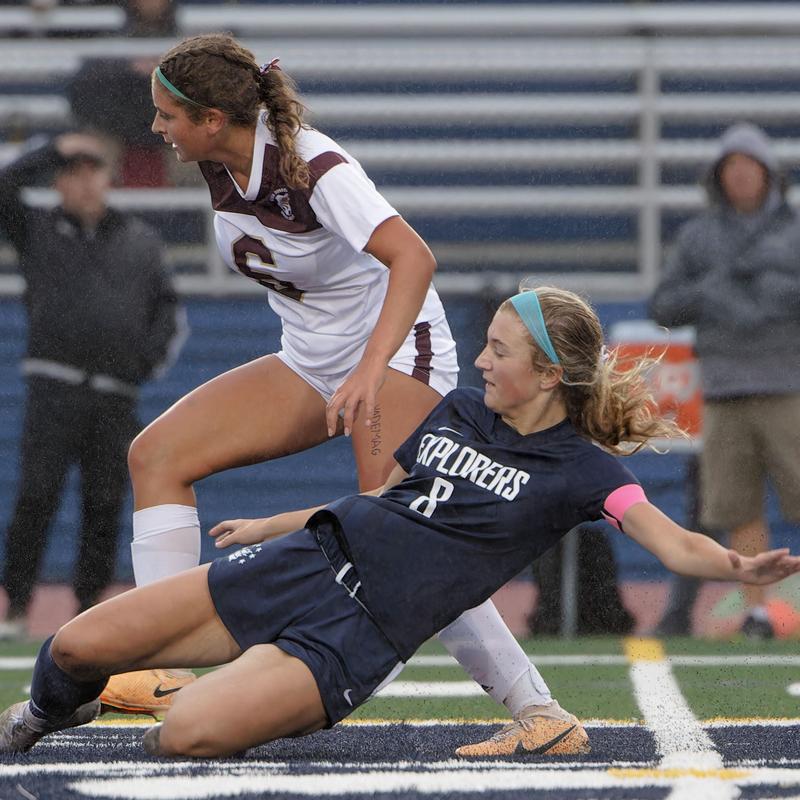
Title: The ACL Injury Crisis in Girls' Sports
[music]
Brian Lehrer: Hey, it's the Brian Lehrer Show on WNYC. Good morning again, everyone. Now I'm going to ask, why are so many girls who play competitive sports tearing their ACLs? If you watch or compete in sports, you know how devastating an injury to the knees, the anterior cruciate ligament can be, ACL. It helps keep the knee stable and prevents the shin bone from kind of sliding out in front of the thigh bone. Teenage girls, as it turns out, are tearing their ACLs at dramatically higher rates than boys who participate in sports, sports like soccer in particular, where the risk may be several times higher. There's a feature in The New York Times Magazine by the writer Craig Welch that digs into the mystery and heartbreak of those injuries. The story begins with Welch's own daughter and her teammates, many of whom suffered ACL tears in a short span of time. We'll talk about this ACL injury crisis in girls' sports, and some of the already known ways to reduce the risks. Craig Welch's story is called Why Are So Many Teen Girls Still Tearing Their ACLs? He joins me now. Craig, thanks for coming on. Welcome to WNYC.
Craig Welch: Glad to be here. Thank you for having me.
Brian Lehrer: Key word in this headline, "Still," I feel like we talked about this a few years ago.
Craig Welch: That is true. I believe researchers started noticing in the late 1990s that girls were tearing their ACLs more often than boys, so it's not a new problem.
Brian Lehrer: Listeners, you can help us report this story. Anybody experiencing this ACL injury yourself, or in your daughter maybe, or someone else you know, in girls' sports, particularly soccer, as a parent, a coach, an athlete, an athletic trainer, were injury prevention exercises part of your team's training? What's the best practice here for prevention as far as you know? 212-433-WNYC, or ask our guest from The Times who looked into this a question. 212-433-9692. Craig, you want to tell us your own daughter's story in brief?
Craig Welch: Sure. I, like many parents, was a soccer dad on the sidelines watching my teenager play soccer, which was a sport that she identified with. It was a big part of her personality. Several of her friends tore their ACLs playing soccer, and it just kept happening over and over again. I started just asking questions of experts about what was happening here, and it turns out that, A, they were not surprised, B, the problem was getting worse, and C, that there are steps we can take to prevent this. As I was doing this, then my own daughter tore her ACL.
For those who may not know this, that especially in teenagers, when this happens, you're out of sports for a year. If you can imagine, being a sophomore in high school, and suddenly you can't do much of anything athletic for a year, that's pretty devastating. In addition to that, there's typically, especially with girls, up to a one in three chance that within a year of doing a tear, if you go back to your sport, that you're going to do it again. Over and over, among my daughter's teammates and friends, I started seeing girls who were tearing their ACL a second time, and eventually that happened to my daughter as well.
Brian Lehrer: Why girls more than boys?
Craig Welch: It's several things. Part of it is just biology. The ratio between their hips and their knees is a little bit different. Girls also tend to stand a little taller when they're going into tackle in girls' soccer. Also, there's just a frustrating phenomenon where girls' cleats are often just boys' cleats that are styled differently, even though girls' feet are shaped a little bit differently. There's all sorts of physical reasons.
In addition to that, there are social reasons. Girls are often trained as if they're boys, even though their bodies are different. Boys are often encouraged at younger ages to go to weight training and start building up muscles, so there's all sorts of both social and physical reasons.
Brian Lehrer: You write it didn't have to be this way. A quarter century ago, Holly Silvers-Granelli, a young, driven physical therapist, helped create a sequence of warm-up exercises designed to protect young athletes' knees. Can you tell us in brief about that series of exercises? I guess you're suggesting that they are not as universally used as they should be.
Craig Welch: They are not at all universally used. Yes, back in 2000, Holly and a small team of people started working on a program to try to prevent exactly these exercises. They tested them with 3,000 girls who played soccer in Southern California. They found that they had 70% to 85% fewer injuries among girls who did a 20-minute exercise a few times a week before games and practices.
In the years since 2000, they have researched this over and over and over again. The research has been confirmed in Nigeria, in Norway, in the UK, in France, and Japan. It's been shown over and over again that these exercises are incredibly effective at reducing the likelihood that girls and boys, as well, will tear an ACL. However, they've just not been implemented. The steps between researchers doing the work and kids actually doing the program, it just isn't happening, and there are all sorts of reasons for that.
Brian Lehrer: What are some?
Craig Welch: First of all, parents, kids don't really know that these exercises exist. A lot of coaches don't know that the exercises exist. Clubs don't know the exercises exist. Among the folks who do know, there's a lot of skepticism. Holly, the researcher who's been working on this for 25 years, said she can't tell me how many times she's heard people say, "Well, where's the science?" Well, if you look, the science is everywhere. It's not disputed. There's also just some steps that coaches take. They're very busy. They are unlikely to want somebody else to tell them what to do. They're also often very busy. There's a lot of social pressure. Parents want coaches to get their kids to play better soccer. They don't want to waste limited practice time doing warmups. There's just a lot of pressure that pushes in the wrong direction. The incentives are all misaligned.
Brian Lehrer: We have a physical therapist calling in. Kareem in Union, hang on a second. You'll be our second caller. Colleen in Montclair, you're on WNYC first. Hi Colleen.
Colleen: Hi there. Thanks for taking my call.
Brian Lehrer: You have a story, don't you?
Colleen: I do. My daughter was just turning 18 in her senior year of high school. She was a high-performing fencer, and unfortunately, tore her ACL fencing. One of the things that I would ask your guest to talk about a little bit more is the psychological impact. One of the things that my daughter experienced was really a huge loss of her identity after being a high-performing athlete for so long and having the sport be such a big part of her life, and then losing that completely. Then, of course, just losing mobility and surgery, and all of that trauma. One of the things we did right after she graduated high school was talk to the school about information for the coaches on how to respond emotionally, and to help the kids in their recovery from the psychological and emotional trauma of the loss of identity, and all of that. Thank you so much.
Brian Lehrer: Has she been able to go on to other sports or other things to replace the sport she was doing?
Colleen: Great question. Not in high school because this was the end of her senior year, and she missed out on all of that really important accomplishment that happens in senior year when you're an athlete. In college, she's gone on to many other wonderful things. Of course, we wish that it didn't happen, but the pivot away from the sport being the focus of her entire life was actually a really good thing for her, and she's doing great now.
Brian Lehrer: That's a whole other conversation we could have. Colleen, thank you very much. Now, Kareem in Union, a physical therapist with a sports background, he says. Kareem, thanks a lot for calling in. Hi.
Kareem: Hi. Thanks. First time caller, long time listener. I would just say I agree with a lot of what those statements, the psychological impacts, for sure, especially when they're trying to go back to their sport, they find a lot of hesitancy, like trying to jump or cut. What I've noticed, for one thing, I think women in general have a little bit more joint laxity, so they are going to be slightly at higher risk.
Furthermore, I 100% agree that there's not enough stock put into strength and conditioning for athletes, men and women alike. Again, it's all about the sport and playing the sport-specific tasks, and not performing enough resistance training to bolster those tendons and ligaments. Then furthermore, I think it's with the level of competition in the world today between the Olympics and professional sports and collegiate athletes, there's so much intensity that they're pushing their bodies to the breaking point, not just to the limit, but to the actual literal breaking point that they in fact tear their ACLs because many of these injuries, I don't know the statistics exactly, but a lot of them are in fact non contact.
Obviously, there's those freak accidents where they lose their foot under them accidentally, and they miss it, but again, strength conditioning is very important, and the rehab process is arguably more important than the actual surgery. A great surgeon can be ruined by a not-so-great rehab process or not giving enough time to get back on the field. Sometimes they rush them back on as well.
Brian Lehrer: To Craig's answer earlier, do you find coaches that you deal with receptive to improving the conditioning program?
Speaker A: You know what, I can't speak on that exactly, just because I haven't had to do it, but I've noticed it with the parents. Sometimes the parents rush to get the kid back to their sport, but with coaches, they obviously want to get the, and I say the kid, I say the athlete, because some of them are grown adults, it's all about getting them back on the field and playing, and are they ready? They have to get the impaired side at least 90% of the way of the strength to the non-impaired side. Sometimes they don't meet those standards.
Brian Lehrer: Kareem, thank you for your call. Any reaction to those two callers, Craig?
Craig Welch: Yes. First to Colleen. I'm sorry, it's so heartbreaking. She's absolutely right. The psychological implications of these injuries you can't overstate them. In my daughter's case, she had played soccer since she was seven years old, and this happened when she was 15, and she played soccer year-round. If I had it to do over again, I would not allow her to play year round, but I was ignorant, and she loved the sport, and so it was really a huge part of who she was. A lot of her friend group was involved in soccer, and then you suddenly take that away, and they're going through puberty. They're in high school and dealing with all the social pressures of high school. It was just devastating.
She fell behind in school. She couldn't do the things she wanted to do. Her first dance, when she went to a dance with a boy, she was wearing a knee brace, and was ordered not to dance. There's just all of these psychological things. I saw the same thing with all of her friends. Some of them were able to come back and do sports, but most of them came back and did an entirely different sport. A lot of the girls went and did track. It's just much safer.
Brian Lehrer: Artificial turf factor?
Craig Welch: It definitely can be. There's a lot of research that goes back and forth, and I think there's a lot of controversy over whether artificial turf is a factor because again, there's research in both directions. I will say the NFL players' union has been pushing forever to try to reduce the amount of turf in stadiums. I think some research has been sponsored by the NFL that suggests that that's not a problem, but really, with all of these things, the point is that there's more than one factor. Turf plays a role, cleats play a role. Wearing the right cleats for the right kind of turf or grass that you're playing on plays a role. Conditioning plays a role. There's so many multiple factors here.
Brian Lehrer: Let me get one more caller in here. Jasmine in Brooklyn, another soccer mom. Jasmine, you're on WNYC. Hi.
Jasmine: Hi there. Thank you so much for talking about this, Brian. It's especially important to my family. My teenage daughter Sienna, tore her ACL playing soccer nearly two years ago. She got the surgery, everything rehabilitated, did her physical therapy, she was cleared for sports two years later. We were super cautious. She went skiing, tore her right ACL for the first injury was in the left ACL, and she just tore it. She's recovering from surgery again on her right ACL. She's not only psychologically devastated, but I just want to know what the longer term implications are. We always hear about like a year out, maybe kids can't play sports, but what does this mean in terms of after the surgery, and with the right physical therapy, what's the longer term implications for their Life? Like, say 25 or 30, what's the risk of osteoarthritis, things like that? That's kind of the things I'm worrying about [chuckles] now.
Brian Lehrer: Yes, and understanding that our guest is a writer and reporter, not a doctor, but Craig, do you have anything on that?
Craig Welch: Unfortunately, I do. There's some pretty solid research that suggests that 15, 20 years out, the odds of osteoarthritis of chronic pain in the knees, they go up significantly. Also, there's an increased risk of even heart disease because there's some inflammation that can happen, that long-term inflammation. Then in addition to that, if you have more limited mobility when you're older than that, that by itself can increase the likelihood of heart disease. Then the odds of needing a knee replacement are much higher. I interviewed a woman who had two knee replacements when she was in her mid-40s because of ACL tear she had when she was a teen.
Brian Lehrer: Boy, that's not what you wanted to hear, Jasmine, right?
Craig Welch: No.
Jasmine: No, definitely not. That's what I worry about as a mother. Obviously, I won't say that to my daughter, but in the back of my mind I'm just like I don't know if it's, like, she needs to take collagen supplements or vitamin C, or what can we do now to prevent those type of things in the future? It is pretty devastating, I have to say.
Brian Lehrer: I'm sorry to hear that for your sake, and thank you for your call though, because, hopefully, maybe that bit of the conversation will help others there. We're going to leave it with writer and self-professed soccer nut Craig Welch. His story in The New York Times Magazine is Why Are So Many Teen Girls Still Tearing Their ACLs. Craig, as a self-professed soccer nut, how psyched are you for the World Cup coming to town?
Craig Welch: I was lucky enough to get tickets, so I'm very excited.
Brian Lehrer: Maybe we'll talk to you during the matches. Craig, thank you for today.
Craig Welch: Thank you for having me.
Copyright © 2026 New York Public Radio. All rights reserved. Visit our website terms of use at www.wnyc.org for further information.
New York Public Radio transcripts are created on a rush deadline, often by contractors. This text may not be in its final form and may be updated or revised in the future. Accuracy and availability may vary. The authoritative record of New York Public Radio’s programming is the audio record.
