
The Abortion Pill Lands in the Courts
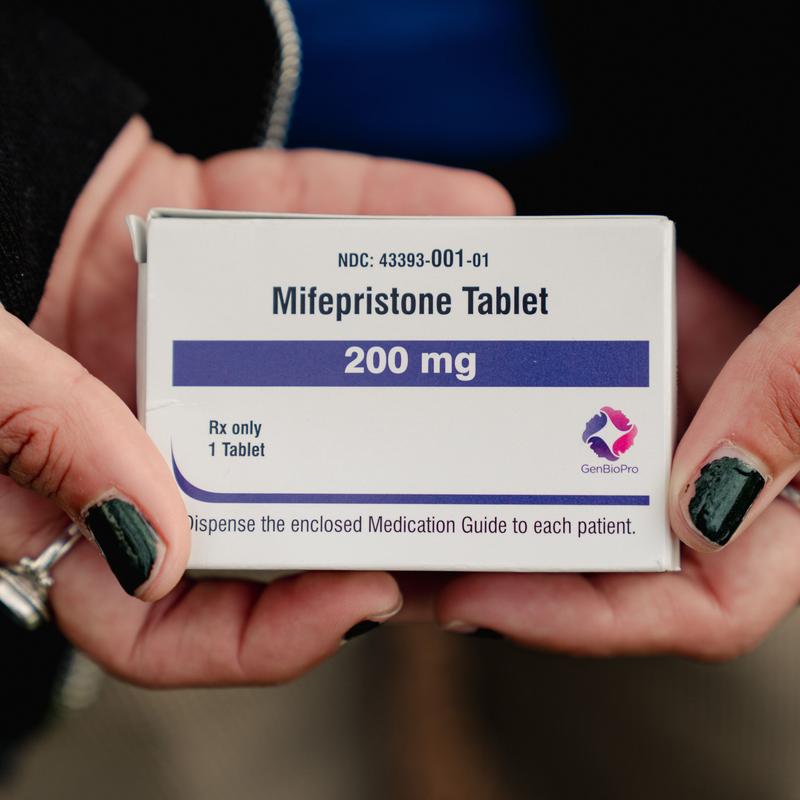
Brian Lehrer: It's the Brian Lehrer show on WNYC. Good morning, everyone. On today's show, we will alert you to a scam that's taking place out there in which someone is posing to represent me and this show and other WNYC hosts and shows. We will alert you about that phishing scheme coming up. Also, law professor and legal affairs podcast host Melissa Murray. Many of you know her from her podcast and her television work with a new annotated edition of the United States Constitution. We'll also get her take on some of the legal issues we've been talking about in the news, including around voting rights and the abortion pill.
Before we get to Melissa Murray, let's actually start today on some of the context around the abortion pill case with whiplash that providers and recipients experienced just over the course of the last weekend into yesterday. Some of the background, the state of Louisiana, as some of you know by now, which has a near-total ban on abortion, went to court to stop distribution of the drug mifepristone by mail.
On Friday, the federal Fifth Circuit Court of Appeals in New Orleans said that while the lawsuit proceeds, the Food and Drug Administration needed to reinstate a requirement that patients must visit medical providers in person to obtain mifepristone. That change immediately impacted the entire country, specifically those seeking abortion pill access in states like Louisiana, where access is limited or effectively outright banned. Access to the pills by mail is more common than before and even more important in a certain way than it might be in a place like New York or New Jersey, where people can go to a doctor in person and get pills or get surgical abortions in some cases.
By yesterday, Supreme Court Justice Samuel Alito, of all people, put a one-week hold on that rule change from Louisiana's Fifth Circuit Court. Alito, of all people, keeping the abortion pill by telehealth available, if only for one week. We'll do some real legal analysis on this with Melissa Murray coming up. Some of the context is interesting in that since the Dobbs ruling that overturned Roe vs. Wade abortion rights four years ago, the number of abortions in the United States has actually gone up.
With us now on all of this, two guests, Amy Littlefield, the Abortion Access correspondent at The Nation, and author of the new book Killers of Roe: My Investigation Into the Mysterious Death of Abortion Rights. Dr. Kristyn Brandi is back with us, an OB-GYN, an abortion provider in New Jersey, who was a previous board chair with Physicians for Reproductive Health. Amy, welcome to WNYC. Dr. Brandi, welcome back.
Amy Littlefield: It's great to be with you, Brian.
Dr. Kristyn Brandi: Thanks so much.
Brian Lehrer: Amy, let's just begin with what's happened in Louisiana and how that impacted the rest of the country over this past weekend. The state argued that telemedicine access to mifepristone undermines that state's almost complete ban on abortions. I'll ask Dr. Brandi about how abortion access has actually expanded since the overturning of Roe, but can you tell us about that case in Louisiana and what Friday's decision effectively did, at least temporarily?
Amy Littlefield: Yes. The fact that Louisiana had to bring this case in the first place in order to try to enforce their near-total abortion ban, I think is a testament to just how successful abortion rights supporters and clinicians have been at subverting these bans in the 13 states, including Louisiana, that ban abortion outright. What we know today is that abortion pills, medication abortion, which typically involves two different medications, mifepristone and then misoprostol, that accounts for almost two-thirds of abortions nationwide.
More than a quarter of abortions are happening via telemedicine, meaning it doesn't require an in-person visit to a provider. What Louisiana was saying is, despite the fact that we have this near-total abortion ban because clinicians in blue states are still mailing Medicaid medication abortion to patients within our borders, abortion access has actually expanded across the country since the Dobbs decision, which I think is a stunning testament to the power and bravery of clinicians in blue states who are doing that work.
We know that there are about 15,000 medication abortion kits per month making their way from clinicians in blue states like New York to states where abortion is banned, like Louisiana and Texas. About 1,000 of those are making their way into Louisiana. What the Fifth Circuit Court of Appeals, one of the most conservative courts in the country, said was this needs to stop. They brought back a regulation that had been eased during the COVID pandemic that said patients need to actually go in person to get the first drug in the typical protocol, which is mifepristone.
I think what we saw over the last 72 hours was a fire drill of what it could look like if these restrictions become permanent, either via the Supreme Court or by some executive action from the Trump administration. We saw abortion providers rallying to switch to misoprostol-only protocol, which is slightly less effective, slightly less ideal, but which still works. We saw that this time around, in contrast to the Dobbs decision almost four years ago, the abortion rights infrastructure in this country was really prepared to deal with a crisis and to deal with a catastrophic court decision like this.
Brian Lehrer: Dr. Brandi, when Friday's news came out, you posted on Bluesky, "It's not like the data on mifepristone safety suddenly changed overnight." What is the data on mifepristone safety? I know that access was expanded not that long ago. I think it was 2021 when telehealth prescriptions became widely available.
Dr. Kristyn Brandi: That's exactly right. Thanks again for having me. Mifepristone has been on record of being a safe medication for decades now. It was approved in the US in the year 2000, but actually was founded in the 1980s. It's a medication we've had for like 40, 50 years now, and have multiple, multiple studies that show that it's incredibly safe and effective. That being said, we're seeing more and more attacks on this medication. Things like the FDA relooking at its safety protocols to assess whether or not it's still safe.
There's really no reason for that because we know that this medication, based on the decades of research, is incredibly safe and effective and something that patients can get both safely in an office setting as well as telehealth, which as Amy mentioned, we're seeing more and more frequently. About 2/3 of abortions are through medication now. It's something that not only do we know from science is safe, but we know from many patients, thousands of patients in the US, and their safe experiences with this medicine.
Brian Lehrer: Initially, as I understand it, mifepristone was approved for ending pregnancies through the first seven weeks of gestation. Then in 2016, it was expanded to 10 weeks. Do you know anything about the research that allowed for that?
Dr. Kristyn Brandi: Sure. Just like is mentioned of the safety data that we have, we've also been testing to see how far along someone can be in pregnancy to use this medication safely. We actually knew when the 7 weeks approval came down that we probably had great data that suggested it could be up to 10 weeks at that time already. I think it's just been incrementally getting the approvals, and now we're looking at data now up to 12, 13, 14 weeks, which we also suspect is going to be incredibly safe and effective for the majority of patients.
The FDA and other organizations always lag behind in the data from a couple of years. In an ideal world, we would expect that the range of people being able to use mifeprostone safely would actually go up if we were an administration that would support such a thing, which we now are really in question.
Brian Lehrer: Listeners, you're invited in to share your experiences with the abortion pill if you feel comfortable doing that, and you've used it. If you're a provider of abortion access or work with medical professionals involved in that work. Have you seen an increase in out-of-state demand since the Dobbs decision in 2022 overturned abortion rights nationwide? 212-433-WNYC. How are you preparing for the possibility that this ban on mail-order mifepristone might get reinstated more permanently after next week? 212-433-9692. Call or text about who's coming into your clinics, what challenges they face.
Do you prescribe via telemedicine? Maybe physicians, when won't you prescribe by telemedicine? How safe do you think that actually is without a physical examination? Or those of you out there who have received abortion care via telemedicine or via the abortion pill, what stories do you want to share to help us report this story and contribute to this national conversation? What was the process like for you? What would you like to say or ask our guests, Amy Littlefield, who reports on abortion access for The Nation, and Dr. Kristyn Brandi, OB-GYN and abortion provider in New Jersey, who was a previous board chair with Physicians for Reproductive Health. 212-433-WNYC. Call or text. 212-433-9692.
Amy, do you think there was any even short-term impact on individuals from the Supreme Court ruling, which basically came out after business-- I mean, the lower court ruling in Louisiana, which basically came out after business hours on Friday and was overturned on Monday at least for one week by Justice Alito? Did anybody get impacted?
Amy Littlefield: Yes. I think a lot of people were confused and frightened. We know that confusion and fear have actually been two of the biggest factors that have stalled access to abortion care in this country. I think often the way that abortion is covered with court rulings and access is being turned off and on and this law is being passed and that law is being passed, it leaves people feeling really confused about whether they can get an abortion if they live in the state of Texas and what websites are still operating.
I think confusion and fear certainly stymied people who might have been wondering if they could get an abortion, or maybe they had an appointment on Saturday, they're wondering if they can keep it. The ruling didn't impact in-clinic care. It didn't impact people who had appointments in abortion clinics. It didn't impact community activists and the vast swaths of the abortion access infrastructure in this country that are beyond the reach of US Courts, either because they're mailing drugs from abroad or because they're just passing them quietly person to person.
Yet, I think-- It didn't impact clinicians who are operating domestically who decided to switch to a misoprostol-only protocol. I think for them the disruption was it forced them to resort to these contingency plans that they had in place for just such an eventuality as this. I think it can be really hard in these crisis moments for people to get the message out and to say abortion is still available. It's going to look a little different. Websites like plancpills.org and abortionfinder that provide accurate information about where people can go to access an abortion were still operating.
I think this is a real difference from four years ago. I think the Dobbs decision that overturned Roe v. Wade caught the abortion rights movement off guard. It had been decades, and I explore this history in my book. For decades, the abortion rights movement had really relied on the federal courts to strike down the incremental attacks on abortion access that were coming from state legislatures. When that strategy finally failed, I think, unfortunately, the abortion rights movement was sorely unprepared for it. There were disruptions to access in the beginning.
I think now, what we can see, four years out from that decision, it'll be-- the four-year anniversary is in June, is that there's been a lot more contingency planning and a lot more preparation and a lot more court proofing. That clinicians who are operating under so-called shield laws in states like New York and Massachusetts, who are mailing medication abortion into states like Texas and Louisiana, had a plan in place for what might happen if the Trump administration or the federal courts hindered access to mifepristone, even temporarily. I think what we saw is a lot of those websites were able to switch to providing a misoprostol-only protocol, which, again, not ideal, but it is effective and used all around the world.
Brian Lehrer: Dr. Brandi, could you talk about that alternative protocol? I know that that's what they announced here in New York State, they would continue to do because the court ruling only affected mifepristone, one of the two drugs. Why do you need to use two drugs in the first place if one will do and keep it legally more simple?
Dr. Kristyn Brandi: Sure. I think that there's a lot of confusion on this, and that's why it's important to talk about-- not to get into the weeds, but to talk a little bit about the medications. Mifepristone is the first drug of two drug regimen. The thing that mifepristone essentially does is it supercharges the misoprostol. The misoprostol often does a lot of the work within the regimen to cause the bleeding and cramping that expel a pregnancy. Mifepristone isn't needed. We have found that when you use it, it works much better.
That being said, people have been using the misoprostol-only regimens for many, many years. It is a WHO-recommended regimen for people internationally. It's a really commonly used medication, and it's what we used in the US before we had mifepristone. As far as effectiveness rates, it's something within percentages of one working better than the other. Of course, as physicians, we want to make sure that we're giving the best regimen that we can. We also, as with many other medications, there are multiple options, and whatever works best for the patient is what we care about.
Misoprostol-only regimens do have some more side effects. It can be a little bit more uncomfortable for folks. Of course, we want to make sure people are comfortable. People, I think, should not have to suffer to go through this process. They should be able to be comfortable while they're taking a medication like this. We're lucky that we have multiple options to give people if they need it. We don't want the medications to be out of reach because of politicians. I shouldn't have to ignore years of evidence and change my practice overnight, like we had to do on Friday, to make sure that people get the medication that I think is safest for that individual person.
It's really a matter of percentage points for people. People should know that both are incredibly safe. I think doctors and healthcare providers just want to be able to provide what we think is best and not base it on some politics.
Brian Lehrer: Amy, to that point, we have a listener text that says, "Can the guests discern or elaborate on the difference between attempts to relook at established medicine for political purposes as opposed to simply wanting to evolve science?" How do you even make that distinction? How do the courts grapple with that distinction if they're not medical professionals?
Amy Littlefield: Well, right. I think it's important to note that the abortion pill, mifepristone, has been contested since its beginning. It has never been a politically neutral pill. In the beginning, when it was on the market in Europe, before it even came on the market here, feminist activists like the Feminist Majority foundation had to fly to Europe and try to pry it out of the hands of the European pharmaceutical companies and regulators to get them to 'please' market this drug there, even though it already had proof of concept, it was already being used safely and effectively in Europe.
The entire history of this drug, the fact that it even took so long to come on the market here, more than 25 years ago, was politically contested and politically shaped. That's because Republican politicians and their allies in the Christian right made abortion into a political issue and manufactured it into a political issue in order to use it to their advantage, not because of anything that has to actually do with healthcare.
Brian Lehrer: Another listener text, something I was going to bring up anyway, we'll put it in the listener's voice. "Mifepristone is not only an abortion drug. It is essential for--" Now this text is getting garbled, but it says, "Without mifepristone, a woman with an incomplete miscarriage can suffer excruciating pain." Dr. Brandi, what the Louisiana court did on Friday was also knock out the ability of women not even seeking abortions, but going through miscarriages, to get this particular care. Right?
Dr. Kristyn Brandi: Absolutely, right. I think we don't recognize that medications are used for many different things in healthcare. Mifepristone, particularly, is a great medication for a lot of things that have to do with the uterus and cervix. We use it for abortion, and most people know about it through abortion, but it's actually the gold standard regimen for miscarriage management at this point. We also have a lot of different uses for it, things like inductions for people that are delivering. We're actually having more and more data in Europe and other places that are looking at other ways that we can use this medication for things like fibroid management or endometriosis, diseases that women have had to face for years without sufficient treatment.
The fact that we could lose a critical medication for so many different gynecologic uses is heartbreaking. It really makes you think about, like, well, what's the purpose? Why are we trying to block this medication that has so much signs that suggest that it's great for a lot of different things, but because we use it in abortion, there has to be bans around it.
Brian Lehrer: Dr. Brandi--
Dr. Kristyn Brandi: I think that's something that we've seen--
Brian Lehrer: Go ahead, Amy.
Dr. Kristyn Brandi: Oh, it's Dr. Brandi. I also wanted to mention around something that Amy had mentioned about the decades-long fight we've had to get this medication. We're still having to battle with the FDA around the things called the REMS criteria, which particularly prohibit the use of this medication in certain circumstances. For example, the whole ruling in Louisiana was moving it back to how it was approved about five years ago, where we couldn't use it for telehealth. That was part of this REMS criteria that the FDA has slapped on this medication that puts it in the same league as things like chemotherapy agents, when it is much safer and has much less side effects than things like that.
We've been trying to push the FDA to go with the science and try to make sure that this medication is more and more available, but it's been an uphill battle for a long time.
Brian Lehrer: Dr. Brandi, here's another one for you. Listener writes, "Something that really gets lost in this discussion is how unpleasant the experience is for women who have had a medical abortion. Days and days of painful cramp--" She means medication abortion. "Days and days of painful cramping and bleeding at home. Surgical abortion is now ridiculously expensive even in blue states because the assumption is that the pills are good enough. I found myself in need of an abortion in January and was advised by every single woman I know who has had a medication abortion to pay for the surgical abortion to avoid the horrible experience. I am lucky I was able to afford it."
For you as a doctor, do you second the thought of that listener that it is less painful and just a better experience to go through a surgical abortion than a medication one?
Dr. Kristyn Brandi: First of all, I'm really sorry that this person was having to navigate that difficult conversation of having to think through the pros and cons of medication versus procedural abortion. It's something that I usually tailor to that individual person, and I have the conversation about the experience of both. For medication, yes, it is crampy for some folks. I usually tell people that expect it to be heavier than their normal period, crampier than their normal period. I 100% routinely prescribe pain medication for folks to make sure that that experience could be as comfortable as possible.
In addition to telling people to get things like heating pads, make sure that you have a warm towel near you if that's helpful for the discomfort. Some people choose that option because it's something that is at home, something they don't have to engage with the healthcare system as much as having a procedure in an office. Some people choose that option because they think it's the best for them. Other people want procedural abortion, where we can offer different types of pain medication during the procedure. It's usually a five-minute process.
Some people prefer that process to make sure that they don't have as much pain, that they come into the office, and make sure that they've gotten their care within that time period. It's really an individual decision. I make sure that people have options that fit their own personality, their own preferences, needs, their needs of their family, and also hopefully trying to make sure that it's cost-effective for both. I'm of the mindset that they should cost the same, procedural versus medication abortion, because I don't want people to have to make that decision based on cost. People should be able to make the decision based on what they think is best for them.
Amy Littlefield: I wonder, Brian, if I could--
Brian Lehrer: Amy, do you have anything to add? Yes, I was just going to ask you to go ahead.
Amy Littlefield: I do, yes. I'm so glad there's a doctor here to field the medical parts of the question. I'm learning a lot, but I would love to just add something on the cost part of that. When abortion was first legalized in the United States with Roe v. Wade, the Supreme Court decision in 1973, insurance plans, by and large, covered abortion, including state Medicaid plans that covered low-income people.
One of the most important pieces of history that I tell in my book, Killers of Roe, is looking at how the first thing that the anti-abortion movement did is try to figure out how to remove Medicaid funding from abortion, and how to take away access, especially for low-income people who are on their state's health insurance plan. The first major victory that the anti-abortion movement secured in 1976 was the passage of the so-called Hyde Amendment that banned federal funding of abortion and that put abortion access off limits for many people on Medicaid, AKA the lowest-income Americans in this country.
Over time, what happens is that we see restrictions on private insurance, and with the Affordable Care Act, with restrictions on people buying health insurance plans on the marketplace as well. This idea that abortion is something that you have to pay for out of pocket has become normalized. That was something that was created by the anti-abortion movement. I think for a lot of abortion rights supporters in their ideal world, we have universal health insurance coverage, and it covers abortion so that people don't have to raise hundreds of dollars to pay for an abortion out of pocket.
When you look at the cost of an in-clinic abortion, it's actually remained remarkably consistent over the years because clinics do their best to keep those prices low. It's the fact that something that costs $500, $600 or later in pregnancy, even thousands of dollars, has to be paid for by the patient, that's a problem to begin with. I also just want to note there's a huge grassroots infrastructure here made up of abortion funds in this country who raised $63 million. That's what they spent in 2024 alone.
$50 million on the cost of just paying for people's abortions, and $13 million on the cost of getting people the plane tickets, the bus tickets, the gas money, the hotel rooms that they need because so many more people now, because we have swaths of the south and Midwest that are completely offline in terms of physical abortion clinics, people have to travel. I think it's on average more than 11 hours now in some of these banned states.
You have this huge infrastructure that's trying to make it so that people-- to fill in the gap, basically, that was left by this ban on federal funding of abortion that endures to this day. I want to add, every single Congress since 1976 has renewed the Hyde Amendment, and the Supreme Court upheld it in 1980. That's a pivotal piece of this history that shouldn't be forgotten.
Brian Lehrer: Yes. Your book is called Killers of Roe: My Investigation Into the Mysterious Death of Abortion Rights. Why do you say mysterious? From the day after Roe in 1973, this movement has been trying to limit abortions in any ways that it can. You just were ticking through some of them. Then Trump ran in 2016, promising explicitly to appoint Supreme Court justices who would overturn Roe. That happened. What was mysterious about it?
Amy Littlefield: There are parts of the story that are very not mysterious that you've just outlined. We know the Christian right legal group, the Alliance Defending Freedom, came up with this Supreme Court case using this Mississippi anti-abortion law, brought it to the Supreme Court, which, thanks to the efforts of Leonard Leo, handing the names of Supreme Court justices to Donald Trump, had been remade. Specifically, tailor-made to overturn Roe v. Wade. Then that's what the court did when it was presented with an opportunity.
There are other parts of the story that I didn't know, even after a decade covering abortion rights. I really wanted to look at the people who were the behind the scenes figures, the grassroots activists, the people whose names I'd never heard of. For example, I mentioned the Hyde Amendment, the ban on federal funding of abortion, which is named for Henry Hyde, a notorious conservative congressman from Illinois, who was the face of this important anti-abortion policy.
When I dug into the history books, I found some much more complicated and interesting people in the records. One of them was Bob Bauman, who was a disgraced ex-congressman from Maryland who had faced a sex scandal in 1980. Another was a man named Paul Herring, who was a retired IRS tax attorney who had actually written an early draft of the Hyde Amendment in 1974, and who I spent hours with as he tried to convert me to Catholicism. I tried to get him to tell me untold stories about the Hyde Amendment.
There was a lot to unpack, especially when it came to the people whose names aren't in the history books. Whose names we don't already know. I was really interested in how the anti-abortion movement built a grassroots infrastructure that was honestly pretty impressive. I'd spent a lot of time covering abortion rights activists and their side of the struggle. I wanted to look at both sides and look at how we ended up with the reversal of Roe v. Wade from the perspective of both sides of the struggle.
Brian Lehrer: We're going to continue in a minute with the news hook being the ruling by a federal court in Louisiana on Friday, striking down nationwide access to the abortion drug mifepristone. Justice Alito, of all people, reinstated it on Monday, at least for one week while the Supreme Court considers the case. I mentioned at the top of the show, we'll have legal analyst Melissa Murray, the NYU law professor, later in the program, and we'll break down more of the legal aspects of what might come next with this.
For now, we're talking with Amy Littlefield, the abortion access correspondent at The Nation and author of the new book Killers of Roe: My Investigation Into the Mysterious Death of Abortion Rights. Dr. Kristyn Brandi, an OB-GYN and abortion provider in New Jersey who was previously a board chair with Physicians for Reproductive Health. Among other things, we're talking about why four years after the Dobbs decision, which overturned Roe vs. Wade, the number of abortions in the United States has actually gone up. Taking your questions and comments at 212-433-WNYC, 212-433-9692. Call or text as we continue after this.
[music]
Brian Lehrer: Brian Lehrer on WNYC. As we continue to talk about abortion access, almost four years after the Dobbs decision and just a few days after a federal court in Louisiana struck down abortion pill access nationwide, Justice Samuel Alito reinstated it for one week yesterday. That'll be back in front of the court by next Monday with our two guests. Dr. Brandi, how has your work changed since the 2022 decision, the Dobbs decision that overturned Roe versus Wade? Has it changed?
Dr. Kristyn Brandi: Oh boy, where do I start? Well, for me personally, I had decided to go from providing full spectrum of OB-GYN, including deliveries and things like that, until providing specifically abortion care. I think the abortion landscape has changed quite a bit. As we talked about earlier, there's more and more people that are seeking medication abortion through telehealth. Thinking through what I can do more to provide in that space, I'm also trying to open a clinic in New Jersey called Luminosas Wellness Collective. In that process, I've been thinking a lot about what do our clinic spaces need to look like? What can we do to help improve care for folks that particularly are traveling from across state lines to get the care with us?
I think the big thing that I'm thinking about as what has changed in the past couple of years is more and more people talking about their abortion stories, and particularly sadly, so many horrific things are happening in states with bans. I'm incredibly concerned about the increased surveillance and criminalization that's threatening patients. We've seen people be arrested for things like having a miscarriage. That uptick of criminalizing patients for their pregnancy outcomes is really scary. Patients shouldn't be criminalized for getting the healthcare that they need and deserve.
I'm thinking so much about people that are having to figure this out on a day-to-day basis, both providers that are looking for more ways to get involved. I've had more and more friends of mine that are in healthcare think about how they can provide telehealth abortion as psychiatrists or emergency medicine doctors that are trying to expand their scope, which is great to hear. I'm glad to see so many places increasing shield laws. New Jersey has a shield law for in-person care, but I'm hopeful that they'll also pass a bill for telehealth provision. I'm glad that blue states and people in blue states, both providers and patients are doing whatever they can to help people improve access to care and help people get to us if they can.
Recognizing that there's so many people that are left behind in this conversation, as Amy alluded to, that many people that are seeking abortion exist in the margins of things like having to face getting childcare, travel costs, to be able to travel to blue states to get care. People, currently, I'm thinking about the intersection of immigration and abortion care, that it sounds easy for people to come up and get care in a different state, but what if you have to worry about ICE at your airport? There are so many things that we're having to consider now in this new landscape to make sure that people get care, but thinking through, most importantly, how no one should be criminalized for getting the healthcare that they need and deserve.
Brian Lehrer: Mike in Flatbush, you're on WNYC. Hi, Mike.
Mike: Hi, Brian. Can you hear me?
Brian Lehrer: We can hear you.
Mike: Oh, thank you so much for having me on. I appreciate the guests. There's a feeling of being boiled slowly in a pot by real sadists in the Republican Party. They're happy to make accessing all healthcare, but especially reproductive healthcare, as painful as possible. Too many Democrats for so many years are seemingly standing by idly, or they're perennially fundraising on the issue.
I'm wondering if your guests have any thoughts about how this is going to impact the midterms. I thought that it was the Republicans and MAGA were a bit like the dog that caught the car, and so after getting routed in so many referendums on the state level, they backed off. This is really knocking people for a loop, I think, who were maybe thought that because Trump could see that abortion was a loser for him, that they needed to put that on the back burner. Is there an inertia from the states and the people there just taking it upon themselves to push their own politics? What do you guys say about that? Thank you so much for being on.
Brian Lehrer: Thank you for your call. Interesting political question. Amy, where would you start?
Amy Littlefield: Thank you. That is a great question. I think there's a reason that the Trump administration had been moving slowly with its own purported safety review of mifepristone, and it was understood that it didn't plan to make any moves on the abortion pill until after the midterm elections. I think that tells you everything you need to know about the popularity of abortion rights in this country and how much Republicans, even four years out from the Dobbs decision, still want to avoid having to confront the issue at the polls.
That's because we know there's an overwhelming majority of support for abortion rights in this country. Whenever voters are presented with the opportunity to vote directly on abortion, they tend to vote for the pro-choice position. We've seen that, as the caller alluded to, starting right after the Dobbs decision in Kansas, in states where you might not expect it. I spent election day 2024 in Amarillo, Texas, where voters in one of the most conservative parts of the country actually voted down a local anti-abortion ordinance that was trying to stop people from leaving the state to get abortions elsewhere.
I think what we find is that voters, when they vote directly on it, tend to vote for the pro-choice position. We know at least three states and probably more are going to be voting directly on the issue with ballot referendums in 2024. We also know that the Trump administration and Republicans were very much hoping to avoid having to deal with the issue ahead of the election. The Fifth Circuit Court of Appeals decision and now the fact that this case is before the Supreme Court puts the issue back on the agenda and back at the top of mind for voters in an election year, which I think is really interesting.
I also want to say, I think for people who need abortions and for people who love someone who needs an abortion, this issue really never went away. There's this perception that it's fallen off the radar because Democratic politicians are talking about it less. That doesn't mean that people have forgotten about it. There's something I can't stop thinking about, which is a study I saw the other day, a new study from researchers at Johns Hopkins that found a 9% rise in pregnancy-related deaths in the 14 states that imposed abortion bans in the wake of the Dobbs decision.
That comes out to 68 deaths by the end of 2023. 68 dead, pregnant or postpartum people would be-- this would be headline news if they had died in almost any other context. When we see the reporting about women who have died preventable deaths in states like Texas and Georgia, the loved ones of those women, the people who have been stymied trying to get an abortion themselves, the people who have had to travel for two days to get to a clinic to get the abortion that they need. Those folks have not forgotten about this issue. Not in an election year and not in any other time.
Brian Lehrer: Listener writes, "Even if states where abortion is legal--" or I think they meant, "Even in states where abortion is legal, like New York, rulings like this create confusion on every level. Doctors and pharmacies and patients. Back in 2023--" the person writes, "Walgreens wouldn't issue mifepristone in New York City after a Supreme Court ruling. My OB-GYN in Midtown had no idea what to do next, so I had to go to Planned Parenthood. The confusion was deeply troubling and added immense anxiety to an already charged situation." Dr. Brandi, I can just imagine your head nodding up and down to that, even though we're not in the same room. What are you thinking as you hear that text?
Dr. Kristyn Brandi: Yes, 100%. We have to remember that the confusion is the point, right? That yes, even in states where abortion is protected, for example, this Louisiana case would have impacted everybody. It said people in all 50 states could not use telehealth in order to access mifepristone by mail. I think we need to remember that we can't just sit on our laurels, that things are continuing to happen.
This administration has shown that it is not supportive really of any healthcare. It's important to remember that no healthcare is safe right now. The intersections on attack on healthcare don't just exist for abortion. Abortion is a big one out there. I think about gender affirming care and also all types of maternity care, things like IVF. We saw an attack on IVF using personhood language.
Of course, we've seen people that are dying or facing adverse health outcomes during a pregnancy because of abortion bans being interpreted as the way they're written to not intervene in cases of emergencies where people are actively dying as a result of pregnancy outcomes. We have to remember that it's something that could be impacted in any type of healthcare setting in the future.
I'm glad that organizations like ACOG have relinquished their federal funds so they could still continue to speak out and provide evidence-based recommendations. I hope organizations like the AMA do more. Also, I think for the midterms, this is also an economic issue. I see so many patients having to balance whether or not they can pay for rent or pay for their healthcare.
As we consider more people not being able to access abortion care, what does that mean to have more and more births? The burden on the healthcare system, the burden for folks that are trying to make ends meet, and having another mouth to feed, or facing huge medical bills by having to manage a complex pregnancy. There's a lot of considerations, and I hope people don't forget about that in the midterms.
Brian Lehrer: Dr. Brandi, how do you process for yourself as a provider the other side's essential argument? The caller a few minutes ago said the Republicans are sadists on this. I think people who are anti-abortion rights would say, "No, we're not sadists at all. We just think the life that begins at conception deserves to be protected and not murdered as they see it." There is a life there. How do you deal with that as an abortion provider? If you accept the earnestness of the other side?
Dr. Kristyn Brandi: It's hard. I'll say that I have patients that come to me thinking that they were anti-choice, that they did not believe in abortion until they needed one. It's actually a pretty common thing, a conversation that I have with patients, and having to navigate where those thoughts come from is really challenging. I have looked at some research about people that are in that mushy middle, that are supportive or maybe not as supportive of abortion.
We know that there are common values that we all share. We want to make sure that people are protected, that people get the care that they need, that they may have false beliefs about what abortion looks like or what an abortion provider is. Often, people think of abortion providers, they think of some white guy. They don't necessarily think of me. Trying to break down some of these myths and misconceptions about things like patients can leave if we have a conversation, we talk about all the options, and patients want to continue their pregnancy, they just go home and do that, and we refer them to prenatal care.
It's something that I think there's mostly just misconceptions out there that people may not know all the facts and all the data, or the stories of people that I see every day. I wish people could come to my clinic and see the patients and the variety of depth and stories and lived experiences that people have to better understand this issue. It's not just a black and white issue. It's not just something that people hear in a vacuum around politics. It is actual healthcare. It is things that are bread-and-butter medical care that I wish people knew more about. I'm glad people are having this conversation now.
Brian Lehrer: As we come near the end of this segment, listeners, I acknowledge that some of you are texting legal questions here. We are going to have legal analyst, NYU law professor Melissa Murray, a little later in the show, and we will take on the legal questions with her. For example, a listener texted, "Please ask your guests the question that came up on yesterday's show about why is it that a judge in Louisiana could institute a nationwide ban on these medications when President Trump just argued against that kind of thing as it pertains to birthright citizenship and nationwide rulings from one district court?" We will take that up explicitly with Melissa Murray coming up.
A last question that's legal adjacent, Amy, for you, the two companies that make mifepristone, Danco Laboratories and GenBioPro, did appeal directly to the Supreme Court for the emergency relief that Justice Alito granted them yesterday for one week. What does that mean, and what comes next? What are you, as a journalist who covers this, watching for before we talk to our legal analyst later?
Amy Littlefield: That means that at least until May 11th, the status quo is maintained, that mifepristone is still available through the mail. It continued to be available, as we said, in clinics and from overseas providers from community support networks. That means that the status quo in terms of telehealth abortions that are a real lifeline for people in the 13 states where abortion is banned, can still be mailed at least until May 11th.
Moving forward, what I'm looking at is how clinicians and activists within the abortion rights movement are saying, "Regardless of what the court does, we're ready." I talked to a community support activist. Now, these are people who get medication abortion kits and mail it to each other or drop it off at people's houses. There are vast networks of this in this country of people who are passing pills person to person, who are dropping surreptitious envelopes into post office boxes that have the pills that someone needs to end a pregnancy.
There's a lot of preparation that has gone into being ready for whatever the Supreme Court or the Trump administration does next. I think we can really see the biggest takeaway for me looking at this fire drill that we had for three days, where mifepristone by mail was interrupted, is that there were contingency plans that were underway that were brought to bear on abortion access in this country.
I talked to a community support activist, for example, over the weekend, who said, "This doesn't impact me at all. I have always known that my liberation doesn't come from any court and certainly not the conservative Fifth Circuit Court of Appeals." I think what I've seen from the grassroots activists that I cover as part of my work at The Nation and that I interviewed for Killers of Roe is a message of defiance that, yes, of course, we're watching the Supreme Court, because what the Supreme Court does matters nationwide. What the Fifth Circuit does matters nationwide. Yet we're not counting on the courts to define what we can and can't do with our bodies anymore.
Brian Lehrer: Amy Littlefield is the abortion access correspondent at The Nation and author of the new book Killers of Roe: My Investigation Into the Mysterious Death of Abortion Rights. Dr. Kristyn Brandi, an OB-GYN and abortion provider in New Jersey who was a previous board chair with Physicians for Reproductive Health. Thank you both for coming on today.
Amy Littlefield: Thank you, Brian.
Dr. Kristyn Brandi: Thanks so much.