
Supreme Court's Mail-In Ballots Case
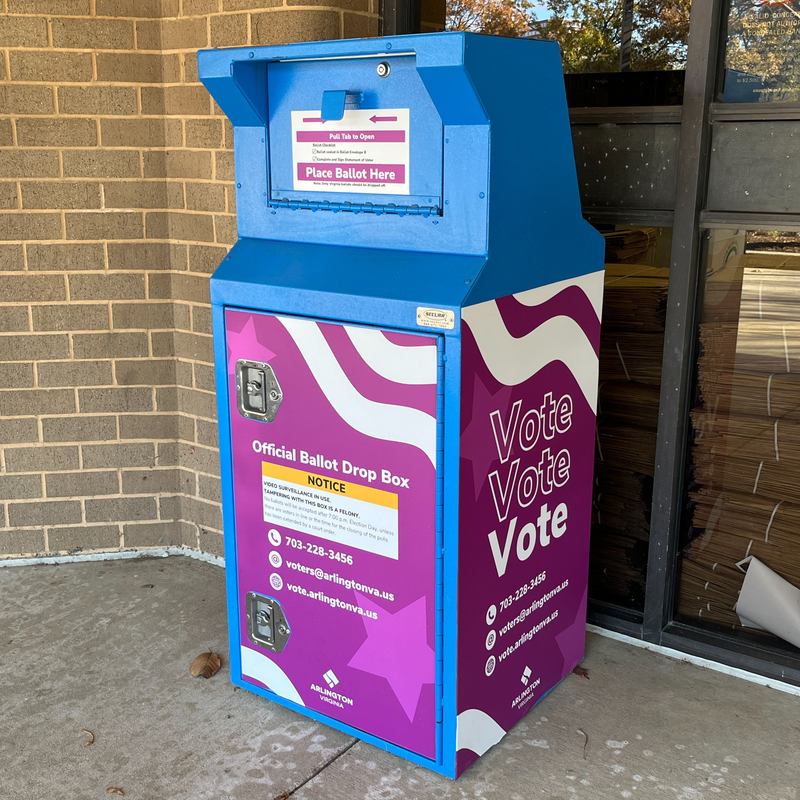
Brian Lehrer: Brian Lehrer on WNYC. Now we'll look at the implications of yesterday's Supreme Court hearing on mail-in ballots, specifically the deadline for mailing in those ballots or for those ballots to be received. This could change the law and what you need to know in New York and many other states. It actually suggests the question, what does Election Day, the term Election Day, actually mean? Is it a deadline for voters to drop their ballots off at the mailbox or the deadline for officials to have the ballot in hand? That was the central question. It may seem narrow, but the implications by all accounts are pretty large.
The central question in the case Watson v. Republican National Committee, the Supreme Court heard oral arguments yesterday. We'll play a couple of clips. It stems from a COVID-era Mississippi law that allowed mail-in ballots to be counted as long as they were postmarked by Election Day. Currently, 14 states, including both New York and New Jersey, plus some U.S. territories in addition to those 14 states, D.C., Puerto Rico, Guam, U.S. Virgin Islands, they all have similar grace periods in their election laws. This doesn't even factor in American citizens abroad. This is a big issue for members of the military who rely on mail-in ballots to cast their votes.
While this is happening at the Supreme Court, you probably know we talked about it yesterday, President Trump is pressuring Congress to pass the SAVE Act, mandating not just voter ID and proof of citizenship at the polls, but also a ban on most forms of mail-in ballots. That doesn't get as much press as the voter ID and proof of citizenship parts, but that's also in there, and the implications may be as large.
Now we're going to recap the arguments heard at the Supreme Court yesterday and break down some of the implications of what the journalists in the courtroom are saying is a likely ruling against the grace period. My guest is Carrie Levine, editor-in-chief of Votebeat, a nonprofit news organization that provides local reporting on elections and voting. Hi, Carrie. Thanks for doing this. Welcome to WNYC.
Carrie Levine: Hi. Thanks so much for having me.
Brian Lehrer: Do you want to say anything more about the actual legal dispute here? Did I oversimplify it by saying this is simply about the difference between a mail-in ballot having to be postmarked by Election Day or received by Election Day?
Carrie Levine: I think that's a lot what it is about, actually. I think you summarized it really well. The federal statute define Election Day as the first Tuesday after the first Monday in November for the general election. The justices are trying to decide what exactly that means, and that's a big part of what they're working with in terms of statutory language. That question really centers around it.
Brian Lehrer: This is a Mississippi case. Which side is the state on?
Carrie Levine: The state of Mississippi is defending its law, which allows voters five business days, as long as their mail ballot is postmarked by Election Day, for that ballot to be received by election officials. It gives a grace period. As long as the ballot is mailed and postmarked by Election Day and the election officials receive it within five business days, that ballot, under Mississippi law, will be counted. The state is defending that law.
Brian Lehrer: I'm glad that you mentioned the specific length of the grace period, five days. That's different in different states. I think it's longer in New York. It might be a week, as long as it's-
Carrie Levine: That's right. In New York, it's seven days of the election again, as long as it's postmarked by Election Day. In New Jersey, it's six days from the close of the polls, as long as it's postmarked by Election Day. It's important to know the rules in your state.
Brian Lehrer: That's why listeners in New York and New Jersey sometimes, if the race is close, they don't even actually know the results until a week or close to a week after Election Day, because they're still collecting some of those ballots, waiting for them to come in, as long as they were postmarked by Election Day. The Mississippi state government is on the side of the grace period, and the conservative justices yesterday seemed focused on where the logic of that leads. Here's Justice Gorsuch pressing Mississippi Solicitor General with a hypothetical.
Justice Gorsuch: Let's say you have a state where a large portion of the electorate mails in their ballots on or close to Election Day. Not far-fetched. Many states are like that. Then the day after the election, a story breaks that one of the lead candidates engaged in an inappropriate sexual escapade or perhaps is concluding with a foreign power. Again, not far-fetched, I think. The competing candidate immediately goes on the airwaves and urges voters to recall their ballots and to tell the common carriers not to deliver them.
Many common carriers will do that with anything that you send through them. FedEx, you just call them up and say, "I want it back." In that hypothetical, did the election happen on Election Day? Oh, by the way, it swings the election.
Mississippi Solicitor General: The election did happen on Election Day, Justice Gorsuch. As we've explained, our ballot does not allow using mail recall, anything like that when somebody submits their ballot by [crosstalk].
Justice Gorsuch: Just first deal with my hypothetical, and then I'll deal with your statute.
Mississippi Solicitor General: The election happened on Election Day-
Justice Gorsuch: Even though it changes the outcome.
Brian Lehrer: All right. Carrie, what is Gorsuch getting at with that hypothetical?
Carrie Levine: I think he's getting at the implications of the ballot being cast on Election Day, but not yet in election officials' hands, whether that leaves a window to change the outcome. As far as I know, that's not a hypothetical, that's quite played out anywhere. Instances of people recalling their ballot, people weren't coming up with great examples yesterday in the courtroom. It's hard for me to know whether that's something that really commonly could happen, especially at the level that would swing an election.
Brian Lehrer: The Mississippi Solicitor General said, "That's not in the law anyway. You can't recall a ballot once you put it in the mail."
Carrie Levine: Right. I thought it was really interesting because Justice Gorsuch then disagreed with him, saying he couldn't actually find that prohibition on recalling your ballot anywhere in Mississippi law. I will say that Justice Gorsuch is probably better at reading the law than I am. [laughs] I'm not in a great position to argue with them about it, but I do think most experts will tell you that people do not commonly recall their ballots.
It was a really interesting hypothetical, but I think what Justice Gorsuch, maybe the larger point he was trying to make is whether it creates an opening to the point where Election Day is not final, where things can change after Election Day, or an outcome could change after Election Day. Not just because election officials are still counting properly cast ballots, which is normal, which happens not just with mail ballots that arrive after Election Day, but sometimes with mail ballots, they're still processing them when they arrive before Election Day.
Or provisional ballots, where voters have cast provisional ballots, ballots of last resort because there's some question about their eligibility, and their eligibility is still being assessed after Election Day, so that election officials can determine whether to count those ballots. There are multiple reasons why it can take some time to get to an outcome in a close election, beyond these late-arriving ballots. I think it's important to note that, but I think his point is, are we creating a situation where all the choices are not finalized on Election Day? That's a concern that he was raising.
Brian Lehrer: Listeners, any comments or questions on this case that the Supreme Court heard yesterday about when ballots need to be postmarked or received if they are mail-in ballots, 212-433-WNYC, 212-433-9692, call or text. We heard one of the conservative justices, Justice Gorsuch. The liberal justices kept coming back to one problem that they raised with the Republican National Committee's argument. If the rule is true, that is, if their argument is true that Election Day should mean Election Day, then it should also ban early in-person voting. Here's Justice Kagan making that point.
Justice Kagan: Could you tell me, going back to this, we're not taking issue with early voting, how it is that you're not taking issue with early voting? Every time I try to state what your rule is, it seems to me it's a rule that prevents early voting because you're basically saying there are two things that have to happen, and they have to happen on Election Day. It's the casting of the vote and the receipt of the vote. Both of those things have to be on Election Day. Just like a normal person says, "When I early vote, I'm not doing that on that first Tuesday."
Brian Lehrer: Carrie, I have that clip of Justice Kagan asking that question. I don't have the answer. Do you know how the RNC's lawyers answered it?
Carrie Levine: The RNC's lawyers were pretty clear on the fact that they are not challenging early voting. They seem to be drawing a distinction, saying that votes have to be consummated on Election Day, which they're defining as cast, and then also received by Election Day. Early voting is something that would fit that definition. I do think it's something that not just Justice Kagan raised, but that multiple justices raised. In fact, Chief Justice Roberts, who asked very few questions during the argument, asked about limits to early voting that could be implied here.
I think that that was an interesting limited window into his thinking on this, but it was clear that multiple justices were concerned about the implications for early voting and implications that went beyond just these late-arriving mail ballots.
Brian Lehrer: Eric in Califon, New Jersey, you're on WNYC. Hi, Eric.
Erick: Hi, Brian. Sorry, I don't want to stray too much, but I've been hearing more recently about the imminent collapse of the U.S. Postal system this year. I know we've heard this before, but what if the postal system does collapse? What happens with mail-in voting then?
Brian Lehrer: It's a good question, and it's collapsed enough that I know at least one person who sent in a recent election ballot just before Election Day and later got a note from the Board of Elections, this was in New York City, that the vote was not counted because it arrived after the deadline. Now, if that story is true, the way I understand it, it means it took more than a week for the ballot to go from one mailbox in New York City to wherever the Board of Elections was going to count it in New York City. That's just one story, Carrie. Eric asks an interesting question. If the U.S. Postal Service continues to collapse, that's the word that some people have predicted.
Carrie Levine: I think that for several years now, I have heard election officials express concern about delays in postal delivery and have heard conversations at conferences elsewhere where they've talked directly to Postal Service officials about this. Postal Service officials have always assured election officials that they prioritize election mail. That clearly marked election mail voter registration cards, ballots being sent out or returned, are a priority for the Postal Service, especially close to an election. They've always boasted about their track record on that, but as you point out with that story, certainly you hear from people who say, "My ballot didn't make it on time."
As the Postal Service has tried to save money, has cut back, sometimes, there are routes that get longer in terms of the path that mail takes between its origin and its destination. Like we're aware of some rural areas where, for instance, someone mails a ballot and it goes out of state and back into state. Absolutely, this is a concern. The solvency of the Postal Service is a concern. I know that at least some states, where many people vote by mail, states like Colorado, have been planning what to do if there is an issue with postal service delivery and they need to do something. Part of that is going to involve drop boxes, creating other ways for people to return their ballots.
Brian Lehrer: Of course, that would seem to be the risk that the individual voter takes, that their vote is not going to get there in time to be counted, as opposed to something that should be prohibited by law. In a way, it's a different topic than what this case was about, unless you disagree.
Carrie Levine: No, I think that the reliability of mail really is something that's a concern. Though I will note that one reason for the grace periods that some states offer, I believe it's now 14 states in the District of Columbia that offer this to every voter using mail ballots, is because they're aware that sometimes there are delays that are no fault of the voter.
Brian Lehrer: Tim, in Brooklyn, you're on WNYC. Hi Tim.
Tim: Hi. Good morning, Brian. That issue of recalling a ballot once sent in, posted to a common carrier, struck me. It took me a long time to figure out exactly what they were talking about there. It wasn't just Gorsuch; it was Amy Coney Barrett also. They had the same refrain. My take on that is this was a bizarre scenario cooked up by an ultra-right think tank, one of those super well-funded by right-wing billionaires think tanks. Unfortunately, the Mississippi Solicitor General was just flailing in the water.
It's such a strange thing, a concept of recalling a piece of mail that you've posted. It screams a fabricated scenario, exactly generated to confound the argument of, in this case, the other side. It really stinks. I think we have a basically a conspiracy here and the fix is in, this is dying because those interests want it to. I'm not a conspiracy-minded person in general, but man, it sure smells like it.
Brian Lehrer: Looks like that to you, Tim. Thank you very much. I'm not saying I agree or disagree with him, but you could see where that suspicion comes from, Carrie, because it is a far-fetched scenario. Maybe there could be a scandal that's revealed that's so big that at the very last minute, a lot of people who mailed in ballots would want to recall their ballots. Even if that was in the law, it still could only be within that six days in New Jersey, seven days in New York, five days in Mississippi, grace period after Election Day. It doesn't significantly change what was the voting period.
Also, as we mentioned before, that idea of mail-in ballot recall is not allowed in the Mississippi law that was being challenged. I asked you this before, but I understand why Tim brings it up again and makes him think that they're grasping at any excuse that they can because they have some interest in just making it harder to vote. I'm not sure, I think that's the case, but it's not in the law. Why did they bring it up?
Carrie Levine: I think it's a really interesting question because it's certainly not a scenario I had heard anything about before this argument, really. I think one thing, just stepping back, that I see the justices wrestling with and that you really heard during this argument is how complex elections are. You're really dealing with millions of people across the United States voting under the rules set by their states, which differ. Things that work in one state may not work well in another. When you change something, are there implications for something else?
I think we really heard some of those complications in the argument yesterday. What windows do you leave? What makes it fair? Some of the justices, the conservative ones, brought up questions about whether late-arriving mail ballots shifting the outcome could contribute to a perception of fraud. I think that what you're seeing is you're really seeing everyone wrestle with how complex this is and how much elections have changed in the modern era.
Brian Lehrer: A couple of things that we should probably clarify for the listeners. One, even though the Supreme Court probably won't decide this until June, this does not affect this year's primaries, even if they change the mail and ballot laws for Mississippi and other states. It would only affect the general election in November. All these primaries that have already started to take place, they're going to proceed and conclude under the current mail-in ballot laws in any state, correct?
Carrie Levine: Yes, unless a state changes it. That's right.
Brian Lehrer: Unless a state changes it, but not by order of the Supreme Court. What about the military? So many U.S. Service members vote by mail from overseas. How does this affect them?
Carrie Levine: That's a really interesting question. Groups representing military and overseas voters have warned they could be disproportionately affected by this. I think that's something that's a concern. Even President Trump, who, as you pointed out, has advocated for really sharp new restrictions on use of mail ballots, has said the military should be permitted to use them. Some of this depends on what the Supreme Court rules and how it rules. What it says applies here.
Absolutely, the military is one group that could be affected by the tightening of mail ballot deadlines. When that came up during the argument yesterday, I forget which justice raised it, but I believe it was the lawyer for the Republicans who brought the case, who said, "Look, states are finding other ways to serve military voters. Some allow them to cast ballots by email, and we think that kind of remedy would be appropriate here."
Brian Lehrer: Given what's also in the news right now, if a U.S. service member is stationed in the Persian Gulf or in the Indian Ocean or somewhere else halfway around the world, if the Supreme Court goes the Republicans way, would that service member have to calculate how long a piece of mail is going to take to go from Kuwait to Trenton or whatever it is?
Carrie Levine: Absolutely. I think in all honesty, what I would tell a member of the military serving overseas is that you should mail your ballot as soon as possible, regardless of what the Supreme Court does, because even these grace periods vary, and some of them are not very long. I don't want to see people who are eligible to cast ballots not getting to do so because they miss a deadline. I think whatever the Supreme Court does in this case, I'd hate it for anyone whose ballot has a long way to go to wait till the last minute to mail it, because, as you pointed out, things happen with mail service, too.
Brian Lehrer: One more call. Arthur in Jamaica Hills, Queens, you're on WNYC with Carrie Levine, editor-in-chief of Votebeat, a nonprofit news organization that provides local reporting on elections and voting, as we talk about this mail-in ballot Supreme Court case yesterday. Hi, Arthur
Arthur: Gang, thanks for taking my call, and good morning to you and your guest. First thing I want to say is that unfortunately, this is being-- I won't name any names, but you got some people up there who are making up these rules who, as I said to the screening, you can't-- If I win by five votes, it was a landslide, and the people have spoken. If I lose by 5 million, I was robbed. I've heard nothing about any of this until the 2020 election. We all know COVID was one of the reasons why a lot of people did mail-in and all this and that, but no one talks about the closing of a lot of the polling places, where you look on television, you see those people standing on lines.
You got to feel as though what they want is for a majority of us to just say, "To hell with this," and go home. Maybe I'm wrong, but if you want to make it more inviting for people to want to do their civic duty and vote, you wouldn't be closing a lot of these different places. You would have more of them. Anyway, I'll leave it at that. That's really how I'm feeling about this whole thing.
Brian Lehrer: Thank you for raising the bigger picture, Arthur. It does seem to be part of a push by the Republicans to make it harder for people who they presume will be disproportionately Democrats, as I guess mail-in ballots have been in the past, make it difficult for those constituencies to vote. Right, Carrie?
Carrie Levine: I think that what you've seen is Republicans on all fronts, at the state level, at the federal level, the president really pushed to tighten up both registration requirements, really push to put new restrictions on registration, new requirements on registration. You've seen them really push to reshape the way elections work in some ways that people find really limiting. I think our caller just raised a very good point, which is many states, including Mississippi, loosened or allowed more people to vote by mail during the pandemic.
In fact, the law that was under challenge at the Supreme Court, the Mississippi law passed in 2020, was challenged in 2024, the one providing the grace period. We see a lot of this date back to the pandemic, when we saw the use of mail voting really surge. For instance, 43% cast ballots by mail, according to some studies, in 2020. That's gone back down. It's still above where it was in 2016, but it caused a big surge in voting by mail, which I think prompted much more attention to it. The Republican focus on it includes allegations that mail voting-- Many Republicans have said that it enables fraud, even though it's clear that this is very rare in American elections.
Brian Lehrer: Do you have good numbers on how many people would be disenfranchised, probably, by this particular change if the grace periods were to go away?
Carrie Levine: It can be hard to say that, because one thing to know is we actually at Votebeat got data from, I believe, 13 of 19 states that had grace periods in 2024 and collected data on it and found that at least 750,000 ballots in those states arrived during the grace period.
Brian Lehrer: The grace period. You would have to subtract from that.
Carrie Levine: There were some states that didn't give us data. Assume that that's a floor and not a ceiling. In addition to that, four states have changed their election laws so that they no longer offer a grace period. One thing I'd say is that if the Supreme Court rules this way, some number of voters whose ballots had previously arrived during those grace periods will hear about it, will change their behavior, will cast their ballots in time to meet the new deadlines. Hard to know how many won't.
Brian Lehrer: Those states that have undone the grace period, they would be the statistical test cases, I would think, because then we could measure how effective whatever education campaigns there were were to tell people, "Hey, you no longer have this grace period. The ballot has to be received by Election Day." Maybe there's data on that out there somewhere. Last question, the much larger effect would be what Trump wants in the so-called SAVE Act, and that is to ban mail-in balloting altogether unless you're sick or absent. Used to be called absentee ballots, generally, just with those exceptions, you couldn't mail in your ballot. You would have to vote in person.
If the Supreme Court rules in the conservatives' favor here, does that enable that in any way under the law, or is that a completely separate question, and it's totally up to the politics of what happens in Congress?
Carrie Levine: In this case, the Supreme Court is really just considering the question of whether ballots can be received after Election Day. You never know what the Supreme Court is going to do, and I'm the last person who's going to tell you I do. That's the question before them in this case. The question of the restrictions on mail ballots that go beyond that is something that, as you point out, Congress is considering right now. The president has repeatedly called for these sharp restrictions on the use of mail ballots, with limited exceptions for people who are sick, who are absent, who are in the military.
What I will say is that the current version of the SAVE America Act pending before the Senate does not have that provision in it, that's not in the version that passed the House. I think part of the reason why is even though the president has fiercely advocated for it, there are Republican members of Congress who have said that they don't favor it, that they don't think those restrictions would be best for their states. Even among Republicans, there hasn't been universal support for those sharp restrictions.
Brian Lehrer: I have to correct myself in saying that that provision to ban most mail-in balloting is not in the SAVE Act. I actually thought it was in the version that the Senate is debating. I stand corrected on that.
Carrie Levine: I believe it's been proposed as an amendment, and so we'll see what Congress does. It was not in the-
Brian Lehrer: I see.
Carrie Levine: -motion that passed the House and went to the Senate, but the president has said that he believes Congress should do that.
Brian Lehrer: Carrie Levine, editor-in-chief of Votebeat. Thank you for joining us.
Carrie Levine: Thank you for having me.
Copyright © 2026 New York Public Radio. All rights reserved. Visit our website terms of use at www.wnyc.org for further information.
New York Public Radio transcripts are created on a rush deadline, often by contractors. This text may not be in its final form and may be updated or revised in the future. Accuracy and availability may vary. The authoritative record of New York Public Radio’s programming is the audio record.