
Slowing Down Cyclists in Central Park
Brian Lehrer: It's The Brian Lehrer Show on WNYC. Good morning, everyone, and happy Presidents' Day. There wasn't always such a holiday. The national holiday, some of you know this, especially if you're a certain age or you just know history. The national holiday used to be George Washington's birthday, on his actual birthday, February 22nd, no matter what day of the week it was on. Some states, including New York, also observed Abraham Lincoln's birthday on February 12. Then Congress passed a law called the Uniform Monday Holiday Act that moved Washington's birthday to the third Monday in February. That began in 1971, and then it became generally known as President's Day as Lincoln's birthday got swept in. Why the Uniform Monday Holiday Act? Well, as history.com tells it, the change was seen by many as a novel way to create more three-day weekends, obviously for the nation's workers, and it was believed that ensuring holidays always fell on the same weekday would reduce employee absenteeism. It continues. While some argued that shifting holidays from their original dates would cheapen their meaning, the bill also had widespread support from both the private sector and labor unions and was seen as a sure-fire way to bolster retail sales.
How many of you are taking advantage of Presidents' Day sales right now? Here we are 55 years later. Presidents' Day sales obviously abound. Kids in New York only get one day off from school for Lincoln and Washington, not two like they used to in past generations. I will note that Lincoln's birthday is still commemorated in the city in a very New York way. Alternate side of the street parking regulations are suspended every February 12th. In addition to Presidents' Day today, one other thing about Lincoln's birthday, it's also one of the reasons that Black History Month got placed in February.
Later in the show, we will launch our own Black History Month series with Karsonya Wise Whitehead, president of ASALH, the Association for the Study of African American Life and History. We'll be talking about the history of acknowledging Black history in this year, when the Trump administration is trying to have us all acknowledge it less. Obviously, Presidents' Day this year comes as the nation is grappling with the presidency like no other, with the question even of whether it's driving us into authoritarianism as a more serious concern than it perhaps any other time in American history.
We hope to ask our guest about that. We begin today with one of the nation's great historians of presidents in particular and of the major themes of American history overall. It's Jon Meacham, who in 2022 published a biography of Abraham Lincoln called And There Was Light: Abraham Lincoln and the American Struggle. He's also written books about presidents Andrew Jackson, Franklin Roosevelt, Thomas Jefferson, and George H.W. Bush. For this moment in history right now, Jon Meacham has a new book called American Struggle: Democracy, Dissent, and the Pursuit of a More Perfect Union.
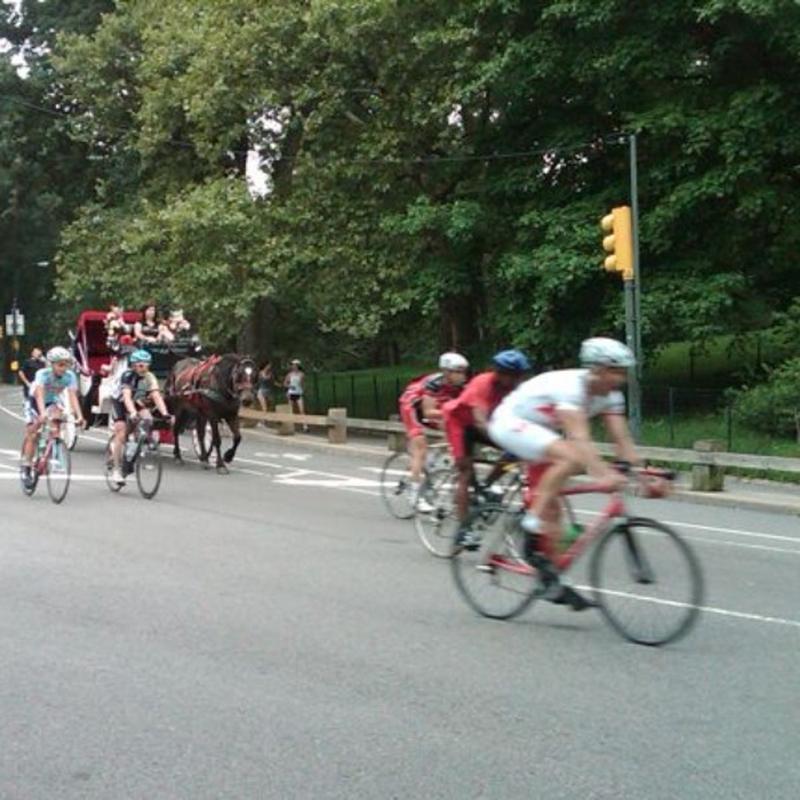
Now, let's see, last I saw, we were having some trouble hooking up with Jon Meacham. Do we have him? No, not yet. Okay. Sorry to start out with some technical difficulties, folks. After that whole introduction about Presidents' Day and Jon Meacham, listeners, we're going to do some local news first and then try to get back to John Meacham later in the show. That's what happens in live radio, even on the holidays. Did you know there's a new speed limit taking effect in Central Park? It's a speed limit for bicycles, regular and E-bikes alike. If you've been on the Central Park Loop recently, you probably noticed how quickly it can go from peaceful to crowded with pedestrians, runners, and cyclists all moving at different speeds in the same narrow corridor on the Loop. Now the city is moving ahead with a new rule, a 15-mile-per-hour speed limit, like I said, for all vehicles on Central Park Drive, including regular bikes and E-bikes. Supporters say it's a straightforward safety move for pedestrians.
There's also pushback, though, and one of our next guests says the 15-mile-per-hour speed limit does not actually fix the real problem. They argue that the real issue isn't speed so much as the city's failure to build enough dedicated cycling space elsewhere. Now we will hear that argument against the new rule from cycling advocate and Streetsblog contributor Neile Weissman, along with Streetsblog reporter Sophia Lebowitz, who's been covering how the city is approaching bike enforcement more broadly. Neile, welcome back. Sophia, welcome to wnyc. Hi there.
Sophia Lebowitz: Hi.
Neile Weissman. Hi. Hi, Brian.
Brian Lehrer: Listeners, you can get in on this if you use Central Park regularly on foot or on a bike or maybe on something else, skateboard, whatever. We know there are all kinds of things, maybe in a horse carriage. Are you for this? Are you against this? Give us your opinions, ask your questions, tell us your stories. Our guests are here with a point of view opposing the speed limit. You can push back or take any position. 212-433-WNYC, call or text with your stories, comments, or questions. 212-433-9692. Sophia, for you as the reporter here, what exactly is the policy that's going into effect?
Sophia Lebowitz: What we know is that on December 15th of last year, the DOT sent a letter to the community boards, which includes Central Park. That's Manhattan community boards 5, 7, 8, 10, and 11. This kick-started a 60-day advisory review period. Basically, the DOT told these community boards we're going to be implementing a 15-mile-per-hour speed limit on the Central Park Drive, which is the main loop going around Central Park. That 60-day review period is up now. I don't know exactly when the DOT is planning to start implementing this speed limit. They haven't come out and given an exact date, but they can now because the 60 days are up.
Brian Lehrer: Right. What triggered the change? Was there a particular crash, a pattern of injuries, sustained complaints from pedestrians, or the Central Park Conservancy -- Was this just Eric Adams had an animus toward bicycles? What was it?
Sophia Lebowitz: I'm not exactly sure. There was no press announcement when it happened in December. That was right at the end of Eric Adams's term. To me, it felt like a quick last-minute move. I've tried to inquire with the DOT and ask a little bit more about it, but haven't gotten much other information other than just the logistics of the process.
Brian Lehrer: Neile, do you want to add anything to that? Do you have a take on how this came about? It sounds like it was just from the Adams administration, the Transportation Department. This was not something passed by City Council.
Neile Weissman: No, I just think it was something that people in the area wanted done. It was supported by the conservancy. I think this is a political decision. I don't think it's founded on safety.
Brian Lehrer: Let me read a little from a New York Times article on this in October. This was before the policy was passed, but describing what many people saw as a problem. The headline is, "In Central Park, pedestrians, horses, and e-bikes battle for space. Critics say the park's drives have become increasingly chaotic as e-bike riders move through at high speeds." It says at the busiest hours, pedestrians, cyclists, and horse-drawn carriages compete for space with e-bikes, e-scooters, skateboards, unicycles, and pedicabs on the three-lane corridor.
Cars have been banned since 2018. The article reminds us. It says now officials are struggling. What has become a vexing problem. Too many people moving at too many different speeds in too many directions. Then The Times article cites a series of headline-grabbing episodes, as they call them, in recent months. In March, an 18-year-old riding an e-bike collided with a 34-year-old bicyclist near the Metropolitan Museum of Art on the East Drive, sending both to the hospital, according to the police. In June, a 40-year-old man on an electric unicycle was hospitalized in critical condition after colliding with a bicycle on the West Drive near 60th Street.
The the same month a man died after his e-bike, the e-bike rider died after hitting a pedestrian. The pedestrian did not. The pedestrian, it says, sustained minor injuries on the East Drive near 97th Street. Sophia, how would you, as a reporter for Streetsblog, but it is an advocacy site, describe the chaos in similar or any different terms from the way the New York Times did in October?
Sophia Lebowitz: I would first say that in terms of e-bikes, this speed limit in the park is a bit redundant. The city implemented a 15-mile-per-hour speed limit for e-bikes already that went into effect last October. That's already there. E-bikes are supposed to not ride over 15 miles per hour. That's something that already exists. If the problem really is e-bikes, there is a redundancy there. Framing it as this battle, I think, is one way to do it. I would argue that it's not so difficult all the time and that thousands of people are sharing this space every day and are all safer inside the park than outside the park in terms of the dangers caused by cars on the streets of New York.
There were last year 112 pedestrian fatalities on the streets and 8,571 injuries, according to DOT's Vision Zero portal. Obviously, there are conflicts in the park, that is for sure. There's a lot of varied users, and I think some growing pains from this new design, which was implemented last year, changing some of the layout and the way some of the traffic lights work, changing them from traffic lights that were made for when cars were in the park to these more flexible yield situations. I do think framing it as a battle can sometimes miss the great things about Central park where so many people really are able to be safe in that space.
Brian Lehrer: You mentioned the redesign. I want to come back to that in a few minutes because I think some people like it, some people don't like it, including the street signals that were the traditional red lights and green lights and pedestrian walk signs being replaced by flashing yellow signals, which some people can find less clear and therefore more dangerous. Neile, talk about your Objections to this 15-mile-per-hour speed limit. If Sophia has it right that there's already a 15 mile an hour e bike speed limit citywide, is what's new here really only the regulation of how fast regular bicycles can go?
Neile Weissman: A little bit of house clearing. Cycling advocate, I already host a website, completegeorge.org, and this has resources related to this discussion, and I recommend people check it out either during this or afterwards. Also, in the interest of disclosure, I'm the public relations director for the New York Cycle Club, but today I'm speaking on my own. Having said that, all of the major racing and recreational bike clubs, including Century Road Club and New York Cycle Club, who've been training in the park for decades, regard this 15-mile-per-hour speed limit as an existential threat because all of our ride programs depend on the ability to train in the park.
If we have always had an understanding with the conservancy and the police that we can do exceed the 20-mile-per-hour speed limit before and 8:00 AM when the park is least crowded. We believe to the extent, and we spread this, we do this voluntarily.
Brian Lehrer: Your line dropped out for just a second. What were the hours where the speed limit would not apply?
Neile Weissman: Between 6:00 and 8:00 AM.
Brian Lehrer: Okay, thank you.
Neile Weissman: This is an understanding that we've had for decades. To the extent that we can funnel cyclists into this period, is that we make the park safer for everybody.
Brian Lehrer: You wrote an op ed on Streetsblog. By the way, listeners, I can now confirm, those of you expecting Jon Meacham, he's going to start at 10:30. Sorry for whatever miscommunication was there, but we will have Jon Meacham talking about Presidents' Day in broad historical context coming up in about 15 minutes. We continue now on what was going to be the second segment today, about the new speed limit for bicycles in Central Park.
212-433-WNYC. 212-433-9692. Neile, I see where you wrote the real problem in Central Park isn't speed, it's scarcity. Your point is there aren't enough other places for people to ride bikes, including training for racing or whatever, safely in the city.
Neile Weissman: We have 800,000 adult cyclists in the city. We know that half the visitors of Central Park, of the 40 million, are cyclists. That's on their Central Park Drive and Circulation report. Of those, 13% are considered fast cyclists, like these clubs. What this new law does, it basically criminalizes 5 million park users per year. Wait, there's more. The Central Park is actually rather hilly. There's about 50 feet per mile, which is pretty steep. With those climbs, there's also descents. On those descents, virtually any pedal cyclist can exceed 15 miles an hour. Where do you draw the line? At what time of day, at what point of the park? This is a morass. How is this going to get enforced?
Brian Lehrer: Let's hear from some of our listeners, some pushing back. Let's see. How about George in Riverdale? You're on WNYC. Hello, George.
George: Oh, hi there. Excuse me. I couldn't hear it on my telephone. I'm calling because I am sorry to say that I have two close personal friends, one of whom was a very active cyclist who was killed in Central Park by a bicyclist, and another friend who was killed on Vanderbilt Avenue by a cyclist. I am fed up a lot of this discussion and all the wonderful things and the great help that's supposed to come, and the separation of grade and everything else that goes on with all the different arguments, transportation alternatives, and the others have done.
Nobody wants to speak against cyclists. I'm going to, and I'm really PO'd. Bicyclists are subject to the same law as motorists, and of course, very few of them actually follow what the traffic laws say. As an occasional motorist, I find it infuriating. As a pedestrian, I find it horrifying and even scarifying. I think that this is outrageous. It's almost impossible at present to police it in any intelligent way, to devote the resources needed to take miscreants and deal with them. We either have to come to grips somehow with this, and we reduce pedestrian fatalities, we possibly produce bicyclist fatalities, but we certainly reduce the amount.
If we can find a way intelligently to modify and regulate this behavior, and in fact charge people serious fines in the event that they break the law. We don't have a method of doing it. The question of e-bikes remains a problem. Enforcement is a problem. All the rest of it, these are very complicated issues, and everything sounds wonderfully simplified, and it's not working.
Brian Lehrer: George, thank you very much. Someone else who's going to agree a lot with George, I think, but with a particular situation. Janet, who lives near Central Park. Janet, you're on WNYC. Hello.
Janet: Brian, this is Janet Crawford. I am a gazillion caller to you. Normally, it's about West Indian stuff, but today it's about cycling. I use a motorized wheelchair. I love my park, but I'm so afraid of crossing that road to get into the park that it limits what I can do. I agree that there should be some enforcement in terms of speed and regulations because it's my park. I love it. Given the fact of my physical challenges, I can't use it the way I want it to. I agree with regulating and having a speed limit.
Brian Lehrer: Janet, thank you very much. One more in this set and I will say that all of our lines are full with people who support the idea of a 15-mile-per-hour bicycle speed limit. That's not to say it's a scientific poll. Maybe that's who's got the passion to call in right now. Just saying. John in Hell's Kitchen, you're on WNYC. Hello.
John: Hey, Brian, can you hear me?
Brian Lehrer: Yes.
John: Thank you for checking my call. I think the last two callers are right on the nose. We have to have it. It's called Central Park. It's not Central Velodrome. There are a lot of issues with the cycling clubs and individual people who train in the park on very fast bikes, professional bikes, and they're aggressive, they yell at people, they go through red lights. I appreciate their training times, but a lot of us in the park, I use it about six days a week, are really at loose ends about, particularly those cyclists and the e-bikes and the uniballs and whatever it is.
Enforcement is the biggest issue. The Parks Department is having a really hard time enforcing because people push back aggressively, whether it's putting dogs on a leash or whether it's cyclists. You see fight after fight. The Parks Department has stepped back. What about enforcement? I have a question for our reporters or anybody else. Yes, the flashing yellow lights, I'm completely perplexed by them. Three of them at crosswalk sometimes. The walk and don't walk signs are covered by burlap and tape, and we have no idea what's going on.
No one can understand the bike lanes themselves. There are two bike lanes. One has marks on it like chevrons, and we can't tell which one means faster and slower. Would love to get some answers on that, but enforcement, enforcement, enforcement, and I am fully for 15 miles an hour. It's a park.
Brian Lehrer: John, thank you very much. I will read a text that came in in support. Listen to writes, "Your guest is right. 15 miles per hour for a pedal-powered bike downhill in Central Park is dumb." Writes that one listener. Neile and Sophia, you heard what was consistent, and I didn't realize it was going to be like that, through all three of those callers. They're not only concerned about the speed limit per se, but they're concerned about enforcement of whatever traffic laws exist.
John also brought up the new street signals, and let's take that first, and then we'll take enforcement second. Sophia, for you. Sophia, from Streetsblog, back to that New York Times article. It says red and green street signals on the drives are being exchanged for flashing yellow signals, a development panned by some park users who object to pedestrians having to cross in front of bikers without the protection of a walk signal. City Councilwoman Gale Brewer, a Democrat who represents the Upper West Side, describes the change as an improvement.
However, she said it's better than the red lights because then everyone thought, oh, I'm safe, but you're not. Now she added, everybody has to look. Sophia, describe, as you understand it, what's changing and give us your opinion of it.
Sophia Lebowitz: I think there was a lot of issues before, after cars were banned from the park in 2018, we still had these traffic signals that were really meant for cars. With the new situation in the park relatively new, I think there needed to be an upgrade that was a design that was specifically for the current users of the park. The blinking yellow lights, the DOT says that cyclists are supposed to yield when they see a pedestrian in the crosswalk, which means stop and let the pedestrian go. Yes, everyone has to look and be a little more aware of what's going on.
It's a little more of a negotiation and a communication versus just a red light, which I think council member Brewer was correct. There was a lot of cyclists not following the red lights. If you were a pedestrian and you just didn't look and started walking across the drive, that might be an issue. When it comes to enforcement, I think that -- I was at a Manhattan Community Board 7 meeting back in January when they were talking about this speed limit, and the Park Precinct Deputy Inspector Timothy Magliente, he even said, this is an exact quote from him.
He said speed enforcement is not easy with bicycles; the frame of a bicycle is very narrow, which makes the LIDAR gun almost impossible to shoot. I think that when it comes to enforcement of bike speed limits, there's always going to be a selective enforcement happening. Also, like I tried to mention earlier, there are just a lot of rules that are already in place. One of the callers mentioned those electric unicycles, those are illegal that NYPD can enforce against those. Those are not street legal. There's a lot of non-street-legal e-bikes that are on the street that can already be enforced against.
I think instead of making new rules, I think there has to be more understanding of the current rules that can be enforced. I do agree more enforcement of what is already in place.
Brian Lehrer: You agree more enforcement because in a transportation alternatives op ed on your site, Streetsblog, opposing the new Central Park speed limit, they wrote, "Existing speeding and right-of-way laws already provide effective tools to address genuinely dangerous behavior." I think some of our callers would disagree that they're being used effectively, these tools. The op ed continues, "These standards let law enforcement officers focus on individuals who fail to yield or behave recklessly rather than imposing a blanket limit that penalizes responsible cyclists."
I'll reread that one line. These standards let law enforcement officers focus on individuals who fail to yield or behave recklessly. I'm not sure that's what we really have. I'm going to play a clip. This is from the WNYC mayoral debate in October, where I asked the three candidates about enforcement of red lights and other traffic laws for e-bike riders. This was in the short-answer lightning round. The whole exchange with the three of them was only 40 seconds. Here it is. The city recently enacted a 15-mile-per-hour speed limit for e-bikes.
Of course, there are the other motorized two-wheelers that also frequently ignore red lights and other traffic laws. If you are mayor, would you direct the NYPD to ramp up speeding tickets and other moving violations on the motorized two-wheelers, Mr. Cuomo?
Andrew Cuomo: Yes. This is a dangerous situation for many people.
Brian Lehrer: Mr. Mamdani, yes or no?
Zohran Mamdani: I would actually build on the City Council's progress in holding the apps accountable, like DoorDash and Grubhub, to ensure that there weren't incentives for breaking those street [applause] laws.
Brian Lehrer: You would not increase ticketing the riders?
Zohran Mamdani: I do not think the police should be the ones dealing with the failures of these app companies.
Brian Lehrer: Mr. Sliwa?
Curtis Sliwa: License them, register them, and yes, do enforcement on them.
Brian Lehrer: That from the debate. Neile, the response of Mamdani, who is now the mayor, was to oppose police giving speeding or other tickets to e-bike riders. Now, maybe we can all agree the apps are providing too much incentive to drive e-bikes recklessly by delivery workers, but he seemed to be against traffic enforcement at all for people on bikes. I don't know if I'm reading too much into it, but that was the implication of what he said. He didn't seem to want bike riders getting tickets. Is that your position, too, for delivery workers or others, or your understanding of the mayor's position?
Neile Weissman: Sophia, would you?
Sophia Lebowitz: I want to bring up a few things here, because I think that what Mayor Mamdani was speaking about was this criminal summons policy that he ran on a platform of getting rid of. Basically, last year --
Brian Lehrer: Wait, what's a criminal summons? Is a ticket for running a red light a criminal summons?
Sophia Lebowitz: It's a little bit complicated. Last year in April, Mayor Eric Adams implemented a policy where, instead of cyclists getting traffic tickets, the same type of traffic tickets that car drivers get, the NYPD, since April, is now directed to give cyclists criminal summonses, which means they have to appear in criminal court. They can't just pay it online. It's not a traffic ticket. It's part of a different court system. This policy was very controversial. There was a lot of selective enforcement of this, and it really was part of this criminal crackdown on cycling that happened at the end of the Adams administration.
I would say that this Central Park speed limit was this last part of that crackdown. We had the criminal summons policy, the e-bike 15-mile-per-hour speed limit citywide, and then now this Central Park speed limit. As you heard in that debate, Mayor Mamdani had said that he was opposed to this policy. He has not actually reversed it. We are still seeing cyclists get criminal summonses instead of traffic tickets. I saw just last week, two e-bike riders coming off the Williamsburg Bridge were given criminal summonses. We've been covering this at Streetsblog a lot, so I wanted to just get that out of the way.
I think when it comes to delivery workers, there's 80,000 delivery workers in the city. They have hard jobs. These apps, they don't route them in a way that they would avoid the Central Park drive. It's very possible that you could be a delivery worker on the east side of the park and get an order that forces you to go all the way across the park. How are you going to do that? You're going to use the Central Park Drive. There are no protected bike lanes on the park's transverses. There are no even protected bike lanes going north and south after 2nd Avenue, all the way to the park on the east side.
Brian Lehrer: Accepting the premise that the apps exploit the workers, do you think there should be different enforcement of the law, differential enforcement of the law for delivery workers and other bicycle riders?
Sophia Lebowitz: No, I think this criminal summons policy is overly punitive, and I don't think that cyclists should get different types of tickets than car drivers do for doing the same thing. If you run a red light and you're driving a car, you get a traffic ticket, and you can pay it online, and you don't have it on your criminal record, and you don't have to go appear in criminal court. If you run a red light now on, on your bike, you do have to appear in criminal court. This isn't even getting into the immigration implications that is the elephant in the room here.
When you have a population of delivery workers who many of whom are within the asylum seeker process, working on temporary work permits, and are having to go through this very subjective asylum seeker process where anything on your record can make a difference, you don't know what's going to happen. I think that the criminal summons policy is not fair.
Brian Lehrer: Neile, last question. If the bicycling community is appealing to Mayor Mamdani to reverse the 15-mile-an-hour bicycle speed limit for Central Park, do you have any indication yet whether he's inclined to do it? Since this was a policy, again, as we said at the beginning, not passed by city council but just enacted by the Adams administration. Presumably, the Mamdani administration could just reverse it. Are they going to do it? Do you have any indication?
Neile Weissman: No indication. When I first heard about this, I said, "Oh, just wait till Mamdani hears about this," but still waiting. No. By the way, I agree with the transportation alternatives op ed. There are laws on the books. Vehicle and Traffic Law 1151, failure to yield to right of pedestrian crosswalk 1180, proceeding at a speed not reasonable and prudent. The police should enforce this. This way, the cyclists know what the rules are. When there are no pedestrians around, they can move at speed. When the pedestrians are around, they know what the rules are, and they know what's going to be enforced.
Brian Lehrer: In your opinion, should e-bike riders or any bike riders be given, let's say, a regular consistent with the way the cars and drivers get them, moving violation ticket?
Neile Weissman: Again, I'm going to defer to Sophia on this one.
Sophia Lebowitz: I think --
Brian Lehrer: Go ahead. Go ahead.
Sophia Lebowitz: I think it's just very important to be clear on the difference. I think cyclists should follow rules, and there should be enforcement of those rules. I think that different types of enforcement, and specifically criminal enforcement for cyclists, is another issue. I think the mayor ran on a platform of getting rid of that policy, and he has not.
Brian Lehrer: Which, I guess, isn't quite a yes on regular red light tickets consistent with the way the cars get them for bicycles. That wasn't quite a yes, was it?
Sophia Lebowitz: Well, yes. It's a yes. I think that there should be enforcement of the rules for cyclists, but I don't think it should be different than -- Yes, I don't think it should be different.
Brian Lehrer: Drivers. We thank Neile Weissman, who is president-- Actually, Neile, here, you can remind everybody of your current title.
Neile Weissman: I host the website completegeorge.org. I'm a freelance contributor to Streetsblog, and I'm a public affairs director for the New York Cycle Club.
Brian Lehrer: Here, here to improving the bike and pedestrian lanes on the George Washington Bridge, which I think is what that title refers to. Right?
Neile Lebowitz: Yes.
Brian Lehrer: Sophia Leibowitz, who's been covering how the city is approaching bike enforcement more broadly for Streetsblog. Thank you both very much.
Neile Weissman: Thank you, Brian.
Sophia Lebowitz: Thank you, Brian.
Copyright © 2026 New York Public Radio. All rights reserved. Visit our website terms of use at www.wnyc.org for further information.
New York Public Radio transcripts are created on a rush deadline, often by contractors. This text may not be in its final form and may be updated or revised in the future. Accuracy and availability may vary. The authoritative record of New York Public Radio’s programming is the audio record.
