
Sen. Booker on 'Standing Up'
[music]
Brian Lehrer: It's the Brian Lehrer show on WNYC. Good morning again, everyone. New Jersey Senator Cory Booker is here. Call in if you want to ask your New Jersey senator a question, New Jerseyans, constituents first priority about things going on relevant to the state that are going on in the country and the world. You can also call about his new book, which we're going to give him a few minutes to lay out the ideas in, called Stand, that seeks to link virtues like patriotism and humility that might help bridge our partisan divides. Senator Booker, always good to have you on with us. Welcome back to WNYC.
Senator Cory Booker: It's great to be back on with you, Brian. Thank you.
Brian Lehrer: Listeners, let me give Senator Booker a chance to discuss the main argument of his book a little bit, and you can call about that, but also certainly about the war. He's on the Foreign Relations Committee about the Homeland Security funding standoff, which continues, the midterm elections, and more, even his thoughts about running for president again in 2028, perhaps, which is why some reviews say he's releasing a new book now. We're going to talk to the senator for a couple of minutes first, so hold your calls for a sec.
Senator, I'm just going to list the 10 virtues that are the chapters of your book as a starting point for our listeners, because it's easy enough to do. They're only one word each. Agency, vulnerability, patriotism, truth, humility, community, creativity, perseverance, grace, and vision. Senator, I'll ask you about a few individually, but what ties this list together?
Senator Cory Booker: I've been traveling around my state and even the country the last year since Donald Trump's been elected, and everybody expresses to me feelings of fear, and hurt, and anger, and asks me over and over again, "What can I do?" This book is an answer to that. It is stories from our past and our present about Americans, many of them not in high office or not holding positions of alleged power, but how ordinary Americans in the worst of times showed the best of who we are, virtue, not as some nicety, but really as strategy, as a strength of how we actually win in difficult times. That's the story of America, how ordinary Americans did extraordinary things in line with our best virtues to overcome really, really tough times like the ones we're in now.
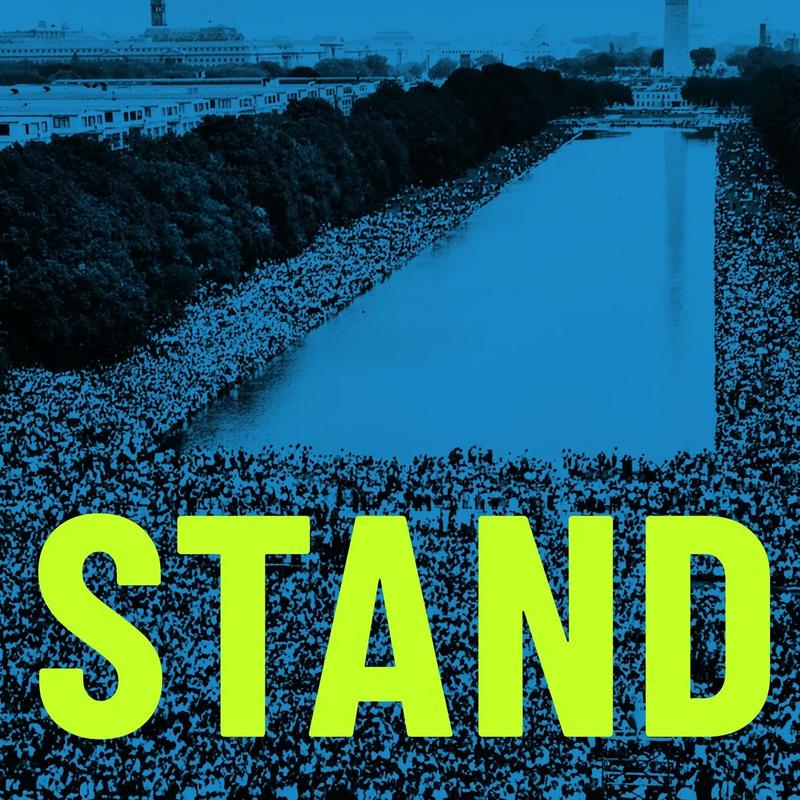
Brian Lehrer: What does the title "Stand" mean?
Senator Cory Booker: It really started with something that we've all heard from our parents when we were growing up. "If you don't stand for something, you will fall for anything." For me, that's the urgency right now, is not to let your inability to do everything undermine your determination to stand right now and do something in the cause of your country. In fact, that's the only thing that has ever helped us to get over in dark times. It's by Americans standing up.
Brian Lehrer: Something in the cause of your country. Let's take two of the virtues, humility and patriotism. Are they in tension with each other? Like patriotism, these days, often gets associated with pounding your chest and chanting, "USA, USA." Humility, as an American in the most powerful country in the world, might seem to be the opposite of that. Are they in tension with each other?
Senator Cory Booker: Not at all. In fact, I challenge exactly that idea of patriotism, that it's not the pounding of the chest. It's actually a quiet devotion. It's this everyday work to align yourself with your country. I highlight and elevate some people, many of whom saw the worst of this country, that still devoted themselves to this nation, even when the nation wasn't loving them. They loved it so much. I worry-- I mean, I had a friend of mine who raised a flag in front of his house, and his teenage son said to him, "When did we become Republicans?" I really worry about how partisan a lot of our symbols have become. I worry about Democrats who walk away from those symbols and indulge in a cynicism about our country.
One of the best quotes in the book that I loved was from a Paterson chaplain, who asked a question during the Civil War, "Are we a nation, or have we a government?" I believe we are still a nation, that we have something in common. The lines that divide us are not nearly as strong as the ties that bind us. We need to rekindle a love of our country that isn't braggadocious and flamboyant, but is that constant service to one another, which is how those incredible abolitionists built an underground railroad. It's how we very quietly were able to change laws in this country because our founders didn't always get it right and needed people in devotion to this nation to fight for her.
It's why James Baldwin even wrote, he says, "I love this country more than any other. That's why I reserve the right to criticize her incessantly." It's always about this idea that we're in this together. We share bonds. It takes work and devotion to advance this nation more towards its ideals.
Brian Lehrer: What about grace? Why is grace on your list?
Senator Cory Booker: Because I think we've become a culture where we too often reflexively hate each other, where we too often demean and degrade each other. Ultimately, grace and forgiveness to me are only way we're going to heal and find redemption. The chapter centers around a story of a person that I know you know about, Judge Esther Salas, who here in New Jersey had her son tragically murdered. Somebody was stalking her and murdered her son, and shot her husband.
I tell you, when we were interviewing her and going over her stories, it's like she took me on a journey of redemption and healing. She talked about the power of forgiveness as a gift to someone else, but almost like a declaration that I'm not going to let this hate and violence warp my soul. I'm going to remember my son by showing his grace, his love, his light. She made herself very vulnerable, which is another chapter. She really opened herself up and showed that often we are strongest at our most broken places.
Brian Lehrer: I recommend the new Knives Out movie, which has grace for people who you consider evil as a major theme. Just as an aside. Listeners, we're going to take a little break with Senator Cory Booker. We're going to get his line solidified. You heard that it was breaking up. We can start taking phone calls for him. 212-433-WNYC, 212-433-9692. You can also text your question to him at that number. He wrote a book 10 years ago called United, which had a very similar theme.
I'm going to ask Senator Booker when we come back from the break if now is the time for the kinds of things he've been saying here so far with United and with Stand and bridging our partisan divide, or is it more time to just stand against authoritarianism, like at a "No Kings" rally and he attended one over the weekend, and that needs to be the central message. We'll, of course, get his take on the war and other things right now. 212-433-WNYC for New Jersey Senator Cory Booker. 212-433-9692. Call or text as we continue in a minute.
[music]
Brian Lehrer: Brian Lehrer on WNYC, as we continue with New Jersey Democratic Senator Cory Booker about issues in the news and his new book called Stand. Senator, I don't know if you heard me say before the break, as we were trying to reconnect your line, that following up on what you were saying before about bridging our partisan divides and knowing that you wrote a book called United a decade ago, in which I think you made a similar case, does the message need to change now, 10 years into the Trump era? I see you attended a "No Kings" rally on Saturday. Why not center that and the need to fight authoritarianism, from your party's perspective, more than bridging partisan divide, which might sound pollyannaish to some people.
Senator Cory Booker: Yes. The book is definitely not centered on bridging partisan divides. It's about elevating the truth of the best of who we are. If anything, this is a book that is a recipe for how we fight and how we win because virtues actually are our greatest strength. A great example of that is we didn't beat Bull Connor and George Wallace by bringing bigger dogs and bigger fire hoses. They actually didn't double down on his hate and darkness. They actually brought moral imagination that appealed to our nation. They called to the conscience of our country.
Time and time again in the book, I give examples of incredible fighters who were able to fight and persevere like a great woman named Jennifer Keelan-Chaffins, who threw herself out of her wheelchair at nine years old when the Americans with Disabilities Act was going nowhere and used her elbows and her chin to crawl up the Capitol steps, an inaccessible building, and shocked the country, and was on the front pages of newspapers and dislodged a stalled bill.
We see time and time again how activists in this country demonstrate that change doesn't come from Washington. It comes to Washington by Americans who take a stand, who live up to our best values, don't reject them for convenience, don't play by the rules of the despots and the authoritarians, but actually are able to awaken the conscience of their country by exhibiting that grace, that patriotism, that devotion to nation.
Brian Lehrer: Susan in Summit, you're on WNYC with your senator, Cory Booker.
Susan: Oh, good. [laughs] I'm happy-
Senator Cory Booker: Hi, Susan.
Susan: -to be here. Hi Senator. I remember I met you the first time at a Boy Scout event in Newark a long time ago.
Brian Lehrer: What's your question?
[crosstalk]
Susan: What my call had to do with was just something very upsetting to me when they dismissed, I believe it was three or four young Black men from getting their one star general and about-- see, I'm not sure of the number, three or four Latinos just dismissing them from getting their one star general, and I see a lot of this going around where the Black people, Latino women are not getting opportunities or having them taken away. Is this a Jim Crow-type thing that we're heading into?
Brian Lehrer: Yes. For people who don't know--
Senator Cory Booker: [unintelligible 00:12:01]
Brian Lehrer: Let me just say, one of the things she's referring to that people may not have heard, here, for example, is a Guardian headline on that. "Hegseth reportedly cuts two Black men and two women from military promotion list." Of course, the implication is he did it without respect to their qualifications. Are you familiar with that particular issue?
Senator Cory Booker: Yes, I'm very familiar with it. I'm familiar with him cutting trans, really extraordinary trans soldiers who had distinguished records, bouncing them out of the military, him blocking promotions. Constantly, he says with an ironic pain that this is about meritocracy, but it's not. He himself is an example of somebody unworthy for the position in which they're in getting it. He seems to be having this idea that I'm going to block pathways, the earned pathways for men, women who are minorities, or in any way different than his thought of what a leader looks like.
We're in a crisis. On top of that, they're trying to erase history. They're trying to erase military history and the contributions we've had from diverse troops that have made our nation stronger and our defense more resolute. I think we're in perilous times. I think this is an administration that, in so many ways, wants to try to create a Disney version of our history and wants to stop the advancement of qualified individuals and says outrageous things where they question the qualifications of people that have proven themselves to be not only worthy of their positions, but extraordinary American patriots. This is something we have to name, call out, and then rally together to stop.
Brian Lehrer: Jim in Belmar, you're on WNYC with Senator Booker. Hello.
Jim Keady: Hello. Good morning, Brian. Good morning, Senator Booker. My name is Jim Keady. I'm former councilman at the City of Asbury Park, currently living in my hometown of Belmar, New Jersey. Cory, we have met in the past when I ran for Congress in 2018 in the 4th district. For the last two years, I've been involved with the movement to end the genocide in Gaza. I have been to your office on multiple occasions with delegations from New Jersey Peace Action, New Jersey Care, Doctors Against Genocide, and you have refused to meet with us on every occasion. I am going to be back on the Hill on April 15th with Doctors Against Genocide. I would like for you to make a public commitment to your constituents right now on this program to meet with our delegation.
Brian Lehrer: Senator.
Senator Cory Booker: Sure. Thank you for that call. This is an urgency that we bring peace to that region, and we end the unnecessary deaths of civilians. It's something that I work with constantly, and we meet continuously with people from all over the spectrum. Most recently with Palestinian leaders in New Jersey to talk candidly about the issues going on. I'm going to continue in every way possible to be an effective advocate and leader to make sure that we not only bring the crisis in Gaza to an end, but as you probably know, I'm the leader of legislation amongst the Democrats to stop the needless and senseless killings in the West Bank where we see settlers continuing to persecute Palestinians in the West Bank.
Brian Lehrer: A related text, listener writes, "I'm a constituent. Ask him why he's still taking AIPAC money, and why he can't denounce Netanyahu as a war criminal."
Senator Cory Booker: Number one is I have stopped taking all PAC money. We announced 10 years ago that I would stop taking corporate PAC money, and I was one of the first people in Congress to do that, and I'm proud of that fact. Then, getting ready for this election, I made a decision at the end of last year to stop taking all PAC money because I don't want any New Jerseyans ever to question what I stand for and that I'm fighting for them.
I am proud to say that the majority of our funding has always come from individual donors, over 85% from individual donors. Our focus is fighting for Jersey and fighting for Jersey interests. As a diverse state with people who have strong views, as we heard from that other caller, what I've tried to do in my office is position myself to bring about a end to this conflict in Israel, a two-state solution, and dear God, an end to all the humanitarian suffering that's going on in that region.
Brian Lehrer: There's been coverage recently of more Democrats refusing to take campaign money from AIPAC. You're saying as senator from a diverse state, you're going to take that as well as those from other interests who may be opposed to those of AIPAC?
Senator Cory Booker: Yes. I think that we have a real problem with money in politics, and a lot of people want to say, "This PAC is bad, that PAC is bad." I'm just saying we need to get money out of politics in the same way I did with corporate tax. I'm making a stand not to take any, which makes me more reliant on small-dollar contributions from people. To me, I think the biggest cancer in our democracy-- I witnessed the corruption in Washington D.C., is large moneyed interest trying to undermine the rational, pragmatic reasoning of politicians and instead allow those special interests to reign supreme. Instead of singling out this source or that source, we should get it all out of our politics. That's why I'm not taking any corporate PAC money or any issue advocacy money either.
Brian Lehrer: Somewhat related, as we are in the midterm election season now. You got mentioned in a Politico article last week about the growing influence of controversial left-wing influencer and streamer Hasan Piker in the Democratic Party. The article was called "The Democrats' Piker Pickle" as he becomes a surrogate for some midterm Democratic candidates. It notes that in an interview with Politico, Piker downplayed accusations against him like by the center-left think tank Third Way, that Piker had a history of anti-American, anti-women, anti-Western, and anti-Semitic comments. Then it named you as one of a few Democratic senators who said you would not go on Piker's stream. Can you confirm that? If so, why is that your stance?
Senator Cory Booker: Yes, I'd be honest with you. I was not that familiar with this person until my staff came up to me and showed me a lot of the quotes that he said that seemed to me strikingly wrong and problematic, to say the least. I have lots of people, as you heard another caller, that I spend my time with, and listen to, and talk to. I'm a person that's trying to heal and bring people together from strong, different perspectives. From what I've been presented by my staff, that's not somebody I want to sit down with.
Brian Lehrer: Just to put a pin in the earlier caller's question to you, it sounds like you did not, and you don't want to on the show, commit to meeting with him or his group. That former congressional candidate and Asbury Park official. That's a yes?
Senator Cory Booker: Yes, there's lots of groups asking to meet with me. I literally take as many meetings as I possibly can and go around the state. On the issue that he's bringing up, I'm confident that I'm talking to a lot of New Jerseyans. I'm not going to make a commitment like that to him over the radio. He can come to my office and talk with my team. I'm happy to have that happen.
Brian Lehrer: Before the Senate went on Passover and Easter recess, the Senate and House, as you know, couldn't agree on a measure passed unanimously by the Senate, we should say, to end most of the Homeland Security shutdown, including for the TSA agents at the airports. How do you see that situation?
Senator Cory Booker: It's very frustrating. As somebody who just came through an airport this morning in Newark, I get very angry that we were fighting for weeks to get the deal that passed unanimously through the Senate, which was to pay TSA, get ICE out of our airports and stop funding this reckless and out of control agency that's doing so much damage within our country, within our communities, as we've seen here, even most recently in New Jersey.
We have a president now that stepped forward and said he's going to pay TSA, claiming powers, if he had, that he should have done it weeks and weeks ago. This has never been about TSA. It has always been about ICE, and it's always about bringing them to account. They are doing things in our communities that violate the values and the decency of Americans from all political backgrounds. That's why I'm standing firm. New Jersey should know I'm not going to vote for another penny for an agency that's doing such damage to our communities.
Brian Lehrer: Trump did issue an executive order to get TSA workers paid again, possibly starting today, is the reporting I'm hearing. Just to take your local airport as an example in the city where you were mayor, how and how quickly do you think that's going to help the lines at Newark, like if people are flying in the next couple of days?
Senator Cory Booker: Look, that's the urgency right now, is this president continue to do things that bring chaos and rising costs to Americans. The lines of the airport are wholly of his making because he decided to hold TSA hostage in order to try to leverage more funding for his out-of-control ICE. He's now making plane travel more expensive as he's causing the worst oil shock we have ever seen, worse than the 1970s. He's raising the cost of people's foods. He's cutting our health care, he's cutting food programs for our kids. This is a president that is cruel, chaotic, and rising costs, and the friction that's being caused at our airport is just yet another example of a president who is reckless and doing things to hurt so many people in our state.
Brian Lehrer: You were just leaning into or toward a discussion of the war with the oil prices going up. I actually want to play you a clip from the Conservative Political Action Conference over the weekend. This is Reza Pahlavi, who you probably know is the son of the former Shah of Iran, who the United States had helped keep in power before the 1979 revolution. Reza Pahlavi was a speaker at CPAC, and he made this case for the rightness of the Trump war policy and its success. Listen.
Reza Pahlavi: Operation Midnight Hammer and Epic Fury have done something extraordinary. The killing of Khamenei and many of his henchmen, the destruction of more than 80% of the regime's ballistic missile arsenal, and the obliteration of the nuclear sites have leveled the playing field. This did not happen by accident. It happened because of President Trump's resolve and the courage of American troops.
[applause]
Brian Lehrer: Senator, you're on the Foreign Relations Committee. Your reaction.
Senator Cory Booker: I will tell you, fundamentally, this unilaterally decided war by Donald Trump, unconstitutionally, was put into place and executed without any clear provocation. Now, without any clear off-ramp, he has caused our problems to go worse in the region. He may have assassinated or killed the leader of an evil regime, but now the regime has a more extreme leader. In addition to that, the $25-plus billion he has spent on this could have extended the health care subsidies and ensure that millions of Americans had health insurance.
Billions of dollars are being spent this week there. We have a more extreme regime. Then, because he had no strategy and no adequate planning, we now have a choke point at the Strait of Hormuz that is causing all kind of challenges. 15 countries now have been directly attacked or had their bases attacked. More and more of our soldiers are being injured as he's now moving thousands of more troops into the region, all while not coming to Congress, as the Constitution says.
This has been folly at every point, is one of the most costly war engagements. We've had the biggest buildup since the war in Afghanistan. It is being done in an unconstitutional, unacceptable manner. Because Donald Trump is so chaotic and so unstrategic, we now find ourselves in a quagmire with no clear off-ramp and no clear, literally, objectives in which we can achieve.
Brian Lehrer: One more, and I will say we're getting a lot of questions like this on the phones and in our text message. That doesn't mean it, like a scientific poll, reflects what most of the audience is thinking. Maybe it's the most activated people who are calling in and texting. I do want to represent. Kevin in Manhattan, you're on WNYC with Cory Booker. Kevin, are you there?
Kevin: Sorry, me?
Brian Lehrer: You.
Kevin: Oh, sorry. I'm actually on one side. Yes, Senator Booker, you talked a little bit about your books, and I just want to ask you what your thoughts are on the widespread and growing notion among the Democratic base that their party and the party leadership isn't really standing up for them. They might issue some platitudes when ICE funding comes up, when Trump unilaterally started this war in Iran. The statements will be about process, they'll be about not having the president come to Congress to talk to them, and not really about the substance of what the base stands for, that they don't want wars of aggression, that they don't want Trump's appointees to get nominated. We see this.
Brian Lehrer: Kevin, you don't think that holding up Homeland Security funding with the resulting pain so that the ICE agents have rules of engagement that the Democrats support is taking action?
Kevin: In this particular case, we've seen a little bit more movement from them, but we've also seen the government get funded a couple times in the past with-- and there's usually a rotating cast of villains where you'll always be able to pass something in the House ultimately with two or three votes. I just want to get in that-- I think it's very clear to the audience that Cory Booker is exploring a presidential run. He has this book out, Stand.
I think what's really emblematic to me and a lot of people that I talk to is Cory Booker did a 24-hour, whatever, filibuster, filibustering nothing. At the same time, we had so many Trump appointees get through. We had USAID defunded, defanged. We had all these, like all these departments, just completely eviscerated. Those first couple months, which I think that's when he gave his filibuster, we saw so much destruction of the federal government apparatus.
Brian Lehrer: Kevin, real quick, a follow-up question for me, and then of course, I'll let Senator Booker respond. Many Democrats have said, "We don't control the levers of government right now, so we couldn't stop a lot of those things." That Senator Booker's 24-hour or so filibuster did a lot to draw attention to those issues. The Democrats have limits in their power. What would you say to that?
Kevin: I mean, no one disputes that they're not in power right now. If it comes down to a 50/50 vote, then they're not going to pass anything. There's been so much capitulation at every step of the way. Each potential battle that comes up with the administration, the administration somehow succeeds.
Brian Lehrer: Let me leave it there. You put a lot on the table. Senator, we're coming toward the end of the segment. Give Kevin a response?
Senator Cory Booker: I think Kevin's anger, frustration is justified. I feel the same way. Now, look, when I was mayor of the City of Newark, and-- excuse me, when I was a city council person, they had the power, but I did-- You remember this, Brian, because you interviewed me during these times. I did a hung 10 day hunger strike on the projects. I moved into a mobile home to park it on the worst drug corners in the city, not only to bring attention to it, but to try to work with the community to fight against it. You are not powerless. None of us are powerless. That's why I wrote this book, to try to give example after example, both inspiration and instruction of people just as angry and frustrated as the caller, and what they can do with that frustration, to fight the problems that we're seeing.
If you want to talk about the Democratic Party, as I say in the book, and as I've said many times, I share your frustrations. I was outvoted when some of the moderates in our party went along to fund the government more than once. I was so angry and frustrated. In fact, one of those continuing resolutions is what contributed to leading me to the floor to stand for 25 hours. It's why months later, I did a sit-in with Hakeem Jeffries all day on the Senate steps to draw attention to other things.
We all have to think, in this time, about how we fight. Yes, elections have consequences. They control the House, the Senate, and the White House, but we still have power. I want to change the Democratic Party. This young man sounds young. I'm calling for new leadership in the Democratic Party. I think this is the last Baby Boomer president we'll ever have. We have the last Baby Boomer heads of the Senate. It's a great generation with a lot accomplished. Now what are we going to do? X, Millennials, and Z, it's our turn. I don't want the same old Democratic Party. It's time for a renewal. It's time for some redemption.
Frankly, it's time for new vision about not only how we fight, but what are we fighting for, not just what are we fighting against. That's the boldness that I want. I'm trying to lead in that way. I hope folks see that I'm not only trying to lead that way to fight in the Senate, but hopefully to inspire. That's why I wrote this book. More people to take action in this time, because King said it.
I end with this. What we have to repent for in his day and age, he said, is not just the vitriolic words and violent actions of the bad people, but it's the appalling silence and inaction of the good people. When more people stand up and fight and get engaged and do more, we still live in a nation where the power of the people is greater than the people in power, and we can win. This is how we always have.
Brian Lehrer: Senator Cory Booker. His new book is called Stand. Thanks for sharing it with us, Senator.
Senator Cory Booker: Thank you. Thank you very much.
Copyright © 2026 New York Public Radio. All rights reserved. Visit our website terms of use at www.wnyc.org for further information.
New York Public Radio transcripts are created on a rush deadline, often by contractors. This text may not be in its final form and may be updated or revised in the future. Accuracy and availability may vary. The authoritative record of New York Public Radio’s programming is the audio record.
