
Sen. Andy Kim on War With Iran
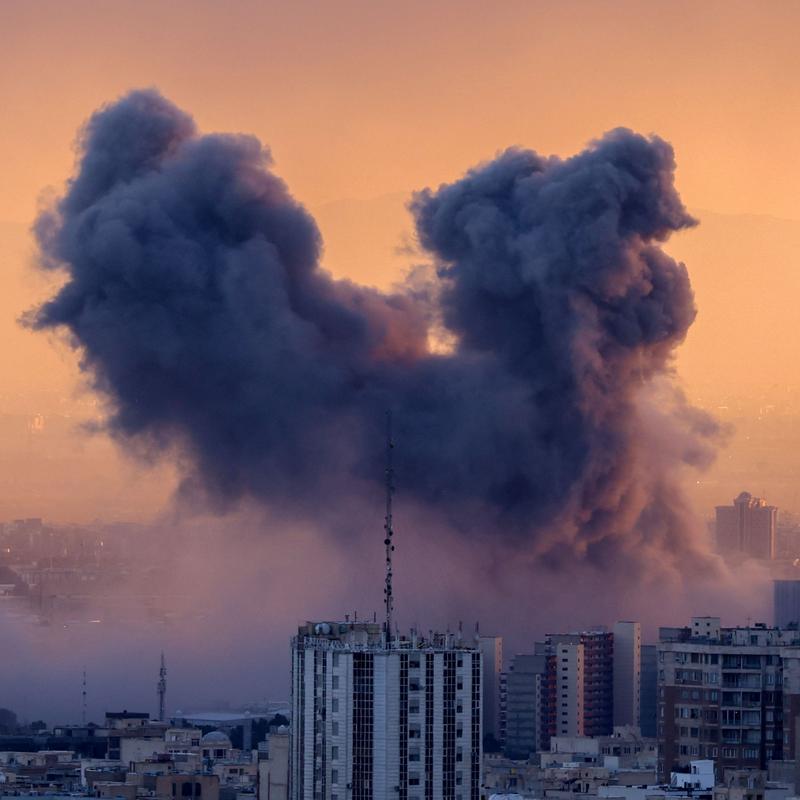
[music]
Brian Lehrer: Brian Lehrer on WNYC. We now know the names of four out of the six Americans who have died in a war that the President keeps changing his reasons for. Did they know in their last moments on Earth what they were fighting for? As the AP reports, Sgt. 1st Class Nicole Amor was just days away from returning home to her husband and two children in White Lake, Minnesota, when a drone strike at a command center in Kuwait killed her and five other US service members. The others were Capt. Cody Cork, 35, of Winter Haven, Florida, Sgt. 1st Class Noah Tietjens, 42, of Bellevue, Nebraska, and Sgt. Declan Coady, 20, of West Des Moines, Iowa. Those are the names that have been released so far. I thought it was fitting to say them out loud here. Yes, they were all in the reserves. The military wasn't even their full-time jobs.
AP says 20-year-old Declan Coady trained as an information technology specialist with the Army Reserves and was studying cybersecurity at Drake University in Des Moines. He was taking online classes while in Kuwait. 35-year-old Cody Cork loved history and had a degree in political science. His family described him as the life of the party, known for his infectious spirit, generous heart, and deep care for those who served alongside him and for everyone blessed to know him. All of that from the AP.
Did they know in their last moments on Earth what they were fighting for? With us now, New Jersey Senator Andy Kim, the Democrat whose bio page reminds us that, "Before my time in Congress, I worked as a career public servant under both Democrats and Republicans, serving at USAID, the Pentagon, the State Department, the White House National Security Council, and as a civilian advisor to top generals in Afghanistan." Senator Kim, with your very relevant experience, welcome back to WNYC to talk about this war.
Senator Kim: Thanks for having me back on.
Brian Lehrer: You wrote an op ed I saw on the MS NOW website in which you describe your own past work against Iranian terror groups. You acknowledge that the Iranian regime poses a substantial threat to the Middle East and to US interests and that Iranian influence must be confronted and checked. Those are all your words, and yet you oppose this war. How come?
Senator Kim: Because it is a war and the President has called it a war, and he has not come before the American people to make the case. Just because we identify a group as a terror group does not give the President unilateral power to send Americans into harm's way, oftentimes without the preparation, the resources that they need. That appears to be the case in Kuwait with the loss of life there. I'm digging into it, but did they have the protections? Did they have the adequate security needed? These are the reasons why we have deliberations about whether we go. North Korea is also a state sponsor of terror. Are we saying that Donald Trump can start a war in North Korea without coming before the American people?
I did a town hall about two weeks ago, and I asked people at that town hall, "Who here thinks that we should be at war with Iran?" Zero hands went up. I asked them, "Who thinks that the American people need to be brought into this discussion if we are to go to war?" Every single hand shot up. After 20 years, we're tired of this. We don't want this. We want to address the needs that so many people are facing when it comes to affordability, when it comes to the crises that we're facing in our daily lives, not to have this imperialist president just start these wars and conflicts all over the world that are costing the lives of service members.
Brian Lehrer: Well, you also wrote that Trump opted for a war, and you remind us that he uses the word war rather than an approach of diplomacy alongside our allies, as you put it. Trump says he tried diplomacy, but Iran kept refusing a deal. Do you still think diplomacy could have achieved enough security from Iran's military aims? One of Trump's critiques is that the US has been trying diplomacy for 47 years, but look at the threat that Iran still is since the 1979 revolution, as you acknowledge they are a threat.
Senator Kim: Look, I asked the American people to look at what Trump tried. That is not diplomacy. What we saw was him sending his son-in-law and his friend. Neither who have worked in diplomacy before. Neither of them have done this with the seriousness that is needed at this moment. Because what we saw was Kushner and Witkoff, who the president tapped to be the negotiators for Iran, were also the negotiators for Russia and Ukraine. They were also the negotiators for the follow-through on Gaza and Israel. The efforts when it comes to negotiating on Iran nuclear, that is not a part-time job. That is not something you just do as a side hustle. This requires real dedication and focus, and to be able to see whether or not we can leverage.
As mentioned, we have ended up going it alone. We have not utilized the multilateral coalition power that we can bring to bear. These are the things that I find so disheartening when I hear about six service members killed so far. There should always be this promise to our service members that if we send them into harm's way, that it is an absolute last resort. That is not the case.
Number two is we should always make sure that our service members go into the fight with every resource that they need to be successful. That also is not the case, as we do not have approval from Congress. We do not have the resources dedicated to this going forward. I was just in a classified briefing yesterday. I got no assurance there that we have the requisite number of interceptor missiles and other types of military equipment necessary to keep our troops safe during what appears to be a sustained, multi-week, if not longer, war. That's what it is. This is the Iran War. I just want to hit that home to the people. Like that is now what is happening. That is something that I just think is such a level of not just disrespect, but it's a dereliction of duty by this commander-in-chief to send our service members into harm's way without guaranteeing that we have all the resources needed to be able to protect them and have them be able to be successful in this mission.
Brian Lehrer: We're definitely calling it a war, not the euphemism of operation or anything like that, because it is what it is, and it should be called what it is.
Senator Kim: The CENTCOM commander yesterday just did a briefing saying that in the first 24 hours of this war, they had twice the number of munitions and targets hit than with Shock and Awe in 2003. They're literally saying and briefing that this is a war. They're saying it's twice as big of an opening start as what happened with the Iraq War, which many did not agree with. I did not agree with that war, but at least the Bush administration came before Congress for approval with the authorization of use of military force. The fact that this is even beyond that level of action, I just want to hit that home to the people. This is not some targeted operation. This is a full-fledged war. I've never seen anything more clear in that vein than anything else in my entire career in national security.
I just find this to be so scary, not just in terms of the current threat, but if this just becomes normal, if this is-- This is Donald Trump trying to normalize the ability for any president to start conflict anywhere in the world without having to justify to the American people. This so clearly goes against the Constitution of the United States. It is a disgrace to see this happening on the 250th anniversary of our nation or any year.
Brian Lehrer: Yes, the Constitution, for people who don't know this part of it, gives Congress the power to declare war. You were talking about the failed attempts at diplomacy. There's at least one historical irony here. Trump, as a private citizen in 2011, predicted President Obama would launch a war against Iran to help him get re-elected because he wasn't a good negotiator, Obama. We played this clip yesterday, but it seems relevant to what you wrote about, so here it is again. Trump on President Obama in 2011.
Donald Trump (2011): This is a great time to negotiate. Unfortunately, we have a president that doesn't know the first thing about negotiation. We have a real problem in the White House. So I believe that he will attack Iran sometime prior to the election.
Brian Lehrer: Do you, Senator Kim, think either half of that applies today? That art of the deal? Trump is a bad negotiator. I guess you've already said you think that. Or that he thinks this war will help Republicans get elected in the midterms?
Senator Kim: Well, first, there's a quote like that for Trump on every issue. Just the way in which he contradicts himself constantly is something that should be unnerving enough just to see how little he cares about any values or any consistency. The main thing that I hope people understand is this is a delusional president. I saw that at the State of the Union address. This is a president living in a delusional world, obsessed with his own legacy, obsessed with delusional goals, like winning a Nobel Peace Prize. He is completely detached from reality, especially the reality that the American people, not the billionaires, not his family, not his pursuit of raising billions of dollars for his family and profits, while he's using the Oval Office for his own personal gain. He is completely delusional here.
The fact that this now is the band who is sending thousands of American service members into harm's way, starting this war that has already spiraled into a regional war, is why this is such a dangerous moment. Look, I don't like to think through the political implications of this because we have service members who are dying right now, who have died, and have sacrificed for this nation. I will say this is not what the American people want right now. That is overwhelmingly clear. It's clear from what we saw in Texas and North Carolina last night. It's clear from what we saw in the New Jersey governor's race and Virginia governor's race last year. I strongly believe that the American people will hold this president accountable in November and that we have a real chance not just to flip the House, but to flip the Senate and be able to push back against this lawlessness that we see unfolding across our country.
Brian Lehrer: I asked in the intro if those Americans killed in this battle knew what they were fighting for, because as every news organization is reporting, the President's rationales for the war keep changing. Do you have your own take on why he really started this war?
Senator Kim: I think this President is obsessed with his own power. He is somebody that just beams and delights in dominating others. I think that, especially after what happened with the Iran attacks last year and Venezuela, he's very much living in this delusional world that he is going to reshape not just America, but this global order. What he's doing is actually doing the work of our adversaries. The people that are happiest right now for the United States to be bogged down in an open-ended regime change war in Iran is Russia and China.
Putin and Xi are just gleeful right now because Trump is literally doing their work for them. They could never have imagined that a US President would play into their hands so much. They're just sitting back watching the United States get bogged down in this war, use up our military resources that could very well be used to deter their actions or at least push back and help the Ukrainians fight back against Russia's illegal invasion. Russia is certainly saying, "Look, how can you criticize our invasion of Ukraine if that's what Trump is doing in Iran?" We're literally hearing and seeing that left and right. This is the most alone that I've ever seen America.
I was at the Munich Security Conference. I've never seen America this isolated as I do right now. That worries me. That worries me about what kind of world my 8-year-old and my 10-year-old boys are going to grow up in because I know that America alone is going to be an America that is much more vulnerable to military action, to economic shocks, and other things that will just continue to perpetuate this unpredictability and instability that gives so many Americans deep, deep anxiety.
Brian Lehrer: I know you got to go in a minute, but I want to spotlight one more emerging issue, which is that the Trump administration is urging Americans to leave 14 different countries as the war is widening, but hasn't provided enough help in evacuating them. This is also historically ironic because Trump was so critical of President Biden for not evacuating enough people effectively enough during the final withdrawal from Afghanistan. Here's Trump yesterday giving a reason, an excuse for this failure now.
President Trump: It happened all very quickly. We thought, and I thought maybe more so than most, I could ask Marco, but I thought we were going to have a situation where we were going to be attacked.
Brian Lehrer: But on Morning Edition today, that did not satisfy Americans like 52-year-old Evelyn Mushi, who was headed from Chicago to Bali with a layover in Abu Dhabi, who got stuck there.
Evelyn Mushi: I want to get out. I want to leave this place.
Brian Lehrer: Very simple, and she said more, but that puts as much of a point on it as we need. Senator, what more can be done for people like her at this point, if anything, in your opinion?
Senator Kim: My heart breaks for all of these Americans trapped in harm's way. We've been getting flooded with calls into our office of Americans trying to figure out how to get out because their government has abandoned them. The Trump administration has abandoned. It's not even just they abandoned them; they just couldn't care less about what harm's way they were in. Otherwise, they would have taken steps preemptively to be able to urge Americans to leave. Before the 2003 Iraq War, the government was saying for months for Americans to get out of there; they could have done more.
In fact, I asked this question directly to Secretary Rubio yesterday in that classified briefing. I asked him, "Why did you not communicate with the Americans in the region for the first 72 hours? It was completely dark." Then the first message wasn't something like, "We have a plan. We're going to help you get out." It was, "Depart now," that's literally the comment. It created such a panic. Now they're scrambling, now they're trying to see whether they can get some planes out. We're talking about half a million to a million people in those 14 countries, Americans that are in harm's way.
How many charter flights would you need with each one, what, maybe carrying 100 people, maybe a little bit more, to be able to handle the scope? This is something where it is so dangerous there right now. In that same briefing, they're telling us that the biggest strikes are still yet to come, that we are going to exponentially increase the violent actions that we're taking right now and the strikes that we're taking right now, which is only going to further the fact that Americans are in harm's way. I just think this is absolutely abysmal as someone who worked at the State Department to see our State Department officers in harm's way.
Why didn't they order departure of these State Department officers out of these countries? They did it in Beirut, but they failed to do it in countries like Iraq, which so clearly were the case. They didn't do it ahead of time when we knew that that would be one of the most vulnerable. This is on the Trump administration that they were so fast in trying to rush towards war that they didn't think about the Americans that are going to be caught in harm's way and think about what their lives are going to be like.
Sec. Hegseth likes to play war, likes to give these briefings where he can act like a tough guy. What he should have been doing is his job, in terms of protecting American people. I'm just livid about this because I lived and worked-- I worked at embassy Baghdad, I worked in embassy Kabul. I know what it takes for us to be able to manage evacuations and what it's like to come under fire in harm's way in these embassy posts. I've had to shelter in place. I've had to take cover. It is so dangerous now for these embassy staff to have to get out of there when there aren't lights. They're having to go over land much more exposed to potential violence. This is an absolute catastrophe and a mess.
I'm going to continue to push on this. I'm continuing to try to fight to get a real plan going forward to help Americans get out of there. This administration is just constantly standing in the way, not just dragging their feet, but putting people in that type of danger, and it's shameful.
Brian Lehrer: Former State Department, Pentagon, and National Security Agency official, now New Jersey Senator Andy Kim. Thank you for joining us.
Senator Kim: Thanks for having me.
Brian Lehrer: Brian Lehrer on WNYC. Much more to come.
Copyright © 2026 New York Public Radio. All rights reserved. Visit our website terms of use at www.wnyc.org for further information.
New York Public Radio transcripts are created on a rush deadline, often by contractors. This text may not be in its final form and may be updated or revised in the future. Accuracy and availability may vary. The authoritative record of New York Public Radio’s programming is the audio record.
