
Russia Is The 'Clear Winner' of U.S.-Iran War
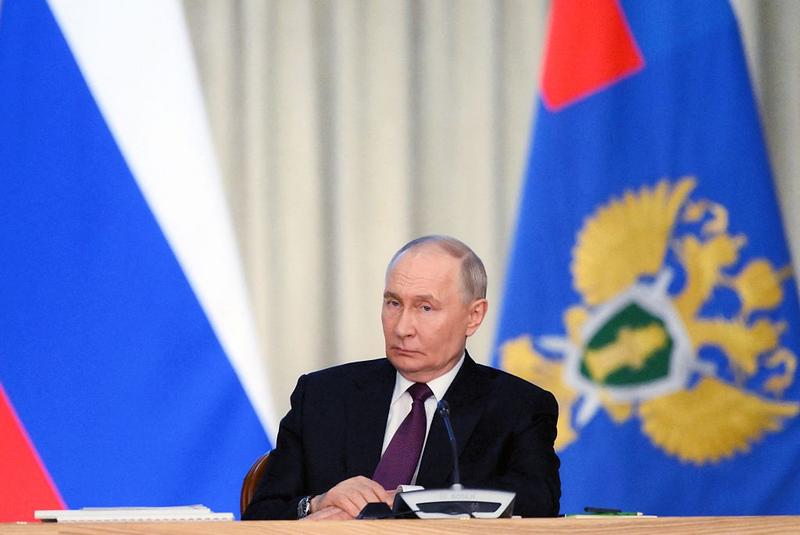
( Photo by Pelagia Tikhonova / POOL / AFP/Getty Images )
Title: Russia Is The 'Clear Winner' of U.S.-Iran War
Amina Srna: It's The Brian Lehrer Show on WNYC. I'm Amina Srna, a producer for the Bryan Lehrer show, filling in for Brian today. Coming up on today's show, WNYC and Gothamist transportation reporter Stephen Nessen will tell us about why the transit union is suing the MTA and why the MTA is suing the federal government. That sue has to do with funding for the Second Avenue subway extension.
Plus, later in the show, the journalist McKay Coppins reports back on the title of his new article in the Atlantic, what he calls his year of degenerate gambling in order to write about how online sports betting has exploded in popularity. He did it himself, and I think it's safe to say it was kind of a wild ride. To wrap today's show, we're going to talk about something our guest has dubbed friction maxing. What she means is trying to sometimes do the hard thing instead of the tech-assisted easy thing.
For example, take the subway instead of taking a car. Stop using ChatGPT for recipes. She's got a lot more examples, and she'll explain why she thinks we should all try to do this. First, we begin with Iran. Now in its third week, the United States war in Iran has quickly spilled out over the Middle East. According to Reuters, more than 2,000 people have been killed across 14 countries now. That includes 13 U.S. service members.
Though the Trump administration has been putting forward mixed messages on the planned duration of the war, saying it may end "very soon," the Pentagon recently asked for more than $200 billion in a budget request to Congress. One winner that's emerging in all of this might be Russian President Vladimir Putin. A new assessment from the Financial Times estimates that Russia is earning an extra $150 million a day in oil revenue since the United States lifted its sanctions on that country's oil exports a week ago. Joining us now to break down the latest is Joshua Keating, senior correspondent at Vox, covering foreign policy and world news. Joshua, welcome back to WNYC.
Joshua Keating: Hi, Amina. Great to be here.
Amina Srna: You write that Putin is the clear winner of this war. That's your phrasing that I used in the intro, which, on its face, sounds pretty counterintuitive because Iran was one of Russia's few real allies. First, for listeners who might not be familiar, what is Russia's relationship with Iran?
Joshua Keating: These are two countries that have had a close alliance for a while now, and it's only gotten deeper since the outbreak of the war in Ukraine. I think this would have played out differently for Russia if the war in Iran had started in maybe 2023, 2024. At that time, Russia was still heavily dependent on Iran for drones, for the Shahed drones, these cheap one way attack drones that is used to attack Ukrainian cities.
Since then, Russia has been able to manufacture more of those itself. It builds its own version of the Shahed now, so it's less dependent on Iran. The air defense systems that Iran has employed with not very effectively in attempts to block the U.S. and Israeli strikes were provided by Russia. Russia has played a role in Iran's nuclear program in the past. These are two countries that have had shared interests for a long time to the point that some analysts have been promoting this idea that there's a kind of axis of autocracy in the world today, that Iran and Russia, along with China and North Korea, even if there are strong differences in these regimes in terms of ideology, that they all share interest in pushing back against U.S. influence and hegemony in different parts of the world. I think we're seeing the limits of that alliance in this conflict.
Amina Srna: We're also seeing that it's become easier for Russia to sell its oil because the Trump administration lifted its sanctions just last week. Russia has faced fairly punishing sanctions from the United States and the rest of the G7 countries since its invasion of Ukraine in 2022. Why did the U.S. lift them now? Do we know how long they might last?
Joshua Keating: Yes. I think it's important to realize just what a dire economic situation Russia has been in. Its energy revenue has dropped by nearly a quarter last year. That's their lowest level since COVID pandemic. We're set for even bigger declines this year. The U.S., through tariff and sanctions threats, had effectively gotten India, which is one of Russia's-- the major customers of Russian oil, to dramatically reduce its purchases.
Now they've lifted some of those restrictions. They've basically waved the sanctions on countries purchasing Russian oil that's already at sea. First they did this for India, and then just for any country buying Russian oil. Basically, it just speaks to how despite the fact that the U.S. is itself an oil exporter, despite the fact that we are in some sense more energy independent than we used to be, the global price of oil still matters to us.
It's weird to think the U.S. is basically facilitating the purchase of Russian oil by India in a bid to reduce gas prices in the U.S., but that's just the nature of how energy markets work. We don't know how long it's going to last. I think it depends what we see with energy markets. The indications don't look good. I mean, even as oil prices were hovering above $100 a barrel, there seemed to be a tacit understanding in the war in Iran that energy infrastructure was off limits, that the U.S. wasn't striking Iran's oil and gas fields, and the same for Iran striking the Gulf, that seems to have collapsed in the past week where we saw Israel strike an Iranian gas field.
Iran responded hitting a gas facility in Qatar and striking this morning a Kuwaiti oil facility. It seems energy is fair game now in this war in a way that it wasn't for the first couple weeks. I think that that's going to spook energy markets even further and lead to even more desperate measures. We saw Scott Bessent, the Treasury secretary, talk about even lifting sanctions on Iranian oil that's still at sea. It's just the fact is oil prices still matter and they're still leading the U.S. to take some policy measures that, on the face of it, don't seem to make much political sense or military sense.
Amina Srna: Listeners, we can take your comments or questions for our guest, Joshua Keating, senior correspondent at Vox, covering foreign policy and world news at 212-433-WNYC. That's 212-433-9692. I'm wondering if we have a few listeners out there who are following the war coverage in Russian-speaking media. How is the war being covered from that perspective? A clear win for Russia? The way it's being viewed by some in the U.S. or something else? What about Iranian media or elsewhere in the Middle East? Help us report this story. 212-433-WNYC. That's 212-433-3692. As always, you can text that number.
Joshua, you cite a Financial Times estimate of $150 million a day in extra oil revenue for Russia. I saw a former Russian central bank economist recently warned in the Economist magazine that the country's economy had entered the "death zone" of slow growth, growing deficits, and little activity outside the defense sector. How significant is that $150 million a day in extra oil revenue number? Given what we know about the state of Russia's economy before the war started.
Joshua Keating: Going back to the early the first year or so of the war in Ukraine, Russia's economy actually boomed for a while just because there was this increase of defense spending. There was so much money going into the defense sector. People called it a defense Keynesianism. That's kind of run its course now. You are seeing very high inflation in Russia. There's really sluggish economic activity for anything except building bombs and drones to drop on Ukraine. I think it does matter.
I think that last week, Vladimir Putin made a comment directed at Russian energy companies indicating that they should use this kind of new economic reality created by the high oil prices to pay down some of their debts. I think it will depend how long it lasts. That's something we don't know because it depends what happen in the war in Iran, in the Strait of Hormuz, which is currently largely closed to oil exports. The longer this goes on, it's easy money for Russia.
Amina Srna: A listener texts, "Can the guest comment on how the elevated oil prices are affecting profitability of American oil/fossil fuel companies?" I know you don't cover the energy sector in the United States, in particular, but I am curious what you think of that or maybe you want to weigh in on. You talked about the Trump administration lifting sanctions. Go ahead.
Joshua Keating: Sure. Well, President Trump actually made a statement like this. I think it was about a week ago in one of his Truth Social posts that said high oil prices are good for the U.S. because we are an oil exporter, we drill for oil here in the U.S. In a macroeconomic sense, that might be true, but it's also true. I've never seen an American politician running for office promising to raise oil prices. That's not how you get elected in the United States. I think Donald Trump knows that.
I think it speaks to a contradiction in a lot of Trump's approach to energy geopolitics. We saw this with the Venezuela case too, where they were hoping to basically take the oil in Venezuela to restart oil production from that company. We're hoping American companies would help them do it. U.S. soil companies weren't actually that enthusiastic about the idea of investing in opening up a new oil exporter, something that will keep oil prices lower.
Trump often seems to want both to have drill, baby, drill in the United States to have a healthy domestic oil extraction sector and to keep gas prices low. Those two things don't always go together. When oil prices are low, there's less incentive to drill for oil. I think that this is a contradiction we've seen come up a couple times in this administration's approach to the geopolitics of oil.
Amina Srna: What about the Russian side of this? I saw in Bloomberg that President Putin literally told Russian energy companies to "take advantage of the current moment." How openly is Russia treating this as an economic opportunity, if at all?
Joshua Keating: That quote aside, I would assume they understand that this may be a fleeting moment, that this is not necessarily a permanent state of affairs, and that the structural problems in the Russian economy are going to take a while to fix and just this war overnight won't fix all the distortions in the Russian economy. The Russian government has, of course, condemned the U.S. strike on Iran and on its ally and the killing of Supreme Leader Ayatollah Khamenei.
I think it'll be interesting to see how the Russian government uses this politically because one thing that we've seen over and over again from Vladimir Putin is he will seize on any opportunity to paint the U.S. as hypocrites, to use U.S. actions as precedents for his own. For instance, during the invasion of Ukraine, we saw over and over again reference to the U.S. invasion, regime change campaigns in Iraq, in Libya, basically, justifying what Russia was doing in Ukraine.
I think it was pretty clear that the widespread anger at the U.S. support for Israel during the war in Gaza after October 7, that Russia took advantage of that at the U.N., for instance, to undermine support for the U.S., particularly among global south countries, for this kind of united front that the Biden administration was trying to build to isolate Russia. I would suspect, if this pattern holds, that the Russian government will maximize this opportunity as much as possible to paint the U.S. as the country that's the aggressor, that's flouting international law, that's violating norms against territorial integrity, against killing foreign leaders. They will look to any opportunity they can to portray the U.S. rather than Russia as the global outlaw.
Amina Srna: Let's go to a caller. Oh, well, let me ask you, we're getting a couple of text messages about Ukraine. I guess I'll read a text. What about Russia in Ukraine? The only time media mentions Ukraine now is about helping the U.S. with drones. I know, Joshua, you write about the other side of the front line in all of this, as you put it, "Officials say American munitions meant for Ukraine, including badly needed systems, like Patriot missile interceptors, may be diverted to the Middle East. Do you want to talk about that?
Joshua Keating: Yes. This is actually something that both Trump and Pete Hegseth, the Secretary of Defense, have lamented the fact that we had sent all these interceptors to Ukraine. In fact, I believe there are more interceptors used in the Gulf already in this war than we sent to Ukraine the entire four years of this war, of the war there. These interceptors systems, like Patriots, some specialists call them the table stakes of modern conflict, that just because of the emphasis on drones and on missiles and the kind of wars that are fought today, just these interceptors are so important.
They're very expensive, and they're complex systems, and we don't make very many of them. That sets up dilemmas when you have multiple theaters of conflict happening at the same time. European officials I've talked to are very concerned that we'll see a diversion of interceptors from Europe to the Middle East. It's different than the Russia question. One thing we've already seen is they've moved some interceptor systems from South Korea, these THAAD aerial interceptor systems to the Middle East.
People may remember a few years ago, it was a huge political controversy. The fact that the U.S. put those systems in South Korea, the Chinese government was extremely upset about it, and actually boycotted South Korean goods for years after that. Considering the amount of political capital the U.S. put into getting those systems in there, the fact that we're moving them out really tells you a lot about the degree to which these wars in the Middle East just become a kind of sucking vortex that brings in resources, whether it be interceptors all the way up to aircraft carriers from all over the world.
As you mentioned, Ukraine is trying to make the best of this situation. Ukraine, over the course of its war with Russia, has become a kind of pioneer at layered air defense. This is basically the idea you don't want to use a $4 million Patriot missile to shoot down a jury-rigged drone that's adapted from something you bought on Amazon or Costco, that you want to save your most advanced systems for the most advanced missiles.
They've become very good at finding ways to layer their defenses so that they're using them in the most productive and cost effective way possible. Then that's expertise that they are now able to offer other countries, including countries in the Gulf. I think there is a hope that they can trade this in politically, that countries like the United Arab Emirates, like Qatar, also have pretty good relationships with Russia.
I think for once Ukraine finds itself in a position of offering military assistance as opposed to asking for it. I'm hoping, and they are hoping that they can translate this into geopolitical leverage down the road. Of course, the problem with that is we live in a world of scarce resources and material constraints, and there are only so many of these more advanced systems to go around.
Amina Srna: Let's take a call. Jim in Brick Township, New Jersey. Hi, you're on WNYC.
Jim: Good morning. I was surprised to hear that already the number of interceptors have been used against the Iranian drones and/or missiles. I was wondering then, is Iran running the risk of at least coming up short? Because they had been supplying Russia with a lot of equipment, drones, I think they're called Shahed. Will that limit what the Russians can use against Ukraine?
Amina Srna: Jim, thank you so much for your call. Joshua.
Joshua Keating: Well, I think if this had happened a few years ago, that would have been the case that Iran was providing these Shahed drones that Russia's used to great effect in Ukraine. What's happened in the last couple years is the Russians have been able to set up their own factories to basically build their own kind of clone of the Shahed, so they're less dependent on, on Iran for those drones than they used to be.
Amina Srna: It's The Brian Lehrer Show on WNYC. I'm Amina Srna, filling in for Brian today. If you're just joining us, my guest is Joshua Keating, a senior correspondent at Vox. We're talking about why Russia is so far coming out ahead with the war in Iran. When we come back, we'll ask Joshua why he thinks Iran might become another forever war, similar to the U.S.'s war on terror post 911. Stay with us.
[music]
Amina Srna: It's The Brian Lehrer Show on WNYC. I'm Amina Srna, filling in for Brian today. My guest is Joshua Keating, senior correspondent at Vox. We can take a few more of your comments or questions at 212-433-WNYC. That's 212-433-9692. Joshua, before we get to your recent reporting on how the war in Iran might end up becoming a forever war, we have a caller who wants to ask about recent reporting that Russia has been giving intelligence to Iranians. Here's Marvin in Brooklyn. You're on WNYC.
Marvin: I thank you very much for taking my call and for this important segment. The Washington Post has been reporting that Russia has been giving intelligence information to the Iranians so that they can be targeting American troops. I guess, from the Russian perspective, it's getting even for what we've been doing in Ukraine. I'm wondering whether anyone has told President Trump about this and whether that's had any impact on his thinking in relationship to Russia.
Also, going back to what you were saying before about the Ukrainians helping to use their expertise for political leverage, I'm wondering whether the assistance that they're providing to Gulf states in the United States might also have an impact on funding for the Ukrainian war effort.
Amina Srna: Marvin, thank you so much for your call. Joshua, before I get your response, we had actually pulled a clip from the director of National Intelligence, Tulsi Gabbard. She testified before the Senate Intelligence Committee on Wednesday. Here she is with Maine Senator Angus King, who questioned her exactly about what Marvin asked us in his first part of the question. Let's take a listen to about 50 seconds of that exchange with Senator Angus King speaking first.
Tulsi Gabbard: Could you update us on the intelligence on Russian intelligence sharing with Iran in the current conflict? What do we know?
Maine Senator Angus King: Senator, if there is that sharing going on, that would be an answer that would be appropriate for a closed session.
Tulsi Gabbard: Well, it's been in the public press. This is open source that it's occurring. Is it occurring?
Maine Senator Angus King: Again, if it is occurring, that would be an answer appropriate for a closed session. What I can tell you is that according to the Department of War, any support that Iran may be receiving is not inhibiting their operational effects.
Tulsi Gabbard: Okay. That's the first cousin of a yes, I guess.
Amina Srna: Joshua, to Marvin's part one of his question there, Senator King might say first cousin of a yes, I guess. What about that? How much does the White House own up to knowing about what's going on with Russia sharing intelligence with the Iran?
Joshua Keating: Right. The special envoy, Steve Witkoff, who's been leading the U.S. negotiations with Russia over Ukraine, he's denied the story entirely. Thank you, Marvin, for bringing it up. That's an important aspect of this conversation. Witkoff's denied it. Trump has said he thinks Moscow might be helping Iran a little bit. Basically, the statement from the White House is even if this assistance is going on, that it's not actually helping the Iranians that much or affecting the U.S. military effectiveness. It's pretty difficult from the outside to assess the degree to which that is true.
The Iranians missiles, the interception rates are pretty high, but some of them also are getting through, striking this Kuwaiti oil refinery. They hit a CIA station in Saudi Arabia. They've killed seven, I believe, U.S. service members already. They are having some success. I just don't think we know to what degree Russian assistance is part of that. As for how this affects the diplomatic picture in Ukraine, I think for the moment, the fact is it's on hold.
There were scheduled talks supposed to take place. I believe it was the first or the second week of the Iran war. Those were canceled. Basically the diplomatic track, these Witkoff-led talks over a ceasefire, are on hold for now. For the moment, the war in Ukraine continues without much diplomacy happening.
Amina Srna: On the Kuwaiti oil strike, a listener texts, "Would Iran attacking Kuwaiti and Qatari oil and gas production also benefit Saudi Arabia? Is shrinking the oil and gas supply to benefit Putin, also benefiting MbS, Trump and American oil companies as well as Iran?" I know we've talked about the benefit potentially to American oil companies, but what about Saudi Arabia?
Joshua Keating: Well, the problem Saudi Arabia has is it relies on the Strait of Hormuz for some of its oil exports, which is currently shut off. They're having to reroute oil to the Red Sea. There's been kind of mixed reporting about the Washington Post has supported that Mohammed bin Salman, the Crown Prince of Saudi Arabia, was actually quietly urging Trump to take this action even as Saudi Arabia was publicly opposed to it.
There's been pushback on that story from the Gulf as well. We don't quite know exactly what role Saudi Arabia was playing in the lead up to this conflict. Saudi Arabia has itself been hit with these Iranian strikes, and not just in this war, but their oil infrastructure has been targeted by Iranian missiles in the past. Unlike Russia, they are directly part of this conflict and vulnerable to Iranian retaliation.
Amina Srna: All right. As promised, moving on to your latest Vox reporting from just this morning. You outline a scenario in which the war in Iran could become a "another forever war," like those post 911. President Trump, of course, has had shifting messages on how and when the war in Iran would end. Here's the latest from the White House yesterday afternoon.
President Trump: It's going to be over with pretty soon. We've obliterated their navy. We've obliterated their just about everything there is to obliterate, including leadership. Their navy's gone, their air force is gone, their anti aircraft equipment is gone. We're flying wherever we want. We have nobody even shooting at us.
Amina Srna: All right. Joshua, I take it you don't agree with the president's assessment. You write that, "Air campaigns almost never overthrow regimes, and there's little appetite in Washington to send in ground troops." What's your take on the latest? Wasn't the Trump administration seeking to spur regime change in Iran by bolstering support of Iranian protesters?
Joshua Keating: Well, I actually don't disagree with what the president was saying right there. It's interesting that he uses this word obliterated over and over again because people may remember after the 12 Day War last June, he claimed that we had obliterated Iran's nuclear program. Then a few months later, we're back at war again in part because of concerns about their nuclear programs. Yes, Iran's military and political infrastructure have sustained enormous damage in this conflict.
Their air defenses have proven completely ineffective. If this war ends with the Islamic Republic in some form still in power, and it seems extremely likely now that it will. Trump has reportedly been briefed by his own intelligence agencies, by U.S. intelligence, that the Iranian government is at little risk of falling, and is actually consolidating power. If they survive, they're going to have every incentive to try and rebuild their missile program.
They're going to have more incentive to try to rush towards building a nuclear weapon, particularly if they still have that stockpile of highly enriched uranium, which we don't know the whereabouts of. We're seeing now in the Strait of Hormuz that they have this new capability to exert leverage on the global economy. That they haven't used in past conflicts that they now have and can use again. You mentioned the Iraq and Afghanistan in the post 911 wars.
I think actually a better model for what we might see is what in Israel is called mowing the grass. This is what we saw in Gaza for years before the October 7th attacks, which is that rather than try to go in and eliminate Hamas entirely and wage the costly and draining counterinsurgency campaign, there was this idea that every few years the Israeli military could go in, engage Hamas, basically keep Hamas off balance, destroy some of their infrastructures, their missile, their tunnels, and degrade their capabilities.
Now, of course, on October 7th, we saw very much the limits of that strategy and how it failed spectacularly. I think we could actually see a version of that. Whereas now that the U.S. and Israel have shown that, within the space of a year, they could go and attack Iran twice. Iran's defenses aren't what people feared for years that we may see this again going forward. I think the question becomes, how much of an appetite does the Trump administration really have for this?
Because I think the Israeli government has probably a higher risk tolerance for blowback than the U.S. does, and is less concerned about energy prices and the kind of concerns that the Trump administration will have. I think it really becomes Trump's pain tolerance that's the limiting factor.
Amina Srna: I think we have a listener who's going to say something pretty similar to what you're saying. Here's Peter in Ridgefield, Connecticut. Hi, Peter, you're on WNYC.
Peter: Hi. I guess I'm more or less in agreement with the speaker. The thing I was going to add is the constraint that the Gulf imposes on a variety of products that are needed around the world, such as sulfur and helium and liquefied natural gas, that it's hard to imagine any U.S.-- not because we're directly affected, but because everyone else around the world is really affected by the absence of these products.
Amina Srna: Peter, thank you so much for your call. Joshua.
Joshua Keating: There's so much emphasis, understandably, on the oil and gas piece of this, but the impact of this war is being felt way beyond the gas pump. I'm glad that Peter brought up the question of fertilizers. That's going to be one of the most direct ways that millions of people around the world are going to be impacted by this. We don't think of these things as much in the modern context. It matters that this war is happening in springtime, in the planting season for much of the world. The fact that these urea and the fertilizer that farmers around the world rely on to grow food, that those supplies have been disrupted right now in the spring, that's going to matter for food supplies and food prices everywhere. I think we're only beginning to see the kind of economic ripple effects that this war is going to have.
Amina Srna: A listener texts, "It seems Iran has played a very slow game." Any signs that they will use more advanced weaponry? Does Iran have hypersonic missiles they can use?
Joshua Keating: Well, I think kind of the million dollar question right now is we've seen a dramatic drop in the number of missile and drone launches coming out of Iran since the early days of the war. I think missiles have fallen 90%, drones 80%. These are the Pentagon's numbers, so they might be slightly exaggerated, but probably it's something close to that. In the case of Israel, they're now firing these cluster munitions which are much harder to intercept because they break apart into these smaller little bomblets.
As a way of inflicting military damage, they're a lot less effective. We're seeing less coming out of Iran. The question is, does that mean that they're just not able to launch as many missiles and drones? That could be true. They built these giant so called missile cities with hundreds of missiles underground. The U.S. has used bunker buster bombs to destroy the entrances to those and basically bury hundreds of these missiles underground. Or is Iran parceling these out? Are they anticipating that there's a long conflict, and they're saving them either for a bigger strike later on or just to keep up this drizzle of missiles and drones across the region going as long as possible?
My guess is it's a combination of the both; that their capabilities have been degraded, and they're also don't want to run out. It becomes a kind of numbers game, a kind of math problem. How many missiles does Iran still have in its stocks? How many can they keep firing? How many interceptors are there on the other side? What kind of costs are they able to impose? Iran having already lost its supreme leader, having lost its security chief this week, Ali Larijani is sustaining enormous damage, but has a higher tolerance for it than the U.S. government, which is worried about gas prices heading into a midterm election. I think there are a lot of factors at play here. There was never any question that Iran was going to be able to defeat the U.S. and Israel militarily or even deter them militarily. I think it becomes a kind of war of attrition and a war of signaling and pain tolerance.
Amina Srna: That's, as you put it, Iranians' appetite or for pain tolerance, I guess. You have talked about the United States and whether or not the Trump administration would want to go further. A last question from a listener via text, "Do you believe that this war could go nuclear, either by Israel or the U.S.?" Just to add a little bit of context to that, I mean Israel is widely believed to have some type of nuclear weapons capabilities, though it is not party to the Treaty on the Non-Proliferation of Nuclear Weapons, NPT.
Joshua Keating: [unintelligible 00:38:57]
Amina Srna: I don't know. Joshua, do you have a take? Not to hold you to any predictions here, but just based on the appetite for nuclear?
Joshua Keating: No, I don't think that's in the cards for the U.S. or Israel to use nuclear weapons against Iran. I would be shocked if that happened. What I am more worried about is that the precedent we're seeing where Iran had a kind of threshold nuclear program where everybody knew they were close to building a bomb, but they hadn't actually built one. That I think the message a lot of countries might take from this is that rather than using a nuclear program for negotiating leverage, they should just build a weapon.
North Korea right now, nobody's talking about attacking them. They have built a pretty effective nuclear deterrent for themselves. I think looking at what happened to Iraq and Libya after they abandoned their nuclear programs, looking at what happened to Iran, I think a lot of countries are going to look at what's happening in the world today and decide having a nuclear weapon is an effective form of deterrence. That's going to mean more countries with nukes and a possibly more frayed non-proliferation system and more risk of, in a future conflict, one of these weapons actually being used.
Amina Srna: Joshua, I was going to let you go, but I had asked in the beginning of this segment for reports on the ground from Iranian media, Russian media, and we are getting one. I just want to take that briefly before we wrap up. Piruz in White Plains, you're on WNYC. Hi, Piruz.
Piruz: Thank you very much for an excellent question and answer. Yes, I am originally from Iran, having lived in New York as a professor for 50 years. The pulse of the media within the country, as well as the sentiment of the people as we follow it closely through media, as well as other sources, directly and indirectly, is that as hard as it is, and they filled between a rock and a hard place.
Nevertheless, the majority of the people who are not close align with Islamic regime seems inevitably to go with the war so long as this war primarily, if not exclusively, remains on regime installation, military security, and otherwise, and tries to avoid casualties among the civilians or civilian zones. There is, however, dissenting from war, primarily in diaspora, which is vocal, and yet still is not really a majority among 6 to 8 million in diaspora.
They do have a point.
I mean, in principle, most of us have throughout our life been against the war. However, declaration of war began with the messianic regime in Iran, death to America, death to Israel. Their ultimate goal is to Islamicize the whole world dominations, and for that, but they are convicted to do it because even if they were to go, they would go to heaven anyway. Because of that, I understand what the anti-war activists claim outside, but that also gives some guidance in terms of strikes for the Americans as well as the Israelis to ensure to the extent plausible to avoid having civilian casualties or hitting civilian or even economic infrastructures that President Trump finally said to the Israelis that they should stop hitting economic centers, such as the oil fields, or what have you, which really would impact the whole international community in terms of free trade.
Amina Srna: Piruz, thank you so much for your call. Joshua, what were you thinking?
Joshua Keating: Thanks for that, Piruz. I think in some ways if the hope, for those who hope for regime change in Iran, this kind of mowing the grass strategy that I laid out is almost the worst of both worlds where a weaker Islamic republic is left in state, but one that has even more incentive to repress its people and show the deadly repression that we saw on display in January when thousands of protesters were killed. I think that if we see more and more rounds of these airstrikes that target Iran, but don't actually overthrow the regime, I think that's going to alienate the exact civilian population that Piruz is talking about, who are the people who could actually push for a democratic future for this country and maybe a better regime if one day the Islamic Republic were to fall.
In some ways that that that kind of scenario where it's everything just becomes focused on the military capabilities and degrading them over and over again without actually changing the government, might unfortunately end up being a worst case outcome for those actually hoping for a better future for that country.
Amina Srna: Joshua Keating is a senior correspondent at Vox who covers foreign policy and world news. Joshua, thank you so much for sharing your reporting with us and hanging on for a little bit longer.
Joshua Keating: Thanks, Amina. Happy to.
Copyright © 2026 New York Public Radio. All rights reserved. Visit our website terms of use at www.wnyc.org for further information.
New York Public Radio transcripts are created on a rush deadline, often by contractors. This text may not be in its final form and may be updated or revised in the future. Accuracy and availability may vary. The authoritative record of New York Public Radio’s programming is the audio record.
