
RFK Jr.'s Mission
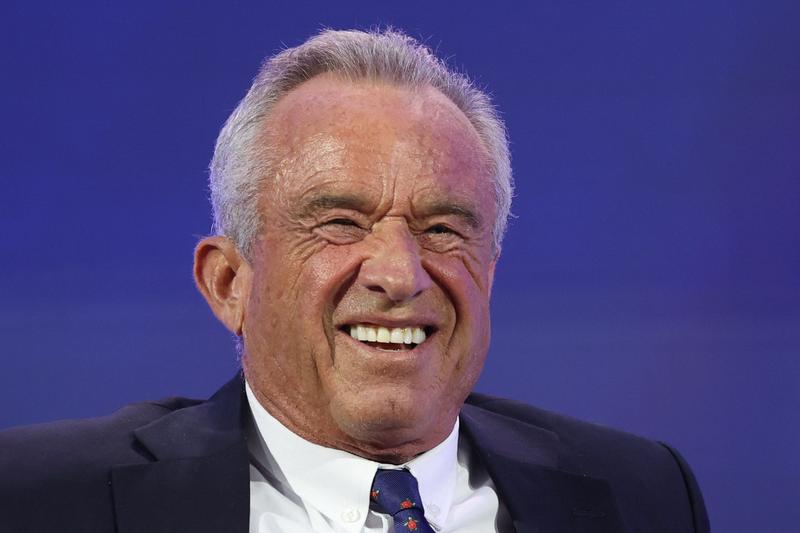
( Alex Wroblewski/AFP / Getty Images )
[music]
Brian Lehrer: It's the Brian Lehrer Show on WNYC. Good morning, everyone. As regular listeners to this show know, we've been doing a health and climate section of the show on Tuesdays all this year. Our premise is that with the blizzard of so much news about everything all at once all year, these topics, important as they are, risk getting lost in the shuffle. I think this week is a perfect case in point. We've had the surprising Trump-Mamdani meeting, Marjorie Taylor Greene announcing her resignation from Congress, the real or fake peace plan for Russia's war in Ukraine, the Epstein files bill negotiations to avoid the Obamacare insurance premium spike at the end of the year, the Jim Comey, Letitia James and now, Mark Kelly, Trump investigations. Deep breath.
With all of that, you may have missed several pieces of striking RFK Jr.-related health policy news. One, the Centers for Disease Control has removed the statement on its website that vaccines do not cause autism and replaced it with language claiming that's an open question.
To cite NPR's reporting on this, "The change comes even though a connection between vaccines and autism has long been debunked by a large body of high quality research. Health Secretary Robert F. Kennedy Jr has long promoted the discredited claim. The CDC's change is alarming public health experts. They are already worried about a drop in childhood vaccination, which has led to a resurgence of dangerous childhood diseases like measles and whooping cough."
There's that from NPR. There's the RFK Jr. aspect of the heartbreaking news that maybe you've heard that Tatiana Schlossberg, daughter of Caroline Kennedy Schlossberg, granddaughter of President John F. Kennedy, at the age of 35, has terminal cancer, specifically leukemia.
She wrote about it in The New Yorker, including these lines about RFK Jr. who is her cousin, "I watched from my hospital bed as Bobby, in the face of logic and common sense, was confirmed for the position, despite never having worked in medicine, public health or the government. Suddenly the health system on which I relied felt strained, shaky. Bobby cut nearly $500 million for research into MRNA vaccines, technology that could be used against certain cancers, slashed billions in funding from the National Institutes of Health, the world's largest sponsor of medical research.
I worried about funding for leukemia and bone marrow research at Memorial Sloan Kettering. I worried about the trials the that were my only shot at remission." From Tatiana Schlossberg in The New Yorker.
In The Atlantic, there's an in depth new article by political journalist and Atlantic Staff writer Michael Scherer called Why is Robert F. Kennedy Jr. so convinced he's right? It includes quotes of RFK as interviewed by Scherer, and he joins us now. Michael, always good to have you on. Welcome back to WNYC.
Michael Scherer: Thanks for having me back, Brian.
Brian Lehrer: Can we start on the news? This change in language about vaccines and autism, do you think a line on the CDC website can have real world consequences for public health?
Michael Scherer: I think as part of a broader effort that Kennedy is undertaking, absolutely. This is actually something we talked about. I met with him six or seven hours over months, and at the end, he was really focused on this question of, "Vaccines do not cause autism." During his confirmation, Bill Cassidy, who was the deciding vote to get him into the HHS Secretary job, made him promise not to remove that line from the website.
He believed then, he believes now that the line is false. The reason he believes it's false is because while there are a number of, just like you read, high quality studies of thimerosal, an additive to vaccines, and of MMR vaccines, which is a vaccine that's usually given after the first year of life, and autism, there's more recent studies about aluminum, which is another adjuvant that's added to vaccines and autism that have not found a correlation, Kennedy points out that a number of the first year vaccines that people get have not been studied in the same way.
Now, the reason they haven't been studied in the same way is because the scientists who are deciding where money goes and what to study have not seen reason to do this. They don't believe there is a correlation here or a causation here, and they have not pursued it. They have put on the website, "Vaccines do not cause autism," as a way of calming people's nerves, dealing with misinformation about some of the MMR and thimerosal studies. For Kennedy, this is central to what he wants to do as HHS Secretary. He believes he has a mandate to basically track down every possible vaccine relationship with autism. That means he's going to spend, he told me, billions of dollars on hundreds of studies that have not been done or been seen as needed to be done before, to investigate this.
Maybe he discovered something that no one thought was there or many people didn't think were there, but the challenge is if in the interim vaccine rates go down, we know the benefits of vaccines. You could have increased harm, increased child illness and death as a result of people not giving their children vaccines and you may not find any correlation or causation at the end of the research.
Brian Lehrer: [unintelligible 00:06:03] nurse, I want to invite you in on this right away with Michael Scherer, particularly any doctors want to call in or medical researchers with real-world effects so far of RFK Jr.'s opinions and policies now that he's in power as HHS Secretary, 212-433 WNYC, or anything on the science, or anything in your own experience as an MD or a researcher that relates to any of the science. 212-433-9692. Call or text with those things or anything else relevant for Michael Scherer from The Atlantic with this deep dive article called Why is Robert F. Kennedy Jr. so convinced he's right?
I'm glad you brought up Senator Cassidy. He was actually going to be the subject of my next question anyway. The senator from Louisiana, an MD who does accept the science on vaccines, people may remember that there was a lot of drama around Cassidy's deliberations over whether to confirm Kennedy. He finally did and made it safe for others in his party to vote yes, but he did with trepidations.
Now he has spoken out against changing that line on the website. Here's a quote from Dr. Senator Cassidy on CNN this weekend, "Anything that undermines the understanding, the correct understanding, the absolutely scientifically-based understanding that vaccines are safe and that if you don't take them, you're putting your child or yourself in greater danger, anything that undermines that message is a problem." Dr. Senator Cassidy on Jake Tapper's State of the Union on CNN this weekend.
You spoke to Senator Cassidy for your article. That was before this latest announcement. What's his take on RFK's tenure so far in general, after he, shockingly to many, voted to confirm him despite rejecting what seemed to be Kennedy's main reason for wanting the job?
Michael Scherer: There's been a pretty significant breakdown in that relationship. When Cassidy voted for Kennedy, he announced that they would meet regularly, that he would stay in close contact with Kennedy, that they were going to work together on public health. When I spoke with Kennedy, he said, "I'm trying to meet with him. He's not meeting with me." He was complaining about not being able to have the debates he wants to have with Cassidy. When I talked to Cassidy about it, he said, "Well, he sends me the same studies over and over again. When I point out why I have concerns about these studies, he considers that immaterial."
They still do talk to each other. They still text with each other. There still is a line of communication there, but the relationship is significantly deteriorated. Kennedy's decision to do this to the website, he promised Cassidy for his confirmation vote that he would not remove the line, "Vaccines do not cause autism from the CDC website," then he went and just put an asterisk next to it and then surrounded it with words that said that line doesn't mean anything, is not true, and shouldn't be relied upon.
Brian Lehrer: Right. He wrote that, "Oh, I have an agreement that I have to include the line on the website that vaccines don't cause autism. Here it is, but I don't really believe it." If you read through that section, that's what it says, right?
Michael Scherer: It's not just that Kennedy doesn't believe it, it's saying the CDC does not believe it. That's a website of the CDC. That's the official position of the CDC.
Brian Lehrer: Well, he's the CDC and the other Trump appointees who now run it, right?
Michael Scherer: Yes, that's correct. He's taken pretty direct control over a lot there. Now, Cassidy has been very circumspect in his public criticism of Kennedy. That CNN interview you mentioned, he dodged a bunch of efforts by the interviewer to get him to criticize Kennedy directly. I think what's happening there is that Cassidy is trying to triangulate. He's trying to minimize what he sees as the damage that Kennedy is doing.
One of his ways of doing that is he still has a relationship with President Trump, he still has a relationship with others in the White House, and he is talking about with them as well. He still has a relationship with a number of people in the Senate. He convenes hearings where Kennedy is a witness, where he can voice his views. His calculation is that starting a public personal fight with Kennedy would politicize this and undermine his ability to dampen what he sees as the damage that Kennedy is doing.
Brian Lehrer: That's a tricky line to walk, to maintain his influence in that way. To what you said and you wrote in the piece, that whenever Cassidy points out statistical flaws in articles that Kennedy sends him, Kennedy says he considers those immaterial. You wrote, "I had been having a similar experience. As I reported this article, Kennedy referred me to many studies meant to convince me there are not two valid sides to this debate, that his is the only valid one."
Michael, could you take us more into that and how it helped you understand what you set out to understand, which is what RFK is about or why he's so certain that he's right. According to your writing, he's not even saying, "Look, people, there are two sides to this debate. Maybe vaccines do cause autism." You're saying he doesn't even believe there are two sides to debate, only his side.
Michael Scherer: The idea of this story was a lot is written daily about Secretary Kennedy, and it's mostly on the level of, he's telling the truth, what he's doing is debunked, what he's doing is false, he's crazy, he has a brain worm, he took a bear to Central Park, all the stories everyone's heard about Kennedy. None of it ever really explained to me why he was doing what he was doing, how he came to be this child of American political royalty in this position, why he embraced President Trump after calling George W. Bush a fascist, why he left the Democratic Party.
That was what I set out to do with this article. What I found is, over time, this was over several months and many hours of interviews, we ended up in a debate. He was trying to convince me throughout. He was sending me studies. Even after the story published, he sent me a critical review of a recent Pfizer study of a new flu vaccine, trying to convince me that the accepted science, interpretations of that science, should not be taken at face value, that there were other things going on, that there were places that hadn't been looked at. It became pretty combative at times. I tried, in the story, to document that journey as a way of explaining who this guy is, why he's doing it, and why it matters.
Brian Lehrer: In fact, he came to regret that he spoke to you for this article, according to your article. Talk about that.
Michael Scherer: We made up after that, but there was a point where he called me on a Sunday, animated. He asked to set up a Zoom call so he could record it. He compared me to other journalists he dealt with who had lured him in under false promises. He compared our relationship to the relationship of the--
Brian Lehrer: The frog and the scorpion?
Michael Scherer: Yes, the frog and the scorpion.
Brian Lehrer: Tell people that fable, who don't know it.
Michael Scherer: The scorpion asks the frog for help crossing the river. The frog says to the scorpion, "I'm not going to do that, you're just going to sting me." The scorpion says, "No, you can trust me." As they're going across the river, the scorpion stings the frog and the frog dies. Basically, I conned him into this, and that I was working for a publication, he's very critical of The Atlantic, that would not allow me to write the truth because he believed I was part of this broader-
Brian Lehrer: A conspiracy?
Michael Scherer: Yes, this broader effort to mislead the American people about science.
Brian Lehrer: Why? Why would you? Why would he think you would or The Atlantic would?
Michael Scherer: He feels like he hasn't gotten a fair shake since he started complaining and raising concerns about mercury in vaccines about 20 years ago. He thinks the reason is a complicated combination of the financial interests of pharmaceutical companies and the scientists who work on vaccines and develop drugs, and a Overton window that has been established by the intellectual elite of the country that prohibits real debate from happening in this space. He sees it's his mission to open that debate.
I said to him very clearly from the beginning of the story, "Let's do it. Let's open the debate. Let's lay this out as much as we can," and we did. We went back and forth for months, and I don't think we came to agreement on a lot of things. What I think clarified was where the disagreements are and how those disagreements come out. One of the things that frequently came up is that when he disagrees with something, when a study is done that shows data that is against his side of the argument, he, very quickly, goes to attack the motives of the scientists who did that. Well, do they have financial relationships? Is there a reason to doubt them? Does Michael Scherer work for The Atlantic? Did I use to work for The Washington Post, who Kennedy-
Brian Lehrer: Which you did.
Michael Scherer: -previously had a lawsuit against? That was one of the things we had to tangle with as we went down this road.
Brian Lehrer: With Michael Scherer from The Atlantic, a physician calling in. Sharman in Queens, you're on WNYC. Thank you so much for calling, doctor.
Dr. Sharman: My concern is that I don't think I'm in isolation as a physician to have a lot of concerns about RFK's policies, especially about the vaccines. I work in an inpatient setting. I see people with flu, COVID, RSV, all of the viral issues, especially around this time of the year.
At baseline, it's extremely difficult for us to convince patients that vaccines do work, because a lot of people have individual experiences where they feel that they've gotten flu vaccine and they've still gotten the flu. They don't think that the vaccine is real. It's conversations all the time from us with people that the vaccines are not supposed to be individual, it's a group effort and it's a herd immunity that protects the most vulnerable people in our communities. I'm sorry.
Brian Lehrer: No, go ahead. I thought you were done with that thought, but continue.
Dr. Sharman: I apologize. Basically, the messaging coming from the government that vaccines don't work, it just makes our job so much more extremely difficult. My concern is, with the EDs overflowing with all of the things that we have to do, what is the takeaway that physicians should do in all of this?
Brian Lehrer: I'm curious, doctor, if in your experience, having to have these conversations with so many more patients now, are they overwhelmingly deciding to get, for example, the flu vaccine after your interactions with them, or are you finding that more than in the past are declining?
Dr. Sharman: I would say it's very age group specific. A lot of our elderly patients who are more vulnerable, they tend to be a little bit more receptive. A lot of younger people don't necessarily feel that it is important. Again, having that conversation over and over again, sometimes they will agree, but there is more than half the time that they don't.
Brian Lehrer: Right. Talk to some of those younger people who might be listening right now, because one of the things that Kennedy changed was the recommendation for an annual fall season COVID shot to change it from, "Everybody should get it once a year, like the flu shot," to, "People over 65 and certain other vulnerable individuals should get it. Generally, for most healthy people under 65, you don't necessarily really need it." We know who the people are who tend to die from COVID. Still, a lot of people die from COVID, but they tend, overwhelmingly, to be elderly. What's your own takeaway?
Dr. Sharman: Younger people, yes, they have a strong immune system and maybe a lot of times, they don't experience experience COVID in the way that a lot of our vulnerable population do. The effect of vaccine, again, it's a herd immunity. It's supposed to protect the entire community and not just one individual person. By taking that vaccine as a younger person, you're preventing spread of COVID to someone who is going to be a lot more vulnerable. I think it's important to recognize that this is not for us as an individual. It really is for the entire community and protecting our communities.
Brian Lehrer: Sharman, we really appreciate your call. Thank you very much for your work as a physician. Michael Scherer, is that representative of the kinds of conversations that you might have as a reporter if you fanned out and talked to doctors in addition to people in Washington?
Michael Scherer: Yes, it's almost identical to the conversations I had. The concern is that by raising questions about the current state of vaccine science, by changing the website, by reducing recommendations, there will be a reduction in voluntary vaccinations, particularly for newborn kids. We've seen the rates of voluntary non vaccination for kindergarteners double to about 3% in recent years.
A couple states have recently announced they're going to pull back their vaccination recommendations for schools in those states. That will lead to viruses and bacteria killing and sickening more children. That damage will be, ultimately, far greater than any benefit that will come from reduced vaccine injury, like new discoveries about chronic disease, neurodevelopmental disease and their possible relationship to vaccines.
That's the bet that the Trump administration is taking right now. It's a giant experiment. It's an experiment with the country. Most of the vaccinologists in this country and the medical associations say it's a bad bet that the American people will lose in terms of health if we go down this path. Kennedy says, "We have to do this," and then lays out the reasons why.
Brian Lehrer: To the doctor-from-Queens' call about herd immunity and the community reason, not just the individual reason for people being broadly vaccinated, I think we have a story about this from the other side, from an individual side, not a health professional side. Matthew in Metuchen, you're on WNYC. Hi, Matthew.
Matthew: Hi, Brian. Good to talk to you.
Brian Lehrer: You have a story, I see.
Matthew: Yes. I was born in 1975. My father was a chiropractor. Didn't believe in vaccines, didn't think they were necessary, didn't think they were safe, and so he didn't vaccinate his children to get us into school. He wrote letters saying that it was a religious exemption, when really it was just more of a philosophical exemption. I grew up thinking that I was the proof that vaccines were unnecessary because I never got measles, I never got mumps, I never got rubella, I never got polio.
My father's explanation for that was that I was exposed to those things, but a healthy body would have just fought them off and not received the damage for them and not receive those problems. That's what I always thought. I thought, like I said, I'm the proof that vaccines are not necessary.
When I got married, my wife is a doctor and we were going to have kids, and there were some very strong debates about whether to vaccinate our children. She was very obviously pro-vaccine and I was very anti-vaccine. In the discussion I said, "Look, I'm proof that we don't need vaccines." She said, "No, you're proof of herd immunity. You're proof that people around you were protected and you were protected from the disease, by the people around you being protected." She said, "We can test this by getting titers."
I went and I got titers, tested my immunity to those things. It turns out I had no immunity to any of those things with the exception of tetanus. I had a little bit of immunity from tetanus, which would have been some kind of exposure. It suddenly just completely collapsed my whole view, and I realized, "Oh, I've never been exposed to any of these things." The narrative that I fought these things off, that I was exposed and I fought these off just crumbled. It supported the idea that it was her immunity that was keeping me safe for all those years. I realized, "Oh, that whole narrative was completely wrong." I went and I got fully vaccinated and my kids are fully vaccinated.
Brian Lehrer: That is such a fascinating transformation story. It's amazing that your dating relationship with a doctor, who became your wife, got as far as it did with the views you started out with.
Matthew: I agree. I must have had a lot of other good things going on.
Brian Lehrer: Probably so. Well, you certainly had an open mind to when evidence got presented to you. Thank you very much for your call, Matthew. That was fascinating, Michael, right?
Michael Scherer: It is. I think it points to something that is worth mentioning here. Over the last 120 years, there's been a sea change, a massive change in human health that I don't think people-- they don't talk to their grandparents or their great grandparents about, so they don't have knowledge of. If you go back to 1900, the top three causes of death in the United States were pneumonia, tuberculosis, and diseases related to diarrhea. All of those were infectious disease-caused deaths. 30% of deaths in the US were among children younger than 5 years old, 30%. One in three people who died were toddlers or younger.
Today, nothing like that exists. The share of deaths that are among young children is less than 1%. The reason we die now, we all know, are not infectious diseases. They're chronic diseases. We get heart disease, we get cancer, we have strokes, we get lung disease. That is a success. It's a massive success. Life expectancy is extended by 30 years.
Now, the reasons for this massive shift are many. We're much better at dealing with pests. We're much better at sanitation than we were, and we're healthier in some ways, but among those things is vaccines, which have effectively removed whole categories of disease that once were quite prominent and were a fact of life for children in America. They're just not around anymore.
I think that's the fear. The fear is that gradually, over time, especially in states where they're dropping vaccine mandates for schools at all, you're going to see a resurgence of this sort of stuff among school children. I talked to Paul Offit, a leading vaccinologist, and he said he has very little hope that anything will change here until the viruses and the bacteria do the education for us, which is a dark vision if it comes to pass.
Brian Lehrer: We'll continue in a minute with Michael Scherer from The Atlantic and more of your calls. We're going to take up the topic here of conflicts of interest after Paul in Montclair, we see you. You're going to be the next caller on possible RFK junior conflicts of interest. Also, Michael, you mentioned before a Pfizer study on a vaccine that they're working on. People may hear that as, "Wait, Pfizer is the one who would make a profit from the vaccine. Why would we trust a study that they funded in the first place?" We'll take those things up and more right after this.
[music]
Brian Lehrer: Brian Lehrer, as we continue on WNYC with Michael Scherer, political reporter and staff writer for The Atlantic. His latest article, Why is Robert F. Kennedy, Jr. so convinced he's right? Michael, we were hearing from that doctor who's now having to convince her patients to even get flu vaccines. Here's a related text. Listener writes, "I'm a veterinarian practicing in Pennsylvania. The anti-vax sentiment is spilling over into my practice. I have people hesitant to vaccinate their pets, even for rabies, which not only protects the human population, but is also the law. I spend my days arguing with clients about important and mandated vaccines."
Maybe there's your follow up article, RFK Jr.'s unintended effect on the animal population and the people who love them. A Kennedy quote from your article from him to you, "The whole medical establishment has huge stakes and equities that I'm now threatening." You note that this seems to sweep in not just insurance companies and big pharma, which we all can be suspicious of, but also, as you write, by implication, the pediatricians and virologists and epidemiologists who have devoted their lives to helping children and reducing suffering.
Does he think pediatricians, for example, overwhelmingly support the established vaccine protocols for their patients because they're corrupt or because they're so stupid they can be tricked by greedy pharmaceutical companies?
Michael Scherer: I think the way he would answer that would be, both are true in different instances, that there are incentives, which he's very critical of, for pediatricians to get certain education, to prescribe certain drugs that he wants to change. He speaks about the story of Galileo, who, of course, discovered that the earth revolves around the sun and not the other way around. He was imprisoned by Catholic authorities because that was heresy at the time.
In Kennedy's telling of that story, the villains of the story were not just the religious authorities that threw him in jail, but also the fellow scientists who were not willing to engage with his arguments, with Galileo's arguments, because they feared for their own professional advancement. They didn't want to get on the wrong side of the church. Kennedy speaks often about this Overton window, the social contract that prevents critical ideas from entering the mainstream. This, he's critical of physicians, he's critical of the press, he's critical of politicians as well.
The other thing that is worth mentioning here is that he is a populist. 7 in 10 Americans believe his bipartisan belief that the current health system in the US is set up more to profit pharmaceutical companies and insurance companies than it is set up to keep people healthy. That's a broad criticism of the medical establishment. He's trying to ride that wave to very specific ends. That's what he's hitching his wagon to.
Brian Lehrer: Well, what about the fact that, for example, Pfizer funds research into vaccines that they may then sell rather than just maybe government-funded or university-funded studies without that apparent conflict of interest?
Michael Scherer: That is the system we have. NIH does do certain studies of basic science, but when a pharmaceutical drug is being developed, it's a capitalist system and the people developing the drug generally finance the research into it. The FDA reviews that research and then makes sure it's kosher. There's also a peer review, an independent peer review process that reviews that research before it's published. That's how we get the science we have.
I think it is totally fair to raise questions about the specifics of any study that's being done. In any of these studies, these are not simple studies, there's assumptions being made, variables that have to be accounted for, populations that are being targeted. There's tons of decisions made to get to any scientific result. science is built upon having that conversation.
In the system we have, there's a lot of really good science that doesn't have specific criticism waged against it, that is funded by industries which then profit from the medications they develop. There are a lot of good medications we have that are very effective and that have very low side effects. The challenge is, where do you stop the macro criticism of the system we have and deal with the specifics?
I don't know if we have time to go into it, but in my story, we go around several of these studies in some detail in the story that he was challenging, and I called up Pfizer and I said, "Okay, explain this to me. Why is he wrong about this assumption he's making about this specific trial?" They explained it to me, and I explained it to the readers.
Brian Lehrer: Paul in Montclair, you're on WNYC. Hi, Paul.
Paul: Good morning, Brian. I was just wondering if anybody brought up the fact that he has the-
Brian Lehrer: Can I just say for our listeners' context, you told us, [unintelligible 00:34:32], you are a retired emergency room physician. Do I have that right?
Paul: Yes.
Brian Lehrer: Go ahead.
Paul: 25 years in an ER. Again, I just wanted to-- if anybody thought of the conflicts that he has in reference to the vaccine industry, because I've read in previous stories that the foundations that he founded, that they did a lot of litigation against these companies and they won a few of their cases. This is what funded his lifestyle and his foundations in the last few years. If that was brought up in his congressional hearings, I was wondering, would that not disqualify him from taking an office like this?
Brian Lehrer: Paul, thank you very much.
Paul: I'll take my answer off the air.
Brian Lehrer: Thank you very much for your call and your service as an emergency room physician. Michael, do you get into any financial incentives that RFK Jr. might have while he points at others?
Michael Scherer: Yes, we talked quite a bit about that. For instance, he recently replaced the Vaccine Advisory Committee at the CDC, which recommends the vaccine schedule for kids and adults. He basically fired the old 17-member panel, replaced it with his own panel. His accusation was that the panel had been dogged for years by conflicts of interest because some people on the panel had been appointed who had worked on drugs before. They were experts in the field.
The way the government had dealt with that since the early 2000s, when there were some scandals around this, was a pretty rigorous system of disclosure of any work you'd done, public disclosure, and then you wouldn't vote on things that you might have a financial interest in. The criticism of the people he replaced that group with was that several of the people he replaced them with had been expert witnesses in lawsuits against pharmaceutical companies arguing of the danger of drugs. They had been on the opposite side of this and making money on the opposite side.
Kennedy was a trial lawyer for decades. He's won a number of very large judgments, usually not in the vaccine pharmaceutical area, more against corporate polluters in the environment, but he's also been involved in other torts. He was helping to find litigants for a case against Merck because of their HPV vaccine. I said to him at one point, I said, "You're constantly going after people because of their conflicts of interest, but couldn't people do that against you?" He made a significant salary from a group he helped run that was basically a vaccine-skeptic group, so he had a financial incentive there.
He ultimately agreed with me that at some point, in our democracy, we have to put down that weapon. If we're constantly disqualifying everyone because of some conflict, we don't really have a democracy. You'd be left with people who don't know what they're talking about or don't have experience in what they're talking about in order to do things.
Brian Lehrer: No relationships.
Michael Scherer: That's right. That said, he continues to use that especially to criticize studies he doesn't like.
Brian Lehrer: Last thing before you go, one anecdote in your article is about this conversation that they've been pushing about the risk of Tylenol during pregnancy. Kennedy told you that he advised President Trump not to post a warning on social media about that. He said, "There's nuance to it, and you can't scare people away from Tylenol." The president, as some of our listeners remember, said it anyway in the most unnuanced and ham handed way. Is Kennedy, at all, frustrated by Trump?
Michael Scherer: He's incredibly praiseworthy of Trump, feels like Trump is really governing with a bravery to take on these industries that no other president has, at least since his uncle, John F. Kennedy. That said, I think people would be surprised that Kennedy sometimes plays the cautionary role behind the scenes, and this was one of those examples. He's also pulled back on his own beliefs.
For years he was arguing, for instance, that there was a clear connection between vaccines and autism. I asked him directly, I said, "Are you still arguing that there's a clear connection between vaccines and autism, or are you arguing that there's not enough science to know whether there's a clear connection between vaccines and autism?" His answer was, "Well, what I believe doesn't matter. My role now is to find the science."
Internally in his own way of communicating, he often pulls back from what he was saying before to inhabit the role he thinks he's supposed to have here. I think it's worth noting that if you go back when that Tylenol announcement was made and look at what the FDA advisory was, to obstetricians and doctors about pregnancy and Tylenol, it was a very nuanced recommendation. It said, "You should not use Tylenol for low fevers," meaning if it wasn't a big deal, don't over-prescribe this because there may be a risk.
It also said, "There's no causal connection we found yet. It's a correlation. This is a hypothesis and a reason for caution." Of course, like you said, Trump said, basically, the opposite of that during the press conference.
Brian Lehrer: Do you happen to know, by the way, if Trump got the annual flu shot or COVID shot this year? He's certainly in the age group where the COVID shot is still recommended by his own HHS.
Michael Scherer: I know he's had a couple visits to Walter Reed and I don't remember offhand whether they've disclosed that or not. I know they came back and they said he's super healthy, because they always do whenever he sees a doctor.
Brian Lehrer: I'm sure that that's a completely nuanced assessment of his health in great detail. Michael Scherer, staff writer at The Atlantic, his latest article, Why is Robert F. Kennedy Jr. so convinced he's right? Thank you for sharing it with us.
Michael Scherer: Thanks for having me again, Brian.
Brian Lehrer: One quick addendum to our last segment, our team of dozens of medical researchers in the WNYC control room looked deeply into it and found that, yes, Donald Trump did get a COVID vaccine this fall, in October, as reported by NBC News, and a flu shot, too.
Copyright © 2025 New York Public Radio. All rights reserved. Visit our website terms of use at www.wnyc.org for further information.
New York Public Radio transcripts are created on a rush deadline, often by contractors. This text may not be in its final form and may be updated or revised in the future. Accuracy and availability may vary. The authoritative record of New York Public Radio’s programming is the audio record.
