
Republicans and Health Care
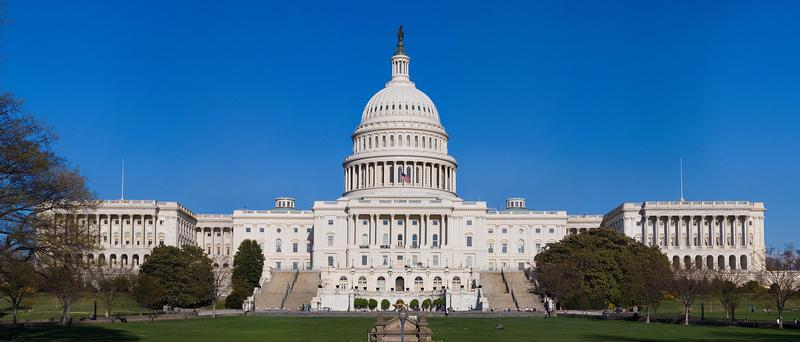
( Noclip, Public domain, via / Wikimedia Commons )
[theme music]
Brian Lehrer: It's The Brian Lehrer Show on WNYC. Good morning again, everyone. It is Tuesday, so we are in the Health and Climate Tuesday section of the show. Health reporter Jonathan Cohn is coming up as millions of Americans face a health insurance cliff at the end of this month. We'll also, later in the hour, have our latest Shop Listener call in to support your fellow listeners, not just the big box stores and those websites whose name I won't even say, in the holiday shopping season. First, this is Giving Tuesday, as you may have heard, the global day dedicated to giving back to the nonprofit organizations that make a difference in your life and make a difference in the world. What is Giving Tuesday? It's a worthy thing, I think, after Black Friday and Cyber Monday, those big shopping days and before you spend all your walking around money on holiday gifts. For those of you lucky enough to have enough money to make charitable donations, the nonprofits of the world banded together a few years ago, this is just a few years old thing, and established this Tuesday after Thanksgiving as Giving Tuesday. Their hope is that you'll support a few different nonprofits. I support that idea. My pitch is to not only give to WNYC, but pick a few nonprofits whose work you support on this Giving Tuesday.
You just heard Michael talking about some of the problems that various nonprofits are facing with the federal funding cuts this year, and you know that includes us. So, maybe you can make a few donations today if you have the means to do that. Obviously, we're asking that you make one of them to WNYC. Thank you for being a little part of that. The phone number, 888-376-WNYC, 888-376-9692, or you can do it right from the homepage, at wnyc.org. Now, millions of Americans are standing precariously on a health insurance cliff, I'm calling it a health insurance cliff, that will collapse under them at the end of this month if the government doesn't do something.
As many of you know, this was the central issue for Democrats in the recent government shutdown, the Affordable Care Act subsidies that have been in effect the last four years but will expire now, causing a doubling of many people's premiums, according to the reported estimates. With President Trump's declining approval ratings, he seems to want the Republicans in Congress to do something, but this seems to be the rare case in which many of them are not following the leader of their party. That's how much they hate the Affordable Care Act, maybe because it's also known as Obamacare, a name the former president has embraced, by the way.
So, for the many of you who might lose your coverage 29 days from now, and everyone else, we'll talk now with Jonathan Cohn, reporter for The Bulwark and author of two books about the American health care system, one called Sick and the other called, The Ten Year War: Obamacare and the Unfinished Crusade for Universal Coverage. He has an article on The Bulwark site called, Trump Discovers, Yet Again, that Health Care Policy Is Hard. Jonathan, thanks for coming on. Welcome back to WNYC.
Jonathan Cohn: Oh, thank you so much for having me.
Brian Lehrer: Would you start by reminding people of the basics? What exactly will expire at the end of this month and who would be affected?
Jonathan Cohn: Yes. This is for people who don't have employer coverage. You don't qualify for Medicaid because you're not old enough. You don't qualify for Medicaid because you make too much money. So you're on your own trying to find health insurance. The Affordable Care Act set up these marketplaces where you could buy private coverage, and this was the big change. Now, it didn't matter if you had a pre-existing condition. They'd sell you a policy and they wouldn't charge you more. Every policy had to have a comprehensive set of benefits.
You didn't buy a policy and discover later that, "Oh, went to the hospital, it's not covering my expenses." Of course, when it did that, they basically upgraded the quality of insurance that you could buy. They made it more expensive. So the Affordable Care Act said, "Hey, we know that, and if you worked for an employer, you'd get an employer contribution, which in turn would be backed by a tax break. So, if you're one of these people buying on your own, you'll get a subsidy. You'll get an extra financial help in the form of a tax credit that was prepaid, went straight to the insurance company. It would vary based on how much income you had."
The idea was to make coverage available for everybody. Those of you who remember your history may remember that when the law came into effect, for millions of people it was life changing. They could get coverage they couldn't before, but it was still really expensive. Right? The premiums were high, or you got stuck with these really high deductibles. There was always this sense that it wasn't enough. So in 2021, Democrats had said all along, "Hey, this is a starter home." You mentioned President Obama. That was his phrase. He said, "This is a starter home. We're going to build on it."
They always wanted to add to it. Kind of make it a little more generous. They didn't get the votes in place until 2021, when it was also the pandemic and there was a lot of support in getting people health care. So they said, "All right, let's add some extra money. Let's make the financial assistance a little more generous so that the premiums come down and people could either save money on their premiums or they could say, 'Hey, for the same money, I can buy a better policy with a lower deductible or maybe lower copayments at the drugstore.'"
That has made a huge impact. Actually doubled enrollment in the Affordable Care Act, but it was temporary. Now it's set to expire. That's the money that's going to go away if they don't act, and we'll basically go back to a system where the insurance is a lot more expensive for more than 20 million people.
Brian Lehrer: Thank you for the background. Now, here's the news. As you report, the White House is gearing up to roll out a major proposal for extending the subsidies. You praised its seriousness, at least by the standards of the Trump White House, as you put it. Spoiler alert. The proposal never came. What was the president considering that you labeled as relatively serious, and what happened?
Jonathan Cohn: Yes. Well, first of all, it was relatively serious because it had numbers. I mean, this White House, if you followed it, they just-- there's a lot of, Trump tweets something out, there's a stray statement from someone on Capitol Hill, and we're all left to figure out, what do they really mean? What are they proposing? This was an actual proposal and it basically, Democrats want to extend these temporary subsidies. They want to make them permanent or at least extend them for several years as is. Republicans don't like them, although there are some division on the Republican side.
There are some Republicans who are like, "We don't want to extend them, but we might be willing to do it because we realize it's going to affect people. We want to make some changes. Upper income people, we think they don't need so much assistance, and maybe we want to make sure nobody can get a coverage purely for free. You have to pay at least a nominal fee." They have these concerns about fraud, which may or may not be real. It kind of sketched out a version where Trump said, "Look, we'll extend these subsidies for two years with these modifications." Which we can go down the list and everyone would have different opinion about the different details of these modifications.
Some, I think, Democrats would be like, "Yes, that's fine." Some, "Yes, we could live with it." Some like, "No way." There was grounds there for a-- you could see the makings or the beginnings of a discussion that would lead to a compromise, that would get some kind of assistance in place for the next year or next two years.
Brian Lehrer: Are there now Republican factions in Congress on this? Is this one of the causes of Marjorie Taylor Greene's rebellion and resignation? Because some Republicans in Congress do want to extend these extended subsidies for insurance policies for next year and some don't?
Jonathan Cohn: There is, and it does, in fact, include Marjorie Taylor Greene. You have a real spectrum. You have Republicans in both the Senate and in the House who understand that the millions of people who are going to have to face higher premiums include a lot of their own constituents. In fact, they are disproportionately in what we call red districts and red states. A lot of them basically say, "Hey, we need to do something here. We don't love Obamacare maybe, but we don't want to stick our constituents with these higher insurance bills, so let's extend them and maybe make some of these small modifications to, you know, because we do have some concerns about it."
That's one faction. Then, on the other hand, you have the hardcore conservatives who are opposed to government health care, especially opposed to the Affordable Care Act. Again, as you said, it's Obamacare, and want nothing to do with any kind of extension and will vote against anything that sort of re-ups the money. Then you have gradations in between, of people who are basically like, "Well, we should do something, but we don't want to do this. Maybe we can use this as an opportunity to alter the program somehow and sort of do a partial extension." So you have a very divided Republican caucus.
There is, though, definitely a critical mass of Republicans in both chambers who I do think want to extend this. It's not hard to imagine if you put a bill on the floor, something getting the entire Democratic caucus in both the House and Senate to vote for it and enough Republicans to pass it.
Brian Lehrer: Yes. As the headline of your article says, Trump Discovers, Yet Again, that Health Care Policy Is Hard. I want to play a couple little clips of the president, because after they didn't release the plan last week that they had leaked to MSNBC or MS NOW that it was coming, and then apparently got blocked by Republicans in the House, Trump did say one thing to reporters about extending the subsidies and what kind of alternative health insurance funding system he might like for people who don't get insured through work. This is audio from on Air Force One. So the audio is not great, but listeners, I think you'll be able to hear it.
President Donald Trump: I mean, I like my plan the best. Don't give any money to the insurance companies. Give it to the people directly. Let them go out and buy their own health care plan. We're looking at that. If that can work. We're looking at that. That's sort of taken off. That's what I like. Don't give the money to the insurance companies. They go out and buy their own plan. You give the money to the people. I like it the best.
Brian Lehrer: Give the money to the people, not the insurance companies. He also did say something about the extended subsidies.
President Donald Trump: I'd rather not extend them at all. Maybe some kind of an extension may be necessary to get something else done.
Brian Lehrer: Some kind of extension may be necessary. So, there's a little real politic there. On what he would like to see, that he called his plan, Jonathan, giving money to individual Americans to buy insurance rather than to the insurance company, who actually receives the subsidies now? I thought it is Americans individually through the tax credits.
Jonathan Cohn: Yes. No, I mean, it is. I mean, eventually, the tax credits go to Americans so they can buy insurance, because people want insurance. Right? They want to pay their medical bills. This has become a very popular talking point, because it is true that the way the Affordable Care Act works is that the money flows. There's dollars that go directly from the federal treasury into whatever insurance company, Blue Cross, Aetna, Centene, whatever it is in wherever you are that you're getting your insurance.
That's a convenience thing. That's to save you, the consumer, instead of you having to take your money and put it in your bank account and then write a check or Venmo or however you would pay your premiums, the government just sends it straight to the insurance company. I mean, I don't know about you, I'm quite happy to have that done, among other things. It's done in advance then, and you sort of save a lot of messy tax work. That's why it goes to the insurance companies. Now, there is a theory behind this.
There's a bigger idea that Republicans, conservatives have pushed for a while that is, I think, what, we always don't know, but we think Trump is referring to here, which is, there is this idea that if you give people money and let them more freedom over how to use it, they might pay for insurance, they might use it to pay down individual medical expenses. This will be a more efficient system because it will lead to more competition and lower prices.
I think there are lots of reasons to be skeptical of that, but whether or not you think it's true, there's the additional factor that we are now-- we're less than a month away from January 1st. People ought to get insurance. You really want to start setting up a plan now? I mean, there's just not time for something like that.
Brian Lehrer: Yes. As it happened, House Minority Leader Hakeem Jeffries was here on this show right at that moment when Trump was going to release a proposal before he didn't. Here's part of Jeffries response after I asked him if he thought the proposal as reported, could be the basis for a bipartisan agreement.
Congressman Hakeem Jeffries: Here's our view as House Democrats. We've put forth a three year extension of the Affordable Care Act tax credits to make sure that working class Americans, everyday Americans, and middle class Americans can have the same level of certainty as it relates to their health insurance costs that Republicans just provided to their billionaire donors in enacting massive tax cuts for them and then making those tax cuts permanent.
Senator Elissa Slotkin: I'm Senator Elissa Slotkin.
Brian Lehrer: That was Congressman Hakeem Jeffries. We'll save Senator Elissa Slotkin for another day. Jonathan, do you take anything from that clip about the chances for success to avoid this health insurance cliff at the end of the month that would affect so many millions of people if the proposal from the White House ever does get released?
Jonathan Cohn: I think Jeffries is signaling that the Democrats are not willing to give up that much in order to get this extension. My sense is, at the end of the day, if there is a deal on the table that preserves most of the money for most of the people getting it without too many of the changes, Democrats would support it. For better or worse, depending on your feeling, and politically, I don't know how it works out politically. I think Democrats are pretty committed to trying to get as many people covered as they can, and they see this as a way to do it.
I think Democrats also feel like, "Hey, we've been at this. We've been talking about this for a year now. You first want to start talking about this now and making demands. That's not really fair and it's not really a smart way to make policy." While Democrats are I think willing to compromise more than I think-- I think some of them are very willing to compromise. I think some would prefer not a compromise. I think a red line for all the Democrats is, "We're not going to make any changes to the core of the Affordable Care Act," which is what some Republicans want to do.
Depending, you know, who knows what Trump himself wants, but there are certainly Republican leaders in Congress who have made clear that the only extension they would discuss is one that is twinned with some kind of major change to the Affordable Care Act that undermined its protections for people with pre-existing conditions. That's just going to be a non-starter among the Democrats.
Brian Lehrer: Well, they sure are playing a game of chicken with people's health insurance. Millions of people health insurance with this cliff coming at the end of the month. One bigger picture question before you go, Jonathan. Since you've reported so deeply on the health care and health insurance systems in this country for many years, insurance is getting less affordable for not just Affordable Care Act Americans, but also those who get insurance from work. What are some of the underlying reasons as you might analyze them, with 20 plus years of covering the health care system, that you could at least put on the table in 30 seconds to a minute.
Jonathan Cohn: Yes, I'm so glad you asked it because we do. It's everybody's insurance. Medicare, private insurance, everything is getting more expensive. The sort of immediate causes, there's a bunch of them, some of them are cyclical, labor shortages. We have to pay more to get nurses, health care workers, things like that. Supply costs, tariffs are actually filtering down, because a lot of our drugs come from overseas. A lot of the drug costs recently have gone up, especially these weight loss drugs. We go in cycles in this country. These underlying causes and consolidation in the health care sector.
Broadly speaking, we are the one country in the world that doesn't have some kind of national budget setting or national fee setting to control health care costs, which is why we spend so much more than every other country. At some point, I think we need to have that discussion. That's the kind of major health care debate that we need and should and hopefully will have soon. We typically have them every 15 or 20 years, but we're not going to have it in the next month or two.
Brian Lehrer: Even Democrats aren't talking about Medicare for All. Do you think with all of this frustration with the health care system, whether through Obamacare or through work, that something like the Bernie Sanders Medicare for All model might rise again politically?
Jonathan Cohn: I'm sure we'll be hearing about it. I'm sure Democrats will be talking about next steps. I imagine there will be a spectrum, some who want to do something like that, some who want to do something more modest, maybe add a public option to what's existing in the Affordable Care Act and maybe set some kind of national budgeting or national price, some kind of leverage over prices like they have in other countries. One way or another, even the most enthusiastic Democrats about the Affordable Care Act, always thought it was part of a journey.
It started with Harry Truman and the passage of Medicare and Medicaid to get to universal coverage. Like I said, we have these debates reliably every 15 to 20 years. If you look at the calendar, it's about time to start the next one, because the Affordable Care Act was 2010. It's about time to really talk seriously about what those next steps look like. Typically, a presidential election is when you have those. I will be surprised if Bernie Sanders' plan and many others are not on the table in the next presidential campaign.
Brian Lehrer: Interesting. At this moment, when we talk about American exceptionalism, but we're exceptional in not having more of a universal health care system compared to other of the world's democracies. Jonathan Cohn from The Bulwark, his article, Trump Discovers, Yet Again, that Health Care Policy Is Hard. Thank you for joining us and explaining so much.
Jonathan Cohn: Thank you for having me.
Copyright © 2025 New York Public Radio. All rights reserved. Visit our website terms of use at www.wnyc.org for further information.
New York Public Radio transcripts are created on a rush deadline, often by contractors. This text may not be in its final form and may be updated or revised in the future. Accuracy and availability may vary. The authoritative record of New York Public Radio’s programming is the audio record.