
Rep. Pat Ryan on War in Iran
Brian Lehrer: Brian Lehrer on WNYC. With us now, New York Congressman Pat Ryan. The Hudson Valley Democrat went to West Point, served two combat tours in Iraq, earning him two bronze stars. He's on the House Armed Services Committee. The district includes Kingston, New Paltz, Poughkeepsie, and other places around there. Congressman Ryan has been in the news the last few days as critical of President Trump for not answering questions about the Americans killed so far in the war or addressing their families. Congressman, thanks for coming on. Welcome back to WNYC.
Congressman Pat Ryan: Thanks for having me, Brian.
Brian Lehrer: For you who served in Iraq, what do you think about the comparisons being made between the two wars, especially like George W. Bush, Trump has deposed the Middle Eastern leader with no plan for what comes next. How much of history repeating itself do you see or not?
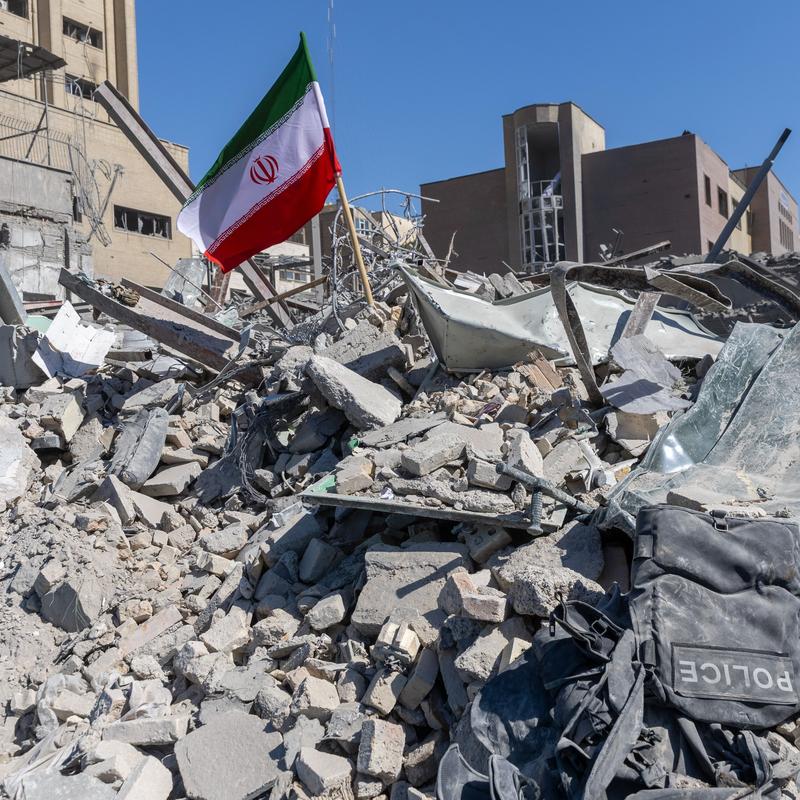
Congressman Pat Ryan: It's infuriating. Maybe history doesn't repeat, but it certainly rhymes very strongly here. You have a war that is built ultimately on a foundation of mistruths and lies. You have another generation of patriotic young Americans going to fight in an open-ended, regime-change war. In this case, even worse than George W. Bush, there wasn't even an attempt, even a token-surface effort to have a good-faith conversation with the American people and the Congress as their representatives about what is the cost. What is the cost in our hard-earned tax dollars, and what is the cost, God forbid, as we're experiencing now in flag-draped coffins coming back from another regime-change war in the Middle East?
Brian Lehrer: When you were in Iraq, did you feel like you understood the reasons for that war? Does understanding the reasons matter to troops on the ground?
Congressman Pat Ryan: I think it matters tremendously. The idea of giving one's life for something greater than yourself is undergirded by a belief in the values. It's really about a trust that I'm signing up-- I was 18 ultimately when I chose to go to West Point. I'm signing up because I love this country, and I believe that they will only ask me to risk my life and my friends if it's absolutely necessary and for a noble cause. Unfortunately, in my service in Iraq, that optimistic view has certainly changed and shaped.
To see in the last few days, even after we started combat operations, after we initiated war, to be clear, this is a war to see the administration and even the president himself change the aims four or five times in 24 hours from this is a regime-change war to, "No, it isn't," to, "We're going to be there weeks. We're going to be there months. We're going to be there as long as it takes." Hegseth yesterday refusing to say that we won't put boots on the ground to start something this serious with clearly no plan past day one. It's infuriating. It's a grave disservice to those over there risking their lives right now.
Brian Lehrer: Those comments you made on CNN about Trump not answering questions about the US service members killed or addressing their families was on Sunday. Now, it's Tuesday, and the US death toll has increased to six. Is the president respecting those who made that ultimate sacrifice to your satisfaction yet?
Congressman Pat Ryan: No, he got off the plane, was asked to address the families, and instead talked about the new flower garden at the White House or something to that effect. Then he shrugged his shoulders in his second pre-recorded video and said, "This is the way it is," meaning losing Americans is the way it is. This is not the way it needed to be. This is not a war that we needed to fight.
There was no imminent threat that has been confirmed by every credible serious analyst and intelligence operative, including our own Department of Defense now. It's very important. This week, we're going to have a vote on it. Too late, but to get back to what our founders intended and the Constitution says, which is that Congress, as the voice of the people, has the say in this, not a singular executive in the way that the British king used to do.
Brian Lehrer: That resolution, correct me if I'm wrong, would require congressional approval before continuing the war past a certain point?
Congressman Pat Ryan: Correct, but I want to just take a step back briefly to say that this decision to go to war is illegal and very clearly so. After Vietnam and all the lessons we learned in that decade-plus debacle, the Congress passed the War Powers Resolution of 1973, often called the War Powers Act. Congress passed it, then President Nixon vetoed it, and Congress overrode it, which is, as you know, quite unusual to say that these kinds of open-ended wars cannot be unilaterally started by a president.
This administration has now violated both the spirit and the letter of Section 2(c) of that law. The vote, which will likely happen Thursday, we're being told in a few days, is to reassert the importance of that resolution, both going forward, but also to make clear that the decision up to this point was not only, I think, strategically unsound, but also not legal.
Brian Lehrer: Well, I know that a similar resolution regarding the Venezuela invasion failed. Do you think there's any more support among the Republican majority for it to pass this time, considering the closer similarities to the Iraq War in this case?
Congressman Pat Ryan: That Venezuela resolution failed both before that another illegal operation into Venezuela and failed after, but only by one vote. They literally had to fly in a representative from Texas who wasn't there to kill that, which is pathetic on every level. I am very concerned that this has become another litmus test of MAGA fealty of pressuring Republicans who might deign to actually follow the Constitution and take seriously their oath not to a president, but to the Constitution.
Unfortunately, I'm not optimistic in the world of today's Republican Party that we'll see any voices of Republican courage. We will continue to push for that. I'm particularly talking with fellow military veterans, those who served in these two forever wars in Iraq and Afghanistan, and trying to appeal to them on that level. I'll do that up to the very last second.
Brian Lehrer: New York Congressman Pat Ryan is our guest, Democrat from the Hudson Valley. I want to play a clip of a caller to the show yesterday from the Hudson Valley. Like you, a little south of your district and originally from Iran. It's Peruse in Yorktown.
Peruse: I'm a Democrat by most of my voting. However, on this one, I am making an exception because I thoroughly and deeply understand the ultimate impact and ramification of Islamic radicalism, which is going to be widespread worldwide. That's the regional and international and national-level ramification of it. Domestically, this regime has been extremely radical and repressive to the nationals of Iran. They have been caught between a rock and a hard place. Therefore, I would give the benefit of the doubt to the Trump administration as we did to Clinton during the Yugoslavian war.
Brian Lehrer: Congressman, what do you say to that caller and other Americans who are Iranian expats who would like to see the repressive theocracy in their country end after 47 years, and that a weak Iran these days with a growing protest movement makes this the best opportunity?
Congressman Pat Ryan: I agree with those goals. I lost close personal friends to bombs and mortar attacks from Iranian proxy forces when I served. I have no illusions about the regime and their motives and what they have done. The question is, how do we best effectuate that? Of course, thinking about the freedom of the Iranian people, but frankly, first and foremost, making sure that the safety of the American people and my constituents are number one.
I fear that having not thought through beyond the immediate tactical, meaning immediate military success of day one, what is the plan to effectuate that regime change in a way that doesn't just repeat what just happened in Venezuela, where we replaced one bad guy with now a potentially even worse woman in Delcy Rodríguez. To even hear President Trump in an interview a day or two ago, essentially say, "That's my playbook here. We want to replicate that," that does not serve the very noble and correct aspirations of the Iranian people to be free. In fact, it potentially makes it worse.
Part of the risk that I think hasn't been thought through here is this Iranian regime clearly planned their succession to the fourth degree, as has been publicly reported. It's likely that hardline elements of either the IRGC or others are even more now likely to come to power and potentially be more repressive. It's an excruciating situation for the people of Iran. I don't skip over that.
I'm worried that not only we fail to address that aim, but we've also now initiated what's quickly becoming an escalatory regional war where multiple surrounding countries are now being struck and potentially pulled into this. Meanwhile, while China, who I think is our greatest, both military but also economic adversary, continues to benefit from us deploying two carrier strike groups, massively spending down critically short munitions and interceptors and air defense assets. I think that makes the American people, frankly, unfortunately, less safe.
Brian Lehrer: Let me ask you a political question. You are generally seen as in a competitive swing district in the Hudson Valley. Obviously, this is a midterm elections year. I want to play a clip of Trump that resurfaced recently from 2011, when Barack Obama was president. I actually saw this first on Saturday Night Live over the weekend, believe it or not. I don't know. Maybe they unearthed it, and I've seen it passed around a lot more since then. Listen to this. This is Trump in 2011.
Donald Trump: This is a great time to negotiate. Unfortunately, we have a president that doesn't know the first thing about negotiation. We have a real problem in the White House, so I believe that he will attack Iran sometime prior to the election.
Brian Lehrer: Well, he predicted, and, obviously, it didn't happen, that Obama would attack Iran because it would help Obama get reelected in 2012. Do you think that in Trump's mind, with Jeffrey Epstein, with inflation and the tariffs, with everything else, that he might think that this is a path toward midterm victory for the Republican Party?
Congressman Pat Ryan: When I think about our troops that are over there and their love of country and optimism that goes with signing up to serve and risk their life, and then you contrast that with what is an incredibly cynical thing that the president said to be kind about it, it absolutely makes my blood boil. I don't even know if he's that thoughtful about this. I actually think what we've seen over the last year, and him taking on more and more of these foreign policy boondoggles, moving into quagmire status, is that he's failing at home in the agenda that he ran on and that the people expect him to deliver on, particularly on lowering costs for housing, health care, groceries, utilities.
He's, like many second-term presidents, flailing about on the global stage, trying to exert his will and strength, and in doing so, is a bull in a china shop and creating all kinds of collateral damage for everybody, including the American people. I think that's probably the closest to what you're saying, as I would interpret it. We've seen this before. Crashing the economy and starting wars has essentially been the theme of every Republican presidency in my lifetime, and I'm 43. It seems to be repeating again.
Brian Lehrer: New York Congressman Pat Ryan from the Hudson Valley, Democrat who served two combat tours in Iraq, earning him two bronze stars, now on the House Armed Services Committee, and, obviously, from the vantage point of experience with a lot to say about the new war with Iran. Thank you very much for joining us.
Congressman Pat Ryan: Thanks, Brian.
Brian Lehrer: Brian Lehrer on WNYC. More to come.
Copyright © 2026 New York Public Radio. All rights reserved. Visit our website terms of use at www.wnyc.org for further information.
New York Public Radio transcripts are created on a rush deadline, often by contractors. This text may not be in its final form and may be updated or revised in the future. Accuracy and availability may vary. The authoritative record of New York Public Radio’s programming is the audio record.
