
Recapping the Senate's Weekend Session
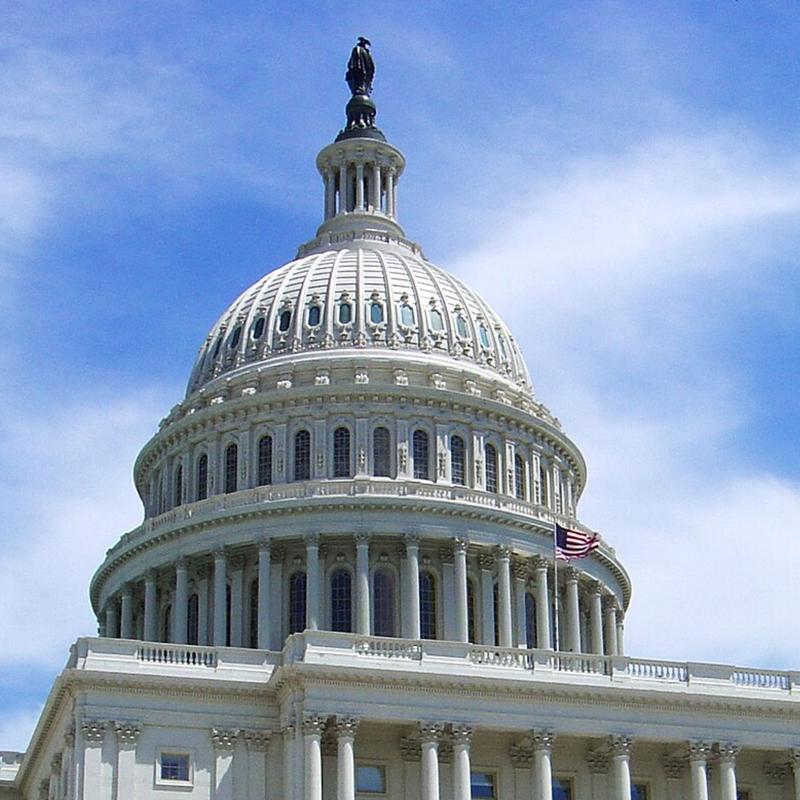
Brian Lehrer: It's the Brian Lehrer Show on WNYC. Good morning again, everyone. As we referred to briefly during Ramsey Khalifeh's report from LaGuardia Airport, the Senate held a rare weekend session over the past couple of days. You know something unusual is happening if lawmakers are working through the weekend. Republican Majority Leader John Thune kept senators in Washington to tackle two major issues.
One is funding for the Department of Homeland Security, which has been in a partial shutdown since mid February. Democrats are refusing to move forward unless Republicans agree to new limits on immigration enforcement, specifically rules of engagement for ICE, like requiring warrants for home entries where they're not in hot pursuit of someone, and body cameras and masks for ICE officers. Apparently, President Trump just said a few minutes ago, and our guest here is on this, that he is a big proponent of ICE wearing masks. That's an issue for the Democrats. Negotiations were going on on things like that through the weekend. As of now, still no deal.
As you probably know, the shutdown is starting to have ripple effects, like at airport security with TSA staffing strain. Travelers are seeing very long lines. Trump's response? He says he's going to send ICE officers to airports to help with security. It's unclear exactly what role they would play and if their training is appropriate to that. The second major issue that the Senate was kept in session to discuss this weekend is one of Trump's biggest priorities right now, maybe his biggest legislative priority, the so-called SAVE America Act, that voting bill that would require proof of citizenship and government-issued ID to vote, proof of citizenship to register.
The House passed it, but in the Senate, Republicans don't have the votes to overcome a filibuster. That bill would also severely limit mail-in voting. Trump said he won't sign any other legislation until that bill moves forward. He tied it to negotiations over Homeland Security funding, essentially saying that the Republicans shouldn't agree to any DHS deal until the Senate can pass the voting bill. Alexander Bolton covers Congress for The Hill, and he joins us now to break it all down. Hi, Alexander. Thanks for joining us. Welcome to WNYC.
Alexander Bolton: Good morning. Thanks for having me on.
Brian Lehrer: I see you have an article just this morning with the headline, GOP Cracks in Senate Begin to Show in DHS Shutdown Fight. What are you seeing?
Alexander Bolton: Well, we're seeing that some Republicans are getting nervous about this ongoing shutdown of the Department of Homeland Security, which has lasted now 38 days and caused real havoc at airports, particularly in Texas around Houston, also New Orleans, as well as LaGuardia, JFK, and the airport in Atlanta, Hartsfield-Jackson. What was notable over the weekend is you had Ted Cruz, the prominent Republican conservative from Texas, proposing something that Democrats talked about or floated earlier in March.
Which is to break up the Department of Homeland Security bill, set aside the funding for ICE and Customs and Border Protection, and just move ahead and reopen TSA, reopen FEMA, Federal Emergency Management Agency, reopen the Cybersecurity agency. Let's just fund what Cruz is proposing, fund ICE and immigration enforcement through the budget reconciliation process, which is a way to avert, get around a Democratic filibuster.
That proposal that Cruz put out there was gaining steam. I talked to a number of Republicans over the weekend who favored it. Essentially, just giving in to the Democrats and saying, "Look, we'll just put the ICE funding on ice, and we'll wait and get it done later, but let's get TSA open," because they're feeling tremendous pressure, especially in Houston. That's where some of the delays have been the worst, because you have TSA workers calling in absent, calling in sick at a rate of 30% to 50%, causing huge problems. Cruz is clearly getting blowback in Texas. He said, "People are missing flights, they can't get to spring break. They're very unhappy." Let's just essentially capitulate here, because--
He didn't say it that way, but he said, "The Democrats are never going to back down on their demands to reform ICE, and Trump's not going to agree to it. Let's just break the bill apart." It was a very pragmatic approach, I'd say. Then, what happened over the weekend, essentially, I heard this yesterday, is that Trump said, "No." He was adamant that against any sort of compromise along those lines.
He said what he then later posted on social media, he wants Republicans instead to debate the SAVE Act for days and days more, even though they're running out of steam and it's not going to pass, because he wants to set up this big political contrast that Democrats are all for, basically unfettered illegal immigrants voting in elections and that he wants-- He thinks that's going to put the pressure on Democrats to cave in this DHS funding stalemate, which doesn't seem to be a accurate read at all about where the Democrats are.
Brian Lehrer: It sounds like there's a conflict between what Trump wants the Republicans in the Senate to do and what some of those Republicans in the Senate now want to do themselves in terms of splitting out ICE funding from the rest of Homeland Security, as you described it, so they can get the airports going again, the TSA functions. Can you tell yet, as a correspondent who covers the Senate, which pressure is going to prevail?
Alexander Bolton: I think the Democrats have the winning hand here. I've heard this from Democratic senators directly. Their internal polling shows that as bad as things get at airports, it's Republicans who are going to ultimately take the blame because they're in charge. They control the White House, they control the Congress. Even though they are the ones that have held up this Homeland Security funding bill for more than a month now, most voters aren't really attuned to what's happening in Washington, what's happening in the Senate, who's filibustering what.
Their main takeaway is Republicans are in charge. The situation in airports is chaos and gas prices are going up and the economy's not that strong. It creates a more sour mood amongst the electorate towards Republicans. Democrats know that. I think the revelation this weekend is Republicans are beginning to acknowledge it. They feel they're losing this. That's why Ted Cruz, of all people, who is one of the most-- He's one of the strongest conservatives and prominent conservatives in the Senate.
When he says, like, "Look, let's just split up the DHS funding bill," which is what the Democrats proposed earlier this month, weeks ago, it's a pretty telling sign that he thinks that this fight is just not working out well for the Republicans. Look, he attacks Democrats while proposing it. He has no love for the Democrats. He says it's a completely cynical strategy, but he says it happens to be working. More to the point, he says, 'We need to get this fixed. We just cannot allow this chaos at the Houston airports to go on for any longer."
I will point out, it's also very bad at LaGuardia and JFK, too. It seems like Schumer, who's the Senate Democratic leader, Chuck Schumer, the senator of New York, he seems fine with that. I think he wants to inflict pain on the President here. I think that's what he's doing. I think what's interesting is you're starting to see Trump's allies starting to-- They're wavering or crumbling a little bit here.
Brian Lehrer: Although I'm not sure if this compromise, as you lay it out, could be called such a win for the Democrats. Yes, it might get the airports open again or the TSA lines at the airport shorter again, I should say, but it doesn't accomplish, it seems to me, what the Democrats' main goal is here, which is new rules of engagement for ICE after Minneapolis, no masks, they need to wear body cameras. They would need judicial warrants in order to go into people's homes because, yes, the rest of DHS might get funded, but the stalemate would continue with respect to ICE.
My understanding is even though they couldn't pay TSA agents, there is money to keep paying ICE agents. This hasn't hampered the work of ICE, only things like airport security. Is that wrong?
Alexander Bolton: Well, I'll point out two things. Number one, the Democrats themselves proposed splitting off that funding so they would get what they proposed weeks ago. It's a win as far as that goes. Beyond that, the Democrats have gained a lot of ground since Alex Pretti and Renee Good were shot and killed in Minneapolis. I talked to Tina Smith, the Democrat from Minnesota, she's the senator there. She said ICE has largely pulled out of Minneapolis and most big blue cities, Democratic led cities. They have retrenched their enforcement operations. They're much lower profile now.
You point out that the Democrats wouldn't get the demands they've made. However, we've already seen some pretty big concessions from the administration in terms of pulling back ICE operations, pulling out of the so-called sanctuary cities, as Trump and his allies call it. Enforcement operations that I think are smaller scale and I think more professional. Kristi Noem is gone, the Secretary of Homeland Security, she's been ousted. That's something the Democrats have been demanding. They have a bunch of wins here.
You're saying like, "Well, what about judicial warrants and masking?" Those were parts of the Democratic 10-point plan that they demanded in terms of reforms. Let's keep in mind, Republicans do control the White House and the House and the Senate. This is a minority party that's dictating to a majority party to expect that you're going to get policy wins, changes in law by holding up a government funding bill. That's not how it works. We've been through shutdowns before, most recently in November when the Democrats demanded an extension of the enhanced Affordable Care Act subsidies.
The way it works in Washington is the party doesn't get what it wants in terms of major policy changes because it holds up a funding bill. To make that the benchmark for Democratic victory, I think, would be rewriting the rule book here in Washington. They've already won a lot. They feel like they're kicking butt here. They're holding firm. If the Republicans were to split up this bill, it would end this impasse. The Democrats would still have ICE and CBP, Customs and Border Protection in a frozen state going forward. You say that, look, those agencies are funded anyway by the one big beautiful bill. That's not entirely true.
There are limits on how they can use that money that was passed in the budget reconciliation bill last year. Democrats would still maintain leverage over the administration as far as those immigration enforcement agencies go.
Brian Lehrer: As far as the rules of engagement for ICE. I see the last post that you put up on The Hill's website just before coming on is headline, Trump says he is a, "big proponent of ICE wearing masks." Obviously, he's trying to dig in on that. I have a question about that with respect to something else that happened last week with Kristi Noem as Homeland Security secretary, and Senator Markwayne Mullin coming out of the Senate, likely about to be confirmed. Could that also lead to a compromise on engagement rules for ICE?
It's being reported that Mullin is interested in a compromise that gives Democrats some of what they want on those rules of engagement. I want to play a clip of Mullin from his confirmation hearings last week. Very surprising to some. Perhaps he actually apologizes in this clip for things he said about Alex Pretti, that protester who was killed by ICE.
Senator Mullin: Those words probably should have been retracted. I shouldn't have said that. As secretary, I wouldn't. The investigation is ongoing, and like I said, they're sometimes going to make mistake and I own it.
Brian Lehrer: Alexander, how rare is that in Washington that any politician or somebody looking to be confirmed by the Senate for a role like Homeland Security Secretary and a current sitting Republican senator at that, to out and out apologize for jumping to conclusions and saying things about anybody that they then walk back.
Alexander Bolton: Yes, apologies in Washington are pretty rare. Typically, politicians don't like to do it. Markwayne Mullin is a different guy here. He's very straightforward. He's a straight shooter. He's bluntly spoken, and that gets him into trouble, but it also endears him to folks as well. He had a vote on the Senate floor on Sunday, and you had two Democrats voting for him, John Fetterman, the centrist from Pennsylvania, and Martin Heinrich, who's a Democrat from New Mexico. I think they both cited their personal relationship with Mullin. He's generally liked on Capitol Hill because he is as he appears. He's a pretty regular guy.
I think those comments you played at the hearing is an acknowledgment that calling Pretti a domestic terrorist intent on inflicting maximum harm on law enforcement officials, that just was wrong. I think pretty much everyone acknowledges that, at least on Capitol Hill. Even the president, I think, has softened some of his initial reaction to that when that shooting happened earlier this year. It is unusual. Now, the question is, what does this mean going forward? Does this open the way for compromise?
The New York Times reported, I think, on Saturday that Mullin has privately suggested that he would be open to requiring judicial warrants for entering a private home by these ICE agents. Although I would be very surprised if that is going to get anywhere with the administration. To quote Peter Welch, Democrat from Vermont, he said, he told me, "I like Markwayne Mullin a lot, but the problem is that Stephen Miller is in charge." Of course, he's referring to White House Deputy Chief of Staff Stephen Miller, who handles Trump's immigration policies, who is in Trump's inner circle. He is one of the few guys that has been with Trump since the very beginning, since the 2016 campaign.
I worked with him in the past when he was in the Senate. He used to work for Jeff Sessions. He is uncompromising on the issue of immigration enforcement. I think the Democrats are very clear-eyed that even with Mullin as Homeland Security chair, you're not going to get any major policy concessions. I think where there could be maybe some understanding is that with Noem gone, who just wasn't up to the job, in the words of Thom Tillis, Republican from North Carolina, and other Republicans, she just didn't have the chops to run that agency, I'm sorry, that Homeland Security department.
The hope is that with Tom Homan, the White House border czar, who's more of a professional, taking a larger role, and with Mullin, who's seen as, I think, more competent and honest, that maybe even if you don't get the policy concessions enacted into law, you can get a more professional management of these ICE enforcement operations. You won't see what we saw in these videos from Minneapolis, which was just extremely unprofessional, aggressive behavior, pepper-spraying people point-blank in the face, pulling people out of cars, pulling people out of homes, and then of course shooting Alex Pretti while he was kneeling on the ground and had been disarmed. That was just outrageous conduct.
I think even there are Republicans who have acknowledged that publicly and privately. I think what Homan and Mullin are, I think signaling to the Democrats is, we will not let things get out of hand that way. That doesn't mean the administration is going to agree to actual policy changes written into law regarding warrants and masks.
Brian Lehrer: Interesting. Before you go, let's get to the other reason that the Senate was in a special weekend session, the so-called SAVE America Act, which would require citizens to have photo IDs when they vote, show on paper proof of citizenship, to register, and severely limit mail-in voting. Here's a short clip of the Senate Majority Leader, John Thune, talking about the bill.
Senate Majority Leader John Thune: As you all know, we are in the middle of a spirited and lengthy debate on the SAVE America Act. It's a piece of common-sense legislation that we think is overwhelmingly supported by the American people. We intend to keep pushing forward and ensure that the American people know whether their senators are for or against ensuring that only American citizens vote in American elections.
Brian Lehrer: Right. That's the official Republican position but the Democrats say, "Look, voter fraud in the United States is vanishingly rare and the real effect of this bill, because a lot of people just don't have the paperwork available to them, is that a lot of people who really are eligible to vote and to register to vote won't be able to do so." I see now, I guess, after that clip, that even Thune may be skeptical of using the SAVE Act as leverage to get anything else done.
I see this quote from Republican Senator Shelley Moore Capito of West Virginia, who said, "I've heard the leader say," referring to Thune, "I've heard the leader say, and I've been in news conferences where he said, 'We do not have the votes to pass this.'" Where does that stand, and what's Thune's role in it?
Alexander Bolton: Well, it's a difficult situation for Thune because Trump has issued this directive that's impossible. I'm not going to even what he basically just said recently is that, "I don't want any compromise with the Democrats." This was one of his most recent social media posts. "I don't want any compromise with the Democrats on Homeland Security funding until the Republicans pass the SAVE Act." It's just not happening because it, because the Republicans don't have the votes unless they were to do something called get rid of the filibuster, nuke the filibuster.
If you know anything about the Senate, it takes 60 votes to pass things through the Senate. Democrats are blocking it with the filibuster. Trump is putting pressure on Thune to get rid of the filibuster altogether so they can pass this SAVE Act. I think Trump's thinking is this will guarantee Republican victories in elections this year and in 2028 into the future because the Democrats are so reliant on illegal immigrants voting in the election. Problem with that calculus is that it doesn't seem to be the case, that even if this law passes, yes, many people will be disenfranchised. Doesn't necessarily mean it'll lock Democrats out of power, as Trump thinks.
Then, the other thing, the other concern that Thune has is, if you do what Trump wants and you get rid of the filibuster, well, then that means the Senate becomes a majoritarian institution. That means when the Democrats take control of the Senate and the House and the White House, then they can do all sorts of things that they couldn't have done previously, like make Washington DC a state and add two more Democratic senators to the Senate, or make Puerto Rico a state and add two more Democrats to the Senate. Or you could have a wealth tax, which is something that some Democrats are pushing. You could jack taxes, you could have Medicare for all. The sky's the limit.
Thune is adamantly opposed to that, yet Trump is insistent. I think from Thune's perspective and other Republicans I've spoken to close to Thune, that Trump is insisting on something that is completely unrealistic from the Senate Republicans' perspective because they don't want to completely change the chamber and get rid of that filibuster rule.
Brian Lehrer: Trump, just to tie it back to DHS funding before you go, Trump is essentially saying, "No SAVE Act, no deal on reopening the Department of Homeland Security." Senator Thom Tillis, on the other hand, outgoing Republican senator from North Carolina, called the situation among Republicans a circular firing squad. Does Trump have real leverage here, or is it just a demand he knows that Democrats will never accept as long as the filibuster remains in place?
Alexander Bolton: If Trump really wanted to go nuclear, so to speak, he could demand that the Republicans oust Thune as leader to get rid of the filibuster. He has loyalists who will attempt to do that. Now, does he have that much of a lock over the Republican electorate that he can threaten all the Republicans into deposing their leader and getting rid of the filibuster to pass the SAVE Act? At this point, I don't think so. I think Trump already has lost a lot of political capital, and the conflict with Iran has caused energy prices, gas prices to soar. His approval rating is going down. Inflation is going to get worse because of the impact of higher energy prices.
We're getting later into the election year. Primary challenges are less and less of a threat because many of these races are already taking shape. I don't think Trump has that type of leverage but if he really want to declare war on the Republican leadership and insist they do this and basically take down Republicans if they didn't do his bidding and get rid of the filibuster, maybe there'd be some kind of scenario where he could use his leverage and use his popularity among rank and file Republican voters, which remains quite high, to really strong arm them. I think that's highly, highly unusual.
I think what we're going to see instead is what kind of work-- We're going to be in this limbo debating this bill, the Save America Act, that has no chance of passing. There's waning enthusiasm even among Republicans for discussing it. Yes, there was a rare Senate session this weekend. I'll tell you, on Sunday, I was there. It was a beautiful day. Only a few Republican senators spoke on the floor about this bill. They're starting to sound very repetitive. I think everyone just knows that this isn't going anywhere. The problem is Trump won't let him get off it, and they don't want to defy the president.
The clear thing to move to would be a DHS funding deal. Trump has made clear in his recent social media posts that he has no interest in a DHS funding deal. The fact of the matter is, is that the Republican Party right now on Capitol Hill is being held hostage by Trump, and we're at a stalemate that doesn't seem to have an end in sight.
Brian Lehrer: Hey, 30 seconds before you go. There was a special session of the Senate over the weekend. They talked about this voting rules bill. They talked about rules of engagement for ICE. Did they even mention a War Powers Resolution with this war raging in Iran and Congress not being given an opportunity by the administration, and so far, the Republicans in the Senate not being willing to assert congressional authority to give permission to continue a military operation? Did it even come up?
Alexander Bolton: No, it didn't come up. There was some talk that it might, but it didn't. I'll point out that the Senate did vote on a War Powers Resolution just last week, and it fell along party line votes. It's the second such vote. There was only one Republican who voted for it, Rand Paul. I expect it to come up again this week. If they cancel the Easter recess to continue debating the Save America Act as Trump wants, it could come up. Then again, the Republicans are pretty unified against it because they don't want to be essentially undercutting troops in the field, especially with Trump now deploying Marines, possibly to take over that critical Kharg island off the coast of Iran.
Republicans are, I think, holding firm against War Powers Resolution. I will say this, the concern is running quite high. I think right now Republicans are taking Trump at his word that this will get wrapped up in the next couple of weeks. We saw the stock market jump on Monday because Trump says they're now meaningful talks with Iran. The longer this goes on, the worse it is politically for Republicans. I think if this does drag on for another month or so, you could start to see some Republican defections on a War Powers Resolution. It's going to take a few more weeks before we get additional GOP defections on that.
Brian Lehrer: Alexander Bolton covers the Senate for The Hill. Thank you so much for coming on with us.
Alexander Bolton: Thanks for having me on.
Copyright © 2026 New York Public Radio. All rights reserved. Visit our website terms of use at www.wnyc.org for further information.
New York Public Radio transcripts are created on a rush deadline, often by contractors. This text may not be in its final form and may be updated or revised in the future. Accuracy and availability may vary. The authoritative record of New York Public Radio’s programming is the audio record.
