
Preserving Black History
Brian Lehrer: Brian Lehrer on WNYC. Now we conclude our three-part Black History Month series on the history of acknowledging Black history. The historical hook is that this is the hundredth year of the observance that became Black History Month. The the 50th anniversary year of Black History Month itself began in 1976 by a proclamation of President Ford. Our focus this morning, the news hook that the Trump administration is on a campaign to decenter Black history in so many ways. At the Smithsonian, on military bases, in schools and colleges, even the national parks will mention how he did it there last month, if you haven't heard that one yet, and the efforts to counter what the president calls woke history in general.
They are aimed at other groups, too. We saw the removal of the rainbow flag from the Stonewall National Monument of all places. We're focusing on the particular efforts aimed at African Americans in this series for Black History Month. I'm joined for today by Marc Morial, president and CEO of the National Urban League and former mayor of the great city of New Orleans. Among other things, Marc has an article in The Washington Informer called The Fight to Preserve Black History is a Fight to Save America.
On a personal note, listeners, some of you know, I was supposed to interview Marc Morial on stage at our Martin Luther King's birthday event at the Apollo Theater complex, but I had last minute family health issues that I had to help out with, and not attend. I was really sorry to miss that as I have co hosted the Apollo King Day event many times. Marc, I appreciate that you're giving me this rain check and coming on to close out this series. Welcome back to WNYC.
Marc Morial: Hey, thank you for all of what you do, and thank you to WNYC as well for all that it does. The event at the Apollo was certainly sensational and outstanding. I'm always honored to be able to speak about Black History Month and what it means and why it's important.
Brian Lehrer: Let me start with something that's in the news right now that a lot of listeners may not even have heard. There's a George Washington exhibit in Philadelphia. The Trump administration ordered that it remove parts of the exhibit about the slaves Washington kept. Then last week, a federal judge, a George W. Bush appointee, ordered the censored parts put back in. What's your reaction to trying to completely erase that part of George Washington's story, not even have it as one piece of his whole story?
Marc Morial: What Trump is doing will fail. Let me say this. What Trump is doing will fail because it's so obscene, foul, and inconsistent with this idea of the First Amendment and the truth about American history. American history has great things. It has bad and it has ugly. It serves no purpose to try to sanitize, to try to erase the truth about African American history. When Trump attacks it, what he does is he elevates support for truth about Black history. All of these book bans, all of these efforts to take down exhibits have created a ferocious backlash in America.
When you look at the polling, like the polling I've seen, there's simply not real support beyond far right conservatives for any of these efforts to suppress African American history, LGBTQ history, Latino history, Native American history. It is foul and it is obscene, particularly because it's happening on the 250th anniversary in this nation. We need to recognize the truth and celebrate the struggles to overcome the bad parts of American history.
American slavery, the attempted extermination of Native Americans, all of these things. The internment of Asian Americans. This is nothing to suppress. This is something to say it happened, but that there are many who resisted it, and many are working to overcome it. I feel, and I can tell you that I will, the National Urban League will, we will forcefully push back, because what is happening is not right and it is obscene and it is foul and is inconsistent with the First Amendment.
Brian Lehrer: It's interesting to me that you said it's going to fail because it's drawing more attention to this. It reminds me of the removal of the segment on Colbert the other week of the Democratic candidate for Senate from Texas. Then more people saw it on YouTube, which wasn't regulated in the same way than would see a typical Colbert show on television. Maybe the bands draw more attention. That George Washington example is one.
There's also the recent announcement just last month. I've mentioned this one on the show a few times already, because, honestly, it blows my mind that the national parks, which offer free admission on many national holidays, would stop offering that on MLK Day and Juneteenth. Instead, they're adding Trump's own birthday, June 14th, which is also Flag Day. That's the cover for it. He's saying it's for Flag Day. What signal does it send to your eye that it would even occur to someone to rescind the free admission on King Day and then actually go through with it?
Marc Morial: It's just racially motivated. There's no rhyme nor reason except to erase the honor and the dignity of Dr. King and the importance of Juneteenth in American history. For any sitting president to attempt to create idolatry for themselves by renaming great arts institutions like the Kennedy Center by, if you will, threatening that you will withhold money unless Penn Station is renamed after you. Now to say my own birthday is a day that we should celebrate.
There will come a day when all of this is going to be erased and wiped out for what it is. It's an attempt to create an American tyranny. It's an attempt to create a cult of personality. I think this is why you see the president's approval numbers, his personal approval numbers and his job approval numbers sinking. We want a president who's going to focus on the problems that we all face in this country, not a president that wants to use the presidency to amass power and amass attention and amass wealth for himself.
We are in a struggle about this basic American principle that I could not have imagined 10 years ago or 20 years ago. Presidents of the modern era, whether you're talking about a Kennedy or a Johnson or even a Reagan or a Bush, you could disagree with their policies, but no one ever questioned their integrity, their sense of being, and their sense that they woke up every day thinking about what was best for America, not create [unintelligible 00:07:57].
Brian Lehrer: Your line is breaking up a little bit. We'll see if we can stabilize it. Here's another example with new currency this morning. I did not expect this to come up in the State of the Union address, but at the Pentagon, after Congress passed a law disallowing naming military bases for Confederates, they've now restored some of those names, sometimes using other military leaders with the same last names. In fact, the reason it's current again today, Trump boasted about this at the State of the Union last night. Here's that moment.
President Trump: I met with them and with a lot of their fellow warriors at Fort Bragg recently. You notice the name Fort Bragg? We have it back. We brought it back. We won the First World War with it, the Second World War with it, and then they decided to change the name, so we changed it back.
Brian Lehrer: Fort Bragg had become Fort Liberty. Now back to Fort Bragg, but technically for a World War II soldier named Bragg, not the Confederate, though Trump didn't include that detail last night. How does that restoration of Confederate names make you feel?
Marc Morial: The effort to restore Confederate names is just an affront. The Confederate movement was an effort to commit treason against the United States of America, and it was destroyed. It was suppressed. In that period, since 1865, when the north won the war, it has been an arc and a struggle in this country towards liberty and justice for all. The idea that you're going to celebrate people who won, committed treason, number two, who were incompetent in their execution of their military initiatives and lost the war. Once again, it's an affront and it's foul. What we have in America today is a struggle between yesterday and tomorrow.
The notion that yesterday, let's return America to yesterday, to 1950, segregated, a caste system that marginalized women and African Americans, and somehow that's a better America, or an America of tomorrow, which is multi gender, multiracial, multi religious, multiethnic. That's the battle line in America today. I am confident it's going to be tough and it's going to be difficult and it's going to be long, but that the vision that most Americans share is a vision of a multi racial, multicultural, multi religious, multi gender America.
It's the only way forward given how our country has evolved. It is consistent with the very principles that this nation was founded on. Trump has defied the Constitution. When he loses a Supreme Court decision. His statement is, "I can do what I want." Those are the words of a dictator, not of a president.
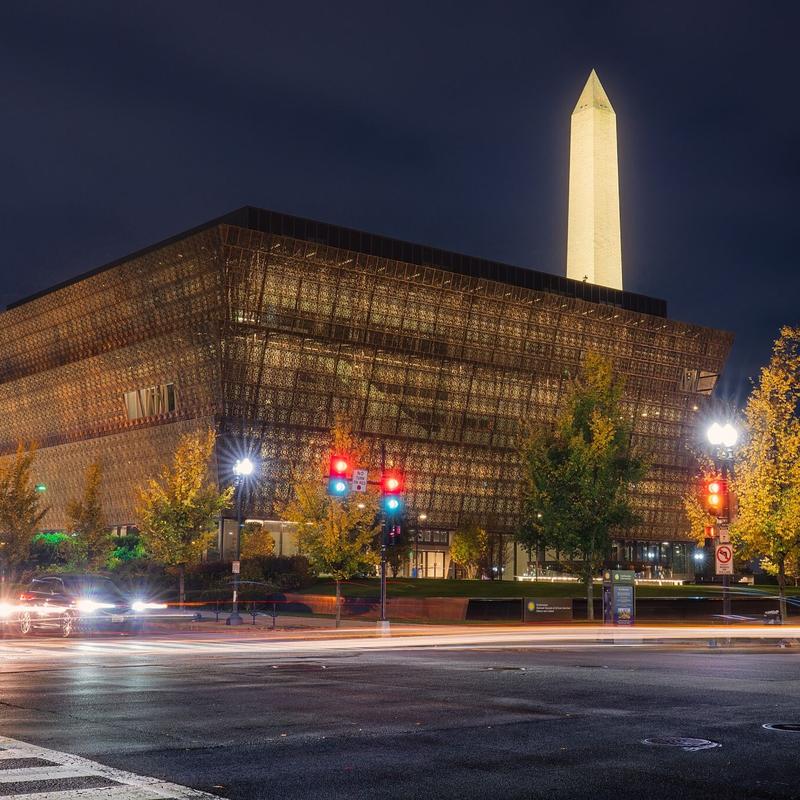
Brian Lehrer: We talked about the Smithsonian and the changes he wants there earlier, saying their exhibits-- at the African American History and Cultural Museum and other branches of the Smithsonian, he says they focus too much on the issue of slavery and how bad slavery was instead of the success of the country and American exceptionalism. I see under one of the executive orders, things were--
Marc Morial: Let me say this. Anyone who says that has never been to the Smithsonian Museum. It is a misrepresentation of the fact that that museum balances the struggle against oppression with the great achievements that have taken place by Black people since the founding of this country. Anyone who says that has not been to the museum. I want to let everyone know, this is why the National Urban League, we're building our own civil rights museum in Harlem. It'll be open in November, and it will not be subject to government censorship because it will be a private museum owned by the National Urban League. It will be called the Urban Civil Rights Museum.
I want people to Marc their calendar for late November this year when it will open in Harlem on 125th Street. We will not allow our museum to be censored, erased or exterminated by anyone. This is so important that we tell stories and we balance. One must balance the history of people, from the struggles and the challenges and the difficulties of oppression to the battles and the fight to overcome, and then the great achievements that have taken place. Anyone who says that the Smithsonian overly-- It is a false narrative. The Trump team is a master at false narratives. Most people call it lying, just flat out lying about what's in this wonderful museum. I challenge people to go visit the museum and actually see for themselves what's in it.
Brian Lehrer: I know you got to go in a minute. Let me just try to touch two more things, if I can, just as a follow up on that, under one of the executive orders, things were supposed to start changing at the Smithsonian and elsewhere by December. Do you know if exhibits have actually been altered to reflect Trump's worldview?
Marc Morial: I'm not aware. I'm like you, I know what I see in the news. I am not aware. The idea that the President and the White House would start fiddling with museums, what are they going to do? Fiddle with the space museum and advance the theory that the moon landing was a hoax? There's no end to this type of thing. This is why I say hands off the Smithsonian. Let the scholars, let the historians, let the experts tell these stories authentically. I trust them to do it in a tasteful, balanced way.
Brian Lehrer: You mean the moon landing was real? What a theory. I'm kidding. Last question, and big picture. You were a mayor. You were the mayor of the great city of New Orleans. As mayor, you always would try to be mayor of all the people, as mayors do, as heads of state theoretically do. Are these things mutually exclusive, in your opinion? Telling the story of slavery and the rest of racial discrimination history and celebrating the way the country has gradually repealed official discrimination or how Black Americans have succeeded? Is there a way to achieve consensus on any of that? Or are we doomed to have an ongoing culture war over the teaching of history forever?
Marc Morial: I do believe that we have, for the most part, achieved some consensus. Not unanimity, not unanimity, but a basic understanding, particularly amongst those who teach school, who teach in the university, those in journalism, a basic understanding of that these stories have to be told in an authentic way. The reason why we have what we have is because there's been a forcible effort led by Mr. Trump, Stephen Miller, Russell Vought and his band of billionaires who somehow want to reinforce the doctrine of white supremacy.
The next thing they'll be doing is saying that the Holocaust was a hoax. The next thing they'll be doing is saying that the south really won the Civil War. There's no end to what I call lying false narratives. When the goal and the objective is power, and power for a few. We as Americans want presidents who represent all Americans, even those who didn't vote for them.
Brian Lehrer: Marc Morial, president of the National Urban League and former mayor of New Orleans, thank you for being our final guest in our Black History Month series on the history of acknowledging Black history. We really appreciate your time.
Marc Morial: Appreciate you so much. Thank you very much.
Copyright © 2026 New York Public Radio. All rights reserved. Visit our website terms of use at www.wnyc.org for further information.
New York Public Radio transcripts are created on a rush deadline, often by contractors. This text may not be in its final form and may be updated or revised in the future. Accuracy and availability may vary. The authoritative record of New York Public Radio’s programming is the audio record.
