
Prediction Markets and the War and Other Economic News
Brian Lehrer: It's the Brian Lehrer Show on WNYC. Good morning, everyone. I want to play maybe the most interesting sound bite from the Trump administration about the war since yesterday's show. President Trump said the other day that the war will end when Iran unconditionally surrenders. Did you hear that one? Unconditionally surrenders.
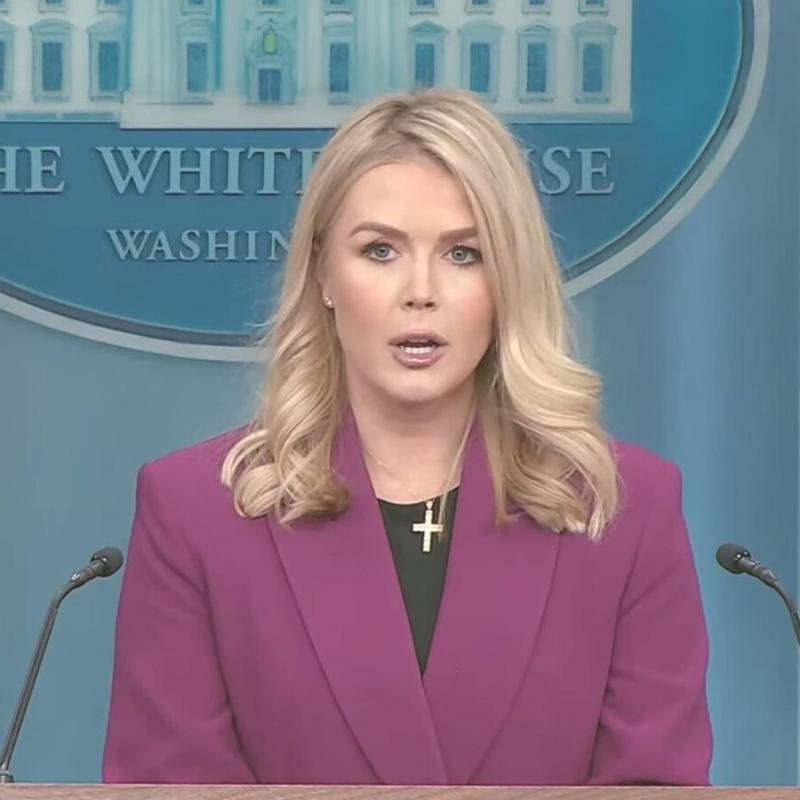
He doesn't seem to be mounting a ground campaign or anything like that to actually get the Iranian government to unconditionally surrender to the United States, like, say, Germany surrendered at the end of World War II or the British in the Revolutionary War. Press Secretary Karoline Leavitt was in the awkward position yesterday of having to redefine unconditional surrender for 2026. Listen.
Press Secretary Karoline Leavitt: Ultimately, the operations will end when the commander in chief determines the military objectives have been met, fully realized, and that Iran is in a position of complete and unconditional surrender, whether they say it or not.
Speaker 3: Does the president still want Iran's unconditional surrender?
Press Secretary Karoline Leavitt: When President Trump says that Iran is in a place of unconditional surrender, he's not claiming the Iranian regime is going to come out and say that themselves. What the president means is that Iran's threats will no longer be backed by a ballistic missile arsenal that protects them from building a nuclear bomb in their country. I could make an empty threat, but if I have no actions to back it up, then it's an empty threat. President Trump will determine when Iran is in a place of unconditional surrender, when they no longer pose a credible and direct threat to the United States of America and our allies.
Brian Lehrer: Unconditional surrender now apparently means weaken Iran's military, not to give up power completely, as the dictionary definition would have it. Merriam Webster, take note, the president might invade you unless you redefine as ordered. John Cassidy is with us. New Yorker staff writer and author of books including How Markets Fail: The Logic of Economic Calamities and Capitalism and Its Critics: A History: From the Industrial Revolution to AI. As you can tell by the subtitle of that book, that one is pretty recent.
He's been writing all kinds of interesting articles lately for The New Yorker, including one called "How to Prevent Insider Trading on Trump's Wars," one with a straightforward headline question, "Can A.I. Be Pro-Worker?" Also one called Jeffrey Epstein's Bonfire of the Élites. Let's talk. John, we always get a little more enlightened when you come on with us. Welcome back to WNYC.
John Cassidy: Oh. Thank you very much, Brian. I'm glad to be back.
Brian Lehrer: Let's start with insider trading on Trump's wars. You give an example of someone making $400,000 on a bet that Nicolás Maduro would be ousted from power by the end of January, and, of course, he was. For the uninitiated, can you explain how and where you even make a bet like that?
John Cassidy: Yes. There are prediction markets online sites. The one in question here is called Polymarket and they offer bets basically on all sorts of things. You can bet on things like who's going to win the Oscars, sports events, political elections. The most controversial one is they've started off in bets on when governments are going to fall, when wars are going to start, when US forces will go into Iran. In the Maduro case, there was a bet on-- you pick a date when there would be an intervention. 24 hours before the intervention, some seemingly very well informed person placed a bet that they would be. When it happened, you get paid out, so you won a lot of money.
The same thing turns out happened in the day before the invasion of Iran on February 28th. Some sort of people who look at this closely, data firms went back and looked at the data and they saw that the-- The people are anonymous, so you can't tell who's doing it, but you can actually see the bets. It turned out more than 1,000 people the day before the invasion had bet that there would be an invasion the very next day. Six of them had vet large sums and $1.5 million or something like that. That obviously raises the question, who are these people? Who's got inside information and who's making the bets?
This site, Polymarket, is offshore and is completely unregulated, so it's very hard to know who they are. In fact, that's the appeal of the site. You know if you go on there and make a bet that you're basically going to be anonymous and you're not going to be charged with anything. It's obviously using classified information to make money. Releasing it effectively is potentially a serious crime if you were within the jurisdiction of the United States, but in this case it seems like it's a sort of free for all.
Brian Lehrer: I'll get back to the insider trading element in a minute. Listening to that Karoline Leavitt clip and also seeing part of the news around people who bet on Khamenei being out of power, there are definitional questions here that make it more vague to bet on world affairs than, say, whether the Yankees beat the Blue Jays on a given day in the baseball season because some people weren't paid, even though they bet accurately on when Khamenei would be out of power because of a clause in that.
Then I was thinking about the Karoline Leavitt clip in this respect. Are people betting on whether Iran will unconditionally surrender? If so, if the new definition of unconditionally surrender is not unconditionally surrender in the way we usually think of it, but rather just their military is weakened to a certain point that Trump declares victory, would the person win or lose?
John Cassidy: It's a very good question. As you say, there have been disputes about the Khamenei one. That was on aanother prediction site called Kalshi, which is regulated. That's inside the United States, so it's subject to regulations. The Commodity Futures Trading Commission, which nominally oversees these prediction sites, has got rules that you're not allowed to bet on wars or terrorism or assassinations. There are questions about whether that bet was even legal to begin with, seeing it was placed in the United States.
The question of a surrender is a very good one. I haven't actually seen any of the sites offering a bet on when or whether Iran will surrender, but as you say, Trump could come out tomorrow and say they've surrendered. Would those bets be paid out? I very much doubt they would be. I think the sites would take the view that surrender means a surrender, not how Trump defines it?
Brian Lehrer: Is this insider trading bad in the same way that insider trading on Wall street is bad because people are cheating the system, causing other people to lose money to them, or is it morally or financially more serious?
John Cassidy: That's a good question. I think the main objection here is moral. That it's immoral to bet on wars and assassinations and things. There are other arguments you can make. The defensive prediction sites, which quite a few economists make, is that people have got private information about all sorts of things, and that this is a useful mechanism for aggregating this private information and making it public.
The most famous example which economists always use is the 2024 election when the prediction sites did a better job of, according to most economists, did a better job of predicting the result than the statistical models did. You can say that was useful information, which we wouldn't have had without the prediction sites. The question is, how far should this extend on a moral basis? Are we going to allow bets on everything? You could put a bet on that Brian Lehre might get assassinated tomorrow and then hire a guy to go out and shoot you-
Brian Lehrer: Exactly.
John Cassidy: -and get paid out in the extreme. I think most people would agree that there should be limits to this. The problem is at the moment, because this site is offshore, there are basically no regulations and there's no way to track down. It gets done through crypto as well, which I should have mentioned. The accounts on Polymarket are paid through crypto, so they've got the anonymity of the blockchain too. A, it's offshore and unregulated, and B, you're doing it through crypto so you have a double guarantee that you won't be caught.
Now the issue is, of course, in a military operation, lots of people become insiders. In the Iran case, Trump issued the order in mid afternoon American time and then announced the war had started at 2:00 AM the following morning on Trump Social. That's 12 hours there for people to make bets. The military people are called up, diplomats may have been informed, people inside the administration.
You can't launch in a large scale war like this without informing a lot of people, including the people who are going to be involved. Did they tell their wives, their girlfriends, their brothers, sisters, who knows? There's just potentially a heck of a lot of people with valuable inside information. In the modern age you just click on your phone and you can place these bets in seconds. That's another issue here, about how far we should allow this stuff to go on.
Brian Lehrer: I guess that goes to the anonymity aspect that you talked about a minute ago. Could these people be caught if they did know, if they were people in the State Department or the Pentagon or relatives and friends of theirs who they happened to leak the information to and then that person placed a bet on Polymarket about when the war would start, that kind of thing? Does the anonymity prevent them from being caught?
John Cassidy: Practically, it makes it very difficult to catch them. Legally, I think, they're liable. If you leak classified information, you're liable whoever you leak it to and whatever you do it with. Certainly if somebody in the State Department or The Pentagon was calling the college friend or their sister or everyone saying, "I've just heard this. You might want to place a bet on it," that would be a crime, I think, but there's no enforcement mechanism at the moment to go after them.
Potentially, as I say, there's a heck of a lot of people who could be the potential insiders, so it's difficult to track them down. Even if you got the cooperation of the sites, they can't necessarily breach the blockchain wall which people used to pay, used to place these bets. It's the issue of all the Internet crypto, et cetera. Crypto transactions, that's been a great attraction for a decade for criminals, that you can anonymized transactions online. This is just another example of that.
Brian Lehrer: Can you talk about that a little bit more for the uninitiated who don't understand, this includes me, how you place a bet anonymously if the platform has to take your money if you lose or pay you if you win and know who you are to that degree? What are we really talking about when we say anonymously?
John Cassidy: I'll preface this by saying I don't have an account with any of these prediction markets, so I'm talking secondhand here. As I understand it, you have to establish a crypto wallet. You've got to know about crypto and establish yourself a crypto wallet with one of the exchanges or an offshore exchange or whatever. Then you go on the Polymarket side and you link your crypto wallet to the site just as if you were signing up with a online payments company. You might link your PayPal account or something to the site, to ebay or whatever. You do the same with your crypto wallet to Polymarket.
When you place the bet, the money comes from your crypto account which you fund. It's a good question. How do you fund your crypto account and how do you then get the money back into dollars. People who are critical of this, people I interviewed in Washington, say that that may be a possible way of policing this. You go after the money when people try and return it to dollars, et cetera.
There are possible ways because even crypto companies, if they're transferring large sums of money across borders, et cetera, and people are trying to convert it back into dollars, they come into connection with the US financial system, which is regulated. That's how the feds have basically gone after money launderers, banks that encourage money or allow money laundering, et cetera, in the past. They have tightened up those regulations a lot over the last decade or so. It's much more difficult to money launder using the US bank than it used to be.
The argument that the people I spoke to, somebody at Better Markets, a public interest group in Washington, and his argument was that if we really wanted to stamp this out, if the US Government really wanted to stamp this out, they could put pressure on all the financial institutions not to transact with the crypto companies or prediction markets that encourage this sort of thing. It's not a hopeless task. In the Trump administration, there's very little enthusiasm for going after this stuff. Donald Trump Jr. is a special advisor to one of the crypto companies and sits on an advisory board of the other main one, too, so there's a direct Trump link here.
Brian Lehrer: Our guest is John Cassidy, New Yorker staff writer on mostly many things economic, also author of the books: How Markets Fail: The Logic of Economic Calamities and, more recently, Capitalism and Its Critics: A History: From the Industrial Revolution to AI. Listeners, any comments or questions on prediction markets as they relate to war or can AI be pro-worker are two main topics for John Cassidy today, based on two recent articles.
Also on the economic underpinnings of how Jeffrey Epstein was able to influence and politically seduce or economically seduce so many elites into helping him rehabilitate his image enough to function in high levels of elite society. John's article on that is called "Jeffrey Epstein's Bonfire of the Élites." We'll touch on that or anything explicitly on the economy and the war. We do have one that's already come in that I'll get to later with John asking-- where did that go? Can the guest comment on the BBC report interviewing a Wharton expert that the war waged in Iran is costing the USA $800 million a day. We will get to that question.
Listeners, anything on any of these things for John Cassidy, 212-433-WNYC. Call or text 212-433-9692. Here's a question from a listener, John, that I was going to ask a version of. The listener writes, "Isn't the larger concern about the betting markets that politicians could be in a position to make decisions not for public benefit, but instead for their own financial gain because of the bets they place?
John Cassidy: Yes, of course it is. The listener has hit the nail on the head today. Of course, in all sorts of issues. If a political decision is to be made--- we'll use the example even of the war. Let's say it was a more minor incursion somewhere. Will Trump threaten Greenland by the end of next week or something? There's nothing to stop Trump or any other politician just knowing that he's going to do this in advance, leaking it to somebody, and then the person places a bet and the politician makes the announcement and they cash in. That's obviously the great suspicion here.
Senator Chris Murphy of Connecticut, the Democrat, has made this accusation directly, saying that these are people in Trump's orbit who are making these bets and getting rich out of it. Now, it hasn't produced any sort of direct evidence to support that, but certainly just the circumstantial evidence suggests that insiders of some sort are making money in this way exactly.
Brian Lehrer: If people are making money off things they know, even if it's the date of when a war will start or a foreign head of state will be assassinated, that's one level of bad, but if an insider having a financial stake in an act of violence leads to getting the government to commit that act of violence so the person can make money off [sound cut] whole other level of bad veering into evil. I guess my question about this is, do you have any evidence that that has happened?
John Cassidy: There isn't any direct evidence yet. The Israeli government arrested two people earlier this year using classified information to place bets on Polymarket. They were relatively low level. One person in the military and one civilian. They didn't release very many details about it. It seems like in that case it was an instance of some people who were involved in the operation or had knowledge of it because they were in the military then passing on information to a friend or whatever, and then they place a bet.
I haven't seen any direct evidence yet of senior level politicians or officials been proven to have done this. Obviously, the temptation is there and the listener is completely right. We want people making decisions in the public interest, not in the private interest. Polymarket give people an incentive. Not just Polymarket, prediction markets generally, if they're allowed to create markets in virtually anything, including political decisions, create a direct incentive for people to act corruptly?
Brian Lehrer: Yes. Absolutely. Maybe things like this are soon to be revealed with journalists digging into the betting markets and the relationship with politicians as much as we are now. Your article, I should come back to the beginning and remind people and myself, it is called "How to Prevent Insider Trading on Trump's Wars," How to prevent it. Somebody knows how to do that?
John Cassidy: There are a few ideas. Seemingly the most straightforward one, according to the experts I spoke to, would be to make the Polymarket and other prediction sites all subject to what are called the Know Your Customer laws, which are a basic set of guidelines for virtually all financial institutions that operate in the United States, including onshore crypto markets. You have to know who your customer is and monitor their transactions for potential wrongdoing.
As part of the Genius act, which was the legislation passed last year to legalize and regulate stablecoins, a form of crypto, even the onshore crypto markets are now liable or have to enforce Know Your Customer laws. If you establish a crypto account at, say, Coinbase, which is the biggest crypto exchange, Coinbase has to know who you are and has to monitor your transactions to try and make sure you're not doing overtly illegal.
Now the problem is Polymarket is offshore. The servers I think are based in London. I think the exchange itself is based in Panama or somewhere. They're just not subject to these Know Your Customer laws. Now the US Government or Congress could pass a law saying that Polymarket is not allowed or no prediction market is allowed to operate in the United States at all if they don't enforce Know Your Customer laws. That would be one way to force them to breach the anonymity.
They wouldn't necessarily have to say online or whatever, who's behind these trades, but it would be a requirement if there's a legal case or if the feds come checking or if regulator says, "Look, that looks like suspicious activity," just like the stuff a couple of weeks ago in the Iran case. We're suspicious of this trading. Can you tell us who did this trading? If they were subject to the Know Your Customer accounts, they would actually have to know that and then pass that over. That would be according to one Rajiv Sethi, an economist up at Barnard, who I interviewed. He thinks that would be the most effective way to bring these exchanges within the law.
The other you could do, as I said, is more generally apply same pressures that we apply to money launderers, financial institutions that encourage money laundering or arms running, et cetera. There are ways if you really want to crack down on things that you can do it. You just have to be creative and you have to have the political will. At the moment, the political will isn't there.
Brian Lehrer: We have an interesting text from a listener who writes, "Polymarket and Palantir just signed a partnership yesterday." This is true. "Could John speak to concerns or predictions on the risks of Polymarket partnering with one of the biggest surveillance and data companies with major government contracts?" We know many activists are skeptical of Palantir because of the way the government uses it for surveillance in various contexts.
From Bloomberg's version of the article yesterday, Polymarket taps Palantir and TWG AI to police sports bets. Fortune says, "Tthe move is a reversal for Polymarket." Previously the CEO said they could self-police insider trading. There's a few layers on that. I think some people are immediately concerned that given what Palantir does, if there's now a betting market on surveillance or something like that, that could stem from this. That's creepy. The other thing is just what I cited. Polymarket previously said they could self-police insider trading, but if they're contracting with Palantir, apparently they're more concerned about it than they admitted before.
John Cassidy: I think so. It's potentially an existential threat to the company here if the government did say, "We're going to effectively shut you down if you don't do something about this." It looks like they're trying to take some steps. I don't know the details of the arrangement with Palantir. Palantir is basically a data analysis firm. They look at the data and try to come up with patterns, et cetera.
You can see that potentially at least there may be a role for them in looking at the patterns and seeing if this resembles insider trading. Obviously in sports events you have the same issue as you do in political events. Are the soccer players or the basketball players or the baseball players or whatever throwing games? It's not even games. Just making shots or points within the games. If you looked at the data very closely, especially the time data, you may be able to trace some of that out.
I imagine what's happening here. As I said, the speculation largely is that Polymarket is trying to relieve the pressure on itself by saying, "Look, we're doing a deal with this famous data analysis firm which has got some obviously very dark aspects to it, but in this case, we're going to use the technology to try and track down a bit on insider trading."
Brian Lehrer: Another listener asks if insider trading on political events is even illegal. They say they know it's illegal when it comes to the stock market. Is insider trading on political developments even against the law? Do you know?
John Cassidy: No, it's not. If you're running a political campaign, you think your candidate is going to lose and most people think he's going to win, it is legal at the moment to make a bet against him on Polymarket, whatever. That's one reason why the economists think that prediction markets do a better job of predicting elections than statistical models do because there's an incentive for the insiders to make their private information public by using it to bet on things.
The argument would be that the reason why the odds on Biden dropping out, for example, back in 2024 on the prediction markets were much higher than what statistical models were saying was because the insiders who knew it was going to happen or suspect it was going to happen were placing bets. That's an extreme example. As I understand it, no, it's not illegal to place bets on a political campaign that you're involved in.
Brian Lehrer: That was an interesting part of your article to me, that Barnard College economist Rajiv Sethi aspect that you were just citing, who found that bets on political prediction markets did a better job of predicting the outcome of the 2024 presidential election than the statistical models that I guess the pollsters use, including the odds that Biden would drop out. Is there something we can learn that's worth learning from the accuracy of a betting market to predict things like that?
John Cassidy: I think most people would agree it's a good idea to have these prediction markets in elections. The findings are not 100% they do better than statistical models. The finding in the Sethi paper is that they did better in the presidential election where there's heavily traded. It's what they call a deep market. In individual congressional races, down ballot races, actually, their models didn't outperform the poll based statistical models.
Brian Lehrer: I see.
John Cassidy: They don't guarantee the right result. There have been lots of famous examples where the prediction markets have said something-- [crosstalk]
Brian Lehrer: I see. One more thing on this before we go on to our next topic based on another of your articles, "Can A.I. Be Pro-Worker?" Just one more thing on this because in this article about Trump's wars and prediction markets, you relate it somehow to Trump personally making a fortune by promoting his family's crypto companies. He pardoned two crypto bigwigs convicted of what? Allowing their platforms to be used in money laundering or drug dealing. How does that relate to this?
John Cassidy: The Trump administration, from the very beginning, from 2024 when Trump said he was going to be the crypto president, has basically done all it can to encourage crypto. The Biden administration took the opposite approach and was cracking down on a lot of these companies. The first thing Trump did when he came into power, he appointed a crypto czar at the White House, of course, David Sacks.
When his people took over the regulatory agencies, the Commodity Futures Trading Commission, the Justice Department, and the SEC, they basically dropped a lot of these cases or settled them on terms that the companies were happy to settle on. In policy terms, there was a big effort to go in favor of deregulation, make America a very friendly place for crypto companies.
At the same time, of course, we know Trump and the Trump family were getting involved in crypto companies, as I said. Then some of those bets have paid off. It's an official policy. I'm not saying that the Trump family has been making hundreds of millions of dollars based on their bets on prediction markets. There's no evidence of that. It's a broader case of them encouraging the industry which facilitates these crypto markets.
Brian Lehrer: We'll continue with John Cassidy in a minute. Brian Lehrer on WNYC.
[MUSIC]
President Donald Trump: I knew oil prices would go up if I did this, and they've gone up probably less than I thought they'd go up.
Brian Lehrer: With that attempt to manage expectations with gasoline prices up more than $0.40 a gallon on average nationally in the last week, we continue with John Cassidy who writes about the economy and other things for the New Yorker. John, can we take a detour from your articles into your take on the news about gasoline prices? Is any of this surprising you?
John Cassidy: Yes, of course. I'm writing about that this week.
Brian Lehrer: Aha. Scoop yourself.
John Cassidy: [laughs] I'm not sure exactly what I'm going to say now, but we're in this extraordinary situation where the price of oil goes up and down like a yo yo every day, depending on the last statement from the White House or the Pentagon or whatever. Today it happens we're about a day where there was oil prices going up despite the announcement of a big release of energy stockpiles by various countries around the world.
You had the hilarious clip of the White House talking yesterday about surrender, unconditional surrender, et cetera. Basically, it all comes down to when is the war going to end. When the Wall Street thinks the war is going to end quickly, the oil price collapses. That's what happened on Monday. Over the weekend, it looked like the war was going on forever. Then Trump came out and said, "It looks complete," was the phrase he used, and then the oil price collapsed $20. Since then, we've been yo yoing for a couple of days. That's had an impact on the prices at the pump already.
A couple of weeks ago, in lots of the country, the price of oil was below $3. I remember driving through New Jersey myself and seeing $2.79 and thinking, "That's pretty cheap." Now it's over $4.50 in lots of parts of the country and even higher in some states. That's a direct result of the gyrations in the international oil market, which are driven by the completely contradictory and crazy statements from the White House every day.
Brian Lehrer: What do you see longer term, if anything? Let's say the war does end in a few days or a few weeks, per Karoline Leavitt's redefinition of unconditional surrender, is this all a blip in the rearview mirror by the summer or by the election?
John Cassidy: Yes. Most people in the oil industry think it will be a blip eventually if it finishes soon. Now, it won't be immediate because the supply chain of oil, as they call it, has been damaged. In places like Iraq and Kuwait have actually shut off a lot of oil wells because, think of oil, it just comes pouring out of the ground and you have to either put it in a tanker or put it in a storage depot. The storage depots are now full in a lot of these countries and the tankers aren't moving because the Strait of Hormuz are closed. What do you do with the oil? You have to cap it off.
Quite a lot of wells have been capped off. Takes weeks to restore them. Also, some of the refineries in the Gulf states, Saudi Arabia and Qatar and the UAE, have shut down because of damage incurred by drones and missiles fired Iran. It would take a few weeks presumably to get those up and running yet. Most oil analysts think if the war were to end next week, the prices would remain high for a few weeks, maybe a couple of months, but as you say, by the summer, the prices would go back to where they were or maybe even fall. You see that in the oil futures markets.
What's happened is the price of oil for delivery immediately has spiked up massively. It went up over 100% on Monday before falling back. If you want oil to be delivered, the way oil works, you can order it to be delivered months hence. If you want oil to be delivered by the end of the year or October, November, et cetera, those prices are still relatively low. That tells you that the market believes that this is still just a temporary spike.
Brian Lehrer: The listener who wrote, "Can the guest comment on the BBC report interviewing a Wharton expert that the war waged in Iran is costing the USA $800 million per day?"
John Cassidy: It depends how you count. I've seen figures higher than that, more than $1 billion a day. It all depends what you put in there. Just the cost of the missiles that have been used is immense. The Tomahawk missiles which have fired, they cost, apparently $1.7 million each. Then there's the cost of additional cost of troop movements, et cetera. That's why the people are saying there's going to have to be a supplemental spending bill to help pay for this.
Then, of course, you make the argument, "What about the additional cost of fuel for people? Should that be figured into the calculations?" because they'd have been paying $1 less for gas than if the war hadn't been announced. As I said, it all depends what you put in the calculation. One thing we can say is it's an extremely costly war.
Brian Lehrer: Now let's go on to your article, "Can A.I. Be Pro-Worker?" You cite three leading economists, there's a Nobel Prize or two in that group, who advocate policies that could change the focus from job displacement to job enhancement. What does that mean?
John Cassidy: The great fear about AI ever since ChatGPT was launched a few years ago is that it's basically going to displace workers, particularly white collar workers, cognitive workers, et cetera. We've already seen that in some industries. The most dramatic impact so far has actually been in the computer program and software programming sector where firms have stopped hiring new hires on the theory that they can get the models to do at least the simplistic programming, and as the models get a lot better, maybe do virtually all the programming.
The fear is that that will be the same. That sort of effect will spread right across the economy. Things like teachers, doctors, lawyers, consultants, et cetera, will be put out of work by the models. That's job displacement.
The economists I wrote about who are all at MIT, they are saying, "Yes, that's certainly a possibility and they're very alarmed about it." They make the argument though it's not necessarily how AI could work. They lay out an alternative vision in which AI is used to enhance the skills of workers rather than to replace the workers. If you do that, if you enhance workers skills rather than replacing them, that gives you an outcome in which they become more productive and wages go up.
If you look through history, that is how technology, over the long term, has impacted the economy. There have been transitional costs and all sorts of problems in the short term, but over the long term, technology has driven higher living standards and higher wages. Some economists think that this is just another case of that and that's eventually what will happen.
The economists I spoke to, Daron Acemoglu, Simon Johnson, and David Autor, who, as you pointed out, are very eminent economists, they say that's not what's happening here. The way things are going, it is going through mass job displacement. We need to change policies to encourage the AI companies through the tax system, through grants, and through using the power of the government budget to encourage them to develop programs that are complements for labor rather than substitutes, to use the economic jargon.
If you're a compliment, it means it complements your skills and hopefully raises your wages. Whereas if the machine is a substitute, it puts you out of work. They're calling for policies and a big shift in a policy agenda to try and make AI more worker friendly. Now I think most of the average people would think that's just not possible, but these are top level economists making the argument that actually it could be done if we had the policy chops to do it.
Brian Lehrer: Yes, the political will, right?
John Cassidy: [unintelligible 00:38:23]
Brian Lehrer: A listener writes, "Does John see anywhere in US history successful examples of the US government regulating an industry after the horse was let out of the barn?" Which is a great question. What do you think the chances are?
John Cassidy: At the moment I don't think the chances are very good at all, but I think we're only in the early stages of this. I think if the pessimistic predictions are true and we start to get mass unemployment, I think there'll be a huge political backlash among the middle class who are the most active politically. I don't think the middle class professionals of America or any other country are going to stand by and be immiserated by Elon Musk and OpenAI. I think there will be a huge backlash if the pessimistic scenario comes into effect.
If you look back at history, let's think about automation in the car industry, for example, which was a huge thing in the middle of the 20th century. Now, what happened was in that case it wasn't necessarily government intervention, but it was union intervention. The unions in the UAW made a famous deal with the car companies, with General Motors called the Treaty of Detroit in which the union said, "Look, you can run the companies. We don't want to be involved in investment decisions.
We won't go on strike and we'll agree to technological progress, but in return you have to make this technological progress worker friendly, not have mass job displacement, and also productivity gains should go to higher wages and higher benefits, not just to higher profits." I think that's a sort of model for what we could be talking about in the 21st century. We basically need a sort of 21st century Treaty of Detroit and accompanying policies to deal with AI.
Brian Lehrer: I wonder how bettors on Polymarket are handicapping the chances of massive job destruction versus pro-worker policies to shape it. That's a joke. I can't resist but to ask you one question about yet another article of yours called "Jeffrey Epstein's Bonfire of the Élites." The subhead is, "His correspondence illuminates a rarefied world in which money--" [phone rings]
Whoops. Sorry about that. I have to kill that sound source, which I will in just a second. "His correspondence illuminates a rarefied world in which money can seemingly buy, or buy off, virtually anything, and ethical qualms are for the weak-minded." You cover the economy, you cover money. What's the money aspect of the Jeffrey Epstein and elite story?
John Cassidy: I think the question people have is why were so many influential people in finance and politics and academia drawn into his web? Now, there are obviously two answers to that. There are the core people who may or may not have been involved in the sexual abuse. That's not really my bailiwick. Outside that, there were a heck of a lot of people who were happy to join his network, go to his dinners, et cetera, even though they knew he'd been charged with soliciting a minor back in Florida. There were all sorts of rumors that that wasn't the only case.
It seems to me the only way you can really explain that is in terms of A, he was seen as very rich and powerful. He had the townhouse in the Upper East Side, which I've seen quoted. I haven't not confirmed that it's the biggest private townhouse in New York, an incredibly palatial thing. He had these dinners where you could mix with foreign politicians, maybe a British member of the Royal family. There are lots of lessons-- [crosstalk]
Brian Lehrer: The short version, and we're going to run out of time, but it sounds like you're saying the short version is because Jeffrey Epstein was so rich, he was able to buy his way back into a certain kind of respectability in certain circles-
John Cassidy: Yes. Certainly.
Brian Lehrer: -by giving these lavish dinners and inviting prominent people.
John Cassidy: Right. Exactly. Then once the allure is there, people want to be part of that network. He was a brilliant networker. You've got to give him that. People join a network because they want the benefits of the network. They want to make shoulders with people who might be useful to them in various ways.
If Jeffrey Epstein was just still a guy from Gravesend or wherever he came from in Brooklyn without a townhouse on the Upper East Side and without a private jet and without seemingly limitless money, I think it's inconceivable that he could have had the influence and the network that he had. I was just making the argument that underlying all this was basically wealth and privilege.
Brian Lehrer: By the way, on the listener's text that asked, "If you see anywhere in US history successful examples of the US government regulating an industry after the horse was let out of the barn," one listener responds, "Probably all technology regulations occurred after release into the market." On the AI, another listener writes, "Ironically, it's a lot of essential workers 'who do manual labor,' who are most immune to AI unemployment."
Finally, somebody wrote, "Yes, people bet on mass worker displacement via something called the stock market. Mass worker displacement is potentially very profitable." I'm going to give that listener the last word as we thank John Cassidy, who writes about all things economy for the New Yorker and is author of books, including his most recent, Capitalism and Its Critics: A History: From the Industrial Revolution to AI. John, thanks a lot.
John Cassidy: Thanks very much, Brian. I enjoyed it.
Brian Lehrer: Brian Lehre on WNYC. More in a minute.
Copyright © 2026 New York Public Radio. All rights reserved. Visit our website terms of use at www.wnyc.org for further information.
New York Public Radio transcripts are created on a rush deadline, often by contractors. This text may not be in its final form and may be updated or revised in the future. Accuracy and availability may vary. The authoritative record of New York Public Radio’s programming is the audio record.
