Brigid: It's The Brian Lehrer Show on WNYC. I'm Brigid Bergin, filling in for Brian. To end the show, we continue our membership drive miniseries on the animals we voluntarily share our lives with in our homes, our pets. We've talked about dogs, reptiles, cats, rabbits, and now we're going to talk about fish. We are joined today by Chi Cho, the owner of one of the area's top destinations for fish and all they need to thrive, Pacific Aquarium, Inc., on Delancey Street in Manhattan. Welcome to WNYC, Chi Cho.
Chi Cho: Thank you. How are you?
Brigid: I'm well. So glad you could join us. First, can you tell us a little bit about Pacific Aquarium, which is, I think, its own adventure in itself? How many fish tanks do you have there, and what other kind of aquatic life do you sell at the store?
Chi Cho: Oh, that's a great question. We have probably today, maybe about 80 aquariums, but we started out about 150. We've been around for about 4 decades now, and we have so much different aquatic life. These little ecosystems, aquarium landscape tanks, shrimp tanks, marine and freshwater, and a big range of aquatic plants is what makes our specialty.
Brigid: Wow. Chi, maybe you can help me understand this. I'm a cat owner and I love my kittens. They're very snuggly. You can't pet a fish. You can't really cuddle with a fish. Is part of the attraction of having these pets just because you're creating this underwater habitat in your home?
Chi Cho: Yes. Believe it or not, fish, shrimps have so much personalities and they are actually very intelligent. The colors, their behavior, what can be combined with what, it's very, very unique. I'm still learning today, being there for decades, and it's just so fascinating. We learn every day. That's what we see.
Brigid: If they have these distinct personalities, do they start to recognize who's taking care of them?
Chi Cho: In some species, such as kois, yes. These are found in ponds, and they could be with the owner for years, and they can recognize you. There are some species, such as cichlids. Cichlids are such as oscars and maybe parrots. Sometimes they can recognize the owner. It's really amazing how intelligent these species are.
Brigid: Forgive me, Chi, are those other types of fish?
Correct.
Brigid: Okay. I know that you also have a lot of exotic fish and corals for people who have maybe some more expertise than obviously I do, but if I'm starting out, where do I start? What's a good option?
Chi Cho: Another great question. Freshwater is definitely easier. It's between 2 gallons up to 29 gallons is what I recommend as a small homeowner if you don't have a lot of room, but let me make one thing clear and help the public. Having fish in aquarium, it's not difficult. It's not difficult at all. It's really about following the three steps of rules in fish keeping. If I can note those three things-
Brigid: Please.
Chi Cho: -it will really help the public. First thing is feeding, feeding requirements got to be really minimum. Oftentimes, when I help customers and see so many problems, it's because the fish are being fed too much. We really feed maybe once every two to three days. That's all we do. The second part to keep healthier is when we change water, we have to keep a sequence, change water once to every two weeks, but only one third. Be careful using the temperature water that we'll be placing back. It must be warm.
One third water change every one to two weeks and replace it back with warm water. The third thing is, please don't overpopulate our tanks. Oftentimes, many people get driven, and they get excited to see a new species, to see a new fish, and it's really hard to pull away, like adding another fish or two. By then, you're overpopulating your fish, on top of which, you may have adequate and good filtration. That is the key. If you follow those three keys, we'll have a successful aquarium.
Brigid: Chi, let me ask you a question about the feeding part of it. I know most fish food comes with instructions right on the package. Should you be following those instructions?
Chi Cho: Thank you for asking that question. No, please do not follow those instructions. Keep in mind one thing: fish food, we need fish food to feed our fish, to keep them alive, but remember one thing, fish food is man-made. It's not something that is naturally occurred in nature. Just keep in mind, let's say fish are in lakes, ponds, and the ocean. I don't think anyone will wake up 4:00 AM in the morning, take some fish food, and feed them. It's not going to be fed by fish food. What are they really living on? What are they eating?
The natural source of food for them is really microalgae, microbacteria, and microorganisms. That's what they're feeding on through the gills. That's why, please don't feed too much. I really strongly recommend every 2 to 3 days. If you go on vacation, you have a period up to 10 days without food. They will be more than fine. Big Heart, we love to see them eat. It's different from dogs and cats. Fish are different. They get a lot of nutrients from water. Again, from microalgae, microbacteria, and microorganisms.
Brigid: We don't usually take calls during this segment because it's pretty short, but we have a big fish fan who's called in, Sarah on the Upper West Side. Sarah, you have about 30 seconds. Tell us about your fish.
Chi Cho: Hi, Sarah.
Sarah: Hi, how are you? I just wanted to tell you, fish are amazing. I have anxiety, and my Mr. Rogers fish tank brings me so much joy. It helps me calm and decompress at the end of the day. It helps provide structure, and it's wonderful. I wanted to give a shout-out to Petco on the Upper West Side. Fish are amazing. Koi, I do know who you are. I have them on my roof. Thank you so much.
[laughs]
Sarah: They're really special.
Brigid: Oh, Sarah, thank you so much for calling. I'm glad those fish bring you so much joy. Chi, you and your employees advise your customers on different types of fish and how to keep them healthy. You also help if fish get sick. What are the signs of illness that people should look out for, and what are some of the remedies?
Chi Cho: Very common illness are white spots. White spots occur when temperature drops. It's known as a parasite or ick. Immediately, once we spot that, we have to increase your temperature. Depending on what type of fish you may have, it's depending on what type of medication we will advise you for. Not the same ick medication can treat all ick-infested fish [unintelligible 00:08:08] for all fish. Second one is if we spot a fungal, a little cotton spot on their tails, fins, on the eyes. If we don't get that treated, it will spread really quickly to other fish. That is generally caused from lack of water change and overfeeding. Overfeeding always cause fungal, so be very careful with that.
Brigid: Chi, in our last 30 seconds or so, do you have a favorite fish at the moment, or do you remember your first fish?
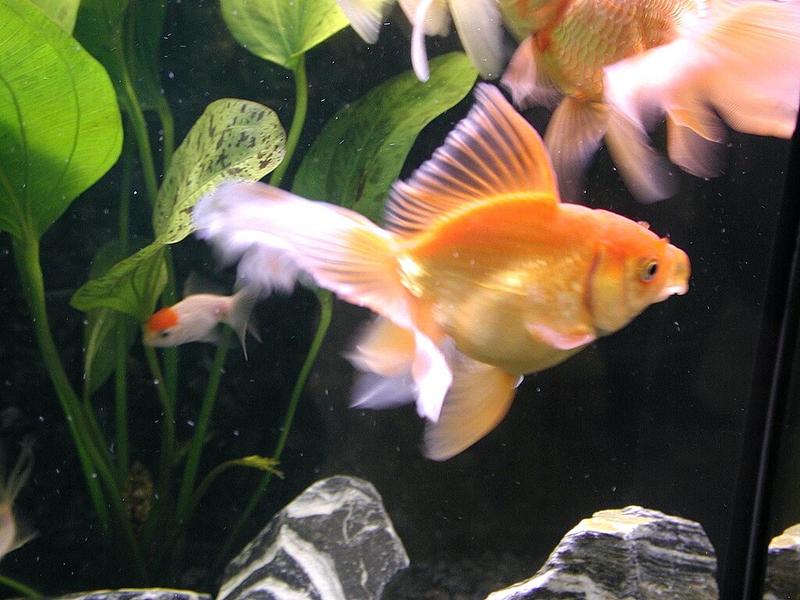
Chi Cho: Yes. Wow, that's a very, very tough question. There's so many great species, but my very first fish is when I was probably eight years old. A beautiful fantail, fancy goldfish called Ryukin. It mesmerized me, and it really got me into what I'm doing today. I'm so driven and so motivated, and it makes me so happy to go to work each day.
Brigid: I want to thank you so much, Chi Cho of Pacific Aquarium, Inc., on Delancey Street in Manhattan. Great information for our fish enthusiasts out there. Thank you so much for joining us.
Chi Cho: Thank you so much. Thank you so much for having me.
Copyright © 2025 New York Public Radio. All rights reserved. Visit our website terms of use at www.wnyc.org for further information.
New York Public Radio transcripts are created on a rush deadline, often by contractors. This text may not be in its final form and may be updated or revised in the future. Accuracy and availability may vary. The authoritative record of New York Public Radio’s programming is the audio record.