
Paramount and Netflix Come for Warner Bros.
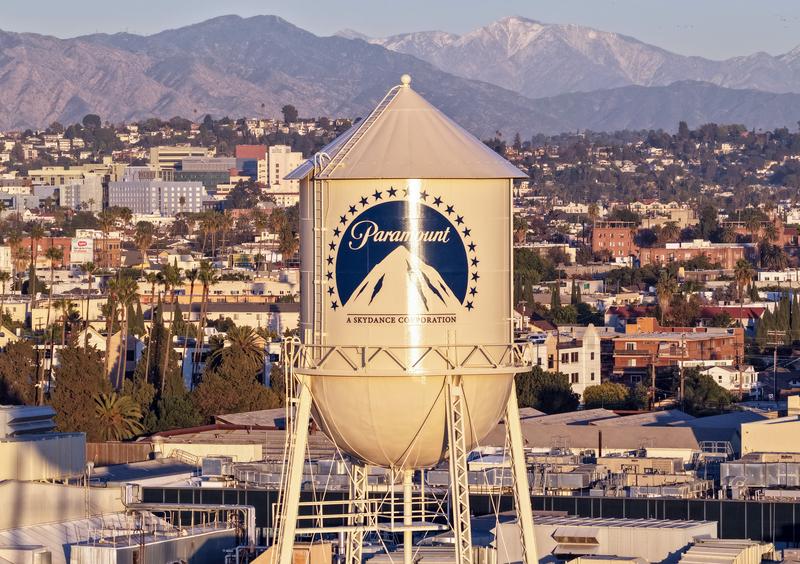
( Mario Tama / Getty Images )
[MUSIC]
Brian Lehrer: It's The Brian Lehrer Show on WNYC. Good morning, everyone. Coming up on today's show, Mayor-elect Mamdani says he will end the Adams policy of homeless encampment sweeps. Is that good for the people living there? Is it safe for everyone else? We have the food politics icon Marion Nestle today. She will revisit her classic book, What to Eat. The new one is called What to Eat Now, its dietary advice with a generous helping of how the food industry affects our diets and our democracy. Also, today, your stories and feelings about self-checkout. That's all coming up, but let's begin here. If you're anyone from a baby boomer down to Gen Z, what American media giant does this song make you think of?
[MUSIC - Charles Tobias, Eddie Cantor, and Murray Mench: Merrie Melodies]
Brian Lehrer: Yes, that's right. It's the Merrie Melodies cartoon theme, as some of you recognized. You might have thought first of Bugs Bunny, Daffy Duck, Yosemite Sam upon hearing that theme. If you remember the visual, it said, "Warner Bros. Pictures, Inc. Presents Warner Bros." Most of you have probably figured out already where I'm going with this, but we don't know where that Warner Bros. theme will be going. Maybe it will be going to live with this little theme.
[MUSIC - Netflix music theme]
Brian Lehrer: Much less fun, but more contemporary, right? The Netflix "tudum." Maybe a decent mix. Who knows? Even though so many people think Netflix already broke Hollywood and think a Warner Bros. Discovery/Netflix merger, which would also sweep in HBO, would put too much of the streaming business too much control of cultural content in one ginormous company's hands, or maybe the silly cartoon theme, did I mention Porky Pig or Tweety Bird, will now wind up on a mixtape with this more serious theme?
[MUSIC - CBS Evening News theme]
Brian Lehrer: Yes, that's the CBS Evening News theme. See how long they extend that last note? Hello, Bari Weiss. Hello, Paramount Skydance and the David Ellison, Arab Emirati, Jared Kushner investment group, which, if they prevail, would even be the ones who bring you this theme.
[MUSIC - CNN music theme]
Brian Lehrer: Yes, it's CNN, for anybody who watches that anymore, actually, which is in more danger of becoming a relic of the past. Elmer Fudd cartoons or having Anderson Cooper in prime time. The outcome of this bidding war for Warner Bros. Discovery might even determine that. Let's talk about this battle of media giants, both as a business story and as a culture and democracy story. We have two journalist guests, Rohan Goswami, business reporter for Semafor, and Katie Campione, TV reporter at Deadline. Rohan and Katie, thanks for joining us. Welcome to WNYC.
Rohan Goswami: Thanks, Brian. How are you doing?
Katie Campione: Thanks for having me.
Brian Lehrer: Listeners, if you work in television or film or anywhere in the arts or entertainment industries that could be affected by who acquires Warner Bros. Discovery, give us your take on what's at stake for the kinds of arts and entertainment that would be widely available to Americans. Also, what's at stake for your jobs? You can talk about that, too, or maybe you're on the journalism side. Jake Tapper, Dana Bash, you can call in, too. 212-433-WNYC, call or text, 212-433-9692.
Rohan, can you start with a little business primer for listeners who may not be mergers-and-acquisitions specialists? Warner Bros. Discovery, WBD, accepted the Netflix offer over the weekend, but then Paramount announced its hostile takeover bid. What's a hostile takeover?
Rohan Goswami: Well, it's exactly what it sounds like when a company doesn't want to sell to one party. In this case, Warner didn't want to sell to Paramount. Paramount, that potential bidder, can say, "Hey, we think we can offer better value for your owners, so we're going to make our case directly to them. We're going to give them the chance to sell their shares to us, in this case, for $30 a share." If Paramount succeeds in getting 51% of all of the shares of Warner Bros., they control the company, in theory, if we take it out all the way to the end.
Now, what a hostile takeover is in this case is really the opening salvo of the next chapter. Paramount is betting that Warner, if enough shareholders like the idea of selling to Paramount, that Warner Bros., that's David Zaslav and his board, are going to come to the negotiating table and strike some sort of deal and sell the company without rancor or hostility, or at least any more than we've already seen.
Brian Lehrer: As I understand it, WBD executives chose Netflix. Now, the shareholders will have the chance to override that decision if they prefer the Paramount bid. I think that's part of what you were just explaining. Do they have different interests, the shareholders versus the top executives?
Rohan Goswami: In theory, no. A board of directors and CEOs are supposed to look out for their shareholders. They're supposed to put their interests above their own. In practice, we're humans. We're fallible. M&A is all about egos and personalities. Certainly, when you're talking about a media deal. Certainly, when you're talking about this media deal. Now, Warner's board has and will argue that they're putting shareholders first. Netflix's bid, depending on how you cut it, is a little bit cheaper than Paramount's. It's a few bucks less in value.
Warner's logic here is that it's a more certain deal, meaning regulators aren't as likely to block it, meaning that Netflix has shown it can definitely pay for this, right? It has a deep, deep balance sheet. You can say in theory that executives and shareholders are aligned. Now, in practice, David Zaslav, out of anyone, stands to make close to $1 billion here. He is very much incentivized to have the highest price. From that perspective, shareholders and executives are completely aligned. Of course, in something like this, you have personality clashes, and that can make things very, very complicated.
Brian Lehrer: David Zaslav, CEO of Warner Bros. Discovery. He's the seller. Katie from Deadline, I see you identify yourself on X as a TV and labor reporter. Are people who work in television freaking out more about one of these offers or the other?
Katie Campione: I would say they're freaking out about both, but in different ways. On one hand, of course, you've got Netflix trying to make a bid for Warner Bros. Discovery. Right out of the gate there, I think that there are some conversations about the theatrical experience and the disappearance of the theatrical experience that many people are concerned about. Warner Bros. Discovery has 12 theatrical releases on their slate this year. What happens if that company goes under Netflix?
Ted Sarandos has tried to assuage concerns that Netflix plans to shorten the theatrical experience. Of course, that's all up in the air if that acquisition were to go through. Then there are some natural concerns about Paramount taking over as well, and especially what that would mean for Paramount to assume control of CNN, another news network, as well as a major television network, an HBO, and a film studio.
Brian Lehrer: Here's a worker calling it in TV and film. Let's see what he has to say. Michael in Queens, you're on WNYC. Hi, Michael.
Michael: Hey, good morning, Brian. Yes, following up on what your guest just said, I'm an IATSE union member in film and television in New York. Things have been very slow for most of us in the city since the writers' and actors' strike. A lot more work is going overseas. I think from a lot of us having conversations that, yes, I don't think New York workers, the New York film industry, is going to be a winner either way. More of these consolidations, we feel like our workplaces have become tougher.
They expect us to do more with a smaller budget, less crews on a shorter time frame. To see all these billions being sloshed around, talking about David Zaslav standing to make $1 billion while New York union members are struggling to keep roofs over our heads, to have jobs that last 10, 12 months are now 6 to 8 months. Yes, I don't think this consolidation will be good for workers in New York City and all the small businesses that rely on us.
Brian Lehrer: Yes, I'm glad you brought up the big picture of consolidation, but within that bleak scenario, is one or the other of Netflix versus Paramount preferable?
Michael: I do hope that theatrical releases stay in theaters for a long time. Those are good jobs to work on. Regardless, a lot of these streaming shows, they want us to do more with less. You'll get one season with no guarantee that you're coming back, so I don't really see-- There are political, cultural dimensions to it, but from a worker's perspective, I don't think we're going to win out either way.
Brian Lehrer: Michael, thank you very much. Katie, there's one worker's perspective. What about the artists' communities, writers and directors, and others? Our country's arts and entertainment choices, at least the ones that are well-financed and easily available, are already very corporate. Have you seen any content creators' or culture critics' reactions to either of these bids yet? From the standpoint of what kinds of TV will get made, do they think an Ellison-owned company, Paramount, will make more TV with politically conservative themes, or anything else?
Katie Campione: Yes, I do want to speak to what that caller was saying, because I think the overwhelming concern-- They're correct. The overwhelming concern is not necessarily the kind of television shows or the kinds of movies that will get made, but how many will get made at all. I think that we're already in an intense contraction period when it comes to production, especially domestic production.
Any media consolidation is going to exacerbate that issue even more. You definitely sense that fear among the artist community, among the worker community, among a lot of people in Hollywood who are already struggling to find work over the past few years, after pandemic-related lockdowns, the strikes in 2023. LA just experienced some really intense wildfires at the beginning of this year.
It's been one after another getting hit really hard in some of the major central production hubs in the US. Those people are really hurting for work right now. Of course, there are cultural concerns as well about the types of shows that will get made. Like I said, the idea that another news network would be owned by the Ellisons and by Paramount, which has already shown itself to be fairly deferential to the Trump administration.
Brian Lehrer: Right. That news network would be CNN if the Paramount bid goes through. Here, I think, is a retired network news producer. Bob in Manhattan, you're on WNYC. Hi, Bob. Thank you for calling in.
Bob: You bet. Normally, I don't, but I retired a couple of years ago, so I feel a little bit more freedom commenting on something like this. I have to say that, yes, people are freaking out about this in the news side. I'm not really have any finger on the pulse of the entertainment side. On the news side, given the fact that in the last year or so, we've seen 60 Minutes cave and give Trump money. We've seen ABC cave and give Trump money.
NBC has not been touched so far, but there is definitely a shadow of death hanging over all of network news lately. It's not just some of the politics going on and threats of being sued, but just bottom line is nobody watches TV anymore. I hate to say that because it supplied me with a career for over 40 years. The fact that it's almost like a disposable item now for some of these corporations. NBC is holding on to their network, but we've seen them divest of the MSNBC cable network and sell it off to this Versant group, which is still seeming to do the same job.
I wouldn't say that everybody goes into the morning meeting and saying, "Oh, let's watch out for what we say today or cover today." I think that's still somewhat pristine in terms of the judgments that are made, but I do think that there is, again, an angel of death hovering over network news. With all these sales going on, especially considering what's happened at CBS, it's absolutely pathetic. That's my view of that.
Brian Lehrer: Thank you very much for your two cents. Rohan from Semafor, we know cable TV is in decline. It's easy to see why Netflix wouldn't want CNN. Their bid did not include CNN, has declining viewership over time and, as a global news organization, is expensive to run. If we assume that's all true, why does Paramount seem to want it?
Rohan Goswami: There are a couple of reasons there. I think, one, the most important is that whether-- and we all agree that cable TV is in secular decline across the industry, but there's one very important regular viewer of television, and that's the president of the United States. He has shown himself to be quite the media critic. In fairness to him, he's an equal-opportunity offender.
He just went after 60 Minutes under this new ownership just a few days ago, the same day that they announced this hostile bid, or just before. If you're the Ellisons and they have back-channeled and publicly messaged, as we've reported, that they are the preferred bidder, they're the guys who the president likes, the easiest way to, in their mind, get through the regulatory approval process, that's the antitrust process to stop big mergers that are anti-competitive, the easiest way to do that is to win the president over by, as the journal has reported, as we've reported, by promising that you'll tamp down on some of the more outspoken anti-Trump personalities on CNN.
That's by design, right? Their edge is soft. They have deep pockets, to be sure, but their edge is also cultural. As the last caller was saying, you talk about newsrooms feeling like they're caving or that management is caving. That's by design. It's strategy. It's a tactic. It's designed to win the president's approval. Even though this business is in decline, they've become these powerful bargaining chips with which big corporations can placate the president, placate regulators. If you look at what CBS did with DEI and its ombudsman around the acquisition of Paramount by Skydance, these are all ploys that can now be leveraged to win the approvals that they need in Washington.
Brian Lehrer: Katie, for you as a TV reporter, what's the fate of CNN, do you think, if it gets orphaned in a Netflix deal? Puck News reported staffers are actually more optimistic about trying to go it alone and make a more effective transition to digital content than they're making so far than about being swept up in the Bari Weiss, more conservative makeover of CBS News that Rohan was just describing. Do you have anything on that dilemma facing CNN staffers about what to root for?
Katie Campione: Yes, it's a difficult dilemma because, as you pointed out, the cable news network is experiencing its own struggles at the moment to just remain profitable. I think the important distinction there is that Netflix hasn't bid on the entire company. Netflix has only submitted an offer for the film studio, the television studio, and not the news networks. If that deal were to go through, those networks would spin off into their own publicly traded company.
Who's to say how that would do under independent leadership? I do think, to your point, that CNN staffers and just news staffers in general are pretty concerned about seeing some of the same changes at CNN that have been happening at CBS. Trump even indicated that he'd like to see some of those changes made at CNN fairly recently. It definitely has everybody's ears perked up as to, if this Paramount deal were to go through, what that would look like for CNN and what it would mean.
Brian Lehrer: Deborah in Manhattan, a veteran of the industry. Deborah, you're on WNYC. Thank you for calling in.
Deborah: Thank you. Thank you, Brian. Thank you for the topic. I don't think anybody really benefits by further consolidation here, except for the investment bankers and the oligarchs who run our world. In my understanding, the Netflix deal might be slightly better for us than the Ellison deal. At least from a labor perspective, Netflix is a little more open to labor.
No matter what we do here, everybody loses, with the exception of the oligarchs and the investment bankers. The people lose. The content consumers lose. News consumers lose. Everybody loses. It's like Milton Friedman run amok. I would hope we come up with another solution. If not, what this is going to do is throw a lot of power to Google and YouTube because everybody's going to need to go to an open platform.
Brian Lehrer: Milton Friedman, that's an interesting reference to pull. Yes, they could call the new network MF News, and you could take that any way you want, or MF Entertainment.
Deborah: [laughs]
Brian Lehrer: Deborah, thank you very much. Actually, that's a good setup to what we're going to discuss regarding this after the break. When we come back, we'll get more into the Washington politics of this deal from an antitrust strange bedfellow standpoint, from a Trump personal interest standpoint, and more with our guests from Semafor and Deadline and you at 212-433-WNYC. Call or text, 212-433-9692. Stay with us.
[MUSIC]
David Ellison: We love the movie and entertainment business. We believe deeply in its future, and we want to help preserve and strengthen it. Movies are one of America's greatest exports.
Brian Lehrer: Paramount CEO David Ellison, son of Larry Ellison, founder of Oracle, right? A Trump ally, and one of the richest people in the world. I've seen Larry Ellison's net worth estimated at $200 billion. Got that on The Economic Times, as we're talking about the King Kong versus Godzilla of the media world in full swing right now. Talk about classic movies. The Netflix versus Paramount competing bids to acquire Warner Bros. Discovery and the potential impact on American culture, not to mention what you pay to watch TV and all the jobs that are at stake. With Rohan Goswami, business reporter for Semafor, and Katie Campione, TV reporter for Deadline, and with you, especially if you work in TV or film or if you're a culture critic or really anyone else may call or text, too, now that we've taken some calls from people in those Industries, at 212-433-WNYC. Call or text, 212-433-9692.
Rohan, let's get more into the Washington politics of this now. With either of these companies acquiring Warner Bros., in either case, there are antitrust issues. I see there are some unusual bedfellows ringing that alarm from Senator Elizabeth Warren on the left to Senator Mike Lee on the right. Remind us, what does antitrust mean? Why would either of these mergers possibly not be in the public interest from that standpoint?
Rohan Goswami: Absolutely. The government has historically, since the time of Standard Oil, taken the view that competition is good. We live in a society where, with reasonable guardrails, free markets can decide for themselves what is good. Sometimes you need the government to intervene when consumers are getting harmed, or when other smaller competitors are getting harmed.
For the last, say, 30 years, since the '90s, the government has taken a really hard look at tech companies and their influence over the marketplace, right? Those are really the biggest players in the room. From an antitrust perspective, you have what we call a number one player, right? That would be in the Netflix bid. That's Netflix. They're the top of the game in streaming, trying to buy the number three player. That's Warner's HBO Max.
Now, any antitrust regulator, Republican or Democrat, is going to look into that and go, "Whoa, hang on a second." Netflix has already increased its prices over the last, I think, 10 years, outpacing the rate of inflation, right? They are a $450 billion, $400 billion company. Regulators look at that and go, "Well, hang on a second. If you're buying the third largest player, you're going to become even bigger, and you're already head and shoulders above everyone else. What's to stop you? If Netflix is around $18 a month now, what's to stop you from charging $30 a month, $40 a month, $50 a month?"
You have no real competition to stop you from gouging consumers. That's the Netflix paradigm. That's why the government in DC might have a problem with the Netflix deal. Paramount gets a little more complicated because Paramount+ is not a big streamer. They're kind of an also-ran. On the other hand, you have regulators in Europe that are very, very attenuated to the risks associated with Big Tech, that are very, very attenuated to the risks associated with a Netflix bid.
Paramount has made this argument that Netflix isn't just bad in the US, but would also pose a huge problem in Europe, where regulators, as we know, already take a very dim look, or dim view rather, of American Big Tech companies. To your point about Larry Ellison, Paramount's kind of a tech company in that it wants to be a big streamer, in that it has hundreds of billions of dollars that are funded entirely by a legacy Big Tech company. That's Oracle, the AI provider, the data center provider, the software maker. The antitrust picture is really complicated, but it basically boils down to which Big Tech company do we think is the lesser of two evils here?
Brian Lehrer: Katie, in that David Ellison clip, the thing that he singled out was the film industry as a pride and joy of the United States domestically and for export. We've been talking overwhelmingly about television so far. Where does film, where do movies, I think you're in Hollywood, right, actually fit in here?
Katie Campione: Yes, yes, I'm in Hollywood. It's a good question. David Ellison, when he mounted his bid with Skydance to acquire Paramount, talked a lot about how much he values the filmmaking process. He started his own production company just to make movies. Skydance is behind Top Gun: Maverick and some of the biggest tentpole movies that have come out in the past few years.
David Ellison does really value film and television, and so does Netflix, at least Ted Sarandos and the leaders over at Netflix say they do. I think that the biggest concern on the Netflix side of things is that theatrical experience. We've seen theatrical windows already shorten increasingly over the last few years, especially after the pandemic. We had seen the straight-to-streaming model really expand.
It's rare for a film to stay in theaters for very long anymore, which has really made exhibitors struggle. It's also made it a lot harder to make money on a movie when it goes to streaming as quickly as it does, because you have several windows that you're collapsing that are some of the most profitable in the early days of a film release. That does definitely raise some concerns for filmmakers in Hollywood.
I think that the deal or the idea of a deal has also illuminated some other frustrations that the industry just has generally with Netflix that maybe have percolated in the background for many years, but have never been this public-facing before. Netflix is responsible for ushering in several other industry trends, including moving away from back-end pay toward completely front-end deals. On the television side, again, shortening episodic--
Brian Lehrer: Meaning you don't get royalties if the thing continues to be popular. Is that what you mean by back-end pay, that sort of thing?
Katie Campione: Exactly, yes. Sometimes Netflix still does that. I don't want to say they never do that anymore. Overwhelmingly, the trend is starting to move toward artists getting paid up front for their work, and then not really being bought in on the back-end, which means, yes, they would get compensated in outsized success, whether that be at the box office or if the film or show does really well on streaming.
That was a big fight a few years ago in 2023 when the WGA and SAG-AFTRA went on strike. Part of it was because of the collapsing of this back-end pay model. There was not a lot of opportunity anymore for artists to be bought in on the success of their projects. They did get a bit of a model there to get streaming residuals for film and TV that does particularly well. The bar is still very high, which makes it difficult for artists to make money off of their success.
You see, it's hard to predict what might do well on streaming. I don't think anybody predicted as well as the movie, like KPop Demon Hunters is doing, for example. In an untraditional environment as the one we're living in right now, how do you account for that success early on and think about that beforehand? You don't necessarily. If you're an artist, and I don't know the particulars of their deals, that was just an example.
If you're an artist who has been paid whatever you've been paid up front, and then your project does as successful as something like that and you don't get to reap any of the rewards of that, there's a frustration and a resentment that starts to build there, even if you accepted the deal in the first place. I think that there are definitely some, as I said, frustrations around the way that the industry is moving as a result of streaming and as a result of Netflix entering the ecosystem.
Brian Lehrer: How big is Netflix at this point? Just for some context, the Wikipedia page on Netflix says it's the most subscribed video-on-demand streaming media service with 301 million paid memberships in more than 190 countries. It says, by 2022, Netflix original productions accounted for half of its library in the United States. As of 2025, Netflix is the 18th most-visited website in the world. They've come a long way since their launch in the 1990s, when they were sending DVDs of existing movies through the mail.
Here's a text from a listener that says, "I'm a union film worker. There is an angel of death that also lingers over the film business. If Paramount buys Warner Bros., the Ellison alliance with this administration will have an effect on how much work will come to New York and New Jersey. This administration will chime in when they want. Look at how Trump got--" this says Brett Ratner.
I think it means Bruce Ratner, "Jared Kushner, relative back to working. The man should never be employed in the film and TV world ever again," or maybe I'm misidentifying Bruce Ratner. I'm not sure, "But yet here we are getting this. Why? Because Trump wants it." You're more of the business politics, DC guy here, Rohan. What do you think about what that listener wrote?
Rohan Goswami: Listener nailed it with Brett Ratner. That's absolutely right. I think it's also important when you think about how-- there has been public reporting about how the president and his family have taken opportunities when they present themselves to enrich themselves. I would just note that I think a week or two ago, Melania Trump, the First Lady, launched her own production company. I, for one, will be very curious to see which of the big streamers and studios decide to cut deals with her.
At the end of the day, even though the president can't unilaterally block this deal or bless this deal, in practice, he can. How companies get around that and try to mitigate that is by meeting privately with the president, meeting privately with his chief of staff. That's Susie Wiles. These very direct closed-door lobbying efforts, which both Netflix and Paramount have engaged in, in the weeks leading up to where we are now.
Now, the person who actually decides all of this, or I should say the department that really decides all this, is the antitrust unit of the Department of Justice. That's led by a woman named Gail Slater, who is actually pretty widely respected on both sides of the aisle as a great antitrust lawyer who has a pretty studious, if different application of the law, than her predecessor. That was a man named Jonathan Kanter, who was the counterpart to the FTC's Lina Khan.
Now, her team has been fastidiously silent on the matter. As we've reported, as my colleague Ben Smith and I have reported, inside the administration, there is a sense of serious discontent with Paramount, which has been messaging to the world that they are the preferred bidder, that they are Trump's preferred bidder. That frustrated folks who are in and around the Justice Department who feel that, "Hang on a second. We are still a nation of laws."
Just because there is maybe a perception that this administration is politicized or biased doesn't actually mean it's reality. It's a perception that even the president has fought back on. If you look at his comments at the Kennedy Center Honors the other day, when he was asked about this deal, he said, "I don't know. We have to take a look at market share. We have to take a look at how this impacts competition." In remarks yesterday, of course, he said, "Well, neither of these guys are great friends to me." The reality is that--
Brian Lehrer: Who believes that? David Ellison is a great-- or at least Larry Ellison is a great friend of his, right? Jared Kushner is involved in that deal, so why should we believe that he isn't just covering for what his actual preference is, so he doesn't look biased?
Rohan Goswami: It may very well be that. Trump, for all his faults, has shown this term that he knows how to negotiate with the private sector and get exactly what he wants from the private sector. What he wants as much from this deal as much as it is influence over the news is cultural influence. As my colleague Max Tani has reported, he's called studio executives and said, "Hey, I think you should reboot these franchises. I like these franchises." Lo and behold, those franchises get rebooted.
I heard that, and I thought, "Well, this is a negotiating posture." He fancies himself a dealmaker. He likes that CEOs come to him and say, "Hey, can we do this deal? Hey, can we buy this company?" He knows he can extract whatever he might want from that CEO. When he says something like, "These guys aren't really my friends," he's pretty calculated with his maneuvers. It's less about friendship and more about, "Well, what can you give me, Ted Sarandos? What can you give me, David and Larry Ellison, that I don't already have?" It's a posture. It's an opening salvo.
Brian Lehrer: Here's an antitrust call. Santiago in Brooklyn, you're on WNYC. Hi, Santiago.
Santiago: Hi. Thanks for taking my call. I'm curious. We've talked about the process around the merger. I was curious if there has been any action in the other direction against a potentially successful Paramount bid if it were to hypothetically succeed in the hostile takeover. My understanding is that state AGs, they don't have as much authority as the DOJ, but they still have some authority to sue to block megamergers. I think this happened under the Albertsons merger relatively recently. I'm curious if any democratic state agencies have come out and basically done their own version of what the DOJ or, I guess, the president is doing, implying they're going to sue to block the merger if Paramount's bid goes through.
Brian Lehrer: It's an interesting question, especially in the context of Trump, I think, Rohan, coming out just yesterday and saying, "No, states, you may not have your own AI regulations. You're going to have to follow whatever we in Washington come up with for AI." I wonder how that might apply to antitrust as well, if you have any take.
Rohan Goswami: In this case, while none that I'm aware of have come out yet against either Netflix or Paramount, state AGs, to the caller's point, do have a very robust framework with which to operate under in terms of fighting or filing antitrust cases. Of course, California, Rob Bonta, and his predecessors have taken an aggressive posture around deals that they feel hurt consumers, hurt workers, hurt the industry.
State AGs can absolutely and will likely intervene, whether it's Paramount or Netflix. The problem is we don't really know yet what the government at the state level, the federal level, or in the EU will do about a Paramount bid because they haven't won. The deal, as it stands, is with Netflix. Already, you've seen John Thune come out against this deal. You've obviously seen Elizabeth Warren coming against this deal.
You've seen federal policymakers say, "Well, hang on a second. We don't like this." It's generally safe to assume that when one politician at the federal level says something, you're going to see at least a few state AGs, policymakers at the lower levels, at the local levels also chime in and say, "Well, hang on a second. We also don't like this, but we can do something about it."
Brian Lehrer: I don't understand the strange bedfellows there. Why are Elizabeth Warren and Senate Majority Leader, the Republican, John Thune, also Republican Mike Lee of Utah, why are both sides speaking out against this?
Rohan Goswami: Well, it's interesting. If you go back to the last administration under Biden, the FTC's Lina Khan was heralded as the future of antitrust enforcement, and that her school of thought has faded or, I should say, been pushed to the side by a much more, we'll call it, laissez-faire willing to settle engagement from the government, but Lina Khan had a lot of fans on the right, including our vice president, JD Vance, conservatives who loved the idea of reining in Big Tech, of controlling and tamping down on their influence over the cultural discourse, over the huge quantities of people they employ, and the massive amount of money they make.
When you have someone like Mike Lee, who was very openly railed against Big Tech companies, and you have someone like Elizabeth Warren, who is obviously very anti-consolidation, they both look at this deal. They have different reasons for arriving at the same conclusion. Elizabeth Warren, no doubt, and has said, she's got a big problem with Big Tech increasing its influence over our society. Ditto for Mike Lee. It's like the horseshoe theory of politics, where, at the end of the day, those on the far-left and those on the far-right, they end up meeting in the middle on a lot of key issues. Antitrust, weirdly enough, is one of them.
Brian Lehrer: Yes, interesting. We were just talking on yesterday's show about that horseshoe theory as it pertains to foreign policy and why both parts of the left and parts of the right want the US to withdraw more from the world. On the left, it's because they think the US is getting over on everybody else. On the Trump/America First right, they think it's because the rest of the world is getting over on us.
Before we run out of time, Katie from Deadline, I'm going to read out some of what Warner Bros. Discovery currently owns. You tell me how much of this would or would not be included in the Netflix deal, because I think they're the ones who would leave more cable channels on the floor, on the table, orphaned. We already talked about CNN in that respect, but Warner Bros. Discovery owns HBO, HBO Max, HGTV, Discovery, TBS, the Food Network, TNT, OWN, that's Oprah's, TLC, TNT Sports, Euro Sports, Cooking Channel, Animal Planet. I don't even know how much of this is current. HLN, also the Cartoon Network. [sings Merrie Melodies] How much of that do they own, and how much of that would Netflix cast aside, kick to the curb, if they win?
Katie Campione: They do own most of that still, I believe. The Netflix deal is just for the Warner Bros. film studio, HBO, and HBO Max. The rest of the cable channels, the news networks, et cetera, would not be included in that deal. Warner Bros. is already planning to, if the Paramount deal doesn't go through, spin off that into a separate publicly-traded company next year, regardless. Either way, if the Paramount deal doesn't go through, then the film studio and the television studio will break off next year from the rest of those networks, even if Netflix doesn't acquire them.
Brian Lehrer: Which ones, if you have any betting odds, would be likely to continue to exist or go by the wayside and become part of the dustbin of cable TV history?
Katie Campione: It's hard to say. To be honest with you, cable television is really struggling right now. I think that the conventional wisdom in Hollywood is that those networks are being spun off because they're what's weighing that company down. I think that might sound harsh to say, but that's, from a business perspective, exactly what's happening there. I don't think the prospects necessarily look great for that company to succeed on its own, but I don't want to completely write it off either and say it's not a possibility. I will say, I think, that it's telling that Netflix is only going after the profitable parts of that business.
Brian Lehrer: Rohan, last question. When will we know who wins? When do all the politics play out, as well as the business aspect?
Rohan Goswami: Well, we've got 19 business days now for all these shareholders to get their shares into Paramount if they want to. We'll probably know within 10 days. That's when Warner's board is required to answer Paramount's pitch publicly. The next two weeks promise to be very, very telling in terms of what we hear. Now, if Netflix wins out, they say it's going to take them, I think, 18 months to get this deal done.
Folks I talk to, antitrust experts, investors think it might take them a bit longer than that. Paramount, on the other hand, if they win out, we could be looking at a situation where they control this company within the year, assuming that they breeze through antitrust approvals as they think they will. Short term, we'll hear a lot of things in the next two weeks. Longer term, this can play out over the next year, year and a half, two years. It's going to be a long slog.
Brian Lehrer: Rohan Goswami, business reporter at Semafor, and Katie Campione, TV reporter at Deadline, thank you both so much.
Rohan Goswami: A pleasure.
Katie Campione: Thanks so much.
Copyright © 2025 New York Public Radio. All rights reserved. Visit our website terms of use at www.wnyc.org for further information.
New York Public Radio transcripts are created on a rush deadline, often by contractors. This text may not be in its final form and may be updated or revised in the future. Accuracy and availability may vary. The authoritative record of New York Public Radio’s programming is the audio record.
