
Oscars Recap With Sam Sanders
[MUSIC - KPop Demon Hunters: Golden]
Brian Lehrer: No, that's not The Brian Lehrer Show theme. That's golden from KPop Demon Hunters, winner of Best Original Song at the Oscars last night. We'll talk to culture critic Sam Sanders in just a minute about the Oscars as a TV show, what he thinks about who won, and maybe even why it might be a good thing that the show is moving to YouTube. I want to put our little corner of the Oscars that we spotlight on this show right at the top so it doesn't get lost, as it almost always does on the telecast. That's the feature-length documentaries.
As many of you know, we had all five nominated directors this year. The winning documentary was Mr. Nobody Against Putin. Here's the director, David Borenstein, on our show in February after I asked him what it could mean if he won.
David Borenstein: On one hand, we think it's important to show what's happening in Russia. We think it's really important to show the world, especially right now when we're debating Putin's intention. Just look at what he's saying in the classrooms every single day in Russia. "We're training you for a future of warfare." There's absolutely no doubt that he is not going to stop with Ukraine when you just watch this film.
Then, beyond that, what's most interesting to me in many ways is the more universal story about resistance. This is a film that I hope makes people think about their own capacity to affect change in some way, that we all face a moral choice when dealing with authoritarian governments and very dark political decisions. That complicity adds fuel to the fire.
When we first started this film, it was like a different America in many ways. Now, with what's happening in Minneapolis and just seeing the same kind of illiberal forces taking over this country in many ways, when we see something that almost seems inspired by Putin now, almost, the film has a different meaning to me than when I first started it. I just hope for us, having this chance to have this nomination and have a voice, that we can create conversations around that as well.
Brian Lehrer: David Borenstein, director of Mr. Nobody Against Putin here in February. He has now won the Oscar for best feature-length documentary for that. Now let's bring on Sam Sanders, reporter, radio host, podcaster, and host of The Sam Sanders Show on KCRW, Southern California's NPR member station. Hey, Sam, welcome back to WNYC.
Sam Sanders: Hey there. It's so good to be here. Thanks for having me.
Brian Lehrer: Listeners who wants to chime in, did you watch the Oscars last night? What, if anything, stood out to you? 212-433-WNYC, 433-9692, call or text. Sam, let's start with what you thought of the ceremony as television. Was it entertaining or interesting as a watch for you, and any different from any other year?
Sam Sanders: Yes. I thought it was a good show. I've spent a lot of time on my show taking hits at the Oscars. I think it can be a bloated, self-aggrandizing thing. Overall, I liked this one. I think Conan is an extremely likable host. His opening number that was spoofing Weapons was just hilarious, and I think his tone was pitch-perfect throughout the night. There were sound issues throughout the whole show, but that didn't leave me angry at the Oscars last night. The biggest thing, I had a bunch of friends over to come watch the show, a bunch of movie nerds, and all of them were late because no one knew that the Oscars were beginning an hour earlier this year.
Brian Lehrer: [laughs] I was so glad they did.
Sam Sanders: Yes, same.
Brian Lehrer: I'm glad you mentioned Conan because, to my eye, he also did really well. I kind of saw him as trying to walk a line between not being Jimmy Kimmel political, if I can put it that way, but also not ignoring some of the moments the world is in. I'm going to replay one joke here that's maybe a good example.
Conan: First time since 2012 that there are no British actors nominated for best actor or best actress. Yes. British spokesperson said, "Yes, well, at least we arrest our pedophiles."
Sam Sanders: Wow.
Brian Lehrer: In general, what did you think of how politics showed up or didn't show up in last night's telecast?
Sam Sanders: It was pretty muted. Conan made jokes about Epstein, as we just heard. He joked about Trump, but he didn't name those two men. The only celebrity who was really vocal on other political issues was Javier Bardem, who talked about Palestine, but he seemed to be the only one to say that word out loud on stage. I was very surprised to see the muted politics in this moment, but it was refreshing to see Conan as a host mock Hollywood itself.
The industry is reeling. People aren't going to movie theaters as much as they used to. Big corporate mergers have all creatives in this town scared. He spoke to that. He mocked the head of Netflix, Ted Sarandos. He mocked the billionaire overlords, which I think the room enjoyed because, in spite of the celebration last night, Hollywood and movies as an industry, they are in existential crisis right now. Conan was able to speak to that and still get folks to laugh at it, which was really hard to do.
Brian Lehrer: Here's that Javier Bardem clip you're referring to. Here he is.
Javier Bardem: No to war on free Palestine.
[cheers and applause]
Brian Lehrer: Jeff in Astoria, you're on WNYC. Hi, Jeff.
Jeff: Hi. Good morning. I actually thought Conan was better last year than this year, but again, that could just be a personal thing. I also wanted to comment on-- I think this was with One Battle After Another winning Best Director and Best Picture. Really think that was Hollywood virtue signaling. I think like some films in the past that were really just more products of their time or their moments in time, I feel like that's how One Battle After Another will be remembered, hopefully in 5, no more than 10 years.
If you look at a film like Sinners, you have the Best Cinematography, Best Original Screenplay, Best Actor, great music. It's the best film. Hollywood wanted to send a message, send a signal, as it always tends to want to do, and it chose One Battle After Another. Possibly also because Paul Thomas Anderson was grossly overdue, much like Martin Scorsese, who has a tremendous amount of work in film and was late in winning a Best Director Oscar. You could easily make the same sort of argument with Paul Thomas Anderson, in that some of his best work was overlooked, and that this was just an opportunity, as he himself noted in his acceptance speech, "Boy, you really make a person work hard for this."
Brian Lehrer: [laughs] Jeff, I'm going to leave it there to get some other people on. I hear your points. Sam, what do you think?
Sam Sanders: I personally loved everything about Sinners and the way in which the Oscar campaign for that movie became this rousing celebration of this entire team of people who really seem to enjoy working together and working with Ryan Coogler. I was hoping that one would win, but I wasn't angry that One Battle did. Paul Thomas Anderson was overdue, and Sinners and One Battle both walked away with a bunch of awards.
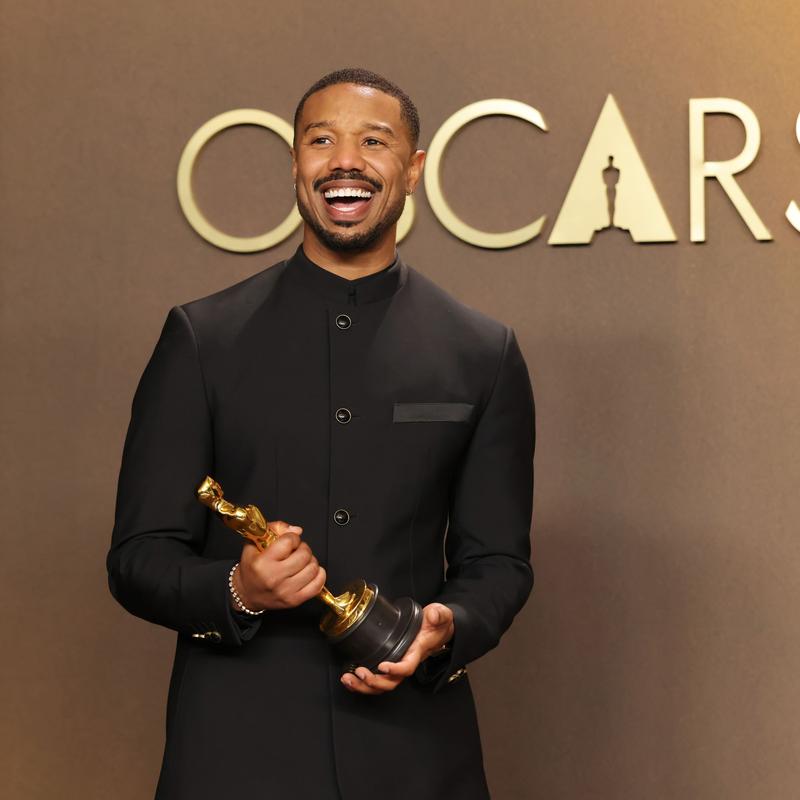
I was really heartened to see Autumn Durald Arkapaw win for Best Cinematography. She was the first woman to do so. In her speech, she had every woman in that room stand. What a beautiful moment. In that same moment, we saw Ryan Coogler bring her son down to the front so he could see his mom give that speech. It was a beautiful moment. Even though Sinners missed the biggest win, to see Michael B. Jordan win, to see Autumn win, what a beautiful thing. Michael B. Jordan, a true California hero, after the Oscars, he went to In-N-Out for a burger and hung out with real people. Really nice.
Brian Lehrer: Yes. I actually said on a segment last week that I thought Sinners deserved Best Picture more than One Battle Over Another, partly because of the politics and partly because I thought it was more ambitious of a film at the level of the direction. The dance scene, which they tried to recreate live on stage last night.
Sam Sanders: Which you can't recreate it. It was hard to recreate.
Brian Lehrer: You can, but it was an awesome attempt at it. I think for people like me who saw the movie, I actually went back this weekend and just watched that scene a second time, just to soak it in. I also thought that I would have liked to see Delroy Lindo, who played Slim, win for Best Supporting Actress for sure instead of the Colonel Lockjaw character from--
Sam Sanders: Sean Penn wasn't even there last night.
Brian Lehrer: Who wasn't even there. I'll ask you if you know what that was about. Maybe he won because that's a memorable role. The caller said people aren't going to remember One Battle five years from now. I think that's one of those classic roles that people are going to look back to, like people in Dr. Strangelove, which I thought there was a parallel to things like that. Hilarious and wonderful. I thought it was an easier role to play because it was so cartoonish than the complicated role of Slim in Sinners. That's just me. Where was Sean Penn?
Sam Sanders: Who knows? He was extremely elusive this entire Oscar campaign season. He really didn't campaign. This guy is so beloved by the industry and has given so many amazing performances. I'm not mad at it. I don't think One Battle was my favorite film of the year, but I do think Sean Penn doing what he did on that screen in that film will stand the test of time, even if the movie does not. I wasn't mad about that win.
What I was most upset about, though, Brian, we saw KPop Demon Hunters win two Oscars last night. By many measures, it was the biggest film of last year. At both moments when that film won, the winners were played off the stage by the orchestra before they finished. It felt rude to me. I think if you're Hollywood trying to find a way forward, movies like KPop Demon Hunters, movies like Sinners that are bankable, that get real people to watch them over and over again, you should do everything you can to give some shine to those films. I really think KPop Demon Hunters deserved a lot more time on the stage last night.
Brian Lehrer: Listener writes, "Misty Copeland dancing was my favorite moment of the Oscars." Nick in Brooklyn has something to say. Nick, you're on WNYC. Hello.
Nick: Hi. I just want to preface what I'm about to say by the fact that I am a crank when it comes to the Oscars, and my wife knows it. There it is. When I watch the Oscars, and I did last night, it always makes me feel incredibly sad because I love movies. I think of them as great art, and I feel like art and beauty in a contest is a beauty contest. I feel like it's reprehensible to impose a hierarchical structure.
Brian Lehrer: Nick, I'm going to leave it there. We get the point. Call us again. Sam, you've talked about this in the past, I believe, right?
Sam Sanders: Yes.
Brian Lehrer: The absurdity of having great works of art in a competitive environment. I think you've wondered if the Oscars should even exist.
Sam Sanders: I've totally wondered that. When we look back at the origin of the Oscars, the Academy and the Oscars themselves were a creation of Louis B. Mayer in an attempt to keep actors, directors, and producers from forming unions. He said, "If I give them a nice show and some awards and make them feel important, they won't organize, they won't take collective action." The origin of this show is pretty fraught.
I do at so many turns, the Oscars get it wrong and don't award the right film. One thing about Hollywood is that they love awards. At this point, the Oscars industrial complex is so big, the campaign season is so long, and so much money is spent. If you took the Oscars away, you'd lose thousands of jobs in Southern California.
Brian Lehrer: Interesting. We've got under a minute left. On your show, I watched your video podcast last week, and you had a guest who thought the move to YouTube off of ABC or any broadcast network for future Oscar telecasts would be a good thing because they could actually make it more entertaining there with fewer traditions that become restrictions. 20 seconds. Do you think so, too?
Sam Sanders: I'm very wary. I had film buffs in my life who didn't realize the Oscars began an hour early last night on the network. It's always been on for years. Getting viewers of the Oscars to move to YouTube is going to be really hard to do, so they'd better start doing press right now to make it happen. I'm not sold yet on YouTube being the best home for the Oscars. Classic movie fans aren't looking to YouTube for this kind of show.
Brian Lehrer: Interesting. Although everybody has YouTube. I don't know if everybody's going to have ABC in a couple of years when this starts.
Sam Sanders: Yes.
Brian Lehrer: Sam Sanders Show from KCRW Public Radio in Southern California. Thanks for getting up early and doing this.
Copyright © 2026 New York Public Radio. All rights reserved. Visit our website terms of use at www.wnyc.org for further information.
New York Public Radio transcripts are created on a rush deadline, often by contractors. This text may not be in its final form and may be updated or revised in the future. Accuracy and availability may vary. The authoritative record of New York Public Radio’s programming is the audio record.
