
Oscar Docs: The Perfect Neighbor
[MUSIC - Marden Hill: Hijack]
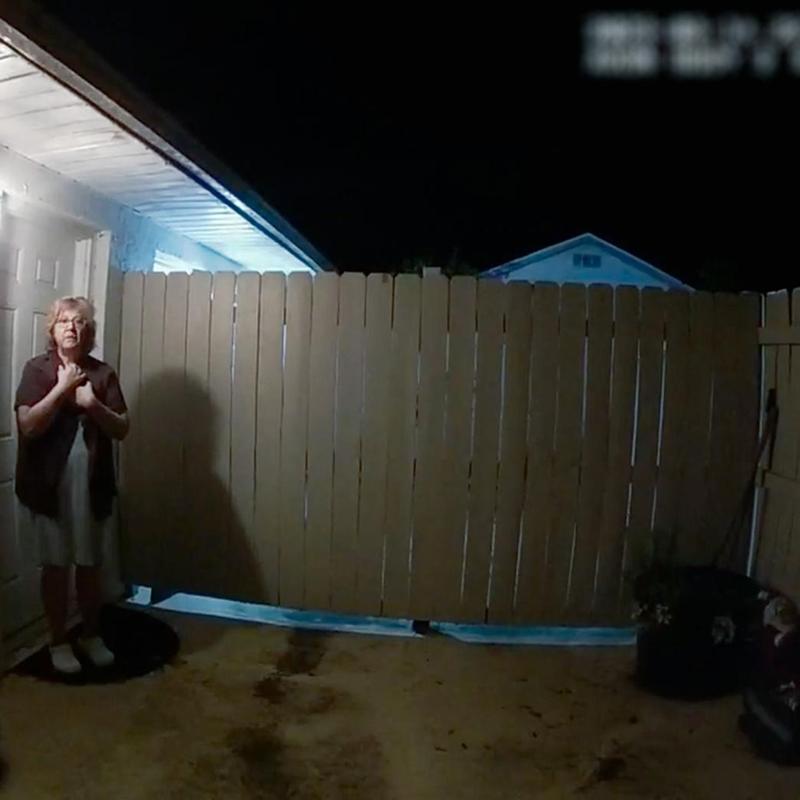
Brian Lehrer: Brian Lehrer on WNYC. Now, we'll begin our annual series on the feature-length documentaries up for an Oscar. Everyone else focuses on the entertainment films, and there's nothing wrong with that, but we feature the documentaries in our non-fiction show lanes. First up is The Perfect Neighbor, which premiered at Sundance and later became a breakout hit on Netflix. It tells the pretty devastating story of Ajike Owens, a mother of four who was shot by her neighbor, Susan Lorincz, in Florida in 2023.
Now, Susan is white, and Ajike was Black. The film is constructed almost entirely from police body camera footage, which I'll note is a pretty impressive feat of editing. It mostly depicts the two years leading up to this shooting, a period when Lorincz would frequently call the cops on the neighborhood kids, including Ajike's, for playing in a grassy lot next to her house. We're watching an escalating neighborhood tension unfold in real time as the cops keep returning to this block to manage Lorincz's complaint.
She starts to sound like a familiar archetype to some people, a kind of you-kids-get-off-my-lawn figure. Of course, the racial overtones make it much darker and more ominous. After a couple of years of increasingly inflammatory 911 calls and encounters with her neighbors, Lorincz shoots and kills Ajike Owens through her front door. Now, Lorincz was ultimately sentenced to 25 years for the killing, but the case and the documentary raise larger questions about Florida's stand-your-ground laws, which allow people to use deadly force if they believe they're in danger.
You might recall back in 2012, when stand-your-ground laws faced a lot of national scrutiny after the killing of Trayvon Martin, that Black teenager whose shooter was acquitted. Geeta Gandbhir is the director of the film, and she joins us now to talk about the movie and unpack some of its pretty heavy themes. We'll also hear some of the documentary clips. Geeta, welcome to WNYC. Congratulations on your Oscar nomination. Thank you for joining us.
Geeta Gandbhir: Thank you so much for having me.
Brian Lehrer: You made the decision to build this almost entirely from police body camera footage, along with other police materials like 911 calls. Why did you commit to that approach?
Geeta Gandbhir: Sure. Starting from the beginning, Ajike Owens was a family friend. That's how we got involved with the case. We were on the ground from day one, trying to raise awareness in the media because we know with cases like Ajike's, without media pressure, they can go without justice, let's say. Oftentimes, they can get swept under the rug, or they can languish.
About two months in, after Ajike was murdered, we received the body camera footage from the family lawyers. They had used the Freedom of Information Act to acquire all the media that we used to make the film. When we had a look at that footage, my team and I at Message Pictures, Nikon Kwantu, who's my husband and producer, and I watched it down. We realized there was a story there. You hardly ever see when a crime is committed, which is what the community was like before, and who they were before.
Gun violence is so common. We often see the aftermath. We see the grieving family. We hear the story retrospectively. With this material, we're able to recreate this beautiful multiracial community living together, loving each other, and tell the story of how one outlier, with her access to a gun and emboldened by predatory laws like stand-your-ground, changed everything irrevocably.
Brian Lehrer: Let me play a couple of clips, and context for this is that I've seen it said that the police, interestingly, do not come off as villains here in the way that some people might expect, that they're pretty sympathetic to the Black families and kids living around this woman. I want to play a couple of clips from the film back-to-back, both to give our listeners a sense of the kind of immersiveness that the body camera footage gives the movie, and also to show some of the encounters that maybe will stand out. The first one is of a cop talking to a group of kids. This is just 11 seconds after one of Lorincz's many calls to the police.
Child 1: Kids do this every day.
Child 2: Kids do this every day.
Child 1: She calls the police every day.
Police Officer 1: Well, you're acting like a bunch of kids.
Child 2: Yes, because we are kids.
Police Officer 1: I know.
Child 2: Duh.
Police Officer 1: That's why we don't worry about it.
Brian Lehrer: "That's why we don't worry about it," says the police officer. Here's another one, 30 seconds of two cops debriefing after one of them talks to Susan, the shooter.
Police Officer 1: She not come to the door?
Police Officer 2: She did.
Police Officer 1: She did? I was trying to talk to her.
Police Officer 2: Okay. Did you explain to her that there doesn't need to be a call for service every time a kid's playing in the road or in the yard?
Police Officer 1: Well, apparently, they've been stomping. That one looks like it's been stomped out, too. Apparently, they've been stomping out her signs and running past her windows and screaming and ding-dong ditching her and knocking on her door.
Police Officer 2: There does come a point where you have to accept that you live with a bunch of kids. She's also the only one that ever calls.
Brian Lehrer: Two police officers talking to each other. Obviously, that was after one of the many calls along the way, not after the shooting. The cops seem to be aware, Geeta, that Susan Lorincz has a vendetta of some kind or an obsession, even though the kids might actually be messing with her a bit.
Geeta Gandbhir: Yes, so what is so interesting about the police in this film is that, indeed, they don't come off as we might expect. They don't come in guns blazing. They don't arrest anyone or shoot anyone. What's interesting is my producer, Nikon Kwantu, often says that our bar for the police is so low that we mistake politeness for competence. The worst possible outcome happened under their watch, which is that Ajike Owens was murdered, and Susan Lorincz is ostensibly spending the rest of her life in prison.
Although the police showed up and were empathetic to the community, they never saw Susan Lorincz as a threat. They brought their own biases to the scene. Again, had Susan Lorincz been a person of color, we think that this might have gone differently. Because she was able to weaponize her privilege, weaponize her race, and she tried to weaponize the police, she failed.
After so many calls, they should have flagged her as the problem. She was using hate speech against children. She was threatening them. She was filming them. She was doing things that were erratic and dangerous, and yet they just saw her as a nuisance. They didn't see the community, a multiracial community, as worth protecting. In Florida, where you can buy a gun like you can buy a toaster oven or microwave, you would think that it might raise alarms, and it didn't. I think that is where, again, race came into play here again.
Brian Lehrer: Listeners, it's part one of our five-part look at the five Oscar-nominated, feature-length documentaries, which we do every year on this show. Today, talking to Geeta Gandbhir, director of the film The Perfect Stranger. We have about five or six minutes, folks. Anybody out there see this and want to say anything about it or ask the filmmaker a question? 212-433-WNYC, 212-433-9692. Where do Florida's stand-your-ground laws come in?
Geeta Gandbhir: Florida's stand-your-ground laws, which are, again, some of the most dangerous in the country, come into play in that they basically state-- Just to back up a little, stand-your-ground exists in some shape, form, or fashion in about 38 states. The tenets vary state to state. In Florida, essentially, the law allows individuals to use force, including deadly force in self-defense without a duty to retreat. They do not have to be in their homes. They can be anywhere as long as they are there lawfully. The threat can be perceived.
Perceived threat, as we know, involves bias and can involve bias. I think this is where stand-your-ground laws come into play. Susan, essentially, who was treated as a nuisance and the police eventually stopped responding to her, researched these laws. What we see with the numbers statistically is that homicide rates increase when this law is in play. Also, we see that if the shooter or the person who commits the violence in "self-defense" is white and the person on the other side of that violence is not, then they are more likely to get off when it comes to trying to use self-defense.
That, again, is a problem. We saw that, as you mentioned, before with the case of Trayvon Martin, where George Zimmerman stalked him, and then an altercation happened. He used stand-your-ground. We also see stand-your-ground adopted in other states and being used in the prison systems by prison guards as self-defense when there are multiples of them and one person who is killed. This happened in Alabama. There's a case that we know of. This is, again, an incredibly dangerous law that puts people of color at risk.
Brian Lehrer: Mark in Brooklyn says he was in Florida when this happened. Mark, you're on WNYC. Hello. Mark, you there? Let's try William in the Bronx. You're on WNYC. I think William saw the film. William, hi.
William: Hi, good afternoon. I just want to say, first of all, I truly enjoyed watching this film. I work within the Bronx, and so we're constantly having a conversation about race and how race shows up in our community, and how to be teamed with NYPD and things of that nature. I really appreciated this film.
Geeta Gandbhir: Thank you.
William: One of the things that you just said recently was about the competency versus the kindness of the cops and how, at times, that comes off, we kind of lower the bar. I really appreciated you brought that up because, a lot of times, we do see that where the bar is so low. We take the kindness of the cops as competent and not really recognizing the need within the community and the threat in the community. I really appreciate that you brought that up, and thank you for continuing this conversation.
Geeta Gandbhir: Thank you so much.
Brian Lehrer: Thank you for contributing to it. What do you think the police could have done more than be nice to the kids? How could they have prevented it if you think they could have?
Geeta Gandbhir: In my opinion, what they could have done was, by the third time she called, and we actually heard this from a former law enforcement officer in Utah who said to us, in my state, or by the third time she called, and it was unfounded, she would have been flagged. She would have been given a warning or even a ticket for abusing emergency services and for calling repeatedly.
She also would have been warned about what she was doing to the kids. These are minors. She was harassing them. The other side would have been told that they could file restraining orders. There was more that they could do. They could press charges. Susan being the problem would have been flagged sooner. I also believe, too, however, that the police are not trained for this in most cases. The police do not often serve communities of color. I think that there's some having something else in place.
There are cities that are using now alternatives to 911. They have programs and responders who come out who are social workers, therapists, and community mediators. That would have been so much more helpful, I think, than the police, who, again, they even say it in the film, they say, "This is a civil issue. We don't deal with this. This is not our wheelhouse." I think, again, the police are often used as a catch-all for everything, and it is dangerous for the community.
Brian Lehrer: Let me sneak in one more caller who saw the film. Ellie in Brooklyn, you're on WNYC. Hi, Ellie. We have 20 seconds for you. Sorry to say.
Ellie: Hi, Brian and Director. I found the film just quite compelling. I didn't have an opportunity to watch the trailer, so I just watched it as it prompted on Netflix. It's just an interesting slice of life, of what justice looks like for Black community, Black and brown communities. I thought it was just compelling storytelling and sad.
Brian Lehrer: Thank you very much.
Geeta Gandbhir: Thank you.
Brian Lehrer: As we run out of time, what would it mean to you or to the world, potentially, if this film wins the best documentary Oscar?
Geeta Gandbhir: It would, of course, be the most incredible honor for us because, again, the Oscars are voted upon by our community, by our peers, who we admire, who we are inspired by. That's incredible. Beyond that, it's a platform for the issues. We want to have a greater impact and make change, so that's most important.
Brian Lehrer: Geeta Gandbhir directed and made The Perfect Neighbor. This is the first of all five feature-length documentary nominees that we'll be focusing on in our annual series. Thank you very much for joining us. Good luck at the Oscars.
Geeta Gandbhir: Thank you so much for having me.
Copyright © 2026 New York Public Radio. All rights reserved. Visit our website terms of use at www.wnyc.org for further information.
New York Public Radio transcripts are created on a rush deadline, often by contractors. This text may not be in its final form and may be updated or revised in the future. Accuracy and availability may vary. The authoritative record of New York Public Radio’s programming is the audio record.
