
Oscar Docs: Mr Nobody Against Putin
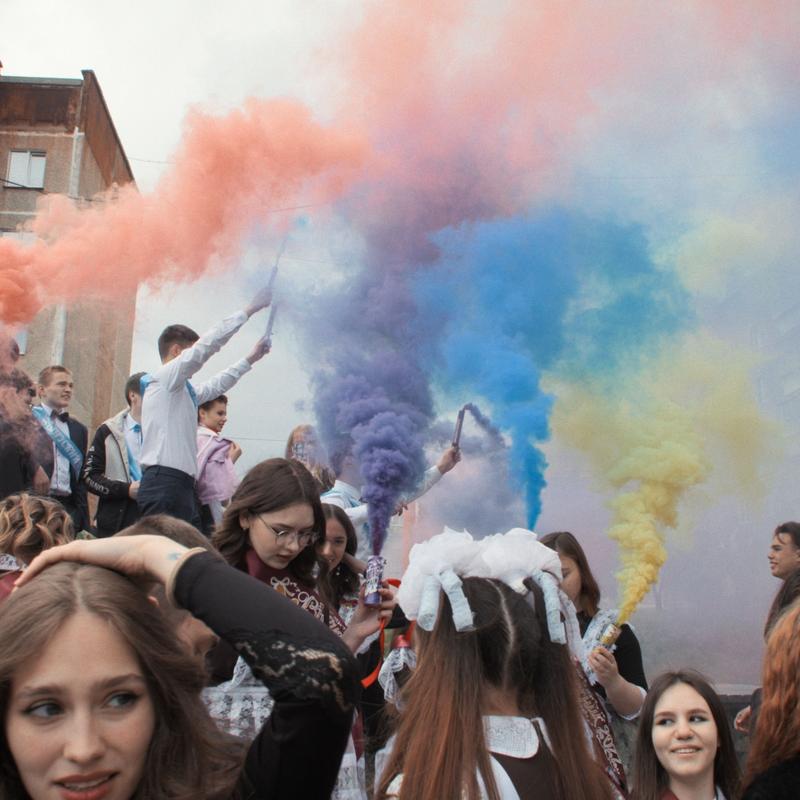
Brian Lehrer: It's The Brian Lehrer Show on WNYC. Good morning again, everyone. Today is the fourth anniversary of Russia's full-scale invasion of Ukraine. It was February 24th, 2022. Appropriately, for the day, I think we continue with our annual series with the makers of the five feature-length documentaries up for an Oscar. As I always say, there's plenty of celebrating the actors and directors and other artists who contribute to arts and entertainment films as there should be. On this show, we spend time with the nominated documentaries.
Today, we're joined by David Borenstein, documentary filmmaker of the Oscar-nominated film "Mr Nobody Against Putin." This documentary takes us back to the very beginning of the war. It's told from the perspective of a school videographer in a small industrial town in Russia. Using his footage, and we'll play some clips, it chronicles how Russian propaganda was taught to Russia's youth. Mr Nobody Against Putin won for best documentary at the British Academy Film Awards, the BAFTA, a very prestigious BAFTA awards if you don't know. BAFTA, on Sunday. David, welcome to WNYC, and congratulations on the Academy Award nomination.
David Borenstein: Hi, Brian, thank you for having me here.
Brian Lehrer: I'll tell the listeners your documentary draws on footage filmed by Pavel Talankin, a videographer at a school in the industrial town of Karabash. I'll play a clip from the film that describes the town itself in a minute. First, tell everybody about Pavel, who goes by the nickname Pasha.
David Borenstein: Well, Pasha, four years ago, was a small-town teacher. He's from Karabash, a town of 8,000 people. He was the teacher and event organizer of that school, which is a special job that involves putting on all special events. After the full-scale invasion of Ukraine, this particular job had the new responsibility of implementing a patriotic military education in the school. This was happening nationwide in Russia. He felt so filled with guilt, and he felt so filled with rage that he was willing to do pretty much anything to get this footage out. That's how we met.
Brian Lehrer: While the school is big, it serves this small town of about 10,000 people, so let's take a listen to about a 30-second montage in the film of what Pasha thinks his town is best known for.
Pavel "Pasha" Talankin: [East Slavic language translated in English] People come from everywhere to see the town that UNESCO once called the most toxic place on Earth.
Tourist 1: The most polluted town in Ural, with an average life expectancy of 38 years.
Tourist 2: It's so like post-apocalyptic here. There's random stinking gases.
Tourist 3: In fact, it's the most depressing place I think I've ever been. Wow, the air-- Oh, man, it stinks.
Tourist 4: There's a high rate of mortality from cancer, lung diseases, and other diseases. Wow.
Tourist 5: Welcome to Karabash.
Brian Lehrer: David, considering the vibe of that montage, should we call that a little Slavic humor there?
David Borenstein: There definitely is some Slavic humor in there, but the way that I experienced Pasha's town was through him telling me about it for the first year or so of the project. Whenever I asked, "What kind of place are you from?" he's like, "It's a great place. We have a good community. We all talk. We all know each other. The school has been pretty good. Russia's not perfect, but this is my home." Later, when I discovered that it has a reputation of being the most polluted, depressing town on Earth, and actually was called the most polluted town on Earth by UNESCO a decade ago or two decades ago, I was actually quite surprised, but that is actually the reputation of the town.
Brian Lehrer: Russia begins its full-scale invasion of Ukraine on February 24th, 2022. Very quickly, President Vladimir Putin and his government require schools to hold regular "patriotic displays." Pasha, the film tells us, the school's events coordinator and videographer, has to film all this stuff. Talk to us about the beginning of this film and how Pasha is seeing his role.
David Borenstein: There were two things happening at once when this film began. One, Pasha got trapped in this kind of Kafkaesque system. He had to film and put on all of these terrible events that were fueling a horrific war in Ukraine. Simultaneously, I was putting out feelers looking for a story in Russia that would explain this unbelievable full-scale invasion of Ukraine that had the whole world shocked.
At that time, Pasha sees a casting call that was put online by a Russian web content company. It wasn't me. It was someone else. This casting call said, "How has your job changed as a result of the special military operation in Ukraine?" or so they call it. Actually, this company was looking for positive stories. They were looking for stories about people writing letters to soldiers and workplaces donating supplies. Pasha sees it, and he gets angry.
He puts in a message that says, basically, "Well, I'll tell you how my job has changed. I've been turned into a propagandist, and I'm coming to school every day filled with guilt and rage." He sends that in. Just by a twist of fate, the person who receives it starts sending it around. He says, "This guy is interesting. I can't help this person tell his story, but maybe a foreigner can." It ended up with me. Then me and Pasha together, we started talking. We developed this plan to film undercover in his school.
Brian Lehrer: Let me get this straight. We see in the film, Pasha hand in a resignation letter because he wants to stop supporting the Russian government, but then somehow, he gets in touch with you and decides to stay in his job and gather footage. Tell us more about how you two met, and what it was like for Pasha once he went from being an agent of the Russian government to being an underground documentarian of things he considered their abuses.
David Borenstein: Yes, so we started talking, and then the very first idea that we had, because Pasha responded to a casting call, was to film him. I sent a DP to his hometown, Karabash, to start filming him. That went on for a little bit of time. Fairly quickly, I discovered footage that he shot inside a delivery of footage to me from the DP, from the cinematographer.
There was a footage of stuff that was all shot from him, wasn't on a fancy camera. It was on just the school camera. I fell in love with this footage. This footage was remarkable. First, it was all in the first person. It was him walking around town for hours at a time, talking to people fly on the wall. Also, it was very emotional because Pasha was picking up the camera to participate in this film as a way of managing his emotions.
He was feeling so trapped and so part of this system. He wanted to feel like he was doing something else. He picked up this camera as a way of feeling like he was someone else, like he wasn't trapped anymore. When I started working with his footage, I just really fell in love with it. Slowly, he became a director on the project. We started working together as two directors.
Then over the course of the next few years, I saw a progression in him, a progression in which he went from seeing himself as this very guilty pawn, a cog in the machine, to a director that was doing something that was going to show the world what was happening in Russia, that was going to resist this regime. The film very much takes that as its dramaturgy. It's about witnessing someone go from someone who doesn't think anywhere, anytime in a million years, they could do anything, to actually doing something.
Brian Lehrer: Listeners, anybody see the Oscar-nominated documentary, Mr Nobody Against Putin? You can call up and give a little of your own take or ask the filmmaker, David Borenstein, a question. 212-433-WNYC, 212-433-9692. You can call, or you can text. We see through what Pasha films, some activities imposed on the students. We see younger students practicing marching and military formation. Older kids are encouraged to write letters to soldiers on the front, all during school hours. It's indoctrination.
The filming takes place over the course of two years. As it goes on, the young soldiers who were sent to the front lines in Ukraine start coming home in caskets for burial. As Pasha says in the film, no one is allowed to film funerals, but he does record audio. What we're going to hear in this next clip is a mother finding out about the death of her son, her other sons trying to hold her back, and then I'll translate what Pasha says on the other side about how the war impacts everyone.
[mother wails]
Mother: [East Slavic language translated in English] No, no, no.
Son: [East Slavic language translated in English] Zhenya, hold Mom.
Mother: [East Slavic language translated in English] Why didn't you let me come close to him? My little Artyom.
Pavel "Pasha" Talankin: [East Slavic language]
Brian Lehrer: Pasha says, "I know the situation here is incomparable to what's happening in Ukraine, but there are more and more people suffering here because of the war, and there is nowhere in school where the trauma doesn't reach." It's true, David, that when we discuss the war in Ukraine, we rightfully focus on the Ukrainian people who are suffering from this incursion. Why was it important to you and to Pasha to show the Russian side?
David Borenstein: Well, when Pasha and I first started talking about working on a film together, I asked him what his goals were. Interesting to me, his goal was so simple. It wasn't about going to film festivals or reaching an audience overseas. Actually, the very first thing he said, the instant reaction before we talked more about getting the footage out, was, "Actually, you know what? Maybe the people that I care most about seeing this are my colleagues, are people in the school that are complicit in the system that is being built around us."
The system that was being built, this war machine, it really wasn't being built by fanatics. It wasn't being built by people who really, really believed in the war. It was being built by his colleagues, who were just taking the most convenient action, the safest action, and going along with the propaganda and just doing it. Well, two years later, by the time we're finished making this film, we see the results of their complicity, of their actions. Students that are beloved in their community listened to the propaganda, joined the military, and then, unfortunately and tragically, their bodies are coming back in caskets.
This scene is gut-wrenching. In fact, I haven't listened to it for a very long time. After I edited it, I don't think I ever watched it again. I always shut it out whenever I'm watching the film. It was very important for the dramaturgy because it shows what happens when we're complicit, when we joke about the propaganda, when we joke about these terrible things that we take part in out of convenience and fear. They have real consequences.
Brian Lehrer: Donna in Bayonne, you're on WNYC. Hi, Donna.
Donna: Hi.
Brian Lehrer: Go ahead.
Donna: Well, I want to say that I saw the film. I loved it. I believe it's a very important film for helping people in countries like ours, even in these times, to understand how difficult it is for Russians to go against the government. The director just said that his colleagues were complicit. I understand that, but the stakes for people who are not complicit are very high. Of course, he had to leave the country. He had no other option left to him. I want to hear what the director comments, but I also have a question for him. There's a scene where Pasha puts a symbol on the windows of the school to counteract the Z symbol that the Russians are using in Ukraine and everywhere as a patriotic symbol. I wonder what happened after he did that.
Brian Lehrer: Donna, thank you for your comment and your question. David?
David Borenstein: Yes, so after he did that, he got yelled at by the school authorities, and he was warned. He got many warnings throughout the making of this production. By the time he left, two and a half years after we started, he left in the summer of 2024. It was really time for him to leave because those warnings were adding up, and it really didn't seem like he had much time left. Pasha is the kind of guy that it's really hard for him to control his emotions. He says it in the film.
He says that being a teacher at that school for him was like walking a tightrope. Some days, he would wake up and feel like such a propagandist, so filled with guilt that he had no choice but to act out just so he could feel like he wasn't a propagandist. I think putting the X's on the window was part of that. Of course, it was a protest and a political statement, but also, it was a way of helping himself, or it was a way of just making him feel like he wasn't just a propagandist. Those acts were adding up, and he needed to get out by the summer of 2024.
Brian Lehrer: You helped him get out and seek asylum in Europe, right?
David Borenstein: Yes, and it's not easy getting a European visa for a schoolteacher in a town of 8,000 people in Russia that makes €150 a month. It's really hard.
Brian Lehrer: [chuckles] I guess. Gabby in Pennington, New Jersey, you're on WNYC. Hi, Gabby.
Gabby: Hi, Brian. I just want to say, so I'm a teen. I'm off from school, so I've actually been listening to WNYC all morning. I was the one who texted in earlier about walking my dog to the horses. Anyways, my mom and my grandma are--
Brian Lehrer: You're the one who wrote that beautiful text. I'm so glad you called in and on something so different than your beautiful experience in the snow with the dog and the horses, so go ahead.
Gabby: Yes, for sure. My mom and my grandma are both Polish, and they're from there. They lived in Warsaw and Krakow. My grandma, obviously, her whole education was in Poland after World War II. She was born during the war. Then my mom, her early education was there before they both left for America when my mom was little. They've always told stories about their education and how they grew up under communist rule. My grandma had to learn Polish as well as Russian in school. She can still speak it to this day.
She was doing those presentations and singing those songs. Even after we watched the movie together, she was singing one of the songs that they were singing in the movie in Russian. It was so interesting and sad and really eye-opening to see the techniques and the traditions of Russian indoctrination and Russian education in Russia, in other places. Interesting to see from an American perspective that we don't get to see as a nation who is very different, obviously.
Brian Lehrer: Seeing it as a third-generation person, how it was brought forward from the Soviet era to what you saw in the film, right, via your grandmother?
Gabby: Yes, yes, definitely.
Brian Lehrer: Thank you so much for calling in. Please call us again, Gabby, but don't cut school to do it. You do go into, in the movie, some of the echoes from the Soviet era, right? Like students who they called the Soviet pioneers back then?
David Borenstein: Yes. First, Gabby, thank you so much for that comment. It was so great. Yes, you are very astute in noticing the parallels between the Soviet era of education and today. In fact, what Putin is doing right now in Russia is explicitly drawing on the Soviet tradition. As you note, Brian, the pioneers were the youth organization of the Soviet-era schooling.
It was designed, especially in the early era, as a way to train the youth to fight the future battles of communism. Well, on the anniversary of the founding of the pioneers, Putin revealed this new plan for children to join the movement of the first, which is kind of a relaunch, a 2.0 of the pioneers. Only now, it's not about communism. It's about loyalty to Vladimir Putin himself and whatever he wants.
Brian Lehrer: I wonder increasingly, as we do this series each year with the directors of the five Oscar-nominated feature-length documentaries, how the Oscar judges, whoever they are, judge documentaries. Is it on the worthiness of the story? Is it on some combination of that and filmmaking technique? We've been doing this series for a number of years. I think this is a particularly strong year for the nominated documentaries from what I've seen and what I can tell.
It's weird in a way that you have to compete against a documentary about abuses in Iran, about abuses at a prison in Alabama, other very worthy stories. How do you feel about being nominated and it being any kind of competition for best feature-length documentary at the Academy Awards? Have you spoken to the other directors about that, or how do you feel about this whole thing?
David Borenstein: It's especially weird because we're like a family. These five films, we all premiered together at Sundance. We have traveled the world together. As a Sundance doc, your documentaries often take a similar trajectory. You have a similar European premiere. You go around the world together. I love all of these people. Every single one of the directors from all these films and the producers and the teams, they've become like family to us.
When The Perfect Neighbor, when their editor came to Copenhagen, I helped moderate a discussion for them because I just love that film so much. We love each other. I think every single film is so good. They're so in different areas, too. They have different styles. It's really, really hard to compare. I don't really know how voters choose. I'm happy I'm not one, and I don't have to choose.
Brian Lehrer: [chuckles] Will it mean anything, do you think, to the cause if you win?
David Borenstein: Let me say what my motivation has been. Basically, I've put a lot of pressure on myself because during the production phase of this, I knew that Pasha, in order to make this film, had to sacrifice his entire life in Russia. He had to go into this extremely unknown situation, living in Europe. I didn't know if it would be a miserable life moving forward, if he'd be in some asylum center, if he would give up his life, and just be in a bad situation.
The only thing in my control was to make a good film, but I was mortified if he were to leave and the film would be bad, or if no one would watch it, or if it didn't premiere in a festival. There's been just a huge fire under me to try to promote the film, make the film as good as possible, because there is a guy in the center of it that really sacrificed everything. He's like a foreigner in Europe now. He doesn't speak the language.
To make the sacrifice worth it, we just really wanted to push it out. Then, of course, beyond that, we really care about the conversations that it can create. On one hand, we think it's important to show what's happening in Russia. We think it's really important to show the world, especially right now. We're debating Putin's intention. Just look at what he's saying in the classrooms every single day in Russia, "We're training you for a future of warfare."
There's absolutely no doubt that he is not going to stop with Ukraine when you just watch this film. Then, beyond that, what's most interesting to me in many ways is the more universal story about resistance. This is a film that I hope makes people think about their own capacity to affect change in some way, that we all face a moral choice when dealing with authoritarian governments and very dark political decisions, that complicity adds fuel to the fire.
I think right now, when we first started this film, it was like a different America in many ways. Now, with what's happening in Minneapolis and seeing the same kind of illiberal forces taking over this country in many ways, when we see something that almost seems inspired by Putin, now, almost, the film has a different meaning to me than when I first started it, and I just hope for us having this chance to have this nomination and have a voice that we can create conversations around that as well.
Brian Lehrer: We're getting a bunch of texts like this one. Listener writes, "Hopefully, Trump doesn't watch smart indie films, since he'd likely pick up on those Russian propaganda ideas," but that's going to be the last word in the segment with David Borenstein, documentary filmmaker of the Oscar-nominated film Mr Nobody Against Putin. Congratulations on winning the BAFTA. Congratulations on the Oscar nomination, and good luck at the ceremony. Thank you so much for sharing it with us.
David Borenstein: Thank you, Brian.
Copyright © 2026 New York Public Radio. All rights reserved. Visit our website terms of use at www.wnyc.org for further information.
New York Public Radio transcripts are created on a rush deadline, often by contractors. This text may not be in its final form and may be updated or revised in the future. Accuracy and availability may vary. The authoritative record of New York Public Radio’s programming is the audio record.
