
Oscar Docs: Come See Me in the Good Light
Brian: This is Brian Lehrer on WNYC. We end the show today with the next film in our annual series with the makers of the five feature-length documentaries up for an Oscar. There's plenty of appropriate celebrating of the actors and directors and other artists who contribute to arts and entertainment films, but on this show, we spend some time with the documentaries.
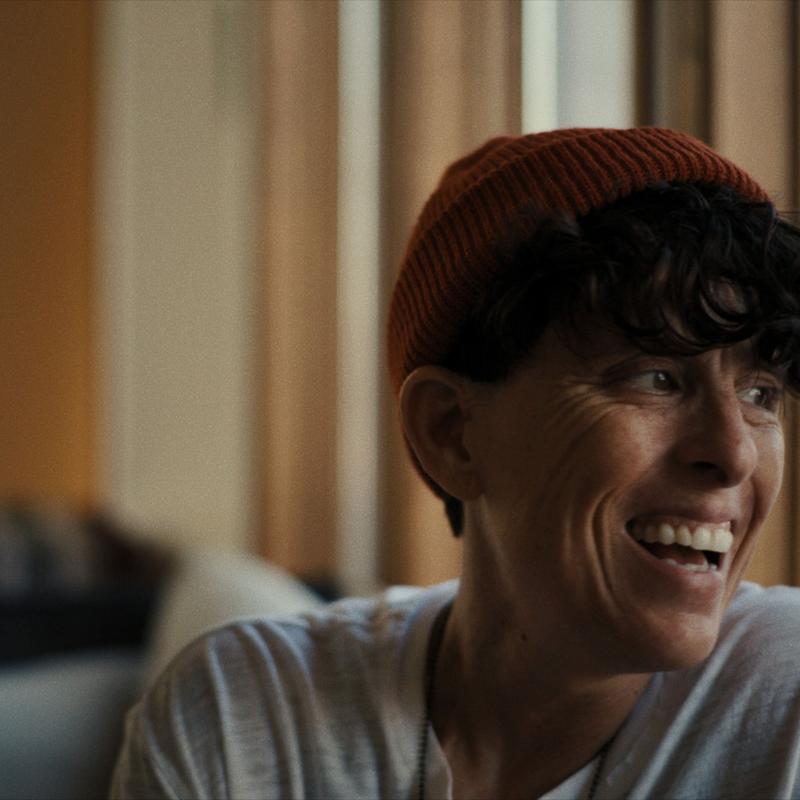
Today, we're joined by Ryan White, the director and a co-producer of Come See Me in the Good Light, a film about spoken word poet Andrea Gibson as they near the end of their fight to survive ovarian cancer. It's not about their subsequent death last summer at the age of 49, so much as about living, knowing death is coming. There's laughter, there's fear, there's grief, and there's more laughter and poetry. Here's a bit of that.
Andrea: At first, I thought it was a stomach bug, but when it started feeling like a stomach anaconda, my doctor convinced me to get a CAT scan. "This is the beginning of a nightmare," I thought. But stay with me all, because my story is one about happiness being easier to find once we realize we do not have forever to find it.
Brian: Ryan White, welcome to the show, and congratulations on the Academy Award nomination for Come See Me in the Good Light.
Ryan White: Thank you. Thank you for having me.
Brian: Maybe start by telling us a bit about Andrea, who was the poet laureate of Colorado, among other things, and is described in the film as a rock star of spoken word poetry.
Ryan White: I was someone who was pretty unfamiliar with spoken word poetry when I began this film, but Andrea is quite well known in those circles, and as you said, was the poet laureate of Colorado, and had built a career for the past few decades on the spoken word circuit, but had put that behind them once they got this cancer diagnosis and were so sick that they couldn't be performing on stage anymore. Andrea's poetry is renowned for being very accessible.
It's an ongoing joke throughout my film that Andrea only knows five or six words. Admittedly, their vocabulary was quite limited, and they weren't super educated, but it made their poetry really cut straight to the heart, which I think is a big part of the reason they built such a fan base over the decades.
Brian: Listeners probably could tell we're using they-them pronouns. Andrea was non-binary, married to fellow poet Megan Falley. The clip I played contains a truth that probably a lot of us have learned: that life can be richer at its darkest moments, even though that's a contradiction. I see it carries over to how you came to make this film. The comedian Tig Notaro connected you with Andrea when you asked for an idea for a funny film. Do I have that right?
Ryan White: [laughs] Yes, I was looking for a comedy. I've been looking for a comedy for over a decade, and Tig is a friend of mine. When she called a couple years ago with a poetry cancer film, it sounded like the opposite of funny. Tig said, "Hear me out. It's the rock star of spoken word poetry. Also, I've been friends with Andrea for 25 years, and Andrea is one of the funniest people I've ever known." Tig understandably has a very high bar for humor, so if she thought that, I had no reason to disagree.
In the end, I hope it really does subvert the terminal illness genre of films in that it sounds very dark and sad. I think most people, after seeing the film, leave having laughed a lot, and they leave quite joyful. I think that was the remarkable shift in perspective that Andrea had after their diagnosis. I think it's the main reason why they agreed to being in a documentary during such a vulnerable time was to try to share that awakening that they were having with the audience of this documentary.
Brian: Here's a clip that I think demonstrates the humor. Of course, the context is you're in there hanging out in pretty intimate moments when they're getting chemotherapy, trying to fix their often knocked-over mailbox, getting disturbing test results. This is Andrea and wife, Megan Falley, talking about how differently their writing styles come out and how easily writing seems to come for Megan. Andrea speaks first.
Andrea: That's the thing, Meg. You know so many words. One day, we're going to find out that all these words that Meg says are words aren't really words.
Megan: Let's take a vote. What's more weird, me knowing words as a poet and a writer, or Andrea, poet laureate, knowing five?
Andrea: Do you know how good of a writer you have to be to write as many poems as I have with five words?
Megan: [laughs] Sorry.
Andrea: You have way more tools. It's like I just built a house with a screwdriver.
Brian: Ryan, there's your line about Andrea only knowing five words. Talk about Megan a little bit. How important was it to you in this now Oscar-nominated documentary to show not only Andrea's struggle, but also their wife, Megan's?
Ryan White: If you had asked me at the beginning, when I started this film, what it was going to be about, I would have thought it would have been much more of a portrait of a genius artist. In the end, what it is more so than anything is a love story, and their stories are probably in equal measure, Andrea and Megan's, in this film. Megan has her own incredible backstory, and then her story is one of caretaking, which I have never been, at least an intense caretaker, in my life.
The number of people that have seen this film now that I see resonating to that part of the film is massive. It's been a real gift. Andrea died in July, but they did get to see the movie before it came out. Since July, I've been on the road with Megan, and she's getting to share the film with audiences and talk with them about it in what she calls grieving publicly. It's been a real privilege to not only have watched her do that beautiful caretaking for many years, but now to be kind of carrying on the legacy of Andrea Gibson by speaking about the documentary.
Brian: If you're just joining us, we're in our latest conversation with one of the five directors up for an Oscar for feature-length documentary, a series that we do every year. While others certainly are entitled and for good reason to celebrate the actors and directors and other artists who contribute to entertainment and arts films, we focus in our lane on the documentaries, which hardly anybody else does. We're proud of this series.
Today, our guest is Ryan White, director and co-producer of Come See Me in the Good Light, a film about spoken word poet Andrea Gibson as they near the end of their fight to survive ovarian cancer. I wonder if you think Andrea was more in touch with finding, I think they use the word sweetness, in what was going on, because we see that they had done the same with their struggles with not fitting into this world, with building a community from other people sharing that kind of struggle, you think?
Ryan White: Oh, for sure. Andrea says in the film that they were suicidal for a lot of their life. It wasn't until this incurable diagnosis where they really had this awakening to the preciousness of life. That may seem sort of dark and twisted, but Andrea confronted those final years with the sweetness. I think it's the reason for the title of our film, Come See Me in the Good Light. It's a line from one of Andrea's poems, which is a love poem for Megan.
It's also an invitation to our audience to come along for this journey that might sound dark or sad or all these things that we culturally prescribe to cancer end-of-life, but to actually come along for the journey, and you might find some light in it. I think that was Andrea's whole intent in participating was to share that with people before it's too late.
The amount of times I would ask Andrea why they were willing to do a documentary during such a taxing time, and Andrea would say to me, "Don't let it take my diagnosis for you to understand how beautiful life is. Don't take it, your life flashing before your eyes, to savor your relationships." I know it was personally life-changing for me to get to witness that, and I'm hoping people that see the film will come away maybe wanting to live their life a little bit differently after witnessing Andrea and Megan's journey.
Brian: Here's one more clip from the film. It's one of Andrea's exes talking about when her father was dying of cancer.
Andrea's Ex: I remember calling Andrea, and I was like, "I can't stay in the room," because it wasn't sadness. It was this discomfort with what was impending. Andrea said, "Just open your heart to love. Everything that you're feeling right now, name it love, whether it's fear or sadness, everything that you're feeling, name it love." I feel like that changed my experience with losing him.
Brian: A beautiful expression from a beautiful film. Ryan, congratulations on the Oscar nomination. What do you think it would mean if you win? The other directors we're having in this series have made nominated films on things like fighting Putin in Ukraine and the repressive Iranian government and prison conditions in Alabama. This is such a personal story.
They say it might help their cause if they win an Oscar. What could it mean if you win?
Ryan White: I know all of those directors. We all premiered at Sundance together, and I love all of those films and many worthy causes in them. I know it sounds cliché, but I do think we all won by getting the nomination. I can see all five of these films getting viewed in an insane way that they weren't getting viewed before the nomination. For us, if we won, it would be a beautiful tribute to the message of Andrea.
I think there's a lot of darkness in the world right now, and I do think there is something about finding the joy, even during the dark times, that's like an act of rebellion in itself. I've seen that a lot this past year, that we are living through such dark times that people need to find joy and a break from that at times, and I hope our film can do that for folks.
Brian: Ryan White, director and co-producer of Come See Me in the Good Light. Good luck at the Oscar ceremony next month.
Ryan White: Thank you so much.
Brian: That's The Brian Lehrer Show for today, produced by Lisa Allison, Mary Croke, Amina Srna, Carl Boisrond, and Esperanza Rosenbaum. Our interns this spring are Arlo Bivins and Jack Walker. Zach Gottehrer-Cohen produces our daily politics podcast. Stay tuned for Alison.
Copyright © 2026 New York Public Radio. All rights reserved. Visit our website terms of use at www.wnyc.org for further information.
New York Public Radio transcripts are created on a rush deadline, often by contractors. This text may not be in its final form and may be updated or revised in the future. Accuracy and availability may vary. The authoritative record of New York Public Radio’s programming is the audio record.
