
Opioid Overdose Deaths See Sharp Decline
Brian Lehrer: It's The Brian Lehrer Show on WNYC. Good morning again, everyone. Now we'll turn to a story that isn't getting much coverage in the media, but impacts so many Americans. Nearly one-third of adults in the US know of someone who has died of a drug overdose. That's from a 2024 study published in JAMA. Recent data show that deaths from fentanyl and synthetic opioid overdoses have been declining since mid-2023. Interesting. They've gone from almost 85,000 in a year down to 48,000 in the year ending in April 2025. That's the most recent data available from the Centers for Disease Control and Prevention. That's still a lot of overdose deaths, but also a really big decline.
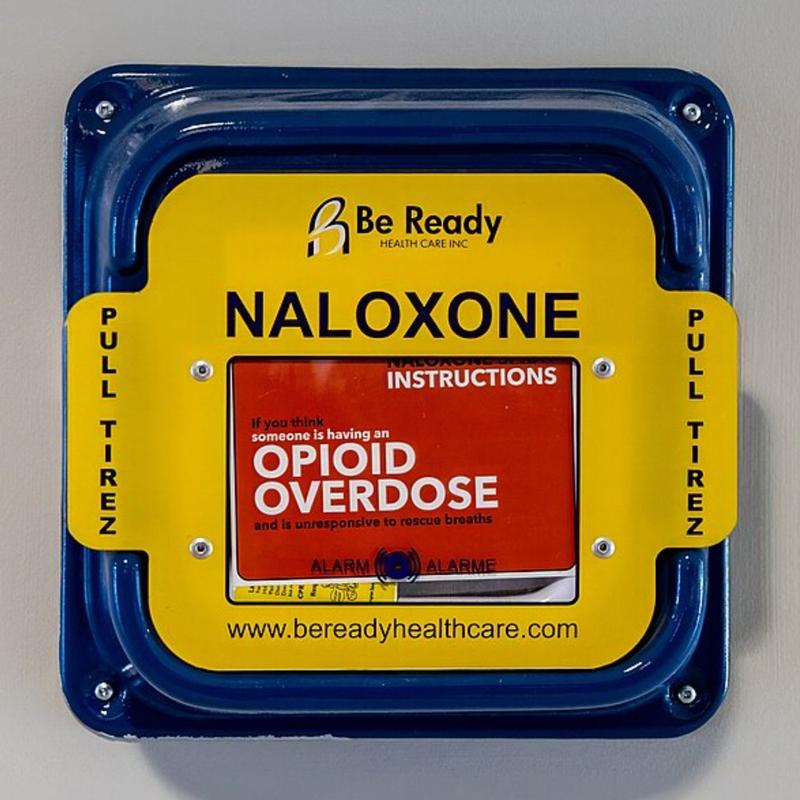
Researchers are cautioning that it's not possible to identify a single driver of the decline. They point to several policy actions, like access to treatment and overdose reversal drugs, as well as increased public awareness. They also noticed a change on the supply side, with apparently a crackdown on fentanyl happening in China starting in 2023 that seems to have reduced the quantity and potency coming into the United States.
More recently, we also have the Trump administration attacks on suspected drug boats coming toward this country. They cite fentanyl as the reason for those attacks. Definitely too early to see if those are actually mattering, but we'll ask our guest about those, too. It's Lev Facher, addiction reporter at STAT News, the health news site. Lev, thanks for coming on. Welcome to WNYC.
Lev Facher: Morning, Brian. Thank you.
Brian Lehrer: Listeners, help us report this story if you have a story of yourself or someone you know. Are you recovering from opioid use disorder? Maybe you have a friend or family member who is. What has been the most helpful component of their recovery or your recovery that may have saved you from the potential worst outcome: dying from an overdose? 212-433-WNYC, 212-433-9692. Maybe you work in harm reduction. You could talk about changes on the policy level in the last few years that may be working to reduce opioid overdoses. Psychiatrists, addiction experts, you're welcome to weigh in, too. Anyone related. 212-433-WNYC, call or text, 212-433-9-692.
Lev, is this decline in opioid death rates concentrated in certain demographics, or is it kind of across the board?
Lev Facher: It's mostly across the board. There are some exceptions to that. There have been persistently high overdose rates, particularly in Black and Native American, Indigenous communities. Broadly speaking, though, there has been a significant decline in drug-related mortality across the 50 states. It's good news. There's no other way to slice it. We're essentially back down to where we were pre-COVID, with about 70,000 total deaths each year from a peak of about 110,000. That's obviously a substantial decline, but it doesn't mean we're not still in the midst of a really terrible and generational public health crisis.
Brian Lehrer: Back down to where we were pre-COVID. Most groups still had higher rates in 2024, I see, than in 2019, meaning just before the pandemic. What's the five-year curve there? Did the pandemic itself cause an explosion in opioid overdose deaths?
Lev Facher: I think it's fair to say it did. It was a bit of a perfect storm. Essentially, the drug supply was already getting much more toxic prior to COVID. As people know, fentanyl took over and really became the predominant street opioid. You can't really buy heroin anymore. Even stuff that people refer to as heroin is really just fentanyl. There was the toxic drug supply coupled with the pandemic, which disconnected people from systems of care and also disconnected people from one another.
It's no surprise that when people aren't in contact with health care providers and harm reduction workers, and also just their friends and their neighbors and people who might be using with them to reverse an overdose and administer Narcan, if that should happen, it's no surprise that the drug deaths really skyrocketed. There was a plateau between, maybe 2021 and 2023, where overall drug overdose deaths were persistently at about 110,000 in the entire country per year. Now we've kind of found the other end of that curve. Like I said, we're back hovering around 70,000 deaths per year. We might be plateauing a little bit, but of course, there's hope that the trend will continue and deaths will go down even more.
Brian Lehrer: As I said in the intro, there isn't one single cause of why the numbers are coming down, but let's go through a few of them, beginning with public policy changes like access to overdose treatment and harm reduction efforts. What's been most important there, if you can tell?
Lev Facher: I have to admit, Brian, I'm a little skeptical that public policy changes explain the magnitude of the shift. It's certainly a good thing that there's more access to medications for opioid use disorder, like methadone, like buprenorphine. It is certainly a good thing that there is more access to naloxone or Narcan, the overdose reversal medication. I don't personally think that those changes alone really explain a reduction in overall drug mortality from 110,000 to 70,000. I think there are other big theories that you mentioned, like the drug supply shift, that are bigger factors.
The public policy changes are celebrated. I don't want to diminish their importance, but I think we're also talking about bigger cyclical factors here that would be occurring probably anyway without those public policy changes.
Brian Lehrer: The drug supply factor, is that a China story?
Lev Facher: In part, it is a China story. There was an interesting research paper you alluded to a few moments ago from some American drug policy scholars back in January that essentially theorized that the Chinese government has started cracking down on precursor chemicals, on just the chemical components that are often exported to Mexico and elsewhere that drug cartels in turn synthesize into fentanyl. As a result, fentanyl potency in the United States is dramatically down. That is documented. That is known.
In part, it probably is a China story if they're doing a better job preventing the export of precursor chemicals to people who would turn those chemicals into fentanyl and smuggle that fentanyl into the United States for sale. Yes, that's certainly going to reduce fentanyl potency and hopefully overdoses along with it.
Brian Lehrer: Are you saying in part that people using opioids may find that there's less potent fentanyl or just less fentanyl mixed in to whatever they're taking because of economic pressures in China?
Lev Facher: It's hard to paint with a broad brush here because drug markets at an individual level really, really vary. What you're buying in one city to the next is not necessarily the same. I think at 30,000 feet, though, yes, there is less fentanyl. Fentanyl concentrations in the illegal drug supply are lower. That's not to say the drug supply isn't still incredibly toxic. There are adulterants like xylazine or tranq, which is this veterinary sedative that can lead to these really horrific skin wounds. That's very present in Philadelphia and really around the country at this point. Yes, fentanyl concentrations specifically have decreased, and that is thought to be at least a contributing factor in the reduced overdose deaths.
Brian Lehrer: Let's take a phone call. Kathy in Brooklyn, you're on WNYC. Thank you for calling in. Kathy, hi.
Kathy: Hi. Thanks for taking my call. This is such an important issue. I am a recovering heroin addict. I used mainly in the '90s and 2000s with some relapses. I am so fortunate that fentanyl was not in the supply as much then because they mainly used street drugs. I've lost many, many friends to overdoses. I've overdosed. There was no Narcan. Did lots of rehab, lots of therapy. Nothing worked except Suboxone, which is medication-assisted therapy.
So many treatment programs and even doctors reject it out of hand, saying that, "Oh, you're still using. It's still an opiate." Well, it is, but you don't get high from it. What it does is it blocks the receptors that you can't use. Whenever I've gone off it, despite all my intentions and hard work in therapy, I've always relapsed. This is saving my life, and I can't go off it. I wish that more doctors were open to it because it is a lifesaver.
Brian Lehrer: Thank you for saying it out loud on the air, Kathy. Are you familiar with Suboxone, Lev?
Lev Facher: Absolutely, yes. Kathy raises a really important point here. There's kind of a bad side to it and then a good news aspect. The bad side is, she's absolutely right. There is two drugs that act as opioid agonists or partial agonists. The analogy I would give is a nicotine patch, essentially. To Kathy's point, there's a lot of opposition out there to people who use these opioid based medications to stave off withdrawal and opioid cravings, and that just allow them to lead normal, healthy, productive lives. There's this view that, oh, if you're using a molecule that's an opioid, that's no better than using heroin or fentanyl. It just doesn't hold up.
If you go back to the nicotine patch analogy, there's no one out there who gets mad at someone who's trying to quit cigarettes for still using nicotine. There's no one who says, "Oh, you're using nicotine gum. What's the point of even quitting cigarettes?" Obviously, there are massive, massive health benefits to these medications. They are shown to reduce opioid overdose mortality dramatically by more than 50%, and think about how few drugs that's true of. A drug for a specific disease that reduces your chances of dying by more than half? That's astounding.
The good news is that I think the phenomenon Kathy is describing with hostility from medical professionals and just society in general, it's very much present. I think it's also fair to say it's a lot less true than it was a decade and two decades ago. Things have gotten better in that regard. There's no doubt that methadone and buprenorphine, or Suboxone, is the common brand name, are critical, critical elements of this country's overdose response.
Brian Lehrer: Also joining us briefly is Michael McRae, Chief Program and Strategy Officer at a group called StartCare. StartCare is a New York City nonprofit which offers opioid treatment programs as well as an outpatient program. Michael, thank you for joining us. Hello.
Michael McRae: Hello. How are you? Thank you. I really appreciate Mr. Facher's mention of racial disparities. I mean, I'm thinking a lot in this conversation. Like you mentioned, StartCare, we're actually the nation's largest and oldest Black-founded healthcare and research organization of our kind. We do addiction, mental health, social care, and research across seven locations, across Manhattan, Brooklyn, and the Bronx. I appreciate the conversation around the racial disparities in overdose deaths.
Again, in New York City, we saw almost a 30% decrease from 2023 to 2024 in overdose deaths, and that was really the first time that the deaths had really decreased since 2018 among Black and Latino New Yorkers. We saw Black and Latinos had really the largest kind of decreases, but still, one and a half to two times the rates of white folks of the same age. I think you think about neighborhoods as well, you think about that kind of the most recent data from the city pointed to that there was the least decrease in the Bronx and the most in Staten Island.
If you look at patterns of how people are dying from opioid overdoses, you see a very similar pattern with poverty, mental health challenges, substance use challenges, and, more broadly, chronic disease, most 911 calls for mental health challenges. I mean, you see a very similar pattern across the city. You see the Bronx with some of the largest challenges, then followed by that Upper Manhattan, some places in eastern central Brooklyn. You see that pattern consistently, not just in overdose deaths, but across the spectrum in terms of mental health, substance use, physical health, and social challenges.
To me, it's very systemic. I appreciate the conversation around harm reduction. We know it definitely works between naloxone, fentanyl test strips, xylazine test strips, education, and obviously treatments, the medications for addiction treatment that were mentioned earlier: Suboxone, methadone. We know we're saving lives, but it remains a challenge that this racial disparity continues to persist.
Brian Lehrer: Are you saying if we really want to fight opioid deaths and opioid death disparities or any kind of drug overdose deaths disparities, we need to fight poverty, we need to fight economic inequality?
Michael McRae: Absolutely. yes. Actually, we think about the social determinants of health as being just as important as the clinical care. We think about housing, we think about access to economic opportunity. We think about access to good quality care that meets people where they are and giving them what they need. Then we think about food as well. These are things that people that we're seeing on the ground are saying that they need housing, food, economic opportunity, and access to broad care.
Brian Lehrer: Do you see any new kind of responsiveness since you're a New York City organization on the part of the Mamdani administration than anything that came before?
Michael McRae: It seems that the mayor continues to support the work, our addiction, mental health, and so forth. Here in the city, we have the first two kind of overdose prevention centers. We know places where you can consume in a supervised way. I believe the mayor continues to be supportive of that. Also, more broadly, I think we're seeing that this administration does want to make sure that there's help for people with addiction and mental health challenges.
Brian Lehrer: Michael McRae, Chief Programs and Strategy Officer at StartCare, a New York City-based nonprofit which offers opioid treatment programs as well as outpatient programs. Thank you very much for joining us.
Michael McRae: Thank you.
Brian Lehrer: We go next to Melinda in Cleveland. You're on WNYC. Hi, Melinda.
Melinda: Hi. Thank you for taking my call. I was just listening to WNYC, yes, even though I live in Cleveland. I always listen to your show whenever I can. I'm a teacher. I'm on spring break. I am also the founder of a small youth prevention nonprofit, which I started after the loss of my son when he was only 19 in 2021, from fentanyl.
Brian Lehrer: I'm so sorry.
Melinda: Thank you. It truly never gets easier. I just have a lot of comments to piggyback off of what the gentleman was just saying now. I do believe it can be based on social determinants, but also I have made so many friends that are in the same situation I am, and believe me, they are from all different socioeconomic status, all parts of the country. The landscape of the drug use has really changed. It's really more like-- I like to say it's more like a minefield.
When it comes to fentanyl, a young person cannot just be experimenting, and it doesn't take years and years to become addicted or to overdose and die. It can just happen the first time you try. If you don't lose your life, you certainly lose your life to addiction with fentanyl. I do see a decrease. Our area, our part of the country, is very, very hard hit. The year that we lost our son, we lost 5,000 lives in Ohio that year. I do think that Narcan, I do think education and helping young people recognize their mental health needs, and being able to ask for help are really the most important factors in this fight.
If not fentanyl, as someone mentioned on your show, there are so many other very lethal and life-altering substances out there now, too. It's important to look at the mental health.
Brian Lehrer: Well, again, I'm so sorry for your loss, but very much appreciate it that you called the show to speak up for what you think is needed to help prevent more deaths in the future. Melinda, thank you very much for calling from Cleveland today. My guest for another few minutes is Lev Facher from the health news site STAT News, as we talk about the decline in opioid deaths in the United States, although it's only a decline to pre-pandemic levels.
When she mentions other toxic things, one person told me, "Well, yes, for these various factors that we've been discussing, for those reasons, fentanyl related deaths are going down, but cocaine related deaths are not. Is that something you know to be true?
Lev Facher: Absolutely not just cocaine, but also methamphetamine. There has been a notable increase in the use of stimulants and deaths resulting at least in part from those stimulants. People talk about this as the fourth wave of the crisis, being what are called polysubstance deaths, people who use both fentanyl and meth, fentanyl and cocaine, some combination. There's just a lot of toxicity out in the drug supply. Certainly, fentanyl is not the only thing out there that can kill you or harm you.
Brian Lehrer: Listener writes, "I am no fan of Trump, but didn't he make the connection between illegal immigration and fentanyl supply? Now we're saying that there is lower fentanyl amounts in the US and lower deaths. Was he right?" asks the listener.
Lev Facher: I guess I would note a couple things. One, that the reduction in overdose deaths began squarely during the Biden administration. There's certainly good reasons to be careful about what comes in through any border, particularly the southern border, and preventing fentanyl trafficking. There's not really many people out there who are going to argue against it, but I don't think the bulk of fentanyl being trafficked into the United States is in the backpacks of individual migrants who are crossing the border looking for jobs or better lives for their families. We're talking about the actions of big drug cartels and really systematic-- These are billion-dollar operations.
Yes, Southern border security. There are people kind of even in the center or to the left on drug policy, who would rather we focus on treatment, but they're not going to argue against having good drug interdiction at the border. I would hesitate between drawing any line between actual illegal immigration and drug deaths, both at a practical level and at a statistical level. Just this decline started far before Trump took power for his second term.
Brian Lehrer: Beyond immigration, what about these Trump boat attacks? They claim it's to stop fentanyl smuggling. Can he be right?
Lev Facher: Not really, because fentanyl is not really coming from the places that these boats are originating from. These are boats in the Caribbean. Some are coming from Venezuela. It's possible, it's even likely, that many are trafficking cocaine in particular. Look, cocaine is a deadly substance, and I suppose it's good to prevent cocaine from being trafficked into the United States.
When you talk about what's actually driving the majority of deaths, we're still talking about fentanyl. Fentanyl is coming mostly from Mexico via these precursor chemicals that are shipped from China. No, it's not really apples to apples. These might be drug-smuggling boats. They might have drugs on board. The drugs on board are probably not fentanyl.
Brian Lehrer: Just to finish up, one more Trump administration thing. I mean, this whole conversation is premised on knowing the number of deaths from drug overdoses. You note in your article that the DEA, the Federal Drug Enforcement Administration, no longer publishes regular data about drug purity and price. We know that the Trump administration is halting the publication of so much health data. Is this an example of that, and for an ideological or political reason?
Lev Facher: I would actually point to even a different change the Trump administration made, which is they had really immense layoffs at the Substance Abuse and Mental Health Services Administration, which is an agency that oversees most drug policy and substance use treatment efforts throughout the entire country. That agency has been totally decimated by the Trump administration. They have, I think, fewer than half of the total staffing they had as of the day Trump took office.
One of the units that specifically was eliminated was the team that worked on the National Survey on Drug Use and Health. There was an entire dedicated data team that put out a really comprehensive annual report. It's still being worked on in some faction by outside consultants, I believe. There's no question that the Trump administration has gotten rid of a lot of really key experts in this policy space, people who are not really partisan, who are not left-wing, right-wing, they're just career civil servants who've been doing these important but very under-the-radar policy data jobs for a very long time.
It's worth noting, Brian, a couple other Trump administration efforts. One, they have announced something called the Great American Recovery Initiative, which is supposed to be this sweeping plan to once and for all tackle the epidemic of drug use and overdose death in this country. They've said a lot of the right things. There are a lot of people who are talking about drug addiction and drug use as a disease rather than a moral failing. They're talking about the comprehensive wellness landscape that a couple callers have mentioned that contributes to people's use and people's safety.
The bigger question, though, is what resources and what funding will be behind it. So far, they've actually gone in the opposite direction. They actually briefly canceled about $2 billion in grants to substance use and mental health organizations that are really the backbone of the country's opioid crisis response. They uncanceled the grants after backlash. Most of that money still got out the door. The Trump administration, they're talking a big talk. Whether the actions end up matching that rhetoric, that is very much an open question. So far, it hasn't.
Brian Lehrer: Lev Facher, addiction reporter at STAT News. Thank you so much for giving us all this information and context today.
Lev Facher: Thanks, Brian. My pleasure.
Copyright © 2026 New York Public Radio. All rights reserved. Visit our website terms of use at www.wnyc.org for further information.
New York Public Radio transcripts are created on a rush deadline, often by contractors. This text may not be in its final form and may be updated or revised in the future. Accuracy and availability may vary. The authoritative record of New York Public Radio’s programming is the audio record.
