Opera and Democracy
Title: Opera and Democracy
[MUSIC - Ludwig van Beethoven: Fidelio]
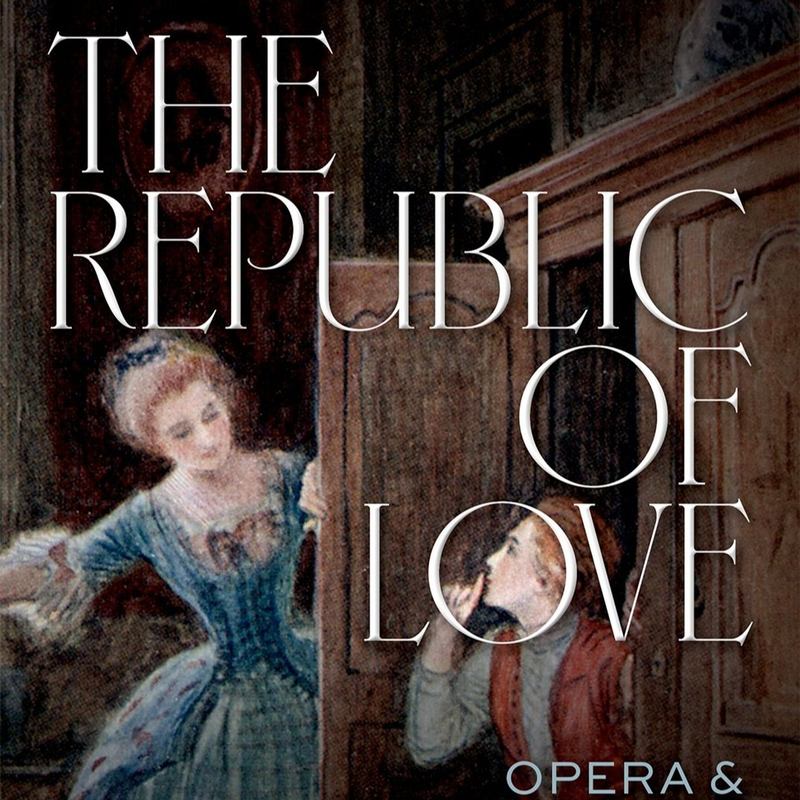
Brian: No, that's not The Brian Lehrer Show theme, obviously. It's Beethoven music from the only opera he ever wrote. Here's the thing. The main lyric from that scene are the first words in a new book called Republic of Love: Opera and Political Freedom by University of Chicago law and ethics professor, Martha C. Nussbaum. The words from Fidelio that we were hearing, or at least that are in that movement as translated into English, are, "Oh, what a delight to draw breath in free air. Only here, only, is life."
I'll read it again. "Oh, what a delight to draw breath in free air. Only here, only, is life." The context is that Beethoven was writing about imprisonment, the conditions of incarceration, relevant 200 years ago and, of course, relevant today. The characters who sing that section are called the Prisoners' Chorus. "Oh, what a delight to draw breath in free air."
Whether Timothée Chalamet is right or wrong, that hardly anyone cares about opera or ballet anymore, Professor Nussbaum has this compelling new book about opera's relevance to political freedom. We will also sample clips from Mozart and John Adams' operas as we go. University of Chicago law and ethics professor, Martha C. Nussbaum, has written many other books that touch politics and philosophy, with titles like The Fragility of Goodness and one she was on the show for a few years ago called The Monarchy of Fear: A Philosopher Looks at Our Political Crisis. Now she's back for Republic of Love: Opera and Political Freedom. Professor Nussbaum, thanks for coming on. Welcome back to WNYC.
Professor Nussbaum: Hi, Brian. Thank you so much for having me on. Thank you for playing that wonderful extract.
Brian: We're going to hear a little Mozart, and we're going to hear a little John Adams as we go. The first thing people will see when they open the book, even before the table of contents, is that line from Fidelio. Why lead with that?
Professor Nussbaum: Because what I'm talking about is the connection of a whole series of operas to debates about political freedom and the importance of cultivating emotions of love and reciprocity in order to actualize political freedom. The connection is that the act of singing, the breath itself, is an act of freedom. What these prisoners are saying is they were allowed to come out into the courtyard for the first time, and for the first time, they can actually draw breath and then, therefore, sing. I put it up front because that's really what I think not all operas, but the ones I write about, are all about, is about the freedom to express yourself.
Brian: Was there a political context of imprisonment that interested Beethoven in his time? Fidelio was first performed in 1805, I believe. We know what some of the politics around incarceration are today.
Professor Nussbaum: I pair it with, in fact, Jake Heggie's Dead Man Walking, which is about incarceration today. I think Beethoven's concerns were very similar to the ones that motivated Jake Heggie, namely the horrible conditions of incarceration, the lack of real compelling justification for those conditions, and of course, the death penalty itself, which is looming in the background of that chorus, because the lead character is in a deeper dungeon, and he's about to be executed by his enemy. The difference is that it's a private prison, and it's a single individual who's responsible for all this. What Jake Heggie shows is that the state itself is doing the imprisoning, and that's something that Beethoven wasn't really conscious of.
Brian: We'll get into Mozart, who is central to the book, and come toward the present with John Adams and his opera Nixon in China. Why, in general, Professor Nussbaum, a book about opera's relevance to political thought now, in 2026?
Professor Nussbaum: I've always been a huge opera fan, and I guess I think all these debates about democracy and enlightenment thought ignore the emotions, for the most part. I think this is the contribution of opera, that it asks us not just to think the right thoughts, but it asks us to dig into ourselves and cultivate emotions of love and reciprocity.
I think it was Mozart's idea of-- He was the first one who had this idea, I think. He was a Freemason, and he thought a lot about politics. He thought that unless you cultivate love and reciprocity through music, you weren't going to realize these values in the fullest way. I follow a series of composers ranging from, indeed, Mozart to Jake Heggie and John Adams, who continue this line of thought.
Brian: Mozart, he composed before Beethoven, that was the 1700s, and you write that the Mozartian strand you follow is one associated with the liberal enlightenment, and that Mozart was a committed man of the enlightenment. In what ways do you mean that, for example?
Professor Nussbaum: I mean that he was part and parcel of a reformed spirit in the Austro-Hungarian Empire. Joseph II had de-ghettoized the Jews, and he had done lots to limit the dictatorial power of the Catholic Church. Mozart was part of this reformed spirit. He went further, and he was actually a committed freemason, which was pretty controversial. The Freemasons believed that all people, working people, aristocrats, they had to come together. The lodges that he chose for himself was not one that had elites in it. It had really bourgeois people and working people. It also had racial minorities, and it didn't have women, but he urged that it should be open to women as well.
He was a pretty more radical egalitarian than a lot of the people around him. He was kind of that court composer of his freemasonic lodge. They called on him to write various things. You can trace this not only in his opera The Magic Flute, which is famously connected to his freemasonic views, but in lots of the things he wrote. He really believed that people were equal, but to realize that equality, you need the emotions, and you need to be exchanging love with others in a climate of reciprocity.
Brian: Hence, to some degree, the name of the book, Republic of Love: Opera and Political Freedom. Here's a short sample from a Mozart opera you write about, The Marriage of Figaro.
[MUSIC - Lorenzo Da Ponte and Wolfgang Amadeus Mozart: The Marriage of Figaro]
Brian: I want to ask you a little bit more about your thought that Mozart was for his time, I guess, and in the context of his music, a promoter of more gender equality in particular, right?
Professor Nussbaum: Yes, and you can trace in The Magic Flute the fact that women are included at every stage. Pamina, the heroine, takes the lead in the trials that lead to initiation. The chorus of initiates is scored for both males and females. These are things lodges in France had admitted women. The thought, I agree with scholars who think that Mozart and his librettist, chickenator, were carrying on that fight within their own lodge, trying to say, "You too should admit women as full equals."
Brian: Listeners, we might have time for a phone call or two or a text that I could read for Martha C. Nussbaum on opera and politics. Any opera and politics connectors out there with respect to any opera that you're a fan of or anything related, 212-433-WNYC, 212-433-9692, if you want to get in on it over the next few minutes.
Much closer to the present, you write about the John Adams opera, Nixon in China. I'm lucky enough to have seen a performance of that one time. Amazing for the music, amazing for the lyrics, amazing for the beautiful, but also sometimes comical, I think it's fair to say, sets and oversized props, like a big airplane replica touching down on stage as if Nixon landing in Beijing. Here's a little from that opera, and then I'll ask you to talk about it.
[MUSIC - John Adams: Nixon in China]
News, news
News, news, news, news, news
News, news, news, news, news
Has a, has a, has a
Has a kind of mystery
Has a, has a, has a
Has a kind of mystery
Brian: Act I, Scene 1, they call that "News Has A Kind Of Mystery." If you couldn't quite make out the lyric, news has a kind of mystery. That was a version by Edo de Waart in the Orchestra of St. Luke's. The Mozart excerpt was from musical list, Leitung, just to give credit where credit is due on those. Professor Nussbaum, you write that opera shows how the search for future peace depends on inevitably flawed human beings. Nixon, Zhou Enlai?
Professor Nussbaum: Yes. This is a theme that runs from the Mozart part on, because Mozart thought we have to find peace and achieve our ideals in the real world, with people as they are, and they are, of course, flawed. That's why his operas are always mostly comic, that the people are flawed and they make peace through that, actually, and not against it. In the second half, I look at various problems in the world that Mozart, dying at the age of 35, had not known about or faced, one of them being the state prison, which I write about.
At the end, I talk about the search for world understanding, and of course, Mozart had no clue about that. I think what's great about Adams' opera is that he's exactly my age, and he came of age in the Vietnam War, and they all hated Nixon, and they thought the war was terrible. He was a draft dodger like everyone else. he realized later that Nixon had a kind of-- The greatness was mixed with the narcissism, and there was this strange mixture, which I think is really true about Nixon, that he really had high ideals, and he was trying to realize them.
In that aria, you hear that, the enthusiasm, the trying to get somewhere, and to get somewhere through actually taking a leap and going there, and trying to understand. This is what Zhou Enlai, at the end of the opera, also does. At the same time, he's Nixon, and he's vain, and then later, shortly after that, he turns paranoid, and says, "The rats are gnawing my sheets." These are the real people in the world who have to do the peacemaking.
Brian: The rats are gnawing the sheets, and the author Edward C. Herman once said, when John Dean and others were deserting the Nixon administration during Watergate, "It's like a rat leaving a sinking rat," which was a funny line at the time.
Professor Nussbaum: It was just after. Watergate was being planned while he was in China, so the good and the bad are contemporaneous, and that's what's so remarkable. I think the trip to China was actually a great and heroic act, and trying to really do something for the world.
Zhou Enlai ends the opera, and he thinks that he's an old man, but he's looking at the world, and he doesn't really want the world of the Cultural Revolution anymore. He was very flawed. He killed lots of people in the Cultural Revolution. What he wanted was a world of détente and understanding. He and Nixon, both extremely flawed, come together in this search for détente and moving forward for the sake of their people, and the theme of feeding the hungry is a very important feature of that opera.
Brian: Seeking détente, maybe not so much for the composer Jimmy in Woodside is calling about. Jimmy, you're on WNYC. Hello.
Jimmy: Hi. I'd love to hear your guest's take on why Hitler loved Wagner's operas, in fact, played them at Nazi rallies.
Brian: Why Wagner? I want to read for the listeners a quote from your book about Wagner, that he was asking us to see a conservative, xenophobic music culture as a genuine condition for genuine musical art. What?
Professor Nussbaum: Yes. Wagner comes into the book as the kind of anti-type of everything else that the book stands for. He had to come in because he's the big opponent that everything that Mozart and Beethoven stood for. He thought that art had to be written by an authoritative artist who would lay down the law for what was true German art, no foreign influences, no French, no Italian. Of course, as he copiously wrote, no Jewish influences.
Wagner, I think, had great talent and certainly his music sometimes compels people, but he was a very sick individual, and he was completely incapable of everything that I talk about, namely, of listening to other people, trying to understand them, reciprocity, mutual respect, and so on.
I think that I'm about to teach a course on opera where we'll talk about Die Meistersinger, which is what I write about in the book, namely this ideal community, which is all the rule of one Wagnerian individual, who just says at the end, Hans Sachs, the hero, says, "Well, beware, there are terrible influences threatening us, these foreign influences. We better keep them at bay and cultivate true, holy German art." That's what Wagner wanted to do. He was the only one he trusted. That's the lesson for us all.
Brian: There's that, which, unfortunately, listeners' heads are bobbing up and down, saying, "Oh, it's really Wagner rising in the 21st century." Now that we've talked about Beethoven, Mozart, John Adams, and Wagner, Desiree in Park Slope is going to close it by raising, who else, Timothée Chalamet. Desiree, we've got about 30 seconds for it. Hi.
Desiree: Okay. As I said to the screener, I believe it is an information-seeking behavior of people to consider the opinions of people in their peer group to be the people. I believe that because people of the age of Timothée Chalamet grew up in an Internet culture, they believe that what's on the Internet and what they can see on social media is the people.
Brian: I'm going to have to leave it there, Desiree, so we have time for an answer.
Professor Nussbaum: I think there's plenty-
Brian: Go ahead.
Professor Nussbaum: -of opera on the Internet. It has actually conduced greatly to the spread of opera, because you can find YouTube performances all over the place, and my students in my opera class come to opera often through the Internet. I think it cuts both ways.
Brian: Was it more of a wide audience art form at any of the times in the past than it is today, though?
Professor Nussbaum: No, I think there were times when it was focused more toward elites. I think that's still true of some parts, I fear, of the New York opera scene. I think the growth of opera comes really from the regional companies, the smaller companies. We've never had better young singers than we do now. The education of singers is fantastic. I've just been listening to a new recording of a Baroque opera that has in it mostly young people of color, Asian, Black, and these singers are fantastic.
Brian: That is the last word. Martha C. Nussbaum, professor at the University of Chicago, author now of Republic of Love: Opera and Political Freedom. Thank you so much for sharing it with us.
Professor Nussbaum: Oh, thank you so much, Brian.
Copyright © 2026 New York Public Radio. All rights reserved. Visit our website terms of use at www.wnyc.org for further information.
New York Public Radio transcripts are created on a rush deadline, often by contractors. This text may not be in its final form and may be updated or revised in the future. Accuracy and availability may vary. The authoritative record of New York Public Radio’s programming is the audio record.