
One Month of Mayor Mamdani
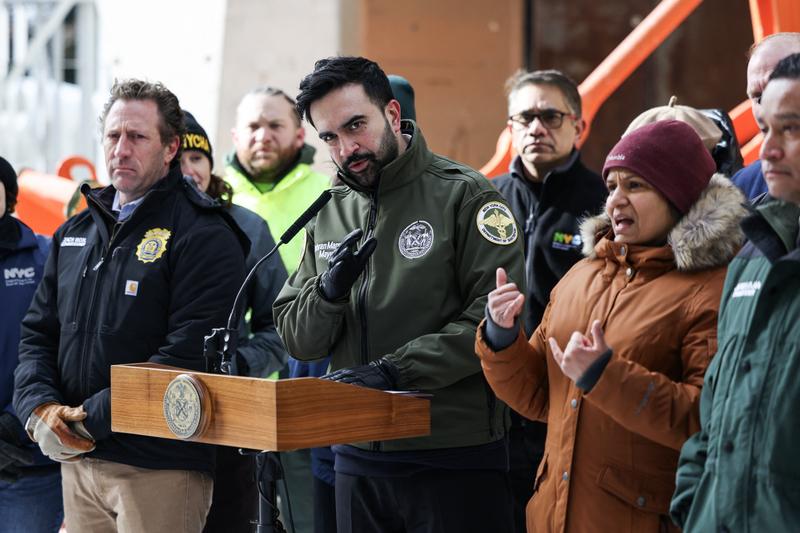
( Angela Weiss/AFP / Getty Images )
Title: One Month of Mayor Mamdani
[MUSIC]
Brigid Bergin: It's The Brian Lehrer Show on WNYC. I'm Brigid Bergin, senior reporter in the WNYC and Gothamist newsroom, filling in for Brian today. Happy Friday. Coming up on today's show, we'll talk about the deal President Trump and Senate Democrats have said they reached to continue funding the government, and what's happening with the changes to the Department of Homeland Security and its immigration enforcement operations that Democrats were demanding. Siobhan Hughes from The Wall Street Journal will be with us in about half an hour to talk about that.
Plus, have you heard about the general strike some activists are planning for today? Are you participating? We'll talk to Rutgers labor relations professor Eric Blanc about the history of general strikes. They're relatively rare, and how this one today might go. We'll wrap today's show with your calls about your cozy hobbies. We're talking about activities like knitting and other textile arts, maybe puzzles, playing board games, or are you back to baking sourdough? You get the idea.
What have you gotten into during this incredibly frigid stretch of winter? Is it helping you feel more grounded during what is a tough time for so many people? We want to hear about your cozy hobbies around 11:40 today. But first, it's January 30th. There's just one day left in what has felt like a very long month. For New York City Mayor Zohran Mamdani, it started like this.
Crowd: Zohran, Zohran.
Bernie Sanders: Please repeat after me. I, Zohran Kwame Mamdani.
Zohran Mamdani: I, Zohran Kwame Mamdani.
Bernie Sanders: Do solemnly swear.
Zohran Mamdani: Do solemnly swear.
Brigid Bergin: And it's ending like this. Here's about a minute from one of the latest videos released from the mayor's office about the state of snow removal.
Zohran Mamdani: Across all five boroughs, we've melted 23 million pounds of snow using eight snow melting sites like this one. We've cleared 12,850 crosswalks and 10,450 bus stops, including 98% of sheltered stops. That work continues around the clock. Every 12-hour shift. 2,500 sanitation workers are out there clearing bus stops, crosswalks, hydrants, and other critical infrastructure.
Another 100 DSNY workers, 300 contractors, and 800 emergency snow shovelers are breaking up snow ridges and hauling snow out of our neighborhoods. We've spread 116 million pounds of salt across the city so far. At the same time, outreach teams are working 24/7 to bring homeless New Yorkers inside. In just 10 days, we've made more than 600 placements into safe havens and shelters, opened 20 warming buses and 18 enhanced warming centers. Let me be clear: no one who needs help will be turned away.
Brigid Bergin: Your head might be spinning. There were a lot of numbers in there, but so far, Mayor Mamdani has received generally high marks for the city's response to the first major snowstorm on his watch, including one of the longest stretches of sub-freezing weather that we've had to deal with in a very long time. One stat he did not mention: the 10 New Yorkers so far who've lost their lives since the start of this extreme cold stretch, but that's far from everything we've seen in this first very busy month for the Mamdani administration.
Joining me now to break down what we've seen so far and where we're headed, plus to take your calls, is my colleague from the WNYC and Gothamist newsroom, politics reporter Elizabeth Kim. Liz, good morning. Thanks for joining me.
Elizabeth Kim: Good morning, Brigid.
Brigid Bergin: Liz, we're going to go through some of the highs and lows of this first month, but I started by playing a little sound from Mayor Mamdani's inauguration. That was, of course, the dayside event. For those of you who might have missed it, that was Vermont Senator Bernie Sanders giving Mamdani the oath of office. I covered that event, but Liz, you covered something that was very cool the night before that. Can you describe it?
Elizabeth Kim: I think I lucked out with the better assignment, Brigid, because I know it was very, very cold-
Brigid Bergin: It was.
[laughter]
Elizabeth Kim: -on Inauguration Day. It actually wasn't that cold the night before for the swearing-in ceremony. Mamdani elected to have his swearing-in ceremony inside this hidden subway station that runs beneath City Hall. This subway station, what I would describe it as, it's this kind of bygone era. It represents this bygone era of civic glamour, this kind of Beaux-Art architecture.
I think that New Yorkers are probably more familiar with this type of architecture with Grand Central Station. This is like a little taste of that. It's a smaller scale of that. You walk inside, and we were escorted by city officials down this hidden staircase. It's amazing. It opens up this secret passageway where you see these vaulted tile ceilings. There're brass chandeliers. There are skylights. It opened in 1904, but it closed in 1945 because the platforms were too short.
The setting was obviously symbolic. The mayor himself said, "Transit is the lifeblood of the city." It was also meant to set the tone for this aspiration towards excellence.
Brigid Bergin: Sure. One of the things that distinguished Mamdani's campaign was very clear messaging. From your perspective, it sounds like part of the message he was trying to convey, symbolically, if nothing else, in that particular ceremony was something maybe a bit more aspirational about city government.
Elizabeth Kim: Right. I was thinking about this on my way to work today. What he's doing in this moment is, like I said, he's trying to say that this is some kind of bygone era where government could build these really amazing landmarks. The subway station is a democratizing space because everyone can use the subway. Like I said, this is the economic engine for the city.
I wouldn't go as far as to say that that no longer exists, because I think if we can think about-- There are recent new transit hubs that the city has actually built, and I think they do conjure this sense of grandeur that government can actually do quite amazing things. Just think about the Oculus, for example, and the experience of walking through that.
He's saying why can't we do more types of ambitious projects like this? Because government can be excellent. Right off the bat, he's sending that message, and he's setting a bar for himself and his administration.
Brigid Bergin: Listeners, we want you to be part of this conversation. If you could give the mayor a letter grade for his performance this past month, what would it be and why? What do you think about some of the early policy moves to protect tenants, expand childcare? What about some of his political decisions, his push to get Albany to tax the rich? What do you make of his communication style? Do you like those types of social media videos? Did you feel like the city was on top of the storm?
Call in and give us your letter grade for Mamdani's first month in office and why. The number is 212-433-WNYC. That's 212-433-9692. You can call or text that number.
Liz, you're talking about how he had set the bar for himself. One of the things that he did right after that dayside inauguration ceremony was to show that this was going to be an administration that was going to work. He went from that big ceremony outside City Hall, where there were some folks partying, and there were freezing cold block parties outside, to an apartment in Brooklyn, where he signed an executive order. One was to revitalize the office to protect tenants. He appointed a woman named Cea Weaver as its director. Talk about that decision to re-set up this office and why that sparked some controversy.
Elizabeth Kim: First of all, if you run on the issue of affordability, the biggest cost that makes the city unaffordable is housing. In many ways, it was very smart for him to tackle the biggest ticket item that New Yorkers face. What really prices New Yorkers out of this city is how much they pay in rent. Right off the bat, he appoints a new director for this office to protect tenants.
It was not surprising; he's known Cea Weaver for a long time. She's a very prominent tenant advocate in Albany. She does have experience. What happened afterwards, though, was the surfacing of some of her tweets. She has a lot of tweets. She has a long history of tweets. I think that some of what she said is not particularly surprising. She has been this really outspoken defender of tenant rights and a critic of the role that racism plays in housing policy.
That's been well documented, Brigid, through the history of redlining. Nevertheless, statements she made, like "home ownership is a weapon of white supremacy," it raised eyebrows, and it was polarizing. This is, I think, something that immediately his transition team realized they would have to confront because this is a young mayor. He's 34 years old. He's the youngest mayor in over a century. He's surrounded by other people that are around his age. These are people that came of age in the-- They're very online, in other words.
Brigid Bergin: Sure.
Elizabeth Kim: They came of age in the Internet. You can expect that they're going to have lengthy social media history. I think right off the bat, it was very instructive to see how does the administration handle that, and that this is something that's going to be scrutinized by people, by his political opponents and critics.
Brigid Bergin: Another decision, Liz, that was seized upon by some of Mamdani's skeptics was his decision to sign an executive order rescinding all of the previous Executive orders signed by former Mayor Adams after September 26, 2024. He didn't just pluck that date out by accident, right?
Elizabeth Kim: No, he chose that date because that was the date of Eric Adams's indictment on federal corruption charges. His argument was that this was the day that New Yorkers lost trust in Adams because every decision, every policy decision that he made after that date could be construed as him trying to cozy up to the Trump administration for a pardon. Adams has, of course, vehemently denied that that was ever the case.
The mayor's poll numbers did plummet after that indictment. I think many New Yorkers did feel that the mayor was compromised. At the same time, like you said, Brigid, there were skeptics, and the skeptics questioned whether this was just convenient framing for the mayor because the mayor wanted to undo specifically policies around Israel and antisemitism that he knew would draw a lot of attention.
The mayor, he is the first mayor in recent memory that has been a sharp critic of Israel and the government's treatment of Palestinians. It was no surprise that he would want to undo some of these orders. One of the orders that he undid was Mayor Adams had codified a certain definition of antisemitism. Another executive order that he undid was one that banned city agencies from boycotting Israel.
There was a third that actually was interesting. There were several that he did not undo. Mayor Adams created an office to combat antisemitism. There was a little bit confusion in the beginning when he issued this order of revoking them, and then the mayor had to actually step back and clarify, "No, that is not one I am undoing." There was another one that he ultimately ended up just amending, but there was an order that allowed the police department to review how it polices protests outside houses of worship.
Brigid Bergin: For those of you just joining us, this is The Brian Lehrer Show in WNYC. I'm Brigid Bergin, senior reporter in the WNYC and Gothamist newsroom, filling in for Brian today. My guest is Elizabeth Kim, politics reporter in the WNYC and Gothamist newsroom, my colleague. We're taking stock of the first month of the Mamdani administration, and we're taking your calls. What grade would you give the mayor in his first month in office, and why? Let's go to Ariella in lower Manhattan. Ariella, you're on WNYC.
Ariella: Hi. This is incredible. Long time listener, first time caller. I would give Mayor Mamdani a B+. I am Jewish. I am a proud supporter of Israel and of Israeli descent. I did not vote for Mamdani. I am heartened by the way in which he has very vocally and vehemently condemned the antisemitic attacks that have happened since he took office.
I am very cautiously optimistic that he is going to do right by the Jewish people. That has been a relief. As far as somebody who lives in the city and commutes all over the city for work, the roads and the streets are not so bad. I definitely will give him a B+. Very cautiously optimistic with what he's done so far.
Brigid Bergin: Ariella, thanks so much for that call. We appreciate it. Listeners, we want to hear your grade and why, for the first month of the Mamdani administration, the number 212-433-WNYC. That's 212-433-9692.
Liz, before we move on from this, on those executive orders, particularly the ones related to Israel and antisemitism, one of the loudest critics of Mamdani when he signed that initial executive order rescinding them was City Council Speaker Julie Menin. She is essentially the second most powerful elected official in city government. She was not the favored candidate of Mamdani for the speakership, but she was elected by unanimous consent in the 51-member city council. How would you say that she has been positioning herself against the mayor?
Elizabeth Kim: From the very beginning, she has been described as someone who would be a check on the mayor. I've really been watching her closely to see whether or not that's fair. I think what we can tell from these early weeks is she's certainly asserting herself in a way that might be a departure from other speakers.
The term I've heard lately from some critics is shadow mayor. I think some of that is from the fact, like just to name a recent example, she was very much on the ground during the snowstorm. She tweeted out a photo of herself. She was in a sanitation jacket. This is sort of the role that you would expect a mayor to play. She's been out in front with her own social media and her own videos. What I would say, though, to people who criticize this, it is her prerogative to decide what kind of speaker she wants to be.
Brigid Bergin: Absolutely.
Elizabeth Kim: Yes. She has set up some countervailing policies that do appear to be a check on the mayor. She set up her own task force to combat antisemitism. She has introduced legislation in which she wants to set up a certain amount of distance; a bill that would propose how far protesters outside houses of worship can stand. That's likely to face a lot of constitutional challenges. It's unclear that the city can do that legally. All the same, she is making a statement with these kinds of decisions and also, with the optics of, like I said, being out there in a sanitation jacket.
Brigid Bergin: We're going to take a short break. More with my guest, WNYC and Gothamist politics reporter Elizabeth Kim. Of course, your calls coming up. Stick around.
[MUSIC]
Brigid Bergin: It's The Brian Lehrer Show on WNYC. I'm Brigid Bergin, filling in for Brian today. We're talking about Mayor Mamdani's first month with my WNYC and Gothamist newsroom colleague Elizabeth Kim. Liz, we were talking about the relationship between Mayor Mamdani and Speaker Menin, and I think you had something to add there.
Elizabeth Kim: Yes. I think, to be fair, you have to also point to the areas in which she and the mayor have come together and united on policies. She was very much for the mayor's universal childcare plan. She's even very interested in his idea for free buses. Right off the bat, in the beginning weeks, she appeared at a press conference with the mayor to ban so-called junk fees. These are these very hard-to-decipher fees that you might see when you're booking a concert or booking a hotel room.
She's very much about consumer protection and also worker rights. They do have a list of shared priorities. However, when it comes to these other issues like Israel, I think that gets a little bit outsized attention. Mostly, I think, because people do like to focus on the areas of tension, but also because of the mayor's relationship with the Jewish community is so fraught and sensitive.
Brigid Bergin: I want to shift gears a little bit to some of the policy conversation. A reminder to listeners, we are taking your calls and your letter grades for the first month of Mayor Mamdani's term in office. I want to sneak in a caller. Let's go to Michael in Queens. Michael, thanks for holding on. What do you grade Mamdani's first month in office?
Michael: How you doing? I'd say an A. One of the things that I noticed, he had a press conference after the storm, and he mentioned particularly to thank the New Yorkers that helped each other, the young people helping the elderly, and people shoveling each other out. To congeal the constituents and to have hopefulness in the community. As a New Yorker, where we've always helped each other out, it was nice to see the nod to that. It puts the social and democratic socialism where we have to help each other, and I appreciated that from him.
Brigid Bergin: Michael, thanks so much for that call. Liz, let's talk a little bit more about some of the policy achievements or first steps we should probably say in this first month of office. One of the mayor's signature campaign pledges was to achieve universal childcare for all New Yorkers. That hasn't happened yet, but he got a pretty big boost in his first week in office thanks to Governor Kathy Hochul.
Kathy Hochul: Today, I'm proud to announce that New York State is paying the full cost to launch 2-Care for the first time. [applause] Universal daycare for 2-year-olds as proposed by Mayor Mamdani. We're not just paying for one year of the program. We don't usually go one year out in our budget, but just to let you know how serious we are, we're taking the unprecedented step to not just commit for the 2027 budget, which I'm working on right now, but also the following year as well, to show we are in this for the long haul.
Brigid Bergin: Liz, let's talk both the substance and optics of this announcement. You've got Mayor Mamdani at a YMCA in Flatbush, Brooklyn, standing there with Governor Hochul. Of course, the photo op is the two of them hand in hand, raising their fists together, celebrating this new money for expanding childcare. They're surrounded by childcare advocates and, of course, kids. You can hear them in that clip we just heard. This is a big deal, but it's not a done deal.
Elizabeth Kim: That's right. I thought it was interesting to hear the governor say, to prove that we're in it for the long haul, we're also paying for the second year. That doesn't sound like the long haul to me. [laughter] To my ears. That's two years. What about the rest of the life of the program? How is it going to be financed? No doubt it's a huge win.
I keep thinking about what would have happened if former Mayor Bill de Blasio had been able to have Cuomo at his side right off the bat when he rolled out his very ambitious plan for universal Pre-K, and the two of them had come together on that. Wouldn't that have been something? This is why I think to political observers, it's like, "Wow, right off the bat, he has the backing from the governor."
We should say he has leverage. He has leverage over the governor. The governor is running for reelection. He was elected on this broadly popular idea of having the government be more proactive in helping New Yorkers, in helping fund childcare for children younger than age 3 in New York City. That, along with housing, is one of the driving costs that make the city unaffordable.
No doubt it is a big win, but in a way, I do wonder, it immediately puts the ball in his court because she's paying for the first two years. The question then becomes, well, how do we sustain it? Then there's even the bigger question of how does he implement it?
Brigid Bergin: Well, let's get to that. That's part of what I think is interesting. Both how to pay for it, how to sustain it. Launching what is essentially another grade is a huge lift. We saw that under the de Blasio administration, it took every facet of government working together to get Pre-K off the ground and then to ensure there was long-term funding for it.
Hochul is saying she's going to pay the first two years, but at the same time, Mamdani has been keeping up this pressure about raising taxes on the wealthiest New Yorkers and corporations. He was up in Albany and just after her State of the State speech, where he actually was in the audience, led the standing ovation when she talked about funding childcare. He said this when he was talking to reporters after her speech.
Zohran Mamdani: There is no question that New York City requires additional recurring revenue. We inherited a budget that mismanaged finances at every turn. Our city also plays an outsized role in supporting the state, that in itself is a legacy of the prior governor. We also have to ensure that we have the resources not only to fund our affordability agenda, but also to fund the demands of our city's budget.
This is a moment in time where we saw a historic number of New Yorkers, more than a million, come out to support an agenda that would not only protect what New Yorkers had, but also advance a vision of a city where they could afford to live in. That's also an agenda where we made explicit to pay for by raising taxes on the wealthiest New Yorkers and the most profitable corporations. I look forward to making the case directly to our partners in Albany as to what our city needs to not only be able to operate sustainably, but also to fulfill an agenda that will keep New Yorkers in New York.
Brigid Bergin: Liz, that was two weeks ago. I'm wondering how you hear that clip now. I remember thinking when I heard it at the time, "Oh, this is foreshadowing." This is how we're going to hear him talk about the budget going into the city's budget cycle. Given what we heard from the mayor's office this week, that kind of unexpected preview, we got to how he is framing his preliminary budget. How does that hit your ears now?
Elizabeth Kim: You're right, Brigid. He was basically foreshadowing, tipping his hand as to how he was going to make his argument to the state when he proposes his preliminary budget. What he's arguing is essentially two things. He's arguing that Eric Adams mismanaged the city budget and that we are in a grave financial crisis, so we're going to need help from the state.
He's also putting some of the blame on the city's finances on not the current governor, but the governor who was in Albany five years prior, Andrew Cuomo, by making the argument that there has been this long-standing imbalance between the revenues that the city sends to Albany and what Albany gives back. Now, that has been an argument for a very, very long time.
Then he's going back to one of his core principles, which is, we need raise taxes on the rich. Now, I think we were talking earlier about what kind of tone he was trying to set with both the swearing-in and also his Inauguration Day speech. I think the line that a lot of us remember, that stood out on that day-- There were a lot of good lines that he had in that speech, but it was the one where he said, "I was elected as a Democratic socialist, and I will govern as a Democratic socialist." Then you saw the camera pan to Bernie Sanders and AOC applauding approvingly.
I think at the time, a lot of us were wondering, "Hmm, what does that really mean?" I think that what we've seen that mean is his identity as a Democratic socialist is rooted in this belief that there needs to be more wealth redistribution and wealth redistribution through taxation. So far, we've seen him hew to that belief and that rhetoric. We've seen it through that stage of the game, which was when Hochul delivered her State of the State, and his response to it, too, this week when he laid out his opening salvo around his preliminary budget, which is due next month.
Brigid Bergin: Exactly. I think it's a line that we heard more from him about this week, and we're going to continue to hear justifying why he thinks this tax increase is really necessary for him to be able to keep up the services the city is currently offering, and then potentially keep any of the campaign promises that he made.
Elizabeth Kim: Well, in part, he could say, "Hochul's giving me $4.5 billion for two years, where's the rest of the money going to come from?" That's essentially part of his argument, in addition to saying that the city's finances are in dire straits.
Brigid Bergin: I want to get in more of our callers. In your text, one listener wrote that they give Mamdani a B so far, even though one month in with a little emoji. Kudos for pushing back on this hyperfocus of Israel. Foreign policy is not part of the mayor's job. Not doing great on this storm. Clean them up. Mamdani coming down so hard on Adam's quote, "Deficit is just so old school. You ran to be mayor. You own the budget." Let's get some listeners, some callers in who may offer their own grades. Lauren in Brooklyn, how would you grade the first month of the Mamdani administration?
Lauren: Hi. Great to be on. I'm going to go B+ because I'm optimistic, but there are things that I want to see. It was crazy to immediately secure childcare funding day one. Like you said, it's only for two years, and if we don't get that baseline in the budget, that is going to be a huge burden for the city to have to make back long term.
We're already seeing problems right now where programs have been expanded, but the funding has only been secured for it for a couple of years, and so you're left with these huge deficits. If that continues, it's going to be a huge problem for the city. Because of term limits, mayors aren't really incentivized, especially one-term mayors, aren't really incentivized to baseline that funding.
Brigid Bergin: Lauren, important issues that you're raising. Thank you for that. Let's go to Edie in Brooklyn. Edie, you're on WNYC.
Edie: Hi, thanks for taking my call. I would give Mayor Mamdani an A. His handling of the storm was amazing. His outreach to people during this time was wonderful. I also have great hope for all the citizens in our city with him as the mayor. I hope that he continues on that path. I appreciate what he's doing. Take care. Thank you.
Brigid Bergin: Edie, thanks for your call. Appreciate it. Liz, some decent remarks from our listeners so far. Some people who have some critiques are not giving me their grades. They're just writing some frustration with some over the snow handling, some objecting, just to his political roots. Some people who don't like the fact that he is so affiliated with the Democratic Socialists of America and critiquing him on that front.
I do want to talk a little bit more about the snow response, which you had written about as potentially an early test for the administration. I remember covering--
Elizabeth Kim: A classic test.
Brigid Bergin: Yes. I remember the beginning of the de Blasio administration. He was socked with a snowstorm, and then he was buried in complaints from Upper East Siders who said that the plowing just was not sufficient in that part of the city. How do you think Mamdani is handling things so far?
Elizabeth Kim: There are two parts to that test. One part is messaging, which it seems like some of the people who have called in and have given him good grades. Felt he was very successful at it. That's no surprise. He is a very skilled communicator. Then there is good old execution. What that boils down to is, "Was your street plowed?"
I was laughing because every time I was listening to the radio, and I would listen to Mamdani or another city official would say, "New York City has the biggest snow fighting operation in the country." It just made it sound like, "Wow, we're really able to do this." Now, the city has maintained that every street got shoveled at least once.
At the same time, and this is not new, this is not just happening under Mamdani, this happens every time there is a very big snowstorm, which is this question of, what about the sidewalks, what about the crosswalks, what about the bus stops? I don't think the city has really come up with a good answer to that, particularly with this snowstorm, because the temperatures have hovered around freezing.
This snow, it's still out there. There are images that I'm sure everyday New Yorkers have seen, trying to get to a bus stop, where there are mounds and mounds of snow. I'm watching parents, people in wheelchairs, trying to just cross the street is extremely difficult.
I think that is one question that has been put to the mayor. Should the city be doing more? Of course, we do understand that property owners are responsible for their own sidewalks, but let's be honest, there are many property owners who do not get to it very quickly, but you as a pedestrian, you need to get to where you need to go, and you're going to need to traverse that sidewalk. I think this raises good questions for the mayor. Then we'll see. I presume there'll be more snowstorms to come under his tenure.
Brigid Bergin: Absolutely. To your point, Liz, I think we are witnessing him learn the complexity of really running the city in real time. Again, the marks that many observers have given have been relatively positive, but hearing those updates from the Office of Emergency Management, the tentative initial position he took on whether city school kids would get a snow day, and then having to reposition that. Here's a little bit of what he said at one of those updates over the weekend.
Zohran Mamdani: We have stress-tested systems, sent students home with the materials and technology they need to learn virtually, and are working with vendors to ensure that our systems have the capacity that they need. I know that this may disappoint some students, so if you do see me, feel free to throw a snowball at me.
Brigid Bergin: Of course, that's the mayor, and this was actually on Monday. Just reinforcing the fact that, instead of the traditional snow day, where maybe you'd be outside, I think he told a story at one point of hurting his arm by sledding in a garbage can when he was a kid, that that would not be formally part of the day that kids were supposed to do some version of remote school. There were some hiccups, but it wasn't quite on the scale of what we saw in the previous year, the previous snowstorm, which I think was two years ago.
Elizabeth Kim: That clip you played, that's a testament to his ability to communicate effectively. He knows he's going to be criticized by some parents over the shift to remote day. He knows the kids are unhappy, but he says, "Hey, throw a snowball at me."
Time and time again, he's able to use humor to deflect that kind of criticism. We should note, Brigid, you've talked about it yourself, is that it's the unexpected things that happened. In this case, it was the deaths of 10 New Yorkers who died outside. Now, the Coalition for the Homeless has said-- Dave Giffen had said that he can't remember in recent history when that many New Yorkers have died in this short time period of very frigid temperatures. I think to a lot of people it's alarming. The question is, and it's a fair question, did the mayor anticipate this, and was the city prepared? Did it proactively do enough to bring homeless New Yorkers inside?
Brigid Bergin: Well, that's a question that I think we're going to keep focusing on as we get through this very cold stretch of weather. As you all know, listeners, it is not done yet. The forecast for next week is just as cold and-
Elizabeth Kim: And dangerous.
Brigid Bergin: -dangerous, yes. To be clear in this initial conversation about the Mamdani administration, Liz and I, who report on city politics, are very aware that this is just the beginning. We're doing more of a pulse check. We appreciate listeners who participated in giving this first month a grade.
I think ultimately we know that the grade is incomplete because this is the very early stage of the administration, but a way for us to check in with how people are feeling, how they're doing, and have you part of our conversation. Liz, we've got a lot of work to do, but I'll see you back in the newsroom. Thanks for joining me this morning.
Elizabeth Kim: Thanks, Brigid.
Copyright © 2026 New York Public Radio. All rights reserved. Visit our website terms of use at www.wnyc.org for further information.
New York Public Radio transcripts are created on a rush deadline, often by contractors. This text may not be in its final form and may be updated or revised in the future. Accuracy and availability may vary. The authoritative record of New York Public Radio’s programming is the audio record.
