
NYS Budget Sticking Points
Title: NYS Budget Sticking Points
[music]
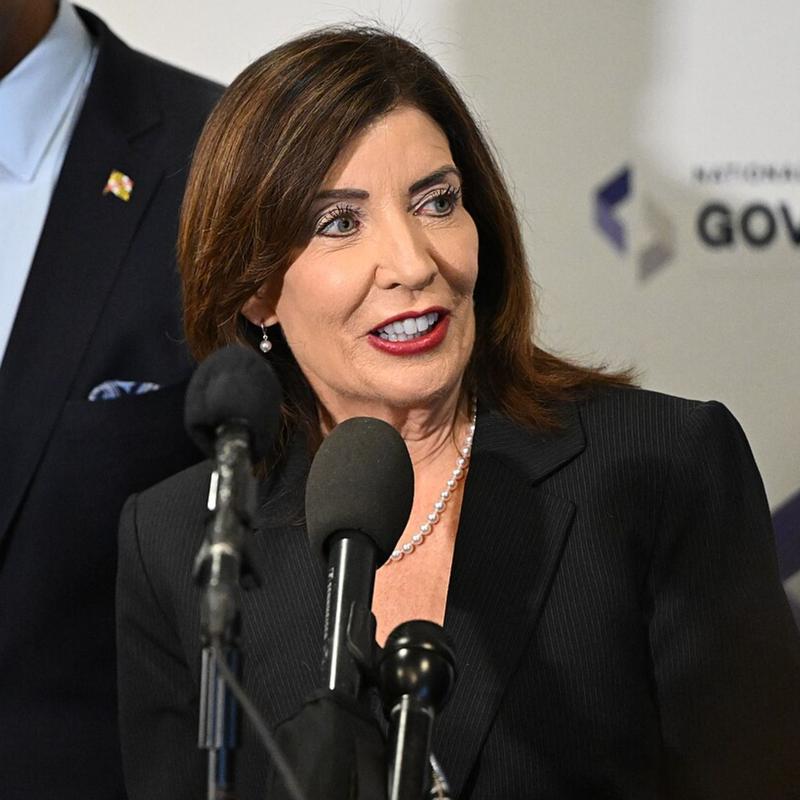
Brian Lehrer: It's The Brian Lehrer Show on WNYC. Good morning, everyone. We have breaking news this morning on the Zohran Mamdani-Kathy Hochul tax-the-rich front. Remember, there's a stalemate in Albany right now over this and a few other consequential things. The state budget was due on April 1st, when the new fiscal year began for the state. Today, it's a full two weeks late. Here's the breaking news. Late yesterday, it's being reported Governor Hochul said she will now propose a tax on some specific rich people. It would be in the form of a so-called pied-à-terre tax. That is a tax on second homes, certain very high-end second homes located in New York City. It would be an annual tax on those homes.
WNYC and Gothamist Albany reporter, Jon Campbell, is here to explain how that would work and whether it would raise the same money for childcare and other priorities as the broader tax on the wealthiest that Mayor Mamdani has proposed. Wait, there's more. Jon says the tax-the-rich question is actually not the biggest sticking point in the budget, even though it gets most of the press. The real biggest sticking points are about car insurance, climate rules, affordable housing construction rules, and sanctuary for immigrants, just those few little details, right? Jon Campbell joins us now from Albany, where even there it's going to be almost 80 degrees while the city is looking at 87 today. Hi, Jon. Welcome back to the show.
Jon Campbell: Hi, Brian. It is a beautiful day in Albany, New York, as always, I should say.
Brian Lehrer: As always. Certainly in January. Let's start with what's new and then get to what else is stuck. What's this version of tax the rich that the governor is proposing?
Jon Campbell: This is a slimmer version of tax the rich. It is not a broad-based income tax increase on people making a million dollars or more, which is what Mayor Mamdani wanted. This would be a tax on second homes in New York City valued at $5 million or more. These are homes that often sit empty for the most part. There's been a push at various points over the years to implement what's known as a pied-à-terre tax. The idea is that you're taxing people who don't primarily live in the city. These are very, very wealthy people, the global elites, as Mayor Mamdani would say, and has said since this proposal leaked out, and the governor is on board with it.
This is not something she's been on board with in the past. It is something that Mayor Mamdani is embracing as a win, even though it is only a sliver of what he was looking for, but it looks like the makings of a political deal here where Mayor Mamdani can say, "Hey, look, we're taxing the global elite." Governor Hochul can go to the business groups and say, "Hey, but look what I held off." We don't totally know where lawmakers are on it yet, but there's reason to believe that they will be amenable to this, especially since the mayor has so enthusiastically embraced it.
Brian Lehrer: Right. The second home has to be worth more than $5 million. This is not going to be a tax on people who maybe moved out of the city during the pandemic near Hudson, New York, or somewhere in the Hudson Valley, because maybe they kept a two-bedroom apartment. It's not worth $5 million. Who are the very wealthy who have these kinds of second homes? One article I read this morning says, "Many of them are not only not New Yorkers. Many are, in fact, from other countries." Do you have a sense of that?
Jon Campbell: Yes, the reporting in the past has bore that out that a lot of these are owned by people from foreign countries, who rarely, if ever, visit them. It is a place to-- for a lot of people, it is a way to store wealth, right? You buy this, you hope it goes up in value, et cetera, et cetera. That is the big part of this here that the governor is selling, which is we're not taxing New Yorkers. We're taxing people from outside of New York who are very wealthy and have these pied-à-terres that they rarely, if ever, use.
Brian Lehrer: Politically, the governor wouldn't be taxing New York State residents, New York State voters, very much with this version of tax the rich while she's running for reelection. Would this raise as much money? I think you've already said no, as the mayor's version for his goal of universal childcare and his requirement to close the budget deficit that he inherited from the last administration upon taking office.
Jon Campbell: Yes, the answer to that is a resounding no. The mayor's proposals, which were primarily, there was a whole menu of proposals he had out there, but the four biggest ones he had were income tax hike on people making a million dollars or more, an increase in the New York City corporation tax, an increase in the unincorporated business tax, and an increase in the New York City personal income tax. Altogether, those would have raised, by the mayor's latest proposals that he had circulated to lawmakers, about $3 billion, $4 billion, $5 billion, roughly, a year. That was the estimated annual revenue. This would raise, by the governor's estimate, about $500 million a year.
Now, we should also say, too, we have zero details about percentages and what brackets this would apply to. The governor's office had said there would be multiple different brackets, depending on the value of the real estate, but all of that needs to be worked out with the legislature. The one thing they are saying is they estimate it would bring in about $500 million a year. That's a sliver of what Mayor Mamdani had been looking for.
Brian Lehrer: Now, listeners, we can take your questions and comments on any of these sticking points in the New York State budget. 212-433-WNYC, call or text. Governor Hochul's luxury tax on high-end second homes in New York City, rather than Mayor Mamdani's version of tax-the-rich on everyone with an income more than a million dollars a year and the wealthiest corporations. The governor's proposed rules limiting car insurance damage awards to people with more serious injuries and who are not at fault in the crash. We'll get to that. The conflicts over the climate rules, housing construction rules, or cooperation with ICE rules. That's a big menu.
We'll touch on each at least briefly, and you can comment or ask a question on any of them. 212-433-WNYC, 212-433-9692. You can call or you can text with our Albany reporter, Jon Campbell. Jon, has the mayor responded to the governor's proposal yet?
Jon Campbell: Yes, the mayor has enthusiastically embraced it. Importantly, this news came out in The New York Times last night, and the mayor was right there in that article, enthusiastically embracing this. That's big for the governor. I mean, this sometimes uneasy alliance between the governor and the mayor. One way this is playing out positively for the governor is the mayor enthusiastically embraced it. That sends a signal to the left and the DSA, the Democratic Socialists of America chapter, that, "Listen, the mayor's on board with this. Get on board."
So far, what you've seen from the left, you've seen some reaction that this is a good first step, and they want to see more, but you are seeing them react positively to this. That's big for the governor. If the mayor would have reacted negatively and said, "No, this isn't enough," that really, really could have put her into a bind.
Brian Lehrer: A couple of basic questions coming in from listeners in texts. One asks, "How many of these are there in New York City, these homes that are second homes in the city worth $5 million or more?"
Jon Campbell: Well, that gets to some of the criticism of these proposals in the past because this is a proposal that has been around in some form for quite some time, and actually did get some momentum back in 2019 when there was a bailout for the MTA. There was a push to perhaps implement this tax then. Some of the problem is figuring out how many there are. Some of the problem is if someone's homes are owned by separate LLCs, how do you track that back to a particular person? How can you prove that it's their second home? Some of that still needs to be worked out. Like I said, we haven't seen any details here.
That is one of the complications, is trying to figure out how many of these there are, and how to effectively ensure that you have the entire universe of these second homes, these pied-à-terres, as they call them.
Brian Lehrer: Another one. This is interesting. On the point of it being only second homes, not your primary residence, second homes worth $5 million only in New York City. A critical listener writes, "This pied-à-terre is just leaving out The Hamptons and other major rich-person second-home locations. Why?"
Jon Campbell: That is a question for the governor that we have not been able to pose to her yet. She just put this out last night. She is having an event, an unrelated event, in the city in about 20 minutes. I presume she'll be asked about it then. We don't have anything from the governor other than the two-sentence statement that she put out last night, which she said New York City residents who call New York City home should not be left carrying the burden alone. It was very New York City-focused. I think the short answer is they're trying to generate money for New York City.
This is an effort to help the city close its $5.4 billion budget deficit. The governor had already pledged $1.5 billion in state money to help that happen. Now she's pledging an extra $500 million in tax revenue through this pied-à-terre tax, if lawmakers go along with it. I suppose the answer would be that this is New York City-focused because this is an effort to help close New York City's budget deficit, but we haven't had the chance to pose that question--
Brian Lehrer: In so doing, it leaves harmless the wealthiest New Yorkers who are probably residents of New York City, for the most part. Some might be in Westchester or Long Island, but by and large, the Downstate people whose second homes, if they are worth $5 million, probably are in The Hamptons or one or two other places. This proposal to help raise revenue for New York is leaving the wealthiest New York City residents, who would be billionaires, off the hook from a tax hike.
Jon Campbell: Well, but the idea is that they're trying to tax people who don't reside in New York City, who don't reside in New York State. I think that's the general idea. Again, I don't mean to speak for the governor. We have not had the opportunity to ask her about this proposal yet, but I presume--
Brian Lehrer: That's what you're reporting, yes.
Jon Campbell: I presume that would be the answer.
Brian Lehrer: Deborah in Harlem is calling about another tax that might be broadly politically acceptable. Deborah, you're on WNYC. I'm so glad you called, because people raise this all the time, and I think it doesn't get enough press. Hi, Deborah. What's your alternative tax?
Deborah: Yes, thank you for allowing me to lobby for this. It's the stock transfer tax, which was enacted, I think, in 1905. ¢5 on any stock sale over $20. It raised, I mean, billions of dollars. I think, particularly during the fiscal crisis. No one was complaining. ¢5 for every sale over $20. Those of us in the market, who have-- Really, no one noticed it, but it yielded a great amount of money and helped New York through the fiscal crisis. Then, for unknown reasons, well, I think there are reasons. It's not very non-regressive tax. It was repealed, and there have been efforts-- I think Senator Sanders from Queens and two other senators have supported the reenactment of this, reinstatement of this, which I think would cover all of Mamdani's programs. Both the pre-K and free buses, like they have in Portland, Oregon.
Brian Lehrer: Deborah, thank you for raising it. She even knows where they have free buses. Jon, the stock transfer tax, are you familiar with the issue?
Jon Campbell: Yes. That is one that comes up every so often. I believe she's right that it is Senator Sanders from Queens that sponsors a bill on that front. Right now, the governor is arguing against tax increases, right? She has made the argument that she doesn't want to drive people out of New York City and New York State. Whether or not you believe that a tax increase would drive people out, the wealthy in particular, that's what the governor believes. That's what the governor's people believe, her team believes, and that is what she has put forward.
On the stock transfer tax, easy for me to say. The argument against it is Wall Street is losing companies to Texas as it is. There's been a big push by Texas to try to attract some of the financial sector. Implementing a stock transfer tax would make New York less hospitable to the industry. New York is super reliant on Wall Street revenues. Every year, we'd see a report from the comptroller's office on Wall Street bonuses and how much the average Wall Street employee is going to get in a bonus. That is always seen as a harbinger of what tax revenue might be for the coming year and how that would help New York State and New York City finances.
I think you would have a hard time convincing the governor to go along with something like that at this point. It has been hard to convince the governor to go along with pretty much any tax increase, aside from this pied-à-terre tax that she's embracing in the last 12 hours or so.
Brian Lehrer: Another listener texts. "$5 million is a crazy high bar. Every pied-à-terre should be taxed," writes that listener. One more on this, before we go on to some other of these very interesting sticking points in the budget. Charlie, in Mayor Mamdani's political hometown of Astoria. Charlie, you're on WNYC. Hello.
Charlie: Hey, how's it going? I just wanted to ask about what I see as the kind of elephant in the room, or really in Albany, which is since Donald Trump passed the One Big Beautiful Bill Act last year, it has set in motion a series of tax cuts for the richest New Yorkers. People making over a million dollars a year, which is what a lot of these tax proposals that people are pushing forward target. It's going to give these people a $12 billion tax cut. Millionaires and billionaires in New York State are going to pay $12 billion less in taxes than they did last year because of this Trump cut.
There's all this stuff about Hochul, "Oh, I don't want to tax the rich. I don't want to raise taxes on the rich. Okay, we can do the pied-à-terre tax because they don't really live here, whatever." Really, this is a fight to stop them from getting a $12 billion tax cut. Hochul could tax the rich $5 billion, fill the entire city budget deficit, instead of this pied-à-terre tax, which is great, but it's going to fill 9% of the city deficit, and they would still be paying less taxes than last year. She could also tax with $2 billion to cover the 470,000 people who are going to lose health insurance in July from the essential plan cuts that Trump has also set in motion, but she won't do this.
My question is why is nobody talking about this massive set of money that the richest New Yorkers were going to pay, but aren't anymore, because of Trump, that Kathy Hochul is basically handing to the rich. She's effectively co-signing this Trump tax cut for billionaires and forcing the city and state to push all these cuts on ordinary working-class New Yorkers.
Brian Lehrer: Charlie, you should--
Charlie: Why can't she just tax them $12 billion?
Brian Lehrer: You should call every week, because whether people agree with--
Charlie: Brian, I call every week.
Brian Lehrer: Okay, you call every week. You can call twice a week. No, call once a week.
Charlie: Okay.
Brian Lehrer: Whether people agree with your politics or not, you're into this at a very deep level of detail, and I think you're getting a lot of the details right. Now, where people land politically, as I say, is up to them, but Charlie puts some really good things on the table. One, by the way, Charlie, you'll be interested to know that we are going to do a separate segment in a few days on the disappearance of the essential plan, the most affordable health insurance plan that New York State now offers, as part of what's coming out of Washington. That's coming up in a few days.
On his central point, Jon, if you know, the so-called One Big Beautiful Bill gave a tax break to people who are very rich, so here on April 15th, of all days, are the people in that top 1% category actually paying less tax than they were last year? This little two-point tax hike on them that Mamdani wants would actually be awash if you look at it over a two-year period. It wouldn't even be a tax hike on what they were paying before this year.
Jon Campbell: Charlie, don't shoot the messenger here. I'm repeating what the governor has said on this in the past, and that is the idea being that, okay, the federal government has reduced their taxes so the state can increase theirs a certain percentage and they'd still come out ahead. That is true, unless the person decides to move to Florida or Texas, where there are no state income taxes. The argument the governor has made, and the governor's budget director have made, is that the wealthy are highly mobile. They can move around and often have different homes in different states.
The argument they would make, and again, don't shoot the messenger here, is that if you increase taxes in New York, they can pick up and leave and go to another state and still enjoy that full federal tax cut. That would be the argument from the governor's piece.
Brian Lehrer: All right. That argument goes on. Now, folks, after a teeny, tiny, very short break, we'll get to the other-- Oh, by the way, I see we're actually going to do the essential plan cancellation issue on tomorrow's show. I said in a few days. That's going to be tomorrow. After a teeny, tiny, very short break, we'll get to the other little issues holding up the New York State budget. Climate rules, affordable housing construction rules, cooperation with ICE rules. As big as those things are, the one that Jon reports is the politically hottest sticking point of them all, car insurance injury claim rules. Why that more than the epic issues of climate, immigration, and housing? We'll find out. Stay with us.
[music]
Brian Lehrer: Brian Lehrer on WNYC, as we continue down the list of sticking points in the two-weeks-late now New York State budget with WNYC and Gothamist Albany reporter, Jon Campbell, and your calls and texts. 212-433-WNYC, as always, 212-433-9692. Jon, I keep saying that the biggest sticking point is over car insurance reform, an issue most people probably don't even know exists. What's the car insurance fight about?
Jon Campbell: This is a fight over tort reform, essentially. That can make people's eyes glaze over, but essentially, the governor wants to change insurance rules in such a way that would limit, excuse me, what insurers pay out to people who are found mostly responsible for a wreck. If you are 51% or more responsible for a wreck, you'd be limited in what you can recover in damages. The idea being, if insurance companies have to pay out less, then they would decrease rates, but that is something that the legislature, in particular, is fighting back against hard. They are questioning whether that is actually true. They've been pressing the governor's office to give them more specifics on how that would actually work.
Really, this is a proxy battle between two huge interests in Albany, Uber and insurance companies on one side, who, Uber, in particular, has spent about $9 million on an ad campaign pushing the governor's plan, and the trial lawyers on the other side. People who represent car crash victims, the "billboard lawyers" among them, if you will, although they take offense to that term. This has turned into a fight, particularly this week, among the governor and Democratic lawmakers, accusing each other of being in one special interest or the other's pocket.
The governor has benefited from these big-time Uber ads that are through a group known as Citizens for Affordable Rates, and lawmakers have long been beneficiaries of campaign contributions from the New York State Trial Lawyers Association, which is a huge lobbying force in Albany. You've got the governor accusing lawmakers of being in the trial lawyer's pocket. You have some lawmakers, Senator Mike Gianaris in particular, accusing the governor of being in Uber's pocket. Basically, there's a stalemate. They're just staring at each other, and neither side will blink.
Brian Lehrer: I'm going to play some Gianaris and Hochul clips on this as we go, but I actually think, despite the battle of the special interest giants, this is an interesting one to get into the weeds on at the level of the policy that the governor wants. The reform that she's asking for, one of them, is that there should be no damage awards to people found to be more than 50% at fault in a crash. Does it get apportioned like that now? It's not simply I'm at fault, or you're at fault. I was speeding, or whatever. Therefore, I can't collect on insurance when a crash happens. They calculate percentages of multiple drivers' contributions to a crash, and even if you're more than 50% responsible, you can collect?
Jon Campbell: Yes, that's exactly how it works. This is beyond what's known as no-fault insurance. If you are in a wreck now, and you have medical expenses or lost wages, then you are entitled to up to $50,000 in coverage from your insurer. If it goes beyond that and you've suffered additional pain and suffering or additional cost beyond that $50,000, you sue the other person. In theory, it goes to court, and it is decided how much damage you've suffered and how at fault you were for at the crash.
Let's say you suffered $100,000 worth of damage, and you were 75% responsible for that crash, that means somebody else or some entity was responsible for 25% of that. They would be on the hook for 25% of your costs. In this case, it would be $25,000. The governor wants to do a 50-50 system. If you're 50.1% or above responsible for that wreck, you would not be entitled to the additional damages beyond the $50,000.
Brian Lehrer: It's true there. The governor's other proposal here limits on what counts as a serious injury that qualifies for pain and suffering awards. Does the governor have a list? Like a broken back should qualify, but a broken finger shouldn't, or specific things like those?
Jon Campbell: There is a list in state law now that does exist, and there are a list of maladies, if you will. A fracture, for example, is something that would count in theory, but there's also this other category that says if you can't carry out your basic job duties essentially for 90 days out of the next six months following your crash, then you have suffered a serious injury. She wants to get rid of that. Her office argues that it's too subjective. Trial lawyers are pushing back big time on that. They say there's tons of objectivity in that, and that the courts, how they understand it, they know how to determine whether somebody can carry out their substantial duties, and they want to keep that in place.
Brian Lehrer: So that you could still sue for the actual out-of-pocket costs for your medical expenses, say, but not for the more abstract pain and suffering?
Jon Campbell: I'm not entirely sure about that distinction, but we are talking about cases that are beyond that initial $50,000 no-fault coverage is essentially what we're talking about here.
Brian Lehrer: All right. Now, as you say, this issue resulted in some sniping back and forth yesterday between the governor and the Senate minority leader, Democrat Mike Gianaris of Queens. Gianaris accuses the governor here of not being willing to compromise on car insurance to get a deal done.
Senator Mike Gianaris: It's a one-way street on the auto insurance issue.
Brian Lehrer: A one-way street on the auto insurance issue. He went on.
Senator Mike Gianaris: To reach a conclusion on the budget, there are three parties that have to agree, which means all three parties have to give. We're not at the place where the parties are doing it.
Brian Lehrer: That's a far cry from the way Gianaris spoke about the governor when she first succeeded Andrew Cuomo in 2021. I dug up this clip this morning.
Senator Mike Gianaris: What a refreshing change to have a governor that actually seeks the input of others and is collaborative in her approach. In just the first couple of weeks, Governor Hochul, you have shown that you do that and so much more, so thank you for that.
Brian Lehrer: That relationship has changed. New York State Senate Deputy Majority Leader Mike Gianaris. The most cynical version of this is that Uber has the governor in her pocket, and the trial lawyers have the legislature, but here's how the governor pushed back yesterday. I think she was speaking to Jon. Here's this clip.
Governor Kathy Hochul: I'm proud of what we're doing. Money has no influence in what we're doing. In fact, if interests are aligned-- those interests are also aligned with the interests of every single New Yorker who wants to see their rates go down. I don't think the trial lawyers' interests are aligned with New Yorkers. That is more self-serving.
Brian Lehrer: Jon, you got the governor on that yesterday.
Jon Campbell: Well, that was at a press conference in Albany. I was there, though.
Brian Lehrer: Yes. Doing your job, as you do. You know what I'm curious about? Why is car insurance being described as the number one sticking point on the budget when the other ones are on the capital B, Big issues list of our time? Affordable housing, childcare, climate rules, ICE, and immigration.
Jon Campbell: Part of it is because of how the governor is framing this. She's framing it as being part of one of the big issues of our time, and that is affordability. She wants to be able to say, "Hey, I took these actions, and it's going to lower your car insurance bills." She wants to take that to the campaign trail. She's up for reelection this year. She's facing Bruce Blakeman, a Republican who's also running on an affordability agenda. She wants that win here. The other thing, too, it's those titans of influence that we've talked about. The trial lawyers, Uber.
They are spending lots and lots of money to ensure that this is a big issue in Albany, and they've been successful so far. Successful in the sense that it is getting tons and tons of attention in Albany, but there's this stalemate. Neither side is willing to blink, and here we are. They're unwilling to move forward on it.
Brian Lehrer: Could it be that it is just the most salient issue? Because, like the governor suggested in the clip, everyone with a car has been seeing their insurance bills really spike right before their eyes the last few years, while these other issues, big as they are, feel more underlying or affect fewer people?
Jon Campbell: Certainly, when you talk about the climate issue, for example, you're talking about goals that are set years in the future, and it can seem not as tangible as something as car insurance rates, for example. I think the governor is banking on this being more tangible to voters, who certainly have come into contact with the Uber ads that are pushing it that way as well. She's hoping to get a win here, and so far has been unwilling to drop it from budget talks.
Brian Lehrer: Do you see a likely compromise on this? They have to come to yes, eventually. Is it just about which injuries wind up on or off the serious injury list that you could sue for pain and suffering on? Instead of 50% responsible for an accident, you have to be 65% responsible in order not to be able to sue, something like that?
Jon Campbell: When you talk to lawmakers, they bring up over and over again the fact that they don't trust that insurers will actually reduce their rates if they go along with this. I think if you had some sort of guarantee, some sort of mandate that they reduce their rates, or you-- Rates are regulated. Car insurance rates, in particular, are regulated by the State Department of Financial Services. If you somehow tighten up those rules to perhaps clamp down on profits further than they already are, maybe there's some sort of path. So far, that is the issue that has been the real, real sticking point in negotiations.
Brian Lehrer: Oh, that's such an interesting point to raise. That even if they come to a compromise that lowers the payouts, the insurance companies may not lower everybody's rates, I guess, because they can get away with it, right? We had a similar conversation about gasoline prices the other day. Also, obviously, affects drivers. When the Iran war ends and the blockades of the Strait of Hormuz and all of that, and oil itself is cheaper, are prices going to come down in the United States, or will the companies just keep the prices where they are because they've acclimated people to them? Those issues keep coming up, but you wanted to say something about that?
Jon Campbell: I was just going to say, here's a place where we could really, really get in the weeds, and that's insurance regulation. Like I said, the profits are regulated by the Department of Financial Services in New York, but there's a six-year look-back period for that. There's been some chatter in the legislature, "Well, what if we lower that? Maybe that would actually result in some rate decrease for ratepayers, for consumers." So far, there hasn't been any deal on that.
Brian Lehrer: All right. Next sticking point in the two-weeks-late budget, you told us off the air you would rank climate as the number two sticking point behind car insurance. What kind of climate dispute?
Jon Campbell: We're talking about the 2019 climate law, known as the CLCPA, as they call it in Albany. This set the state's climate targets, emissions reductions targets into law, made them a mandate. That was a 40% reduction in greenhouse gas emissions by 2030 and 85% by 2050. The state is not on pace to hit that mark, in part, climate activists would say, because the governor has not implemented the regulations to put a cap and invest program into place. The governor wants to push back essentially the mandate to 2040 and set a new mandate.
She has not said what she wants that new mandate to be, but more consequentially, she wants to change the accounting methodology for how the state counts emissions, move it from a 20-year scale to a 100-year scale. It's complicated, but the effect of that is it would put a lesser burden on natural gas, which produces methane, which has a quick blast of harmful emissions. Lawmakers to this point have resisted that. They don't want to change the methodology. They've been frustrated that the governor hasn't put a number on the 2040 mandate that she wants to put in place.
This is one where there is a path to a compromise because some lawmakers are pushing for more money for what's known as the Sustainable Futures Fund, which essentially funds various different climate-related programs and projects. This is one where there may be is a path, but so far, they haven't been able to reach a deal.
Brian Lehrer: Next sticking point. Immigration. Oh, here's one more comment that came in a text on the trial lawyers and the car insurance. Listener writes, "The trial attorneys are the ones who drive up the insurance premiums. A lot of them prey on marginalized people and tell them to visit doctors for minor injuries to drive up the no-fault payment for a bigger tort payout." At least that's the observation of one listener.
Next sticking point. Immigration. Politico has a story today. "Kathy Hochul's ICE guardrails have flipped the script for Democrats." It says, "The Democratic governor's push for legal barriers to Trump's deportation policies are offering a test case for how voters feel about immigration." Can you explain the Democrat versus Democrat conflict on that?
Jon Campbell: Right now, this is a debate that is happening alongside budget talks, may or may not be part of the final budget, but it is basically a debate over whether to extend sanctuary protections of some sort, statewide. New York City has them in place right now. They've been in place for some time, but a lot of areas of the state do not have them. In some areas of the state, they actually cooperate with ICE, either through local jails, housing people on ICE's behalf, or on police work. This is a debate about whether or not to extend those statewide. Generally, the governor and lawmakers agree that something needs to be done on that front, but they disagree about how broadly that should be done.
One of the debates that's happening behind the scenes now is what crimes can trigger when local law enforcement can cooperate with federal immigration authorities. Does that apply at the time of charging, or does it apply at the time of conviction? These are debates. In general, lawmakers want to go a little further than the governor wants to go, but this is something they've been debating for months now and have not been able to reach a conclusion. This is yet another thing that is wrapped up either in budget talks or alongside budget talks, depending on who you talk to.
Brian Lehrer: Briefly, the one more sticking point on the list, SEQRA, which is an acronym for environmental review rules for housing construction. I thought almost everyone, even many environmentalists, at this point, have agreed that these can be scaled back with no real environmental harm in order to fast-track more affordable housing. Obviously, I'm missing something. Fill me in.
Jon Campbell: One of the debates, we actually asked the governor about this yesterday, the press conference she had in Troy, New York, near Albany, was about this push right now. We went to a housing complex that's under development right now, under construction. We heard from the developer who said that SEQR, as they call it, has added six months or so to their timeline. Other developers have had a worse situation, a worse timeline with SEQR in the past. We asked the governor, where is the dissonance with the legislature? Because everybody is broadly on board that something needs to happen. Mayor Mamdani is on board with this as well, with the governor's plan.
She said, "Well, you've got to ask lawmakers," but she also said one of the things they're debating is how broadly it should apply. Should it only apply in urban areas? Should it be statewide? Should it apply only to affordable housing projects, or should it be all housing projects? The governor wants to apply it more broadly. The legislature has been pushing for more restrictions, and those are the details that they're still trying to work out on that.
Brian Lehrer: Jon, before you go, let me tack on one non-budget question. This is in the news the last day. This is about the governor's race with Nassau County Executive Bruce Blakeman, the Republican nominee, promising to pardon the New York City police officer who got convicted of manslaughter. He was just sentenced this week for throwing a cooler at a suspect who was fleeing on a scooter. Throwing a cooler at a suspect fleeing on a scooter and killing him. The cop's defense was that he was protecting other officers from the scooter driver going recklessly in their vicinity. The court didn't buy that defense. Does Bruce Blakeman think being on the side of the killer cop will help him get elected?
Jon Campbell: He has argued that the cop in this case was "thinking out of the box and using intuitive policing." He made those comments this week during a press conference at City Hall. This is something that the NYPD Sergeants Association has been big on. They've been fundraising for a legal defense fund for the former sergeant, Erik Duran. He is aligning himself with the NYPD, or at least the Sergeants Association, and is making the bet that this is something that would play well with his base. He has long promoted himself as pro-cop, and he is trying to differentiate himself with the governor on this.
The governor, to my knowledge, has not weighed in on that case, which was brought by the state attorney general's office. When Gothamist asked the State Democratic Party for a response, they just trashed Blakeman, which is par for the course at this point in the campaign. He's trying to differentiate himself with the governor and present himself as very pro-cop and pro-public safety.
Brian Lehrer: We will leave it here for today with our Albany reporter, Jon Campbell. Hear his stuff on the radio, read it on Gothamist. Tomorrow, we will get more into that cancellation for many New Yorkers of the so-called essential plan, a very affordable health insurance, a downstream effect of things that are coming out of Washington. It's not, as I understand it, a cancellation for everybody on the essential plan, but for people making about twice the poverty line, which is still not that much income. I gather that notices went out to people who would be canceled this week. The cancellation would take effect July 1st.
We're going to dig into that on tomorrow's show, back on the health insurance beat, and where that intersects with the New York State budget, but we leave it there for today with Jon Campbell. Jon, thanks a lot for all the information.
Jon Campbell: Thank you, Brian.
Copyright © 2026 New York Public Radio. All rights reserved. Visit our website terms of use at www.wnyc.org for further information.
New York Public Radio transcripts are created on a rush deadline, often by contractors. This text may not be in its final form and may be updated or revised in the future. Accuracy and availability may vary. The authoritative record of New York Public Radio’s programming is the audio record.