
NJ Elections Update: Obama and Trump Weigh In
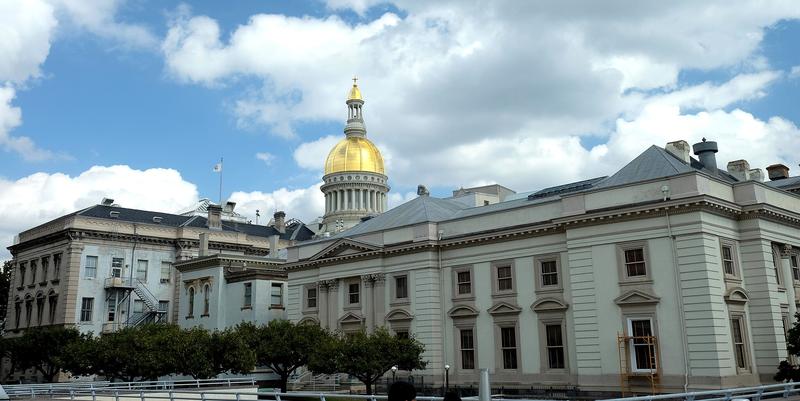
( Lowlova, CC BY-SA 4.0 <https://creativecommons.org/licenses/by-sa/4.0>, via / Wikimedia Commons )
Brian Lehrer: It's The Brian Lehrer Show on WNYC. Good morning, everyone. Mostly today, more election coverage as early voting continues in New York and New Jersey. We'll have a 30 Issues in 30 Days segment as part of that on the school funding formula as a race, class, and geography issue in the New Jersey governor's race. We'll take calls later on whether you're voting more for somebody or more against somebody in the candidate choices that you're making in any race.
We'll also take a detour for a national issue today that we know is very personal to many of you, your health insurance premiums bill, as open enrollment is beginning for the many of you on Obamacare or Affordable Care Act health insurance policies. The Democrats, as you probably know, have made a continuation of the current subsidies for those premiums, the central issue for them in the government shutdown. The Republicans want the expanded subsidies enacted during the pandemic to expire. This is not just bookkeeping. Renewal time is here, and the difference in cost for millions of Americans is real and immediate.
We know health insurance premiums on and off the Obamacare market are going up for other reasons, too. We'll have a guest to explain as well as we can, and invite you to share your latest premiums bill and to share your stories. Employers and employees, too, with workplace-based insurance, you'll also be welcome. That's coming up. We begin on the New Jersey governor's race, as we've been doing on these segments we call Jersey Thursday or Jersday on The Brian Lehrer Show. There's been so much coverage of the early voting surge in New York City. Well, how about in Jersey, which has the exact same early voting period that runs through Sunday?
Let's see what's happening with Nikita Biryukov, who covers state government and politics for the New Jersey Monitor with a focus on fiscal issues and voting. Nikita, thanks for coming on. Welcome to WNYC. Happy Jersey Thursday.
Nikita Biryukov: Thank you, Brian. Thank you for having me.
Brian Lehrer: Listeners, we'll do on the Jersey side what we did on the New York side earlier in the week and invite last-minute deciders. If you decided between Sherrill and Ciattarelli only in the last two weeks, that's our time frame, last two weeks, give us a call and say what held you back that long, and which candidate you finally chose. 212-433-WNYC, 212-433-9692.
The committed, the faithful, the volunteers, the canvassers, sit this one out. This is for those of you who decided between Sherrill and Ciattarelli in this very close race, according to the polls, only in the last two weeks. Give us a call and say what held you back that long, and which candidate you finally chose and why. 212-433-WNYC. You can call or you can text. 212-433-9692.
Nikita, how is early voting going, just in terms of the amount of voters? The mayor's race in the city is seeing this massive interest, massive turnout. What about the governor's race?
Nikita Biryukov: Our early voting turnout is down some from last year, though that is to be expected. Obviously, a lot more people are interested in presidential races than they are in gubernatorial races. It does seem like early voting in New Jersey finally has caught on. So far, about 250,000 people have cast early in-person ballots, and then there's another about 430,000 who've returned mail-in ballots. I'm sorry, that's just for the major parties. Obviously, we have unaffiliated voters who are also turning out.
Brian Lehrer: Right. Your article on turnout after the weekend, after just the first two days of early voting, noted that more registered Democrats than Republicans had come out, 68,000 to 63,000, plus 30,000 not registered in any party at that point. I'm curious if that tracks with the registration proportions in the state, or does that indicate one party's voters are turning out more or less than others?
Nikita Biryukov: There's a few things to disentangle here, mainly because the parties tend to approach pre-election day voting a little differently. Democrats are much, much more likelier to vote by mail, and Republicans, relatively, are more likely to vote early in person than Democrats are. That said, Democrats have a broad voter registration advantage in the state. It's down under a million now, but it's still up in the 900,000 somewhere. We would expect to see if it was just following registration to Democrats to have a larger advantage in early in-person day voting. Because of those dynamics and because of which mediums of voting each party's voters favor, it is a little bit more even in the early in-person vote.
Brian Lehrer: Right. How does the early voting turnout compare, not just with last year, because I think everywhere the presidential election year turn out would be more than for local elections, but with the last governor's race, Phil Murphy versus Ciattarelli in 2021, if you have anything on that?
Nikita Biryukov: Sure. This is actually a comparison that I would advise against making, just because in 2021, that general election, that was the first time that New Jersey had early in-person voting, and really almost no one used it, and people kept not really using it until last year's election, when we saw a swell of early in-person turnout around the presidential race.
Brian Lehrer: Interesting. What about mail-in voting, then, in that respect?
Nikita Biryukov: Mail-in voting is now kind of permanently popular here in New Jersey because we do have a law that if you request a mail-in ballot one year and you don't tell them to not send you one the next, you'll get one in the mail the next year. Mail-in voting is popular, especially among Democrats. I can't think back offhand to the turnout numbers in 2021, but I don't see anything in the data from this year that really represents any major changes. Democrats still use it a lot, Republicans still use it, but considerably less. Unaffiliateds use it to some degree similar to the Republicans. Really, the return rates among parties are fairly similar, though Democrats have started pulling a little bit ahead in that arena.
Brian Lehrer: The driver of turnout in the city seems largely to be strong feelings for or against Mamdani. Would you say there are not the same strong feelings on either side in the governor's race to drive a big surge?
Nikita Biryukov: People care. People seem to care a lot, though obviously, it's not to the same degree that people care about the presidential race. This is an important election, and New Jersey's gubernatorial elections do generally see higher turnout than the rest of its off-year elections for other state offices.
Brian Lehrer: You also track by county, and you tallied after the weekend, the most voters showing up in Monmouth County, followed by Bergen, Ocean, and Morris. Is that any different from where people tended to vote early the most last year? Given Democratic and Republican voters tending to live in different places, does that give you any clues about how it's going so far?
Nikita Biryukov: The counties that are seeing the most early voting are pretty similar to last year. I think a couple may have shuffled in the top three slots, but overall, they're pretty similar. I do want to say that I would recommend everyone avoid drawing any hard conclusions from these pre-election day returns. We may know the party affiliations of people returning mail ballots or casting early in-person votes, but we don't actually know how they voted and we have very little idea of what turnout is going to look like on election day. Typically, Republicans who vote less before election day vote more on election day.
Brian Lehrer: Right. One of the biggest trends in the presidential election in Jersey last year was the fall-off in Democratic voters. Kamala Harris won the state, but Trump came closer than he did in 2020, not so much because he got a lot more votes, but mostly because Harris got hundreds of thousands fewer votes than Biden did in his race. Do you have a sense, by now, demographically of who those non-voters tended to be, meaning those who voted for Biden in 2020 but didn't vote at all in 2024, and if you can see them coming back at all this year?
Nikita Biryukov: I don't have that level of granular insight to the voters turning out this year. I haven't done the work to go dig through the voter rolls to figure that out. It does seem like there has been an uptick in enthusiasm among Democrats if we're just looking at the early vote returns. To illustrate that point, by the end of the early voting period in 2024, counting mail ballots and early in-person votes, 55% more Democrats turned out than Republicans. At this point in this year's early voting period, that number is 95%. It does look like there's some enthusiasm on the Democratic side that maybe wasn't quite there last year.
Brian Lehrer: If you're just joining us, Nikita Biryukov, who covers state government and politics for the New Jersey Monitor. As we talk about endgame issues and developments in the New Jersey governor's race, we're going to play some ads that are running in the last minute and talk about some of the rallies that they're both having. Here's a potentially major development that might have implications even beyond New Jersey and beyond this year.
Nikita, I see reported on this announcement from the Trump administration that they're sending election monitors, election monitors to Passaic County, acceding to a request from Republican officials in the county. Now, for listeners who don't know, Passaic is, let's say, north and west of the George Washington Bridge, including the city of Paterson, an immigrant-rich area, as some of the coverage has noted, plus municipalities like Clifton and Wayne and Little Falls and further out up to Pompton Lakes, Wanaque, Ringwood, West Milford.
The monitors will focus on mail-in ballots, I see. Democrats are concerned it's a form of voter intimidation. Can you tell us in more detail how many federal monitors are involved and what kinds of monitoring they're doing or will be doing?
Nikita Biryukov: Unfortunately, I really can't. The Department of Justice, when it made this announcement, didn't give a ton of detail about why they were sending these people in or what these people would be doing. Based on their remit, they really should just be observing. Obviously, there are officials from both parties in these polling centers and the places where ballots are stored and counted. There will be eyes on them, but they haven't really said why it is that they're here. Republican election officials in Passaic did request that they come after a dispute over adding cameras and some other security measures to a room where mail ballots are stored.
Brian Lehrer: Can you tell us more about that? What was the dispute? Who was on what side with what kinds of surveillance cameras, if you know?
Nikita Biryukov: Sure. The Republican members wanted cameras inside a room where returned mail-in ballots are stored while they're waiting to be canvassed or after the post-close on Election Day counted. Democratic members said those cameras were unnecessary because access to that room is already tightly controlled. You can only get in there if you have two keys, each one of which is held by a member of the major parties, and they felt it was unnecessary. That board is evenly split, as all New Jersey boards of election are between the two major parties.
Brian Lehrer: Listeners, I wonder if anybody has any questions or even stories to help us report this election monitors issue. Anybody in the Passaic County, I don't know, poll worker community, or anybody else, want to call in on this? Any New Jersey politicians, Democrat or Republican, say why you're for this or against this or what the implications are for a fair vote count of mail-in ballots or voter intimidation, depending on your point of view? 212-433-WNYC, 212-433-9692, call or text, or with questions about this.
Nikita, you quote Democratic State Attorney General Matt Platkin saying the Trump administration has not even attempted to identify a legitimate basis for this. How specific has the Trump administration gotten?
Nikita Biryukov: Not really at all. Their announcement that they were sending in these monitors essentially just said, "We're sending in these monitors," and then various things about protecting the vote. They didn't really name any allegations or any specific concerns about election security in Passaic County, though I will note the county does have a history of voter fraud allegations, particularly in local races In Paterson, the state's third most populous city.
Back in 2020, Alex Mendez and Michael Jackson, both councilmen in Paterson now, were charged with ballot fraud and some related counts. Chiefly, they were accused of exceeding the state's limit on how many ballots a bearer can carry. In New Jersey, that number is three. Prosecutors said they far exceeded that and also charged that campaign aides destroyed some mail ballots that were marked for opponents and, in at least one case, fraudulently filled the mail-in ballot. Those cases have worn on very slowly.
Prosecutors, just this April, refiled charges against Mendez in a superseding indictment. Neither of the men have been convicted, and they both deny guilt. It's also important to note that observers or cameras in the storage room wouldn't necessarily do much to stop the type of voting fraud alleged to have happened in Paterson five years ago.
Brian Lehrer: Your article on that notes that these mail-in ballot fraud allegations in 2020 were very minor. They reran the two races for Paterson City Council, and the same candidates won. You wrote, the judge in the case actually found there was no voter fraud, to begin with. Why did they rerun the election?
Nikita Biryukov: I'm going to quibble a little bit on the phrasing. It's not so much that the judge found there was no voter fraud; it's that the judge did not make a finding of voter fraud in the same way when someone's in a criminal trial, they're found not guilty, they're not found innocent. I'm sorry, could you restate the question, Brian?
Brian Lehrer: Yes. Well, let's see. The part of the question that you want restated, I guess, is more specifically, what were these allegations of voter fraud? I understand your distinction between the judge did not make a finding of voter fraud, or the judge made a finding that there was no voter fraud. This involved just something about three ballots. Did I see that number in your story?
Nikita Biryukov: Sure. That number three refers to the limit that a ballot bearer can-- how many ballots they can deliver. In New Jersey, say, if you have a family member who is disabled and can't get around easily, state law allows you to-- after they fill their mail-in ballot, it allows you to take them and deliver that to election officials however you want to, through the post, through a Dropbox, or by hand. You can only do that for up to three ballots, not counting your own. The accusation here is that the campaigns of those two Paterson officials far exceeded that number. Among other things, they are accused of--
Brian Lehrer: Oh, far exceeded that number.
Nikita Biryukov: Yes. They're accused of either destroying mail-in ballots that did not vote for their candidates or, in very few cases, actually filling in someone else's mail-in ballot for their people and submitting that.
Brian Lehrer: Remind me, were those candidates accused of that, Democrats or Republicans?
Nikita Biryukov: I believe Paterson holds nonpartisan elections. It's a large city in New Jersey, so ideologically, they would lean toward the Democrats.
Brian Lehrer: You describe Passaic as a heavily Democratic county that flipped to Trump last year. Can you tell us roughly how that happened? Like, what kinds of previously Democratic voters may have swung to Trump, or, as we were mentioning before, just didn't vote?
Nikita Biryukov: Sure. Part of it was that, like in other places around the country, Hispanic voters in Passaic moved a little bit away from the Democrats in 2024. I think probably the bigger part is that Passaic and Paterson, especially, have large Muslim immigrant populations. For them, the conflict in the Gaza Strip was a major election issue, and they did not like where Democrats landed on it, and they did not like what the Biden administration was doing on that conflict. Really, I see that departure as a protest vote on Israel-Gaza policy.
Brian Lehrer: We'll see, I guess, if some of those voters "come home to the Democratic Party in the gubernatorial election," or if they continue to vote Republican, or if they stay away. You wrote that Platkin's office, State Attorney General Platkin is considering weighing, or he's weighing options to prevent this Trump election monitoring from turning into voter intimidation. Do you know what kinds of measures he might take?
Nikita Biryukov: I will say, to my knowledge, no suit has been filed there, but I imagine they would seek some sort of probably preliminary or temporary restraint to stop those monitors from being deployed. I'm not sure what their legal arguments would be in such a case because I'm not wholly familiar with the authority the Department of Justice's Civil Rights Office has to deploy these monitors. I would take the fact that the election is just a handful of days away now and that no suit has been filed as a sign that maybe they're going to be here to stay for this race.
Nikita Biryukov: Kate in Montclair is calling in on the monitors. Kate, you're on WNYC. Hello. Do we have Kate in Montclair?
Kate: Oh, I thought that you were going to--
Brian Lehrer: Oh, there we go.
Kate: Forgive me.
Brian Lehrer: We have you. Can you hear me?
Kate: I can hear you. I hope the radio is not. I'm just really afraid of the monitors and really afraid of what Trump is doing nationally. I'm just scared that he's going to mess with the election. This is a really important gubernatorial election. That's my thought.
Brian Lehrer: Thank you very much. That fear, and this may be beyond your beat as a state politics reporter for the New Jersey Monitor, but I think that fear extends to the possibility, at least hypothetically, that Trump is using this as kind of a test run, or the Trump Justice Department is using this as kind of a test run to see how much pressure they can put on mail-in balloting next year in the midterm elections nationally. Any indication of that that you can see or that Democrats are even alleging at the county or state level?
Nikita Biryukov: Not that I've seen so far. I would point out that the Trump administration does have a practice of pushing and testing boundaries in a way that's not really dissimilar from this one. We've seen it with firings within the military service branches. We've seen it in terms of changes at the White House itself. I wouldn't be surprised necessarily if that is the ultimate thought behind these actions. Really, I have no visibility into their thinking on this.
Brian Lehrer: Here's Dave, a Passaic County poll worker in Clifton. You're on WNYC. Dave, thanks a lot for calling in.
Dave: Yes, hi. Thanks, Brian. I'm a longtime listener, first-time caller. Go ahead.
Brian Lehrer: Glad you're on.
Dave: As I was saying to the screener that as far as I know, we haven't seen any evidence of monitors, but in any event, there is a rule that there has to be 100 feet away from a polling station. That's something that is normally enforced anyway. I'm not sure exactly what monitoring means in any event. That's one of the issues. As far as we can see, so far, the polling's been unaffected.
Brian Lehrer: That's good.
Dave: I can't speak for all of it.
Brian Lehrer: What else can you tell us as a poll worker that you're seeing in terms of turnout or enthusiasm or whatever else might be striking you as people come through?
Dave: Well, my understanding, because I haven't worked this week, but my understanding is that turnout's been pretty good.
Brian Lehrer: Dave, thank you very much for checking in. There's that rule, Nikita, that you need to be, what was it, 100 feet or more?
Nikita Biryukov: That's actually 200 feet now. We raised it fairly recently.
Brian Lehrer: Okay. Which raises the question of how do you even monitor? I know we touched on this briefly before, but maybe you have more on it. How do you even monitor mail-in ballots? It's not by standing outside the polling place, I presume, because the ballots are coming in the mail, since that's the mission of this Justice Department monitor or monitor team.
Nikita Biryukov: I'm not really sure what the monitors are hoping or not hoping to find. You are right, there are some ways to spot irregularities, but these come down to things like signature matching or the way a given mail-in envelope has been repackaged and returned. Maybe they're there to see if someone carts in a bunch of mail-in ballots that seem to come from nowhere. Really, that's not the sort of thing that happens.
Brian Lehrer: When we continue in a minute, we'll talk about how Sherrill and Ciattarelli are closing out their campaigns with attack ads. We're going to play one or part of one from each, and big-name endorsements and appearances. You might be surprised at some of the people showing up at the last minute, relevant to the New Jersey gubernatorial race, and what the national implications are.
A lot of the national media is saying, since there are only two gubernatorial races this year, New Jersey and Virginia, they are bellwethers, to some degree, for how voters are feeling about Trump. Don't know if that's true. We'll get our guest's impression. 212-433-WNYC, if anybody else wants to weigh in on any of this, who's listening right now. Stay with us.
[MUSIC - Marden Hill: Hijack]
Brian Lehrer: Brian Lehrer on WNYC as we continue with our latest Jersey Thursday election segment with Nikita Biryukov from the New Jersey Monitor. Talking about the Ciattarelli-Sherrill gubernatorial race, mostly. I said I'm going to play a few clips of how they're advertising in the end game, but I want to take one more call that's come in on the election monitoring that raises, I think, a tangential issue or an adjunct issue that might be related. Paul in Westchester, you're on WNYC. Hi, Paul.
Paul: Hi. Kind of twofold. I apologize if I don't know if there's any US rep elections in Jersey this year, but why are the monitors coming to a state election, other than Republicans apparently asking for them? Two, are these monitors possibly coming with ICE agents to target the same population that apparently voted for Trump last year?
Brian Lehrer: Paul, thank you very much for that two-part question. Let's take both parts. Nikita, I think for part one, we should probably say that federal election monitors, even though the Constitution puts elections, even federal elections, in the hands of the states for how they're run state by state, certainly around enforcement of the Voting Rights Act and things like that, there is a history of the Justice Department deploying federal monitors to ensure free and fair election. That's part of the context. Would you say anything else about that in this case? Because it seems to be out of the usual pattern, and yet there's some kind of precedent.
Nikita Biryukov: Sure. The Division of Civil Rights does have a responsibility to ensure that all US citizens' voting rights are respected. In the sense that that is their responsibility, these deployments aren't necessarily really that out of the usual or, on their own, even alarming. I think what has a lot of Democrats concerned here in New Jersey is that there hasn't really been a justification given for why these monitors need to come into Passaic County.
Brian Lehrer: To Paul's second question, and having noted, and some of the coverage has noted, that Paterson, biggest city in Passaic County, does have a lot of immigrants. Listener asks, "There are these monitors coming with ICE agents, and is it related to the deportation effort?"
Nikita Biryukov: None of the agencies involved have announced that they're going to be doing some sort of cooperative push to deport people on election day or to detain people on election day. That said, there are immigration activities all over New Jersey. There was a raid in a warehouse in Newark yesterday, I believe. There is obviously a very notable detention center in Newark called Delaney Hall. It's gotten some national attention because of the arrest of Newark Mayor Ras Baraka and Representative LaMonica Iver. They haven't announced or tied immigration efforts to these monitors at all, though I don't know that they're going to pause any ongoing immigration enforcement activities because it's Election Day.
Brian Lehrer: All right. Well, Sherrill and Ciattarelli are closing out their campaigns with a variety of ads, mostly attack ads, as well as big-name endorsements and appearances. Here's a pro-Ciattarelli, really an anti-Sherrill ad that's currently running on TV.
Marcia Kramer: If you could pass one piece of legislation, what would it be?
Sherrill: Wow. That's a really good question because there's so many that are coming to mind right now. Right now, I would love at this point to pass legislation as a--
Ciattarelli: You're kidding me, right? You want to be governor, and you can't answer that question? We have skyrocketing electric bills in a state people can't afford. We need to fix New Jersey. I will.
Brian Lehrer: There's that. Here's a clip of Ciattarelli that the Sherrill campaign has excerpted from for an attack ad against him.
Ciattarelli: Sales tax on all items, including food and clothing. 10% sales tax on all items. 10% sales tax, including on food and clothing. I think all options should be on the table.
Brian Lehrer: Nikita, let's talk about those two ads because a lot of listeners are probably nodding, "Oh, yes, I've seen that one. Oh, yes, I've seen that one." When was that Sherrill interview with Marcia Kramer of Channel 2 there in which she seemed to falter on being able to state a first bill that she would introduce, or any context that you think is relevant on that?
Nikita Biryukov: I don't remember when that interview was, but I will say that getting caught on these sorts of questions that ask for some specifics about policy have been a stumbling block for Sherrill in this campaign. Really, it seems like she is very reserved on giving specifics, even where she has names and policy that she would pursue. For instance, she's pledged to freeze electricity rates on day one if elected. There are methods to do that, but they're all fairly convoluted.
Brian Lehrer: She said she would declare a state of emergency. She's running that in her own ads, right?
Nikita Biryukov: Yes. The complications I'm talking to are more related to the actual energy market dynamics because the big thing pushing up our current energy prices isn't really something that any governor has control over. They can put weight down somewhere else in the process to hold down costs, but it's complicated, and every option involves trade-offs. To my earlier point about stumbling on specifics, when I asked her campaign about how they would do this, I heard nothing back.
Brian Lehrer: The Ciattarelli ad on all these taxes that he would consider raising, allegedly, how about context for that?
Nikita Biryukov: Sure. This is an attack that actually drew quite a bit of controversy because Ciattarelli, I would say, floated a 10% sales tax. He didn't say, "I'm going to change the sales tax to 10%." The Sherrill campaign ran with it, and he's denied that he would do it. Really, some people see that ad as the one that kind of sent the tenor of the campaign down the drain. I'm not sure if I fully agree there, but Ciattarelli's campaign certainly took offense to that. You could say that, but for that ad, perhaps the temperature of this race would be a little bit cooler.
Brian Lehrer: I just looked it up, and the Marcia Kramer-Sherrill interview appears to have been from May. It was certainly during the election cycle, deep into the election cycle, as they headed toward primary day. How else are they closing out their campaigns? Are they emphasizing any proposals to make things better for New Jerseyans, or have both campaigns figured out, or at least decided for themselves that attack ads are the main way to go in these last days?
Nikita Biryukov: It is a mix. They are pointing to policies on things like energy and taxes to make their closing case in these last days. Mainly, it is attacks. Obviously, the tone of this gubernatorial campaign has been fairly accurate for a fairly long time. I wouldn't say it's the most negative I've ever seen. That prize probably still goes to the 2018 race between then Senator Bob Menendez and former Celgene CEO Bob Hugin. It's definitely been a muddy race.
The goal of negative ads like this generally isn't to persuade anyone to come out and vote for your candidate; it's to dissuade people from coming out to vote for the other side. The idea is that if voters find both candidates detestable, they're not going to vote for either. The same is true for partisans who may never consider crossing over. If they're made to hate their party's candidate, they're less likely to come out and vote.
Brian Lehrer: Listener asks in a text message, back to the election monitors, "Why not ask the New Jersey Attorney General's office to send monitors to monitor the monitors? Also, unexpected benefit, if monitors have nothing to report, the Republicans will look foolish." What do you say to the premise of the first part of the question? Could the Attorney General office in New Jersey, Attorney General Platkin, send monitors to monitor the Trump monitors?
Nikita Biryukov: I'm not aware of anything that would stop Matt Platkin's office from doing so. I will note, also, these areas where these ballots are stored or counted or canvassed, there are a lot of folk from both parties here at pretty much every stage of the process. That's built in as an election security measure. The thinking is, it's very hard to cheat when everyone's watching. In these situations, generally everyone is watching, and there are members of each party with distinct roles. They're there to observe, and they're there to make sure that everything is on the up and up. It's not as though the election monitors are going in there with complete free reign.
Brian Lehrer: Do you know if whatever reign they do have includes video recording of any kind? Because we have another listener who chimed in and said they're concerned that these Trump administration election monitors in Passaic County, monitoring the mail-in ballots in some way, could take a little footage of the venue and then use them to create deep fake videos that make it look like there's mail-in ballot fraud when there isn't. Of course, that's not an allegation that that's going on. That's a hypothetical of something that could theoretically take place. Do you know if they're allowed to record video?
Nikita Biryukov: I don't know if they're allowed to record video. I also don't know that they would necessarily need to if they wanted to create some AI video about something nefarious going on at whatever polling center or accounting location. That technology has advanced quite a bit. Those images are very easy to generate now, and for the most part, they're very convincing. To the degree that anyone wants to play those sorts of games, I don't see that they're going to run into a lot of barriers.
Brian Lehrer: What kind of rallies are they holding? Are either Ciattarelli or Sherrill turning out a lot of people? We certainly saw that big Forest Hills, Queens rally for Mamdani on the New York side. Are we seeing anything close to that or any in-person rallies at all for either of the gubernatorial candidates?
Nikita Biryukov: Yes. Really making sure people turn out is the campaign's main focus at this point. That does mean canvas launches or rallies where the candidates themselves or some of their surrogates go to speak. That also means mailers that say, "Hey, Election Day is Tuesday, but you can vote early today." Another thing that I found a little bit odd, just because I don't really understand it, is both candidates are currently doing bus tours where they have a bus wrapped with images of themselves. I'm not really sure why they're doing it, but I imagine the fact that they both are means it's seeing some sort of success.
Brian Lehrer: Endorsers, we talked about Trump on the Ciattarelli side. I see that there are a number showing up in one way or another. You could tell me if they're in person or on video, in what way, for Sherrill, Governor Whitmer of Michigan, Governor Shapiro of Pennsylvania, who's another one, Pete Buttigieg, and former President Barack Obama. In fact, they made an ad. Here is a pro-Sherrill ad featuring the former president.
Barack Obama: Hey, New Jersey, this is Barack Obama, and I want to talk to you about my friend Mikie Sherrill. Mikie is a mom who will drive down costs for New Jersey families. As a federal prosecutor and former Navy helicopter pilot, she worked to keep our communities safe. Mikie's integrity, grit, and commitment to service are what we need right now in our leaders. Mikie Sherrill is the right choice for your next governor, so go vote by November 4th.
Brian Lehrer: Can you do political analysis of that ad? Like, whose vote do they think Barack Obama moves in 2025?
Nikita Biryukov: Well, I think Obama has a very big coalition. I think that coalition has some staying power despite the fact that he's been out of politics now for nearly a decade. If you look back, he's the last pre-Trump president. I think it's fair to say that the country has gone through some changes since 2016. Perhaps they're hoping that moderate voters who voted for Obama or Republicans who crossed over lines to vote for him will come and turn out this November.
Brian Lehrer: On the other side, how much is Trump's endorsement a good or bad thing for Ciattarelli as far as you could tell?
Nikita Biryukov: That one's a little bit more of a mixed bag. Trump is an omnipresence in American politics today, and surely, he's Republican's most potent kingmaker. He's also not especially popular in New Jersey. Much of Sherrill's campaign is focused on tying her opponent to the president. If I'm Jack Ciattarelli, that line of attack is a fairly big concern for me because Trump isn't popular despite his strong showing here last year. He is a great motivator for Democrats. You can just look back to the results of the 2018 midterms here. Democrats won all but one of New Jersey's five GOP-held seats that year.
Brian Lehrer: Is Zohran Mamdani an issue in the Jersey race? We know Republicans are trying to nationalize the election out of trying to convince potential swing voters that the party is going in a direction that is something to fear, and Mamdani is a symbol of that. Last I saw, Sherrill has not endorsed. When asked, she says she's just focusing on New Jersey. Can you tell if any of that moves the needle in the state either way?
Nikita Biryukov: I think it may animate some Republican voters, but I don't think it has a super outsized effect. Republicans have made some attacks that sought to tie Sherrill to Mamdani. Those were a lot more frequent earlier in the race when Sherrill somewhat half-heartedly said she'd back the Democratic nominee in New York's mayoral race. Frankly, it's much harder to sell than linking Trump to Ciattarelli. Ideologically, there's not a ton of alignment between Sherrill and Mamdani. She's a moderate and has been since before she first won a seat in Congress seven years ago.
Brian Lehrer: Last question. Again, I don't know if you have a take on this as somebody who covers the state of New Jersey. We will definitely ask some national politics reporters next week, just before and just after the election. A lot of people say that since there are only two gubernatorial races this year, New Jersey and Virginia, that they are, to some degree, bellwethers for the midterms next year and whether the Republicans will continue to hold the majorities in Congress, or there's enough backlash to the government shutdown to SNAP benefit suspension possibly coming Saturday.
That's just one example from the government shutdown, but the many other Trump things, that this is a bellwether. I don't know if it's a bellwether. Maybe this is more about property taxes and the state school funding formula, which we're going to talk about in our next segment, than it is about Donald Trump, pro or con. Any take?
Nikita Biryukov: I do think that the results of this race may give some indication of how next year's midterms are going to go, based just of what we can glean on Trump's effect on the race. I would really urge people to avoid drawing too many hard conclusions. A year in politics is an eternity, and there's a lot that we don't and can't know about future races today.
I will say historically, New Jersey usually picks a governor who does not share the president's party. Phil Murphy's reelection in 2021 obviously broke that trend, but for the most part, it holds true. If we do see evidence that the electorate is trying to send a message to Trump, we can expect they'll want to send that same message next year, absent any changes on how the White House or the administration are conducting themselves.
Brian Lehrer: One last one on poll monitors. "Back in 2004," a listener writes, "when George Bush was running for reelection, I was an election observer in North Philadelphia, a predominantly African American area. We noticed a pattern of white men in suits and cowboy hats showing up at polling places and engaging voters outside, telling them that they were at the wrong place or not registered to vote, and sometimes just intimidating voters by blocking their path." That would be pretty extreme if that happens. Any history of that in New Jersey, as far as you know?
Nikita Biryukov: Unfortunately, there is. It's a couple of decades earlier than the incidents that you just mentioned. Back in 1981, there was a thing called the National Ballot Security Task Force, which was a group essentially led and organized by the Republican National Committee to discourage turnout among Democratic voters. They would be outside of polling places and say, for example, urban voting centers where you might have a large population of Hispanic or Black voters.
Their presence, these were generally armed men, perhaps off-duty police officers, and the like. Their presence, courts found, was meant to discourage those people from turning out. There was actually a consent decree that was in place for decades that barred that sort of behavior. That consent decree expired back in 2018. In theory, we could see something like that return.
Brian Lehrer: Last thing. We were talking about the Obama ad for Sherrill, a listener text that there's going to be an in-person rally with Obama for Sherrill on Saturday in Newark. Can you confirm that?
Nikita Biryukov: That sounds correct.
Brian Lehrer: That's a get-out-the-vote rally. They're at least betting on the fact that Obama has some poll. On the other side, a couple of listeners texting things like this, Mamdani supporters writing, "I think Sherrill might lose because she hasn't endorsed Mamdani, and progressives may stay home." That's a push and pull for her, right? She's always tried to look moderate, as you were describing before. On the other hand, part of the base that she might need to turn out may not get enthusiastic enough. That's a tension she's been dealing with, right?
Nikita Biryukov: Sure. Really, there has been a lot of, or I guess a lack of enthusiasm from those sectors of the party that are more progressive. I think generally, and probably her campaign is making the same calculus, generally, I think going for moderates is a more effective strategy, simply because there are more of them, and they tend to vote more often than progressives do. That, and I don't know that New Jersey voters really are overly concerned about who the mayor is in New York City.
Brian Lehrer: Yes, but no, those kinds of policy platforms, though, is what I think the listener was getting at. I guess the opposite side of that would be, are there Republicans who are concerned that Jack Ciattarelli is not MAGA enough? He hasn't always been MAGA enough. I don't know if there's any daylight left there, the way he's been running this campaign and Trump has been coming out for him. What do you think?
Nikita Biryukov: Four years ago, when Jack was running for governor against Phil Murphy, I think that would have been a greater concern. Since then, he's really tied himself to the president in ways that simply wasn't true. I think for him, maybe there's a concern about getting outflanked by some other folk on the right that aren't the president. For example, Bill Spadea, who's a radio host here in New Jersey who sought the nomination, or the Republican nomination, I should say.
Brian Lehrer: He lost big time to Ciattarelli.
Nikita Biryukov: He did, and he doesn't seem to have gotten over that fact because, fairly commonly on his radio show, he's attacking the now-Republican nominee.
Brian Lehrer: Oh, interesting. To the extent that that particular conservative talk show has poll in New Jersey, that's a negative to the right for Jack Ciattarelli. All right, we leave it there with Nikita Biryukov, who covers state government and politics for the New Jersey Monitor. Thanks so much for joining us today. Good luck covering the rest of the race.
Nikita Biryukov: Thanks again for having me.
Copyright © 2025 New York Public Radio. All rights reserved. Visit our website terms of use at www.wnyc.org for further information.
New York Public Radio transcripts are created on a rush deadline, often by contractors. This text may not be in its final form and may be updated or revised in the future. Accuracy and availability may vary. The authoritative record of New York Public Radio’s programming is the audio record.
