
National Politics with Senator Booker: Health Insurance, Baby Bonds, and More
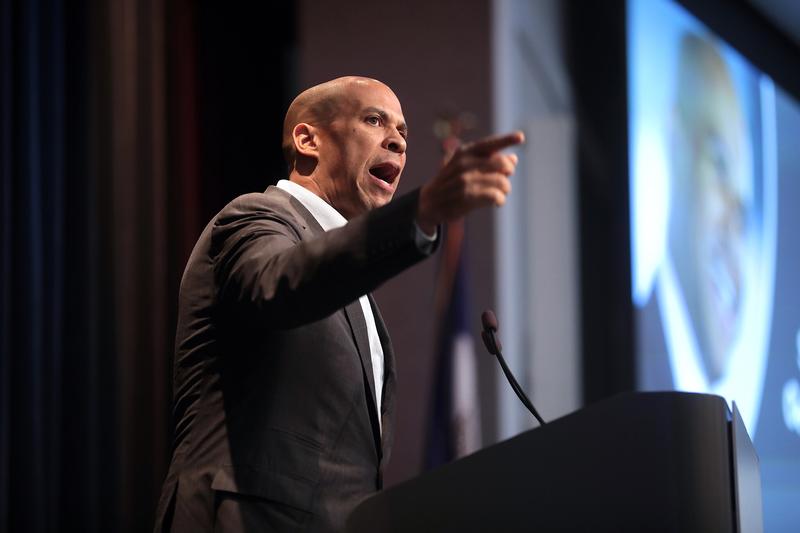
( Gage Skidmore from Peoria, AZ, United States of America / Wikipedia Commons )
Brian Lehrer: Brian Lehrer on WNYC. New Jersey Senator Cory Booker joins us now at a pivotal moment in a number of ways. We remain on the health insurance cliff for millions of Americans with the Obamacare subsidy cuts coming at the end of the month unless Congress acts to extend them. Plus what an increasing number of people see as the human rights emergency, national security emergency, and US Reputational emergency of Pete Hegseth's leadership at the Pentagon.
Also, do any of you remember Senator Booker's idea for baby bonds to help reduce the rampant economic inequality in this country by the time the next generation matures and those bonds mature at the same time? President Trump got something like that in the so called big beautiful budget bill this summer. Of course, they're called Trump accounts. We'll see if the senators thinks it's more real or more fake as something that can be financially transformative for people. Yes, I know some of you want to know about the senator's wedding, which if you do a Cory Booker Google search right now is about 80% of the links. Senator Booker, we always appreciate when you come on with us. Welcome back to WNYC.
Senator Cory Booker: Thank you. It's always great to be on. I, as you know, I'm a big fan, and just grateful for your show and voice.
Brian Lehrer: Thank you. Listeners, we only have about 15 minutes with the senator to today because of other things that he's got backed up. If some of you want to call and ask New Jersey's senior Democratic senator a question, you can or text if you keep them really to the point. 212-433-WNYC. 212-433-9692. Let's start on this New Year's Eve subsidy and premium hike cliff. The deal that ended the shutdown did include a promise by Majority Leader John Thune of a vote in the this month on the subsidies. There is no such promise by Republicans in the House. Do you have a date for the vote in the Senate or the language of a bill?
Senator Cory Booker: It looks like it's going to be next week. It's going to be a very straight up or down, do you support extending the subsidies or not? I think it's going to be a long shot whether we get Republican support, but we're going to push it anyway and put people on notice about who is fighting to lower your health care costs and who is not. For New Jersey, hundreds of thousands of New Jerseyans are in the balance right now.
A family that's making about $130,000 a year could see their healthcare premiums go up $11,000. This is catastrophic. It's the beginning of a healthcare tsunami, because at the beginning of 2026, this cliff would happen. At the end of 2026, if you remember, in their big bill, that they gut about a trillion dollars out of Medicaid as well. Those two combined hits will be just devastating to New Jersey, New York, our regional hospitals, health care providers. It'll be the largest attack on health care we've seen in my lifetime, with millions of Americans losing health care coverage.
Brian Lehrer: Not just New York and New Jersey, but I read there will be a disproportionate impact on people in Republican areas of the country. If enough Senate Republicans vote to pass an extension, and even President Trump seems to want this to go away as an issue for next year's midterms, do you see the House under Speaker Mike Johnson being pressured to hold a vote there, too?
Senator Cory Booker: No. When someone tells you who they are, believe them. He has said that he does not believe that we should be extending these healthcare subsidies. I can't see it passing through the House of Representatives. Frankly, there may be a few votes we'll pick up here in the Senate, but we would need a significant number to get to the 60 votes to pass something. I'm still even doubtful that we'll get it done, because the Republicans have really dug in. Remember, they've been vilifying the Affordable Care act, what they call Obamacare, for a very long time.
This party that controls the House, the Senate, and the White House has made it very clear that they have no plan, they put forward no vision for health care in America. As a result of their attacks on the Affordable Care act, their attacks on Medicaid, they've unleashed what will be for tens of millions of Americans, seeing costs go up or overall just losing their health care. It's unfortunate, but it seems like a callous and cruel lack of vision or action based on the majority of the Republican Party.
Brian Lehrer: Wow. You don't even think it'll pass the Senate. If they do expire, is there anything you can do next, or anyone can do next, to help the estimated 5 million to 10-plus million people who will lose their health insurance altogether?
Senator Cory Booker: Look, I'm not gonna wait around for November's midterms to fight this fight. We have to start right now. The first round in this fight will be next week. I would be shocked if we picked up more than three to five Republican votes. There's 47 Democrats, we have to get to 60 in order to pass it. It doesn't end with next week. We have got to be putting pressure on these Republican actors to let them know that if they do nothing, as millions of Americans suffer, there will be consequences in the midterm.
They demand, "If you do not support the extension of the Obamacare or the Affordable Care act subsidies, what's your plan? Do something right now." Unfortunately, and I'm not being dramatic, when health insurance coverage rates go down, death rates in America go up, human suffering goes up, rural clinics close. This will have a catastrophic impact on the lives of millions of Americans, healthcare providers and more.
Brian Lehrer: Meg in Newark, you're on WNYC with Senator Cory Booker. Hi, Meg, right to the point, if you can.
Meg: Hi, Senator Booker. I was wondering if you were planning on visiting the Delaney Hall Detention center in Newark. It seems yesterday you posted on Facebook how they put up a canopy, but that picture was taken by someone on site. I wanted to know what your plans were to address that situation.
Senator Cory Booker: For those of you who don't know what we're talking about, there is-- Delaney Hall in my city where I live, the GEO Group has shown time and time again this is a group that is incarcerating human beings, something I spoke out against and have fought against and worked with the Biden administration to strip resources from. This is a private prison for immigration detention in my city in Newark, New Jersey. That's outrageous.
We've been doing everything we can to fight against it. We had a trip scheduled there that had to get pulled down, unfortunately, because of the budget shutdown fight. I do plan on going out there to visit it. More than that, I will stand steadfast in the continued fight not only to improve conditions there, but again, I'm fundamentally morally against private prisons in and of themselves.
Brian Lehrer: Of course, that is an immigrant detention center. I want to ask you something about the latest Trump rant against immigrants. I don't know if it's the latest. Maybe he did a new one this morning, but this time Somali Americans in Minnesota in general after the COVID benefits fraud scheme by some was revealed. The fraud is obviously bad and should be prosecuted.
Trump said, and I don't even want to play the tape, but his comments included, "The Somalians should be out of here. They've destroyed our country." He said, "They contribute nothing. I don't want them in our country. I'll be honest with you." That went way beyond the fraudsters or Congresswoman Omar from there who he talked about and he has political differences with. To anyone of that national origin or heritage, your reaction?
Senator Cory Booker: This is rank bigotry, hatred coming from the President of the United States on a group of people just based upon their ethnicity. It is disgusting and it should be roundly condemned, not just by some partisan left or right, by Americans. The Somali community is yet another one of the great immigrant groups in our nation. They are doctors, they are teachers. They are a community that provides such strength to this country. For a President of the United States to call them garbage, it is just rank bigotry, raw and exposed and should be something that we all are speaking out against. This kind of racist scapegoating should never be in our public dialogue from the President of the United States.
I condemn his comments. This should be another point, ignition point of not just outrage, but people getting out and speaking out against what this president is doing to weaken our country, to make us more dangerous, to violate our values, and I believe even violating the Constitution. The way he is going about immigration enforcement right now with masked people coming out of unmarked vehicles, going into our schools, going into our hospitals facilities, going into our churches, going into courts where people are trying to abide with the law, dragging people out who have often American spouses or American children, separating and hurting American families.
This is an all out assault on who we are conducted by a man who hates certain American ethnic groups. He said that in his first term when he described some countries in which people were coming from as asshole countries, removing the expletive. Now he's not even hiding. He is saying he specifically thinks that certain communities of Americans are garbage. It is time. If there's ever a time in America where silence should be viewed as complicity, this is a time that people must be speaking out against this kind of dangerous, callous, cruel hatred coming from the President of the United States.
Brian Lehrer: Here's a critique of your party from a listener in a text message. Listener writes, "The Republicans vote virtually in lockstep. The Democratic Party is not asking us to do anything in an organized, impactful way except to donate money." What do you say to that listener?
Senator Cory Booker: Again, I don't agree fully with that critique, but I will say that I agree with the part that the Democratic Party is in a state of crisis. We've been losing elections. This is unacceptable. It is time for us to renew our party. It is time for new leadership. This is the last of the baby boomers in our party holding positions of power. This is the last baby boomer president, last baby boomer head of the Senate. We see a new generation rising that has to redefine, renew the Democratic Party. I am sick and tired of what I am seeing right now. The Democratic Party has to take responsibility for helping to pave the road to where we've arrived at. I'm not happy with my party and I'm going to be one of those people fighting to change it.
Brian Lehrer: Is it really about age, though, or about ideology? Some of the same people who are calling loudly to primary-- people like Senator Schumer, are also calling loudly to primary young, more centrist Democrats like Congressman Ritchie Torres of the Bronx, where they're not calling to primary Senator Bernie Sanders, 84, Senator Elizabeth Warren, 76, Senator Ed Markey, who's up there from Massachusetts, et cetera.
Senator Cory Booker: I make the point that it's really about new leadership and new direction within the party. Yes, there's some generational dynamics to the fact that, look, the greatest generation, we know what they're about. We know what my parents generation, baby boomers. I call them the civil rights generation. They have a long legacy from Roe v. Wade to Voting Rights act accomplishments. My generation X and millennials and Z, what's our story? What's our defining characteristic? When my parents generation came about, 90% of them did better than their parents. We now are seeing declines in our generations. That should activate everybody.
Life expectancy going down, the number of our generation doing better. If you're born in 1980, it's only 50% that do better than their parents. It's getting worse. America is in crisis. We need to redeem the American dream. I don't care who it is or from where they come, I'm not letting on my watch our country for the average American decline economically, medically, healthcare wise, educationally.
What is the American dream about? We need new leaders stepping forward and saying, "You know what? We have problems, real problems, real crises right now. It's time for us to be great. It's time for us to stand up and have a vision. It's time for us to make the American dream mean something for more Americans." I'm coming out next year, as we close out this one, really talking not just to New Jersey voters who I hope will give me a chance to serve them again, but really about a vision to reset, renew, and reimagine who we are as a state and a nation.
Brian Lehrer: I know you got to to in a couple of minutes. I want to touch "Trump bonds" real quick, and your wedding. Headline on Roll Call. Bipartisan Senate duo seeks corporate support for Trump accounts. This is you and Ted Cruz, of all people. Want to tell everyone what that's about. What I really want to know is, given that Trump accounts depend primarily on family and employer contributions, as the Brookings Institution analyzes it, many policymakers predict that these accounts will disproportionately benefit wealthy Americans. It won't actually do much, if anything, to end the racial and other wealth disparities that your baby bonds were about. Your thoughts?
Senator Cory Booker: Again, we had a bold vision for having every child in America as American birthright born with an account opened that would benefit from the best thing young people have, which is time, the power of compound interest. It would be done in a way that would close not only the racial wealth gap, but frankly, it would give and empower people on the lower earning spectrums, families in the lower income spectrums, in a significant way. I believe in this idea and I've been fighting for it for closing in on 10 years now.
What Donald Trump has done is, you're right, the way it's structured right now, it'll add a lot of benefits towards wealthier American kids and not as much to lower income kids, but it is a step in the right direction. When you put $1,000 into an account for a kid from a working class family, it will make a difference. I'm encouraging people to support this limited idea. My vision is to really expand this and make it stronger. I'm not a partisan guy when it comes to helping people. This will do some good, but it's not the bolder vision that I have that I hope to make real and I'm going to continue to fight for.
Brian Lehrer: Congratulations on your wedding. Covered all over the press. I'm going to read you The Times of Israel headline, Torah-quoting Senator Cory Booker marries into the People of the Book. It says, "The New Jersey politician, long known for his pro-Israel advocacy, ties the knot with Alexis Lewis in an interfaith ceremony that features a rabbi and Jewish rituals." What would you like our diverse audience to know about your wedding-- your marriage?
Senator Cory Booker: The thing should be is I'm just grateful to marry a woman that's so extraordinary, that has so transformed my very existence. It was such a beautiful wedding and a wedding ceremony, blending our traditions, her family, Jewish mom, a black dad from Alabama. So many cultures coming together as we start our lives together. I'm very, very excited and just very grateful to the universe, to God, for giving me what I've dreamed of all my life. She's a great woman.
Brian Lehrer: Are you having difficult dinner conversations about Gaza and the West Bank?
Senator Cory Booker: There should always be difficult conversations about that subject matter because there are people suffering in that region unjustly. I've worked my entire Senate career. As you know, I was there on October 7th to meet with Palestinian leaders in the West Bank about the expansion of a pathway to a two state solution. Enough of the suffering in that region. We need to bring about peace and justice, a lasting peace and justice for Palestinian people, for Israeli people, and frankly, for the larger region where there's still so much suffering from the Kurds, to what we're seeing in Syria, to the challenges with Iran. I hope we can all dedicate ourselves not to fighting each other, but finding a path forward that will bring about justice for all.
Brian Lehrer: Senator Booker, we always appreciate that you come on with us. Thank you very much.
Senator Cory Booker: Thank you so much. I look forward to the next conversation.
