
MTA Chair Janno Lieber on Transit News & Finances
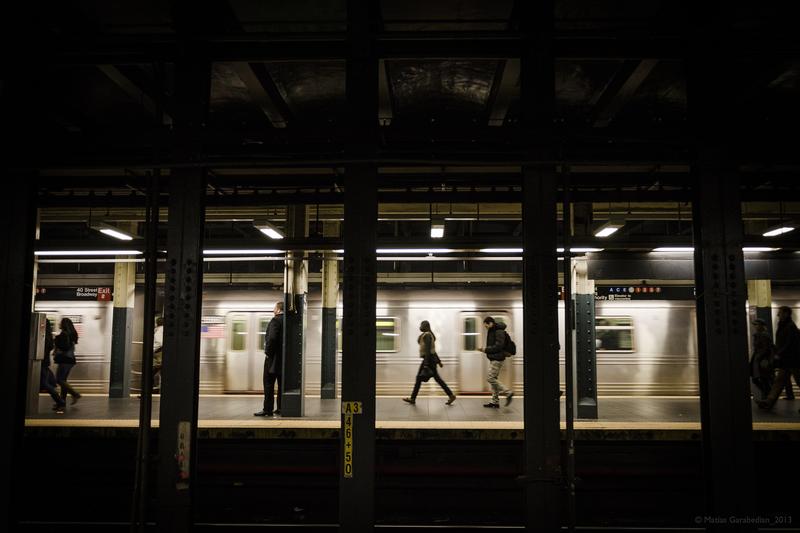
( Wikimedia Commons/New York City Subway )
[MUSIC]
Brian Lehrer: It's the Brian Lehrer Show on WNYC. Good morning, everyone. On today's show, it's call your senator and call your MTA chairman. Coming up a little later, it's our monthly call your senator segment. My questions and yours for New Jersey Senator Andy Kim. But first, we have the chair and CEO of the MTA, Janno Lieber, who will answer my mass transit questions and yours as the Mamdani era begins and the MetroCard era ends. 212-433-WNYC call or text with a question for Janno Lieber. 212-433-9692. Chairman Lieber, we always appreciate that you come on with us. Welcome back to WNYC.
Janno Lieber: Good to be with you, Brian.
Brian Lehrer: Want to start with the end of the MetroCard era? What's the exact date again?
Janno Lieber: At the end of this year, we're going to stop selling new MetroCards, but they will be accepted in the system, and most important, people can trade them in for credit on OMNY cards or on an OMNY account at least through the first half of next year. It's going to be a smooth transition. Brian, we're already up to well over 90% of riders using OMNY, and even the reduced fare customers, that seniors and disabled people who qualify for reduced fare, our fair fares customers as well have adopted OMNY to 90% level in just a few months. It's really taken hold. We're on the move.
Brian Lehrer: I guess there's not that much nostalgia. I remember the dawn of the MetroCard era in the '90s when there were traditionalists out there complaining about the demise of the subway token and why do we need this new-fangled blah, blah, blah. It was definitely an improvement by so many measures. Are you getting any of that nostalgia or resistance to change from people just used to swiping MetroCards?
Janno Lieber: Listen, New Yorkers are nostalgic. You and I grew up in the token era, and we made the transition, and it enabled us to give people better deals and enable people to give us weekly and monthly reduced fares. We're able to do even more with OMNY now because it's a, it's a much more advanced system technologically. Yes, there's nostalgia, and we're going to celebrate that nostalgia. We're going to have a lot of MetroCard-themed events in the next few months to say goodbye to the MetroCard. People are taking advantage of tap and ride and getting real benefits. You don't have to walk up to the machine and say, "How many times am I going to ride next week or next month?"
You don't have to have $100 in your pocket to pay for a monthly. It all happens automatically with OMNY, and people are loving those benefits.
Brian Lehrer: I didn't know about this idea for farewell MetroCard events. Are you going to do ultimate Frisbee, MetroCard fling, or what's it going to be?
Janno Lieber: [laughs] It's all kinds of stuff. We did MetroCard-themed food with Zabrze and Carvel, and all these New York food brands are doing MetroCard-themed food. There's even a MetroCard yellow and blue sandwich, which is nostalgic to the back in the day old blue and yellow MetroCard. We're going to do things with-- look out for different cards that we're going to be doing, that's part of the fun. More to follow on all that.
Brian Lehrer: Oh, that's interesting. My favorite was a Yankees and Mets logo Subway series MetroCard that I used until it wore out.
Janno Lieber: Everybody's got their fave. I've got a Biggie Smalls MetroCard that I used for a while, too. Definitely, there's a lot in the nostalgia category that we are going to keep doing with the Metro code.
Brian Lehrer: On the tap and ride technology, people's credit cards, their payment apps on their phones, or actual OMNY cards, but I've heard complaints about the discounts for many rides not being as clean as they were for weekly or monthly MetroCards. You have to pay for those free taps and get reimbursed on your card later. Is that true?
Janno Lieber: No. It's Automatic. You ride 12 times, starting at the 13th ride. If you ride more than 12 times in a week, you automatically get free rides for the balance of the seven-day period, and it can start on a Monday and on a Tuesday, on a Wednesday. You don't need to decide when your seven-day period starts. The challenges that we've had with the technology is a little bit software capacity on the back of house. Sometimes the charges were delayed, which definitely got us some grousing from customers legitimately, but we've now got the contractor to upgrade the technology so that it can process more quickly. I think that problem is going to go away. No one was ever overcharged.
Brian Lehrer: Do you have me?
Janno Lieber: I got you, Brian.
Brian Lehrer: Okay. Sorry about that. I don't know, we had some kind of glitch there. We do have a text from a listener on the discount system. Listener writes, "Why aren't there monthly or weekly options? Feels like I get charged way more than I would if I could buy a monthly flat out. Maybe it's worth explaining a little bit why that particular change.
Janno Lieber: You're not prepaying for a monthly unlimited. What you're getting is every time you start using your OMNY card, whether you use Apple Pay or Google Pay, or an OMNY card or just a regular credit card, it starts tracking you for the next seven days. If you hit 12 rides in the seven days, you automatically get free for the balance of the seven days, so you don't have to pre-purchase. It's a much simpler system, and it really takes away the unfairness of unlimited ride options being only available to people who have the money in the pocket to prepay. It's a real equity step forward.
Now, I understand that people don't see it as much because they're not prepaying and they don't have that monthly or weekly in their pocket, but it is a fairer system and it's a more flexible system because a lot of people were leaving money on the table, Brian. They were buying a weekly or a monthly, and they then-- we were making $20 plus million a year on people not using the full benefit of these prepaid cards. We're giving that money up so that we can have a fairer system where people don't have to prepay and do all the math about how many times they're going to ride.
Brian Lehrer: A couple of people have texted versions of this in the last couple of minutes. Is OMNY giving personal tracking information to the NYPD?
[music]
Brian Lehrer: Folks, as you can tell, we're having some technical difficulties. We've lost our line to Chairman Lieber. Hopefully, that will be rectified momentarily. I think we'll throw to a break and then hope to continue as we continue with your calls and mine, my questions and yours, hopefully your questions too, for the chairman and CEO of the MTA, Janno Lieber. Hopefully, we will be able to reconnect with him. Some other things that we're going to bring up, definitely fare free buses as Mayor-Elect Mamdani ran on. Janno Lieber was on during the campaign one time opposing that idea. It'll be interesting to hear if he thinks they have a fight coming in the legislature over that next year.
I'll ask him if we get him back, if he's spoken to the mayor-elect since the election about how they might work together on mass transit. If we can, we'll continue to take your calls and texts because whatever technical difficulty we're having seems to have disconnected our phone lines as well. Stay with us, as one way or another, we'll continue the Brian Lehrer Show on WNYC. Stay tuned.
[MUSIC]
Brian Lehrer: Brian Lehrer on WNYC, as we do continue with the chair and CEO of the MTA, Janno Lieber, who is back with us on the phone. We are having some kind of internet connectivity problems, seems like. Chairman Lieber, you can hear me, right?
Janno Lieber: I can. I hope this isn't a continuation of what the Feds are doing to public [unintelligible 00:10:16] that's for sure.
Brian Lehrer: [laughs] Right. Or what the Feds are doing to mass transit. Seriously, isn't President Trump down on mass transit, and that means mass transit funding compared to past presidents?
Janno Lieber: There's a lot of different rhetoric coming out of Washington. There was a rhetoric about Second Avenue subway around a time of the shutdown. It was clearly directed at the Democratic leaders in the House and Senate happened to be from New York. We'll see when the dust settles whether that continues. We've been dealing with a secretary of transportation who likes to run around telling everybody how dangerous New York subway system is, even though crime is down double digits from before COVID and down significantly from last year. We can deal with whatever's coming from Washington.
You know why, though, Brian? Because we have a state government led by Kathy Hochul that really supports mass transit. We got the biggest capital program that we've ever had. We've had our budget problems addressed by Albany again under Hochul's leadership. We ain't in the same boat as Philadelphia or Chicago or BART in San Francisco, who are struggling to pay their bills and maintain service. We're in great shape.
Brian Lehrer: That's good as far as it goes, but more on the federal roll, when Senator Kim is on later this morning, I know we'll talk about the Trump administration's termination of the Gateway tunnel project between Penn Station and New Jersey. That's not part of the MTA, but it does have ramifications on the New York side, I would guess. I think it at least affects Amtrak, not just NJ Transit. Do you have any comment on that?
Janno Lieber: No. We are not in the middle of the Gateway project at all, but I know that Governor Hochul and the state leadership and Senator Schumer and folks in New York leadership in general believe that's incredibly important to the region. We're all hoping that that settles down. We're forging ahead because most of our capital money is coming as I said, from the state. Now we're rebuilding all the tunnels that no one's touched in 100 years. We've got the power systems, all the basic unsexy stuff that is going to fall apart if we don't invest in it, is finally getting investment.
We're putting in ADA elevators at every goddamn station that we can, as fast as we can, because it's time that every New Yorker had access to mass transit.
Brian Lehrer: I was mentioning during the break that you've been on before during the campaign opposing Mayor-Elect Mamdani's free buses proposal. Do you have a fight coming in the legislature next year over that?
Janno Lieber: I got to say, I've said it before, but it doesn't always get picked up. I love that the mayoral campaign focused on mass transit so much. I love that Zohran Mamdani put mass transit in a lot of his commercials. There's a picture of him on the front of this week's New Yorker on the subway. It's great when mayoral candidates and the mayor to be is talking about transit all the time. We're going to work through the issues of the specifics, but I love talking about more riders and more service, and more affordability on mass transit. I think we have a lot in common.
Brian Lehrer: I know it's been just a couple of weeks since election day, but have you spoken to the mayor-elect since?
Janno Lieber: I haven't spoken since the election, but I know the guy. He was a very pro-transit assemblyman, and we spent time with him, as we said, the last couple of years when we were making sure the MTA had enough money to run more service and keep those fare increases that are in the 20%, 30% range in Philadelphia and other places that we're doing 2% a year. I do know the mayor-elect, and I look forward to working with him.
Brian Lehrer: What the mayor-elect says in his slogan, as you know, is not just free buses, it's fast and free buses. Do you have an alternative way to speed up how buses get from point to point? His argument is if the driver doesn't have to wait for everybody to use their OMNY card or whatever form of payment, then the buses can just basically keep going, and they'll be faster. Do you have alternative ways to speed up how buses move? On many lines, as you know, it is really slow.
Janno Lieber: There's basic stuff. The Times did a whole detail on this. There are lots of ways to make buses much faster without dealing with the specifics of [unintelligible 00:15:19] How do we do that? We have the bus lanes that are actually the law of the city of New York. We're supposed to be doing bus lanes much faster. We continue to have automatic camera enforcement for people who are blocking the bus lanes and blocking the bus stops, which is making things better. Also, automatic camera enforcement on double parking that is blocking buses. There are a ton of ways that we can do it.
When we have full OMNY and you're no longer messing around with coins on bus, we can do European-style proof of payment, which opens the opportunity to do rear-door boarding as well. One of the reasons that we haven't moved as quickly to rear door boarding as we may have wanted to is the farebox is still important. It's where people pay. The other thing that's helped us move buses more quickly, especially in Manhattan, is congestion pricing, which is an unmitigated success. How often do we get policies that governments are implementing that automatically show benefit, like congestion pricing? Huge success for the city.
Brian Lehrer: By the way, here's an update for you and for our listeners on what may be happening with our normal way to connect. We are going to be able to take phone calls because phone service does seem to be working. That's how we got you back on the line. New York Times just moved a story with the headline, Cloudflare says it has resolved outage that disrupted part of the Internet. Hopefully, our service will be coming back soon. The subhead says Services from Cloudflare, a Software Company, Underpin Thousands of Websites, Including X, Spotify, and OpenAI, plus WNYC, I guess.
It says Cloudflare experienced issues with its global network, disrupting service for many websites and apps. The company said it believed the problem had been resolved around 9:40 AM, roughly three hours after first reported issues. Although whatever happened to us didn't happen until just a few minutes ago, but I think now it may be resolved for us too. I'm just going to try to switch lines here. Let's see if this is-- if this is back then, listeners-- [laughs] I'm in better quality now. Thank you for sticking with us through that. Those of you who did. Chairman of the MTA, Janno Lieber, is still with us by phone because we had to rehook him some way when our digital connection to him went down.
Chairman Lieber, you're still there, right?
Janno Lieber: Yes, I'm glad. Teenagers everywhere can return to scrolling.
Brian Lehrer: There you go. Okay, let's see. Let's take a call. Here is John in Wantagh, a social worker, wondering how he'll give free MetroCards to people, which they normally do. It works in Brooklyn, or I guess maybe free OMNY cards. Let's see how he puts it. John, you're on WNYC with chair of the MTA, Janno Lieber. Hi.
John: Yes, Brian, thank you. It's just a question because now the working poor don't qualify for Medicaid trips. We've been giving single-trip MetroCards, and that's going away. One of the projected solutions was to have them waive their discharge papers at the clerk. That's a privacy issue too, so I just want to know if there was any plan for the single-use type card.
Janno Lieber: Honestly, we are determined to make sure that everybody who's serving that low-income category has access. We've actually been pushing for universal and higher income eligibility levels on fair fares, so people of limited means, I think those are the folks you're talking about. We want to get to those working poor folks. That is a huge part of what the MTA is pushing on affordability. We do have those single-use OMNY cards available. I don't know the mechanics, but we can figure it out if you contact the MTA at mta.info, send us an email or get on the phone with somebody through one of the mechanisms that we have, social media. Otherwise, we can get into the specifics.
Brian Lehrer: John, I hope that's helpful. Let's go next to Eric in Brooklyn. Eric, you're on WNYC. Hello.
Eric: Hello. Thanks for taking my call. I just wanted to know how does the chairman of MTA justify constant rate hikes. What I mean by that, at least since 2003, there's been more people riding the train than ever. Let's just disregard the pandemic, but every single business in New York City pays a tax to the MTA. Before you even get on a taxi and ride, there's a surcharge that goes to the MTA. They always say that the trains are not fixed because everything's old. Where's the money going? That's money that you're not spending. There's been layoffs of clerks, so that's salaries in insurance that you don't have to pay. You have enough money to hire security to watch the turnstiles.
I just want to know, how do you-- the books are not shown, so I just want to know where is the money going and how do you justify these rate hikes?
Janno Lieber: Everything about the MTA's budget is available online. If you want to look at it, we have literally billions and billions of lines of data there, and it's all publicly available through open data. In fact, Reinvent Albany, which is the organization that pushes for transparency in government, has called us the gold standard. If you want to know anything about the MTA's budget, by all means, go on the open data of the state of New York, or you can actually go on the MTA website and get into it. The reason that we have our fare hikes, though, just bear in mind they're 2% a year over the past 15 plus years, even less.
We have to increase our wages of our workforce, which is about 60% to 70% of our cost structure, just like every place else. That is the reason that we have incrementally increased. Now, in the old days, what they used to do is they wouldn't increase the fare, and then the MTA budget would blow up, and they'd have a crisis, and it would go up by 10, 20, even more, 10%, 20% at a time. Instead, about 15 years ago, there was a recommendation that we do small incremental increases every couple of years, and those have been at the rate of 2% a year. That's what we're trying to stick to.
Remember, New Jersey transit across the water went up by 20% last year. SEPTA is going up by over 20%. In Philadelphia, we're trying to keep it down to a couple of points a year just to cover our wage reality. Bear in mind, and I know the caller is probably skeptical about MTA finances in general, but what I would say is we are actually spending less money in real terms than we were before COVID. Our budget is actually lower in real terms than it was before COVID, even though we're running a ton more service. We've increased Long Island Railroad service by 40%. We're running a whole new Long Island Railroad station in the basement of Grand Central.
We have cut $500 million a year out of our budget. I'm very proud of the fiscal restraint that we have exercised in the time that I've been there.
Brian Lehrer: Eric, I don't know if that fully answers your question, but hopefully it does. Thank you for raising it. You mentioned Chairman Lieber in that answer, the recovery, or maybe he really brought it up, the recovery of ridership after the pandemic. I know early on, ridership recovered better on the weekends than the weekdays. The last stats I saw, you're still not at 100% of ridership from before the pandemic. My personal experience, just observation, is it does often seem to be more crowded on the weekend than the weekdays, certainly relative to the past, but what are the actual stats?
Janno Lieber: We're between 80% and 85%, apples to apples, of pre-COVID on the subways. You're absolutely right, Brian. We're at 90% plus on the weekend, sometimes over 100%. Long Island Railroad is actually at 120% of where it was pre-COVID on the weekends and like 90% on the weekdays. We're getting there. There's no question that hybrid work is a thing. It's affected our commuter population. Where people have options about how to go where they're going, where they want to go out at night or go see family members or do shopping, they're choosing transit at much higher rates, much closer to pre-COVID levels. You're right about that.
Brian Lehrer: Joy in Manhattan, you're on WNYC with Janno Lieber, CEO and chair of the MTA. Hi.
Joy: Hi. I have two related questions. I, until about a week ago, was still using my MetroCard. The reason why I didn't want to switch was because I sometimes transfer from the subway to a bus in Yonkers. With the MetroCard, you can transfer. With OMNY, you cannot transfer. If I didn't have a regular MetroCard, I would have to pay twice. Part of my question is, are you going to fix that? The second part is, you keep saying we can use MetroCards at least until January. I had to call 511 to find out where there was a station that would actually let me add money to my MetroCard.
Fortunately, there's one only a mile from where I live, so I can walk up there and put money on my card, but most stations do not let you add money to your MetroCard anymore. The notion that we can still use them really is not correct.
Janno Lieber: We still have MetroCard machines out there at most stations, but you're not wrong that [crosstalk]
Joy: No, you don't. You have them at very few stations. Very few.
Janno Lieber: Your situation is unique. We are trying to get all the Westchester bus lines on OMNY as well. They're actually acquiring the technology. That is underway. It's coming. It's Westchester Bee-Line. It's run by run by the county of Westchester. The time is coming when your particular problem is going to go away, when Westchester Bee-Line has full OMNY adaptation. I'm sorry for the headache in the meantime, but that is coming. We have been working with them very closely to make sure they get the same technology in place.
Brian Lehrer: Another listener asks in a text, Why doesn't the OMNY system tell you if you're getting a free transfer like the MetroCard would? Will we ever get to see our balance on an OMNY card when we tap, like on a MetroCard?" Listener writes, "I love my plastic OMNY card, but these seem like steps backward."
Janno Lieber: You can go online and look at your account and set up your online account so you can review all your transfers and the progress that you're making towards getting your free rides and all the benefits of OMNY. We're going to continue to increase the transparency of that to the customer in the station as well, over time.
Brian Lehrer: Lawrence in Manhattan, you're on WNYC with Janno Lieber. Hi, Lawrence.
Lawrence: How are you doing? I just have two questions. One is, do you have any data on cross streets like West 14th Street and East 14th Street, where the buses, people aren't paying? They have free buses already there. What are you doing to monitor that? Secondly, is it speeding up the service because no one's paying? That would be a good pilot study.
Janno Lieber: First of all, 14th Street is a great example of faster. People talk about fast, and the mayor-elect also talks about free, but for fast, 14th Street is the success story because when they limited car travel on 14th Street, all of a sudden, the speed of the 14th Street crosstown went up dramatically. I don't think it's because people aren't paying. You're right about something, which is while we have reduced fare evasion on the subway by over 30% in the last year, the bus continued to have a fare evasion problem. People got out of the habit of paying during COVID when they were getting on the back of bus and being told not to pay because we were protecting drivers.
We have had trouble reestablishing the pattern of fare payment. Once we get into the OMNY world, we're going to have what I call European-style payment validation, where fare agents can get on a bus and ask anybody, "Show me your OMNY card, show me your phone, how you paid, and validate that." In the meantime, we are doing much more enforcement on the buses and giving out tickets for people who don't pay. You can't have a cop or a fare agent on every bus because there's so many more than in the subways, and non-payment is definitely an issue. When people don't pay, what they're doing is they're breaking the rules of New York.
What I think is harmful is it's saying that you're going to make the other guy pay for your fare in a sense. We don't think that's fair. It's not the way New York works. We're all responsible for the system, but we do want to make it easier for people who have really low income to get free fares. That's why we have pushed to increase the so-called fair fares program to raise the eligibility threshold for income level so that more people get that benefit as well if they're really poor.
Brian Lehrer: Is it a point of dispute between you and Mayor-Elect Mamdani or DA Bragg in Manhattan, for that matter, what kind of penalties, if any, should be imposed on people who get caught for fair evasion?
Janno Lieber: Truthfully, I'm not into enforcement for its own sake. In the subways, fare evasion enforcement frequently yields people who have warrants and people who are carrying weapons. We pick up 100-plus guns a year from fare evasion enforcement. I'm not into enforcement for its own sake. I just want to maintain this culture of we're all in this together and not make people who pay their fare feel like suckers because if we have a massive fare evasion problem, the subway system and the bus system is going to have a financial problem, and that's bad for everybody. We don't want to cut service or have to fire people because fare evasion has broken out and become rampant.
Let me tell you, Brian, we've made a lot of progress in the last year. I don't want that to be underestimated. That progress on the subway to take it down 30% was a big push that I undertook with Demetrius Crichlow, the new head of New York City transit, and it has been successful. We're going to bring the same focus to the buses once we have a little more technology available.
Brian Lehrer: Have those new flaps that I've been seeing on the top of the turnstiles-- they look like little wings or flaps. People who ride the subways have seen them a few inches, starting at the turnstile bar and going up. I guess you have to be a little bit more of a vaulter to get over that than just the turnstile. Plus, it's got this flat edge that wouldn't be fun if you landed on it. Are they making a measurable difference?
Janno Lieber: We've done a range of different things. What we call. We fix the physical turnstile so you can't backcock. We've had what we call fins and sleeves that make it harder to vault over the turnstile. We had gate guards, those people who make sure that the exit gate doesn't get pushed open and 10 people walk in. And we've also put a delay on some of the egress gates as well, which is altogether. That's what yielded the 30% plus. There's no one thing that has created the reduction by itself. It's been this variegated effort, but it's been very successful, and we're going to keep pushing.
Brian Lehrer: Let me ask you about a bill on Governor Hochul's desk that I gather she is deciding whether to sign or veto. For listeners who don't know, it would require the MTA to have two crew members on trains. As the New York Times describes it, we now see an operator who drives the train and a conductor who controls the doors and makes announcements. Supporters of the practice say that a second pair of eyes on the train helps keep passengers safe. Many transit advocates argue that the custom is unnecessary, costly, and impedes faster service. That from the Times. They also point out that the union supports the bill.
I guess that makes sense because it's that many employees more and members. Where do you stand on that?
Janno Lieber: Listen, this bill has been bouncing around the legislature for literally 30 years, and it was never enacted. I don't know why the legislature voted it this year. It's actually asking us to change things so that on the Times Square to Grand Central shuttle, we would have to have two people, even though it's a short train. It would force us to add people to even the shorter trains that were running. It would be both inefficient and, frankly, it's making New York really weird by national and international standards.
NYU did a study and found that less than 6% of transit systems actually use two operators. We're looking for flexibility. We're looking to be able to provide maximum amount of service, and this would not be helpful in that connection. We'll see what happens, but this is an oddball move by the legislature, frankly, on a very, very outdated concept.
Brian Lehrer: I see what you're saying about really short lines like the Grand Central, Times Square shuttle, but what about safety issues? If we don't want the over policing risks to people of more cops or Governor Hochul's National Guard troops on the trains, which some people perceive as a threat to them, not just safety. You know that people with safety concerns often gravitate to the car with a conductor because even though they're not cops, their presence is considered likely to deter crime in that car. Do you agree?
Janno Lieber: Listen, the conductors are not policemen. Let's just be clear. We've had a significant reduction in crime in the last couple of years. We're down, I think, 13% since before COVID. We're significantly down in felony crime versus last year, and that's because of the NYPD, and it's because Governor Hochul helped us to invest in cameras so that there's literally a camera in every subway car, which was not the case a couple years ago. There's a camera all over on the station. Those are the things that have made a difference in the reduction in crime.
What would also make a difference in further reducing crime is if the criminal justice system was able to deal with the very small number of people who are really chronic recidivists. I keep seeing people who do bad stuff in our system who have 20, 30, 40 arrests beforehand, including for violence, violent attack. I'm really counting on the criminal justice system to make sure those people are kept out of the system. If we got rid of those folks, crime will continue to go down, and we're really proud of the progress that's been made already.
Brian Lehrer: A Metro-North question from Patrick in Croton-on-Hudson. Patrick, you're on WNYC. Hello.
Patrick: Hi. Good morning. Big picture question based off a small picture experience, New York City Marathon was coinciding with daylight savings time. Living in Croton, I know a lot of people used to take the train in the morning to get to Staten Island, but the conductors said earlier in the week on Friday that due to daylight savings time, the earlier trains were not going to run because they didn't pick as many people. Then, jumping on the subways following my daughter all around, the trains are overcrowded, and we got kicked off a bunch of trains or couldn't get on.
Just wondering how you guys handle events in the city that coincide with a situation like daylight savings, if you consider how the impact would be as opposed to the cost savings.
Janno Lieber: I'm a tiny bit confused. Number one, love that you're a Metro-North rider. We're 98% on time performance on Metro-North. The best ever. People are loving it. The daylight savings time issue confuses me because that is always the case the night before the marathon. I know it because I ran marathon. Never fast, but I ran it for many years.
Brian Lehrer: Good for you.
Janno Lieber: Always daylight saving time, which is great because an extra hour of sleep before the marathon, everybody can use. I don't know the specifics of how that may have affected the Metro-North schedule, or what those conductors told you. I'll take a look at it. I do know this, which is that you're absolutely right. The subways are crowded during the marathon. When you're chasing around your family members or others who you're watching, they are crowded. It is the challenge. We love the fact that the best way to get around on marathon day is New York City subway, because traffic is obviously not an option.
We do add a lot of service and make provisions for all that extra marathon activity. Thanks for being a rider, and I'll look at this daylight savings time issue that I was unaware of.
Brian Lehrer: Another Metro-North question. What's going on with Penn Station access for Metro-North and the new Bronx stations along that route? I think you once said on the show that that was going to be done this year. Now I see it's being delayed until at least 2027. What's up with that?
Janno Lieber: It was always scheduled, Brian, to be done in 2027. Here's the problem. It's basic. The MTA before my era had a reputation for projects that went over budget, went very long. We said we're not doing that anymore. We then changed the way that big projects are done, and we started getting projects done on time. The 10-mile-long Long Island railroad third track project done, $100 million under budget and on time. The same contractor is working on the Penn Access project. The same team from the MTA is working on the Penn Access project.
You know what? They can't get any work done because Amtrak owns the railroad and promised outages. They promised personnel so work can get done, and Amtrak has not made good on those promises. Bronx selected officials are enraged because this project is designed to make sure that folks in Co-op City and Parkchester, Morris Park get fast rail service. These are places where people can take an hour and a half to get to a job, and they can't get to the nearby jobs in Westchester and Connecticut on mass transit. We were going to give them that mass transit, and Amtrak has stopped us cold because they own the railroad and they are not making good on their promises. That is a huge conflict.
I'm not going to back off on this because we insist on accountability at the MTA for our project, so there's never another East Side Access project that runs years late and billions over budget. We want Amtrak to be accountable in the same way when they own the railroad, and we're trying to get work done. By the way, 60% of the work on that Penn Access project that is designed to give people in the Bronx railroad service for the first time, 60% of the work is actually fixing Amtrak's own damaged infrastructure, and they won't even let us get the work done.
Amtrak can actually allow us to get service started for those people in Co-op City and Parkchester, Morris Park in 2027 if they let us on the railroad now before the project is finished. That's what we're insisting on. Let us on the railroad, the people in the Bronx get service even though Amtrak has screwed the project over six ways to Sunday.
Brian Lehrer: You're putting it on Amtrak. I hear you. Last thing, just after New Year's, we will complete the first year of congestion pricing to drive into Manhattan below 60th Street. As you know, it has had its supporters and detractors. Obviously, you were for it. How's it doing from the revenue standpoint for funding MTA projects? One of the main goals of the fee.
Janno Lieber: The amazing thing about congestion pricing is that it has actually delivered exactly what was promised. There's a ton less traffic, there are less pedestrians and cyclists being hit by enraged road rage drivers. There's more people actually in the central business district than there were before congestion pricing, air quality is better. Among the things that is right on the money is that we have actually exactly the revenue that we projected, which is going to be enough for us to bond out $15 billion in bonds that will support investments in the subway system and in the mass transit system.
We've actually ordered subway cars with the money from congestion pricing, and we're getting new buses this week. We're putting in new signals on the A train and other lines with the benefits of congestion pricing so that New Yorkers see that congestion pricing going to work to fix the mass transit system.
Brian Lehrer: Is it a catch-22 long term? If one goal is to reduce driving into the business district for congestion and environmental and other reasons, but the other point is to raise revenue for the MTA from drivers who do come in, aren't those opposing goals?
Janno Lieber: Listen, there are a certain number of people who are going to drive. You know who they are? They're the people who can afford to park in Midtown. We're not worried. We studied this for five years, and we're pretty confident that there are going to be a certain number of people who are going to drive no matter what, and it's going to support the revenue projections. We're happy that we've also achieved the reduction of congestion and the improvements to the air quality, and the other benefits. How often does a government initiative of this scale get executed and immediately deliver the promised benefit? We're very proud of the way congestion pricing has played out.
Brian Lehrer: I guess those parking garages in the business always have congestion pricing or surge pricing. Chairman and CEO of the MTA, Janno Lieber. We always appreciate that you come on and answer my questions and so many listener questions. Keep doing it. And thank you for today.
Janno Lieber: You bet.
Copyright © 2025 New York Public Radio. All rights reserved. Visit our website terms of use at www.wnyc.org for further information.
New York Public Radio transcripts are created on a rush deadline, often by contractors. This text may not be in its final form and may be updated or revised in the future. Accuracy and availability may vary. The authoritative record of New York Public Radio’s programming is the audio record.