
Monday Morning Politics: The Latest on Venezuela and the Trump 'Doctrine'
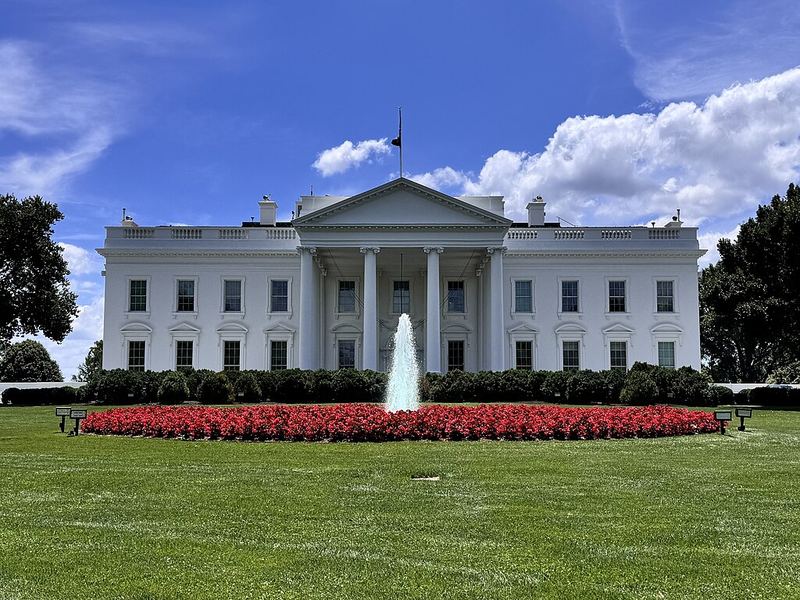
( DJTechYT, CC BY-SA 4.0 <https://creativecommons.org/licenses/by-sa/4.0>, via / Wikimedia Commons )
[MUSIC]
Brian Lehrer: It's The Brian Lehrer Show on WNYC. Good morning, everyone. On today's show, as Governor Hochul gets ready for her State of the State address tomorrow, we will talk about mobilizing the Mamdani campaign volunteers for promoting his policies in Albany, maybe more effectively than politicians did in the past. Also, a take from a sympathetic journalist and college professor who argues that his base needs to avoid getting in the way of his success. That'll be with Eric Blanc, writer for The Nation, and Jacobin, and a Rutgers professor.
Also today, this would be interesting, an exit interview with New Jersey's outgoing attorney general, Matt Platkin. It's January 20th when the new governor, Mikie Sherrill, will be sworn in and a new attorney general. It was a very eventful four years, not as much of a public figure outside the state of New Jersey, but very consequential. Among other things, he became the lead plaintiff in the case to save birthright citizenship. He sued social media companies for alleged deceptive practices that harm children. He took on corruption in the state and more. That's coming up. That should be interesting with Matt Platkin.
We will start on the intense moment in national and international politics as they involve the White House right now. President Trump gave a long interview to four New York Times reporters. Maybe you heard that. It was recorded. The 30 seconds of the interview making the most news are this clip. Now, think about the aggressive actions the President is taking right now in Latin America and maybe Greenland, maybe Iran, not to mention Minnesota. As you listen to this exchange begun by our guest, New York Times White House correspondent Katie Rogers.
Katie Rogers: Do you see any checks on your power on the world stage? Is there anything that could stop you if you wanted to?
President Trump: Yes, there's one thing. My own morality. My own mind. It's the only thing that can stop, and-
Zolan Kanno-Youngs: Not international law?
President Trump: -that's very good. I don't need international law. I'm not looking to hurt people.
Zolan Kanno-Youngs: Do you feel your administration needs to abide by international law on the global stage?
President Trump: Yes, I do. You know I do, but it depends what your definition of international law is.
Brian Lehrer: President Trump with four New York Times reporters saying the only thing that can stop him is his own morality, his own mind, and that's a good thing. The reporter who began that line of questioning joins us now. It is Katie Rogers, White House correspondent for The Times. She's also author of the book American Woman: The Transformation of the Modern First Lady, from Hillary Clinton to Jill Biden. Katie, thanks for coming on with us. Welcome to WNYC.
Katie Rogers: Thank you so much for having me. I'm happy to be here.
Brian Lehrer: Before we get to that clip, why do you think the President gave a two-hour interview to a team of New York Times reporters? He generally expresses a lot of disdain for The Times and gets his message out far and wide through social media, and Fox, and right wing influencers, et cetera. Why do you think he even did this?
Katie Rogers: That is a great question. It's interesting, right? I think you know about Trump's biography. A lot of us do. He is a New Yorker. He is a guy from Queens at heart, and he is somebody-- If you understand this about Trump, it's almost as important as understanding that the President really thrives on what he views as positive news coverage. In his mind, he understands that there was a period in his life where he was getting great coverage, in his estimation, from The Times. The architectural critics were writing about his buildings, the culture pages were writing about his relationships. He was a New York figure, larger than life mogul.
Now he sits in the Oval Office, and he's furious that his hometown paper is not treating him the same way and is not writing what he would view as flattering news stories about him. If you take those two pieces of him, he's a New Yorker who thrives on positive attention, it makes absolute sense that at arguably the most important moment for him and his administration on the world stage, he wants to call in The Times and try again, as he has repeatedly, not with this group of reporters, but other Times journalists.
He wants The Times to understand him and he wants The Times to support what he's doing. As journalists, the latter is not our job. Our job is to understand him, but also hold him to account and press him on the decisions he's making and the reasons he's making them. I think he will never stop trying for what he views as a going Times headline, but he also wants to be understood by this paper.
Brian Lehrer: I think the last part of that is really important. In addition to The Times in a certain way being his hometown newspaper or one of his hometown newspapers, as somebody who came up in Queens, also, though, that contradictory feeling or complicated feeling that he has toward elite institutions generally, that he were--
Katie Rogers: Totally, yes.
Brian Lehrer: To hate them and express disdain for them. This was part of his Queen's thing, too. He also wanted to be accepted and respected by them.
Katie Rogers: He was an outsider who wanted to be held in high esteem by people he wants respect from. It's a key facet of the wide ranging personality that is President Trump.
Brian Lehrer: From y'alls point of view, with a president who talks and posts all the time, including, in fairness, taking lots of reporters questions, what were your goals as Times reporters that you hope could be of public service in a different way with this two-hour sit down with four of you?
Katie Rogers: We were negotiating with the White House for weeks over this, and we weren't sure it was going to happen, but we had a lot of discussions about it. It dates back to-- I had written a story about his health in November and he had reacted pretty aggressively to that and was on a tear about seditious and treasonous reporting by The Times and others about his health. Then he happens to see David Sanger in the Oval Office. David was doing pool duty, which, I don't know, that is-- every day, a different group of reporters is assigned to be with the President.
If he calls them into the Oval, those are the people who are asking him questions on television when you see him sitting there and fielding questions behind the Resolute desk. David Sanger, he knows David. David has been a reporter at The Times for 42 years. He is a familiar face. At the end of that pool spray, as we call it, he said something like, "David, call me." We use that as an opening to leverage his interest in wanting David, in particular, to understand him, to having a full fledged interview.
As we were negotiating with the White House and preparing for this interview, which I have to say, the whole might of The New York Times newsroom was-- there were four of us in there, but everybody, I think, feels some ownership of this because the people who prepared us in these meetings. We talked a lot with people on the daily and video journalists and the like about what we could get from the President that went beyond his normal daily rat a tat pool spray in the Oval or in front of a helicopter where the rotors are super loud and you can't hear him. There are also journalists who are there to prop him up and compliment him.
With all that taking into account, we were really laser focused on trying to make news that people might not have heard before, ask the President about his job, about his thinking, how he makes decisions. We knew that we needed to ask him simple questions. We covered a lot of news of the day. I think my question for him about power, which, by the way, again, was workshopped ahead of time with a lot of other journalists, was meant to get a different answer out of him, as introspective as he can be about something like that.
I think all of that preparation and talking about how we could do this interview differently paid off, I think, with having him think about what he was doing a little more deeply than in the Oval where he's very much on guard and on camera. That's a crucial difference, too.
Brian Lehrer: Let's talk about the sound bite that we played that is making people shudder around the country and around the world. You asked, "Do you see any checks on your power on the world stage? Is there anything that could stop you if you wanted to?" The President said, "Yes, there is one thing. My own morality. My own mind. It's the only thing that can stop me, and that's very good." Katie, were you asking that question, expecting a certain response, and did that response, how far he went in that response surprise you?
Katie Rogers: I think the interesting part of that question is that was the second time I had tried that question. I had tried it about a minute earlier. I asked a version of the same question, and he went off on President Biden and the Afghanistan troop withdrawal. As he's talking, I'm thinking, "Okay, he's doing what he normally does, which is he diverts into Biden criticism." Then I'm thinking, "This is what we hear all the time." I just waited for him to take a breath or a beat, and I might have just interrupted him and tried again just really quickly, because the first question was longer.
I just point that out because he listens for keywords, and then he goes to what he normally says. I tried again, and I think that time, it got through to him what I was asking, and he answered that way. It did not surprise me. It didn't surprise me that he said that. I think that is how he views the world-- That is how he views the presidency and his role. He is the arbiter.
He told Zolan, my colleague, who followed up with the international law question, which was-- He had to do it twice, by the way. He will say that he must abide by international law, but the key thing about his answers in both cases is that he sees himself as the arbiter of what international law is and how it should be applied. That is a seriously crystal clear window into how he is operating the presidency this term compared to his first.
Brian Lehrer: Listeners, how do you hear or feel about the President's words, about his own moral compass being the only thing that controls him on the world stage, or Stephen Miller, and we'll play this clip, we played it last week, but we'll play it again, saying on CNN last week simply that the world is governed by strength? 212-433-WNYC. Listeners, 212-433-9692. You can call or you can text as usual or any other questions or comments for New York Times White House correspondent Katie Rogers, one of the four Times reporters who did that two-hour sit down with President Trump last week. 212-433-9692. Here's a caller from-- I think a Trump supporter who will say that that clip is no big deal. Dan in Brooklyn, you're on WNYC. Hello, Dan, thank you for calling in.
Dan: Hello. Thanks for taking my call. Not necessarily a Trump supporter at all. In fact, I did not vote for him. I think he's outrageous and we should realize at this point that he's pretty raw and unfiltered when he speaks.
Brian Lehrer: Okay. Sorry if I misinterpreted your call. Go ahead.
Dan: I think it's much ado about nothing. Number one, any president who is the executive of the United States is obviously as the executive operating from their own sense of morality in terms of their decision making. He's just unfiltered in the way he said it. Every single president is obviously going to operate from their individual standpoint as an executive. Number two, when it comes to international law, international law is always under development. The United States does not abide by several international law statutes. It's not a one fixed thing. In fact, Biden made it very clear. He said it was outrageous that the International Criminal Court, which we do not associate with and abide by should [crosstalk] with an arrest warrant-
Brian Lehrer: We're not in that treaty, just saying.
Dan: -for Netanyahu or for Hamas leaders. The point is, both cases, that international law is not a fixed thing. For us to simply assume that we should abide by it is to say that we as the United States should defer our own law to some amorphous international law. When the UN, we see, has their Human Rights Council run by Syria a few years ago. It's ridiculous. We are the United States of America. We should be setting the tone, not simply just succumbing to some sense that there's an international law that we should abide by. This is why the International Criminal Court is something we don't go with.
Brian Lehrer: Good. We'll talk to Katie about that in a second. Katie, before you jump in, Dan, on the first part of your answer, that every US President is guided by their own sense of morality, obviously, that's true. Katie's question was, is there anything that could stop you? The President said, "One thing. My own morality." You don't find that different?
Dan: No, because that's just the outrageous, raw, unfiltered nature of Donald Trump. Here we are obsessing about it and talking about it on a Monday morning when there are bigger things in the world and bigger fish to fry. That's exactly what feeds into his notion that there's this Trump derangement syndrome. Of course, he's operating on that, but of course, we know there are checks and balances.
Just like he said, "Oh, I'm going to send the National Guard into every place and everywhere." The courts do what they do and they pull things in and they hem things in. Congress, even Republicans right now are looking deeper into Venezuela. This is just Trump. He's just talking off the cuff as he normally does. We're making a big old how do you do about it.
Brian Lehrer: Dan, thank you for your call. I really appreciate it. We're going to talk about, specifically after the theoretical of a president even saying those words, how it does apply now to Venezuela, to Greenland, maybe to Iran. Katie, I know you wanted to get in with a reaction to the caller. Go ahead.
Katie Rogers: No, I think that's a fair reaction to what the President said, but I think that there are a few major points I'd make, and one of them is the president has fewer people around him than he used to have in the first term. He had a wider array of advisors who were all conservative. There were four star generals, there were people deeply versed in foreign policy around him. Now he has a much smaller group of people around him. He has fewer inputs from other staffers.
While your caller is absolutely correct that it comes down to one man's decision, the difference here is that there are fewer people around him and they're all saying the same thing. That is very different from any other president, including first term President Trump. That, I think, is an important distinction. Your caller mentioned, I think, setting the tone, the United States is setting the tone of how we operate on the world stage. With what the President said, the tone is really, "I will do what I want to do, and nothing can stop me."
If that is-- what's the term? Derangement syndrome. That is for others to determine. The reality here is that this president has fewer checks. I think your caller mentioned Congress. Congress has not functioned as much of a check on the President. In fact, they introduced the War Powers Resolution a day after this interview. Senator Rand Paul said it was, in part, because of the President's comments.
People who are not suffering from this syndrome are hearing this and are concerned, given-- Again, the caller mentioned bigger fish to fry. I don't know what is a bigger fish to fry than possible military conflict with Iran, ousting the leader of Venezuela, threatening Cuba, threatening to take Greenland from Denmark, which is a NATO ally, which would lead to the disbanding of NATO. I understand the impulse to say this is just how he talks. That is also how people explain him away. I think that there are no bigger fish to fry than these issues on the world stage. How the President is thinking about operating the United States military and directing the military at this moment, that is very important.
Brian Lehrer: Another reason, in my own opinion, that it's important to talk about this is that it's always impossible to tell when the President is just riffing and when he's saying something that he actually means to apply that might be very alarming. It's so alarming to many people who hear those words because they are practically the very definition of autocracy.
Katie Rogers: I think the riffing part is important because Greenland as a concept goes back to his first term, when the President joked out loud to his advisors that maybe we should just take Greenland because it has a lot of natural resources. At the time, he had advisors around him that were-- they had to humor him and say, "Yes, sir, we'll look into this." They thought that that was impossible at the time. What the President often does is say things so frequently and so often that he normalizes the idea. Now, years later, we are in a very real diplomatic engagement with a NATO ally over whether or not the United States will take Greenland by force.
Brian Lehrer: On the question of the advisors, the President's answer did echo something that his senior aide, Stephen Miller said to Jake Tapper on CNN last week that many people are also finding so frightening. That it sounds like the words of a dictator. Here's that clip.
Stephen Miller: We live in a world, in a real world, Jake, that is governed by strength, that is governed by force, that is governed by power. These are the iron laws of the world that have existed since the beginning of time.
Brian Lehrer: Is that where we are, Katie, as the first year of this Trump term wraps up, that might makes right. If that's the message, it's not what our country was founded on, not to mention what Jesus or other religion or morality icons would say.
Katie Rogers: I will say that in that interview, we asked the President about Stephen Miller's comments, and he said he didn't necessarily believe that taking everything by force was the way to do things. To your earlier point, it's hard to know sometimes what exactly he's serious about and what he's poll testing or trial ballooning. He did say that. Then throughout the two hour interview, he goes on to make very clear to us that he reserves the right to use force.
Right now, the President is in a position where he's letting Stephen Miller, who is, by the way, involved in all policy issues in that White House, whether it's international Greenland or sending ICE agents into Minneapolis, he's letting Stephen Miller be the most extreme version of that messaging coming from the White House. The President himself is saying, "I want to get along with everybody. I don't want to take things. I abide by international law. I will decide for myself and I will use force if I need to." That's where we're at.
Brian Lehrer: Philippe, in Manhattan, you're on WNYC with New York Times White House correspondent Katie Rogers. Hi, Philippe.
Philippe: Hi, good morning. Thank you so much. One thing that I noted earlier in this interview was that Katie said that she had to ask the same question twice before the President addressed the actual meat of her question. Then she also went on to state that the same thing happened with another one of her New York Times colleagues. After two hours of spending this intimate time in the Oval with the President, what was your team's takeaway on the President's general cognitive abilities?
Katie Rogers: That's a really great question. I did think about that after I was finished. He was able to take questions for two hours, give us a tour of the White House. He took us up to the residence. We pressed him and pushed him repeatedly on issues ranging from the world stage, to the economy, immigration, how he perceives his job, his health. My collegue asked him if he's ever taken Ozempic. I asked him if he's ever had a heart attack. He took a lot of questions and it got uncomfortable at points. At the end of that interview, he said something like, "Wow, this was great. It's like a competition."
He enjoyed the sparring, even though it got uncomfortable and adversarial at points. My takeaway about his cognitive abilities is that he is able to answer questions. He has recall. He goes to the same explanations and anecdotes and stories, but he's quick. He's very quick to respond off the cliff and on the fly. I wasn't sitting there looking for cognitive failure, but he was quick on the uptake. He sets the messaging tone for that White House.
I didn't come away-- There were some moments where he was at odds with Republican orthodoxy and the current state of his party in major ways like immigration. I think that is him wanting to explain himself or be more of a uniter in the moment. I don't know if that answers your question, but there weren't moments in that interview where I necessarily thought he was failing to understand what we were asking him. He was struggling to hear at points, but that's what I would say.
Brian Lehrer: Philippe, thank you for your call. Before we get into the particulars of Venezuela and Cuba and Greenland and Iran right at this moment, let me take one call from a listener, and there are a couple like this on the board who want to criticize or critique the entire premise of doing this kind of interview with Trump and publishing the whole transcript and everything in The New York Times. Jacob in the Bronx, you're on WNYC with Katie Rogers. Hello.
Jacob: Hi. Thanks for taking my call. I don't mean any disrespect to The New York Times. I'm a Democrat. I'm a regular reader of The New York Times. I am so sick and tired of seeing Trump's name in the headlines. There is nothing greater that this man wants than for us to be talking about him, which is exactly what this segment is this morning. All he wants to do is get his name in the news. If we're not talking about him in a particular day, then it's not a good day in the Trump world.
Everything we do with Trump is analyzing every word he says. He's a provocateur, he wants to say things. I think that the liberal media reads way too much into these things and we need to start talking about more important issues because he's a complete narcissist. I think this is actually-- Everything with Trump is, "Can you believe he said this? Can you believe he said that?" It goes on for years, and I think we actually need to stop it. I think it's beneath The New York Times to keep doing these stories. Thank you.
Brian Lehrer: Thank you. Katie.
Katie Rogers: I just wonder, what is more important? What would be a more important topic that the President isn't influencing or in direct control of?
Jacob: I would say we need to be talking about the economy, we need to be talking about people's lives.
Katie Rogers: Totally. T
Jacob: We need to get Trump's name out of every single article. Every article I read with Trump is, "He's got a blemish on his hand. What's going on with his health?" He said this. "He can shoot people in the street." If we just keep following the same routine of every time he said something provocative, we dedicate a whole segment on public radio towards it. We're going to be talking about him till the end of time, which is feeding exactly into what he wants.
Brian Lehrer: Jacob, let me ask you one more follow up question. What if he is acting, to many people's minds, like an autocrat and then actually comes out and says or suggests, "I have the power of an autocrat." Not a big deal.
Jacob: Is that a question to me specifically?
Brian Lehrer: To you, yes.
Jacob: I think that, unfortunately, he's the president for the next three years, and he knows that, which is why he's doing a lot of these things. He's pretty much untouchable until the midterms next year. That is the only thing that matters. We need to start building up candidates that could possibly challenge him. We need to start talking about people's lives, how we can make their lives better. He's going to do the most audacious things every day.
Brian Lehrer: Got it.
Jacob: We need to get him out of office. That's the only thing we can do.
Brian Lehrer: That's from a political perspective, from a Democrat. It's different from what a journalist is doing. Katie, go ahead.
Katie Rogers: I think those are great-- it's a great wish list. I take your point about the economy. It was really important for me to press him on the economy and to ask him, "Sir, even Republicans are warning that people are suffering. Young men are turning away from you. They're worried about the rise of AI. What do you say to them?" I asked him multiple times what he would say to low income and middle earners who can't afford to live right now. He had no answer for that. I know that you think that, as many people do, many people believe that we just inflame things by writing stories about him, which is literally my job.
That aside, having the President of the United States on the record, refusing to believe that the economy is bad, refusing to believe that the people who voted for him are putting groceries on payment plans, calling polls rigged, circling back to his own personal grievances, that is something that voters, that Americans are going to take into account when they go to the polls to vote for Republicans or Democrats in these midterm elections. I would argue that asking the P`resident and pushing him on something like the economy and pushing him on people's lives is absolutely important and crucial to our job as journalists to inform the American people ahead of making such a decision as important as voting.
Brian Lehrer: We'll continue with Katie Rogers, White House correspondent for The Times, and get to the Venezuela situation as it continues to unfold, the President's new threat against Cuba and possibly Iran. How many military fronts is he actually going to open in the next few days, maybe? Maybe more of your calls and texts if we have time. Stay with us.
Brian Lehrer on WNYC as we continue with New York Times White House correspondent Katie Rogers. You have a Times article published yesterday headlined, Trump Says Cuba Will No Longer Get ‘Oil or Money’ From Venezuela.
It says President Trump urged Cuba to, "'Make a deal, before it's too late' in a social media post, but it was unclear what he meant," you wrote, and that, "Cuba's president responded with defiance." What does your reporting tell you about what he may have meant by Cuba making a deal or what would happen if he decides it's too late? Even to the previous caller's point, this is exactly the kind of thing that he said about Venezuela for a long time. A lot of people thought, "Yes, yes, yes, he doesn't like Maduro." Didn't think we'd actually send the military in.
Katie Rogers: I worked to figure out what he was talking about when he made a deal. I spoke to somebody very close to him who was with him yesterday, who said they had no idea, and the President doesn't have an idea. His response would just be they need to make a deal. Cuba doesn't have much in terms of resources to offer the United States. It is unclear what a deal could even be. Perhaps the release of political prisoners in Cuba and a change of rhetoric toward the American government. You know that the Cuban government has been a thorn in the side of American diplomacy for decades, not just right now.
The second point of your question is Venezuela has long been seen by Secretary of State Marco Rubio as a way to get to Cuba and to basically cause regime change in Cuba. Venezuela and Cuba are very close politically, financially, economically. Crippling Cuba by way of Venezuela pressuring Delcy Rodriguez and the people in power in Venezuela to cut off ties, particularly financially with the Cubans, could hasten what somebody like Secretary Rubio wants, which is the fall of a leftist communist government in Cuba.
Brian Lehrer: You also wrote in that article that, "Mr. Trump's command to Cuba to make a deal was also a message to Venezuela's new leader, Delcy Rodrigo," who was Maduro's vice president. You wrote, "She faces pressure to cut the United States into the country's oil production and in turn to cut off what it gives to other countries, including Cuba," from your article. I want to play a clip of Delcy Rodriguez. Folks, this is in Spanish with NPR's Kerry Kahn translating to English. This is the way NPR set it up on Weekend Edition yesterday, that it sounds like Rodriguez is capitulating Trump while still saying she's not. Listen.
Delcy Rodriguez: [foreign language]
SpeakerI Kerry Kahn: We will not surrender in the face of aggression, she says, while adding, our hands are open to all countries in cooperation, including for energy agreements.
Brian Lehrer: I'm curious, as a White House reporter, Katie, how you hear that clip and how much power Trump has over Acting President Rodriguez right now. If you want to go there on what she is trying to accomplish in this relationship at this point. I realize you're a US White House reporter, not a Venezuela correspondent.
Katie Rogers: When I hear her speak like that, it reminds me of a lot of other leaders, whether they're leading nations or leading cities, who try to say, "We make our own decisions, we are sovereign, and yet we are going to work with the Trump administration." This happens a lot. Historically, they end up being compelled to do what the United States government wants.
I guess I answered the first part of your question last, but I think that sends up a flag to me that sounds very much like a leader trying to thread the needle, trying to buy time, trying to reason and engage in diplomacy with what they view as a hostile takeover. By definition, it is, by ousting the leader of the country. I think the Americans know that they-- it's not leverage, it's control. Right now, I think the President is in a period of figuring out if she is going to do what he wants or if he is going to escalate.
Brian Lehrer: Do you have any take on why Trump did not ally himself after seizing Maduro with the opposition leader and Nobel Peace Prize winner Maria Corina Machado? I've been curious about this. I wrote a newsletter post about it last week. Machado, who won the Nobel Peace Prize last year, why for her courage in opposing Maduro and seen as the most popular politician in Venezuela, and she dedicated her Nobel Peace Prize to Trump, and yet he completely kicked her to the curb and worked with Maduro's vice president? Do you know why? Because I haven't been able to figure out why.
Katie Rogers: I can't tell you why. I can tell you based on the interview we had with him and what I have seen is that he has said that she does not have the respect that she needs. That is what he has said. Also from the interview, it is pretty clear that he thinks about what he is doing in terms of-- This is historically true as well, is he does quick raids that are very high risk, that are cover of night, Al Baghdadi, bombing Iran's nuclear sites, ousting Maduro.
The next part is not something he likes to think about. The next part is not something he's engaged in. One, I would think that installing an opposition leader, rightful or not, is a headache. That would take a lot of time. It would take a lot of oversight. It would take the military. That's not how he thinks. He thinks in terms of operations, not occupations.
Brian Lehrer: The latest threat of military action from the President is now toward Iran with the widespread protests against the regime that are taking place there. Certainly most Americans would support the protesters against that authoritarian theocracy. What does the President see as a US national interest that could cause him to get militarily involved?
Katie Rogers: I think the most crucial, important interest we have is stopping the Iranians from developing a bomb, developing a nuclear weapon. I think that if the United States, through military intervention-- This is what I think. I have not deeply reported on Trump's strategy here to the extent that there is one, but there is an opportunity to do that and to shake a theocratic government that has alienated many of its citizens and endangered them.
Brian Lehrer: Though bombing nuclear facilities is different than getting involved in a popular uprising for regime change. I know we're just about at the end of our scheduled time, but let me throw in one Greenland question because I think it's really important. Here's the President on Air Force One yesterday saying if the US Government doesn't take Greenland, others will.
President Trump: If we don't take Greenland, Russia or China will take Greenland, and I am not going to let that happen.
Reporter: Is there any deal they can offer you?
President Trump: Yes, sure, I'd love to make a deal with them, it's easier, but one way or the other, we're going to have Greenland.
Brian Lehrer: He says otherwise China or Russia will. Why this sudden renewed focus on Greenland right in the middle of the complicated situation in Venezuela? Then I know you got to go.
Katie Rogers: I think that he is feeling emboldened. I said earlier that he's talked about wanting Greenland for a while. He is thinking about encroachments by Russia and China. At the end of the day, the Venezuelan takeover was about oil. He brought in oil executives last week. It was about exploiting a natural resource. Greenland has critical minerals that would help us in the race to build semiconductors and chips, the most advanced technology in the world. It has uranium. It has all sorts of natural resources that he would want.
He uses national security as an explanation for these interven-- they're not interventions, for these operations and occupations. He understands that there are exploitable resources that the United States could use to its advantage.
Brian Lehrer: Katie Rogers, White House correspondent for The Times. She was one of four Times reporters in that two hour interview with Trump last week. She is also author of the book American Woman: The Transformation of the Modern First Lady, from Hillary Clinton to Jill Biden, as I swallowed the wrong way. Excuse me. [chuckles] Katie, thank you very much.
Katie Rogers: Thank you so much. Bye.
Brian Lehrer: Brian Lehrer on WNYC. To the earlier caller's point about everybody talks about Trump, Trump, Trump. As you know, that's not the only thing we do on this show, though we feel it's important to scrutinize the President and hold him accountable for his words and actions. We are still to talk about Mayor Mamdani next, New Jersey Attorney General Matt Platkin after that, and more. Stay with.
Copyright © 2026 New York Public Radio. All rights reserved. Visit our website terms of use at www.wnyc.org for further information.
New York Public Radio transcripts are created on a rush deadline, often by contractors. This text may not be in its final form and may be updated or revised in the future. Accuracy and availability may vary. The authoritative record of New York Public Radio’s programming is the audio record.
