
Monday Morning Politics: Shutdown Ends; Epstein Files
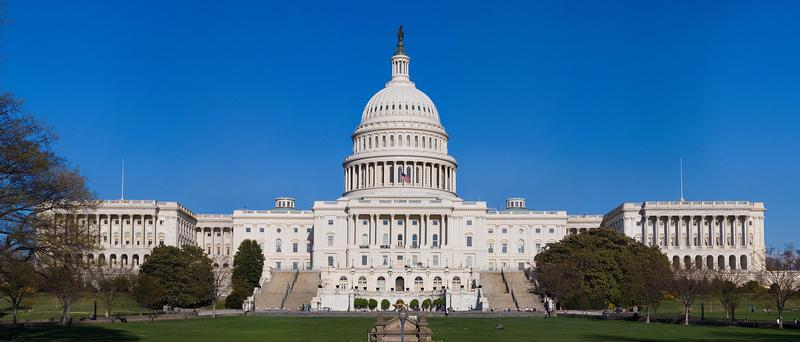
( Noclip, Public domain, via / Wikimedia Commons )
Brian Lehrer: It's the Brian Lehrer show on WNYC. Good morning, everyone. If you follow the news closely enough, even like Sunday night and early Monday morning, maybe you've heard by now about President Trump's latest flip-flop on releasing the Epstein files. He was for it as a candidate when he couldn't release them than against it when he became president, and he could. You probably know that much. Now it looked like he would get embarrassed by lots of House Republicans voting against him and for the release. He suddenly recommended last night in a social media post that the House should vote for it. If they do, I guess he can declare victory instead of defeat, right? We'll talk more about the politics and the new revelations from last week about Trump's involvement with and knowledge of the Epstein crimes.
In light of that content, I thought it might be good to start with a very brief reminder of what we're talking about when we talk about Jeffrey Epstein. This is a short clip of the journalist Julie K. Brown from the Miami Herald who spoke about Epstein on NPR's Weekend Edition yesterday. She reported more on Epstein than anyone. She was asked about Epstein having so many friends in high places while being a serial abuser of minors.
Julie K. Brown: I think that it shows that he's a great manipulator and that also could you imagine if he's able to manipulate some of the top people in the world, could you imagine what he must have done with these young girls who were 13 and 14 years old and how he must have been able to manipulate them into believing somehow that he was going to help them with their lives? That is the sad part about it. He was the mastermind behind this sex trafficking network that led to the abuse of hundreds of women and girls and girls that came from troubled backgrounds.
Brian Lehrer: Julie K. Brown. Hundreds of victims as young as 13 and 14, she reports. Just so we know what we're talking about for some basic context, because it doesn't always get stated so explicitly like Julie K. Brown did there, more often now people just say, like, pedophile Jeffrey Epstein and things like that. There are these files that apparently the Justice Department has. When Trump was running for president last year, podcaster Lex Fridman asked him if he would release the files if elected. This clip sometimes gets cited as Trump promising to do so, and he kind of does. But you'll hear how much, even last year, he was trying to hedge it when Fridman backs him into a corner with this follow-up.
Lex Fridman: It's just very strange for a lot of people that the list of clients that went to the island has not been made public.
President Trump: Yes, it's very interesting, isn't it? Probably will be, by the way.
Lex Fridman: If you're able to, you'll be--
President Trump: Yes, certainly take a look at it. Now, Kennedy's interesting because it's so many years ago. They do that for danger, too, because it endangers certain people, et cetera, et cetera. Kennedy is very different from the Epstein thing. I'd be inclined to do the Epstein. I'd have no problem with it.
Brian Lehrer: "I'd have no problem with it," is the part that everyone quotes like it was a campaign promise, but you heard how uncomfortable he was with saying yes in any way. Tried to refocus the conversation on Kennedy files, but then probably felt he had to land on, "I'd have no problem with it." Then he's elected and he starts to call the Epstein issue, as it pertains to him, a Democratic Party hoax. You've heard that in recent weeks, but it's not because it has-- It's not a Democratic Party hoax because it has some of the most conservative members of Congress urging the files be released, too, like Congressman Thomas Massie of Kentucky, who went on ABC's This Week program yesterday.
Thomas Massie: In 2030, he's not going to be the president. You will have voted to protect pedophiles if you don't vote to release these files, and the President can't protect you.
Brian Lehrer: Thomas Massie. Another of those conservative members ready to vote to release the Epstein files, as many of you know by now, Marjorie Taylor Greene of Georgia, previously one of Trump's biggest boosters in the House, now drawing a derisive nickname as if she was Hillary Clinton or somebody. A derisive nickname, she says, has drawn death threats to her.
President Trump: Marjorie Traitor Greene. I don't think her life is in danger. Frankly, I don't think anybody cares about her.
Brian Lehrer: Marjorie Traitor Greene, according to Trump. When you call somebody a traitor, that's usually supposed to mean they sold out your country, right? I guess in this case, it means she sold out Trump's desire to keep something, and nobody's quite sure what. It sure looks like he has a strong desire to keep something as a wonderful secret. Now, as of last night, he jumped to the front of the parade and said, "I'm for it. Nothing to hide. Release the Epstein files. Go ahead and vote that way, members of Congress."
By the way, in case you missed it, and you may well have, because it may have been designed for you to miss it. The Epstein files flip was the second instance of Trump backing down this weekend in a classic Friday evening news dump. You know about those politicians of all kinds do it, corporations do it, because people don't follow news as much on the weekend. People release the worst stuff that they feel they need to release about them on Friday evening.
In this case, at that time, the president announced that he will reverse tariffs on certain common food items, including coffee, bananas, and beef, after the Democrats did so well in the elections, partly on affordability promises that voters felt Trump had failed to keep. The president who ran on winning so much, you'll get tired of winning, took those two losses in the last few days. With us now, Eleanor Mueller, congressional reporter for the news organization Semafor. Eleanor, thanks for coming on. Welcome back to WNYC.
Eleanor Mueller: Thanks for having me, Brian.
Brian Lehrer: When can we expect a vote in the House on releasing the Epstein files?
Julie K. Brown: We're not quite sure yet. The thing it is, it could happen as soon as tomorrow. But you're exactly right that the tide was already turning in favor of several House Republicans voting in favor of this, even though only the four, including Marjorie Taylor Greene and Thomas Massie, actually signed on to the discharge petition that forced Speaker Mike Johnson to take up this bill this week.
Brian Lehrer: For people who may be confused, what's the difference between the Epstein files the House will be voting on, which includes the list, I guess whatever the list actually is that was referred to in one of the clips, the difference between the Epstein files the House will be voting on and the big Epstein emails release that Democrats were able to make public last week?
Eleanor Mueller: This is when House Republican leadership's defense all along they've said that because the Oversight Committee under their leadership has started already obtaining some of these emails from the Justice Department, making them public, as we saw recently from the Democrats. They released that email that called Trump "the dog that had not barked," damning stuff. House leadership has taken that and said, "You know, well, we don't really need to vote for the Justice Department to release any more files because we already have these documents. Thanks to our efforts."
The bill that's coming up this week, thanks to Thomas Massie, Marjorie Taylor Greene, others who signed on to that discharge petition, would require the Justice Department to release all of the files. That's basically a power that even the Oversight Committee at this point does not have, has not executed, and would in theory produce many more documents than the ones that we've seen so far.
Brian Lehrer: A couple of listeners are starting to call in and text about this already. Listeners, you have the number 212-433, WNYC 212-433-9692 with Eleanor Mueller from Semafor. I want to run down some of the breakout quotes, and you just mentioned one, and I want to go over that one and a few others and what they might mean, quotes that pertain to Trump in these emails and ask you to help us understand what they seem to say or imply about the president and what they don't. We'll take these chronologically.
In 2011, Epstein had gotten out of jail after his first conviction relating to his behavior. It was a relatively minor charge compared to what he was actually suspected of. It was one count of soliciting prostitution and one count of soliciting prostitution from someone under the age of 18, as the AP describes it in a story. AP says he was sentenced to 18 months in jail under a secret arrangement. AP says the US attorney's office agrees not to prosecute Epstein for federal crimes. Now, that would have been during the Bush Administration, 2008.
AP continues, Epstein serves most of his sentence in a work release program that allows him to leave jail during the day to go to his office, then return at night. He's out of jail in 2011 and emails his accomplice, who was later convicted herself, Ghislaine Maxwell. Epstein writes, "I want you to realize that that dog that hasn't barked is Trump." What can you say about that reference to Trump as that dog that hasn't barked? Barked about what? How clear is it?
Eleanor Mueller: That is exactly the question that we're seeing congressional Democrats and even those House Republicans like Thomas Massie, Marjorie Taylor Greene raised. I think in that same batch of emails, he also said that Trump "spent hours at my house alongside one of Epstein's survivors." Obviously, we do not have the full context. We do not know exactly the meaning, especially without this fuller batch of documents. It's certainly, I think, not a good look for the White House.
Brian Lehrer: Right. Same batch 2011 reference to a victim or survivor who, as you say, "Spent hours at my house with him," him being Trump. The name of the victim, and I guess this is important, the name of the victim is redacted in what the Democrats released last week. Trump claims it was the late Virginia Giuffre who wrote about her Epstein horror story, but notably did not accuse Trump of anything. We don't know if Trump is telling the truth that it was Giuffre. Do you know anything more about what that text refers to about a victim who Epstein wrote, "Spent hours at my house with Trump?" Or if the Democrats needed to redact the name.
Eleanor Mueller: They needed to redact the name. This is another reason that House Republican leaders have been citing as why they can't vote to release all of the Justice Department's files. They've basically expressed that they hold concerns that some of these women could be exposed by having either their names or other personal identifying information in them released. This is what the supporters of releasing these documents have been doing, is they've been meticulous about redacting names, redacting personal information. If this bill that will get a vote later this week ends up getting enacted, it'll be the same thing. The Justice Department will be required to remove any information that could identify the victims before they put these documents out there.
Brian Lehrer: Trump could be lying that it's Virginia Giuffre, because then that would clearly not incriminate him in terms of actual sex or molestation or whatever it would be called with her, because she wrote a book and did not accuse Trump of anything when she said a lot about other people. But we don't know. He could just be making this up because he can make it up and not get caught. Or maybe it really is her.
Eleanor Mueller: Yes, we don't know and we won't know, of course. Many of Epstein's survivors are still alive. They're still involved in this process. Maybe some of these documents come out and they opt to come forward and clarify their role, maybe others' roles that they knew about, who they feel would comfortable with them sharing. At this point, there's a lot of uncertainty.
Brian Lehrer: Those were from 2011, years before Trump runs for president. Now we'll jump ahead to 2015. Trump is starting to run for president, and Epstein is having an exchange with journalist Michael Wolff, who is writing a biography of Epstein. Michael Wolff, I hear CNN planning to ask Trump tonight about his relationship with you. Epstein, if we were able to craft an answer for him, what do you think it should be? Then Wolff also wrote, "If it really looks like he could win, you could save him generating a debt." Do you have anything on that? The notion that Jeffrey Epstein thought he could save Trump in any way in his presidential campaign. Save him from what?
Eleanor Mueller: [laughs] It's a fantastic question and it's fascinating to look back now a couple days ago to when Congresswoman Marjorie Taylor Greene was posting about the Epstein files before Trump attacked her on Truth Social, saying that he revoked his endorsement of her, et cetera. She said there's no proof to her knowledge in any of these documents that Trump is implicated or involved in any way. I think, you know, this batch of emails released by the Democrats on the House Oversight Committee would certainly indicate otherwise. This is one of those examples.
Brian Lehrer: One more. Epstein emailed Michael Wolff in 2019 about Trump. Trump is president now at this time. "Of course, he knew about the girls." That quote has really jumped out. 2019, of course he knew about the girls. 2019 is the year Epstein is arrested again, this time on more serious sex trafficking charges, and he dies by suicide in his jail cell. At very least, assuming Epstein's email is true, it appears to catch Trump in a lie when he said this in 2019.
President Trump: No, I had no idea. I had no idea. I haven't spoken to him in many, many years, but I did have no idea.
Brian Lehrer: No idea what was going on. There's the apparent lie if Epstein's email is accurate. I guess my question about that quote, "Of course Trump knew about the girls," is if we take that to mean Trump knew about Epstein's sex trafficking or at that point, alleged sex trafficking, because he was only charged before he killed himself, what would Trump or any person's responsibility be under the law to report that to the police? I realize you're a congressional reporter, Eleanor, you're not a lawyer or legal analyst, but have you heard anybody talk about this? What would Trump or any person's responsibility be under the law to report that to the police if they knew about sex trafficking, and particularly of minors?
Eleanor Mueller: Presumably, they would be liable in some way, especially with such extensive now documentation seemingly of that knowledge. It's worth noting that these emails come from Jeffrey Epstein's estate. This is an entirely separate bucket than the Justice Department emails that would be released if this bill this week gets enacted. We could get a much more fulsome picture quite soon here.
Brian Lehrer: There could even be a crime in that case, failure to report. I don't know if the statute of limitations would have run out, but at least in theory, it could have been, if all that's accurate, criminal negligence on the part of then President Donald Trump. It might just be really bad for Trump politically, at very least because it would be ethically so bad if it's true. It could even be criminal, is what I think you're saying.
Eleanor Mueller: I am not positive, but it certainly seems like something that would be within the realm of possibility. Again, this is Congresswoman's Green point repeatedly as she thinks Trump is dramatically underestimating just how important this is to the mega base. Even if the repercussions here are solely political, I think those will still be something significant that he has to grapple with.
Brian Lehrer: That, I guess is where we are today. One more thing about this, though. Even if Congress does vote to release the Epstein files, Trump may still have another trick up his sleeve to prevent the release that he claims to be for. If you take a step back, this might be as bad as anything in terms of plundering democracy. Epstein particulars aside, because after the email dump last week, he got Attorney General Pam Bondi to launch an investigation of Epstein related activity only of Democrats. He got the attorney general like on a snap his fingers moment's notice it seems like to launch an investigation of Epstein related activity only of Democrats, Bill Clinton and a few others. Listen to what Republican Congressman Thomas Massie had to say about that yesterday on ABC This Week.
Thomas Massie: If they have ongoing investigations in certain areas, those documents can't be released. This might be a big smokescreen.
Brian Lehrer: Eleanor, that clip really made my ears perk up. Might we be headed to a moment soon where Trump can say, "oh, I'm for the release of all the Epstein files, but we can't make them public now because they're part of a criminal investigation?"
Eleanor Mueller: That is certainly the thinking of the Congress people who have backed this push. I think whether or not it turns out to be true, we'll have to wait to see until it's enacted. The Justice Department has to respond to being asked to release all of these files. Of course, the House vote today or this week is just the first step that then also goes to the Senate, and then also in theory, Trump could veto it. Now, Congressman Massie told me Wednesday night he doesn't think Trump will veto it. He said it's one thing to privately lobby against these files coming out. It's another thing to quite publicly and bearing the full political brunt of that action, veto the bill. We'll see. Either way, the Justice Department has a little more time here to maneuver as far as potentially circumventing this legislation.
Brian Lehrer: Raul in East Elmhurst, you're on WNYC. Hi, thank you for calling in.
Raul: Good morning, Brian, and good morning to you guests, thank you so much for this topic. I've been wanting to say something. I heard another public radio station, someone that have been looking into it, studying from the very beginning. I'm very disappointed. This system is just not ripe. Obama knew about it, Biden knew about it. Why did they not release those freaking files? Now Trump doesn't want to release it. Trump doesn't want to. All of this stuff, people are guilty. Why did not Biden and Obama release the files? That's what I want to know.
Brian Lehrer: That's a fair question. Does anybody know the answer to that? Eleanor?
Eleanor Mueller: Well, it's certainly something that we've seen House Republicans seize on as they urge their colleagues to vote for the release of the files. I think Marjorie Taylor Greene, I keep bringing her up, but she's such an interesting figure in all of this, actually posted a screenshot over the weekend of her text to Donald Trump saying, "We've always wanted this because we know there's Democrats implicated and we know that they've opted until now to not release them themselves. Why would we as Republicans not pursue the release?" Obviously, that's not an opinion Trump shared, at least not until last night when he posted that House Republicans should actually vote for this bill. It's certainly something that's given them a useful political tool as they advocate for these documents to come out.
Brian Lehrer: I think a lot of Americans would believe they should investigate whether it's a criminal investigation under the attorney general or a congressional investigation or both. Let the chips fall where they may. If any Democrats did anything horrible with respect to anything that Jeffrey Epstein did, let the chips fall where they may. Same with Republicans. Have you reported it on-- Again, I realize you're a congressional reporter, you're not a Justice Department reporter. That really raises questions, doesn't it, when he can ask the Justice Department to launch an investigation only of Democrats on any particular issue?
Eleanor Mueller: Absolutely. This is a broader pattern that we've seen throughout Trump's second administration of weaponizing his departments to go after his political enemies. We've seen it with Federal Reserve Governor Lisa Cook. We've seen it with New York Attorney General Letitia James. He's really pushing the boundaries of what he can do within the executive branch to go after these people who either he disagrees with or who have attacked him or whose absence would benefit him politically. I do think we hit a wall eventually in terms of whether or not he can actually follow through on some of these things.
Brian Lehrer: I guess partly in answer to the caller's question, I think the politics of this have been, and you're closer to it. Tell me if we need to reframe this. The politics for a number of years before Trump and since Trump hit the scene as a presidential candidate and then president, has been because they would be difficult to release, the Republicans were making it look like a Democratic conspiracy to cover something up because maybe Bill Clinton was implicated in something, who knows? Or Lawrence Summers, another name that Trump mentioned and wants Pam Bondi to investigate.
Maybe Democrats did do something, some Democrats. They wanted the political narrative out there. The Republicans did that. Oh, the Democrats won't release this. But because there may have been Republicans implicated, too, they didn't really want it released. They just wanted the issue. Now that they have the power to release it, and some Republicans, like Massie and Marjorie Taylor Greene are getting on board, it seems like Trump is getting nervous because whether or not he committed any sexual crimes himself, he's acting like there's something that he doesn't want people to see in there. The politics have flipped from let's have this great conspiracy theory out there that people can come to conclusions about without any actual evidence to now that the evidence might be released. "Oh, we can't do that." Does that make sense?
Eleanor Mueller: I think that's right. It's worth noting that the momentum on the Democratic side certainly seems to be behind, "Release these files, even if they do implicate members of our own party." Every single House Democrat signed on to the discharge petition that forced this vote this week. It's really primarily on the GOP side and primarily because of Trump that we're seeing this hesitance.
Brian Lehrer: Dave, in East Irvington, is that New York or New Jersey? Which Irvington?
Dave: That's New York. I thought if I called it East Irvington, maybe it would start clicking, that we're not to be confused with New Jersey.
Brian Lehrer: East Irvington would be closer to the Saw Mill River Parkway and not so close to the river, right?
Dave: Exactly. Yes, we're very close to the Saw Mill Parkway. It's a great place to live. No, I shouldn't advertise that because we're trying to get my son to find a house up here. We don't want competitors very hard. Anyway, moving on to the-- I was just typing it up for my daughter, so I have a little bit of it in front of me, and hopefully I can explain it. One is a question which I think is the less important item. I see even that's a little confusing.
The question has to do with the provenance of the files, whether they can be-- we can be sure that there's no way they could be monkeyed with like Rose Mary Woods and Watergate mixed and all that. Now I see you, having listened to some of the prior discussions, it's not that clear because there are many other things that could obscure them in the meantime. The other idea is that, you know, yeah, this may be something, not a smoking gun, but this may be the thing that finally tips the house of cards in the other direction. It doesn't have to be one thing. We all tend to think, "Oh--" Not we all, but many people tend to say, "Oh, it's got to be the emails or the tapes or in this case, esty nesting."
This may do it. Or if it doesn't, there are a dozens of other really important issues. For me, it's the pardons. The pardon is the most glaring. If there's a way to somehow put focus on how it's undermined the whole justice system. Yes, they all do it, but he's really done it to just blanket pardon 3,000 people and many other glaring examples. Anyway, my question about the provenance, maybe that's important too, because he's not so confident. I think once he makes a decision, that's it, he's going to go with it. He may have finally get on the wrong horse here. Anyway, I try to appreciate [crosstalk].
Brian Lehrer: Dave, thank you very much. Dave's got those two questions in there, Eleanor. There are bigger democracy issues I think he's suggesting than this, even though obviously anybody connected with what Jeffrey Epstein did is in a group of horrible people. The pardons. I guess moving Ghislaine Maxwell to this country club Thai prison after she met with, was it the attorney general herself? And said Trump didn't do anything. There's of course, the whole huge list of democracy issues. Yet I think sometimes, just at a gut level, human beings pay more attention to something like sex trafficking and sexual abuse of minors than things that may seem more abstract, even if they have implications for many, many, many, many more people. Like the plundering of democracy.
Eleanor Mueller: Absolutely. We're having some of these same questions about so many other parts of the federal government under the second Trump administration. It's not just whether or not the Justice Department would comply with legislation forcing them to release all of these documents on Jeffrey Epstein. It's also whether they're doing what they've historically done in every other administration many other aspects as well. We've mentioned in passing some of those very same examples, whether that's using the Justice Department to prosecute political enemies or the Federal Housing Finance Agency to come after Federal Reserve governors. It's a long, long list there, and certainly indicative of a bigger, more structural issue than just how this administration is responding to the Epstein files.
Brian Lehrer: On the earlier caller's question about why these files weren't released under Democratic Presidents Obama and Biden, one listener writes, "As to Obama, there was a secret deal between Acosta's office and Epstein." Acosta was the US attorney, I believe, in Florida at the time. If that would have even been under Obama's watch, I'm not sure. It says, "As to Biden, there was a criminal trial going on Maxwell." If the caller is right on either things, the texter, you can comment, if they're right on Biden, then it adds even more credence to the fact that Trump may have gotten Pam Bondi to launch this investigation of Democrats, a criminal probe to give him another excuse not to release the files. Do you know if that's accurate? During Biden, there was a criminal trial going on of Ghislaine Maxwell, and that was why Biden couldn't release the files.
Eleanor Mueller: That is a great question that I admit that I do not know the answer to. I do know that Acosta testified before the House Oversight Committee earlier this year, or rather interviewed privately. Private testimony and the Republicans take away afterward was that he basically exonerated Trump. He never spoke to Trump in his capacity of conducting this investigation into Epstein. That's been his role most recently in the case. Admittedly, I do not know the logistics of what that investigation meant about releasing the files in previous administrations.
Brian Lehrer: Just a little more on Acosta. I believe he was the US attorney for the Southern District of Florida when the deal was struck to prosecute Epstein on minor charges in 2008. That would have been under Obama. Then there is also a Politico story from just October 17th, a few weeks ago, Alex Acosta cleared Trump of wrongdoing in the Epstein case. A lot of unanswered questions and questions that we may or may not get the answer to, and then see what consequences they have for Trump or anybody else involved.
Now, when we continue in a minute, we'll turn to two other topics, front and center now after the Democratic wave in the election, Trump announces reversal of some tariffs because of affordability concerns. Remember that word came up maybe a few times in the campaigns of people like Mikie Sherrill and Zoramdani, affordability. What will happen now with the Obamacare subsidies that the Democrats made this shutdown about? Lsteners, we can take comments or questions about those things. 212-433 WNYC 212-433-9692 as we continue with Eleanor Mueller from Semafor. We're going to play, we've played some really interesting clips already regarding the Epstein and Trump situation. Wait till you hear what we've got of Chip Roy and Hakeem Jeffries. Coming up after the break.
[music]
Brian Lehrer on WNYC. We continue with our usual Monday morning politics segment, national politics. There is so much of it today with Eleanor Mueller, congressional reporter for semafor. Eleanor, you wrote about food tariff reversals. What did Trump announce, though?
Eleanor Mueller: Treasury Secretary Scott Bessent signaled last week this would be on the horizon. Then on Friday, the Trump administration made it official. They said that they would lift tariffs on key groceries, including coffee, bananas, tomatoes, in an effort to alleviate some of the price increases that customers have seen since they went into effect. This mirrors legislation that a bipartisan pair of senators introduced last month. Democratic Senator Catherine Cortez Masto and Republican Senator Rand Paul, both vocal critics of the administration's tariffs, wrote a bill to do justice. This is something that the administration has been facing pressure on for quite some time. To your point about the Friday news dump on Friday said, "In fact, going to walk back some of these things because we want to make sure that Americans aren't hurting too much at the grocery store.
Brian Lehrer: He flipped on Epstein, and he flipped on this flip tariffs in one weekend's time. Why on the tariffs? Politically speaking?
Eleanor Mueller: Clearly, the administration is feeling pressured to improve affordability. Trump has said publicly Americans are doing great. The economy is doing great. The that is, of course, the same thing that got former President Joe Biden in trouble, was telling Americans who are struggling that actually you are wrong, the economy is fantastic. He's taken some actions that have shown us he might not personally, privately think that life is quite so great for Americans economically. He said that he wanted to look into cutting Americans a check of tariff revenue. That's something, of course, that they need Congress to do, most likely, but nonetheless, they're talking about it. Now, of course, this reversal of tariffs on groceries.
Brian Lehrer: As your article points out, previously called the idea that there's an affordability problem "a con job by the Democrats." Now apparently it's not a con job anymore because he cited affordability in this reversal, specifically beef, coffee, I think the third category was tropical fruits. It wasn't bananas in particular, but there are no US-grown bananas, I don't believe. I think all, you know, America. A friend of mine who was an immigrant from Ireland, Eleanor, once said one of the first things that struck her about the United States is how many bananas people are eating all the time. [laughs] There are no domestic bananas. Tropical fruits, I presume, refers largely to bananas.
Eleanor Mueller: Yes, same goes for coffee. This was Senator Rance Paul's point when he introduced that bill last month was we're not protecting American jobs when we place these dramatic restrictions on things like coffee and bananas. These are things that we've historically needed to bring in from other places.
Brian Lehrer: Is he just going food by food? Newsday, Long Island's newspaper, has a story now about Long Island, Italian restaurants gearing up for a possible doubling of pasta prices due to possible tariffs. I guess those might still be on. I can't tell for sure. Is this whack-a-mole tariff reversals, food by food."
Eleanor Mueller: We're going to have to see. But it certainly does make it tough for the administration to back up the argument that it's been making over the last several months, which is that, in fact, the companies are the ones that are going to be absorbing these cost increases. If you feel the need to reverse tariffs on groceries because you feel like they're causing customers to pay too much at the grocery store, then of course, it's tough to also argue that people actually aren't seeing their costs go up at all.
Brian Lehrer: Listener rights, by the way, one other thing about Epstein and Congress. If Representative Sherrill, who was just elected governor of New Jersey and announced she's resigning from Congress this week, so she can prepare to take that job if Representative Sherrill resigns her seat this week as planned, does that negate her signature on the Epstein files discharge petition putting it back below the required number. What would you say to that listener?
Eleanor Mueller: The consensus, as far as I've heard it from House leaders, is that, no, that is not a problem, in part because the discharge petition's point was to force the vote. In theory, it could have taken the rules outlined seven legislative days, two days after that, to actually come to the floor what Speaker Mike Johnson said last week was. Let's just get this thing over with. That's why we're seeing a vote this week. Because the vote is already in motion, already scheduled, it won't actually matter if that discharge petition loses any signatures because it's already done what it set out to do.
Brian Lehrer: Another listener, Paul from Jersey City, texts, let's all keep in mind regarding Trump's reluctance to release the Epstein files, we are talking about a man who himself is convicted, at least civilly, sexual harasser. There was, of course, the E. Jean Carroll case. I think it's not called a conviction. I think it's called found liable for, but found liable by a jury of sexual abuse. Some context there on Trump for anybody who wants to read into his Epstein positions a possible connection there.
Health care after the shutdown, Democrats want to vote in the House on Affordable Care Act or Obamacare, same thing, subsidy extension. Most of our listeners know that. I'm going to play parts of an exchange on that in the House that involves a Republican and two Democrats. Listen first to Republican Chip Roy of Texas, who is against voting to extend the subsidies. This is new. This is once Congress came back after the shutdown ended. Congressman Chip Roy
Chip Roy: Insurance companies 1032% stock prices up since 2010, 448% up from 2013. 85% of the revenues for insurers come from the federal government. What my Democratic colleagues are proposing is an insurance company enrichment scheme. It's literally what they're doing is printing money in the treasury and giving it to insurance companies. That's their solution for health care, enriching insurance companies that are the very people that are telling the American people which care they can get and not get. There's no chance for an American to go to the doctor of his or her choice. There's no chance for them to go get care. There was no chance for my constituent who lives near Fredericksburg, Texas, to go to MD Anderson to get care because she's on Obamacare, which can't go to MD Anderson.
Brian Lehrer: That particular private insurance plan that the person bought on the Obamacare exchange has their list of doctors and Hospitals that people can go to. That's true. That's a real thing. The response from Democrats, Mary Gay Scanlon of Pennsylvania, teeing up Minority Leader Hakeem Jeffries came after that.
Mary Gay Scanlon: Have our Republican colleagues ever been able to produce a plan that would provide the kind of coverage for Americans, affordable coverage, that the Affordable Care Act did?
Hakeem Jeffries: I's very interesting that my colleague from Texas wanted to sit there and lecture both Katherine Clark and I, but couldn't see fit to ask us a single question, engage in a debate. Where y'all been, bro? You've been out for seven weeks. You don't have the time to have a back and forth. We hear you rant for a few minutes, basically threaten to repeal the Affordable Care Act and then don't want to defend that position. You should feel free to defend that position. You've done it 70 times. If you think that's on the right side of the American people, then fine. That's your plan. Repeal and displace tens of millions of people. That's the Republican plan.
Brian Lehrer: Hakeem Jeffries. Eleanor, where does this stand? We talked a lot about on the show, the Senate deal, enough Democrats being willing to make a deal to end the government shutdown in exchange for the promise that there will be a vote on extending the subsidies in the Senate. Speaker Mike Johnson in the House never promised such a vote in the House. Those Democrats were willing to go forward anyway. There's no promise of a vote in the House to extend the subsidies, but the Democrats are trying to force one with, again, like forcing the Epstein vote, this is a parliamentary term that most people never have to know. A discharge position petition. A discharge petition. This is where we're at with this. Maybe you can explain.
Eleanor Mueller: This is another reason why the administration is facing so much pressure on affordability is because of these enhanced Affordable Care Act subsidies that are supposed to expire at the end of the year. This was what was at the core of the disagreement over government funding that kept us shut down for the longest amount of time in US history. The senators who agreed to reopen the government, there were only eight of them who caucused with Democrats. This was what they accepted, was the promise of a vote in December on a bill to extend the subsidies that they approve.
The problem is that House Republicans made no such concession. In fact, Speaker Mike Johnson, when he came back to the Hill after the agreement was struck, said repeatedly that not only had he not agreed to hold any kind of vote, but he would not agree to hold any kind of vote. I think that from leaders' perspective, there is a widely held reluctance within the House Republican Conference to implicitly support any form of Obamacare, including voting to extend these subsidies. Also a great deal of difficulty when it comes to threading the needle on some kind of change that could bring down the cost to the way that fiscal hawks want, whether that's by an income cap or a measure to address fraud, like requiring a minimum copay or a deductible.
We are seeing now the Senate and House on two dramatically different tracks. enate Republicans really rushing to get, if not a bipartisan product by December, which seems like a heavy lift, but a Republican product that they can put on the floor at the same time as the Democratic bill. The House is in a much earlier stage of its negotiations. I was talking to someone about this last week who works on these issues on K Street and asked them what they make of the House and the Senate being on different timelines and whether that was a positive thing. They said not if you want a result. That's where we're at right now. It's not looking too good.
Brian Lehrer: Well, to Hakeem Jeffrey's point that the Republicans-- what did he call it? Repeal and displace. Repeal Obamacare, Affordable Care Act, and displace those millions of Americans who get their health insurance that way and can afford it, even if barely because of the subsidies, his point being repeal and displace. They don't have a plan. They don't have an alternative plan. If Chip Roy pointed out a real problem with just about any private insurance that they have lists of doctors and hospitals that you can use and ones that are not in plan that you can't use or have to pay an arm and a leg for to use. What's the Republicans' plan for making that better for patients in America and people getting well care.
Eleanor Mueller: This is the same fight that Republicans on the Hill have been having for 15 years now. This is one of the biggest fault lines we're seeing emerge is that we have moderate Republicans, blue state Republicans who are saying, "Let's just at least for the short term, at least making some changes, extend these enhanced tax credits.
Then on the other hand, folks like the chair of the Senate Health Committee, Bill Cassidy saying, "Well, what if we made bigger reforms instead?" That is a much more complicated, much more time intensive question for Republicans specifically to answer. This is something that they've been struggling to do for a decade and a half, and whether or not they can even agree on one solution, let alone get it across the finish line is is a huge, huge question for them to answer in the next few months here.
Brian Lehrer: Anybody, including Democrats considering all this talking anew about Bernie Sanders style Medicare for.
Eleanor Mueller: All, I think with a Republican White House, House and Senate there is an understanding that that is not something that's in the cards at least for the next couple of years I will say that it is certainly being talked about in the political context of making sure that voters understand who held the majority when the subsidies lapsed, when folks premiums went up and as they're looking at you know either being stretched incredibly thin to afford the health healthcare costs next year or even having to make the choice to go without health insurance because they can't afford it.
Brian Lehrer: Eleanor Mueller, congressional reporter for Semafor. Thank you very, very much.
Eleanor Mueller: Thank you, Brian.
Copyright © 2025 New York Public Radio. All rights reserved. Visit our website terms of use at www.wnyc.org for further information.
New York Public Radio transcripts are created on a rush deadline, often by contractors. This text may not be in its final form and may be updated or revised in the future. Accuracy and availability may vary. The authoritative record of New York Public Radio’s programming is the audio record.
