
Monday Morning Politics: Latest on US Strikes in Iran
[MUSIC]
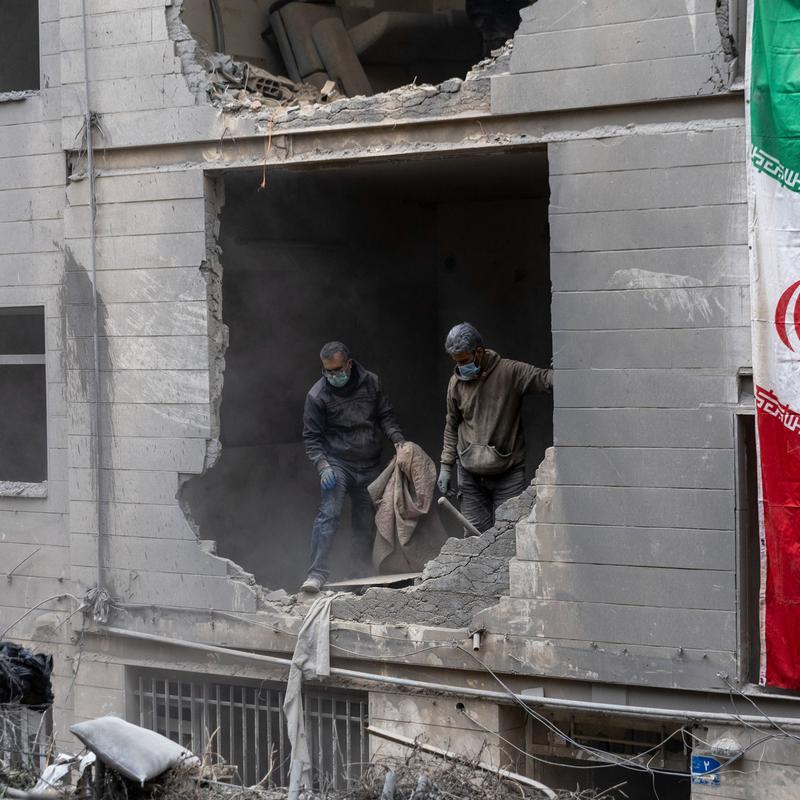
Brian Lehrer: It's The Brian Lehrer Show on WNYC. Good morning, everyone. Here in week 3 of the war against Iran some of the headline developments, most notably from a US and global impact standpoint. The Strait of Hormuz remains mostly closed as President Trump asked other countries to send their militaries to help escort ships through. Gasoline is up more than $0.80 a gallon on average in the US at last report, at least temporarily, much more in countries that depend more on Middle east oil than the US does.
The war is still widening in that respect. How to resolve the Strait of Hormuz issue, how much power Iran has to keep that front open is a key question right now. Also, how much of Iran's military supply or enriched uranium supply has to be destroyed for the US to declare victory? NPR as reporting this morning that about 70% of their missiles have been destroyed. Iran is definitely being weakened militarily to a very substantial degree. How much is the goal?
I also want to start the week by mentioning two things getting less attention. One is simply that tomorrow is St. Patrick's Day and the Pentagon says they're celebrating it in cities around the country. Nothing wrong with St Patrick's Day and celebrating Irish heritage. We will do some of that here on the show tomorrow. This after the Pentagon under Pete Hegseth banned just about every other kind of official identity observance: Black and Women's History Month, Martin Luther King Day, Holocaust remembrance days, anything LGBTQ. Is St. Patrick's Day an exception because Irish people are white or the holiday has a Christian religious underpinning and it doesn't look like identity to him.
The other one the Pentagon observed this year was Mardi Gras, a time of partying, as you know, to kind of get it out of your system before the Christian observance of Lent. Why those? I'm wondering. Maybe our guest, who covers the Pentagon, who will join us in a minute, will have an answer or at least a thought. We're also following the gradual process of the US Taking responsibility for the bombing of the girls elementary school in southern Iran, where about 175 people, mostly children, were killed.
It was apparently the result of outdated intelligence about that building, which used to be for Iranian military use. How does information like that go out of date? Let's go all the way back to day 3 of the Trump administration, this Trump administration, January 23, 2025, Washington Post headline, Trump moves to close Pentagon office focused on curbing civilian deaths. It starts by saying, "The Trump administration is moving to abolish a Pentagon office responsible for promoting civilian safety in battlefield operations, suggesting that incoming Defense Department leaders may attempt to loosen restrictions on US Military operations worldwide."
That from the Washington post in January, January 23 of last year, three days after the inauguration. Then in March of last year, as that proposal was quietly becoming a reality, an officer named Wes Bryant, whose title was Branch Chief of Civilian Harm Assessments, took it public, leaking details to the Washington Post. He described that moment on WNYC's on the Media this weekend
Wes Bryant: When that word came down that, "Yes, this is over, guys. The center's being shut down. Everything's going to be rescinded, all the policy, all the changes, guidance. Sorry, we put up a good fight. See ya," I decided at that point to whistleblow to the good people at the Washington Post. I also went public with my name and my title. I knew the risk there, but I believed it need to be said as a whistleblower and not be anonymous, so I'm going to stand up and do this.
Brian Lehrer: Wes Bryant on OTM this weekend on closing down or scaling way back, the Pentagon program known as the Civilian Protection Center of Excellence, that was actually its name, including the words of excellence, and his leak about that last year to the Washington Post. With me now, Washington Post Pentagon and military reporter Dan Lamothe. Dan, thanks for coming on. Welcome to WNYC.
Dan Lamothe: Sure. Thank you for having me.
Brian Lehrer: We'll talk about all of the above from the intro. Let's start on your article from Friday: Hegseth vows thorough probe of school strike that Trump blamed on Iran. What was new on Friday?
Dan Lamothe: Really, I think the most significant piece was that despite the president previously saying on at least two occasions that he thought Iran had carried out this strike on their own school, the defense secretary has now acknowledged that there's a broader, fuller, more robust investigation within the US Military. These investigations are known as 15-6 investigations. It follows a specific army regulation with that number in it. These are usually relatively thorough; dozens of interviews, lots of witness statements. They'll comb through data. They'll probably listen to radio transmissions. All different ways of trying to get a better understanding of how this sort of situation could occur.
Brian Lehrer: An AP story that the Washington Post carried said outdated intel likely led the US to carry out that strike on the school. Can you describe briefly what was apparently outdated?
Dan Lamothe: Yes, the Post itself had similar reporting. The idea here is that there was a building adjacent to a number of military structures that, at some point in the last 6, 8, 10 years, was shifted back to be a school. There's a list of targets, a targeting list, they call it. For reasons that aren't really clear right now, that targeting list was not up to date. They drew on that targeting list when drawing up what they would strike in Iran, particularly given the number of things that they've hit Iran in in short order here. This school was among some of the first things hit, and they were working on awful data. I think the why of it is really the unclear part here, how that could occur.
Brian Lehrer: The why of it. We don't know for sure that they would have known it was a school if they hadn't defunded the Civilian Protection Center of Excellence. Here's something Secretary Hegseth said on March 2nd, the day after the School was hit.
Pete Hegseth: Two days ago, under the direction and direct orders of President Donald J. Trump, the Department of War launched Operation Epic Fury, the most lethal, most complex, and most precise aerial operation in history.
Brian Lehrer: Now, he would have almost certainly known about the school strike at that point when he said those words, "the most precise aerial operation in history." Have Hegseth and the other leaders been asked to comment on the closing of the Civilian Protection program that used to be in place, and whether it could have been relevant to having outdated intel on the school?
Dan Lamothe: Yes, this is an issue that obviously goes back basically a calendar year at this point in terms of the closure. They tended to focus heavily on looking at what happened after mistakes occurred, so they would be involved now. Whether or not they could have prevented this from happening, I don't have a clear read on that. That's something that perhaps the investigation will look at as well.
Brian Lehrer: You said they would look at preventing these things from happening in the future, looking back at mistakes that were made. Hegseth said on Friday that the US doesn't target civilians, only Iran does. Iran certainly has a history of backing explicit attacks against civilians in Israel and elsewhere. The school strike was because the Pentagon was wrong about what that building was. That's morally different. If it's from purposely being neglectful about preparing to avoid civilian deaths, that also raises moral questions. Did Hegseth say anything about how the Pentagon, under his leadership, will try to not to make such mistakes in the future?
Dan Lamothe: He's framed it largely as, of course, the US Military wouldn't do these sorts of things on purpose. I think, generally speaking, the US Military does have a relatively good record, but the exceptions to the rule tend to be pretty appalling. One example that we acknowledged in the story, it's about 10 years ago now, there was a hospital in northern Afghanistan that the US Military shelled for the better part of an hour, despite cries from the ground. Basically, people in that hospital trying to say, "Hey, stop shooting at us." In that case, it was similar feel of they thought it was one thing on the ground. It actually was something else. A lot of lives were lost in that process as well.
Brian Lehrer: Listeners, your comments and questions, welcome for Dan Lamothe, who covers the Pentagon and the military for The Washington Post, 212-433-WNYC call or text 212-433-9692 on anything we're discussing about the war or anything you want to bring up. Before we get to the main tension in the war right now, the Strait of Hormuz, with its massive economic and military implications. Can I ask you about these St. Patrick's Day celebrations that I mentioned in the intro?
I don't know if you've covered this at all or if it's on anybody else's radar, but I'll read from an article in the military newspaper Stars and Stripes. The headline is See the Pentagon’s calendar of events honoring the nation’s 250th birthday. They are citing here from the Pentagon's own calendar of events for this 250th birthday year of the United States. It says, "The year kicks off with the Tournament of Roses Parade and Rose Bowl football game on Jan 1st."
Then it goes on to Mardi Gras, Mardi Gras parades in New Orleans taking place from February to March, performances by the US Military Academy Drill Team and the Marine Corps Ceremonial and Brass bands. Then St. Patrick's Day parades in Savannah, Georgia, St. Louis, Missouri, and New York City will respectively feature the Army's 3rd Infantry Division, Army Color Guard, and the Military Academy's Pipes and Drum bands. That's them from the Pentagon's calendar of 250th birthday events. My question is, if they canceled every other kind of identity celebration, why are they making ones for St. Patrick's Day? Do you have any idea?
Dan Lamothe: No. I have no sense for exceptions to the rule here, other than to acknowledge that there have been in several cases in the past. When Secretary Hegseth first came in, there was a pretty conservative and pretty pointed effort to squash any kind of diversity effort that I think looked like an exception to the rule in his eyes. That's not just Martin Luther King Day and things like that, but also West Point. I wrote a story about a year ago talking about how they had basically prohibited the meeting of a variety of what they call affinity groups, which tend to be relatively specific groups of students, Asian American groups, or African American groups on campus.
Students are basically meeting themselves in relatively small groups, celebrating their own heritage and their own diversity. That was not something he was welcome to. With that said, in addition to things like continuing to march in parades, we have seen regular Christian meetings at the Pentagon. He's brought in a number of the evangelical pastors. They're relatively open and actually kind of really trying to highlight those events even as they cancel others.
Brian Lehrer: The obvious question that comes to mind is, is it because Irish heritage is white and Christianity adjacent? Hegseth doesn't consider that an identity celebration in the same way as Martin Luther King Day or others that they can no longer officially observe? You said he set out to quash what seemed to be exceptions. Maybe this just doesn't look like an exception to him. He doesn't even register that it's an identity celebration. I don't know. Has anyone asked that question?
Dan Lamothe: I'm not tracking any new reporting on that other than it fits into a larger pattern.
Brian Lehrer: All right. Let me take a call from Dan in Sleepy Hollow about the Civilian Protection Office. Dan, you're on WNYC with Dan Lamothe, who covers the Pentagon and the military for the Washington Post. Hello.
Dan: Hello. There was a really good interview this weekend on the media with Wes Bryant, who was either the head or a high-ranking in that Civilian Protection unit in the Defense Department.
Brian Lehrer: I'll just say for the record, because I guess you came into the segment a little late, we sampled from that interview in the intro to the show, and all credit to OTM for doing that, but yes, we played a clip of that guy to set this up. Go ahead.
Dan: Oh, great. Yes, it was really nice. Your guest had just mentioned that the Civilian Protection Unit was more retrospective and like, looking at things that happened, and so wouldn't have necessarily helped with the school attack, but the guest on the media was saying that they preemptively mapped out civilian areas and no strike lists and things like that. It seems that there's a bigger picture out there of possible preemptive protection that could have happened in the Iran school strike.
Brian Lehrer: Dan, thank you. Dan from the Washington Post, anything to say to that?
Dan Lamothe: Yes, I think it's notable how outdated the data on the school situation appears to have been. There is open Google imagery and Maps available that had a playscape in the back of the school, I think back in '27, 2018. It has been a school for quite some years.
Brian Lehrer: Larry in Oceanside on that topic as well, the school strike. Larry you're on WNYC. Hello.
Larry: Good morning, Brian. This is in reference to the frightening age of autonomous AI warfare that's upon us. I heard this discussed, actually in detail, the other day on Science Friday, where reporters stopped by. They talk about the fact that Anthropic, among others, is engaged with the government in various contracts to supply the sort of level of sophisticated AI which can actually select targets and act upon that information to select and kill targets, both human and otherwise. It hasn't been ruled out as a possibility in this instance. I'd be curious to see what your guest has to think about that.
Brian Lehrer: Thank you, Larry. Anything on that, Dan?
Dan Lamothe: Yes, the Anthropic discussion within the Pentagon has been very lively. Anthropic's concern was basically that humans would be eliminated from the kill chain, they would call it, too frequently and then too great ff an extent. The Pentagon's long-time thought on this, predating the current Trump administration, back to the first Trump administration, at bare minimum, was that at the very minimum, there needed to be human beings that actually authorized the strikes that actually said yes or no on a target.
AI probably could have value in terms of saying, "Hey, you should look at X. This is happening, and shift your attention to a certain spot." If you're actually going to say yes or no on actually pushing the button, I think that is where it remains thorny, and I think that's a very live discussion moving forward.
Brian Lehrer: Thank you, Larry. I appreciate it. Another one on this topic with a critique of Iran that I think is going to be fair if I get his just right from our screener. Sam in Brooklyn. You're on WNYC. Hello. Sam's with the kids, apparently.
Sam: Hello.
Brian Lehrer: Hi, Sam. You're on WNYC.
Sam: Yes, basically, I'm dropping my daughter off at school. We're running a drop late. In the US, they don't put girls' schools in form of military compounds. It's just people don't understand how dangerous and how fighting such a-- They're a religious fanatical group. You can't put a girls' school in a former compound. The US could try there as hard as they could, but we're dealing with an army from a different epoch. It's just a different-- you can't compare.
Brian Lehrer: Sam, I got, I think you go ahead and drop your daughter off, don't want her to be late for school. I think you make a really good point, Sam. Dan, we could say in response to Sam's call that there is a multifactorial cause to this school strike. One of the causes, besides the ones from the US Perspective that we've been talking about, is that the map does show that that school, which used to be part of the military compound that's right there is still adjacent to what are still military-use buildings.
The intelligence may have been outdated. Perhaps the United States is at fault for allowing intelligence about civilian targets, civilians to avoid targeting, allowing it to become as outdated as it did. The caller asks who puts a school for children in effect, on a military base? That's a fair question. Maybe we do it too. I don't know. There are military schools. In this case, the school, from what I read, was primarily for children of people in the Iranian military who were stationed there. The school is very integrated with the base. Is that fair to say?
Dan Lamothe: Yes, the points taken, and frankly the facts would bear out that the Iranian military, the Taliban, a number of the other US Adversaries over the years, they don't adhere to the same standards the United States does generally. They're open to using civilians as shields. They're open to basically trying to complicate American targeting or targeting from other adversaries by placing civilians in the way.
I would add, particularly in this case, if an Iranian ballistic missile landed on an elementary school adjacent to an American military base, how would we be thinking of that? There are elementary schools on many American bases. We also integrate schooling for US service members, families into the American military system. This is an exceptions in a rule in terms of what the American military has appeared to have done.
Brian Lehrer: That part of the caller's point is wrong that they do this and we don't. We have schools integrated with military bases, too. I know somebody who's pretty young child, son, went to a summer camp program that was at a fort. I will not name the fort, but a fort in New York. I guess the only difference is that we're not being struck at our military bases domestically at this point, but not that schools aren't integrated. Nevertheless, they did it. All right. We will talk about the widening war because of the Strait of Hormuz as President Trump asks other countries to send military escorts for oil tankers and other ships. After a break, we'll play a clip of Ed Miliband, the UK's energy secretary, responding and more with you. 212-433-WNYC, call or text.
[MUSIC]
Brian Lehrer on WNYC as we continue with Washington Post Pentagon and military reporter Dan Lamothe, and you, 212-433-WNYC call or text. Let's talk about where the war stands. What's happening in the Strait of Hormuz?
Dan Lamothe: The Strait of Hormuz remains effectively closed, I think is probably a fair way to put it. There's certainly a disagreement over whether or not ships are able to pass under any circumstances at all. The reality is, it's such a dangerous place at the moment that ships mostly are not passing and probably won't be for some time. That creates a whole cascade of effects on gas prices, on shipping, on how allies and partners look at this war, and on the pressure that the Trump administration is going to face.
Brian Lehrer: What are the global economic impacts? Where would you start to describe them? People know what they see in their lives. The US has an $0.80 average gasoline price increase, is the number I saw reported since last month. Is it worse elsewhere?
Dan Lamothe: It is. That's in part because the United States, over the years, particularly since some of the earlier wars in this region, has tried to look for new ways to insulate themselves from Middle Eastern oil prices. Some of that is domestic oil, some of that is alternative methods of energy. Either way, while US Prices are going up, prices are going up even more in Asia, in parts of Europe. One of the things that I thought was notable here is one of the first things we saw is that sanctions were actually eased to a degree on Russian oil, which those sanctions were put in place after the full-scale invasion of Ukraine a couple of years ago. Some of the teeth that Russia faced are now actually going away as a result of this conflict in the Middle East.
Brian Lehrer: The US is asking other countries to send their militaries to escort ships through the Strait. Germany, Japan, Australia, and Greece have all said no. Here's UK Energy Secretary Ed Miliband over the weekend.
Energy Secretary Ed Miliband: You can rest assured that any options that can help to get the Strait reopened are being looked at in concert with our allies. As I say, we don't want a nuclear Iran, but ending this conflict is the best and surest way to get the strait reopened.
Brian Lehrer: Just on the UK for a second, Dan, do you have an understanding of what their Energy Secretary, Ed Miliband, was actually saying there? Of course, they're concerned about the situation, but the best way to get things back to normal is to end the war. Who was he talking to? Was he talking to Iran? Was he talking to President Trump? Can you parse the UK position?
Dan Lamothe: I would say that's probably directed at both parties to a degree, but I think even more so to the Americans. I think this is a discussion that goes back decades. What to do with Iran, what to do with Iran's nuclear ambitions. Numerous administrations have examined what to do, how to handle it, and a lot of them ultimately said that any kind of full-scale war was likely to lead to a closure of the Strait of Hormuz and that it would be very thorny to reopen it once that occurred. We're in that spot now.
Brian Lehrer: What is Trump asking these countries to do exactly? Why are so many saying no? I don't know if those countries are not being impacted: Germany, Japan, Australia, Greece. Apparently, Trump asked them.
Dan Lamothe: What he's asking for is not insignificant, which is to put their own militaries, their own vessels in harm's way directly in an effort to reopen this strait that they themselves had no party to involvement on the closure of it. That's a waterway that's relatively narrow, in addition to the mines in the water, which can be found, and that's a threat that can at least be dealt with. There's a risk there nonetheless.
Then, more so, dealing with the one-way attack drones that Iran can launch, not only from its mainland, but from a lot of these islands that they have control of in the Persian Gulf. It's a multifaceted threat that's hard to predict. For the sake of argument, if a British warship gets hit and they have 10 dead sailors, does that then pull them directly into the conflict in a way that domestically they're going to have to struggle with?
Brian Lehrer: A couple of texts coming in, one looks back to that question of schools integrated with military bases. In addition to what we said about it happening in the US as well as in Iran, Listener writes, "Schools are on most US Military bases along with family housing in the US and abroad," meaning, I guess, US Military bases in other countries around the world, there are also schools integrated. Just making that point for more context on that. Another listener writes, with a little bit of snark, "We need a New Yorker cartoon of Trump pictured over a barrel with a $200 a barrel price tag on it. Ha ha ha."
Someone else writes, "After Trump denigrates our allies in NATO, as well as leveling destructive tariffs against them, he now asks for their help to bail him out and concludes his incompetence is on full display for all to see." That listener's opinion. How much does your reporting, or that of your colleagues who may be on more European, Europe based or even Asia based beats, how much does the reporting indicate that Trump's tariffs, in the case of NATO allies, the way he denigrates them is coming back in this case just because people are saying, "Oh, Yes, now you want our help," that kind of thing?
Dan Lamothe: I think certainly the sentiment is there. They're pretty open about that in some cases to taking exception to the way they were treated before and now having a hat in hand feel to it, or at least pressure to do more on something that they didn't sign up for in the first case. I think it's not just how does an oil price out of Iran affect, for the sake of argument, a country in Asia? It's what's the down trickle effect of that. How does that affect Asian manufacturing?
How does that affect the supply chain that would then reach back to the United States? All of this stuff is interconnected. You throw a major monkey wrench into the system economically, the downhill effect of that is, I think, to a degree, predictable, but maybe not the full extent or the full effect of it. I think some of that is going to take weeks, months, or years to figure out.
Brian Lehrer: Somebody in the Trump administration critiqued the media within the last few days for reporting stories asking if Trump underestimated Iran's ability to respond to the war. Used as an example, of course, they anticipated that Iran would try to close the Strait of Hormuz. Do you, as a Pentagon reporter, have any facts to say on whether they anticipated it or whether they anticipated the extent to which the closing would be successful so far?
Dan Lamothe: Yes, I thought the Trump administration and some of the early reporting there was, to a degree, kind of talking past each other. I believe the initial report was a CNN report that said the Trump administration had underestimated this. The administration's response was to kind of take exception and say, "Hey, of course we planned for this." I think, in reality, both things very well might be true here. The military has planned for many, many years for the potential closure of a strait.
It's something that regularly features in US Military war games. It's one of those perennially thorny issues that changes over time based on the technology and other things involved, where they really have to think about how it might look, not historically, but also how it might change over time. Yes, they're planning for it.
We saw some additional reporting from the Wall Street Journal over the weekend that said the Chairman of the Joint Chiefs, General Dan Caine, presented President Trump with a lot of those concerns and made mention of the fact that it would be difficult to reopen. Not impossible, I suppose, but difficult. The president heard those concerns at least and went forward with his plan anyway. Whether he underestimated it or whether his senior political advisors underestimated it or dismissed it, I think that's a separate issue.
Brian Lehrer: What would an international military escort look like? Would it be effective, do any experts tell you, at neutralizing Iran's closing? Would they presumably have to engage in battle with Iran. The point of asking other countries to come in is to have Iran outgunned in the Strait, or what's your understanding of the military implications, the scenarios?
Dan Lamothe: I think one model here we saw a few years ago, when the Houthis started attacking following the attack on Israel in 2023, that widened into a regional conflict where a lot of these proxy forces, they would call it, people that are equipped, trained, supplied by Iran. One of those groups is in Yemen. The Houthis in Yemen started opening fire on all kinds of commercial shipping in the Red Sea off the Yemen shore.
That eventually led to a multinational effort where a number of countries, the United States figuring very prominently in that, had to kind of try and figure out a way to reopen commercial shipping through the Red Sea, through the Suez Canal down south, and then into basically the waterways that lead to Asia. We did see numerous civilian vessels that were hit with attack drones and short-range missiles and other things.
This threat that they face now off the coast of Iran, for me, it's that and more. It's that, but with more tech and probably more AIM points. It's a much more broad problem off the coast of Iran than it is off the coast of Yemen. Even the Red Sea threat, some shipping went through there after you started to see US Destroyers that were placed there to try and shoot down incoming drones and other things like that.
That's, I think, probably a similar feel here. You're going to see American destroyers and other vessels like it that are "what can you shoot a missile at with a missile" kind of idea. That's not 100% solution. Some of those rounds tend to get through. Even if you hit 92%, 95% of them, the ones that get through can be very destructive.
Brian Lehrer: It's interesting that Trump asked China to be one of the countries that sends military escorts, a US-China military alliance of all things against a common enemy. Do you know if China has any interest? It's not on the list of countries that are reported to have already said no.
Dan Lamothe: I don't have the sense they said yes yet either. China's got a real commercial interest in that strait staying open. I suppose that's the Trump administration's pitch here. The same could be said for the Red Sea when you had European goods and Asian goods transiting the Red Sea to get back and forth. That upends the market in both places. Whether China wants to sign on for something like this when they could themselves directly be targeted, I think that's a very live question.
Brian Lehrer: Is it different for Russia? I heard, and you mentioned it earlier in this conversation, that the US has temporarily lifted its oil embargo on Russia.
Dan Lamothe: At least some of the sanctions. Yes.
Brian Lehrer: What's their interest in this war, economically speaking, and is it different from China's?
Dan Lamothe: I do think it's different. Russia has such an oil-based economy that they, in many ways, stand the benefit from this conflict. China's economy is built on a lot of other things: manufacturing, cars, just all number of things that are not just oil. If anything, China needs oil. They have a very different set of interests there. We've also got some reporting recently from the Washington Post that would suggest Russia is at least to some degree assisting Iran in figuring out what targets to hit.
Brian Lehrer: Here's Ken in Queens, who I think has a question for you as a Pentagon reporter. Ken, you're on WNYC with Dan Lamothe from the Washington Post. Hi, Ken.
Ken: Oh, hi. Thanks very much for taking the call. It's very exciting to be able to talk to both of you. I did have a question about covering the Pentagon. I think it was Friday. I listened to the Pete Hegseth press conference, and I didn't recognize a lot of, of course, the media groups that were there, except I think the Wall Street Journal was there. I wondered if Dan could give a little of his insight into covering the Pentagon now, given the new rules and regulations that make it harder to be in the Pentagon and what the press conferences are like.
Brian Lehrer: I'll just give a little bit of news context for this for folks who haven't heard it. I'm reading a version from the penn.org site, that's the freedom of speech group PEN America, which notes that the Pentagon booted longtime members of the press corps from the building months ago, and just days ago, it banned photojournalists from Iran war briefings. I think those were some independent photojournalists from Iran war briefings over photos that it deemed unflattering.
The latest wrinkle of this is they have a new directive inserting the Pentagon, inserting itself into editorial decisions by Stars and Stripes, this says, the military newspaper, and that it will break down and undermine the long-standing firewall between Pentagon leadership and independent news organizations. That's commentary from PEN America. Ken, what do you see in this regard as a Pentagon correspondent, and does it give you second thoughts about reporting anything? Are they trying and succeeding in chilling anybody's reporting their journalism?
Dan Lamothe: Yes, I mean it's a, it's a multifaceted and multi-month discussion at this point. I was among dozens easily of reporters who departed the Pentagon in October. We were all presented with this option to sign a pledge that seemed to restrict a lot of independent reporting. It also put sources at greater risk, where basically, if they could determine who a source was, even on unclassified information, I would add, which is really where I think my own concerns were, that put them at additional criminal risk even for sharing unclassified information.
What you've seen is the Pentagon established this ulterior press corps that is largely politically aligned with them, generally not entirely, but generally very inexperienced on the issues at hand, and generally not doing the job full-time. A lot of these correspondents are White House reporters who cover the White House full-time, who come over on occasion for a briefing at the Pentagon. Many of them don't even live in the area.
You call a press conference on a Thursday, if I live in Arizona, California, Florida, wherever, I then need to make a judgment call of whether I'm going to fly for a 30-minute briefing. Many of them Don't. What you've seen these press conferences, I can't say it's entirely questions from the new press corps, but many of them are. Some of those questions very much mirror what I would ask, some of them don't.
Then the old school press corps, myself included on one of the recent briefings, tend to be in the last couple rows, don't tend to be called upon and we're kind of all there taking it in. You'll hear occasionally a question shouted out, trying to interject something that maybe wouldn't be asked otherwise, and you're kind of waiting to see whether or not they call on anyone that might be a little more skeptical of the way the facts are being presented at the Pentagon right now.
Brian Lehrer: Even with all of that, the administration is-- maybe this is what any administration does, or maybe they're doing it more-- complaining that the press coverage has been spun against them. Do you think that your colleagues in the press corps are failing to get information out, that they would get information out to the American people about, because of the way you described their setting up these news conferences?
Dan Lamothe: [00:41:42] For me, it's probably to a degree about the news conferences. It's even more about the other ways that we access information. If this was 2 years ago, 5 years ago, 10 years ago, I wouldn't be walking into classified spaces in the Pentagon, but I would have free rein to go check with Army Public Affairs or with Joint Staff Public Affairs, or with different groups in the Pentagon that all have different, to a degree, overlapping, to a degree, not sets of information.
It's a way to kind of truth squad things and try to get at what actually happened. They have one by one shut down access to many of those things. As they're saying, "Oh, well, you just need to go to the right people and ask these questions, and we'll give you answers," let me tell you, I've done that exercise quite a bit over the last year. One of the most common answers we get when we do that is either no answer at all or an answer that basically resembles, "We have nothing for you on that."
That has led a lot of us to kind of back doorways of information that always were active but now are basically the primary, which I think has frustrated Secretary Hegseth and others, because while they have slowed down the flow of real information, they haven't been able to stop it. It takes more time. It takes more effort. It takes more meetings in person. It takes more messaging on encrypted applications like Signal and others, but that doesn't completely stop it. Over time, you've kind of created this whole other way of talking and staying up to date. That has led to a lot of the reporting that has frustrated them in recent days.
Brian Lehrer: Wow. Pretty bad. Ken in Queens, thank you for asking that question. Dan, thank you for answering it in such detail. Before you go, on the stated goals of the war by the US, because everybody wants to know how this ends, how this potentially ends, I know there have been various conflicting goals stated, but here's Secretary Hegseth right at the start of the war, March 2, saying, I think pretty much what it's turning out to be
Pete Hegseth: The mission of Operation Epic Fury is laser-focused: Destroy Iranian offensive missiles, destroy Iranian missile production, destroy their navy and other security infrastructure, and they will never have nuclear weapons.
Brian Lehrer: Hegseth also said this.
Pete Hegseth: All on our terms with maximum authorities. No stupid rules of engagement, no nation-building quagmire, no democracy building exercise, no politically correct wars. We fight to win, and we don't waste time or lives.
Brian Lehrer: Democracy for the Iranian people. He said no democracy building exercise, not a goal. The rules of engagement comment widely cited in the context of the lack of caution or bad intel that apparently led to the school strike. On the campaign against Iran's military, I heard a stat that about 70% of their missiles have been destroyed so far. Do you have anything like that?
Dan Lamothe: Yes, I think that the challenge for the administration right now is several of those bullet points Secretary Hegseth read out in that clip are achievable. You can destroy their ships. Admiral Cooper, the top admiral at US Central Command, put out a video update in the last few hours that said they had hit in excess of 100 Iranian military vessels. Some of those are probably speedboats, some of those are much larger. That's an achievable goal. You can see those, you can hit those. It's hard to hide many of those.
You can check that box off at some point and say, yes, we've done that. The same goes for the ballistic missile launchers, although that is more difficult because some of those are hidden below ground. There probably will be some stragglers for some time. I think the tricky part is really that last bucket. How do you stop Iran from its ambitions? We don't want them to ever have a nuclear weapon. That's a mindset. That's a goal that they have. Regime change or not is a discussion that's a part of that. If the replacement regime has the same ambitions, then I don't know that you can really say you've achieved that end state.
At what point the United States says, "We did this, that, and the other, the military's been smashed," and they can look at Iran and say, "Okay, we have some sort of negotiated settlement that we can look at and say, okay, we can walk away from this for now." Then I think the discussion becomes, if they don't like what they see 18 months from now, they see signs of Iran rebuilding either missile facilities or the actual nuclear testing labs that we've seen. Are they spinning centrifuges? All that kind of stuff. At that point, it's like, okay, do you go back and strike them again and again and again? I think that's where this is unresolved.
Brian Lehrer: Probably where it's headed because there's almost no other realistic scenario. Not the unconditional surrender that Trump cited at least once. That doesn't seem realistically to be what even he thinks they're aiming for.
Dan Lamothe: Yes, I think at some point, Iran is going to have virtually nothing left. If the mindset doesn't change and they're still able to occasionally launch attack drones, and for that matter, it wouldn't be a reach to think that Iran may eventually decide to destroy a restaurant in the United States or in Europe or wherever else to make a point here. This is a very complicated threat and it's unresolved.
Brian Lehrer: Your Washington Post colleague, David Ignatius, was on Morning Edition today, saying another shoe that could drop is, God forbid, but the terrorism aspect of the war, that. We may have already started to see it with some of the incidents last week, but individuals in the United States or elsewhere around the world carrying out attacks because they support Iran.
Dan Lamothe: Yes, and I think that those come in two categories. You've got the inspired-by version of it, where it's not somebody who's directly affiliated with Iran, but they're unhappy with what they've seen, or maybe they have family members there, or they're fed up with what they see from the administration, so they take action that is criminal and deadly and the fellow Americans feel the consequences of that.
The second version is something that's more Iran-sponsored or Iran itself. That's something that we've seen Iran do in the region. It's been a concern in the United States in the past. There's been discussions of whether or not Iran had ambitions to assassinate Americans in the past. All of that, I think, becomes a much more acute threat at a time like this.
Brian Lehrer: Last question, just to circle back to the Strait of Hormuz, because that part becomes Iran's decision as to when to end the war. How do you see, how do your colleagues who are experts on this see that situation actually resolving?
Dan Lamothe: One way is that you find some sort of off-ramp with a discussion, and Iran pledges to stop launching drones in exchange for whatever concessions they can get. Another option here, and I think this is one that's got a lot of attention right now from not only folks like myself, but a lot of American veterans who served in earlier wars in this region, is there's a discussion right now at least of do you need to land troops in areas on the ground to go after some of these drone launching points?
That would mean basically putting American troops on Iranian soil, either the coastline, the islands, or both. That becomes very dicey in terms of what does that mean for these Americans that are involved, what kind of threats do they face? What kind of fatalities and casualties do we see? Whether or not the Trump administration decides to go there, I think there's very much an open messaging they might. Whether or not they actually do, that's a major decision.
Brian Lehrer: Absolutely. Dan Lamothe, who covers the Pentagon and the military for the Washington Post, thank you for so much time this morning and so much information. It's crucial.
Dan Lamothe: Sure. Thank you.
Copyright © 2026 New York Public Radio. All rights reserved. Visit our website terms of use at www.wnyc.org for further information.
New York Public Radio transcripts are created on a rush deadline, often by contractors. This text may not be in its final form and may be updated or revised in the future. Accuracy and availability may vary. The authoritative record of New York Public Radio’s programming is the audio record.