
Monday Morning Politics: Congress's Perspective on Greenland, Venezuela and More
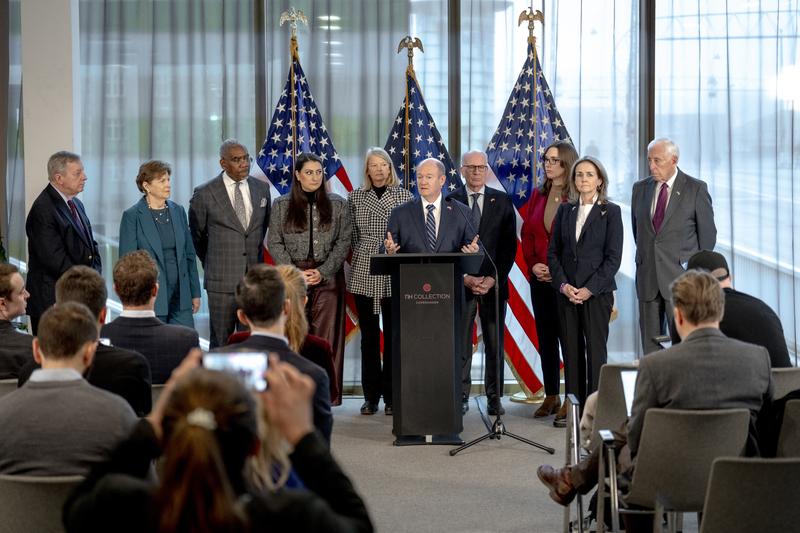
( Ida Marie Odgaard / Ritzau Scanpix / AFP / Getty Images )
[MUSIC]
Tiffany Hanssen: It's The Brian Lehrer Show on WNYC. I'm Tiffany Hanssen, filling in for Brian today. Brian has been taking off as he's taking care of a family member who is in the hospital. It is Martin Luther King Jr. Day, which is a federal holiday as designated by Congress and signed into law by President Reagan in 1983. It's one of our several holidays that honor Americans' right to protest.
Given the protests happening in our country and around the world, and given the history of this day, we'll dig into the history of protests. We'll also revisit a conversation Brian had on MLK Day in 2023 with University of Texas historian Peniel Joseph about Dr. King's life and legacy and how his work compared to Malcolm X's ideology and methods. We'll hear some listeners share oral histories of how they participated in the civil rights movement.
Plus, incoming New Jersey Governor Mikie Sherrill will be inaugurated tomorrow. We'll talk about what we might see from her regarding education in the state and how her efforts may differ from her predecessor. First, we start with our Monday Morning Politics Roundup. We're going to talk about some of what's been happening in politics inside and outside of the Washington Beltway, including the growing rift between President Trump and congressional Republicans, the latest on the possible extension of health care subsidies, and the effort to rein in the ability of politicians to make money on cryptocurrency.
With us to talk about all of it is Eleanor Mueller, who reports on Congress for Semafor. Good morning, Eleanor.
Eleanor Mueller: Good morning.
Tiffany Hanssen: Eleanor, let's just get started with these cracks that we're seeing between President Trump and congressional Republicans. In some of the reporting you've done on the president's economic agenda, you quoted Republican Senator Josh Hawley from Missouri saying essentially that Congress had been in a mode of sit back and cheer on Trump, but that things are starting to change. We are seeing areas that, as I mentioned, like the president's economic policies, but also the investigation of Fed Chair Jerome Powell and health care subsidies.
As we've been hearing a lot about this morning and over the weekend, Greenland, those rifts forming. Well, even just a few weeks ago, we had some Republicans like Senator Thom Tillis from North Carolina, who, by the way, is the co-chair of the Senate NATO Observer Group, saying, "A wish list of US satellites didn't make sense." We've seen protests in Greenland, a shift in the thinking after what happened in Venezuela. The president might be serious about this takeover of Greenland. Just tell us, catch us up, where the majority of Republicans are on the president's side, not standing with the president, and who are the Republicans who are dissenting on this particular view around Greenland?
Eleanor Mueller: It's been fascinating to watch. In this month, since we've come back from the holiday break, we've seen Republicans first over Venezuela, which was obviously the first thing to happen. Then, in a kind of cascade from there, Greenland, these other places that Trump was talking about taking over. Then, from there, some of his populist policies, which really alarmed some of the party's more traditionally free-market members, and health care, Federal Reserve Chair Jerome Powell, whom Trump's Justice Department opened a criminal investigation into, all of these things.
In the last couple of weeks, we've seen a much faster and stronger pushback from a wider variety of Republican members of Congress than we have up until now in his administration. It certainly seems like even though he still has a great deal of control over his party on Capitol Hill, it's maybe not quite as strong as it has been before, given what he's been up to in the last month.
Tiffany Hanssen: Well, put it in context for us, though. How many are we talking? We're not talking about a massive number of dissenting voices suddenly in the Republican Party.
Eleanor Mueller: No, we are not. I'm glad you said that. The case in point is that the Senate voted on, or rather took up, a resolution that would have constrained Trump's ability to declare war on Venezuela. They voted last week on a motion to essentially kill the bill, which obviously the White House wanted to do. Only five Republicans had voted for that resolution the first time it came up. Then they wound up successfully blocking it when the White House was able to flip some of those Republican senators. That includes Senator Young from Indiana. Again, it's more than we've seen until now. It is still not by any means a robust challenge of his executive authority.
Tiffany Hanssen: Still a handful.
Eleanor Mueller: Yes.
Tiffany Hanssen: All right, listeners, Eleanor and I would love to have you in this conversation. What questions do you have about the growing rift between Republican lawmakers and the president? Where do you think members of Congress should push back on the administration more? What issues, potentially around affordability or government oversight? Is Congress doing enough on those issues to act? How do you see all of this playing out in these midterm elections this coming year? All right, call us, text us. We definitely want to hear from you. 212-433-9692. You can call and, as I said, text at that number.
Eleanor, let's talk a little bit more about Greenland here, because it's on top of everyone's mind here this morning. Are the objections from the dissenting Republicans to a takeover of the region of the country specifically, or are the objections more based on the impact that would have on the relationship between the US and NATO, the relationship between the US and the EU or both?
Eleanor Mueller: I think it's all of the above. Obviously, we've spoken with several Republican lawmakers who have said that they wish Trump would take military action off the table, that he'd make very clear that he's talking about opening some kind of dialogue. There are a ton of GOP lawmakers who have told us that even just the conversation of wanting to take on Greenland as the United States is incredibly harmful, not just to our relationship with Greenland and Denmark, but also the rest of the of the European Union to, of course, NATO. For those reasons, this is something that we really need to drop.
It was fascinating to watch it first play out on the Hill because we started the week after the attack on Venezuela with many members, including Senator Tillis, who traveled there this weekend, was really, really adamant that this was something in recent days, that this is something that was would be considered unacceptable. He at first was like, "Why are we even talking about this?" As reporters, he was saying to us on Capitol Hill, "You're doing the American people a disservice by acting like this is the real thing."
Then, within the course of days, his tune, others tune, including in the House, which we've seen has been significantly less willing than the Senate to push back even at all on President Trump, has been very, very, very clear, unequivocal, that this is something that they don't think that we should be pursuing as a country.
Tiffany Hanssen: Was the action in Venezuela really the tipping point there?
Eleanor Mueller: It was. It was we extracted Maduro, and then almost immediately, Trump brought up all of these other countries. One of them was Greenland. Even though this was something that he'd spoken about in the past, that served it to reservices, and I think for a lot of members of his party, drive home that this was not a passing thought. This was not something that someone had said to him one time he repeated, but he wasn't going to circle back to. Clearly, he's genuinely fixated on this and wants this to be something that his administration works on.
Tiffany Hanssen: All right. You mentioned Senator Thom Tillis. He was, as you said, in Greenland over the weekend, joined by Senator Murkowski from Alaska. I have a clip here of Senator Murkowski. I want to play that and then we'll talk about it.
Senator Murkowski: When you ask the American people whether or not they think it is a good idea for the United States to acquire Greenland, the vast majority, some 75%, will say, "We do not think that that is a good idea." This senator from Alaska does not think it is a good idea. I want to build on the relationship that we have had, as Aya and I penned in an op-ed about a year ago. Greenland needs to be viewed as our ally, not as an asset.
Tiffany Hanssen: Eleanor, I think it's worth noting, and correct me if I'm wrong here, but I think that Tillis and Murkowski were the only two Republicans in there. It was a coalition of Democrats that went along with them, right?
Eleanor Mueller: Yes. As far as I know, that's correct.
Tiffany Hanssen: All right. This trip, presumably to smooth things over, in addition to what Senator Murkowski was saying, is that there was talk there of these shared security goals. I'm just wondering what lawmakers are talking about specifically in terms of goals. Is it security-- I'm talking about both those who are in favor and those who are opposed to the action. Security goals. Is it security for the Arctic? Is it the rare minerals? Are there military goals? What are we hearing the most from Republicans on this?
Eleanor Mueller: It's a great question. I think that that is a significant part of the pushback we're hearing from Republicans on Capitol Hill is what exactly purpose would it serve US national security if we were to acquire Greenland? I think for a lot of them, including, obviously, Senator Tillis, Senator Murkowski, who are on this trip, they think that the US's interests are being served currently by our existing relationship with Greenland, and there's nothing really to be gained by banding or taking over the Danish territory.
Whether or not the administration can convince its own party in the next week or so that there really is something to be gained, I think will have a big effect on whether or not we see this advance or whether we just see the wheels continue to spin.
Tiffany Hanssen: Why a week or so?
Eleanor Mueller: I feel like we're really reaching a boiling point here, especially with the announcement in the last couple of days of potential trade restrictions by the administration on Greenland and Denmark in retaliation for their resistance to this idea that the US wants to buy them.
Tiffany Hanssen: What have we been hearing about those tariffs, both from opposition in the party and dissension in the party?
Eleanor Mueller: Trump said on Saturday that the US will impose tariffs on countries that have sent troops to Greenland in recent days in a show of support for Denmark. We saw very quickly pushback from those same Republican and Democratic senators who had already expressed concerns, who had traveled there earlier in the weekend. Senator Tillis said it's "bad for America, bad for American businesses, bad for our allies. Instead, it's good for these people who want to see us divided."
It's interesting because he continues to kind of place blame for what he's openly saying is a bad idea on President Trump's "advisors." We've seen a great deal of reporting from within the White House that has shown us that it really is Trump himself that is personally interested in this.
Tiffany Hanssen: We are talking with Eleanor Mueller, who reports on Congress for Semafor. We're talking about a whole range of issues here for our Monday Morning Politics Roundup, including this growing rift between Republicans in Congress and the administration. Listeners, of course, we'd love for you to join this conversation. 212-433-9692. You can call us, you can text us at that number. Eleanor, let's bring Carl in Staten Island into the conversation. Good morning, Carl.
Carl: Good morning, and thank you for taking my call. Trump claims that we need to take over Greenland for security purposes to defend it from China and Russia. Explain to me if I'm wrong. Denmark was a founding member of NATO. Doesn't NATO become the de facto security team that would protect Greenland from being taken over by Russia or China?
Tiffany Hanssen: Thanks, Carl. Eleanor, this is one of the issues that has been raised among NATO countries that are now being more vocal about this whole thing, which is NATO's role, and also what any sort of action by the United States in Greenland would do to NATO. We mentioned it a little bit. To Carl's question there, where does the responsibility here for standing up for Greenland lie? Is it with NATO?
Eleanor Mueller: It is absolutely with NATO. That's part of the reason we've seen Senator Tillis be one of the Republican senators who is so outspoken about the dangers of this type of conversation. He is the co-chair of a group within the Senate that is responsible for defending NATO, defending the US's role within NATO. When we're talking about who is on the other side of this push by President Trump, it really is NATO and all of its members that are trying to make the case as strongly as possible that this is something that would not actually improve the US's national security.
Tiffany Hanssen: We mentioned this action in Venezuela as the tipping point here between a murmur of dissension among Republicans to now a larger, although still small, chorus of voices dissenting in the Republican Party. Taking a look at Venezuela, we saw the evolution of the Republican response to that in real time. Maybe just recapture for us how we saw that evolution from the capture of Maduro to today, both positive and negative. I assume they're pretty much falling along party lines, right?
Eleanor Mueller: They are. Right. It's some of the same members that we've been watching since Trump was sworn into office who have indicated some concerns about his agenda. That's Senator Tillis, particularly since he announced his retirement last year, and Senator Murkowski, Senator Josh Hawley, who is in some instances a real staunch ally of the administration and I think is seen by many as typically likely to stay that way, but in some ways is willing or at least more willing than others to openly say that he has some concerns.
You're right. You make a great point. We're not talking about a full-scale leadership-led majority resistance to these things, at least not openly. I think we've heard that several members, both in the House and the Senate, are privately being much more open about their issues, not only with the way the strike on Venezuela was handled, but then also the effort sense to infringe on Denmark and Greenland to pursue some more populist policies like banning institutional investors from housing, like capping at credit card interest rates.
Then, of course, this Justice Department criminal investigation into Federal Reserve Chair Jerome Powell, which a lot of Congressional Republicans saw as a real threat to US markets. In some ways, they were proven right. I think investors did not react as badly as they may have because so many Republicans were so quick to push back. I think, in some ways, the threat was not seen as real. We did see the dollar go down. We saw gold go up. It's certainly a thin line that the administration is walking on that front specifically. I think that we've seen that evidenced in the last couple of days because the administration really hasn't come back to it. Trump said explicitly at the end of last week that he has no plans to fire Powell anytime soon.
Tiffany Hanssen: You said Tillis is retiring. This is Thom Tillis, right?
Eleanor Mueller: Yes.
Tiffany Hanssen: The cynic in me, Eleanor, says, well, of course, he can speak out now because he's not worried about reelection.
Eleanor Mueller: Yes.
Tiffany Hanssen: [laughs]
Eleanor Mueller: You know what? It was actually surprising immediately, as someone who has covered Senator Tillis for quite some time, because I thought we were going to get this side of him much earlier on. We kind of got in this tiff with Trump. That's when he announced that he would not be seeking reelection. I thought immediately we would see this really open pushback on so many of the things that we've heard others express concerns about privately.
It took him a few weeks, but we got there this month. He was speaking out about Venezuela, about the Fed, about Greenland. It's that last point, Greenland, that we've seen him really dial in on as members are hearing from their allies in the year in Europe as far as their concerns here.
Tiffany Hanssen: Talk a little bit about how the president is pushing back against the members of his party who are standing up to him. I was reading about, was it a congressperson in Louisiana who is up for reelection. The president, I think, over the weekend on social media, endorsed a challenger. Of these handful of Republicans that we see dissenting, how is the president reacting to that?
Eleanor Mueller: Yes, we saw Trump over the weekend encourage a Republican congresswoman, a member of the House, to run against the Republican senator from Louisiana, the chair of the Senate Health Committee, Bill Cassidy, which, I think, took a lot of people by surprise. Cassidy is, in a lot of ways, a real staunch ally of the president. He's the person who first tried in the Senate to put pen to paper on some of these health care ideas that Trump had mentioned, like sending money from Affordable Care Act subsidies into flexible savings accounts that folks could tap to spend directly. At the end of the day, it did not matter. Trump went ahead, and he made that announcement.
Fascinating. Look at how the White House is willing to put its money where its mouth is here.
Tiffany Hanssen: Are we seeing social media posts about other Congress members that are pushing back against him?
Eleanor Mueller: Oh, yes. We saw when we had that vote, that first vote on the resolution that would have required Trump to basically acquire consent from Congress before he pursued further military action in Venezuela. There were five Republican senators that first voted against advancing that legislation. Trump almost immediately on Truth Social posted all of their names, calling them a bad Republican, saying that they were not aligned with his agenda, and it wound up working. They successfully voted to kill that bill last week because he was able to convince Senators Hawley and Senators Young that they should vote with him and that he would, on the side, make--
Presumably, he made assurances that they felt comfortable then doing so. I think Senator Young was saying that he secured a promise from the administration that Secretary Rubio was going to testify before the Senate on some of the things that had led him to vote for the resolution the first time around. Either way, yes, they were able to successfully squash that.
Tiffany Hanssen: You mentioned Venezuela again, so I'm glad I want to circle back to that because you reported on an executive order that the president signed that outlined where the money would go from selling oil. Break down for us what was in that executive order and what we know about where the money is going.
Eleanor Mueller: Yes. We've had a lot of questions over the last several days about exactly what the plan is for Venezuela, the way that the US is going to be managing its oil, the role that they're going to be counting upon the oil companies to play in rebuilding Venezuela's currently decrepit oil infrastructure.
Tiffany Hanssen: And debt-laden.
Eleanor Mueller: And debt-laden. Exactly. That is part of the problem here is that Venezuela owes-- it's unclear how much even they owe. Some estimates are $170 billion, not just to international bondholders who they defaulted on their bond payments years ago, but also some of these oil companies whose assets they seized in some cases decades ago and have yet to repay. That was the first question of many of these oil companies was, where are we going to get our money back if we go back into the country? They've received very mixed signals from the White House.
Trump has made comments at some points to the effect of, "Yes, we're going to try and help make you whole again," and then made comments at other points to the effect of "Let bygones be bygones, help us out and we'll make it worth your time somehow, but I'm not going to make any promises about getting your money back."
One of the questions we were able to answer last week. My colleague Shelby Talcott and I were told by some administration officials that they had made their first sale of some of the oil, the Venezuelan oil that Trump had acquired to the tune of $500 million. We don't yet know who they sold it to or what happens to the oil at this point, but we know that it's been sold and that he's actually placed some of the revenue in a bank account in Qatar. Not in the United States, not within the purview of the US government here onshore, but actually in another country.
The explanation that we were given was that that allowed the US to handle the money as quickly as possible. What we've heard, sensed from some folks, is that it also maybe makes it harder for some of Venezuela's creditors to access.
Tiffany Hanssen: Just to be clear, this is oil that was, you said, acquired. This is oil that was acquired by the US military seizing oil tankers, right?
Eleanor Mueller: Yes.
Tiffany Hanssen: Then that oil was sold, and the money from that is now being put in, potentially, or yes, a bank in Qatar.
Eleanor Mueller: That is what we have been told by administration officials. We've been following up with them about exactly why they chose that bank account. Why a bank account within the United States was out of the question, whether or not some of these creditors may still be able to tap these funds, even though they are located in another country. I think a big question, especially for Venezuelans, is how will these disbursements work?
The United States President Trump has said that he will use this money. He will spend it on the Venezuelan people, help them get their economy back up and running again, as the US tries to shepherd them toward a democratic election. We have very, very few details on exactly what those payments are going to look like as far as funneling that money back into the country.
Tiffany Hanssen: Do we know if lawmakers were briefed on that executive order ahead of time?
Eleanor Mueller: As far as the conversations I have had with primarily senators in the last few days, they were not briefed. When we got news that the revenue had been sent to this Qatari bank account, I spoke with several, including the top members of the Senate Armed Services Committees, the Senate Foreign Relations Committee's folks that would have, in theory, been looped in on decisions like this. They said that they were still awaiting more information from the administration as far as next policy steps here.
Tiffany Hanssen: Something I've been seeing over the weekend online, and we just have a text, or actually have a lot of texters asking this question, isn't this all-- By that, we mean Greenland, Venezuela, all of these foreign policy movements that the administration is making, aren't they all a distraction from the Epstein files? Explain for us where we are with the Epstein files, because I'm even a little bit fuzzy here. They're out of compliance with releasing the DOJ is out of compliance with the amount of information that they were supposed to have released at this point. Is that correct?
Eleanor Mueller: Fantastic question. As far as I understand, today actually marks exactly one month after the congressionally mandated deadline for the Justice Department to release all of its files on Jeffrey Epstein. The Justice Department has released only a fraction, and they've revealed very little about their plans to fully comply here. Those texters are exactly right. There's a lot of question marks remaining, very few explanations as to why it's taken them so long to put out these documents.
We're not hearing a lot from congressional Republicans. I mean, in part because, again, to listeners point, they're dealing with so much of this other stuff. We're not hearing them talk a lot about why we have not seen the Justice Department put this information out. Some of them have said openly that it's not a priority. You know what I mean? Politico quoted Congresswoman Lauren Boebert this morning, saying, "I don't give a rip about Epstein." She was someone who had previously been relatively vocal about the need to put out this information.
Tiffany Hanssen: We're talking with Eleanor Mueller, who reports on Congress for Semafor. This is our Monday Morning Politics report. We're going to get to that and much more after a quick break. Listeners, stay with us. This is The Brian Lehrer Show, and I'm Tiffany Hanssen in for Brian. Don't go anywhere.
[MUSIC]
Tiffany Hanssen: It's The Brian Lehrer Show on WNYC. I'm Tiffany Hanssen in for Brian today. Yes, it is Martin Luther King Jr. Day. Coming up next hour, we're going to have a couple of conversations for you about that, including the history of protesting, and also Brian's conversation with the University of Texas historian Peniel Joseph about Dr. King's life and legacy and how his work compared to Malcolm X's ideology and methods. Right now, we're talking with Eleanor Mueller, who reports for Semafor on Congress. We're talking congressional politics. It's our Monday Morning Politics Roundup.
Eleanor, I'm going to just go ahead and dive right back in here and bring Jerry in Fairlawn into the conversation. Good morning, Jerry.
Jerry: Good morning. Thank you for taking my call. Just a couple of questions, being how do we encourage Congress to take their heads out of you know what and start to do their job instead of ceding their power to the president and convincing the president to do what I call maybe the right thing. In turn, what can Congress do? If Congress can't do anything, who can to rein Mr. Trump in from dealing these weird things regarding Venezuela, Greenland, and then, of course, what can be done to rein in ICE, if they would actually abide by their rules, then we probably wouldn't have a lot of issues. I'll take my answers off the line.
Tiffany Hanssen: Yes. Thanks, Jerry. I think what Jerry is referring to here, which we mentioned early on here, is that quote from Senator Josh Hawley that Congress has been in a mode of kind of sit back and cheer Trump on. What can they do, and will they do it?
Eleanor Mueller: I think that is the question we're hearing across [unintelligible 00:28:46] is-
Tiffany Hanssen: That's the $100,000 question.
Eleanor Mueller: -where does the buck stop in this Republican controlled House and Senate? If Congress does fail to act, then what does the Supreme Court wind up doing? I think an excellent example is what we're seeing right now with terrorists. The Supreme Court is supposed to rule any day now, and whether or not Trump really can impose all of these trade restrictions on an emergency basis, essentially. If the justices rule that he cannot, then for a lot of these other trade tools, he's going to have to get Congress's approval. That seems like a relatively high bar. A
On issues of foreign policy, it's a little bit trickier. We saw that resolution in the Senate last week that they successfully killed that would have required Trump to come to Congress if he were to take further action in Venezuela. We know the Democrats are pushing a similar action when it comes to Greenland. The tough thing is that even though we are kind of within striking distance in the Senate, so even though it is within the realm of possibility that they do get enough votes to advance that, it seems highly, highly unlikely, even with Speaker Mike Johnson's incredibly narrow majority in the House, that they would actually pass anything like this.
As of right now, the outlook is we are not yet at the point where it seems lawmakers have a path to really cutting down on some of this stuff. I think as far as ICE goes, which you brought up, we're seeing a lot of agitation from Democratic lawmakers, especially because Congress right now is in the midst of passing appropriations legislation that will fund the government past the end of this month, or at least certain agencies past the end of this month. For a lot of them, they're saying this is where we, as the minority, need to assert ourselves. This is where we need to say there'd have to be restrictions on this money going to ICE.
Again, it's tough. Obviously, this is something that their voters want to see, but it's not necessarily something that they're going to successfully be able to pull off because they just don't have the votes, even with only a few more House Republicans than House Democrats in the lower chamber. I think a lot of eyes on exactly your point. We don't know just yet how precisely that's going to play out.
Tiffany Hanssen: Well, to split hairs a little bit. It's not that there's not a path, it's that nobody wants to walk down the path.
Eleanor Mueller: Yes, yes. The path is not being taken.
Tiffany Hanssen: Can we attribute that somewhat to the fact that it's a midterm year?
Eleanor Mueller: Absolutely. As we saw again over the weekend with Trump's endorsement of another Republican challenger to the Republican incumbent senator who chairs the committee that will have to advance the president's health care plan, if it comes to that point in the next couple of weeks, he's clearly not unwilling or afraid to call out folks that he does not feel are aligned with him. I think a lot of Republicans are pretty nervous to play in that game.
Tiffany Hanssen: Well, let's talk about that healthcare plan that the president released, a White House official saying the door to subsidies, which had been kind of the focus of the talk around health care up to this point, that that door hasn't closed. Just really quickly catch us up on one, what's in Trump's plan? Two, how does that relate to these subsidies that we had been hearing so much about?
Eleanor Mueller: The plan was a combination of things that Trump has talked about in the past. He teased earlier in the week, kind of a comprehensive health care undertaking, not necessarily what we saw. Instead, we saw him bundle together these things that he's talked about before, including this idea of expanding health savings accounts for Affordable Care Act enrollees. Instead of, again, extending those enhanced ACA subsidies, taking that money and putting it in an account that people can choose themselves how to spend.
There was no mention of extending these Affordable Care Act subsidies that expired at the end of last year that have already caused Affordable Care Act enrollees' premiums to go up dramatically. I asked administration officials when they briefed reporters on this plan, "Does this mean that the White House is closing the door on those subsidies?" The answer was no.
The answer was that Trump sees this as a bigger issue. He's trying to move forward in a way that addresses that, but it certainly does not help the members of his party in the Senate, in the House, who are actively trying to negotiate a path forward for their party, for the Democratic Party, before they have to go on the campaign trail and talk to voters who are upset about high health care costs. We are in as much of a dead end as we have been at any point during this conversation, really.
Tiffany Hanssen: Well, that was one of my questions. Health care likely to be one of the issues that members of Congress who are up for reelection might be hearing on the campaign trail this coming year. What are the other issues? Will we hear people ask about Greenland? I'm sure we'll hear people ask about ICE. Other issues?
Eleanor Mueller: ICE is going to be a big one, as folks who were texting in reflect. I think that the Epstein files are going to be a big one, but it's primarily going to be affordability. We heard from voters over the last year and a half that the reason that they picked Trump to be their president was because they felt that prices were too high. They felt like they were not making enough to support themselves, support their families. I think there are very few people out there who think that that's changed, that we've seen real progress in terms of putting more money back in the pockets of Americans.
It's one reason that we saw the Treasury Department move up the filing date this tax season because Republicans passed this party-line tax cut extension. They want people to, as quickly as possible, get those refunds, see those improvements in hopefully, ideally, they're saying paying less in taxes. As of right now, I think that most Republicans are certainly bracing to hear a lot from their constituents about how they do not feel like they've seen themselves become economically better off than they were before Trump's election.
Tiffany Hanssen: Given all of this, how vulnerable are the Congress members up for election at this point? Are people nervous? Are Republicans nervous?
Eleanor Mueller: I think House Republicans especially are nervous. I think there are very few Republican senators out there who think that they will lose the majority in the Senate. We are seeing a very defensive posture from Republicans in the House. They got a tough job ahead of them.
Tiffany Hanssen: Let's just talk quickly, if we can here, before we let you go, about some of the more populist ideas that the President has been throwing out here lately about credit card interest rates, capping those at 10%, lowering credit card swipe fees. You talk about affordability being something that voters are going to ask about on the campaign trail. Those seem like they could be pretty popular. Do you sense that lawmakers are kind of latching on to those ideas or not at this point?
Eleanor Mueller: Well, this is an excellent example of what we were just talking about. The White House is clearly realizing that it has to focus more on affordability, especially heading into the midterms. That's why we've seen the President put out ideas. I spoke with one of his administration officials, Bill Pulte, when one of these ideas was announced, and he said explicitly, I think 30 to 50 ideas on affordability were being tossed around. Trump was picking the ones that he liked. He was running with them.
What's interesting is these ideas, for the most part, would require Congress to act. Trump cannot unilaterally require credit card companies to charge no more than 10% in interest. He cannot unilaterally prevent large institutional investors from buying up a lot of homes and either tearing them down or renting them out.
Tiffany Hanssen: Yes, that was the other one I was going to mention. Stopping investors from buying single-family homes.
Eleanor Mueller: Yes. Fascinatingly, both of those ideas are progressive Democratic ideas. We're talking Senator Bernie Sanders, Senator Jeff Merkley ideas, and this is something that his administration is pushing out themselves. We haven't seen a ton of coordination with the Republicans who would actually get this across the finish line in the House and in the Senate. I've talked to almost all of them myself since these ideas became public. It's been publicly very tepid. We will see what we can do. We're happy to hear the President out.
Privately, on background, off the record, anonymously, they've said, "These are not ideas that we are interested in pursuing. These go against the core of our identity as free-market, pro-capitalism Republicans, and we have no plans, really, of pursuing this legislation." Of course, we see populists like Senator Josh Hawley saying, "100%, we think this is great, let's go." We're not seeing a ton of movement from the folks who can actually put it into action. We even saw leaders in the House and the Senate.
Senate Majority Leader John Thune, House Speaker Mike Johnson say explicitly last week that they thought, for example, the cap on credit card interest rates was a bad idea, that it could actually reduce access to credit, which is the bank's argument for why they don't want this to happen. It seems like, at least for now, for the White House, this might be more about messaging than actually getting policy enacted.
Tiffany Hanssen: Good spot to leave it. Our guest has been Eleanor Mueller, who reports on Congress for Semafor. Eleanor, thanks for your time and perspective this morning. We appreciate it.
Eleanor Mueller: Thank you for having me.
Copyright © 2026 New York Public Radio. All rights reserved. Visit our website terms of use at www.wnyc.org for further information.
New York Public Radio transcripts are created on a rush deadline, often by contractors. This text may not be in its final form and may be updated or revised in the future. Accuracy and availability may vary. The authoritative record of New York Public Radio’s programming is the audio record.
