
'Minneapolis on Edge'
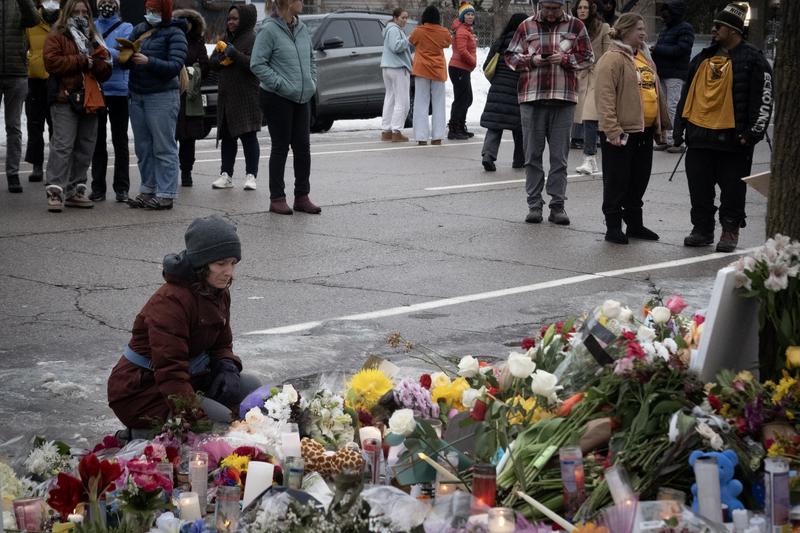
( Scott Olson / Getty Images )
Title: 'Minneapolis on Edge'
[MUSIC]
Tiffany Hansen: It's The Brian Lehrer Show on WNYC. I'm Tiffany Hansen in for Brian today. Coming up on today's show, we're going to talk about Governor Hochul's proposal for what she's calling 2-Care, or free child care for two-year-old kids. It's a strong display of alignment with Mayor Mamdani, who, of course, campaigned on free child care. We'll talk to someone who was on the mayor's transition team and who works in the child care realm about how this might work.
Plus, teenagers, social media, AI, mental health. It's probably the hottest topic that parents of older kids deal with today. New York State is trying some new regulations to keep kids safer online. We'll talk about what those are and some tactics to help teenagers manage the wild world of social media and AI. Our guest will be the executive director of Children and Screens, a nonprofit focused on child-centered tech policy and design.
We'll wrap today's show with a conversation about millennials and prenups. Apparently, this generation is a big fan of the prenuptial agreement, not just wealthy people who are signing on the dotted line. However, we'll hear why some regular folks are getting a prenup before walking down the aisle.
First, we'll start today in Minnesota. The state is on edge after an ICE agent killed a woman in Minneapolis. Protests have erupted, politicians are swearing during press conferences, and the governor is saying that he has plans to call in the National Guard. We'll see where things stand with that and with Governor Walz himself. Walz, the former Democratic running mate of Kamala Harris, announced earlier this week that he will not be running for reelection for a third term there amid investigations into fraud in the state.
On one hand, the Department of Justice is prosecuting individuals that it claims were involved in a pandemic-era scheme to defraud the government of hundreds of millions of dollars. While some are still facing prosecution, others have pleaded guilty. In one case, several have pleaded guilty to attempting to bribe a juror.
On the other hand, federal prosecutors are descending on the state to investigate more recent allegations of fraud at several childcare facilities in the state. Now hearings have begun in Congress, and Republican lawmakers on the House Oversight and Government Reform Committee are accusing both Governor Walz and Minnesota Attorney General Keith Ellison of being, at the very least, asleep at the wheel.
In response, the Trump administration has halted billions of dollars in funding for social services programs to five states led by Democrats, including Minnesota and New York, by the way. Joining us to discuss is Rachel Leingang, a Midwest political correspondent for the Guardian US. She is based in Minneapolis. Welcome Rachel.
Rachel Leingang: Good morning.
Tiffany Hansen: Listeners, of course, Rachel and I would love you in this conversation as well. What questions do you have about the killing of a woman at the hands of ICE agents in Minneapolis? What about those allegations of fraud in the state or the Department of Justice prosecutions? Are you wondering what the political undercurrents of all of this might be on the national and the local level?
You can call us, you can text us, 212-433-9692, and of course, any of our friends in Minnesota from Minnesota who are listening right now, please, you're invited to call as well and help us report this story. 212-433-9692.
Rachel, before we talk about all of that fraud that I was mentioning, I do think we should start here with the news from Minnesota that is on everyone's mind, and that is the killing on Wednesday of a woman who has been identified in the press as Renee Nicole Good, who was a resident of Minneapolis. There was immediate outrage at that killing. For anyone who hasn't been following this closely, just give us a little context surrounding her death. Who was she? What was she doing in the proximity of ICE agents?
Rachel Leingang: From what's been reported, she had dropped her child off at school and was returning home, and there were ICE agents on the block. From what the videos show, she looked to be driving away from the scene or trying to drive away from the scene when an officer shot her three times, and then her car accelerated and hit a light pole. There were a lot of bystanders and eyewitnesses who saw all of this happen.
ICE had been very heavily in that part of town in South Minneapolis all week this week, really, and so a lot of people have been tracking and monitoring ICE taking video. That's actually been happening throughout this entire surge of ICE agents. People have been on high alert. There were a lot of people who captured footage that I think, for many underscored what happened versus what the administration has tried to say they believe happened.
Tiffany Hansen: Protests erupted after this, but really, protests have been ongoing for a while in the state in response to the ICE presence there. Has the messaging from protesters at this point changed? Has it been consistent throughout this? Was there a change that you noticed following the killing of Renee Nicole Good?
Rachel Leingang: Since the officers have searched here, the calls from protesters and, frankly, from local officials has been the same. They want ICE to leave the state. They don't believe the presence here is justified, and their tactics are very intense, very harsh.
If you go around town, for instance, like a mall that is primarily Somali businesses has been basically unfrequented for more than a month now. I was at a Mexican mall yesterday, and was the only person there during lunch hour, and this is a place with mostly restaurants. People want to get back to their normal lives. They want to be able to leave their homes. That call from protesters has been the same.
Now there's also the additional layer of the federal government has tried to take over this investigation. People want the state to investigate as well. They don't believe that the federal government will do a thorough or fair job. There were also calls yesterday when I was out at a press conference at the shooting site, from hundreds also wanting the state to be able to do an investigation and the FBI to turn over a file so that the state could properly investigate the shooting and hold people accountable.
Tiffany Hansen: You mentioned yesterday you were out and about, and it was fairly quiet at a restaurant area. I'm wondering, is that indicative of what the mood is like in the city? Can you just describe for us how it feels to be in Minneapolis right now?
Rachel Leingang: I would say from people who are immigrants or even look like immigrants, they have been largely staying home. There's a lot of fear that even if you are a citizen or even if you are legally here, that you would be detained, you get pulled over. Those groups are very on edge and largely staying home.
There have been large mutual aid networks set up to help people with groceries, helping get their kids to school, helping them get medical care, all sorts of things like that, where the community is stepping in and trying to make sure that people who don't feel comfortable leaving can still get what they need.
I also know that, since I mentioned schools, the schools have been closed this week. There were ICE agents at a high school on Wednesday, and there was an altercation outside the high school. The city closed the schools for the rest of this week just for the safety of students and staff.
Then, it had looked yesterday like ICE was spreading more and more into the suburbs and outside of the metro area. There were reports at going into grocery stores at a Target. This many officers means that the breadth of what they're doing is just spreading and spreading.
I will say then there's also the people who are out; the ICE observation, the ICE watching that is still very robust. Those folks are out blowing whistles, taking video, trying to document what ICE is actually doing. Then, at the shooting site itself, yesterday afternoon, it was cordoned off with a makeshift wooden wall by people in the neighborhood. That's become a vigil site, similar to how George Floyd Square looked after the 2020 shooting.
Then there are also large protests. I'm sure some have seen videos at the federal building here. There was an ongoing protest throughout much of the day yesterday at that facility. There have been protests at the federal building nearly daily for quite some time, but it seemed that yesterday was larger than the ones there have been.
Tiffany Hansen: Just to circle back to the ICE enforcement that you've been seeing since this shooting, you're not getting any signals, really, at this point, that ICE has changed the way they're operating in the state, based on what happened on Wednesday?
Rachel Leingang: It doesn't seem to. They don't communicate with local law enforcement at all. There hadn't been any indication given to them that there would be a change. I will say when I was in South Minneapolis on Wednesday, which is when the shooting was, I could hear whistles everywhere, not just at the site. I was at the scene of the shooting and could hear whistles in other parts of the neighborhood.
Tiffany Hansen: Meaning what?
Rachel Leingang: The whistles are what people do when they see ICE. They were just seemingly all over. Then, when I was in that same area on Thursday, it was quieter there. Then I started getting messages that they were out in the suburbs and at the Hy-Vee in my neighborhood, which is the grocery store chain. It's not like they weren't doing anything. It might not have been as active in that neighborhood the immediate day after, but I don't get the sense that they're changing their posture.
Tiffany Hansen: We are speaking with Rachel Leingang, who is a Midwest political correspondent for the Guardian US. She's based in Minneapolis. We're talking about the events this week around the shooting of a woman by an ICE agent in Minneapolis that happened on Wednesday.
If you have questions about it, listeners, call us 212-433-9692. We're also interested to know if you live in Minnesota. Help us report this out a little bit. You can call us, you can text us 212-433-9692. Rachel, let's bring Martin in Red Bank into the conversation. Good morning, Martin.
Martin in Red Bank: Good morning. How are you?
Tiffany Hansen: Doing all right.
Martin in Red Bank: Good. I'm a retired sheriff's officer, and it's obvious to me that ICE agents are not trained properly and they're not chosen properly. They don't seem to be going through any sort of psychological exam before they're hired. They don't seem to have any training in a real police academy.
For instance, with shooting somebody driving away in a car, we were trained rigorously on when to shoot and when not to shoot. We were trained never to pull your gun unless the death of the person was warranted. It's very obvious to me that they're not trained properly. They must be hired and go through a two-week course or something. It's just not right, and it's dangerous for the American public to have people like that running around.
The last point I want to make is if somebody pulls up in an unmarked car in a van and has a mask on, as far as I'm concerned, that's an illegal abduction. If they ever did that to me, they would have a very bad day.
Tiffany Hansen: Thank you, Martin, for the perspective. I appreciate that. Rachel, I'm curious. This is something that we've heard a lot recently about the training; detractors saying that the folks aren't properly trained, these ICE agents aren't properly trained. Have we heard much from Homeland Security Secretary Kristi Noem about that? Then, just as a follow, what has she said specifically publicly about Wednesday's killing?
Rachel Leingang: I'll just say I've had many of the same concerns and questions that the caller just raised. In the month-ish that they've had the search here, I have been hearing from observers multiple times that they'd had guns pulled on them. It was something that was happening with regularity.
In a sense, you've heard some local officials say this was a matter of time because of the tactics that they're using. We do know they hired a lot of people very quickly, and what that likely means for training is probably that is not as thorough as it could be. They don't seem to have the same de-escalation tactics that most police departments do now.
Then, I don't know that Noem has really exactly said much on the training. On the shooting itself, she and the administration have very quickly blamed Renee Good for what happened and referred to her as a domestic terrorist and said she was menacing ICE officers. I think all of which is fairly contradicted by what you can see with your eyes.
Tiffany Hansen: One of the things that you have reported on Rachel is this, and you mentioned it, the FBI is currently in charge of the investigation following this killing on Wednesday, but state officials are trying to gain hold of that investigation, as I understand it. If the federal government won't prosecute this killing, do we know is there a way for the state to get involved, or is this just a show tactic?
Rachel Leingang: I have been asking around about this because it is such a specific scenario. People did not seem to have a definitive answer on what the state can do, what the city could do, what could be done locally if the federal government doesn't properly investigate this. I think that's really up in the air, and I'm not sure to what extent it's posture, to what extent there are practical things that can be done by the state.
I would assume there is some avenue the state could take, and that they will try to do it. I do think there're concerns, too, of, we've already heard what the Trump administration believes happened, well before an investigation has even happened. I think the concerns there are valid on what will be investigated and how.
Tiffany Hansen: Governor Walz issued a warning order to prepare the Minnesota National Guard. Just explain what exactly he is expecting the guard could do and what legal authority they might have to do. Is this in relation to the protests?
Rachel Leingang: It seemed to be a very open-ended get-ready type idea. There are various things that they could be used to do. The order that he had put out made it open-ended on what their role would be. Basically, it was phrased like, only if their local law enforcement resources have been exhausted. It's something where you could see them feasibly responding to protests. You could see them helping residents who can't get what they need. It could be any number of things. I think for many, hearing that the National Guard was being called up, it caused some consternation of what does this look like on our streets then?
Tiffany Hansen: Walz also said, and I'm quoting here, "Do not allow them to deploy federal troops into here. Do not allow them to invoke the Insurrection Act, do not allow them to declare martial law." When he says something like that, who's he talking to?
Rachel Leingang: I would guess the President. [chuckles] What Walz has previously said is that, we are basically being attacked by the federal government. The federal government's treating us like we're at war with them. It seems like this will only escalate going forward.
Tiffany Hansen: There does seem to have been sort of a degrading of the relationship over the past many months here between the state of Minnesota and other blue states and the Trump administration. I do want to get to that, and I think this is probably a good moment here to switch gears a little bit and talk about Governor Walz and the fraud in the state.
For folks who haven't really been caught up on this, there's a pandemic-era scheme that I mentioned in my open that was allegedly conceived by dozens of individuals who basically built the state out of money. It was allocated for feeding underserved people. Describe, just really briefly, catch people up, like, who was involved in that and what the scheme entailed.
Rachel Leingang: It was a really broad scheme that involved saying that they were giving out meals to children, billing pandemic aid funds for those meals, but the kids never received the food. Many dozens have been prosecuted for that. The crux of what has become the fixation of the Trump administration on this is that a good number of them were Somali residents.
Then there have been other cases in progress right now of theft of social services, fraud in social services, in a autism therapy program, and a housing assistance program.
Tiffany Hansen: Has the governor spoken to that directly, and for that matter, the state Attorney General, Keith Ellison? Have they spoken about that at length at this point?
Rachel Leingang: Their responses have generally been that, yes, there's fraud. We are working to make sure that we close certain loopholes and put in place measures that it won't happen again, and that we're prosecuting the people who committed the fraud.
Tiffany Hansen: There was a video just put on YouTube after or right before New Year's talking about alleging some fraud at various childcare facilities. This is different than the fraud that has been prosecuted to this point. In response to that YouTube video, Attorney General Pam Bondi said that federal prosecutors were essentially going to flood the state looking into the allegations for this.
Do we know the scope of that work that these prosecutors are going to be zeroing in on? Will there be a broader examination of the social programs in the state? You mentioned some other programs there. Do we know if the attorney general has plans for a broad investigation?
Rachel Leingang: I would bet that the feds are here to try to find more fraud. There were some videos too put out by ICE of them taking boxes out of offices, saying they're looking for fraud, which is typically not the purview of ICE. I don't think it's within their authority.
The one thing I'll say too is with the video from a right-wing influencer, he went basically door-to-door to child care centers and was trying to see kids, which I think most daycares do not let in random people. They're pretty locked down for safety reasons.
The state had looked into a lot of those and was trying to see if there were instances where there's fraud. I think some of them probably have some level of additional questioning they'll have, but not confirmed that any of them did not have children at their child care center.
The pipeline here between a right-wing influencer and the White House is very direct. That video went viral quickly, and the federal government very quickly said freeze federal child care funds to Minnesota, we're going to go in and investigate the fraud claims. While very real-- not from the daycare video, but while very real in general with the ones that have been prosecuted so far.
They've served as the predicate for a very broad attack on Minnesota that has include a lot of xenophobic remarks about Somali residents. A lot of direct hatred toward Governor Walz. Basically, this fraud underpinning has really blown up well beyond the facts.
Tiffany Hansen: I wonder how you feel about or how you perceive Governor Walz's addressing of those fraud claims early on, and did he address them early enough to maybe head some of this off at the past? There are allegations that we'll get into, I think, with the hearings that are basically saying he was asleep at the wheel. I wonder if some of that has to do with the fact that he didn't address them early on.
Rachel Leingang: I think that there had been red flags for a while in some of these programs that, really, to most people, should have been addressed earlier. I think candor to the voters is always really helpful when you're dealing with something like this. All of that could have been improved earlier, more transparent, always better.
I think in that sense, any person who believes that if a program is intending to feed kids, it should be feeding kids, that kind of fraud should be offensive to most people, if not to everyone.
I just, as someone who lived here, was seeking answers that I didn't always get responses to in what was publicly stated. I think that's part of it. Then you have to accept, too, that in this political environment, would that have been enough? Who knows? It's a really heightened, divisive time, and someone being candid about what's happening is usually not enough to ward off what happens next.
Tiffany Hansen: I'm wondering if you think this is a new low. Is this a new low, and I mean specifically for the relationship between the Trump administration and Minnesota? Blue state, purple state, some might argue. Is that indicative of the Trump administration's relationships with other blue states? New York was included in that funding freeze, which we can also talk about. I just wonder if you think we're at a new low here in terms of your perspective, having looked at it for a while now.
Rachel Leingang: I want to say yes, but I also don't think this is the bottom. When Trump ran for office, he's very clear that he planned to go after democratically run cities. That was a main goal of his administration. You can see in what he's done that one of the main ways he's doing that is just using ICE as this force on the ground to make points that aren't just about immigration.
Tiffany Hansen: How would you supply evidence for that?
Rachel Leingang: Oh, I mean, he's coming in here talking about fraud and how the state is run by the governor. That's not directly an immigration issue. Arresting undocumented immigrants doesn't really relate to addressing fraud. The two things are distinct issues.
Tiffany Hansen: You think there's a conflation?
Rachel Leingang: Yes, so the things get conflated. Correct. I'm sure they would argue that they're part and parcel of the same thing, but they're distinct issues. He's made good on that campaign promise, for sure. They've said that the operation in Minnesota is the largest one to date. I think the way this looks on the ground looks like really, really intense for people who live here. People who live in LA, who live in Chicago, they've experienced similar, in D.C. It's definitely a feature of his administration.
Tiffany Hansen: To the point of it being a new low, potentially, condemnation following Wednesday's killing came swift and hard from many elected officials in the state, including Minneapolis Mayor Jacob Frey, who dropped the F-bomb during a press conference. I saw a video from outgoing Senator Tina Smith, also dropped the F-bomb. Where is this coming from? Is this a new MO for state politicians? Is this just truly rage showing itself? Or is there some calculated response here to the Trump administration that feels different from politicians in the state?
Rachel Leingang: In terms of using swear words, particularly, or just [unintelligible 00:26:30]?
Tiffany Hansen: Yes, or just that the gloves are off and language that you wouldn't necessarily expect during a press conference from an elected official.
Rachel Leingang: We had tracked over the last year or so that a lot more Democratic officials had been swearing. I don't know if there was something that went out of that. However, I will say in this instance, I think people are very angry. They saw the video. They saw what Trump and ICE was saying about the video, and they were just completely upset about the dissonance there.
I don't think the anger is inorganic. I think it's a very real fear in the place that saw the start of the 2020 protests after George Floyd's murder. A very real fear that we're going back to something that really was so hard for the city.
I think they want ICE out. Genuinely, I don't know that swearing at a press conference is necessarily how you get them to leave, but I don't think there was a memo that went around and said swear about this or anything like that. I think the anger is very genuine.
Tiffany Hansen: We're talking with Rachel Leingang, who is a Midwest political correspondent for the Guardian US. We've been talking about Minnesota, the killing earlier this week by a woman in Minneapolis at the hands of ICE agents, and also some of the fraud in the state that has led to a degrading in the relationship between not only Minnesota, blue/purple state, and other blue states and the Trump administration.
We're going to have more of our conversation, including some discussion of this freeze of federal funding coming up, so stay with us. This is The Brian Lehrer Show. I'm Tiffany Hansen, in for Brian. Don't go anywhere.
[MUSIC]
Tiffany Hansen: It's The Bryan Lehrer Show on WNYC. I'm Tiffany Hansen in for Brian today, and we are talking first this hour about Minnesota, the state on edge after an ICE agent killed a woman in Minneapolis. Protests have erupted. Politicians swearing during press conferences. Governor Walz, saying he is not running for a third term, he has plans to call in the National Guard. We're talking about all of this with Rachel Leingang, who is a Midwest political correspondent for the Guardian US.
Rachel, as we talk about this degrading relationship between the Trump administration and blue states, specifically as it relates to Minnesota, I want to talk about this federal funding freeze. The Trump administration saying that these billions of dollars in funding for Minnesota and New York, by the way, for social services benefiting needy and family kids, is coming to an end. Just explain what funds have exactly been frozen and what this action was in response to.
Rachel Leingang: What the administration has said is that there were serious concerns about fraud or misuse of dollars in these programs, that, well, it was called the Child Care and Development Fund, and mostly was going toward needy families who use these assistance funds to access child care. It's a significant amount of money.
Basically, the way it was described is that the freeze on these states would require the states to provide a ton of documentation to the Trump administration to quell this idea of fraud. Like my colleague, I talked to some people who work in that space, and it's not data that's readily collected. It will be tough, it seems, for them to provide some of this documentation, but I'm sure the states are working on it.
The belief is that this will mostly affect the families across these states who will not be able to get the assistance they need to attend childcare. For anyone who pays for childcare, both that it's incredibly expensive, and it's often hard to find spots. The child care crisis will worsen because of these funding freezes.
Tiffany Hansen: Governor Hochul, rather predictably, said that kids should not be a political pawn in the fight that the president seems to have with blue state governors. Where has Governor Walz come down on this?
Rachel Leingang: I believe he's said similar. I can't recall the exact response, but there's been a lot of concern for the families who use these funds and what happens to them in the meantime. Then also, what happens to the child care centers who take care of kids who are using these funds? Are they able to stay open? Because a lot of times, child care centers have thin margins as it stands.
Tiffany Hansen: Governor Walz has indicated that he is not running for a third term. House Oversight Committee hearings have begun on the fraud in Minnesota. Republican Congress members from the state have really taken the lead on this. There's a state Rep. Walter Hudson, who has said in these hearings that the instances of fraud have become pervasive across state government. He said there's "a culture of profiting from government programs." He's not the only one using that sort of language. Where else are we seeing that language?
Rachel Leingang: I think that's something that the federal government has said when they've justified why they need to take over investigations here and come into town. Like I mentioned earlier, the instances of fraud are very real; there are extensive documented cases in prosecution now and already prosecuted of fraud of social services. The state had expanded its social safety net. I think there are criticisms that there were not always proper checks and balances in place to make sure that people weren't taking advantage.
I think there should be work done to fix those sorts of things going forward. I'm not sure what the federal government believes its role is in all of that. I think we'll find out as they are here gathering more information and what they intend to do. For now, these childcare funds are frozen for Minnesota, for those other blue states, and families will have to figure out what to do with that.
Tiffany Hansen: We have an interesting text here, Rachel, from a former Minnesotan here who has lived in New York City for 30 years. Minnesota has a long history of good government, pragmatic liberal policy, much rooted in Scandinavian notions of progressive social reforms. This in contrast to the long history of corruption here in New York City. Can you please discuss the context of what is happening there now? A little shade thrown at New York City there.
Rachel Leingang: Sorry to New York.
[laughter]
Tiffany Hansen: I think what's happening is we look at the history of Minnesota's good government pragmatism, more progressive social programs, versus where things are now. Taking that all in context for its history, I guess, is what the texter is trying to ask.
Rachel Leingang: I've been trying to figure this out myself. Everyone I've been talking to, I've been like, "Why here and why now? Why are we under this intense microscope?" I can come up with a few potential reasons for why we are in this situation.
I do think that in 2023, the state passed a host of progressive reforms that got a ton of national attention, and because so many things are started at the same time, perhaps they didn't have the right oversight in place. Also, when you get that kind of attention, that makes a lot of people want to negate what you're doing as well, and so I think there's some element of that.
I also think Walz's presence on the presidential ticket didn't endear him to Trump. I don't think they became friends running against each other or anything like that. He has remained a target of the right very strongly since the 2024 loss. Then you have these real fraud cases that are offensive to the taxpayer, and people want accountability for that on all sides of the aisle. What that accountability looks like is just vastly different for where you're coming from politically.
For the right, I think in some cases it means they don't think that the programs should exist in any sort of way. Like, there should not be subsidies for childcare, or that these programs were too big to begin with. For the left, it might be that we need to put more checks and balances in place to make sure that they run properly. I think the expansion there of state programs is part of what's led to some of this.
Tiffany Hansen: Just circling back to these hearings because Governor Walz, along with Attorney General Keith Ellison, is being asked to appear in February at these hearings. They haven't responded as far as we know. Republican committee members are saying there's going to be subpoenas if they don't respond. What do you think is the hope for having testimony made public from those two at this point?
Rachel Leingang: I would say, like many proceedings in Congress, a lot of it is just politics. I'm not sure if they're hoping to get answers to specific investigative questions. I would guess likely not. It's tough to see things in Congress outside of a political lens.
Tiffany Hansen: I'm not sure if you saw this, Rachel, but there was an interesting Op-Ed in the New York Times this week by Ruy Teixeira, who was a fellow at the American Enterprise Institute. It was titled, "Minnesota's Fraud Should Be a Wake-Up Call for Democrats." In it, Mr. Teixeira says that the language that Democrats are using around fraud is similar to the language that helped fuel the rise of Reagan-era conservatism in the '70s and '80s. In this person's opinion, the Democrats minimized the claims of fraud and charged that the claims of fraud had a racial undercurrent, which then led to a backlash in that Reagan-era conservatism. I wonder if you would agree with that.
Rachel Leingang: I haven't read the piece, so I'm just really not sure of the broader arguments that it's making, but I'll have to check it out.
Tiffany Hansen: I wonder if you have any comments then, just generally about the language you're hearing from politicians at this point around the fraud investigation and how you think that will play out for Democrats, not only in the state-- We're in an election year, the fact remains that a lot of what is happening that we're seeing is political. There's no two ways around it. I'm just wondering what you think about this political perspective.
Rachel Leingang: I do think if Walz had stayed on the ticket, that would have been the entire thing discussed on the campaign trail. No doubt about it, so far it had been. I do think whoever the Democratic candidates end up being, they will have to address this, too, rightfully. This is, to most people, one of the biggest issues facing the state. We, of all political persuasions, want answers on how exactly to address this problem that is real.
It's tough because I think this is and should be a nuanced conversation, and I hope people can hold different thoughts in their head at the same time to say that, like, "Yes, there is real fraud happening, and yes, there is also racist and xenophobic actions, words, etc, happening related to that fraud." Those are two things happening at the same time. I think we can accept that the fraud, the documented fraud, is real, while also not accepting that, then expanding it into attacks that are based on race is the right move as well.
Tiffany Hansen: What have we heard from the Somali community in Minnesota? I know it's like asking for one person to speak for what? 100,000 people. Let's just take Representative Ilhan Omar, for example. What have we been hearing from her or others advocates in the state about that xenophobic language?
Rachel Leingang: Every Somali resident I've talked to has said we do not deserve to be painted by the actions of a few people in our community. That does not happen to other ethnic groups, where a white person commits fraud and suddenly all white people are fraudsters. That is not a fair way to portray a community.
The Somali community here in Minnesota has very long roots. They've been here for three decades. Many of them are US Citizens. Most of them are US Citizens, second and third generations at this point. They have a lot of community ties. They are Minnesota. Some have said that they felt both obviously very attacked by the Trump administration, but then also like, solidarity from their neighbors.
It's really affected their ability or their willingness to move about in town, knowing that there are agents who are trying to pull people over under direction from the administration to address Somali residents. It seems like a really, really tough time, but I would say all of them are like, "We don't want the fraud either." They don't agree with it. They didn't support it. They don't want to be painted as if they're part of it, and instead, they're all being lumped together.
Tiffany Hansen: Last question here, Rachel. I'm just wondering what you might say to New Yorkers who are listening. Just circling back to how we began the conversation, talking about that killing on Wednesday of a woman at the hands of an ICE agent in Minneapolis. What would you say to New Yorkers in terms of what they might expect and how they're feeling at this point about the ICE enforcement that is happening in our own state?
Rachel Leingang: I don't know how extensive it's been there yet. I'm assuming we're probably getting the most of it right now. There's a lot of work that's been happening for months of people building up aid networks to help neighbors, doing Know Your Rights trainings. They're doing a lot of that preparation. There was a lot of preparation happening here well before people came. Those sorts of things, I'm sure happening in New York, if not have already been happening for quite some time.
With the quest to go after Democratic cities, it seems any place that is led by Democrats is probably on the radar of the Trump administration. It could be anywhere, really. I think that from what I heard from people here in the communities, they want solidarity. I was at a vigil yesterday with a lot of clergy of all different faith backgrounds who were saying that they wanted to show unity and solidarity as a community and as a country and seek accountability and justice at the same time, but move for peace, basically.
Tiffany Hansen: I think that's a good place to leave it. Rachel Leingang is a Midwest political correspondent for the Guardian US. Rachel, we sure appreciate your time this morning.
Rachel Leingang: Thank you.
Copyright © 2026 New York Public Radio. All rights reserved. Visit our website terms of use at www.wnyc.org for further information.
New York Public Radio transcripts are created on a rush deadline, often by contractors. This text may not be in its final form and may be updated or revised in the future. Accuracy and availability may vary. The authoritative record of New York Public Radio’s programming is the audio record.
