
Meet the New NYC Health Commissioner
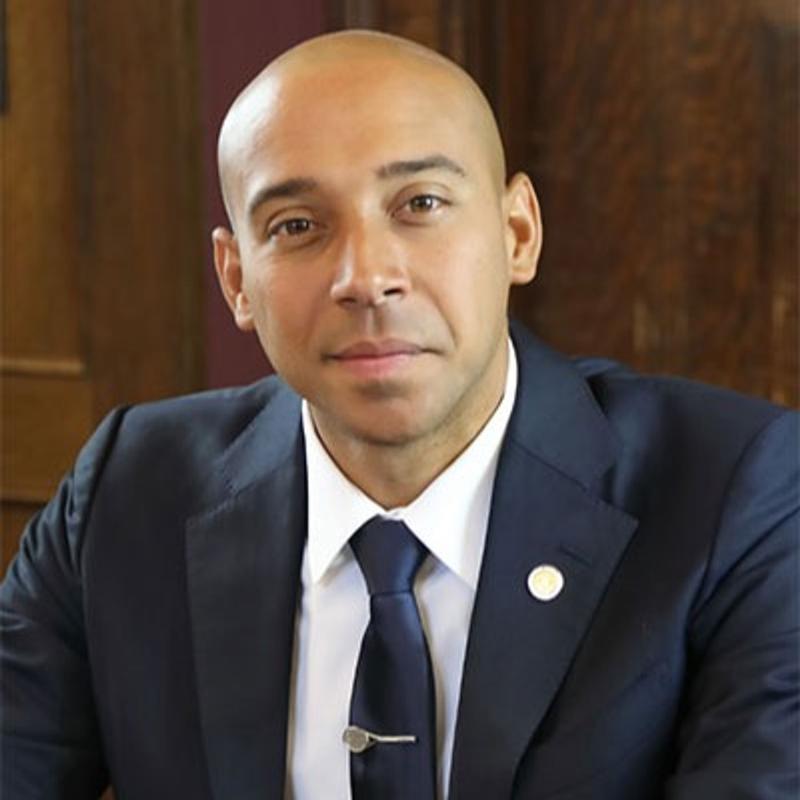
Brian: Brian Lehrer on WNYC. Now we'll meet New York City's new health commissioner. Dr. Alister Martin was appointed by Mayor Mamdani earlier this year to lead the city's Department of Health and Mental Hygiene, as its full name goes, the largest and oldest local health department in the country. We'll talk about his vision for the role, how public health connects to the mayor's affordability agenda, how the department is advancing health equity or trying to at a time when the federal government is moving in the opposite direction.
We talked with the previous health commissioner under Mayor Adams about how funds that were supposed to address health equity, in particular, with the huge health disparities by race that exist in the city, have been cut off, because you're not supposed to look at it that way anymore, according to Trump, plus the latest news out of the agency. Dr. Martin, welcome to WNYC. Congratulations on your appointment.
Dr. Martin: Thank you so much, Brian. It's a pleasure to be here.
Brian: Introduce yourself to listeners. Who are you? How'd you get here?
Dr. Martin: Thank you again, Brian. My story starts in Queens, just like yours does, Brian--
Brian: [unintelligible 00:01:19]
Dr. Martin: That's right. In a little part of Queens called Jackson Heights, where I saw my mom at the time, who was a high school teacher, really struggling with her own challenges with regard to affordability and making it even back then in this city. We eventually moved over across the river to New Jersey, and then I eventually went to medical school up in Boston, did my training there. I have to say, as an emergency room physician, what I have seen time and time again, Brian, is that the ER is the epicenter for public health challenges.
What we're seeing every single day, you go to an ER in Queens, in Brooklyn, in Manhattan, and it's always the same set of challenges, Brian. It's folks who are struggling with addiction and coming in with overdose, folks who are coming in because they don't have a home and they have nowhere else to go, folks who are struggling with food insecurity and are simply there because they need a warm meal. I think you can only see that--
Brian: Can I jump in on that? Because even more directly-
Dr. Martin: Absolutely.
Brian: -people who, for whatever reason, can't afford good primary care, they don't have good health insurance, whatever, they don't have access to preventive healthcare. Where does that wind up getting expressed? In your emergency rooms, right?
Dr. Martin: That's exactly right, Brian. The reality is that the emergency room plays this social safety net function, but it also plays this function of really dealing with and grappling with some of our biggest public health challenges, Brian. I think as an ER physician, as an ER nurse, as an ER clinician, you can only see that so much so often before you decide, I'm either going to do something about this or I'm going to complain about this for the rest of my life. I chose about 12 years ago to begin to do something about it. I left the emergency room, Brian, and I started creating programs to address the very challenges that I was seeing in the ER.
First starting programs addressing addiction, then helping to make sure that we were getting vaccines into the arms of some of our most vulnerable patients, and then most recently, really focusing, Brian, on the question of what can healthcare and public health do to address financial instability? Because at the end of the day, it's the poverty that is really making people sick, Brian. I'm excited to bring all of those lessons, and from my time working at the White House and state government, right back here, Brian, to the city that I was born in, to serve the people of this great city.
Brian: You worked in the White House as an advisor to Vice President Kamala Harris, and it certainly sounds like your vision for public health aligns with Mayor Mamdani's. How do you start to implement that in a practical way? To what you just said, can the health commissioner fight poverty, or how do you connect with the affordability agenda of the new mayor?
Dr. Martin: That's right. That's right, Brian. Coming in, I've got three big priorities, Brian. The first is really to invest in just the core public and mental health components of the agency, Brian, and to do that in an era, and we're going to get to this, where the federal government is making it awfully hard for us to do the work of protecting New Yorkers every single day from the public health perspective. There are threats to our funding.
There's the toxic environment with regard to the communications around vaccines they've created. The bottom line is we are not sitting here and waiting for Washington, DC to come in and tell us what we're going to do to keep New Yorkers safe and healthy. We're going to step in when the federal government has stepped back.
On the second priority, it's really advancing the mayor's vision on affordability, but doing that through the public health lens. We're going to talk a lot more about this, Brian, but the big four areas we're going to push forward on are Medicaid coverage, helping New Yorkers who are eligible for Medicaid really stay on Medicaid. You know, in just a few months, in the new year, it's going to be a lot harder for folks to stay on Medicaid because of the coming changes from H.R. 1.
The second is with regard to helping people enroll in cash assistance benefits, things like SNAP, WIC, EITC, Lifeline. Every single year, Brian, folks are leaving billions of dollars on the table right here in this city because they're not enrolling in these programs. We want to help connect people to those programs, working with our agency partners. The third is helping folks erase their debt. What we know still to this day is that medical debt is the biggest driver of personal bankruptcy. We've already helped to erase about $135 million. Brian, we want to amplify that.
The fourth piece on affordability is with regard to helping to prevent evictions. We know from the data, it's very clear, if you walk into that courtroom alone, if you're facing an eviction, odds are you're not going to be able to keep your home. We are a right-to-counsel city, and many New Yorkers who could be accessing these lawyers to help them are not. We want to play that connecting role. The last big priority, Brian, is really to make the invisible visible and make the work that we do in this agency much more visible, and we'll talk more about that, Brian.
Brian: Listeners, do you have a question for the new New York City Health and Mental Hygiene Commissioner, Dr. Alister Martin, appointed by Mayor Mamdani? 212-433-WNYC, 212-433-9692. Call with a question or text with a question, or a story. Help us report the story of the public health challenge facing New York City today. 212-433-WNYC.
I will note, as I referenced in the intro, that your predecessor, Dr. Michelle Morse, made racial health equity a centerpiece of her tenure. Some of the stats, Black New Yorkers have the lowest life expectancy of any racial group in the city, about 78 years, compared to about 83 years for white New Yorkers. This is according to your department statistics. Black women are five times more likely to die during or just after pregnancy than white women in New York City, also New York City Health Department stats.
Meanwhile, the federal government is actively working against equity initiatives. One thing that always blows my mind as somebody who likes to look at data, pulling sociodemographic data from federal data sets, they're removing data that provides context, and they're canceling NIH grants for health disparities research, as KFF has reported. How do you advance this work without federal support?
Dr. Martin: I know you love to look at the data, Brian. You are a master's in public health graduate. Is it Columbia, Brian?
Brian: Yes, Columbia. Boy, you really did your homework.
Dr. Martin: That's right. That's right. Look, we love data as well here in the agency, and we are not going to stop using that data to make sure that we deliver for New Yorkers in every single part of the city, and making sure that we stay committed to our work with regard to health equity. Let me give you a story.
Just this last Sunday, Brian, I was with one of our doulas who is part of our By My Side doula program. Her name is Masada. I was out with her, Brian, doing a client visit, and it turns out that this client was in the middle of a really challenging situation with her partner. There was domestic violence involved, and so she had to move to a domestic violence shelter. We went to visit this client, and the client told me a story.
She said, "With my son, who I had just delivered, the pregnancy had been going well, except for the fact that when I got to the hospital, I had been feeling contractions and had been seen by the team there. They did an evaluation and found that I was dilated, so they were ready to deliver the child." She said, "It's not clear what happened. It was maybe a miscommunication, or something got mixed up."
Long story short, the next thing she knew, she was looking at discharge paperwork, Brian. She was going to be discharged from the hospital, even though she was close to delivering. She picked up her phone, and she called Masada, who is her doula that we provide from the New York City Health Department. She went to the hospital, Brian, and within six hours, she delivered.
Now, I don't know what was happening at the level of that conversation at the hospital, but the bottom line is that patient could have been discharged, and maybe things would have been all right, or maybe she would have been one of the next young Black women that the statistics demonstrate have a much, much more dangerous time when it comes to pregnancy and delivery. It was the actions of that doula that we helped to fund and deploy that really made that case a success as opposed to a failure. That is what it looks like, Brian, to stand by equity, to continue to push that kind of work forward, and we will not stop doing that, no matter what the federal government says.
Brian: We have a very interesting caller who used to be in the New York State Assembly, who's going to bring up one way to address health inequities in New York State, and I have a feeling you might be able to guess what that's going to be. First, I want to read a text that came in, and I'm just going to acknowledge that this kind of thing frustrates me so much because of what it leaves out.
Based on what we were describing before about racial health disparities, a listener writes, "I'm a physician working at a federally qualified health center where we see mostly people who can't afford their healthcare. The divide is not mostly racial. It is mostly economic. I think it's divisive to focus on the racial issue. I wish we could all agree that at least all citizens deserve public provision of at least basic medical care." Again, I come back to the line in that, "I think it's divisive to focus on the racial issue." Again, as a little bit of a data geek, Dr. Martin, what do you do when you see that there's a percentage of the people who economically can't afford their healthcare? The next question has to be, who are those people?
Dr. Martin: That's exactly right, Brian.
Brian: Do they fall into any patterns? Then when you know the patterns, then you can start coming up with specific solutions that address the specific conditions of specific populations that need that help. We see so much of this conversation that's even in good faith. Let's assume this doctor is writing in good faith. This is something that I think stops us from solving the real problem, but go ahead.
Brian: The thing about it is that, and likely the doctor was writing in good faith, but what it does not include is the legacy, hundreds of years of disinvestment, disempowerment, racism, Jim Crow, things that have for years chipped away at that community member's ability to stand on their own two feet and to have financial stability. I think it is not fair nor accurate to remove race from the conversation with regard to economic stability.
Now, I think that we can do both. I think that we can really make the conversation also include the economic dilemma or the economic component here out of the public health department, and that's what we are aiming to do here, is really begin to grapple with what we are calling, Brian, the health wealth gap. Every single place we look across the city, we find the same specific outcomes.
Where individuals have more income, where there are higher assets, where the socioeconomic status improves, you see health outcomes improve. The opposite is also true. Where assets are lower, where the socioeconomic status is worse, where incomes are lower, you see health outcomes also decrease. We are going to do everything that we can. We can't solve all the problems in healthcare out of this agency with regard to healthcare affordability, but we want to do what we can to try and address the financial instability that is making people sick, Brian.
Brian: Former assemblymember of the New York state legislature, Richard Gottfried, on the Upper West Side, you're on WNYC. Hello.
Richard Gottfried: Good morning, Brian. I'd like to talk to the commissioner about the New York Health Act, which is a bill in the New York legislature to create publicly funded universal health coverage for all New Yorkers. Mayor Mamdani, when he was in the assembly, was a co-sponsor of the bill. Mitchell Katz, the head of the Health and Hospitals Corporation, supports it. As mayor, if Mayor Mamdani were to be speaking out for the bill now, I think that would make a lot of difference to getting it enacted and helping every New Yorker have access to complete health coverage without any financial barriers.
Brian: Dr. Martin, talk to former Assemblymember Gottfried.
Dr. Martin: Assemblymember, thank you very much for that question. I'll say just a few words of my personal background on this, and then we'll talk a little bit about the policy implications. I got to spend a year of my life, actually, between medical school and residency. Did something a little bit different. I went up to Vermont, moved everything, including my cat, and got an apartment in Montpelier, and worked for the governor of Vermont.
What were we there to do? We were there to really explore how we could help move the state. Back then, it was called Act 74, which was an act that compelled the state to implement a single-payer system. I was there to help figure out how we could get that done and to work on the messaging and the upcoming referendum that would be asked of the state of Vermont. I learned an incredible, incredible deal in that time, in that period.
I come away with your same position, Assemblymember, that something is deeply, deeply broken with our current healthcare system. It chews up and spits out poor people and makes it incredibly challenging for everybody else to access it. I'm all for big ideas. I'm all for transformation. I have been talking with State Senator Rivera, and so those conversations will continue between he and I.
Now, with regard to the mayor, the mayor is really focused right now on really addressing our budgetary challenge that we're in right now. I think that I'll leave it to him and his team to really weigh in on the future of that act. I share your concern, Assemblymember, with how broken our current healthcare system is. We don't have to accept these constraints as they are. We can take times like this to reimagine what the future of healthcare delivery and coverage look like.
Brian: Richard Gottfried, let me ask you one follow-up question real quick. I've heard a lot of people who like the idea, in theory, say this should be national Medicare for all, like Bernie Sanders has proposed, because if you try to do it just at the state level, there just isn't the economic base without taking too much money out of other things in order to have a universal, single payer, government only healthcare for all system.
It's just too economically crushing if one state tries to do it on their own. I think Vermont might have had an experience like that. Just give me a 30-second answer, because I think that's why a lot of your colleagues who would be supportive in their hearts of the direction who are in the legislature won't vote for it.
Richard Gottfried: There may be some states that would have that economic difficulty. New York is not one of them. There have been any number of economic analyses done of the New York Health Act for New York and similar programs in other states. It is eminently economically and legally feasible here in New York. To say we want to do it nationally, I always say that's like buying a ticket for a raffle where the prize is a trip to Bermuda, but you have to go by train. We're just not getting there in the reasonable future.
Brian: I'm going to leave it there. Former Assemblymember Gottfried, thank you very much for calling in.
Dr. Martin: Can I jump in there, Brian?
Brian: Yes, sure.
Dr. Martin: I just want to say that I think we can do both. I think we can think transformatively and think about what the future of health coverage looks like and healthcare access looks like, while at the same time taking care of today. I think that the main challenge of today is that in January of this coming year, because of the changes that have been made at the federal level, they're now going to make it incredibly challenging for New Yorkers to stay covered if they have Medicaid.
They're going to have to do monthly work requirements. They're going to have to do biannual renewals. All of these things are just extra hoops for folks to jump through with the hope that they won't be covered. What we are going to do in this agency, in this department, in this city, is help to make sure every single person who is eligible for Medicaid can stay on Medicaid.
We're going to help to do that through making sure that folks get reminders. We're going to physically be helping them enroll and do the renewals in our 11 clinics that we have across the city, in our three neighborhood health action centers. We're going to be working across all of our city agencies to help do what we can as a health department to make sure folks stay covered.
Brian: Here's another listener question. Listener writes, "Does your guest have any plans to make healthcare in prisons better, especially for women?"
Dr. Martin: Thank you very much. This is absolutely a huge topic for us and something that we're putting considerable time and energy into making sure that we get this right. It's not only for folks who are in prison that we need to get it right for, but it's also for the recently released to make sure that they're getting the services that they need, to make sure that they're getting the health coverage that they need, they're getting the benefits that they're eligible for. We are looking at this very closely, but we're also looking at, again, making sure that that population who is recently released can get the support that they need to remain stable on the outside.
Brian: Here's a question from a listener about coverage at the state level that's short of going to universal healthcare at the state level. This is very of the moment. Listener from Brooklyn writes, "I recently lost my job and health insurance. It's really difficult to find a job, especially if you're over 50. Currently, I qualify for an Essential Plan," that's one kind of New York State Obamacare plan, "Essential Plan through the marketplace, but according to Hochul's plan, this will go away."
"When it does, I'd be expected to pay more on my health insurance than rent going forward while not making any money, though I still wouldn't qualify for Medicaid." What will you do about this? It's not just the poorest who are stuck. Anything for that, listener?
Dr. Martin: Absolutely. That's a really, really important challenge that we are also concerned about. This is yet another example of the federal administration and the policies that have passed from Washington, DC, that are affecting the lives of New Yorkers here every single day. With regard to the Essential Plan, yes, it's not just the fact that the Essential Plan itself has become destabilized, and folks in that 200% to 250% FPL. Just for the listeners, there's a segment of New Yorkers that are able to get health coverage that's extremely affordable because of the changes to the Essential Plan.
When that Essential Plan goes away in July, because of the forthcoming federal policy changes, it's going to get a lot more expensive for them. At the same time, they're going to go back into the traditional Obamacare market, where they're going to see that premiums have increased there, because again, the federal government has not extended the subsidies for the ACA. There are a number of these issues that we're really, really deeply concerned about.
Now, what we're thinking through on this, and I have to be completely honest with the listeners, Brian, we at the city level don't have the ability to pull the levers on health coverage at the federal level or to expand the FPL limits for who gets coverage with regard to the Essential Plan. What we can do is work with our state partners. We're in constant communication with them. I'm constantly talking to Dr. Jim McDonald up there at Albany, who is the commissioner of health.
What we can do is make sure that we are ready to receive people at our clinics. Folks may not know this, but we have 11 public health clinics all throughout the city. These are low-cost to no-cost clinics, Brian, and so folks can come in. There's no concern of ability to pay or insurance status or immigration status. We offer healthcare on a couple of very concrete challenges that New Yorkers face. We recommend and advise folks to come to our clinics if they have no other source of options.
Brian: We're running out of time. I want to acknowledge one thing without going into it, because I think a lot of our listeners are familiar with the question, but I do want them to know that your department just launched a $1 million media campaign regarding vaccines called Ask Questions, Get Answers, Vaccinate. Ask Questions, Get Answers, and there's the answer: Vaccinate. That's obviously in the context of the RFK Jr. era at the federal level. With our remaining time, I want to take one more caller who's going to bring up a public health issue that doesn't get so much press. Sarah in Fort Greene, you're on WNYC. Hello, Sarah.
Sarah: Good morning. Thank you for taking my call. March is Endometriosis Awareness Month, and I wanted to ask the commissioner if we might see a planned public health campaign about endometriosis, a condition that affects 1 in 10 women. It's as common as diabetes, but that is so underrecognized, literally, that there is an average 7 to 10-year delay in diagnosis. It is a whole body inflammatory condition that can affect bowel function, bladder function. Lesions can be found in the lungs, the diaphragm, the heart.
It can cause infertility. Many, many women suffer from pain and other symptoms for years before being taken seriously by a doctor. NYU, in particular, has a campaign to say that pain is not normal, even period pain, even if your mom had it, perhaps particularly if your mom had it, because it is a genetic condition or a [inaudible 00:26:30].
Brian: Sarah, I'm going to leave it there because we're running out of time in the segment. March is Endometriosis Awareness Month, she said, and I'll bet a lot of people heard from her call right there descriptions of what endometriosis can do for the first time. Do you have anything on that? Then we're out of time.
Dr. Martin: Yes. First of all, thank you so much to the listener. This is an incredibly important diagnosis. I've taken care of dozens of patients who have come into the emergency department with inexplicable pain, which we later diagnose as endometriosis, and so this is absolutely an incredibly important issue. First, I absolutely take her comment, and we will think about that. Thank you very much. About how we might do more on this, how we might raise the profile and raise the conversation about this very important diagnosis.
Here's some of the things that we currently do. The maternal hospital quality improvement network that we work to do across the New York City hospital ecosystem really focuses on how we address disparities in maternal mortality, how we address morbidity with regard to maternal health, and how we focus on clinical practice changes to make sure that we as a city are serving every every New Yorker, but in particular, making sure that we get it right for our city's women, specifically on issues that relate to women's health, endometriosis being one of them. Thank you very much for that suggestion. We will think about how we can do much more on that.
Brian: We leave it there with the new New York City Commissioner of the Department of Health and Mental Hygiene, Dr. Alister Martin. As we like to do with health commissioners, we look forward to talking to you many times during your tenure. Thanks for coming on today.
Dr. Martin: Looking forward to the next one, Brian. Thank you so much.
Copyright © 2026 New York Public Radio. All rights reserved. Visit our website terms of use at www.wnyc.org for further information.
New York Public Radio transcripts are created on a rush deadline, often by contractors. This text may not be in its final form and may be updated or revised in the future. Accuracy and availability may vary. The authoritative record of New York Public Radio’s programming is the audio record.
