
Meet the New Jersey City Mayor: James Solomon
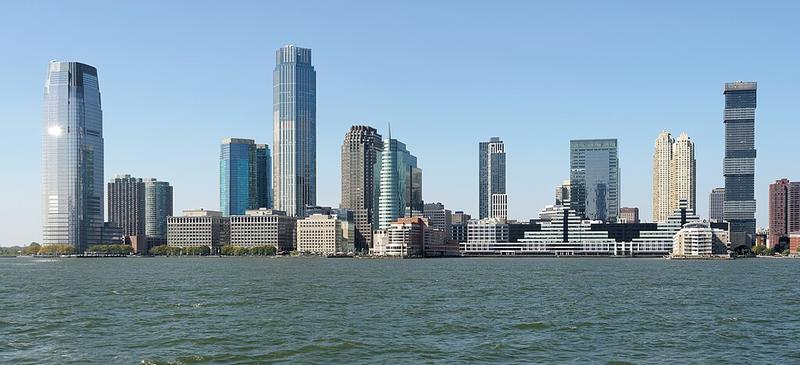
( Jakub Hałun, CC BY-SA 4.0 <https://creativecommons.org/licenses/by-sa/4.0>, via / Wikimedia Commons )
Title: Meet the New Jersey City Mayor: James Solomon
[MUSIC]
Brian Lehrer: It's The Brian Lehrer Show on WNYC. Good morning again, everyone. Now we're going to talk with an incoming progressive mayor. Let's see if you can figure out who this is and what city I'm talking about. Incoming progressive mayor who defeated a disgraced former governor who spent a lot of money trying for a comeback. Surprise. I'm not talking about Mayor Mamdani. I'm talking about James Solomon of Jersey City, where a surprisingly similar race, for those of you who didn't follow it or vote in it, unfolded across the river from New York City.
Solomon has been serving as a Jersey City council member since 2017. He ran for mayor on a platform of affordability, vowing to take on big developers and special interests. Remember, he toppled former New Jersey Governor Jim McGreevey by a landslide in the runoff election earlier this month. Because, as we saw in New York City, name recognition and deep pockets aren't everything. We are joined now by Mayor Elect Solomon to talk about his agenda for Jersey City, how it might affect the whole region, and how he plans on getting it done. Thanks for joining us, Mayor Elect. Thank you so much for coming on WNYC.
James Solomon: Thank you so much, Brian, for having me. I appreciate the comparison to the mayor-elect across the river.
Brian Lehrer: How much would you make that comparison, either in the way the campaign unfolded or in your policy agenda and where you are on the political spectrum?
James Solomon: Sure. First, our campaigns shared a laser focus on affordability. When I knock on a door in Jersey City, the question I get asked the most is, "What can you do, because the next rent increase or the next property tax increase is going to force me out of the city that I love?" Getting to see Mayor Elect Mamzani's campaign, and you saw that focus on affordability in ways that were digestible, in ways that were easy to understand, and in ways that would make people's lives better. I think that is the core similarity between us. I think we're both progressive. He is a member of DSA. I am not, but certainly I think we're both on the left part of the spectrum.
I appreciate in your promos, you called me young. I'm a little bit older than him. I'm 41, but I'll take the moniker of a young politician for as long as I can get it.
Brian Lehrer: Young in the scheme of things, if you look at the percentage of who's in office around the country, I know you know that. Let's talk about housing for a while, which you put at the center of your campaign and which is such a central issue throughout our region. One of the things I know Jersey City is facing is that new developments catering to, let's say, affluent New York City commuters are driving overall prices higher and often displacing people. I imagine you have a dilemma there because you're supportive of new people moving to the city, but you have to balance that growth with your desire to keep longtime residents from being priced out. Or how would you put?
James Solomon: It is the question of both the election as mayor, how I get to govern and how I will govern. For me, we have to do more to make the development of Jersey City actually benefit the residents of Jersey City. We're in a really unique position. We are a small part of this large New York City regional housing market. I always say, in fact, the best housing policy for Jersey City would be New York City to get its act together, for New York City to start building more housing of all varieties, whether they be market-rate housing or affordable housing, because that will relieve the pressure that is driving the displacement crisis in Jersey City. We can't rely on New York to take action.
For me, the development of the city cannot just be the luxury only model that we had over the last 12 years. We have to do more to mandate affordable housing being built to protect tenants, and to basically strike this balance of, we're not against development, we don't want to stop development, but the development must benefit the broader community and not just a small slice of it.
Brian Lehrer: I laid out the dilemma as, of course, you want more people to move to your city, but actually, do you want more people to move to your city? I even have a friend in New York City who says we should just say New York City is closed until supply meets demand for the people who are here. Jersey City, of course, is much smaller. Do you ever think, "Look, you Upper West Siders, Jersey City is closed," or anything like that?
James Solomon: No, I don't. We're America's golden door. I think we were very proud of the fact that Jersey City is a place that welcomes everyone, where everyone can have a home. What we got to do is make it affordable for the people who have been here who have helped make this city such a special place. I don't think in the last decade, those residents really feel like city government cared about them, that city government was prioritizing them. I don't think there has to be this sort of zero-sum. It's, you have to choose between the old-time residents and the new residents, or the ones who want to move here. You have to have a public policy that embraces all of those groups.
I think, again, what voters feel in Jersey City is that over the last decade the long-term residents have been forgotten, that the development process hasn't been for them, that they haven't seen the benefits and in fact have only seen the negatives. That's what has to change.
Brian Lehrer: You said in the last 10 years, city government hasn't cared enough about people. Do you think Steve Fulop was a bad mayor? I'll note that he has now gone on to become president of the major big business lobby group in New York City.
James Solomon: Well, there is nuance in everything. There are things the mayor did that I was particularly fond of, and there were real criticisms. The two for me-- were three. Let me put the three huge changes that I think have to occur. The first is what we talked about, development for everybody. Not development just for the wealthy and luxury only. The second is solving our budget crisis. We do not 100% know the exact figures, but we believe we're walking to a structural deficit of around $100 million. That's 15% of our budget. That is an extraordinary number, one of the highest across the country.
That reflects kicking the can down the road, not making tough budget decisions, and ultimately leaving the city in a better place than you found it. Then the third is we have to significantly improve city service delivery. Whether that's filling potholes, whether that's picking up trash, whether that's maintaining parks. City service delivery is not close to where it needs to be. On those three issues, we really need a change in direction.
Brian Lehrer: Listeners, Jersey City listeners in particular, we can take some phone calls and texts for Mayor Elect James Solomon. 212-433-WNYC. 212-433-9692. We have some calls coming in already, some texts coming in already. We'll go to you folks in just a minute. I just want to follow up a little more on the housing issue. On the campaign trail, you talked about a plan to create thousands of apartments capped at $1,000 a month rent. Can you walk us through how you plan to accomplish that? Because I know the dilemma always is, well, without massive property tax increases and therefore government subsidies, you can't get developers in the game to build buildings that are going to have rent that low.
James Solomon: Yes. Happy to do so. The first is we propose mandating affordable housing in every large new project. That hasn't happened in the city to date, and I think we have failed to build the affordable housing that we need in Jersey City. When you mandate affordable housing, a portion of that is going to be affordable at very low incomes. Then that is rent of around $1,000 a month. Oftentimes, when you knock on a door and you say, "I want to prioritize affordable housing," the first question that comes back at you is, "Well, what do you mean by affordable?" Because if you mean $2,500 a month in rent, that's not affordable to me, it's not affordable to most working people in the city is what folks will say to me when I'm on the door.
We wanted to make it explicit that we are going to prioritize affordable units at very low incomes. If you look at the data, it's the type of affordable housing we need the most. It's the most at risk in Jersey City. We're going to mandate that developers provide that as a portion of the overall affordable that we're requiring. We're also going to use some tools to maximize and increase the number of that. Then your question is, "Well, how do you pay for it?" The primary way you pay for it is having developers subsidize it with the luxury units that they're building.
If you're building 80% market rate, some of these developers are charging $8,000, $9,000, $10,000 a month in rental fees. There's significant profit there, and a number that revenue can be used to subsidize the low-income and very low-income units of housing. Now, across the city, that's going to look different. A project Downtown will look different than The Heights on the west side than Greenville. We're going to be sensitive to the fact that every neighborhood looks a little different. Our affordable housing plans are going to look a little different in each neighborhood, and we are going to look to the state to provide subsidies.
The state has what's called the Aspire Program, which is a wonderful program to get more affordable housing and union labor on these projects. We're going to look to every tool that we have to fund it. Property taxes have gone up 50% in 5 years. We have a, as I said, $100 million structural deficit that we are walking into. For me, it is unacceptable that any solution would significantly increase property taxes because that's going to drive out people, the city, it's going to displace more people as well.
Brian Lehrer: You ran so much on, you'll put people first, not developers. I think you even put it that way. Why should they build in Jersey City if that's your stance toward them? They can build in Hoboken, they can build in Fort Lee, also right across the river from Manhattan. Why shouldn't they say, "No, we're not going to bother with James Solomon's Jersey City"?
James Solomon: Because they're going to continue to make money and they're going to continue to have good projects, but those projects are going to be beneficial to a broader community than what they've currently done. For me, we have had a developer-driven city over the last decade where they have really dictated the terms and pace of the city. You just have to look at the results. We've had some of the largest property tax and rent increases in the country, let alone in New Jersey or in the tri-state region. I think that model clearly has not worked.
Again, my thing is when government sets clear guidelines and clear rules for how development should work and then doesn't play favorites, doesn't allow for politics and money and donations to influence things, if your developer is just like, "Look, I'm here to just build a good project and you, government, tell me the parameters on which I'm going to do it," that makes it simple. It's the developers that like to buy, the political system like to work it. Those are the ones who are not going to operate as well in my city. Frankly, we don't need them in Jersey City. If you're here just to-- we're going to set the affordable parameters and then you build, great, we'll have a good relationship going forward.
Brian Lehrer: Richard, in Jersey City, you're on WNYC with Mayor Elect James Solomon. Hi, Richard.
Richard: Hello. Can you hear me?
Brian Lehrer: We can hear you.
James Solomon: That's good morning.
Richard: Great. Longtime listener and longtime supporter of Mr. Solomon. There's so many things I could ask you about, but in particular, one of the things you were talking about in the campaign was the traffic congestion Downtown. People drive on the turnpike extension and get off at the Science Center or even at-- well, before the tunnel entrance. Monmouth Street ends up being a parking lot at certain times of day. What is your plan on that? I'm really curious.
James Solomon: Thank you, Richard. It's good to hear your voice, and I appreciate the question.
Richard: Again, I invite you to lunch anytime you want to go.
[laughter]
James Solomon: Thank you. I will take you up on that in the very near future. A couple of things, and what Richard described just for your listeners. The turnpike runs right through Jersey City, with the Holland Tunnel right there. As traffic builds up, residents use our local roads-- not residents, excuse me, commuters use our local roads as a cut through to get to the tunnel, and it really does turn into a gridlock traffic jam on our residential streets. It's not acceptable. It's congestion, it's pollution, it's everything that we don't want. In the short term, there's a couple of things. We can deploy some traffic personnel to help move and flow traffic.
We can adjust some of the light timing to incentivize the cars to stay on the turnpike, and we can work with the app companies to try to again encourage their apps to keep their cars on the turnpike. Long term, I would love to partner with the state legislature on a plan to basically mini congestion pricing, if you will, but basically to create a fee to use our local roads as a cut through to the tunnel, and that could then be put into better transit systems and safer pedestrian access as well. Then I'm strongly opposed to the plan to expand the turnpike in Jersey City.
Right now our outgoing governor, Gov. Murphy, has proposed widening the turnpike to four lanes in each direction in one section, and then three lanes in each direction through Jersey City. Our view of that is that that's about $12 billion to make a problem worse. The Holland Tunnel remains two lanes. It remains a bottleneck, and instead, you're just going to flood more cars into the same bottleneck that already exists that's going to funnel more cars onto our local streets, more pollution, more congestion, more danger on our roads. I think it is a really misguided policy and we are going to look at every tool we can to get the state to rethink the highway expansion through the heart of an urban center.
Brian Lehrer: Deborah, in Jersey City, you're on WNYC with Mayor Elect Solomon. Hi, Deborah.
Deborah: Good morning, Mayor Elect.
James Solomon: Good morning, Deborah.
Deborah: I'm the Deborah that wrote you the emails when you got into the run-off.
[laughter]
James Solomon: Thank you, Deborah. I appreciate that.
Deborah: I wanted to know-- I've been in Jersey City for 35 years, and when they were first giving out abatements when I first moved here, they were giving out a lot of them, but they were usually like 10 years. All of a sudden, it seems like every abatement they give out is 30 years, and you're giving out abatements to developers who are mostly building luxury apartments.
Brian Lehrer: Deborah, let me cut in for just a second. We're bringing everybody along. When you say 30-year abatements, you mean tax abatements, tax breaks for developers that they get to keep benefiting from for 30 years?
Deborah: Yes.
Brian Lehrer: Go ahead and make your point.
Deborah: My problem is, if someone is building a development that is mostly affordable with different types of affordable housing, I can see them getting a tax break. If somebody's just putting in 10% or 20% affordable housing, somebody please tell me why do they need an abatement and why do they need 30-year abatement?
James Solomon: It's a great question, Deborah. First, I made the promise, no tax abatements for luxury-only housing. I think that that got Jersey City into some of the budget mess that we're in and the affordability mess that we're in. If you're building again, you have to build for that broader community. The second thing is I made a promise in my campaign, but in every campaign I've ever run, never to take money from developers. That was so I could be an unbiased arbiter and decision maker when a developer is coming before us.
If they come before us and say, "Look, I want to give you a set of community benefits for a tax break." A series of affordable housing projects, maybe a new park or a new school, we're going to subject that to independent financial analysis. I will be an independent decision maker because they haven't given me a cent in donations. I think that's the model we need to move to in Jersey City, and having less influence of developers on politics. My promise here is, is you're going to take each project one by one, but no abatements for luxury-only development.
Then developer comes and says, "Well, I need this." We're going to say, "Show your work," and that work will be public. It will be public for the community to review, to see the numbers, to know that their tax dollars are always going to projects that benefit the broader community, not money that goes into the pockets of the politically connected.
Brian Lehrer: This next caller identifies himself as a real estate broker. He may be making a similar point to Deborah, but let's see. Paul, in Jersey City, you're on WNYC with Mayor Elect Solomon.
Paul: Thank you. [clears throat]
James Solomon: Hey, Paul. How are you?
Paul: I'm doing very good. I was going to say the same thing or similar stuff. I wasn't talking about abatements per se, but more like the pilot programs and some of those other programs where there are properties that are worth two, three, four times what the average property in Jersey City is worth, but they're assessed far lower and their tax burden is lower. My taxes have been going up to subsidize and there's no need for it, especially in a building like a condominium, where there is no low-income housing there or anything like that.
James Solomon: Yes, absolutely. One, creating just a fair assessment system. What New Jersey law requires us to do is revalue the properties every decade. We actually have the ability to move to an annual system, which I think is a fairer system. Then, again, if you've got someone who's building a luxury-only development, they're not going to get a tax break in my administration. That just can't happen. It's a mistake in it and it does create a real dichotomy between someone who's paying maybe a third, or half, or double the taxes of somebody else in a similar property.
Brian Lehrer: Here's a text from a listener who says-- sorry, this flipped off my screen. Oh, here it is. "I see no parking tickets on any cars ever on my Downtown block. Non-residents are supposed to park max two hours. Congestion pricing and no tickets has incentivized non-residents to park and take the train. Your response?
James Solomon: 100% right. This resident's experience is my experience. We broadly need to make government work, and one piece of that is our parking enforcement. Then it's a simple rule, which is if you don't have a resident permit Monday through Friday, you can only have two-hour parking on our streets. We had to enforce it. Right now, the city government-- That gets back to that very big question you asked me at the start, Brian, which was, "What do we need to do better from the current administration?" One is the basic city service delivery.
Our traffic enforcement division is not where it needs to be. We're going to have to have significantly better resident-only parking enforcement or resident parking enforcement. Then that's through a broader system of making sure we're delivering the basics of government well. We have a plan to establish a city stat-style system using performance management, holding division and department directors accountable, communicating that data out to the public on a regular basis. Things that have worked in cities from Baltimore to Louisville to basically make city services work well.
I think for folks who are municipal government nerds, which I happily consider myself to be, there's a real model in Boston with Mayor Michelle Wu of how do you do the big things and the basics? That is the standard that we're going to hold ourselves to. We have a big picture of making the city more affordable, and we're going to deliver the basics of city government well.
Brian Lehrer: In a similar vein to the previous text, listener writes, "You ran in support of traffic and pedestrian safety. There was another pedestrian death on Mallory. Please vocalize your support of Vision Zero and the infrastructure department as a whole. Better neighborhoods, pedestrian first." Writes this listener.
James Solomon: Yes, absolutely. There's not a single person I know in Jersey City who has not had a close call on our streets, almost been run over, almost hit on a bike, almost in a car crash. That's an unacceptable reality. I'm committed to Vision Zero, which for, again, listeners who don't know, means the goal of zero traffic fatalities on our streets, zero serious injuries. We have had two truly tragic fatalities. A child killed over the summer, older gentleman killed, I think, today. Sadly, crash was yesterday and killed today.
How do we change that reality? First, real investments in our infrastructure department so both operating and capital dollars that they're getting to make our streets safer and then real traffic enforcement. We do not have a traffic enforcement division with JCPD. Our state bans us from automated traffic enforcement measures. We have to push on both those fronts, create real enforcement in our local police force, and then push our state legislature to amend the laws and give us the ability to have real automated traffic enforcement as well.
Brian Lehrer: Back to housing. Mike, in Jersey City, you're on WNYC with Mayor Elect Solomon. Hi, Mike.
Mike: Thanks, Brian. How are you? Mr. Mayor, I'm calling. I don't want to get too far into the weeds on a radio show, but the property tax assessment system in Jersey City, and I say this as somebody who owns six units of affordable housing in Jersey City, discriminates against affordable housing buildings and in favor of rich people buildings. Without getting into the weeds, you would know this from your Kennedy background, they use the same capitalization rate for both types of properties, and it basically shifts the tax burden to the buildings that provide housing for lower income and middle-income people, and away from Ivanka Trump's tower in downtown Jersey City. It would be great if you could look into that.
James Solomon: I appreciate you sharing that, 100%. Brian, this also gets a little bit to your question earlier. It's like, "Why are these developers all going to leave?" If you're building affordable, we want you here. We ought to make that system work. Obviously, we will look specifically into this question of the assessments. Our tax assessor is technically a state employee, but there are ways we can work with that person to change the way that they're doing assessments if they are unfairly penalizing affordable and moderate-income units.
We have a housing transition team that's going to be getting started in their work and they're going to be presenting both 100-day recommendations and first-term recommendations. We're going to ask them to look at this specifically and include that in our plan. Then, more broadly, we do want to cut red tape permitting clear rules. If you're building affordable, we want that to be a clear process for you to go through, that is quick and easy and understandable, and free from political influence.
Brian Lehrer: Two kind of competing texts. One says, "You are really in the NIMBY camp," Not In My Back Yard. They don't like that. The other is exactly the opposite, that says, "Jersey City roads are narrow and cannot support traffic or bike lanes." They mean more traffic or bike lanes. "PATH has shortened trains. We can't support more development." Wants a response.
James Solomon: I appreciate. This is the beauty of local government, and you get all the perspectives all at once. I classify myself and my views as neither YIMBY nor NIMBY. So not Yes In My Back Yard, not Not In My Back Yard. I want to view it as a balanced approach that knows we have to grow and develop as a city. It helps our tax base, it can bring the affordable housing that we need, but to very specifically say if someone is just proposing a luxury-only building and project, I don't think that is ultimately benefiting Jersey City because we can't build ourselves out of the New York City housing crisis.
New York City has to [chuckles] build out of the New York City housing crisis. My job is to make sure development benefits the broader community. For the person who thinks we're overcrowded and we can't have more projects, what I say is I don't agree, but what I will do is subject every project to a clear cost-benefit analysis. Again, because I don't take money from developers, they're not going to get a project approved just because they donated to my campaign account, which I think has been too often the New Jersey way of doing development.
We're going to assess every project on a case-by-case basis, make sure that it fits the infrastructure of that community and provides it. For the person who's like, "Hey, you're a NIMBY," what I would say is, "Look, I've approved 400 or 500 unit projects during my time as a councilman, but those projects brought benefits. They brought real affordable housing, new park space." I didn't just let a developer say yes. I said, "Look, meet the needs of the community and then I'm happy to partner with you."
Brian Lehrer: When we talk to and about Mayor-Elect Mamdani in New York, one of the things that always comes up is how much he's going to need Albany to get his agenda enacted for universal child care and other things. How much do you need Trenton? You've already brought up one of the ways that you hope the state will help the city afford affordable housing construction. Have you spoken to Governor Elect Sherrill about these things and have any commitments?
James Solomon: I had a wonderful conversation with the governor-elect in the fall and brought up these core needs. Affordable housing, keeping Liberty State park free, open and green, and real investments in our transit system, as well as our budget challenges. Those were the main topics of conversation, and believe she'll be a wonderful partner for us. I do need Trenton. It's not exactly the same way Mayor Mamdani needs Albany and that some of his core proposals need a direct approval from the legislature and the governor. Although certainly there's a number of laws I'd love the legislature to pass to make our job of governing easier in Jersey City.
What we do really need is a partner in Governor Elect Sherrill and our legislative delegation. New Jersey City has really gotten the short end of the stick from Trenton in the last decade. The current mayor had really strained, toxic relationships with the powers in Trenton. I think there's a ground here where you're true to your values, you're willing to criticize kind of politics as usual in Trenton, and build relationships with folks to make sure Jersey City gets its fair share of resources and attention. I think that will be a really positive, marked change in the way that I approach Trenton, from the way that the last 10 years, Trenton has been actively punishing Jersey City. I think we're going to get the opposite in the coming four years.
Brian Lehrer: One more call. Alana, in Jersey City, you're on WNYC with Mayor Elect Solomon. Hello, Alana.
Alana: Hi. I'm just wondering what Solomon's stance is on the Uber Eats delivery robots that have been taking up public pedestrian space and taking away jobs. I'm just wondering if he has any particular opinion on that.
James Solomon: Thank you, Alana. That is a great question. Again, for your listeners, we have these little robots that now deliver food in a partnership with Uber Eats, as opposed to individuals on bikes or walking or cars. Obviously, those people are still delivering as well. The first thing that I'm going to do is put in place a real structure around this program there. Right now, no fee is being paid to the city. There are really no rules in place, and there's no criteria upon which we're evaluating the pilot. For me, it was just like we let Uber Eats come and do their thing and shh.
We want to make a data-driven analysis of what's happening here. To the points made, do we see increase or decrease in pedestrian safety through this process? What are the ADA implications, Americans with disability implications? Does this help or hurt our small business and our restaurants? Our plan is to put in place a real evaluatory process for us to be able to determine whether this has been beneficial to Jersey City or harmful. Part of that will include taking public input. We are going to subject it to scrutiny and then share that with the public and let you know if we're going to continue to move forward with it or kind of sunset the pilot.
Brian Lehrer: Thank you for that call, Alana. Last question. You said at the beginning of this that one of the best things that could happen for housing costs in Jersey City is for New York City to build a lot of affordable housing and therefore ease the price pressure on the whole region. That's something you want from New York City. I wonder if you call yourself a progressive and Mayor Elect Mamdani can form any kind of coalition for regional progress toward affordability, or whatever else you want to label it.
There's such a history, not just in this area, but everywhere, of places competing with each other with tax breaks, to companies for jobs, and other ways that they compete with each other that may not ultimately be in the public interest. Give me a thought on housing. Give me a thought on cooperating with Mamdani or regionally to benefit potentially everybody in the region, or is that unrealistic?
James Solomon: It is where we need to go. The challenges of regional cooperation are difficult, but we're in tough jobs to solve difficult problems. Housing is a regional issue, which means it requires a regional solution. I would be happy to partner with Mayor Elect Mamdani, work with his housing team, so that our housing policies are aligned, that we're giving developers a little more clarity about what different cities are looking for.
They won't be exactly the same, but if New York is building more housing supply, making some of that explicitly affordable, if we are building more housing supply and making some of that explicitly affordable, that will do wonders to the region, as opposed to the current system where Jersey City is basically building housing supply for New York City. That just does not work. That has to change. The more we can strengthen regional coordination and cooperation, the stronger all of our cities will be.
Brian Lehrer: James Solomon, now the Mayor Elect of Jersey City.
James Solomon: Brian, thank you for having me. I've listened to your voice for decades, so it's an honor to be on the show.
Brian Lehrer: An honor to have you. Good luck. We'll talk to you when you're in office.
James Solomon: I appreciate it. Thanks so much.
Copyright © 2025 New York Public Radio. All rights reserved. Visit our website terms of use at www.wnyc.org for further information.
New York Public Radio transcripts are created on a rush deadline, often by contractors. This text may not be in its final form and may be updated or revised in the future. Accuracy and availability may vary. The authoritative record of New York Public Radio’s programming is the audio record.
