
Meet the New Commissioner of Consumer and Worker Protection
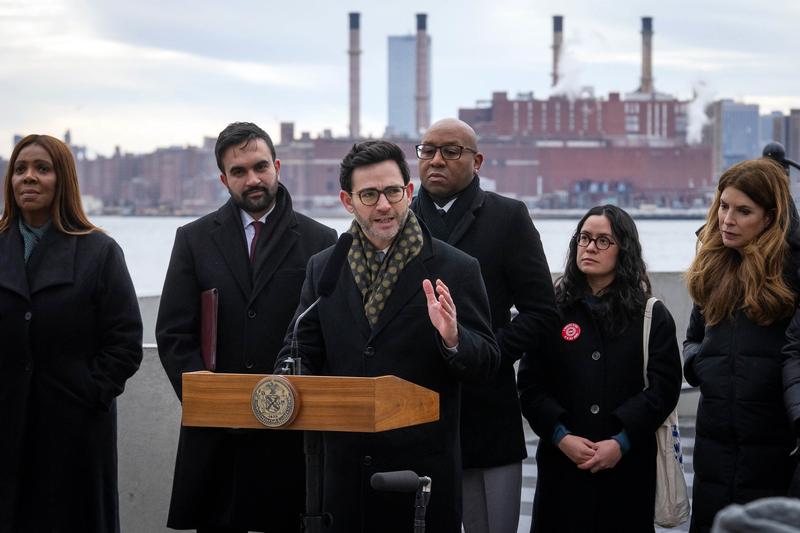
( Ed Reed/Mayoral Photography Office / Mayoral Photo Office )
Brian Lehrer: Brian Lehrer on WNYC. We'll be introducing you here to commissioners and other leaders of the new Mamdani administration. We have the school's chancellor scheduled for a few weeks from now. Today we've got Sam Levine, the new commissioner of the Department of Consumer and Worker Protection, previously known by before the de Blasio administration as the Department of Consumer Affairs. De Blasio brought workers under the same tent as consumers for this important department. Eric Adams kept it that way, and now so is Mayor Mamdani. This is our first interview with a member of the administration since the inauguration, and he's already done a lot in just these few weeks.
By way of introduction on the consumer side, the commissioner has been tasked with enforcing the executive order, banning junk fees and subscription traps. We'll talk about that. His office will also play a role in the upcoming rental rip-off hearings that the mayor announced. We'll definitely hear more about that. I can already hear many tenants thinking what they might report. We did one call in on that already.
As for the worker protection side, last week the DCWP sued the restaurant facing delivery app Motoclick and its CEO for allegedly violating the city's delivery worker laws and sent out a compliance blitz, they called it, to other delivery companies, warning them to adhere to delivery worker laws that will come into effect next week. Commissioner Levine also issued a report finding that Uber Eats and DoorDash "engineered design tricks in their interfaces" to make it harder for consumers to tip workers, resulting in what the commissioner says is a combined $550 million pay cut, allegedly. First, we'll ask the commissioner about his priorities and his resume.
Did you know he served as the director of the Federal Trade Commission's Bureau of Consumer Protection under President Biden? Now he's working under the leadership of a democratic socialist, which we know Biden wasn't. Mayor Mamdani, is there a democratic socialist approach to tackling this job? Lots of questions, so let's jump right in. Commissioner Sam Levine, congratulations on your appointment, and thanks so much for joining us today. Welcome to WNYC.
Sam Levine: Thanks so much, Brian. It's great to be here.
Brian Lehrer: Listeners, ask the new commissioner of Consumer and Worker Protection a question of your choice. 212-433-WNYC, 212-433-9692. Call or text. Commissioner, let's start maybe a little bit on the conceptual side because President Biden was not a Democratic socialist, nor were previous mayors who staffed this role. Of course, your new boss, Mayor Mamdani, is. Why do you think Mayor Mamdani chose you for this role? Do you think his expectations for the department are different from previous mayors or from President Biden based on his democratic socialist beliefs?
Sam Levine: The mayor ran on making the city more affordable, and I have a track record of doing that. When I was at the Federal Trade Commission, we found a lot of dormant tools to crack down on junk fees, crack down on subscription traps, strengthen competition in the US Economy, and that's exactly what he's charged me with doing at DCWP. We have in this city some of the strongest worker protection laws in the country. We have really strong consumer protection laws, too. I really think we need a city government willing to take on big corporate actors that are pricing people out of the city and squeezing our workers as well.
My hope is to really make DCWP the tip of the spear in making the city more affordable. Our actions over the last couple weeks, I think, show how we're going to go about doing that.
Brian Lehrer: I'm not sure if you identify as a democratic socialist. Maybe you don't even want to say, but do you believe the principles of democratic socialism can be enacted to any degree through the Department of Consumer and Worker Protection?
Sam Levine: Our mandate is to enforce the city's consumer and worker protection laws. My personal political views don't really play a role in that. The council has passed really strong laws against deceptive practices, against firing workers, firing our delivery drivers without cause, about paying them beneath their minimum wage. Our job is to make sure that those laws actually live up to their promise. My job is to make sure that if companies break them, they're held accountable.
Brian Lehrer: Just before we go on to some of the specific things you're doing already and the mayor is doing already, like the executive order banning junk fees and subscription traps. I'll be curious to hear you define for our listeners what a subscription trap is. One of your predecessors, as some of our listeners know, is the new city council speaker, Julie Menin. She served as the director of the Department of Consumer and Worker Protection under Mayor de Blasio. Did she make a mark? Maybe the two of you compared notes about the role. Did you?
Sam Levine: She certainly made a mark. I had the opportunity to speak to the speaker at our junk fee executive order announcement about a week and a half ago. We talked about her experience leading the department. We talked about my experience leading the department over the last couple weeks. I know it's just going to be the first conversation. I'm really excited to work with her to build out some of the strongest consumer protections in the country here in New York. I know she's going to draw on her experience at DCWP and also her new perch leading the council to deliver on that vision for the people of New York.
Brian Lehrer: That executive order banning junk fees and subscription traps, what do those things mean? Give us some New York City examples.
Sam Levine: Yes, sure. Subscription traps, a lot of New Yorkers, I bet, joined a gym maybe as part of their New Year's resolutions. Maybe they join late December or early January, but maybe they decide in a couple months that instead of going to the gym, they want to enjoy our incredible park system. They want to cancel their gym membership. We want to make sure that New Yorkers don't get stuck. I have heard both in my time at the FTC and here in New York of people trying to cancel gym memberships and having to send in a certified mail or show up at the gym during certain hours to cancel.
Those practices, those are called subscription traps. They're against the law. The mayor has made clear that it's going to be a priority of the city to make sure those laws are enforced. I think junk fees are another problem that are really familiar to New Yorkers, whether that's when you rent a property and you think the rent is going to be one price, and then you realize after you've signed the lease that there's a pest fee or a fee for processing your payments. Maybe you're booking a concert ticket and one price is advertised for the ticket, and then it's a much higher price at checks out.
These fees are already deceptive under the law. We need a DCWP, and we need a city government prepared to actually enforce the law, even if it means taking on some powerful companies.
Brian Lehrer: Here's a consumer protection question from Linda on the Upper East Side. Linda, you're on WNYC with the new commissioner of the Department of Consumer and Worker Protection, Sam Levine. Hi, Linda.
Linda: Good morning.
Sam Levine: Good morning.
Linda: As I said, I was interested-- good morning. I'm interested because in the last couple of months, I've noticed-- actually, about six months, I've noticed that when you go to a restaurant, you agree to pay the already high prices. You know that you're going to pay a substantial tip. Now I've noticed in the corner of the menu that addition to all of that, you have to pay now a service charge. It's annoying, it's expensive, and it's usually a surprise. Can you make a comment on that? Do you consider that a job fee?
Sam Levine: Yes, I think it's a really important question. There's no doubt that just the cost of dining out in the city has surged. We really do have to strike a balance. We know that the people who wait our tables are not getting the pay that they deserve. We know the restaurants are trying to make sure they get compensated. We also have to make sure that consumers are not getting tricked. We have to make sure that when companies say that they're charging a service charge, that is actually going to our servers, that that is actually going to the staff.
I brought cases when I was at the FTC against companies like Amazon for telling consumers tips would go to drivers, only to pocket the money themselves. We need to make sure that these charges are clearly disclosed. The consumers aren't surprised, and that our waiters are getting the compensation they deserve.
Linda: Excuse me, Commissioner, but in these menus, it specifically says that this is not a tip and this is not going to the waitstaff.
Sam Levine: If the menus say that these are service charges and it's not going to the waitstaff, we can look into that. The fact of the matter is, if companies are charging a fee and they call it a service charge, it ought to go to the waitstaff, it ought to go to the servers. If you want to bring that to our attention, you're absolutely welcome to do so. nyc.gov/dcwp. You can also call 311. We really do want to make sure that people are not being surprised by hidden fees. We want to make sure that if there are fees to support our workers, they're actually going to our workers.
Brian Lehrer: Linda, thank you for your question. Sounds like something she could report, you were saying, to have you and your department look further into it. How can anybody report what they think might be a consumer rip-off to your department?
Sam Levine: I'm really glad you asked. Our expectation is not that New Yorkers look up the law themselves and figure out if it's being broken. If people feel like they're being cheated, if people feel like they're getting ripped off, if people feel like they've been victimized by a bait and switch, we want to hear from them. That's how we build our cases. You can file complaints at nyc.gov/dcwp. Of course, people are also welcome to call 311, and those complaints will get routed to us. If New Yorkers see something, they should say something. We're here to protect people's pocketbooks, but we need New Yorkers to be our eyes and ears in doing so.
Brian Lehrer: Listener writes asking my permission. "Brian, is it okay if I ask the commissioner if he's a New Yorker?" I guess it's okay because I passed on the question. Commissioner?
Sam Levine: I am a New Yorker. I'm a recent New Yorker. I moved here last year mainly because I've always wanted to live in the city. I have a lot of family roots here on both sides of my family. My grandmother grew up on the Lower East-- actually, both my grandmothers grew up on the Lower East Side. I'm proud to call the East Village home. I'm another New Yorker. I'm a renter as well. These same rental junk fees, subscription traps, sky-high utility bills that are squeezing so many other New Yorkers are squeezing me as well. This work is personal for me. I'm excited to work with the mayor and work with the whole administration to make the city more affordable.
Brian Lehrer: On the restaurant fees, in addition to the tips that the last caller was on about, a few people are writing in suggesting that those fees may be for credit card use, where they sometimes tack on a percentage. I don't know if that's the case in the caller's experience, but a few people are throwing that in as a possible explanation, at least for what that was. I want to get into-- go ahead. No, go ahead.
Sam Levine: I was going to say, and I'm sorry to interrupt you, I was just going to say this speaks to a real problem we have in our city that doesn't get a lot of attention, that it's not only consumers getting squeezed, it's our small businesses. Credit cards are raking in more than $150 billion a year in fees from small merchants. That's nationwide. We know that part of delivering affordability for the people of the city isn't just lowering prices, it's also making it easier to open and operate a small business. That's why the mayor issued an executive order last week about reducing fees, fines, and regulations.
We really need to look across our economy to make sure companies aren't squeezing workers, consumers, or small businesses.
Brian Lehrer: I want to ask you about your announcement last week that the department is suing the company Motoclick for allegedly violating the rights of delivery workers. Motoclick, for people who don't know, is a restaurant-facing app. Perhaps listeners who are the consumers and not in the industry aren't familiar with it. How many New Yorkers interface with Motoclick? What laws are you alleging that they violated?
Sam Levine: We actually don't know how many New Yorkers interface with Motoclick because they do not cooperate with our investigation. I think that's an important point I want to make too. To all the corporate executives listening, if you don't cooperate with our DCWP investigations, we're not just going to put the file in a drawer and lock it. We're going to take you to court if we feel the law is being violated. You asked if laws are being violated. We have clear rules in the city around minimum pay, around making sure workers can get the tips they deserve, around making sure workers have predictable schedules.
We are enforcing these laws not only against the companies that break them to squeeze their workers, but also, as you saw in the Motoclip case, we're looking to hold the CEO personally accountable. What that means in practice is that if the CEO ran away with workers' money, and we believe millions of dollars was stolen from workers, if the CEO ran away with their money, we're not only going to try to get money from the company, we're going to pursue him personally to try to get money back to workers who he stole from.
Brian Lehrer: You also released a report in which you found Uber Eats and DoorDash engineered design tricks, you use the word tricks, in their interfaces to make it harder for consumers to tip workers, resulting in a combined $550 million pay cut. What are these design tricks?
Sam Levine: What Uber and DoorDash did, as we described in the report, was as soon as the minimum pay rate took a fetch for delivery drivers, shortly after they changed their interface to make it much harder for consumers to tip. They didn't put the tip. Initially, they had prompted consumers to tip before checkout. That was moved after the checkout process. That might sound like just a small design change, but what we know is that this had a huge impact on the workers of the city. The average tip went from over $3.66 to under a dollar to about 73 cents. Tips overall across New York fell by more than $550 million.
This wasn't because New Yorkers didn't want to tip other apps that didn't engage in these tricks; we saw tips hold steady. This really was an effort, I think, to lower the tips for New York workers. Thanks to a new law the city council passed, that is illegal starting on January 26th, and we're going to be enforcing that law vigorously.
Brian Lehrer: DoorDash CEO John Horton told the New York Times that your report was "flat out wrong". He said what's really happening is the Department of Consumer and Worker Protection wants to pressure consumers to tip even more. "Forcing people to tip may as well be a tax," he said. Your response?
Sam Levine: He's mistaken. Nobody's being forced to tip. What the new law says is that New Yorkers should be given the option to tip as part of the checkout process. What we saw over the last year is that most New Yorkers want to tip the delivery drivers. They know it's an incredibly hard job and an incredibly important service. The message the council sent by passing those laws, the message I'm sending as the person charged with enforcing those laws, is that these delivery companies need to get out of the way. Consumers should have an opportunity to tip their drivers, and companies like Uber and DoorDash shouldn't be trying to stop them.
Brian Lehrer: Why would they be trying to reduce the amount of tipping, in your opinion? What's the motivation for them if the money is not coming out of their pocket, theoretically, if people are tipping the drivers more?
Sam Levine: It's a good question, Brian. I think it's a question that should really be asked of them. The fact is, they have fought just about every effort the city has undertaken to raise standards for delivery drivers. They fought minimum pay rate. They're fighting the new law that says they can no longer hide the tip option. They talk a lot about how much they value the delivery drivers, but if you actually look at the positions they take in court, the positions they're taking in the press, the actions they're taking with respect to their tipping interface, it does not suggest a company that is committed to the well-being of their workers.
Fortunately, we have a city government and a DCWP where that is our highest priority. That's why you've seen the flurry of activity you've seen over the last couple weeks.
Brian Lehrer: Listener writes, "Commissioner, when I go to buy milk at a corner deli, they ring it up as one price, but if I pay with my phone tap or debit card, they add a fee but do not disclose it. I see it on my receipt. Is this a junk fee?"
Sam Levine: Companies need to disclose that they're charging a credit card surcharge. That potentially is a junk fee. Now, again, I want to reiterate the point I made earlier. I have a lot of sympathy for merchants that are dealing with outrageous credit card fees, and it's making it very hard for them to compete with big box stores. That said, surprise fees are illegal in the city of New York. If you're going to charge a fee for credit card usage, which generally is legal, you need to disclose that to consumers. That can't be a surprise.
Brian Lehrer: Here's Abdul in the Bronx with a question about another kind of fee. Abdul, you're on WNYC. Hello.
Abdul: Hello, Brian, thank you very much for taking my call. Thank you also for what you're doing. I've been following you for years. This is the first time I called because I wanted to--
Brian Lehrer: Thank you very much. Great to have you.
Abdul: Thank you. Mr. Levine. Thank you for coming on as a new commissioner. I am basically a taxi driver. I rent a cab, and I'm doing Access-A-Ride. I went to apply with a broker. Probably you're familiar with them. They help Access-A-Ride move people around. I was told that if I don't agree to pay fees to own the company, I will not be able to drive with them. I have my back at the wall, and I wanted to make some money, so I went along with it. Basically, they charged me about $600 of fees plus 30% of whatever I make during the week. You were talking about the fees, so I said, "Let me ask you that question."
I don't know if probably Brian can allow me. I'll have other question, but I don't know, I'll just wait if he does. If not, then that's okay. That's really one of my main concerns.
Brian Lehrer: You want to throw the other one in there real quick, Abdul?
Abdul: Oh, yes, okay. All right. The other thing is, what you call it? How these brokers are getting to have the Access-A-Ride contract? Why us as a taxi driver in New York City, we can get the straight contract, which is for the MTA? To me, the MTA is a taxpayers-funded company, basically.
Brian Lehrer: That's an interesting question, and I like your ringtone, by the way. Why can't the Access-A-Ride drivers have a direct relationship with the MTA rather than having to go through a broker? Plus, his first question. Briefly, Commissioner, can you answer Abdul's concerns? Is this something you can look into?
Sam Levine: Yes, these are really important concerns. To be honest, I'm not familiar with those fees. The mayor just last week nominated a new chair of the Taxi & Limousine Commission. I'm really looking forward to working with her, but I would encourage Abdul, file a complaint with us, nyc.gov/dcwp, or you can call 311. Either we'll look into it, or we'll talk to our partners at TLC. The mayor has a long history of standing up for taxi drivers, standing up for drivers across our city. I share that commitment, and I know that our new TLC chair does too. I would encourage Abdul to file a complaint with us.
Brian Lehrer: Last question from a listener. Let's see, where'd this text message go? They're streaming in, so I hope you'll promise to come back because obviously, when you're the commissioner of the Department of Consumer and Worker Protection, there are a lot of consumers and workers who think they're not being protected enough.
Sam Levine: That's right.
Brian Lehrer: What we've gotten so far are relatively individual, I don't want to say small bore, because they all matter and they add up, but individual complaints about individual things. Here's something much more global. Let's see if I can pull it back up. Otherwise, I'm going to have to paraphrase it. I can't find it. The question was basically-- oh, there it is. What is he doing to protect New Yorkers against Con Ed's monopoly over our gas and electric? They continue to raise prices and lobby our politicians, and New Yorkers have no other options. What immediate actions can he and his department take to stop rates from rising and to ensure Con Ed is reading the meters fairly and accurately?
I'll tell you a lot of our first segment today on Governor Mikie Sherrill's inaugural address and executive orders was things that she's going to try to do in New Jersey with these rising utility rates. Does this come under your purview in New York?
Sam Levine: This is such an important question. This is not under DCWP's purview historically, but I'm a ratepayer too. I am getting squeezed too, by my Con Ed. I'm in a small one-bedroom apartment, and I cannot believe how much I am paying every month. What I can tell you is that as commissioner of this department, part of my job is to stand up for the people of this city. We're going to be working with agencies across city government and across the state government as well to try to ensure that Con Ed can't keep ripping people off.
Even though that might fall outside DCWP's direct authority, I can tell you that I'm going to continue to be a voice for affordability in the city and a voice for the ratepayers of the city who really are getting ripped off in a way that is pretty shocking to me as someone who has to pay that bill every month.
Brian Lehrer: Sam Levine, commissioner of the Department of Consumer and Worker Protection, newly appointed by Mayor Mamdani, thank you so much for making this an early stop. We really appreciate it. You can tell from our calls and our texts, the listeners really appreciate it. We hope you come on with us a lot over the next four years. Thank you very, very much.
Sam Levine: The questions were great. I'd love to be back. Thanks so much for having me.
Copyright © 2026 New York Public Radio. All rights reserved. Visit our website terms of use at www.wnyc.org for further information.
New York Public Radio transcripts are created on a rush deadline, often by contractors. This text may not be in its final form and may be updated or revised in the future. Accuracy and availability may vary. The authoritative record of New York Public Radio’s programming is the audio record.
