
Meet NYC's New Human Rights Commissioner
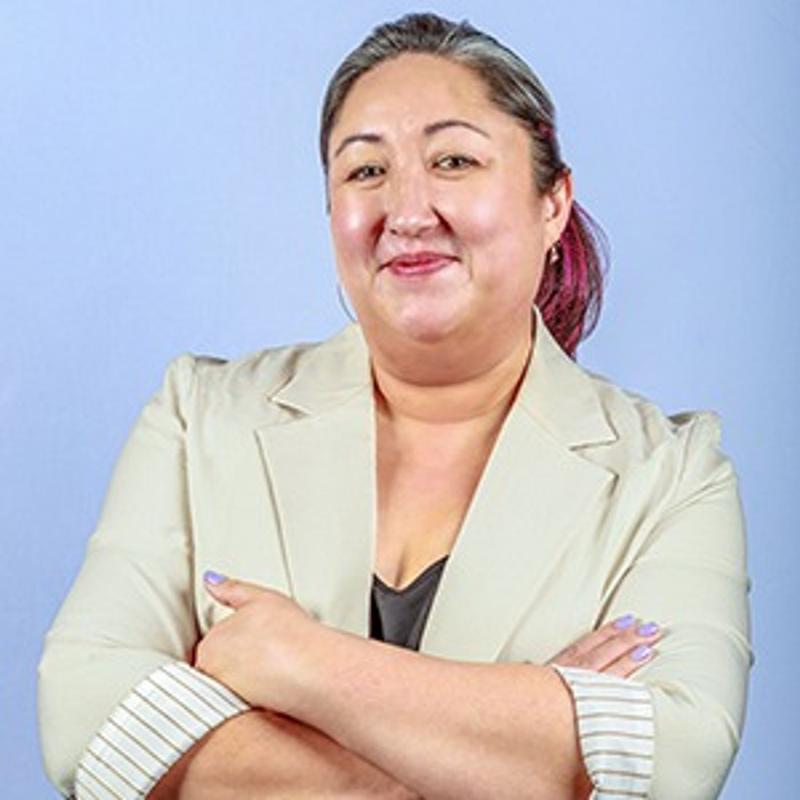
Brian Lehrer: Brian Lehrer on WNYC. New York City has one of the strongest anti-discrimination laws in the country, stronger in many ways than federal law. As the Trump administration dismantles federal civil rights enforcement, not to mention what the Supreme Court just did with the Voting Rights Act, the question of who is protecting New Yorkers from discrimination might land harder on city government. New York City has its own agency dedicated to investigating and enforcing those protections. It's called the Commission on Human Rights. That agency has a new leader, Christine Clarke, who will join us in a minute.
Clarke comes to the role after years of fighting legal battles for low-income New Yorkers and securing housing subsidies for elderly and disabled New Yorkers, among other things. She's a few months into the job now, but the commission she's inheriting has its own challenges, including a backlog of complaints and a staffing shortage. This at a moment when the demand for the agency's work may be greater than ever. Christine Clarke, commissioner and chair of the New York City Commission on Human Rights, does join us now. Commissioner, thanks for some time today. Welcome to WNYC.
Christine Clarke: Thanks so much for having me. I'm really excited to be here.
Brian Lehrer: Listeners, we can take some calls and texts. Your questions for the new commissioner of the New York City Commission on Human Rights. Call or text, 212-433-WNYC, 433-9692. Maybe you've experienced discrimination in your job. You're building a store, a school, didn't know exactly what to do about it. Maybe you're a small business owner or employer trying to understand what your legal responsibilities are, anything like that. 212-433-9692. Call or text. Commissioner, tell our listeners a little bit more just about who you are, how you got here, maybe what made you say yes to this particular job at this particular moment.
Christine Clarke: Absolutely. I'm a career civil rights lawyer. I've been largely a legal services lawyer, although I've also done nationwide impact litigation, constitutional litigation. I've done a series of different kinds of civil rights law in my life, but largely focused on low-income working people, people who don't have access to private lawyers and a lot of resources. Most recently, I worked at Legal Services NYC, which is one of the largest providers of free legal services to low-income people in New York City, housing lawyers, foreclosure prevention lawyers, the whole nine yards.
I never thought about coming to this agency, but I was recruited by advocates who wanted to see some change at the agency and really wanted to take advantage of this new admin. I really couldn't think of anything better to do with my skill set and my career, both as a lawyer and as a manager of large nonprofits, than to work with this administration, as you were talking about at this time, when there's this huge vacuum where the federal government used to be in terms of civil rights enforcement, where the courts used to be in large part.
I think the idea of joining this administration in this incredible experiment of seeing how much we can do at the city government level to fill the gaps and keep New Yorkers safe, and I'm really excited to be able to do that.
Brian Lehrer: Are you a direct Mamdani appointee?
Christine Clarke: Yes.
Brian Lehrer: What did he say to you when he approached you for this job, besides whatever he said to you about you? What did he say about how he envisions this, and especially if he intends to remake it or have it adapt to what's going on at the federal level, in any particular ways? What did he say to you?
Christine Clarke: Well, this agency is absolutely a priority for him, and I think for this entire administration, making sure that we are able to protect New Yorkers and that we are able to fill the void at this time. I will admit that when I meet him, I do a lot of talking. I'm chatty. I have a lot to say about this commission and about city municipal government's role in protecting people's civil rights. It's been a huge part of my career.
I've worked with the commission as a lawyer from the outside for many years, and I had lots of friends who'd come in and out of the commission. I had a lot of ideas about what I was hoping that this commission could do at this time. Absolutely, I think we had a fantastic conversation about how to make that work and how to make our visions align. I think they absolutely are aligned in this way, in the way of making sure that New Yorkers understand their rights as New Yorkers first. Even in this world where people feel like we're, I think, understandably, very consumed with global events and with politics at the federal level.
I think it's very important that we identify ourselves really also largely as New Yorkers, because New York City law, particularly around civil rights, is so unique and so different and so unchanging. It's purposefully untethered from federal rights, where whatever happens at the federal level, city law remains, that it really provides this unique opportunity. I think the Mamdani campaign was largely focused on bringing New Yorkers together to identify themselves as New Yorkers first and as federal political, partisan second. That's definitely, I think, part of the same message and part of the same.
Brian Lehrer: What kinds of human rights enforcement do you intend to emphasize?
Christine Clarke: We enforce the New York City Human Rights Law, and it is called the Human Rights Law, but it's largely a civil rights law. The reason for that naming convention is to make sure that everyone agrees that civil rights are human rights. What we really do is enforce laws against discrimination in housing, in employment, and in public benefits. Discrimination is sort of very broadly defined in our law. It's everything from discrimination based on your race or pregnancy status or LGBTQ status, as well as your status as a voucher holder or someone with a criminal record. There's a whole series of protected classes in our statute that we help to protect.
Brian Lehrer: Here's a caller who I think has gotten some results from the New York City Human Rights Commission in the past. Sasha on the Upper West Side here on WNYC. Hi, Sasha.
Sasha: Hi there. Thank you, Christine, for doing this noble work, this valuable work. I'm particularly excited because, as Brian said, we've gotten some amazing results from this powerful law that I didn't used to know anything about. I'll tell you how. I became a disabled New Yorker in 2009 when a giant tree branch fell on me in Central Park. I've been a wheelchair user since then. I came to realize that the subways that I'd always relied on, I thought, were for everyone. Nope. They're vastly, at that time, only 20% of subway stations were accessible.
I got to realize, wait, other cities have done this. How did they do it? Oh, they sued, and they got ADA to be enforced in their cities, the federal law. ADA, as I'm sure you know, has an Achilles heel, let's say of reasonable, "reasonable accommodation". In New York, it said, "Oh, it's enough for the subways to not be totally accessible, but there's accessories, there's buses, close enough under ADA [crosstalk].
Brian Lehrer: ADA, the Americans with Disabilities Act, just to be clear for everybody, but go ahead, Sasha.
Sasha: Thank you, Brian. That's right. Under the much more powerful New York City Human Rights Law, as you were describing, it wasn't enough because it's not even close to allowing people to really engage in civic and economic life in the city. We went to state court with that, not federal court, and we were able to force the MTA into a settlement with wonderful nonprofit lawyers. It wasn't for a dollar, but that settlement meant they had to be on a legally binding schedule to build new stations, which effectively meant that at the time, they were doing like three or four a year and whenever they felt like it. Now they have to do at least a dozen every year for the next 30 years, which is fantastic.
Thank you for that work. Thank you for this agency for having passed this law. My question is, how else can we use this law to enforce the rights of disabled people, but also in a way that's not just a cost, but to show that New York can be a leader? Is it possible, maybe, to join with other cities that have such laws and say things like, of course, every school should be accessible?" Not just in the slower, close enough way of ADA, but in New York, that's not enough. Every school needs to be welcoming to disabled students, to disabled parents, to disabled teachers. Could we work with other cities to say, "We're going to be a coalition of the willing to make accessibility the human right that it is, and it should be?" Everyone can be disabled. Everyone needs this.
Brian Lehrer: Former Mayor Dinkins used to famously say, he would list all kinds of diversity in the city, and then he would say, and the temporarily able-bodied, because we're all going to be disabled in some way at some time. Commissioner, Sasha tells a powerful story. What do you say to his question?
Christine Clarke: I think that keeping alive the enormous successes of the Disability Rights Movement of the '80s and '90s is incredibly important to us here again, no matter what happens on the federal level. He really raised up, I think, a very important point, which is at the federal level, the law says the thing has to be good enough for people with disabilities and at the city, it says it has to be so good that you enjoy the equal privileges and enjoyment of whatever it is compared to people who don't have disability?
There's a number of things that we do to make sure that we-- We do have a small staff, we work very hard, but we make sure that everything that we do has as much impact as possible. For example, when we're working with a building that needs to build a ramp, for example, for a tenant who's become disabled, we make sure that they build the ramp to the specs that will work for everyone in the building so that that building is now accessible going forward. Not just getting money damages, maybe for that tenant, but really changing and altering the building in a way that's accessible to everybody.
Similarly, we recently settled another case with the MTA. I'm sure this won't be our last either. Concerning service dogs on the bus. The MTA had a system where you had to get a card that says you need a service dog, and none of that's required under city law. City law says a public accommodation, a place where the public's allowed to go, can ask you if your animal is a service dog. If it is, that's basically the end of the questions. We had a bunch of complainants who had been really harassed off a bus and made to feel ashamed of themselves for having a service animal.
Now, if you go on the bus, hopefully you will see, on basically every bus, a sign that our amazing staff here made that tells you what your rights are as someone who needs a service animal. There's a lot of stuff that we're doing. I totally agree that it's incredibly important that we hold hands and work very closely with other municipal human rights and civil rights agencies, which we do, very much so that we can build on this idea that we have to create cities that are resilient and rights that are resilient, regardless of what we now understand to be potentially rapidly shifting federal landscapes and shifting much more quickly than they have in our lifetimes. We're all working together to build city infrastructure, city rights infrastructure that will survive that. Absolutely, we work together very closely.
Brian Lehrer: Sasha, thank you for your call. This is WNYC FM HD and AM New York, WNJT FM 88.1 Trenton, WNJP 88.5 Sussex, WNJY 89.3, Netcong, and WNJO 90.3 Toms River. We are New York and New Jersey Public Radio and live streaming at wnyc.org and on the WNYC app, with the new New York City Human Rights Commissioner, Christine Clarke, and with Jacqueline in Brooklyn, who's calling about something in the news right now. Jacqueline, you're on WNYC. I'm so glad you called in about this.
Jacqueline: Good morning, Brian. Thanks, Commissioner, for everything. Great to hear you guys and Sasha. I didn't know if it was off topic, but it is very relevant right now. I was just curious if you had any way to change anything that's going on right now at the Wyckoff Medical Center in Bushwick. It's just been really heartbreaking to see people getting torn out of a hospital and taken by ICE. It's hard to be a New Yorker and see stuff like that happening. I felt called to call.
Christine Clarke: Yes, it's incredible.
Brian Lehrer: I'm glad you did. Commissioner, I'm sure you've seen that situation. Is it under your purview at all?
Christine Clarke: I can talk about what we can do and what we can't do, but first, I definitely want to-- I hear the sadness in the caller's voice, and I definitely share that. It's incredibly hard time to be a New Yorker or to be an American right now in the United States. I think in terms of what we can do, of course, we don't have jurisdiction over ice. We don't have jurisdiction over the federal government, but we do have jurisdiction over a lot of places that involve ICE interaction. I want to make very clear what they are, because there is actually universe of things that we absolutely can do for people.
When a landlord or an employer threatens to call ICE on a tenant or a worker, regardless of why they're threatening to call ICE, we consider that a form of immigration status discrimination, and that's illegal in New York City. We absolutely will intervene and try and stop whatever's happening, resolve the situation, separate people, try to figure things out as best we can.
Again, we can't prevent ICE from doing what ICE is going to do, but we can prevent employers, landlords, other people in positions of power in a non-governmental sense, from using ICE as a weapon to coerce workers and coerce renters. This is absolutely happening for people who are organizing rent strikes or trying to get repairs. People just calling 311 on their landlord, the landlord's threatening to call ICE on them. That's absolutely illegal. If you call us and report that, you don't have to leave your name. We will never ask you your immigration status. We consider it perceived immigration status discrimination. We won't ask you, we won't keep it in our records. You don't even need to leave your name. You can make it an anonymous tip, and we'll look into it.
Brian Lehrer: Jacqueline, thank you for raising that. In our previous segment, we were talking about how the federal government is getting out of the voting rights enforcement business, at least the way the Voting Rights Act had been interpreted for 61 years. Nicole in Brooklyn is calling about another way that the federal government under Trump is getting out of the anti-racial discrimination business, and wonders about adopting it at the city level. Nicole, you're on WNYC. Hello.
Nicole: Hi, good morning. Thanks for having me. Hi, Commissioner Clarke, so glad you're there. I am wondering about the fact that the EEOC is really not a place that-- I'm a workers' rights attorney in Brooklyn,
Brian Lehrer: Again, can I just do the alphabet soup for our listeners? Some know, some don't know. The EEOC is the Equal Employment Opportunity Commission of the federal government. Nicole, I'm sorry, go ahead.
Nicole: Yes, no, thank you for clarifying that. We know that the EEOC is really getting out of the business, unfortunately, under this administration, of helping so many vulnerable folks, including trans folks, including immigrants. I'm just wondering, how do you see the commission fitting into a strategy to protect New Yorkers who can't be protected to go to the EEOC?
Brian Lehrer: Thanks, Nicole. Commissioner.
Christine Clarke: Oh, sorry. We are absolutely looking at all of our systems and all of our structures to make sure that we are able to squeeze more enforcement for people and do it faster, precisely to fill this void. It is a significant void. The EEOC, the Federal Employment Discrimination Agency, it's very large. It's the first place that people used to think of to report discrimination, and that it really, in many ways, is not the preferred venue. For some people, it's basically a useless venue. I'm not aware of them investigating LGBTQ discrimination or disparate impact or any of the things the federal government is now thumbing their nose at, I should say.
We very much intend to fill that void. We're looking at all of the ways that we interact with complainants to make sure that we're able to give people more justice faster and to meet them really more where they are. We're moving more non-lawyers into our enforcement mechanisms to make sure that our lawyers can focus on litigating and that people who come to us have someone to talk to who's culturally competent, who's able to meet them where they are, and we can get to the meat of things much faster.
We also have an early intervention system that we're very proud of that's very effective at getting emergency relief for people. If you're about to lose your job, you're about to get evicted for something discriminatory, you can't get an apartment because of your housing voucher, like you saw the apartment, but they won't let you in, call us. We do have a very effective early intervention system that is meant not to be as litigious, but is meant to get people what they're actually here for, which is justice.
Brian Lehrer: One of the things that you just mentioned on that list is the topic of another caller's question. Let's get into this a little more in-depth because I know it was also the subject of a recent court ruling in New York State. David on the Upper West Side, you're on WNYC with the new New York City Human Rights Commissioner, Christine Clarke. Hi, David.
David: DAVID hi there. Hi, Commissioner Clarke. My question is about housing vouchers and source of income discrimination. The commission is essential in combating source of income discrimination. In particular, I know the Parkchester apartments settlement opened up 850 units as set-aside units specifically for voucher holders who otherwise experience rampant discrimination in the regular market. How does CCHR plan to continue this work to help vouchers? Advocates are calling for $25 million as a budget, a $10 million increase to CCHR. How could you help voucher holders if you were to get that additional funding?
Christine Clarke: Let me explain a little bit, I think, more of what you're talking about for callers who probably don't know, just in terms of the lingo of housing voucher discrimination and set-asides. If someone's looking for an apartment and they have a Section 8 voucher or they have a city voucher or a HASA voucher, some government program that will pay their rent, the brokers and landlords are required to treat them the same as someone who's paying rent in any other lawful way and can't require extra credit checks or extra deposits and can't turn them away and can't ignore them, which is the most common thing that happens. We call it ghosting.
When we enforce against especially large landlords and large brokers, we make sure that what we get at the end of the day out of that litigation or out of that settlement is not just damages, which we do get, which is cash compensation for victims, but we also get the landlords to agree to set aside some significant portion of their portfolio specifically for voucher holders. I will tell you, those apartments fill up so fast because it is very hard to find a landlord in New York City who will take vouchers. That's a problem we take very, very seriously.
We're currently fighting that with, I think, we have six people in our emergency response housing voucher discrimination program. It's very small, but it's very mighty. I think we have 15 staff attorneys working on all of our cases. We're a small team, but we do squeeze enormous juice out of that team. Of course, if we had more funding, we would do more. That's the math is, I think, probably somewhat self-evident. A lot of what we would do is invest in our early intervention program, which really addresses things like this. We get these kinds of settlements out of that early intervention program, too.
Brian Lehrer: Didn't a New York State court just rule in March that landlords do have the right to discriminate based on source of income, that is, to discriminate against people who would pay some or all of their rent with Section 8 vouchers? Because they said that law, that policy of banning source of income discrimination, was discriminatory against landlords. Given what you just said, your mission is going to be in the role that you want the Commission on Human Rights to play. How can you in the face of that court ruling?
Christine Clarke: Yes, that's a great question. That ruling was out of the third department, and it said that basically the government can't require landlords to participate in Section 8. It largely rested on this requirement in Section 8 that says to participate, landlords have to open up their records for inspection. That ruling wasn't in New York City. It doesn't apply to the New York City law directly. It's being appealed. I feel very confident in the New York State Attorney General's office ability to appeal that. Also, a lot of those arguments don't apply to any of the other vouchers that are at issue. Certainly not to HASA or CityFHEPS or FHEPS or LINC or anything else. I feel very confident in our continued enforcement of that law.
Brian Lehrer: We also have some other breaking court news. I'm not going to spoil it because Michael Hill is here in just a couple of minutes with the latest news. We were talking earlier in the show about what happened in a lower court on Friday, blocking telehealth abortion appointments and telehealth prescriptions of Mifepristone. The Supreme Court weighed in on that just a few minutes ago. In just a few minutes, Michael Hill is going to be here with the latest news, and that's going to be his lead story.
Let me take one more for the New York City Human Rights Commissioner, Christine Clarke, just appointed by Mayor Mamdani, and with a new set of missions. Oh, that caller went away. I'm going to ask that caller's question and also read a related text. A listener writes, let me get this up. Sadly, I'm sorry. I already lost this text, too, because so many are coming in. Basically, this is about budget cuts. Both the caller and the text are about budget cuts, Commissioner, and cases being backed up two, three, four, five years because you don't have the money, you don't have the staff. Is there anything that you and the Mamdani administration can do to address that?
Christine Clarke: I think that obviously the fiscal crisis is very real. I think the fiscal outlook is clearly not what any of us thought it was going to be coming in, and that is disappointing, I think, for everybody. We do have a ton of plans for how to resolve the backlog and get people justice faster under any circumstances. I do want to be real, math is math, and we only have the people that we have, and there's only so much they can do so quickly.
Nevertheless, I feel very confident that we're going to be able to significantly impact wait times just by changing the way that we do business. Some of it is probably like two in the weeds for a public radio call. There's a degree to which we're looking at all of the systems in the agency and really centering people more, which sounds like not a real thing, but we're really centering what people need from the agency more and fancy-lawyering less.
I will say I came into the agency, and the thing that shocked me the most was this incredibly high quality of lawyering from this teeny, tiny team. That's so important. What we're trying to do is free up that team to do more litigation and bringing in more people with community experience, with more specialized backgrounds, with more cultural competency, with more languages to do more of the public-facing interaction in terms of investigations, talking to witnesses, collecting documents, and taking witness interviews and stuff like that. I think that that will make a huge difference, even though the budget might not be what we would hope for.
Brian Lehrer: Last question. Listeners not familiar with the New York City Commission on Human Rights probably have gotten a sense from this segment, if they've been tuning in for a while, that you deal with a whole host of human rights issues at the municipal level based on all these callers, each of whom had different issues. We could keep going with other callers if we had more time. Tell people who might want to get in touch with you, with your office, if they have a problem that they think the City Commission on Human Rights might address, how do they do that?
Christine Clarke: My favorite question. The easiest way to do it is to call 311 and ask for Human Rights or Human Rights Commission, and they'll route you to us. The other option is to go to our website. You can just Google it. City Commission on Human Rights will pop right up, and we have an online form. It's not like a full intake form, but you can upload documents, you can upload information, and we'll get it and start the intake from there and call you back.
Brian Lehrer: Would that it only be that easy? Call 311 and say human rights and you will get your human rights.
Christine Clarke: That's the idea.
Brian Lehrer: We can at least say they will try. Christine Clarke, Commissioner and Chair of the New York City Commission on Human Rights. Congratulations on your appointment. Thank you for joining us today. We look forward to speaking to you from time to time.
Christine Clarke: Thank you so much.
