
Medicaid and Medicare in Peril?
Title: Medicaid and Medicare in Peril?
[MUSIC]
Brian Lehrer: It's The Brian Lehrer Show on WNYC. Good morning, everyone. You may not have caught this with all the focus on war news last week and maybe you were distracted by the Passover and Easter week holidays, but President Trump released his budget proposal for the next fiscal year, which included an eye popping 40% increase in military spending to be paid for in part by about a 10% cut in domestic spending, targeting what the New York Times called core government services, including money meant to respond to natural disasters, train new teachers, root out tax fraud, research cures for diseases and develop clean energy technology, and including, the Times says the elimination of key federal health, housing and education programs.
Listen to what the president said at a luncheon last week, with cameras and microphones rolling, that's a fundamental reversal of a campaign promise that he has always made, and said distinguishes himself and the MAGA movement from other Republicans. He wants the federal government out of Medicare, at least in this statement, as well as other health and social programs. You will hear him refer to his budget director, Russell Vought.
President Donald Trump: We have a balanced budget because these are the kind of numbers. I actually said to them-- I said to Russell, "Don't send any money for daycare," because the United States can't take care of daycare. That has to be up to a state. We can't take care of daycare. We're a big country. We have 50 states. We have all these other people. We're fighting wars. We can't take care of daycare. You got to let a state take care of daycare, and they should pay for it too. They should pay.
They have to raise their taxes, but they should pay for it. We could lower our taxes a little bit to them to make up for-- but it's not possible for us to take care of daycare. Medicaid, Medicare, all these individual things, they can do it on a state basis. You can't do it on a federal. We have to take care of one thing, military protection. We have to guard the country, but all these little things, all these little scams that have taken place, you have to let states take care of them, Russell, and you have to do it.
Brian Lehrer: The president last week. The daycare debate is new. Let's separate that out. You know it from the New York News, probably, where universal daycare is Mayor Mamdani's number one stated priority for equity and to keep families from leaving the city. President Biden had proposals, we talked about them at the time, that got rejected by Congress for the federal government to expand funding for daycare as well. Trump said in that clip, zero to the states for that from him, but that would be an expansion of the federal role in supporting families.
That's one kind of debate, but lumping Medicare and Medicaid into that quote implies he could support a dramatic retreat from core existing federal programs. His language was a dramatic reversal from how Trump and the MAGA movement have always campaigned. Too much spending on foreign wars, and no cuts to Medicare or Social Security. Here's Trump just days into his first campaign. This is from June 15th, 2015.
President Donald Trump: Save Medicare, Medicaid, and Social Security without cuts. Have to do it. Get rid of the fraud, get rid of the waste and abuse, but save it. People have been paying in for years, and now many of these candidates want to cut it. You save it by making the United States, by making us rich again, by taking back all of the money that's being lost.
Brian Lehrer: Six months later, December 29th, 2015, on Fox News, candidate Trump said this.
President Donald Trump: I'll save Social Security. I'll save Medicare. Ben Carson wants to get rid of Medicare. You can't get rid of Medicare. Medicare is a program that works. There's fraud, there's abuse, there's waste, but you don't get rid of Medicare. You can't do that. People love Medicare, and it's unfair to them. I'm going to fix it, make it better, but I'm not going to cut it. I will get rid of the fraud, the waste, the abuse, all of the problems, but we will have Medicare.
Brian Lehrer: Candidate Trump in 2015, and he said many things like that over his subsequent campaigns, but again last week, he said.
President Donald Trump: Medicaid, Medicare, all these individual things, they can do it on a state basis. You can't do it on a federal.
Brian Lehrer: With us now, Axios staff writer Maya Goldman, who focuses on Medicare and other health issues in Congress and the federal agencies. Maya, thanks for coming on. Welcome back to WNYC.
Maya Goldman: Thank you so much for having me. It's great to be here.
Brian Lehrer: Let's actually do a little one-on-one on Medicare and Medicaid. We throw those words around so casually these days, but unless that's how you, or a family member get your health insurance, people may not really know what these programs are. What is Medicare?
Maya Goldman: This is a great question. Medicare is the federal health insurance program. Mostly covers seniors, people who have paid into the program for years. You can age in when you turn 65. It's health insurance that's paid for by the federal government. You can choose to have a plan that is run by a private insurance company, or you cannot have a plan. You can just have health insurance from the federal government.
Brian Lehrer: We'll get into more details on that, and the politics, and the economics of it, but what is Medicaid?
Maya Goldman: Medicaid is typically for lower-income people and very, very sick people. It's the safety net when it comes to health care. It's a joint federal-state program. The federal government and the states put it on together and fund it together. It's a little different from state to state. Eligibility rules are a little different from state to state, but generally, you can think of it as the lower-income health plan.
Brian Lehrer: Careful listeners will note that you called Medicare a federal program and Medicaid a federal-state joint program.
Maya Goldman: Yes.
Brian Lehrer: We will get back to that distinction, but let's talk about Medicare. We heard in the older Trump clips, one of them, the simple statement, "Medicare is a program that works." For Trump or anyone else, what makes Medicare a program that works?
Maya Goldman: I think one of the things about it that works is that, you know it's going to be there. Right now in our country, generally, you get your health insurance through your employer, and if you change employers, that creates a whole difficult situation, and changing insurance plans if you don't have an employer, if your employer doesn't have to offer you health insurance, if you're unemployed. There are all these different ways to fall through the health insurance cracks, but you know that Medicare is going to be there, and for most doctors, they accept Medicare.
We can get into the differences between being in a Medicare Advantage plan and a traditional Medicare plan, but generally, you're going to be able to afford your health care. You're going to have pretty good comprehensive health care, and people tend to like it.
Brian Lehrer: Beyond that, I think it's fair to say Medicare was created explicitly to reduce senior citizen poverty as well as health outcomes.
Maya Goldman: Yes.
Brian Lehrer: I've got some stats here. The Center for Medicare Advocacy says the elderly's poverty rate declined from 29% in 1966 as Medicare was being born, 29% elder poverty rate to just 10.5% by 1995. It adds that "Medicare also provides security across generations. It has given American families assurance that they will not have to bear the full burden of health care costs of their elderly or disabled parents or relatives at the expense of their young families."
The Center on Budget and Policy Priorities, another think tank, says Social Security lifts more people above the poverty line than any other program. Says, without Social Security, 22 million more adults and children would be below the poverty line. Those are from think tanks and advocacy groups. For you as a journalist, do those numbers sound about right?
Maya Goldman: Yes, they do. I think, obviously, we're in a different time now than we were in the '60s when these programs were created. Costs are really high, and there are still a lot of seniors who are living in poverty or living right around the top of their means, and there are a lot of problems with these programs. Not a lot of people know this, but Medicare does not cover long-term care, and so there are lots of holes in the safety net. Generally, it's a safety net, and it can help in a lot of ways.
Brian Lehrer: Trump says in the clip from last week that Medicare and Medicaid, as well as daycare, should be funded by the states, and they should raise their taxes to do it, while for the federal government, "We need to take care of one thing, military protection." Staying on Medicare for now, what percentage of Medicare funding is paid for by the states today? Any of it?
Maya Goldman: I don't think so, and hopefully someone will fact-check me, but I'm pretty sure that that is entirely funded by the federal government.
Brian Lehrer: As far as I know, that's correct. There are many economists, though, who say the future projected expenses of Medicare are a much bigger problem than the future projected expenses of Social Security, which I think we hear about a lot more as, "Oh, Social Security is going to go bankrupt in X number of years." I think a lot of economists say that's actually a bigger danger for Medicare given the aging of the population, the low birth rate, and now low immigration rate.
These reduce worker-to-retiree ratios, taxpayers-to-Medicare recipients, the increasing number of medical tests and treatments that medical science has given us, and the costs of many of those things going up, and the Medicare tax rate. There is a specific Medicare tax, but economists say it's too low to cover the projected costs, especially too low, critics will say, on high-income people, to cover the full projected future costs. Medicare is a bigger potential federal debt problem than Social Security is. Is that your understanding?
Maya Goldman: Certainly, I don't know the situation with Social Security as much as I do with Medicare, but there's a lot of concern that the Medicare trust fund is very close to insolvency, just a couple of years away from insolvency. When that happens, the federal government won't be able to pay at the level that it does for Medicare. That could mean a lot of access issues for seniors. It could mean a lot of problems. We sometimes call this a silver tsunami, the baby boomers aging and living much longer, and increasing health care expenditures in that way. This is all coming up pretty quickly.
Brian Lehrer: Now, listeners, we welcome your Medicare and Medicaid 101 questions on the economics of them and the politics of them as we discuss the implications of President Trump saying last week, "Medicare, Medicaid, all these individual things, they can do it on a state basis, you can't do it on a federal. We need to take care of one thing, military protection." 212-433-WNYC, 212-433-9692. I'll acknowledge that he left it vague, but that's how these things often start, and then they weave their way into actual budget proposals. We are talking about this at its outset. You're going to give us an axiom from Axios.
Maya Goldman: Yes, sorry.
Brian Lehrer: I was just going to remind new listeners just joining along the way that our guest is Maya Goldman, who covers health care for Axios with a special focus on Congress and the federal government generally. Go ahead, Maya.
Maya Goldman: I was just going to say in DC, sometimes they say, "Take President Trump seriously, not literally." It's unlikely that there will actually be a push to completely cut off federal funding for Medicare or Medicaid, but you do have to look in the margins and see what they're trying to do. Also, we should note that Karoline Leavitt, the press secretary, said that President Trump was referring to fraud, waste, and abuse. The administration has certainly-- they're doing a full-court press to try to root out these things in the federal government, but also those fraud, waste, and abuse are often in the eye of the beholder in health care. It's not always so cut and dry what's fraud and what's legitimate service.
Brian Lehrer: Sometimes, just when we think we shouldn't take Trump literally, the thing that seemed outrageous to a lot of people winds up wending its way into an actual proposal. What would happen if Medicare actually got turned over largely to the states, hypothetically?
Maya Goldman: I don't even know how to answer that question because it's not something that I've really heard discussed by policy wonks that I talk to. I would imagine that it would function similar to Medicaid. This is all purely from my own brain, though, but right now, Medicaid, like I mentioned, is jointly funded by the federal government and the states. There are certain things that states have to cover, and they get certain amounts of money based on the amount of enrollees that they have and things like that, but the programs can look pretty different state to state.
Brian Lehrer: We'll get in more detail into Medicaid in those respects. Oh, some people are calling with solutions for making Medicare more solvent, more long-term. You can do that, or any other questions or comments. 212-433-WNYC call or text, 212-433-9692. Medicare at the state level is not entirely theoretical. We just had a segment the other day where the topic of Medicare for all at the state level came up. Of course, there's Bernie Sanders style Medicare for all to replace all private health insurance at the federal level that gets discussed.
At the state level, there's a proposal in New York State, for example. It comes up every year. It's never passed the legislature. It's not expected to pass this year, but it has been tried in some smaller states, Vermont, for example, where it did not survive economically. One of the main reasons, if not the main reason, was said to be that a state doesn't have enough of a population base, tax base to support Medicare for all, while the federal government does. Is that a reason Medicare was founded as a federal program in the 1960s in the first place?
Maya Goldman: I think it's part of it for sure. That's a good point. This is how health insurance works. You need a lot of healthy people to fund the claims of the sickest ones. You need a big pool.
Brian Lehrer: Does this year's Trump budget propose to actually cut Medicare benefits in any way, or is it just talk so far, just this thing he said at that luncheon last week?
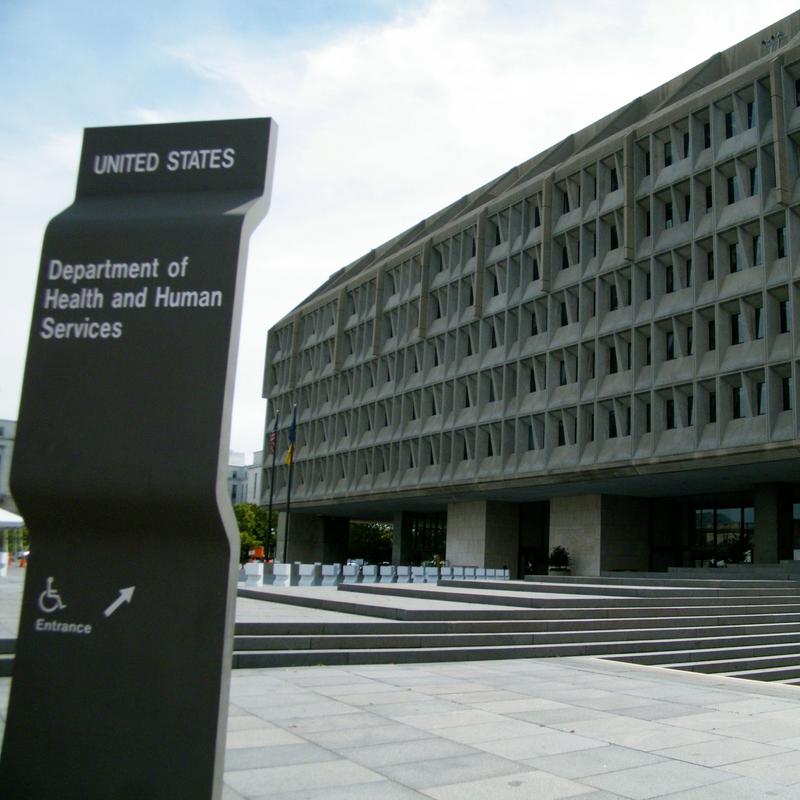
Maya Goldman: The budget proposes about a 12.5% cut to the Department of Health and Human Services. That's the umbrella organization that administers Medicare. I don't have the numbers in front of me right now. I don't think that much of that cut was to Medicare. Most of it was to the NIH, National Institutes of Health, also the Agency for Healthcare Research and Quality, and things like that. I think there are not the severe proposals that we're seeing at that level right now.
Brian Lehrer: In fact, your latest article on Axios, just out today, is called Private Medicare Plans Get a Break. That's a Trump administration story. What's that about?
Maya Goldman: Yes. Like I mentioned, Medicare is either you can have a traditional, we call it Medicare plan, or you can have a privately run Medicare plan called Medicare Advantage. Those plans, which now cover about half of seniors, the insurance company gets money from the federal government to run a Medicare program. The federal government every year proposes a payment update. This year, the Trump administration had said that for 2027, essentially, they wanted to have a flat payment update to Medicare Advantage plan payment. That was really controversial with providers and plans.
A lot of health insurance stakeholders were saying this is effectively a cut to Medicare for seniors because costs are rising, and we're not going to be able to keep up with what we need to do to take care of seniors with this update. Just yesterday, the Trump administration came out with their finalized payment rate for next year for these plans, and they ended up bumping it up to about a 2.5% increase. They gave plans a bit of a reprieve there.
This is an interesting issue because there's a lot of debate right now over whether these privatized Medicare plans cost the federal government too much money relative to traditional Medicare. The privatized program was founded to try to save money, and there's some evidence that it's actually cost money. This is a big political issue right now. Is this a place that the federal government should be looking for savings?
Brian Lehrer: You may know that in New York, there's a kind of revolt underway by retirees from city government, former city employees, who the city and some of the unions are trying to move on to Medicare Advantage programs, those private Medicare policies rather than traditional Medicare. There's been such an uprising of the actual retirees that they have put it on hold, it's tied up in court, et cetera. That's at the local level. On the federal level, Project 2025 made Medicare Advantage an agenda item.
I'm reading the critique of it on the American Progress liberal think tank website. It says the Heritage Foundation's Project 2025 calls for Medicare Advantage to be made "The default enrollment option for all Medicare beneficiaries, which would push the United States toward a future of fully privatized Medicare." Maybe not turning it over to the states to start or maybe ever, but this at least would be the kind of thing that has President Trump's ear, making instead of regular Medicare, the Medicare Advantage private plans, which could limit what doctors and hospitals you have access to and things like that much more than traditional Medicare could become the default if they take Project 2025's agenda.
Maya Goldman: Yes, that's absolutely something that is being whispered about and maybe discussed even more openly than that right now. There are real benefits and drawbacks to Medicare Advantage if you're a senior. You often can get a plan with no premium. You get certain supplemental benefits like dental and vision coverage. Traditional Medicare doesn't have that. You have to go get that on your own.
Those are big perks for seniors, but then you also have that limited network and more prior authorizations, or you have to get extra approval from the health insurance company before you get certain medications and things like that. It's really something that a lot of people love and something that a lot of people hate.
Brian Lehrer: How far in your understanding does Project 2025 or any other conservative advocacy group go in recommending that Medicare Advantage be, maybe not just the default? When they say default, you can interpret that in a fairly benign way, which is that's what people would automatically be put on, but they still could choose traditional Medicare. What about abolition of traditional Medicare and privatize Senior Health Coverage 100%?
Maya Goldman: I think that is a discussion. To be quite honest, I'm not sure how much weight that has right now. I think what we're mostly talking about is default enrollment, but I think there's a really interesting divide within the Republican Party right now, where you have this traditional fiscal conservative moving towards privatization wing of the party that's colliding with a more populist wing of the party. Medicare is a really interesting test case for that, because traditionally Republicans have loved Medicare Advantage.
This is one of their favorite programs. It's held up as an example of the way that privatization works well, but now you're, over the last couple years, getting more Republican lawmakers in Congress starting to talk about, "Well, maybe this program isn't working the way that we want it to, and maybe the plans are costing us too much money," and doing a little bit more program integrity work there. I think we're seeing that play out in real time, that tension between, "Do we want to fully privatize this program, or is that a slippery slope?"
Brian Lehrer: Steven, In Astoria. You're on WNYC. Hi, Steven.
Steven: Hello. I'm a retired teacher, and I'm on both Medicare and Social Security. Do people know, though we've been paying in, in my case, since the 1970s, when a dollar was worth more than a dollar today? We all know, especially the last few years, with inflation. I pay about $800 a month out of pocket. They think Medicare is free. No. I've been in the hospital only two days in 25 years. That included while I was working and retired. I pay $800 a month for Part B, C, and D.
United Healthcare, they said to stay away from Advantage because they said it was a ripoff. I don't know. I'm not a doctor. Then the drug plan, prescription plan. I take three pills, but they're every three months when I buy them. Some of them are $200, $300 out of pocket. I averaged it all out. United Health Care and the Part B that's taken out of Social Security, do people know you pay Part B of original Medicare, taken out of Social Security? Altogether, mine comes to at least $800, sometimes $900, depending on if I get my 90 pills for that month.
Another question just before I stop is, why should any American military person fight in any undeclared wars? This is why we need that stupid $1.5 trillion for defense. That's for Trump and Hegseth to fight these stupid, needless, expensive, lethal wars. I'm against all these wars. Venezuela, the ICE civil war, killing citizens in Minneapolis. What about bombing those fishermen? Two of them were going back to Trinidad after working in Caracas. Hegseth doesn't care.
What about the other possible wars, Cuba, Greenland, and all the others? I'm against all these wars. Why should any military person have to fight in undeclared wars? We want to know who's voting for these wars in Congress because they're doing nothing now. Thank you very much.
Brian Lehrer: Steven, thank you very much. Segueing into the military funding aspect of it, as well as the obviously military policy and wars that are being waged aspect of it, but that's the contrast. That's the premise here. Trump proposing in his budget proposal for the next fiscal year a 40% increase in military spending and a 10% cut to help pay for it in all domestic spending, and saying in conjunction with that that Medicare and Medicaid are things that might be better handled by the states, if not tomorrow, maybe eventually.
Of course, Medicare is largely a state program or a joint federal and state program. Medicaid is, Medicare is not. That's why the Medicare portion of Trump's comment has gotten so much attention. Bob in Brooklyn may have a suggestion for how to make Medicare more solvent going forward. Hi, Bob, you're on WNYC.
Bob: Why, thank you. Thank you for taking my call. I have heard, and perhaps your guests would know better than I, that up to $164,000 in annual income, everyone pays into Social Security. However, at the 164,000 first dollar, no matter how much money you make, you pay nothing into Social Security. Since we have 2,500 billionaires here in US alone, according to Scott Galloway, anyway, who is one of them, that that would help to go a long way, if not resolve the Social Security issues, because your Medicare Part A, which covers part of your hospitalization, the Part B that covers your doctor visits both inside and outside the hospital, and your Part D, which is your prescription drug plan for Medicare, all come from your Social Security check.
One helping one would help the others. Also, I just heard from you guys just now that the president is suggesting that the states take it over and that the states should raise taxes for the coverage of the Medicare. However, since we're sending that tax money to the Fed and we're no longer getting the services for that tax money, we shouldn't have to raise more money. We should get that money back from the Fed, or we should stop paying that money to the Fed and use it, therefore, to pay for the Medicare program.
Brian Lehrer: Bob, thank you very much for your call. Maya, the aspect of that at the beginning of his call that gave the exact cutoff, do you get that number right? I think it's right, but I don't know the exact number.
Maya Goldman: I also don't.
Brian Lehrer: $164,000 income, above that, you don't pay the Social Security taxes?
Maya Goldman: I'm not 100% sure on that, unfortunately, but it is a huge issue that a lot of seniors are living on fixed income, and their Medicare premiums keep going up and up and up. The cost of living increases to Social Security are not always a commensurate with that.
Brian Lehrer: For you who covers Congress and health care, are there competing proposals that are fairly active from people in the two parties to cover the projected increase in the cost of Medicare over the coming decades, or is it not even an active thing because whether they cut something or whether they raise taxes, it's going to be so politically unpopular that everybody's avoiding it. Where does this stand?
Maya Goldman: It's a really good question. I should preface this by saying that this has been something that policymakers have been talking about for years, if not decades. People have seen the writing on the wall, and they've been working really hard on it. There's a whole movement that came of age with the Affordable Care Act about a decade and a half ago called Value-Based Care, which is a movement to pay doctors for outcomes and for quality, instead of based on the service that they provide.
Right now, you go into the doctor's office, you get an MRI, the doctor is paid for doing the MRI, but instead, there's this movement to try to pay for the whole scope of care that you get in that visit in one go. [crosstalk].
Brian Lehrer: That sounds to me like it would reverse the incentive. If the incentive now for a doctor or a hospital is to do a lot of tests and procedures because they get paid per the one, if it's a lump sum for the entire treatment of the patient, then the incentive is exactly the opposite. It's to provide as few services as possible to get the same lump sum payment.
Maya Goldman: Yes, you could certainly look at it that way. I think the charitable way to look at it is that it allows doctors to give the care that they think is needed and not more and not less to get paid. This is something that's really active, that CMS, the federal agency that administers Medicare and Medicaid, is working hard to try to implement into the programs, but it's a huge uphill battle because you have to change the entire incentive system for medicine, and that's really hard to do.
That's something that people are trying to work on. There's also, like I mentioned, a big push to get rid of fraud, waste, and abuse in the system. This past year, the government uncovered a huge increase in spending in these high-tech, fancy bandages that were used on a lot of seniors, and they were super expensive. The federal government cracked down on that, and that's supposed to save significant money in the next year. There are lots of initiatives like that going on.
Brian Lehrer: We just looked up on the ssa.gov, socialsecurityadministration.gov website, that tax rate cutoff, and it says, "In 2026, the maximum amount of earnings on which you must pay Social Security tax is $184,500." It says, "We raise this amount yearly to keep pace with increases in average wages," but then it says, "There is no maximum earnings amount for Medicare tax. You must pay Medicare tax on all your earnings." That would include billionaire Scott Galloway and everyone else. Is that your understanding?
Maya Goldman: That is my understanding, yes.
Brian Lehrer: Why does Medicare seem to be more daunting, according to many economists, than even Social Security for long-term solvency?
Maya Goldman: I think that part of it is because the cost of care is going up. There's medical inflation just like there is inflation on the gas prices. We're getting more high-tech medications and machines, and being able to keep people alive for longer. These costs are just going up and up and up, and hospital consolidation, and so many dynamics that are going on that are really increasing the cost of healthcare much faster than we're able to pay into it. We have this very rapidly aging population. It's a confluence of factors.
Brian Lehrer: Here's a question from a listener that I think suggests maybe there's at least this advantage to the private Medicare Advantage plans. Listener writes, "Isn't it true that there is no out-of-pocket cap with traditional Medicare and that Advantage plans have a cap? I think what that means is there's no lifetime maximum after which you pay nothing if you continue to have medical bills." Do you understand the question?
Maya Goldman: Yes. That's a great question that is true in Medicare Advantage. In traditional Medicare, the Biden administration helped pass legislation a couple of years ago that introduces an annual out-of-pocket maximum for drug coverage for all seniors, for all Medicare enrollees across plans. That is a huge difference that is new, but yes, that's generally true. There's a lifetime limit on expenses for Medicare Advantage plans, and that's a huge perk for seniors.
Brian Lehrer: We'll finish up in a minute with Maya Goldman from Axios, who covers healthcare with respect to Congress and other federal agencies. We're going to move from the Medicare part of the discussion to the Medicaid part of the discussion, which has different, very interesting complexities. Stay with us.
[MUSIC]
Brian Lehrer: Brian Lehrer on WNYC. We're talking about President Trump's budget proposal for the next fiscal year with Maya Goldman, who covers Medicare and other federal health programs for Axios. We're not really talking in great detail about other aspects of the budget proposal. What we're doing is spotlighting Trump's new language about Medicare from a speech he gave last week, compared to what he said as a candidate. We played longer versions earlier, but for those of you just joining us, basically, he's gone from this in the 2016 campaign-
President Donald Trump: Medicare is a program that works.
Brian Lehrer: -to this last week.
President Donald Trump: Medicaid, Medicare, all these individual things, they can do it on a state basis. You can't do it on a federal. We have to take care of one thing, military protection.
Brian Lehrer: As his new budget proposal includes about a 40% increase on military spending and a 10% cut on domestic programs, including various health care ones. Ellen in Manhattan, you're on WNYC. Hello, Ellen?
Ellen: Good morning. Thanks for taking my call. I just wanted to say that, as when he decided to call Pete Hegseth the Secretary of War, I'm actually grateful to Trump for laying out very starkly the choices that we face in our priorities in federal spending. Do we want to support things that improve the lives of our population and things that support humanity and human beings, or do we want to put that money into a bloated military budget that goes to a Pentagon that has never passed an audit, speaking of fraud and waste?
I'm just glad that what for me has been the elephant in the room in terms of budget priorities for decades is really been laid out very starkly by the president himself.
Brian Lehrer: When you say the Pentagon has never passed an audit, what does that refer to?
Ellen: The Pentagon has never passed an audit. Its spending is so corrupt. It has never passed an audit.
Brian Lehrer: Ellen, thank you very much. We would need to drill down more on what that means, but certainly, Maya, if they weren't increasing military spending or the president is proposing to whether it gets through Congress is another question, but proposing to increase military spending by 40% or the way Ellen frames it, the military budget has been such a big piece of the budget forever, maybe more than is actually needed to protect Americans, but it's politically popular. Of course, Medicare is very politically popular as well.
Have you ever done calculations as to if they went the other way? Trump is saying, "Increase the military budget and cut domestic spending to help pay for that." What if they went the other way? What if they cut the military budget by 40%? How much would that solidify Medicare over the long term or anything else?
Maya Goldman: There would be a lot of dynamics that you'd have to sort through there, but what I can say is that health care spending is already about a third of our federal budget. We do spend a lot on health care. There's certainly lots of arguments to be made that we're not spending enough and that we're not spending in the right way, but this is still going to be a big chunk of our federal outlays.
Brian Lehrer: That's fair to include. Health care is a third of the federal budget. When you say that, does that include Social Security, or would that bring--
Maya Goldman: I don't think that does. I don't think that includes Social Security.
Brian Lehrer: I don't know who it was who once said, "What is the federal government? The federal government is an insurance company with an army," which indicated a lot on Social Security, which is in its way an insurance program, and Medicare as the two big "insurance outlays," and of course, the military would be, I think, the next biggest thing because Medicare and Social Security are more than the military spending when you take them together. Michella in Provincetown, you're on WNYC. Hello, Michella.
Michella: Hello, Brian and Maya. Good morning. Speaking of the military spending, from what I understand, that's the root of the insolvency of Medicare. It's due to the borrowing for Desert Storm during the first President Bush.
Brian Lehrer: There's been a lot of borrowing under presidents for various things that they considered emergencies. Certainly, the federal government did go into a lot more debt because of the Iraq and Afghanistan wars, the responses to 9/11. The Obama administration borrowed a lot because of the Great Recession and then the pandemic. Trump plus Biden. I don't know if you have anything on that, Maya, if that's too tangential to your beat, but what she's citing, Desert Storm, the Iraq war, taking money from Medicare to pay for that war, and they've never filled that hole. Do you know that to be true as stated?
Maya Goldman: I'm not sure about that. I wish that I had a better answer for that. There are so many dynamics here, so much going on that it's hard to keep it all straight.
Brian Lehrer: Medicaid is different. It's got a lot of state as well as federal funding, as we've said. Can you describe a little bit of how that works?
Maya Goldman: Sure. Federal government and states share the cost of Medicare. States pay for their Medicaid programs, and the federal government matches the money that they put up to a certain percent and that's very broadly how this program is funded.
Brian Lehrer: Medicaid, by many accounts, is the number one stressor on many state budgets. We talk about Medicare being a big stressor long-term on the federal budget. Medicaid, by many accounts, is right now the number one stressor on many state budgets. Why has that become more expensive per taxpayer over time at the state level?
Maya Goldman: Also, a confluence of factors. Generally, we have expanded Medicaid enrollment and eligibility in the states over the last decade or so. That's more people. There's also increasing health care costs like there is in Medicare, and increasing the benefits that are offered in a lot of states, which is really valuable to enrollees, but that adds cost. There are a lot of states that are really concerned right now. This is a huge stressor. They're looking for ways to cut back.
On top of that, you might remember last summer the Congress passed the One Big Beautiful Bill Act, or H.R.1, which cuts almost a trillion dollars in federal Medicaid spending over the next decade, and is going to cut eligibility and change the terms for state financing. A lot of those changes don't go into effect until 2027, but this is coming into a time when states are already stressed about the increasing cost of health care. They're getting really concerned about this.
Brian Lehrer: We've talked on the show before, as have a lot of other news programs and organizations about the work requirement under the One Big Beautiful Bill so called, which a lot of people will see just as a paperwork barrier and they won't bother or won't be able to go through with filling out the paperwork even if they are actually eligible. Some of that was about immigrants, some legally here, some not, as I understand it, is that correct, who may no longer qualify for Medicaid?
Maya Goldman: That's correct. There were a couple of states that were using state funding to give coverage to people who were undocumented. That was part of it, but that was not federal funding. The federal government is also cutting off eligibility for legally present enrollees.
Brian Lehrer: Would it be accurate to say that Medicaid, just as Medicare, is largely an anti-poverty program for seniors and has been very effective at that? Is Medicaid, in large measure, a child poverty measure? The United Hospital Fund of New York wrote last year, that "In New York, Medicaid covers 44% of all children, 49% of all births, and 44% of children with special health care needs. Overall," it says, "Children enrolled in Medicaid have increased access to high quality preventive care, better health outcomes in adulthood, and higher educational attainment."
It goes on from there, but how is it that 44% of a state's kids get health coverage through Medicaid? The poverty rate is much less than 44%.
Maya Goldman: Medicaid is certainly a hugely important program for kids. The eligibility requirements are different for kids than they are for adults. The state generally has an incentive to keep kids healthy because if you help keep kids healthy when they're young, they grow into healthier adults. That's good for the economy, and that's good for the human lives of the state. It's hugely important for kids.
Brian Lehrer: Did Obamacare, the Affordable Care Act, expand Medicaid from-- We know that there was the Medicaid expansion under Obamacare that states could adopt or not. Many have, some haven't, but the incentive to adopt was that the federal government would pay a lot of that. Some states adopted it, some states don't, but was the point of that expansion to turn Medicaid from simply being a program that provides health care funding for people who are poor to also helping prevent people from becoming poor who are near that line?
Maya Goldman: Yes, I think you could say that. Medicaid expansion generally expanded eligibility to lower-income adults who do not have children. There's this huge gap of people that couldn't afford health insurance but also weren't qualifying for Medicaid. Medicaid expansion picks up those people in a big way.
Brian Lehrer: We will leave it there for today on Medicare and Medicaid, prompted by what the president said about turning them over to the states, whether we take him literally or only just seriously. Talking about Medicare and Medicaid and the state and federal shares, and how much they cost, and some of the policies around them with Maya Goldman, who covers healthcare for Axios, especially with respect to the federal government. Thanks for filling us in so much and helping take calls and texts from listeners.
Maya Goldman: Thank you for having me.
Copyright © 2026 New York Public Radio. All rights reserved. Visit our website terms of use at www.wnyc.org for further information.
New York Public Radio transcripts are created on a rush deadline, often by contractors. This text may not be in its final form and may be updated or revised in the future. Accuracy and availability may vary. The authoritative record of New York Public Radio’s programming is the audio record.